
Dubai
Ambassador School Dubai
low confidence· 4/6 cats · 0 avg sourcesOne of Dubai's rare CISCE schools, offering a Humanities stream alongside Science and Commerce in the heart of Mankhool.
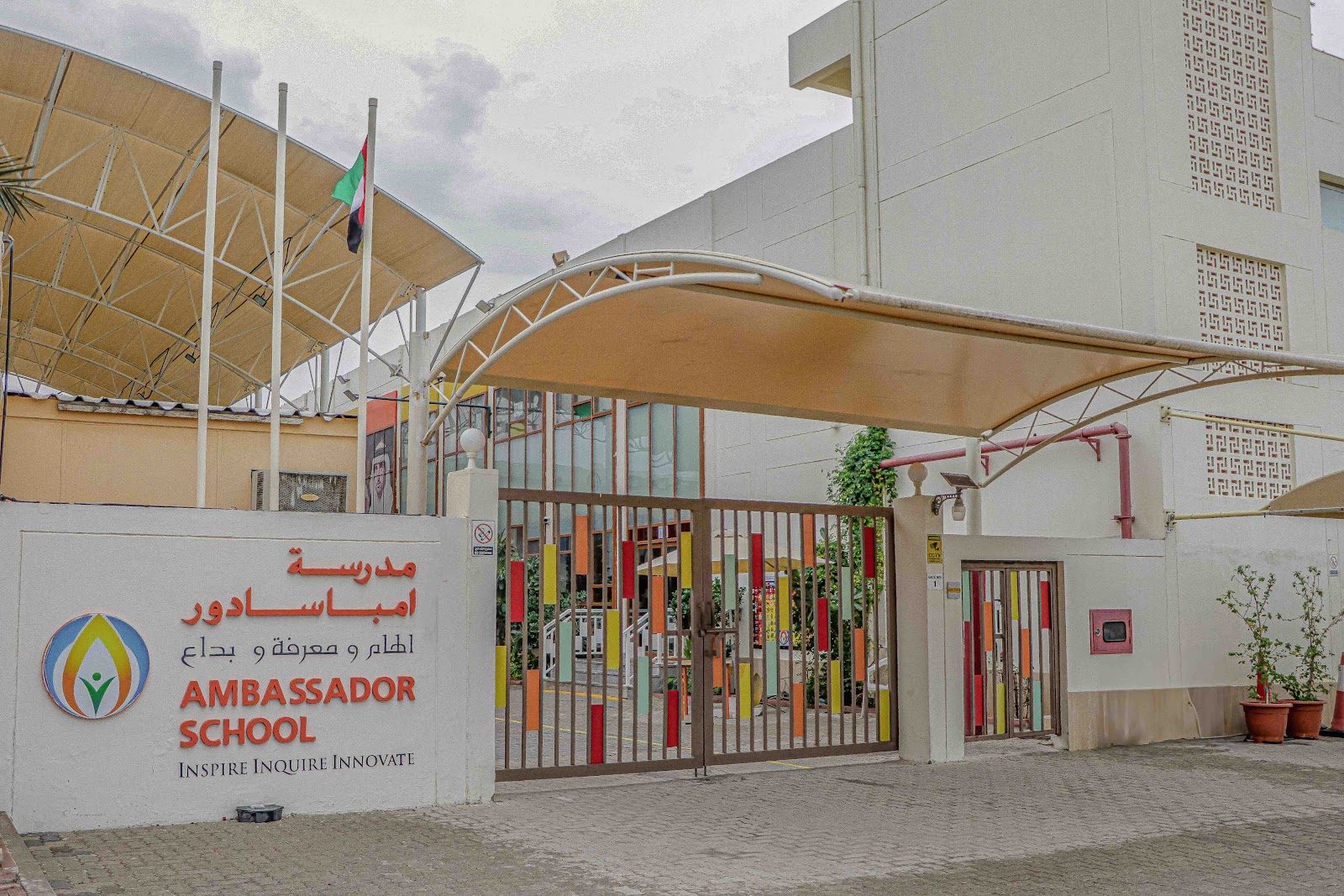
Photo © Ambassador School via Google Maps
Type
Day
Ages
4–18
Curriculum
Indian National
Ratio
—
The Verdict
Editor's commitment
Right for
Families wanting an Indian curriculum school in Dubai from age 4 to 18, with a KHDA Very Good rating and rare CISCE breadth.
Wrong for
Parents seeking boarding, low fees or a non-Indian pathway; this is a day school in Mankhool at an average AED 30,956.
Watch out for
Public-facing information is thin and even the contact page is sloppy; for a 2010-founded school, that weakens confidence fast.
Ranking breakdown
Ambassador School Dubai · # of 1591
Composite score 63.0. 8 weighted criteria.
By criterion
Academic Outcomes
Weight 20%
#747
of 1533 scored
University Placement
Weight 16%
#848
of 1529 scored
Prestige & Heritage
Weight 12%
#1140
of 1580 scored
Alumni Network
Weight 12%
#781
of 1530 scored
Facilities
Weight 12%
#794
of 1540 scored
Transparency & Communications
Weight 8%
#553
of 1547 scored
Peer & Industry Review
Weight 10%
#1330
of 1564 scored
Admissions Selectivity & Demand
Weight 8%
#1370
of 1529 scored
Peer & Industry Review
How Ambassador School Dubai is regarded in the sector
66
Respected · high confidence
Ambassador School Dubai has carved out a genuinely respected niche as one of the UAE's few CISCE curriculum providers, with WhichSchoolAdvisor noting the school is clearly on the way up, having now secured three Very Good ratings from the KHDA, and describing it as one of the top-rated Indian schools in the city. SchoolsCompared corroborates this trajectory, tracking KHDA records showing Ambassador School moving from Acceptable to Good and then to Very Good across successive inspection cycles, and its sister news coverage rates it, alongside GEMS Modern Academy, as one of the top performing Indian curriculum schools in Dubai. Parent sentiment is solid rather than exceptional, with WhichSchoolAdvisor's survey of over 450 parents having provided their views, with an overall rating of 4.1/5 - a positivity rating of 82%. Its standing is real but bounded by curriculum niche rather than city-wide prestige.
Editors' overview
Ambassador School Dubai occupies a useful niche in a crowded market. It is one of Dubai’s few Indian schools offering the CISCE pathway, and that matters because it gives families a clear alternative to the dominant CBSE route. The school runs from ages 4 to 18, teaches in English, and sits in Mankhool, which keeps it firmly in the orbit of older central Dubai neighbourhoods rather than the newer suburban education belts. The headline distinction is sixth-form breadth: alongside Science and Commerce, the school offers a Humanities stream, still uncommon in Indian-curriculum schools in the city. For families who want an Indian education without forcing a narrow STEM-or-commerce choice at 16, that is a genuine differentiator.
This is also a school with credible local standing rather than inflated branding. KHDA rates it Very Good for 2023/24, which places it above the mass of merely acceptable schools and gives parents a regulator-backed quality marker. The average annual day fee across the full age range is AED 30,956, which puts Ambassador in Dubai’s mid-market sweet spot: expensive enough to expect substance, far below the city’s premium international-school stratum. Founded in 2010, it is not an old institution with generations of alumni behind it, but neither is it a start-up finding its feet. The practical point for parents is straightforward: this is a school that offers a recognised Indian curriculum, a central location and a stronger-than-average inspection outcome without demanding elite-school money.
The pupil who fits Ambassador School Dubai is not chasing glossy prestige. This is a better match for families who want academic structure, cultural familiarity and a curriculum that keeps India-facing university options open while still operating in an English-medium environment. It will also suit students with clear interests in literature, history, psychology or the social sciences, because the Humanities option gives them a route that many comparable schools do not. Parents looking for a flashy campus narrative, a long list of international accreditations or heavily advertised overseas destinations will find the public picture thin; the school does not publish that wider layer of institutional proof in the information we have seen. Parents who value curricular clarity, a solid KHDA grade and a rare subject mix within the Indian segment have a stronger reason to shortlist it.
Academic Performance
Academic-performance transparency is the weak point. We have not seen aggregate board results, subject-level outcomes, top-score distributions, university matriculation lists or trend data across multiple cohorts. That leaves parents without the hard comparative evidence that stronger schools in this segment publish as routine: headline pass rates, distinction rates, destination patterns and evidence on how the sixth form performs across different subject routes. For a school with a regulator grade above the market middle and a sixth-form offer that extends beyond the standard Indian-school pattern, that silence matters. It does not invalidate the academic proposition, but it does leave it under-evidenced, opaque and harder to rank against direct competitors.
Relative to peers, Ambassador sits in a frustrating middle ground. It has enough credibility to warrant serious consideration, yet not enough published outcomes to earn a data-led academic endorsement. In Dubai’s Indian-school market, the best performers make their case with board statistics that parents can interrogate. Ambassador does not. The practical reading is plain: families interested in the school need to ask for the last 3 years of ICSE and ISC results, stream-by-stream ISC performance, subject uptake in Humanities, and university destinations after Grade 12. Until that evidence is disclosed, the academic story remains credible but unproven in public.
Facilities
The school’s public-facing picture on facilities is thin, and that matters. We can confirm a campus in Mankhool, a virtual tour, and the school’s own emphasis on “outstanding campus features”, but the specifics that parents need are not set out with enough precision. We have not seen a published inventory of specialist labs, performing-arts spaces, sports provision, library scale, maker facilities or sixth-form-only study areas. That leaves the campus hard to benchmark on substance rather than marketing cues. In a market where strong peers spell out exactly what sits behind the classroom offer, this level of disclosure is below par, frustratingly vague and a weak point in the school’s case.
That does not mean the site is poor; it means the school has not done the work of proving it in public. For a central urban campus, the sensible expectation is a more compact footprint than the sprawling sports-heavy estates in Dubai’s outer districts. Against peer Indian schools in older neighbourhoods, that is not a flaw in itself; many families trade acreage for access and convenience. The real question is how efficiently the school uses its space and whether senior students get the specialist rooms their subject choices demand. Parents touring should ask direct questions: how many science labs, what computing provision, where the arts happen, what indoor sports space exists, and whether the sixth form has a serious study environment rather than a token one. Until the school answers those points clearly, the facilities verdict stays serviceable but unproven.
Ambassador School Dubai occupies a useful niche in a crowded market
Prestige
Ambassador School Dubai carries limited prestige in the way international parents use the term. It does not trade on old institutional cachet, selective scarcity, headline university placement, or a brand name that opens doors on recognition alone. Its standing rests on something more modest and more concrete: a regulator grade above the ordinary, a central address that serves established residential districts, and a curriculum choice that is genuinely less common in Dubai’s Indian segment. That gives it serious local credibility with families who know the market, but not the kind of status that confers instant social capital. The fee level reinforces that reading. At an average of AED 30,956 a year, this is not a bargain school, but it is also nowhere near the price bracket where Dubai schools start selling exclusivity as a product.
That is why the prestige verdict lands in the middle. Within its own niche, Ambassador has a clear point of distinction and enough regulatory validation to command respect. Outside that niche, the public case weakens. We have not seen the trophy indicators that turn a solid school into a high-status one: published destination lists, standout board data, major scholarship outcomes, or widely recognised institutional affiliations beyond inspection. In plain terms, this is a school people choose for fit, structure and subject breadth, not for bragging rights. For many families, that is a strength. For parents chasing prestige first, it is not.
The pupil who fits Ambassador School Dubai is not chasing glossy prestige
Communications
Parent communication looks functional rather than polished. The school gives families direct admissions routes — landline, mobile, email, an enquiry form, online application and tour booking — which covers the practical basics and reduces friction at the first point of contact. There is also a virtual tour, a useful concession for working parents who want an initial read before committing to a visit. That said, the execution is untidy. The public contact layer carries stray formatting, duplicated prompts and even a Sharjah email reference on the Dubai site, which is a careless error for any school and a credibility dent for one asking families to trust its day-to-day administration. Communication starts with signals; this one sends a mixed message.
For existing parents, the public picture is thinner than it should be. We have not seen a clear news rhythm, a substantial parent-information architecture, or a well-organised repository for policies, handbooks, calendars and academic updates. That does not prove weak operational communication behind the login wall, but it does mean the school’s outward communication culture lacks discipline and sharpness. In practical terms, parents should test responsiveness before enrolling: send 2 admissions queries through different channels, ask for turnaround times, and request examples of routine school-home communication on attendance, assessments and pastoral issues. A school can run well without glossy messaging, but it cannot afford sloppy basics.
Uniqueness
Ambassador’s real distinction is not generic “all-round” schooling; it is choice at the point where many Indian schools narrow sharply. The school gives older students a route into the social sciences and humanities instead of funnelling them into the standard science-or-commerce split. That matters more than brochures admit. For the student who is stronger in writing than in physics, more drawn to history than accountancy, or serious about psychology, literature or adjacent disciplines, this is a meaningful academic release valve. It protects students from a crude early sorting mechanism and gives families room to back aptitude rather than market habit. In a segment that still defaults to convention, that is a genuine structural advantage.
Its second point of difference is positional rather than aspirational. This is a centrally located Indian school with regulator-backed quality above the market middle and fees that stay in the workable range for professional families, at an average of AED 30,956 a year. That combination is not common. Students get a school model that is academically orthodox in structure yet less restrictive in sixth-form direction, without the social theatre or price inflation attached to prestige-led brands. The gain for children is practical: clearer fit, less pressure to conform to a narrow post-16 template, and a school experience that can support serious non-STEM intent without treating it as second best.
Ambassador School Dubai carries limited prestige in the way international parents use the term
Student Profile
The best fit here is the student who wants structure without being forced into a narrow identity too early. This school suits children who work steadily, respond well to clear academic expectations and do not need a campus built around spectacle to stay engaged. It will suit families who value orderly routines, conventional academic discipline and a peer group oriented towards examinations rather than performative “whole-child” theatre. Older pupils with genuine interest in reading-heavy subjects, essay writing and the social sciences have a stronger case here than they do at many comparable Indian schools. That matters at the point where subject choice starts closing doors elsewhere. For that child, the school offers a more humane fit than the standard conveyor belt into science or business routes. The fee level, at an average of AED 30,956 a year, also places it within reach for families seeking serious schooling without buying into luxury branding.
The weaker fit is easy to identify. This is not the right school for children who need extensive public proof of elite outcomes, a high-gloss extracurricular culture or a visibly expansive campus experience to feel motivated. It also does not suit families who equate school quality with social cachet. Students who thrive here will tolerate a less showy environment in exchange for clarity, predictability and a broader post-16 choice set than this market often provides. In plain terms: diligent, academically purposeful, and not obsessed with prestige.
We have not seen aggregate board results, subject-level outcomes, top-score distributions, university matriculation lists or trend data across multiple cohorts
Co-curricular strengths
Arts & sport, on a separate axis
Overall 7.48/10
Scored 0-10 from the school's own published evidence. This axis is editorial-only — it does not feed the main WTS ranking.
Sports
7.8/10
The extracurriculars explicitly list multiple sports—Cricket, Football, Basketball, Swimming, and Table Tennis—showing a structured multi-sport offering.
Drama
7.5/10
Drama appears explicitly in the extracurriculars list.
Dance
7.2/10
Dance is explicitly listed as an activity.
Music
7.4/10
Music is explicitly named in the extracurriculars list, but there is no further evidence of ensembles, facilities, specialist staff, or performances.
Visual Arts
7.5/10
Art Club is explicitly listed, which is enough to confirm visual arts provision, but the profile gives.
Editor first-pass · editor-reviewable · 7/27/2026
Official inspection · Dubai
KHDA report · 2023/24
Official · KHDAInspectorate
Knowledge & Human Development Authority
Dubai's mandatory education regulator; annual DSIB inspections.
Curriculum
Indian
Improved vs previous cycle
Full report
KHDA report finderRating history
Strengths
- +KHDA rated Very good in 2023/24
- +Indian curriculum KHDA-attested
- +Full through-school for ages 4 to 18 within one system
- +English medium of instruction
Considerations
- −We could not independently verify published examination outcomes
- −Primary sources give little academic detail
- −Admissions messaging highlights only some year groups, so continuity across all years needs checking
Availability
Primary entry gate & tests
CAT4 / Assessment
Gallery
Photo © Ambassador School via Google Maps
Photo © Ambassador School via Google Maps
Parent reviews
Have you sent your child here?
Voice reviews carry the strongest trust badge — we transcribe them for you to tidy up before they go live. Prefer to type? A written review is fine too.
Add your voice
In 60 seconds, tell other parents: what's the best thing about Ambassador School Dubai, and what surprised you when your child joined?
We ask for a Google sign-in so every review has a real face behind it — no anonymous drive-by attacks on schools, and no faked positive reviews. Your email is never shown publicly.
Send this profile to a friend
International parents rely on word-of-mouth. Share this review with someone weighing the same decision.
Schools with places
Similar schools to Ambassador School Dubai with places available now.
The Indian High School
Dubai · United Arab Emirates
- 2026-27
- PLACES OPENApps open / space-dependent
- 2027-28
- WAITPOOL2027/28 timetable TBC
Delhi Private School, Dubai
Dubai · United Arab Emirates
- 2026-27
- PLACES OPENApps open / space-dependent
- 2027-28
- WAITPOOL2027/28 timetable TBC
Availability first, then country, area, curriculum, price, co-curricular
Consider also
Also worth looking at alongside Ambassador School Dubai.

The Millennium School Dubai
Dubai · United Arab Emirates
Dubai's only day-boarding CBSE campus, blending GEMS-backed academics with Round Square's ethos of service and self-reliance.
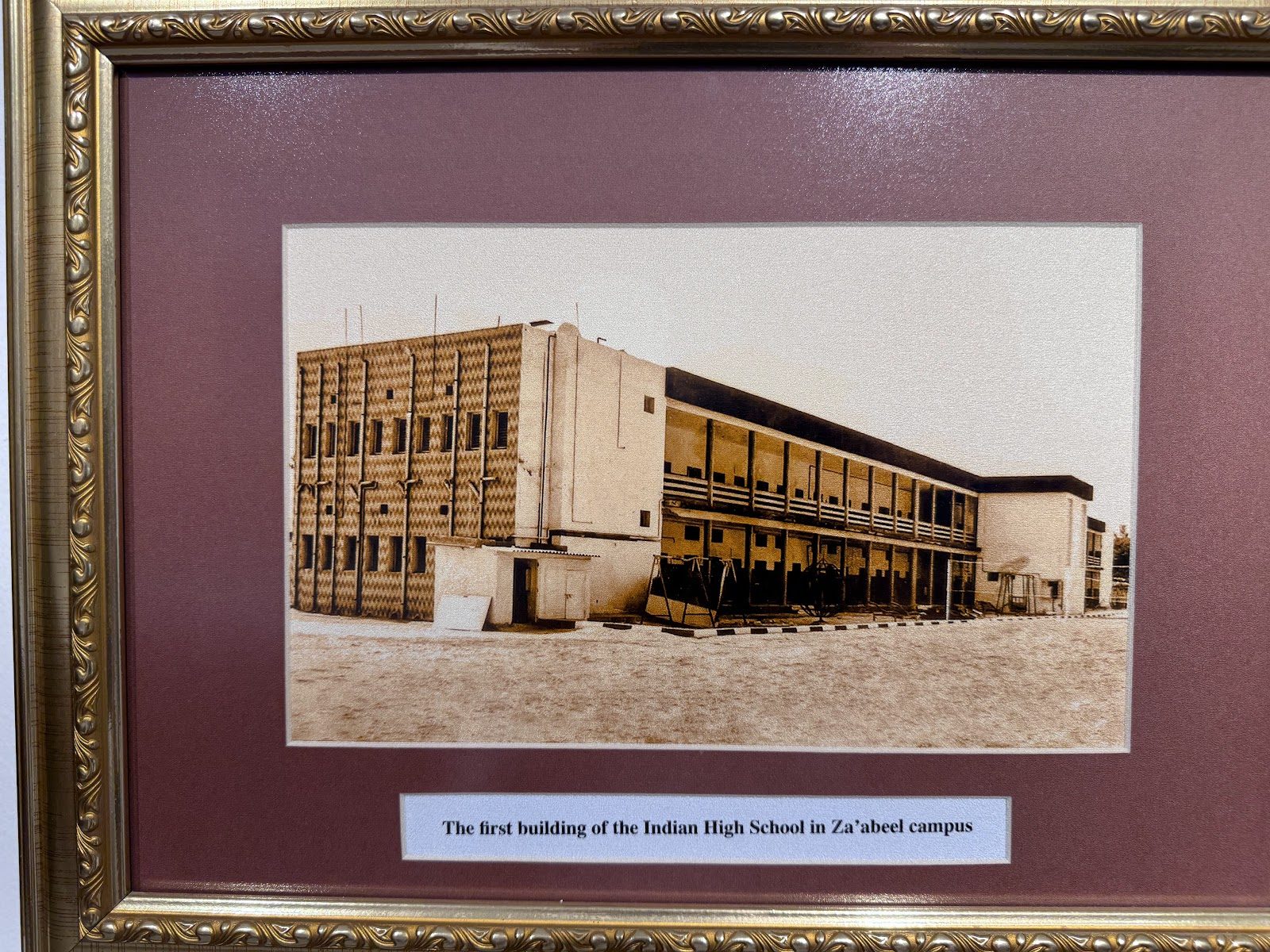
The Indian High School
Dubai · United Arab Emirates
Founded a decade before the UAE itself, this CBSE pioneer has grown into the Gulf's largest Indian-curriculum community.

Delhi Private School, Dubai
Dubai · United Arab Emirates
Amid Jebel Ali's Gardens district, a CBSE stalwart pairs board-topping exam results with a house-system creed of service before self.
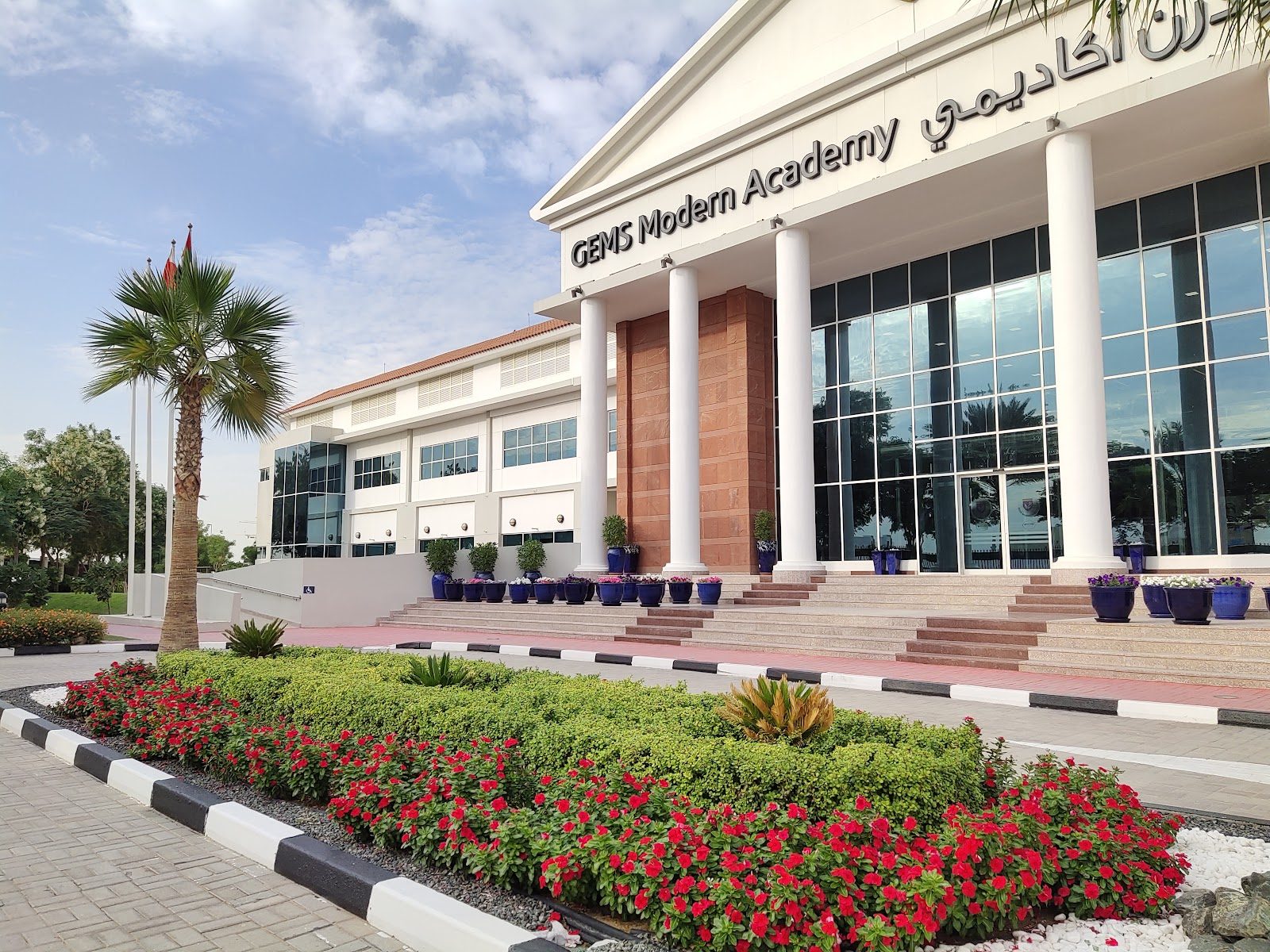
GEMS Modern Academy
Dubai · United Arab Emirates
Where the CISCE curriculum and the IB Diploma share one campus, and the only Indian-curriculum school in Dubai rated Outstanding by KHDA.
Same country and curriculum — closest matches within ±10 points either way