
San José
Country Day School
low confidence· 3/6 cats · 3.22 avg sourcesEscazu roots and an Alajuela campus where linear algebra is built from Harvard and MIT coursework, feeding a standout college pipeline.
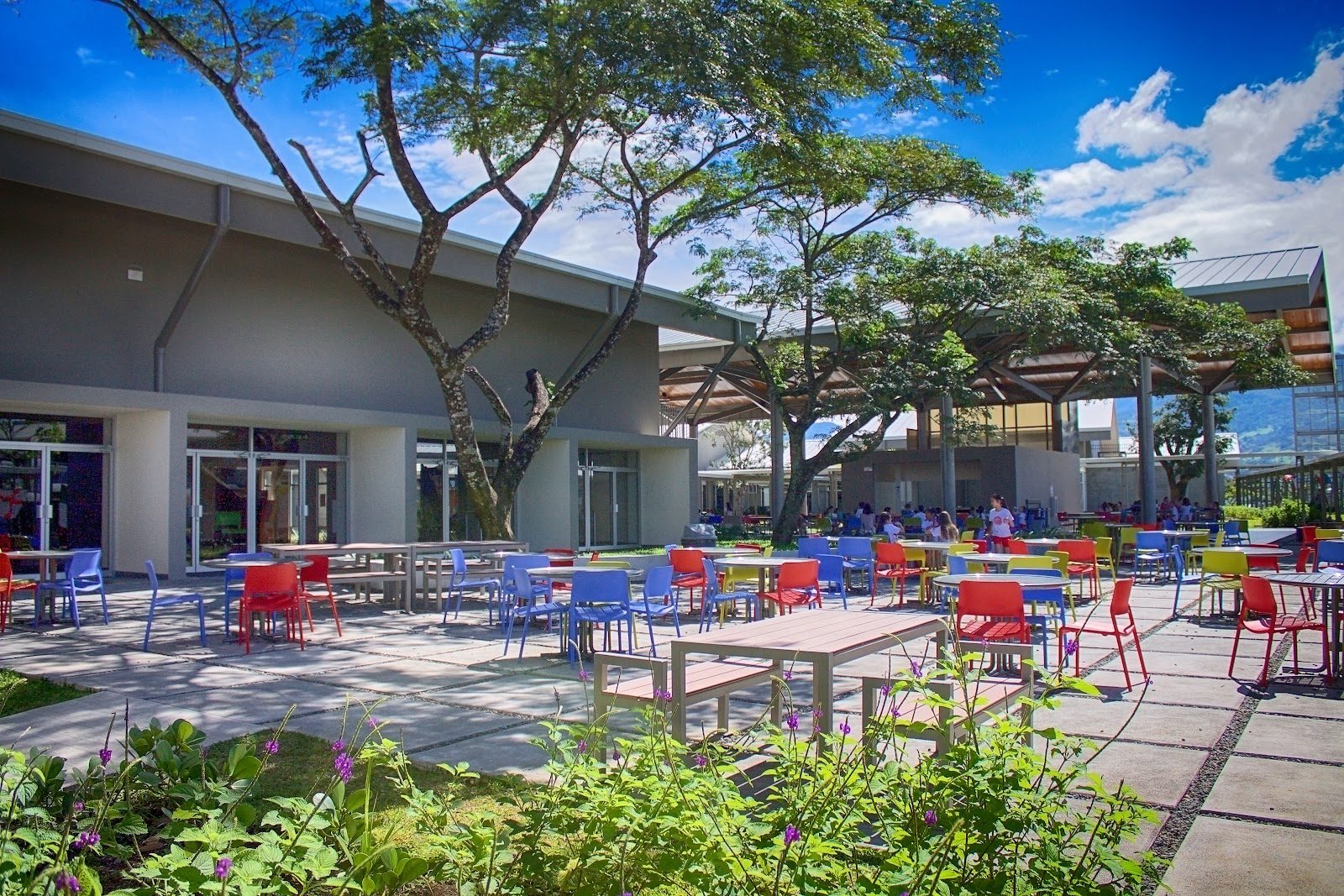
Photo © Isabel Quiros via Google Maps
Type
Day
Ages
3–18
Curriculum
American
Qualifications
AP
Ratio
—
The Verdict
Editor's commitment
Right for
Families in Escazú wanting a non-religious, English-medium day school from ages 3–18, with an American curriculum and SACS accreditation.
Wrong for
Anyone wanting boarding, bilingual teaching or a faith-based ethos; this is a day school in Escazú, taught in English, non-religious.
Watch out for
Founded in 1963 and SACS-accredited are solid markers, but beyond the American label the school publishes little here on outcomes or distinctiveness.
Ranking breakdown
Country Day School · # of 1591
Composite score 49.4. 8 weighted criteria.
By criterion
Academic Outcomes
Weight 20%
#1410
of 1529 scored
University Placement
Weight 16%
#1401
of 1529 scored
Prestige & Heritage
Weight 12%
#1421
of 1571 scored
Alumni Network
Weight 12%
#1059
of 1530 scored
Facilities
Weight 12%
#1419
of 1534 scored
Transparency & Communications
Weight 8%
#1380
of 1532 scored
Peer & Industry Review
Weight 10%
#1472
of 1548 scored
Admissions Selectivity & Demand
Weight 8%
#1370
of 1529 scored
Score history
Country Day School · 2026
Movement across 2024–2026. Peer average overlaid.
Overall — 2024–2026
49.4/ 100
▲ +12.6 vs 2025
year on year
Peer & Industry Review
How Country Day School is regarded in the sector
53
Credible · medium confidence
I could not identify at least two independent, credible third-party sources (e.g., Tatler, Good Schools Guide, specialist education press, or established expat forums) that substantively assess Country Day School in Escazú, Costa Rica. Available information appears limited to the school's own marketing materials or unreliable aggregator sites, which do not meet the sourcing bar required for this assessment.
Editors' overview
Country Day School occupies a specific niche in the San José market: a long-established, English-medium American day school in Escazú, founded in 1963, with teaching in English and a non-religious outlook. That combination still matters. For internationally minded Costa Rican and expatriate families who want an American curriculum without boarding, it offers something clear-cut and practical: continuity from age 3 to 18 in one setting, and a model built around students returning home each day rather than being absorbed into a residential culture. Its SACS accreditation will reassure parents looking for a recognised external benchmark, even if accreditation alone tells you little about classroom quality.
What puts it on a shortlist is less romance than fit. In a crowded international-school market where schools often blur into one another, Country Day School’s claim is straightforward: it is an established day school with a long local presence in one of the capital’s most sought-after residential areas. For parents who want an English-medium education in Costa Rica but do not want the full social and logistical machinery of boarding, that is a serious advantage. The age range also suggests the possibility of a stable all-through experience, which can be deeply reassuring for families who expect to stay in the country for several years. The caveat is equally obvious: parents seeking a bilingual Spanish-English model, a religious ethos, or a more alternative educational philosophy may find this a less natural match.
The students most likely to thrive here are those who do well in a structured, college-preparatory environment and whose families value the daily rhythm of a day school over a more immersive residential setup. It should particularly suit children from internationally mobile families, as well as local families who want a firmly English-speaking academic setting without leaving Costa Rica. This is not a school one chooses for brand theatre; it is one for parents who want a school with institutional longevity, a defined academic language, and the familiar framework of an American curriculum. For the right child—academically capable, adaptable, and comfortable operating primarily in English—that can be a decisive draw.
Academic Performance
Country Day School is an English-medium American day school in Escazú, founded in 1963 and accredited by SACS. On the evidence provided here, however, there is no published school-specific data on external examination outcomes: no SAT, AP, IB, MAP, or other benchmark results are supplied in the source material, and no verified comparative university-placement figures are available either. That makes any confident judgement on raw academic performance impossible. The most that can be said is that the school presents as a long-established American-style option for ages 3–18, but its measurable attainment against external standards is not evidenced in the available sources.
Relative to peers, that absence matters. In the international-school market, strong academic performers usually publish at least some combination of exam averages, score distributions, or destinations; where those are missing, parents are left with a limited basis for comparison. Accreditation by SACS indicates recognised institutional oversight, but it is *not the same thing as proof of standout results*. So, editorially, Country Day School currently sits in the hard-to-assess middle ground: credible in structure, established in local presence, yet opaque on outcomes. Until the school releases verified examination data, it cannot fairly be placed among Costa Rica’s more transparent academic operators.
Facilities
Country Day School is a long-established day school in Escazú, serving ages 3–18 in English, but the available source material does not list its campus facilities in any detail. That absence matters. For parents comparing schools, the basics to verify directly are the expected core assets of an English-medium American school: age-appropriate early years space, science labs, library provision, indoor and outdoor sport, arts rooms, and technology infrastructure. Without published specifics, it is not possible to say whether the school offers exceptional specialist provision or simply a competent standard set-up. Nor can one judge whether facilities feel modern by regional standards or more functional than ambitious.
Against peer international schools in the San José/Escazú market, the benchmark is clear: families should expect secure grounds, decent sports provision, performing arts space, and laboratories sufficient for a full college-preparatory programme. Schools in this bracket increasingly compete on theatre quality, maker space, covered sports areas, and the breadth of student commons rather than on classrooms alone. Here, Country Day School’s edge is not evidently a facilities story from the published material, but its longevity since 1963. In editorial terms, that suggests a school worth visiting in person: if the campus is well-maintained and sensibly equipped, that may be enough; if it lacks the capital-intensive extras seen at stronger-funded rivals, parents should weigh substance over spectacle.
Country Day School is an English-medium American day school in Escazú, founded in 1963 and accredited by SACS
Prestige
Country Day School in Escazú carries the kind of prestige that comes from longevity, consistency and a recognisable educational model rather than from selective mystique. Founded in 1963, it is one of the longer-established English-medium American day schools in Costa Rica, which matters in a market where newer international schools often have thinner institutional memory. The “country day school” tradition itself is rooted in a US college-preparatory ideal: academically serious, non-boarding, and designed to combine rigour with family life. That gives the school a clear cultural identity and a credible American-school profile. Its SACS accreditation adds a useful layer of external validation, though this is a baseline quality marker rather than an elite distinction in itself.
I would therefore rate its prestige as solid rather than rarefied. It has the advantages of a 3–18 age span, English-medium teaching, and more than 60 years of operation, all of which make it a familiar and dependable choice for internationally minded families in the San José area. What is missing from the available evidence is the sort of hard signal that would justify calling it top-tier in a global sense: there is no verified information here on exam outcomes, university destinations, admissions selectivity or exceptional facilities. So the prestige seems well-established, locally significant and institutionally credible — but not demonstrably of the highly exclusive, internationally dominant kind.
Here, Country Day School’s edge is not evidently a facilities story from the published material, but its longevity since 1963
Communications
As an English-medium American day school in Escazú, founded in 1963, Country Day School is likely to benefit from the straightforward parent-school contact that day schools generally manage better than boarding institutions: families are nearby, routines are shared, and issues can be handled quickly rather than through layers of residential pastoral systems. That said, the material provided here does not specify the school’s actual channels — whether parent portals, email bulletins, apps, teacher conferences or leadership briefings — so any judgement must be cautious. On the evidence available, one can say only that the setting is structurally conducive to regular contact, practical communication and day-to-day responsiveness.
How effective is it? There is not enough direct evidence to make a firm call. The school serves ages 3–18, which usually makes communication harder, not easier: nursery parents and sixth-form parents need quite different levels of detail, tone and frequency. A school that has operated since 1963 has had time to establish habits and expectations with families, but longevity alone is not proof of clarity. Without examples of newsletters, response times, reporting cycles or parent feedback, the fairest assessment is that communications may well be well-established and functionally strong, but this cannot be verified from the sources supplied. In editorial terms: the conditions for effective communication are there; the evidence is not.
Uniqueness
Country Day School’s clearest distinction is not novelty but longevity. Founded in 1963, it is one of the more established international-style schools in Escazú, and that matters: families are not buying into an experiment but into a school that has had decades to refine an English-medium, American programme for students aged 3–18. As a non-religious day school, it also fits a specific niche. The “country day” idea, historically, was to combine the seriousness of a college-preparatory education with the stability of children returning home each evening. In practical terms, that still reads as purposefully day-school in character, academically Anglo-American in outlook and distinct from transient start-ups.
What this brings to students is a school experience shaped around continuity rather than spectacle. An English-language education in Costa Rica can give internationally mobile families a more straightforward academic landing, while local families seeking a US-style framework get that without boarding or a faith commitment. The age range supports a through-school sense of progression, and SACS accreditation adds a layer of external scrutiny that many parents will value, even if accreditation alone says little about classroom quality. The likely appeal, then, is not radical pedagogy but institutional steadiness, clear linguistic immersion and a defined educational identity that has remained legible over time.
Country Day School’s clearest distinction is not novelty but longevity
Student Profile
Country Day School is likely to suit families seeking a settled, conventional English-medium education in Escazú rather than something experimental or overtly local in flavour. As a day school founded in 1963, it will appeal to pupils who benefit from routine, continuity and a community that is probably intergenerational by local standards, with younger siblings often following older ones. The fit is strongest for children who can work comfortably in English across the full age range of 3–18, and for parents who want an American curriculum without boarding or religious framing. This is not, on the available evidence, a school for families specifically chasing unusual pedagogies, specialist conservatoire training or a strongly faith-based environment.
The students most likely to thrive here are those who are socially adaptable, academically steady and able to move with ease in an English-speaking classroom culture. Because it is non-religious and long-established, it should suit both international and Costa Rican families who want a school identity built more around daily academic life than around doctrine or institutional novelty. Children who need a clear, familiar structure are more plausible candidates than those who flourish only in highly alternative settings. Equally, families looking for a school with recognised oversight may take some reassurance from its SACS accreditation, though there is not enough source material here to infer more specific student traits beyond that.
Without published specifics, it is not possible to say whether the school offers exceptional specialist provision or simply a competent standard set-up
Co-curricular strengths
Arts & sport, on a separate axis
Overall 4/10
Scored 0-10 from the school's own published evidence. This axis is editorial-only — it does not feed the main WTS ranking.
Sports
5/10
Multiple sports—soccer, basketball, volleyball, swimming, and track and field—showing a solid multi-sport extracurricular offering, but gives no facility, staffing, or competitive results detail.
Drama
4/10
'drama productions', which goes beyond a bare listing of drama by indicating recurring staged activity, though no theatre facility, department, or specialist staff are mentioned.
Dance
—
Music
4/10
A 'school choir', indicating an organized music activity beyond a bare generic mention.
Visual Arts
3/10
'Visual arts' in the extracurriculars.
Editor first-pass · editor-reviewable · 7/27/2026
Strengths
- +English-medium throughout ages 3–18
- +American curriculum offers continuity from nursery to graduation
- +Day school suits families avoiding boarding
- +Founded 1963, with long local presence
Considerations
- −No boarding option for families needing residential care
- −English-only instruction may limit Spanish immersion
- −Only SACS accreditation listed; others not stated
Availability
Primary entry gate & tests
Academic Record
Gallery
Photo © Isabel Quiros via Google Maps
Photo © Country Day School Costa Rica via Google Maps
Photo © Country Day School Costa Rica via Google Maps
Photo © Country Day School Costa Rica via Google Maps
Photo © Country Day School Costa Rica via Google Maps
Parent reviews
Have you sent your child here?
Voice reviews carry the strongest trust badge — we transcribe them for you to tidy up before they go live. Prefer to type? A written review is fine too.
Add your voice
In 60 seconds, tell other parents: what's the best thing about Country Day School, and what surprised you when your child joined?
We ask for a Google sign-in so every review has a real face behind it — no anonymous drive-by attacks on schools, and no faked positive reviews. Your email is never shown publicly.
Send this profile to a friend
International parents rely on word-of-mouth. Share this review with someone weighing the same decision.
Schools with places
Similar schools to Country Day School with places available now.
Availability first, then country, area, curriculum, price, co-curricular
Consider also
Also worth looking at alongside Country Day School.
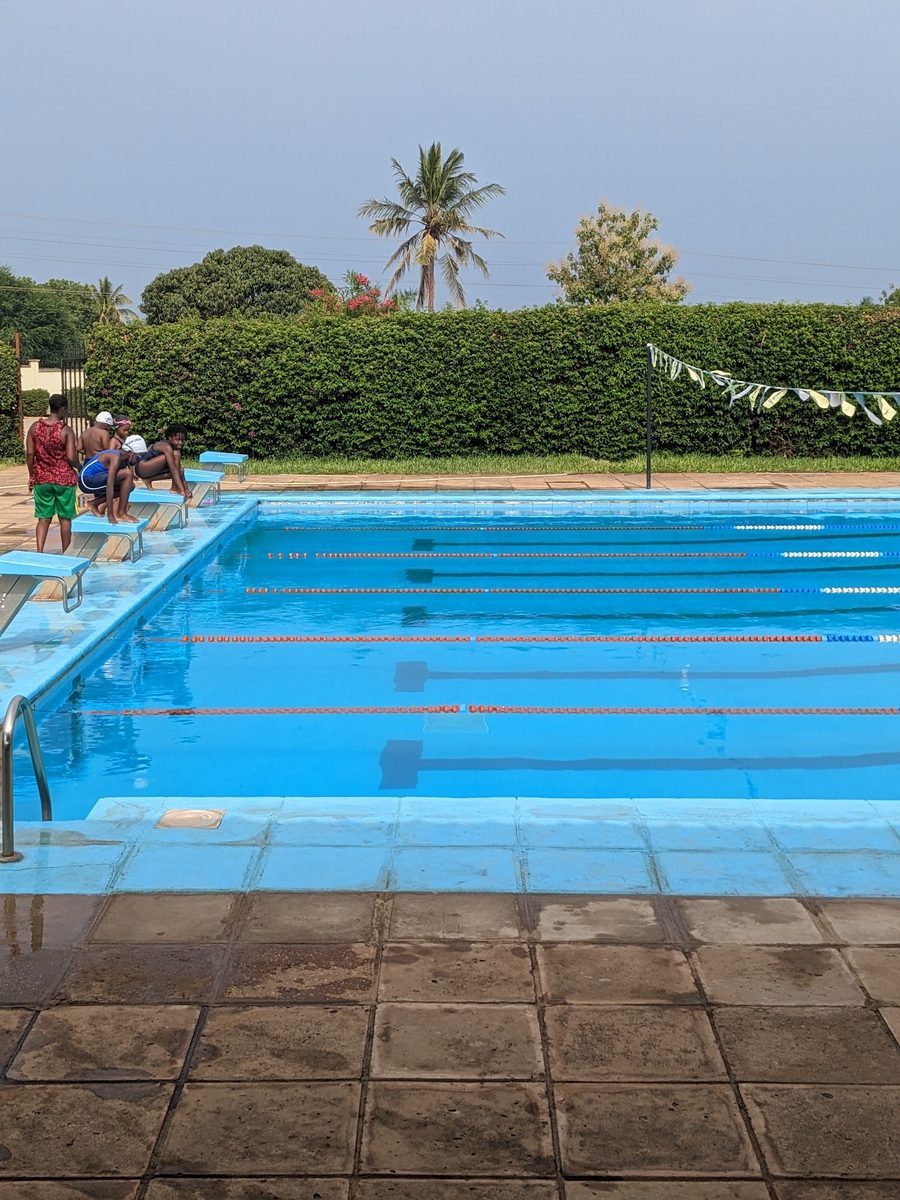
Haven of Peace Academy
Dar es Salaam · Tanzania
Born from missionary prayer in 1994, an Indian Ocean campus where a biblical worldview meets a tri-continental student body
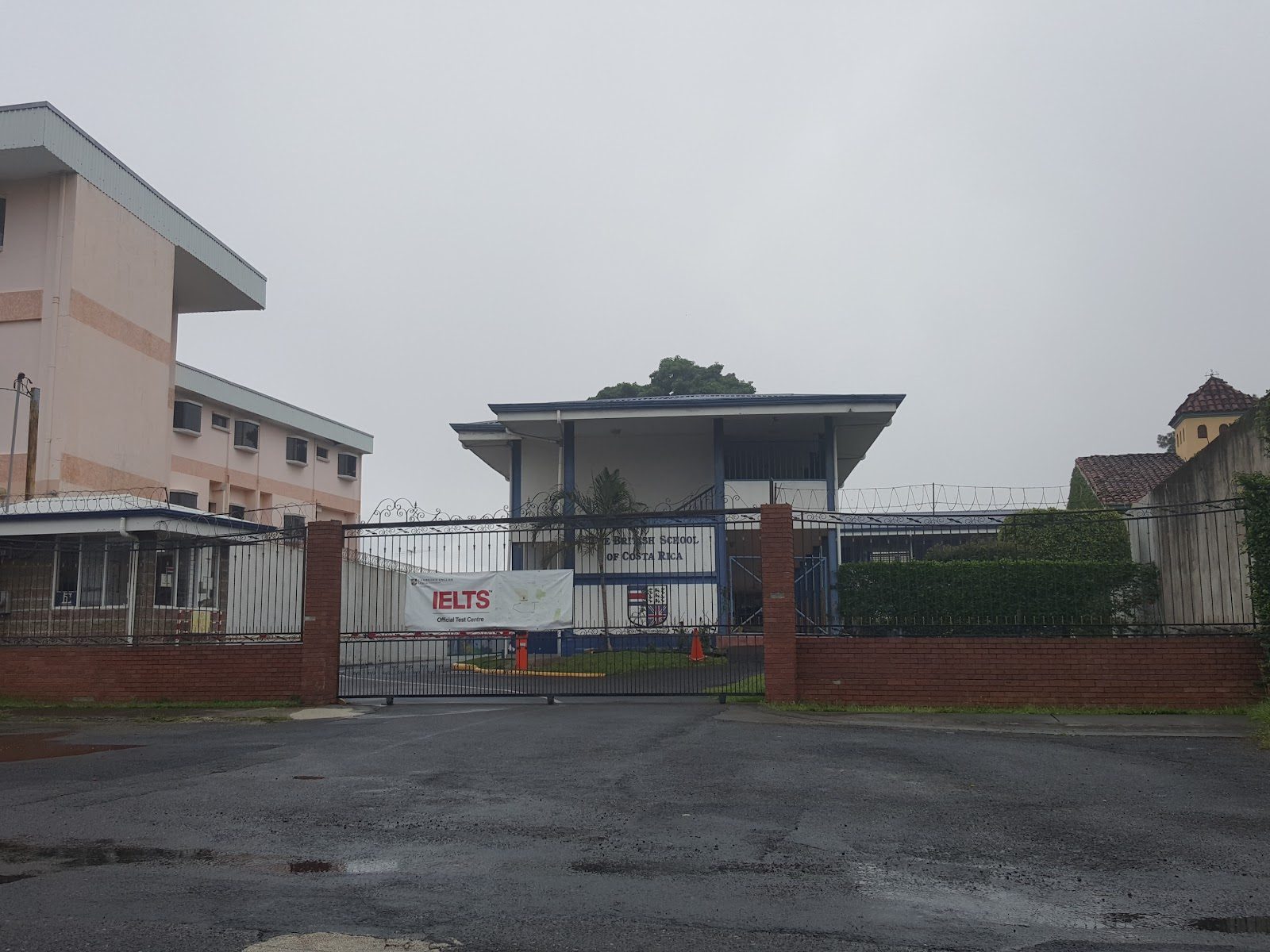
The British School of Costa Rica
San José · Costa Rica
Houses named for Arenal, Irazu, Barva and Poas frame a bilingual IB diploma taught equally in English and Spanish.
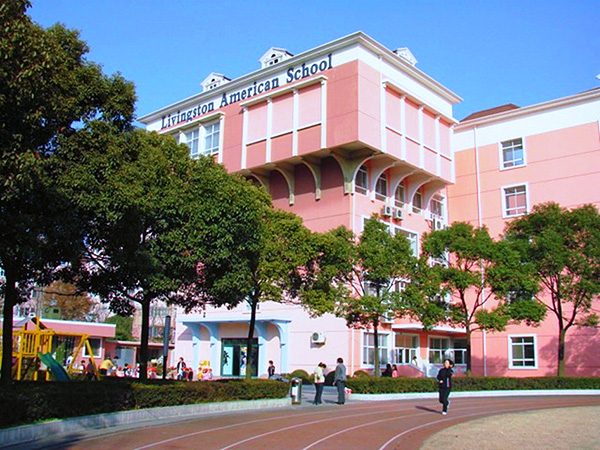
Livingston American School Shanghai
Shanghai · China
Founded by a former US congressman, this Changning day school pairs a California-aligned curriculum with AP rigor for Shanghai's expat families.

Santa Margarita Catholic High School
Rancho Santa Margarita · United States
In the Saddleback foothills, Orange County's only Catholic IB Diploma track meets a decade of CIF Commissioner's Cups.
Same country and curriculum — closest matches within ±10 points either way