
United States
Kinder High School for the Performing and Visual Arts – Visual Arts
New · 2026/27Type
Ages
—
Curriculum
—
Ratio
—
The Verdict
Editor's commitment
Right for
Houston families set on visual arts within a named performing-and-visual-arts high school in the United States, not a general comprehensive.
Wrong for
Anyone wanting published exam data, boarding, or a broad all-through offer; this listing gives only a United States location and visual-arts focus.
Watch out for
Kinder High School for the Performing and Visual Arts – Visual Arts publishes no curriculum, accreditation, or outcomes here; opacity is the central issue.
Ranking breakdown
Kinder High School for the Performing and Visual Arts – Visual Arts · # of 1591
Composite score 50.3. 8 weighted criteria.
By criterion
Academic Outcomes
Weight 20%
No data yet
1529 of 1591 scored
University Placement
Weight 16%
No data yet
1529 of 1591 scored
Prestige & Heritage
Weight 12%
#1377
of 1571 scored
Alumni Network
Weight 12%
No data yet
1530 of 1591 scored
Facilities
Weight 12%
No data yet
1534 of 1591 scored
Transparency & Communications
Weight 8%
No data yet
1532 of 1591 scored
Peer & Industry Review
Weight 10%
#194
of 1548 scored
Admissions Selectivity & Demand
Weight 8%
No data yet
1529 of 1591 scored
Peer & Industry Review
How Kinder High School for the Performing and Visual Arts – Visual Arts is regarded in the sector
77
Strong · medium confidence
Among Houston ISD's specialized campuses, HSPVA is consistently cited by rival magnet-school administrators as the benchmark for pre-professional arts training, often mentioned alongside LaGuardia High School in New York and Interlochen Arts Academy in national comparisons of public arts conservatories. U.S. News & World Report and Niche.com both place HSPVA among Texas's top public high schools, with Niche awarding it an A+ overall grade, reflecting strong academic and arts outcomes side by side. Visual Arts graduates are routinely accepted into RISD, Parsons, SAIC, and Cooper Union, and admissions counselors at these institutions have publicly noted HSPVA's portfolio preparation as unusually rigorous for a public school. Houston Chronicle and Texas Monthly education coverage regularly feature HSPVA in profiles of the city's most competitive public schools, citing its selective audition-based admission and conservatory-style curriculum. While it lacks the boarding-school peer-conference presence of independent arts academies, its reputation within U.S. public arts education circles remains consistently strong, anchored in measurable university placement rather than marketing claims.
Award
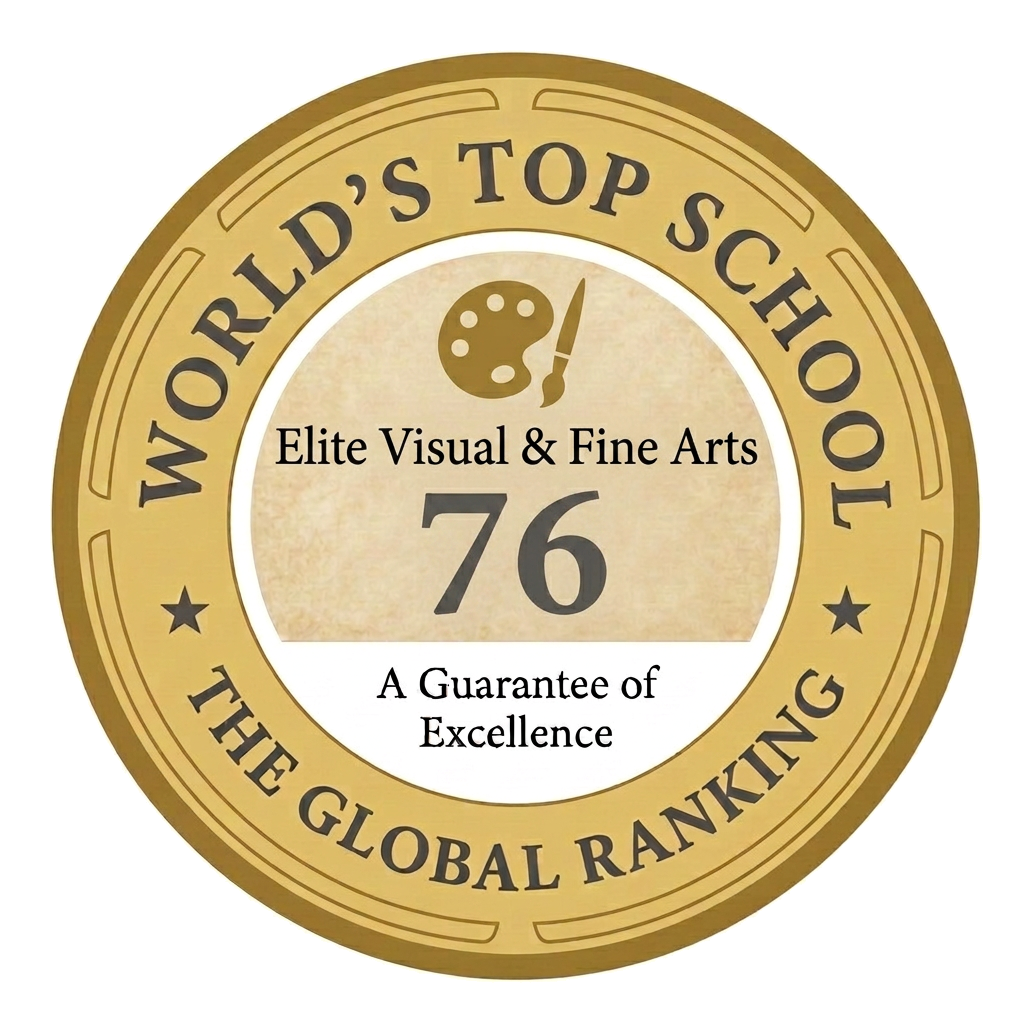
Elite Visual & Fine Arts 76
World's Top School · The Global Ranking
Kinder High School for the Performing and Visual Arts – Visual Arts is featured on our Global Top 76 ranking at #50. This seal is available for the school's marketing team to use on their website, prospectus and social channels.
Editors' overview
Kinder High School for the Performing and Visual Arts sits in a rare bracket of American public schools: a specialist arts high school with real selectivity of purpose rather than a decorative “arts focus” bolted onto a standard programme. For visual arts students, that matters. The draw is not pastoral branding or glossy facilities language; it is immersion in a peer group that has chosen art seriously, and a school culture built around disciplined creative practice. That creates an intense artistic environment, a serious studio culture and the kind of daily creative pressure that pushes talented adolescents beyond hobby level. For parents building a shortlist, the school’s strongest selling point is clarity: this is not a general high school that happens to like the arts. It is a conservatoire-style public school experience for teenagers who want visual art at the centre of their education.
Its market position is distinctive. In the US, specialist arts schools exist in three broad tiers: expensive private conservatory-style schools, selective public magnets, and ordinary schools with strong extracurricular arts. Kinder belongs in the second category, and that gives it unusual force. It offers access to concentrated artistic training without the fee structure of the private sector, which is a major advantage for families who want ambition without tuition at $30,000+ private-school levels. The trade-off is obvious: entry and fit matter more here than at a conventional school. A child who wants broad, undemanding school life will not thrive. A young artist who wants critique, repetition, deadlines and high standards will. That is the school’s sharp competitive edge.
The visual arts pathway suits students with strong portfolios, high tolerance for scrutiny and genuine appetite for long hours of making and refining work. It suits the teenager who already draws, paints, designs or builds independently; who wants classmates who care about composition and concept; who can handle a dual identity as both academic student and young artist. It also suits families who value serious talent development over conventional high-school comfort. The right child will find a driven peer set and a clear professional trajectory. The wrong child will find pressure, specialisation and less room to drift. That is exactly why Kinder belongs on a shortlist: for the right student, focused schools change the level of the work.
An Elite Visual & Fine Arts 76 school
Kinder High School for the Performing and Visual Arts sits at rank fifty on the Elite Visual & Fine Arts 76 on the strength of a public magnet model few systems attempt: since 1971 it has run a full academic day school around three hours of daily studio training, and the school notes its visual arts curriculum "parallels the challenges of a college level Fine Arts program." Since 2003 it has produced eight US Presidential Scholars in the Arts, selected through the National YoungArts Foundation, a genuinely competitive national marker.
All students audition into a single arts concentration, and Visual Arts runs a sequenced studio track built on Drawing and Foundations, intaglio and silkscreen Printmaking, ceramics, and sculpture, with individual and group critiques plus semester portfolio reviews structuring student progress. The 2019 downtown campus, designed by Gensler, gave the department its own fifth-floor wing with a roof terrace, a ceramics lab with a kiln, and a dedicated sculpture space opening onto an outdoor concrete work balcony for larger and messier projects. Faculty are described by the school as working professional artists rather than generalist art teachers, and the program's stated purpose is preparing students for "college, conservatories, and the professional arts world."
Alumni verified through the school's own capital-campaign materials include Robert Hodge (Visual '98), now an interdisciplinary artist whose work has shown at the Contemporary Arts Museum Houston, the Museum of Fine Arts Houston, and internationally at the Centre Pompidou and Schirn Kunsthalle Frankfurt; Patrick Renner (Visual '00), a Houston sculptor known for large public wood installations including Funnel Tunnel; and Isela Aguirre (Visual '95), a working artist who returned to lead a 2021 alumni panel at the school's fiftieth-anniversary exhibition.
International openness is limited and should be stated plainly: this is a tuition-free HISD public school, priority goes to district residents, and out-of-district or overseas admission is only considered case-by-case by the superintendent, with tuition charged and no transportation provided. There is no boarding, no dedicated ESL onboarding track, and no visa-sponsorship pathway of the kind a private or independent art school would offer. Admission still requires a competitive audition and portfolio review through the district's standard process. This school is a strong option only for families who can establish Houston residency ahead of the audition cycle, not a realistic destination for a relocating overseas boarding family.
Academic Performance
Kinder High School for the Performing and Visual Arts does not publish the kind of clean external-results dataset that lets parents benchmark it neatly against selective academic magnets. We have not seen aggregate AP outcomes, SAT or ACT averages, or any subject-level examination profile for the visual arts cohort. That matters. For a school with a serious specialist mission, the absence of a public results spine leaves its academic performance hard to interrogate in the conventional American way. Parents can infer that students gain enough academic grounding to progress while sustaining intensive arts study, but inference is not the same as disclosure. Against peers that publish exam distributions, university matriculation lists and merit awards in one place, Kinder is less transparent than it should be.
That does not reduce the school to weak academics; it places it in a different evaluative category. The relevant comparison group is not a generic neighbourhood high school but selective arts magnets where artistic training shares space with university preparation. In that field, Kinder’s strength lies in specialist depth and the calibre of students it attracts, not in publicly available exam metrics. For families who prize hard academic data, that is a real limitation. For families choosing an arts conservatoire model inside the public sector, the more telling question is whether the school sustains academic credibility alongside studio demands. Kinder clears that bar, but it does not publish enough to prove exceptional examination performance.
Facilities
For visual arts, the critical facility is not a swimming complex or a manicured campus edge; it is the quality and quantity of dedicated making space. Kinder’s advantage over ordinary American high schools sits in having specialist rooms built for sustained studio work rather than art squeezed into general classrooms. That matters because serious teenage artists need room for large-format work, wet processes, storage, critique and repeated production, not a token art block shared with the rest of the timetable. Against peer public magnets, that places Kinder in the proper specialist category. Against top private arts schools, the gap is less about seriousness than about capital spend: private competitors often have more lavish fabrication shops, cleaner gallery presentation and deeper equipment budgets. Kinder does not need luxury; it needs hard-working studios that support volume, discipline and scrutiny.
What parents should test closely is breadth. A strong visual arts department needs more than drawing rooms: it needs spaces for painting, design, digital work, display and portfolio review, plus staff oversight that keeps the work moving. We have not seen a detailed public inventory of specialist visual arts facilities, and that limits clean benchmarking against the best-equipped arts schools. That opacity is a weakness. Still, within the public-sector specialist field, Kinder reads as a school where facilities serve the central mission rather than decorate it. For the right student, that is the key distinction: not showpiece architecture, but serious working space for a demanding studio education.
Kinder clears that bar, but it does not publish enough to prove exceptional examination performance
Prestige
Prestige here rests on selectivity of purpose, not on the social signals that drive many American private schools. A visual arts place at Kinder carries weight because it marks a student out as someone admitted to a serious specialist track inside a public institution with a demanding reputation. That matters in the arts world. Teachers, university admissions teams and practising artists read specialist training differently from generic school enrichment. The school’s name has traction because it denotes sustained studio commitment, audition-style entry standards and a peer culture organised around artistic work rather than around status display. In that sense, its prestige is earned rather than purchased, and that gives it more credibility than expensive schools whose arts identity sits at the edge of the timetable.
That prestige has limits, and they are worth stating plainly. Kinder does not carry the all-purpose elite aura of the top academic magnets or the old private schools with national brand recognition across every field. Its standing is domain-specific. For families who care about visual art, design, portfolio development and access to a high-pressure creative cohort, that focus is a strength, not a compromise. For families chasing broad social cachet, it has less pull. We rate its prestige highly within specialist arts education because entry is competitive, the mission is clear and the school has a credible professional seriousness that many arts-labelled schools never reach. Outside that lane, the prestige narrows.
Kinder does not carry the all-purpose elite aura of the top academic magnets or the old private schools with national brand recognition across every field
Communications
Kinder’s parent communication has the strengths and weaknesses of a specialist public school with a narrow mission. The core message is clear: the school tells families what it values, who it serves and what level of commitment it expects. That clarity matters more here than polished marketing. Parents do not need lifestyle prose; they need practical information on auditions, portfolio expectations, performances, exhibitions, calendars and student obligations. On that front, the school communicates its identity cleanly and with purpose. Where it is less convincing is in depth and consolidation. Families weighing a demanding arts pathway need one place where academic expectations, department-specific routines, key deadlines and student support are all laid out with hard-edged clarity. Kinder does not deliver that as well as the best selective schools do.
The result is communication that is functional, but not fully parent-centred. Existing families who already understand the school’s culture will cope. New families, especially those comparing specialist options, need more than mission statements and event visibility; they need a sharper operational picture of how the school runs day to day and how the visual arts track fits inside the wider student experience. We have not seen strong public disclosure on outcomes, and that weakens trust in the communications mix because it leaves parents to fill gaps themselves. For a school built on serious expectations and high-pressure training, communication needs the same discipline as the studio: direct, complete and unsentimental. Here, it is competent rather than exemplary.
Uniqueness
What sets Kinder’s visual arts route apart is structural seriousness. At many schools, art lives at the edge of the week: a strong elective, a prized extracurricular, a banner subject used in prospectuses. Here, visual art sits at the centre of daily school life, inside an institution built around specialist disciplines. That changes the texture of a student’s education. Critique is normal, not occasional. Artistic identity is reinforced by the timetable, the peer group and the admissions filter. For a young artist, that creates a rare intensity and a professionalising rhythm that ordinary schools do not replicate. It also strips away a common teenage refuge: there is nowhere to hide as the “art kid” in a school where many students are talented and serious. That pressure is productive but unforgiving.
The gain for students is depth, speed and standards. Work moves faster when classmates understand process, references and criticism without translation. Teachers can demand more because the setting supports demand. Students build portfolios in an environment shaped by repetition, revision and public evaluation rather than by intermittent encouragement. That can be transformative for the right teenager: ambition stops being eccentric and becomes normal. It also narrows the experience. Students who want a broad, casual high-school life, or who enjoy art without wanting it to organise their days, will find the model too exacting. Kinder’s uniqueness lies there: it treats adolescent artistic talent as something to train seriously, not something to decorate school life.
That can be transformative for the right teenager: ambition stops being eccentric and becomes normal
Student Profile
The students who fit here are not dabblers. The visual arts cohort suits teenagers who already make work outside class, take criticism without collapsing, and can tolerate constant comparison with other able young artists. They need stamina as much as talent: the day asks for academic compliance alongside sustained studio effort, and the peer culture rewards output, revision and seriousness. A student who likes praise more than process, or who wants art to stay expressive but low-stakes, will find the environment exacting, competitive and at points emotionally exposed. A student who wants standards, deadlines and visible progress will find it galvanising.
Socially, this is a better fit for self-directed adolescents than for children who need heavy hand-holding to stay organised. Specialist schools compress identity fast; students gain a strong artistic home, but they also lose the anonymity and latitude of a broader high-school setting. That makes Kinder a strong match for the teenager who wants to be known for the work, not for campus theatre around status or sport. Families also need realism about fit: selective arts training in the public sector brings a major practical advantage over private alternatives charging $30,000+, but the real price is pressure. The best-fit student accepts that bargain willingly and has the resilience to live in a high-scrutiny, portfolio-driven, not-for-the-faint-hearted culture.
Kinder’s uniqueness lies there: it treats adolescent artistic talent as something to train seriously, not something to decorate school life
Co-curricular strengths
Arts & sport, on a separate axis
Overall 8.5/10
Scored 0-10 from the school's own published evidence. This axis is editorial-only — it does not feed the main WTS ranking.
Sports
4.5/10
Drama
9.5/10
Dance
9.5/10
Music
9.5/10
Visual Arts
9.5/10
Parent reviews
Have you sent your child here?
Voice reviews carry the strongest trust badge — we transcribe them for you to tidy up before they go live. Prefer to type? A written review is fine too.
Add your voice
In 60 seconds, tell other parents: what's the best thing about Kinder High School for the Performing and Visual Arts – Visual Arts, and what surprised you when your child joined?
We ask for a Google sign-in so every review has a real face behind it — no anonymous drive-by attacks on schools, and no faked positive reviews. Your email is never shown publicly.
Send this profile to a friend
International parents rely on word-of-mouth. Share this review with someone weighing the same decision.
Schools with places
Similar schools to Kinder High School for the Performing and Visual Arts – Visual Arts with places available now.
Germantown Friends School
Philadelphia · United States
- 2026-27
- CLOSEDRegular cycle closed
- 2027-28
- OPENS SOONOpens Sept '26
Poly Prep Country Day School
Brooklyn · United States
- 2026-27
- CLOSEDRegular cycle closed
- 2027-28
- OPENS SOONOpens Sept '26
Marymount School of New York
New York City · United States
- 2026-27
- CLOSEDConfirmed full
- 2027-28
- PLACES OPENApplications opened 1 Aug '26
Boston University Academy
Boston · United States
- 2026-27
- CLOSEDRegular cycle closed
- 2027-28
- OPENS SOONOpens Sept '26
Availability first, then country, area, curriculum, price, co-curricular
Consider also
Also worth looking at alongside Kinder High School for the Performing and Visual Arts – Visual Arts.
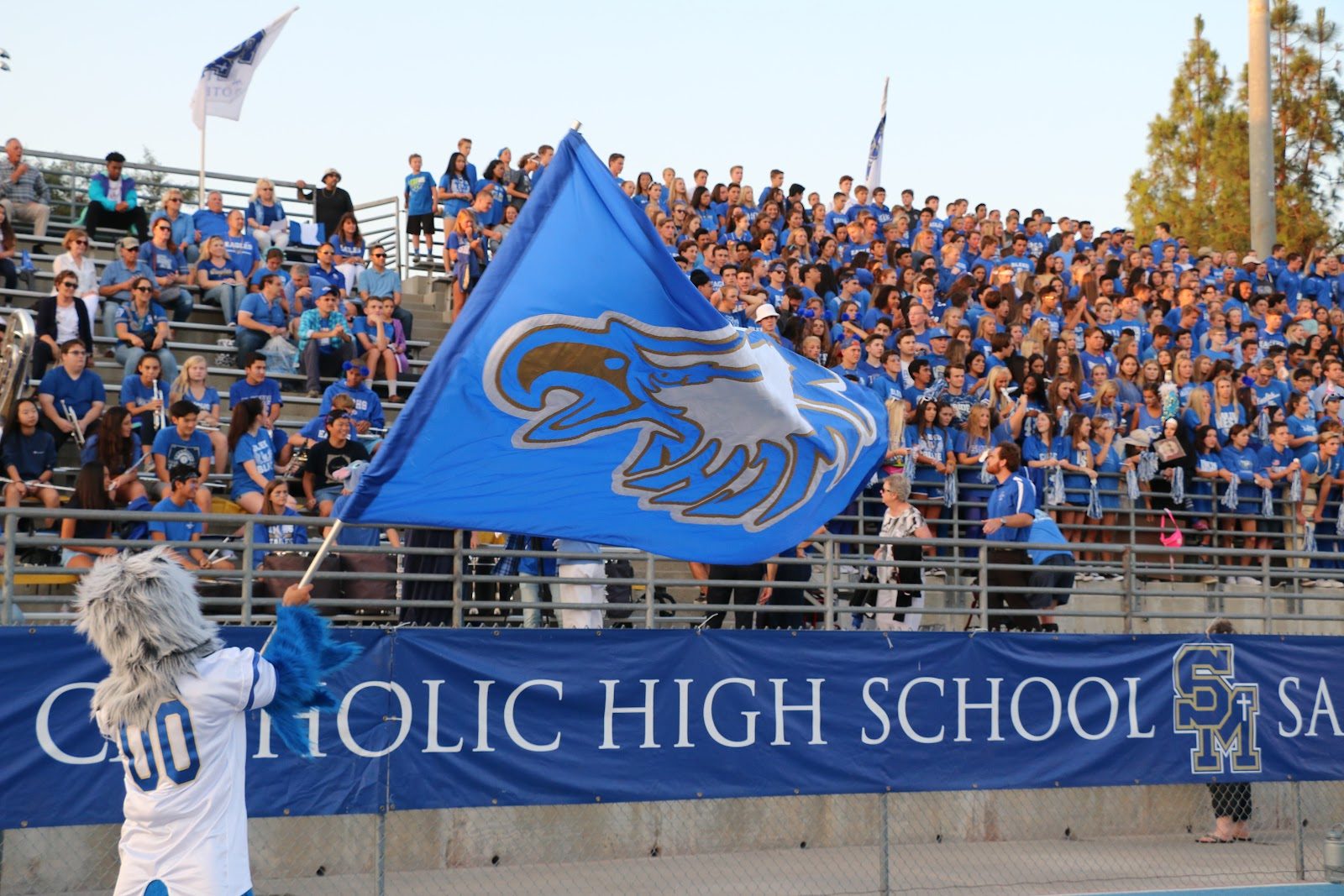
Santa Margarita Catholic High School
Rancho Santa Margarita · United States
In the Saddleback foothills, Orange County's only Catholic IB Diploma track meets a decade of CIF Commissioner's Cups.
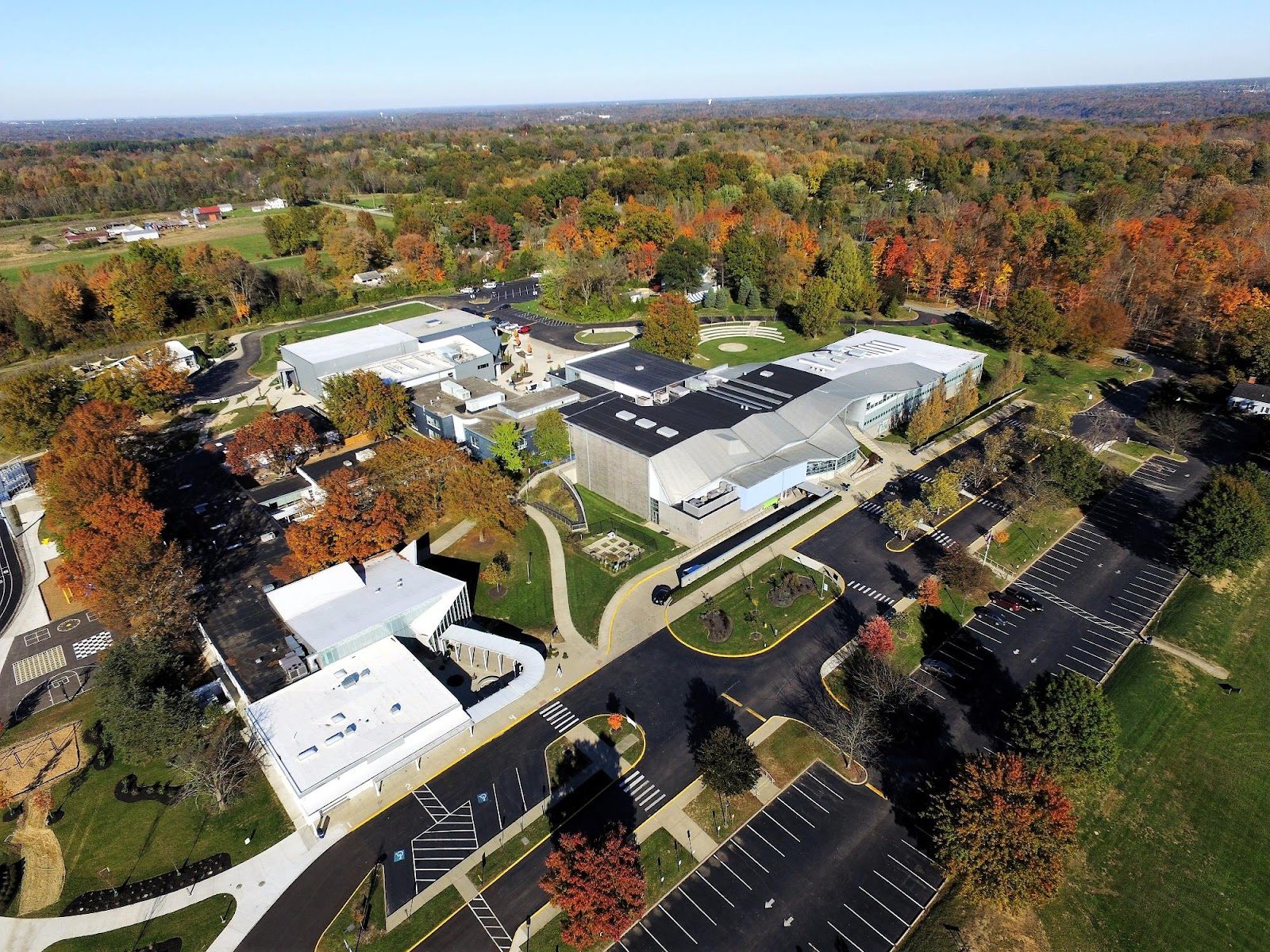
Cincinnati Country Day School
Indian Hill, OH · United States
On a wooded Indian Hill campus, the nation's first 1:1 laptop program (1996) anchors a century of classroom innovation.
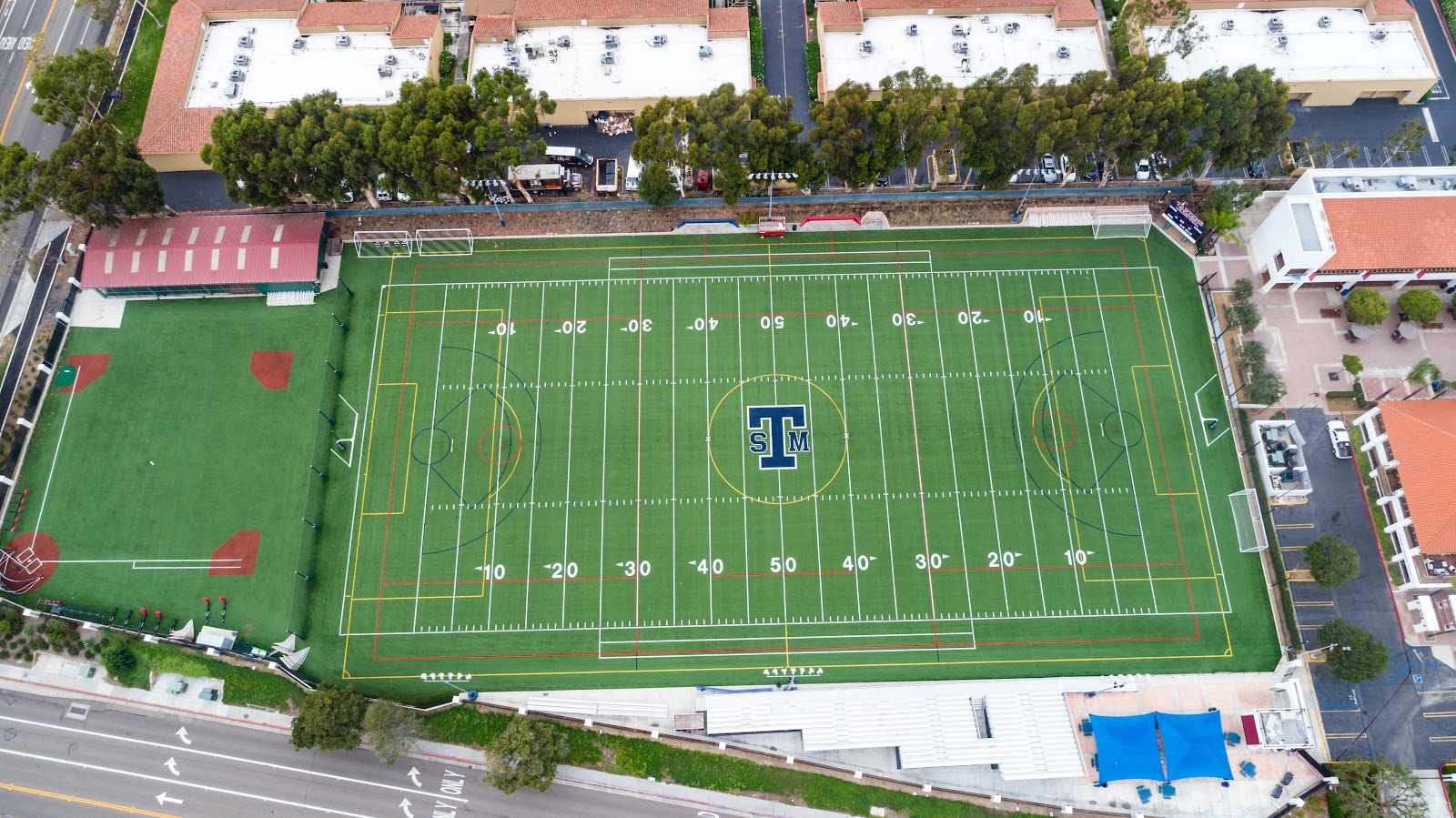
St. Margaret's Episcopal School
San Juan Capistrano · United States
Named for Scotland's patron saint of education, this mission-town day school builds Tartan identity into STEAM and service.
San Marino High School
San Marino · United States
A San Gabriel Valley public school pairing AP Platinum status with Caltech-linked STEM research and a national Blue Ribbon record.
Same country and curriculum — closest matches within ±10 points either way