Poland
Państwowe Liceum Sztuk Plastycznych im. Józefa Szermentowskiego, Kielce
New · 2026/27Type
Ages
—
Curriculum
—
Ratio
—
The Verdict
Editor's commitment
Right for
Young artists in Kielce who want a state fine arts liceum, not a generic academic school in Poland.
Wrong for
Families outside Kielce expecting published international curricula or boarding; Państwowe Liceum Sztuk Plastycznych lists neither for this Poland campus.
Watch out for
This Kielce school publishes no verified exam outcomes, university destinations or accreditations here; parents must inspect the art training firsthand.
Ranking breakdown
Państwowe Liceum Sztuk Plastycznych im. Józefa Szermentowskiego, Kielce · # of 1591
Composite score 51.2. 8 weighted criteria.
By criterion
Academic Outcomes
Weight 20%
No data yet
1533 of 1591 scored
University Placement
Weight 16%
No data yet
1529 of 1591 scored
Prestige & Heritage
Weight 12%
#1185
of 1580 scored
Alumni Network
Weight 12%
No data yet
1530 of 1591 scored
Facilities
Weight 12%
No data yet
1540 of 1591 scored
Transparency & Communications
Weight 8%
No data yet
1547 of 1591 scored
Peer & Industry Review
Weight 10%
No data yet
1564 of 1591 scored
Admissions Selectivity & Demand
Weight 8%
No data yet
1529 of 1591 scored
Peer & Industry Review
How Państwowe Liceum Sztuk Plastycznych im. Józefa Szermentowskiego, Kielce is regarded in the sector
Insufficient peer signal
We couldn't find enough independent third-party evidence to score this school's peer & industry standing with confidence. It doesn't mean the school isn't well regarded — only that public reputation sources we trust don't yet cover it. This axis is left blank for now and the composite score is median-imputed from the other six categories.
Award
Elite Visual & Fine Arts 76
World's Top School · The Global Ranking
Państwowe Liceum Sztuk Plastycznych im. Józefa Szermentowskiego, Kielce is featured on our Global Top 76 ranking at #70. This seal is available for the school's marketing team to use on their website, prospectus and social channels.
Editors' overview
Państwowe Liceum Sztuk Plastycznych im. Józefa Szermentowskiego in Kielce sits in a narrow but important segment of the Polish market: the public specialist art secondary school. That matters. Parents are not choosing a broad academic all-rounder with a strong art department; they are choosing an institution built around visual arts training from the start. Its distinctiveness lies in that clear vocational seriousness. For the right student, that focus gives shape, discipline and purpose in a way a general liceum rarely can. For the wrong student, it closes doors early. This belongs on a shortlist for families who want a school with *art at the centre rather than at the margins*.
Its appeal rests on specialisation, not breadth. A school of this type offers an education directed towards studio practice, technique, artistic development and sustained portfolio building. That gives ambitious young artists something valuable: time. Time to make work, time to be critiqued, time to test commitment. In market terms, this is not a prestige international school play and not a conventional academic route dressed up with creative branding. It is a state art school with a serious studio culture and an identity tied to Polish public arts education. Parents who value structured artistic training and a peer group that shares that commitment will see the attraction at 16+ level. Parents who want maximum subject range, an English-medium setting, boarding, or a hedge against a late change of mind will find the model restrictive.
The school will suit a student who already draws, makes, designs or paints compulsively; who wants criticism rather than constant praise; and who gains energy from specialist teaching and like-minded peers. It suits teenagers with an early, stubborn sense of direction. It does not suit the merely curious. Specialist schools demand commitment, resilience and tolerance for a narrower path. The best candidates will want immersion, not variety; depth, not sampling; and a school day shaped by artistic work rather than by the broadest possible academic menu. That is why it earns a place on a shortlist: for the young artist, it offers focus with consequences. For everyone else, there are safer options.
An Elite Visual & Fine Arts 76 school
Panstwowe Liceum Sztuk Plastycznych im. Jozefa Szermentowskiego in Kielce, Poland, sits at rank seventy on the Elite Visual & Fine Arts 76 on the strength of eight uninterrupted decades of specialist art training that has produced a disproportionate share of Poland's Academy of Fine Arts professoriate. The school, founded in 1945 and marking its eightieth anniversary in 2025, has grown from a wartime crafts workshop into what alumni themselves describe as the country's benchmark liceum plastyczne, with more than 300 students in thirteen classes across its two constituent schools.
The specialism here is a genuine five-year plastic-arts cycle, not a bolted-on elective: candidates sit a practical entrance exam in drawing, painting and spatial composition alongside an oral art-history component, and study proceeds through dedicated studios in graphic techniques, sculptural techniques, artistic ceramics, painting and gilding techniques, artistic textiles and artistic furniture-making, with students choosing their specialization after the second year. Core teaching in art history, drawing and painting, sculpture, design fundamentals, multimedia design and photography and film runs alongside, delivered by a faculty of more than seventy teachers, roughly forty of them in art-specific subjects, under director Maria Kowalczyk, herself a graduate of the school. Training culminates in a defended diploma project plus the matura, explicitly built to feed Polish art-academy entrance exams; no verified pipeline to RCA, Slade, Central Saint Martins or comparable Western institutions could be confirmed, and this ranking makes no claim on that front.
The alumni roll is where the school's case is strongest. Marian Czapla became a professor of painting at the Warsaw Academy of Fine Arts and co-founded the Simplex S4 art group; Wincenty Kucma and Antoni Janusz Pastwa both became sculpture professors, with Pastwa's Apollo quadriga now crowning the facade of Warsaw's Grand Theatre. Leszek Madzik, founder of the Scena Plastyczna KUL visual theatre, was honored by Pope Francis with the Pro Ecclesia et Pontifice medal in 2014.
International openness is limited and should be assessed honestly. Admission requires a Polish primary-school completion certificate, an oral exam pegged to the Polish national curriculum, and a health clearance, with a hard cutoff at age seventeen; instruction is entirely in Polish with no ESL track identified. As a public state school it charges no tuition, and boarding is available in shared rooms for a modest monthly fee plus a daily meal rate, but there is no dedicated international admissions office or visa-handling service. This is realistically a destination for families whose children are already Polish-speaking or committed to full immersion well before application season each spring, not a plug-and-play overseas pipeline; prospective parents should contact the school directly at least a year ahead to confirm eligibility.
Academic Performance
Public exam performance is the decisive question for a specialist school of this kind, and the difficulty here is simple: the school does not publish aggregate examination data in the public domain. We have not seen consolidated matura outcomes, subject-by-subject score distributions, pass rates, value-added measures or destination figures. That leaves parents without the basic benchmarks needed to judge academic strength against other Polish secondary schools, let alone against other specialist art licea. In editorial terms, that is a real weakness. Specialist focus does not excuse opaque results reporting. If a school expects families to commit early to a narrower academic path, it should publish hard outcomes.
Relative to peers, the school fits the category where studio training and artistic development carry more weight than league-table visibility. That does not tell us whether external results are strong, middling or weak. It tells us only that comparison needs to be done with care: a specialist art school should be judged against other art schools first, and against general academic licea second. Even on that narrower basis, the absence of published data makes the picture frustratingly incomplete. Parents should ask for the last 3 years of matura performance, pass rates in core subjects, results in practical diploma components, and progression into art academies or design courses. Without that, academic performance remains opaque rather than proven.
Facilities
For a specialist public art school, the core question is not whether it has a swimming pool or a glossy sports hall. It is whether students get the right working spaces: studios with enough room to make large pieces, drawing rooms that support sustained observational work, workshops for material processes, and exhibition areas where work leaves the classroom and faces scrutiny. That is the baseline here. A school in this category needs practical art rooms first and conventional prestige facilities second. Against peer schools in Poland’s public arts sector, that focus is entirely right and far more useful than a campus padded out with amenities that do little for artistic development. What we do not have is a clear public account of the specialist estate itself: no detailed room list, no workshop inventory, no photography that lets parents judge scale, upkeep or technical range. That lack of disclosure is a real limitation.
Compared with stronger specialist competitors, the gap is not the absence of luxury; it is the absence of precision. The best art licea publish enough detail for families to assess whether students work in printmaking, sculpture, design and studio practice in spaces that are fit for serious training. Here, parents need to ask blunt questions. How many dedicated studios are there? What equipment is available? How much independent workspace do older pupils get? Is student work displayed in a way that creates a proper critical culture? In this market, facilities matter less as a status symbol than as the engine of daily practice. On that measure, the school’s public picture remains too opaque.
Its distinctiveness lies in that clear vocational seriousness
Prestige
The school carries niche prestige, not broad social cachet. In Poland, a public specialist art liceum has standing with families who value disciplined studio training and with students targeting art and design pathways. That standing is real, but it is narrow. This is not the kind of school whose name signals elite general education, international polish or automatic status outside its field. Its reputation rests on membership of a serious public arts tradition and on the selectiveness implied by a specialist route taken young. For the right audience, that gives the school credible artistic weight. For everyone else, it reads as a vocational choice made early.
That is why the prestige rating sits in the middle rather than at the top. Specialist identity gives distinction; opaque published outcomes hold it back. Prestige in education comes from two things: institutional name recognition and visible results. The school has the first within its segment, but not enough of the second in the public domain. Without clear destination data, competition results, major exhibitions, or aggregate exam performance, parents cannot treat the school as unquestionably top-tier. What it does have is seriousness of purpose and the status that follows from a dedicated public arts institution. That earns respect, not glamour; earned regard, not automatic prestige.
That is why the prestige rating sits in the middle rather than at the top
Communications
Parent communication looks functional rather than polished. This is a public specialist school, and its outward style follows that pattern: notices, schedules, administrative updates and practical information take priority over narrative, explanation or parent-facing guidance. That is not a flaw in itself. Many state schools communicate perfectly well in a plain register. The issue is depth. Parents choosing a specialist route need more than calendar changes and official announcements; they need a clear account of expectations, workload, studio demands, assessment structure and progression beyond school. Here, the public picture does not give enough of that. Communication covers the basics, but it does not build a strong sense of partnership with families making a high-commitment choice.
Effectiveness, then, is mixed. For existing parents who already understand the Polish state-school system and the logic of arts education, the school’s communication may be sufficient: direct, formal and transaction-led. For families comparing options, especially those unfamiliar with specialist art schooling, it is too thin. We have not seen the kind of published parent information that answers the questions people actually ask before committing: how critique works, how much independent work students carry, what equipment students need, how performance is tracked, or where graduates go next. In a mainstream school that gap is inconvenient. In a narrow-track art school, it is more serious than that. Better communication would not need glossy branding. It would need clarity, regularity and hard information.
Uniqueness
What sets this school apart is not novelty but concentration. It takes a part of adolescence that many schools treat as an extracurricular interest and makes it the organising principle of the week. That changes the student experience in concrete ways: more time spent making, more exposure to correction, more pressure to develop technical control, and a peer group selected by shared intent rather than broad academic fit. In a general secondary school, the young artist fights for hours, space and seriousness. Here, art gets first claim. That creates a clear professional rhythm early on. It also strips away illusion. Students find out fast whether they want the discipline, repetition and scrutiny that serious visual training demands. For committed teenagers, that is hugely valuable.
The second point of difference sits in the public-school context. This is specialist arts education without the international-school packaging or the private-school fee logic. That gives it a harder, less decorative identity. The value lies in immersion and standards, not polish. Students gain sustained practice, specialist critique and the social benefit of working among others who care about the same thing with unusual intensity. They also accept a trade-off: a narrower route and fewer soft exits if motivation fades. That is the school’s uniqueness in plain terms. It offers purpose before breadth, and for the right student that is not a compromise but an advantage won at 16+.
Józefa Szermentowskiego in Kielce sits in a narrow but important segment of the Polish market: the public specialist art secondary school
Student Profile
The student who fits here has already moved past casual interest. This school suits teenagers who draw in their spare time without being told, who tolerate long hours on one piece, and who do not collapse under critique. They need patience, visual discipline and a taste for repetition: the willingness to redraw, rework and start again until the result holds up. A student who wants a wide menu of school identities — athlete one week, actor the next, scientist after that — will chafe. A student who wants art to dominate the timetable will feel properly at home. The social fit matters too. Specialist schools gather young people with a single-minded streak. That can be energising, but it can also be intense.
This is also a school for students who can live with early commitment. The right applicant has enough self-knowledge, even at 16+, to accept a narrower route in exchange for deeper training. Families need to be honest about temperament. The best fit is resilient, self-motivating and open to correction, not hungry for constant reassurance. Students who need broad academic optionality or a soft, low-pressure environment will find the culture hard going. Those who want immersion, standards and a peer group that takes making work seriously will get something valuable and exacting. In plain terms, this suits the driven young artist, not the merely creative child.
For the right student, that focus gives shape, discipline and purpose in a way a general liceum rarely can
Co-curricular strengths
Arts & sport, on a separate axis
Overall 5.7/10
Scored 0-10 from the school's own published evidence. This axis is editorial-only — it does not feed the main WTS ranking.
Sports
4.5/10
Drama
5/10
Dance
4.5/10
Music
5/10
Visual Arts
9.5/10
Parent reviews
Have you sent your child here?
Voice reviews carry the strongest trust badge — we transcribe them for you to tidy up before they go live. Prefer to type? A written review is fine too.
Add your voice
In 60 seconds, tell other parents: what's the best thing about Państwowe Liceum Sztuk Plastycznych im. Józefa Szermentowskiego, Kielce, and what surprised you when your child joined?
We ask for a Google sign-in so every review has a real face behind it — no anonymous drive-by attacks on schools, and no faked positive reviews. Your email is never shown publicly.
Send this profile to a friend
International parents rely on word-of-mouth. Share this review with someone weighing the same decision.
Schools with places
Similar schools to Państwowe Liceum Sztuk Plastycznych im. Józefa Szermentowskiego, Kielce with places available now.
Availability first, then country, area, curriculum, price, co-curricular
Consider also
Also worth looking at alongside Państwowe Liceum Sztuk Plastycznych im. Józefa Szermentowskiego, Kielce.
International School of Poznań
Poznań · Poland
Poznan's original IB Diploma authorization, now closing in on a full PYP-MYP-DP continuum via its own induction year for newcomers.
Lycée Français de Varsovie
Warsaw · Poland
Founded in 1919 as a diplomatic bridge between Paris and a newly independent Poland, its Baccalaureate classrooms still run on trilingual rigor.
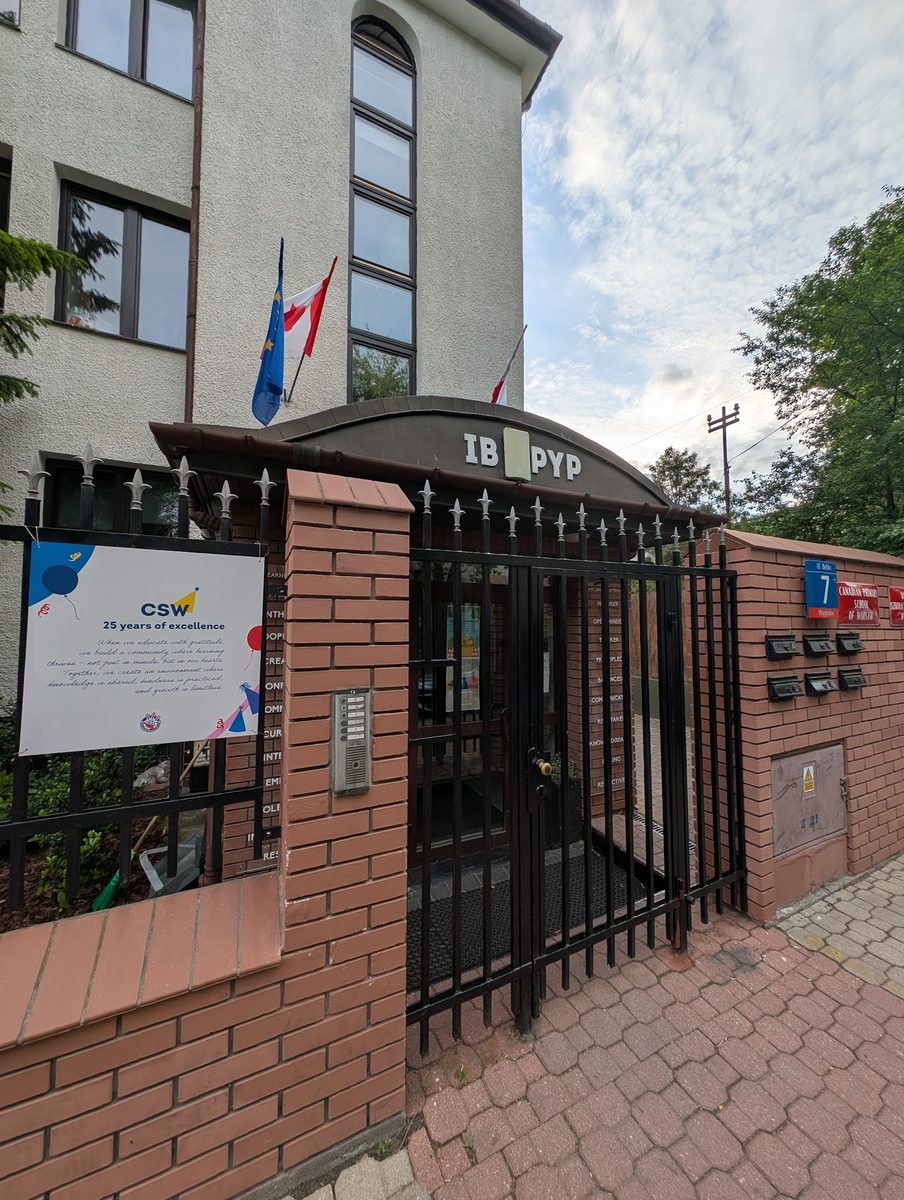
Canadian School of Warsaw
Warsaw · Poland
In Warsaw's Mokotow district, a Canadian-founded IB Primary Years school pairs Polish curriculum rigor with English-Polish-French fluency.
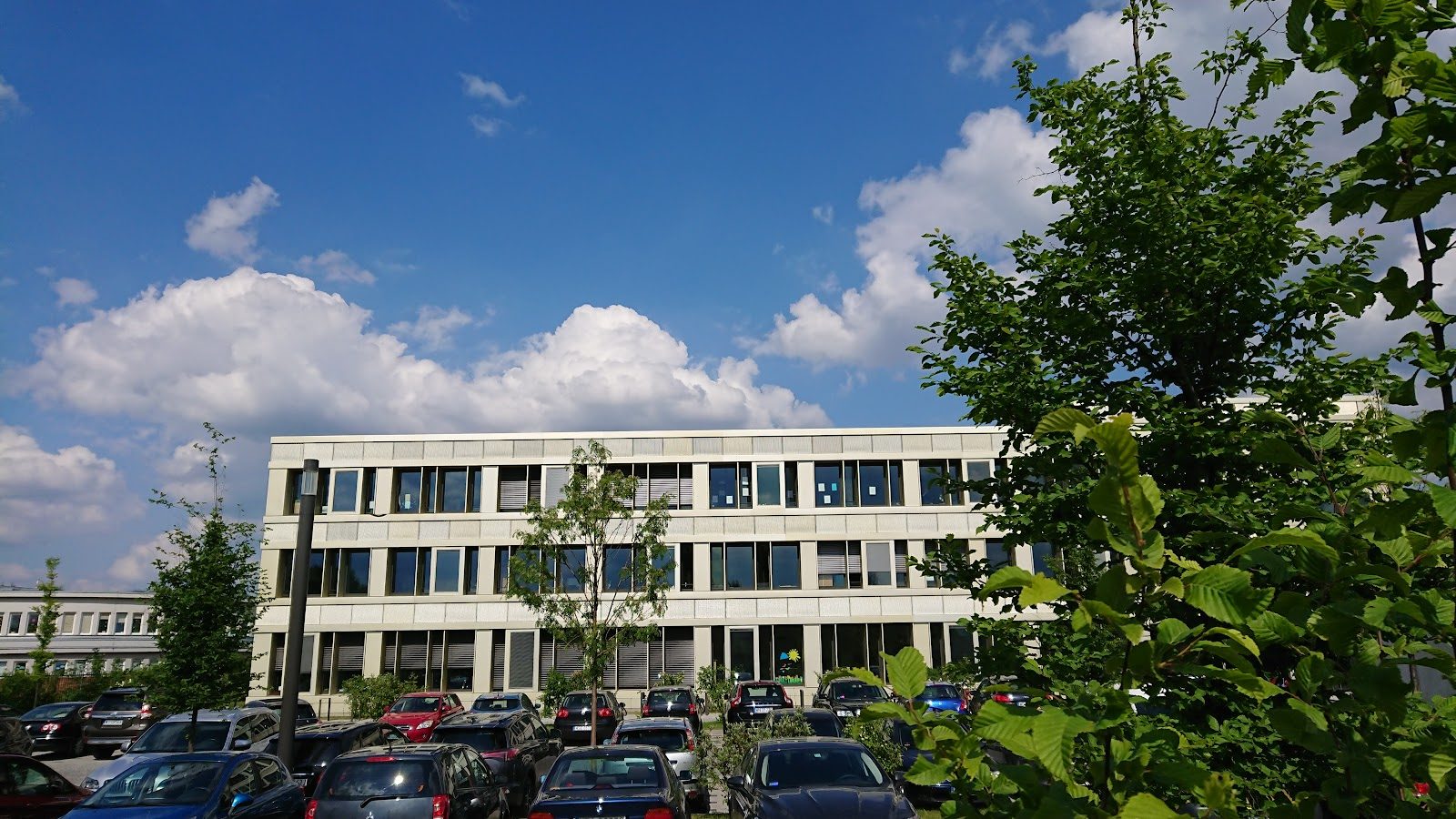
Willy Brandt German School
Warsaw · Poland
Poland's only German Auslandsschule, pairing Abitur rigor with a namesake built on Cold War reconciliation
Same country and curriculum — closest matches within ±10 points either way