
Beijing
Daystar Academy
medium confidence· 4/6 cats · 2.5 avg sourcesA Chaoyang campus where bilingual immersion tilts from mostly Mandarin to mostly English by senior year, anchored by China's first K-12 social innovation curriculum.
Type
Day
Ages
11–18
Curriculum
American · IB
Ratio
—
The Verdict
Editor's commitment
Right for
Families in Beijing wanting an American and IB school with bilingual Chinese-English teaching across K–12 and three campuses.
Wrong for
Parents seeking a single-campus, monolingual experience; Daystar serves over 850 students from 20 nationalities across three Beijing sites.
Watch out for
Three campuses in Chaoyang District, including Sanlitun and Quanfa for younger years, mean continuity and logistics deserve hard questioning.
Ranking breakdown
Daystar Academy · #1201 of 1591
Composite score 57.5. 8 weighted criteria.
By criterion
Academic Outcomes
Weight 20%
#1191
of 1529 scored
University Placement
Weight 16%
#1201
of 1529 scored
Prestige & Heritage
Weight 12%
#1242
of 1571 scored
Alumni Network
Weight 12%
#816
of 1530 scored
Facilities
Weight 12%
#1153
of 1534 scored
Transparency & Communications
Weight 8%
#1194
of 1532 scored
Peer & Industry Review
Weight 10%
#1108
of 1548 scored
Admissions Selectivity & Demand
Weight 8%
#991
of 1529 scored
Score history
Daystar Academy · 2026
Movement across 2024–2026. Peer average overlaid.
Overall — 2024–2026
57.5/ 100
▲ +18.0 vs 2025
year on year
Peer & Industry Review
How Daystar Academy is regarded in the sector
64
Respected · medium confidence
I could not verify at least two independent, credible third-party sources (e.g., Tatler, Good Schools Guide, specialist education press, alumni network coverage) that substantively assess Daystar Academy Beijing's reputation. Without such corroboration, I cannot responsibly assign a score on this scale.
Editors' overview
Daystar Academy occupies a specific niche in Beijing: a private bilingual school offering both American and IB pathways for pupils aged 11–18. Founded in 2002 and based in Chaoyang District, it sits in the part of the market where families want serious English-medium international preparation without giving up Chinese language development. The school’s own positioning is clear enough from the structure: instruction in both Chinese and English, a student body of over 850 and some 20 nationalities across the wider school. That combination gives it a broader cultural mix than many locally focused bilingual schools, while still feeling more rooted in Beijing than the transient embassy-school circuit. For parents making a shortlist, the attraction is straightforward: a genuine bilingual proposition, a more anchored local setting, and access to recognised international routes rather than a purely domestic programme with imported branding.
What is special here is less glamour than design. Daystar appears built for families who want a child to move confidently between Chinese and international contexts, rather than choosing one at the expense of the other. In Beijing, that is a meaningful distinction. Some schools are international in name but narrow in intake; others are bilingual but academically incoherent. Daystar’s appeal is that it seems to aim for the middle ground with intent: cross-cultural fluency, academic optionality, and a school community that is international without being socially weightless. The three-campus setup also suggests an institution with enough scale to be established, though for this listing the relevant phase is secondary. It should be on a parent’s shortlist if the brief is not “most elite” or “most expat”, but “Where can my child study in Chinese and English, and still keep credible international university-facing options open?”
The pupils most likely to thrive here are adaptable, linguistically capable, and comfortable in a school that bridges systems rather than serving a single national identity. This is likely to suit bicultural families, internationally minded Chinese families, and expatriate parents planning to stay in Beijing long enough for bilingual education to matter. It may be especially attractive to children who are at ease crossing worlds, intellectually flexible, and not dependent on the very traditional atmosphere of an old-established British-style school. Families seeking a more rarefied, highly selective brand of international schooling may look elsewhere; Daystar’s strength seems instead to be relevance, dual-language competence, and a clear-sighted response to the realities of living in China while preparing for life beyond it.
Academic Performance
Daystar Academy presents itself as a Beijing bilingual school with American and IB pathways, but the available public evidence on external examination performance is not especially transparent. In practical terms, that makes it harder to place academically than better-documented Beijing competitors that publish IB averages, diploma pass rates, matriculation lists or AP/standardised testing patterns. What can be said with confidence is narrower: this is a private international bilingual school in Chaoyang serving a comparatively broad age range, with over 850 students and representation from 20 nationalities, and its bilingual structure should appeal to families seeking dual-language academic development rather than a purely expatriate model. For academically ambitious families, however, published outcomes matter, and Daystar does not appear to put much data into the public domain.
Relative to peers, that leaves the school in a credible but data-light category rather than among Beijing’s clearly evidenced top academic performers. Schools offering the IB Diploma or an American pathway are usually judged by IB point averages, university destinations, and consistency of exam reporting; without those figures, Daystar cannot be rated as demonstrably high-performing on results alone. That is not the same as weak performance—simply insufficiently evidenced. Parents comparing selective bilingual options in Beijing should therefore ask directly for recent IB results, university offers, cohort sizes, and score distributions before drawing conclusions. Founded in 2002, Daystar looks established, but establishment is not a substitute for disclosed attainment.
Facilities
Daystar Academy’s physical footprint is defined less by spectacle than by spread. The school operates across 3 campuses in Beijing, with the main campus on Shunbai Road and additional nursery and elementary sites in Sanlitun and Quanfa. For families considering the 11–18 section, the practical centre of gravity is therefore the main campus, while the wider estate suggests a school of some operational scale rather than a single compact all-through site. The bilingual model — instruction in Chinese and English — is the facility story’s most concrete differentiator from monolingual international schools. It points to spaces designed to support parallel language delivery and a student body of 850+ across 20 nationalities, which places Daystar in the mid-sized bracket for Beijing rather than among the city’s largest campuses.
Against peer bilingual and international schools in Beijing, that profile reads as functionally substantial rather than lavish. The multi-campus structure is useful for age-specific organisation, but it can also mean less of the one-site cohesion some parents prefer in older years. On the evidence available, there is not enough published detail to claim standout specialist assets — theatres, aquatics, design labs or elite sports provision — in the way top-tier rivals sometimes can. So the fair assessment is credible but not fully documented: a school with solid operational capacity and clear bilingual infrastructure, but without the publicly evidenced facilities inventory that would allow it to compete, on paper at least, with Beijing’s most extensively equipped peers.
Daystar Academy occupies a credible, mid-to-upper tier position in Beijing’s crowded bilingual market rather than the city’s absolute top prestige bracket
Prestige
Daystar Academy occupies a credible, mid-to-upper tier position in Beijing’s crowded bilingual market rather than the city’s absolute top prestige bracket. The school has been operating since 2002, which gives it more institutional maturity than newer entrants, and its bilingual structure — with instruction in Chinese and English — is a meaningful advantage for families who want serious access to both local and international academic cultures. The combination of American and IB pathways also broadens its appeal. That said, prestige in this sector is usually built not simply on curriculum labels, but on long-established selectivity, highly visible university outcomes, deep alumni networks and broad name recognition beyond the local market. On the evidence here, Daystar looks well-established, credible and internationally minded, but not obviously elite in the old-guard sense.
Its profile is strengthened by scale and relative diversity: over 850 students and 20 nationalities suggest a school with some substance rather than a boutique operation. Three campuses also indicate a degree of stability and parental demand. Still, numbers alone do not create status. There is nothing in the material provided about examination results, university placements or specialist accreditations, all of which would help justify a higher prestige rating. So the fairest assessment is that Daystar carries solid bilingual-school prestige in Beijing: a respected option for families seeking an English-Chinese education with American and IB routes, but not one that can be presented here as among the capital’s most rarefied or universally recognised names.
Daystar Academy occupies a specific niche in Beijing: a private bilingual school offering both American and IB pathways for pupils aged 11–18
Communications
Daystar Academy’s basic communications proposition is straightforward enough: a private bilingual school in Beijing serving pupils aged 11–18 within an American and IB structure, operating in both Chinese and English. That bilingual setting matters. For parents, it usually implies that essential information must travel clearly across two languages and, often, across different expectations about school-home contact. The school’s scale — over 850 students and 20 nationalities across three campuses, though this listing concerns the secondary years — suggests a communications operation that needs to be more than informal goodwill. On paper, that points to a structurally demanding brief but also to a potentially well-organised one if systems are disciplined.
What we cannot verify from the provided source material is the mechanism: there is no evidence here on newsletters, parent portals, app usage, reporting cycles, leadership accessibility, or how quickly concerns are handled. So any judgement must be restrained. Still, the bilingual and multi-campus nature of the school makes effective parent communication not a nicety but an operational necessity; if it works, it is because messages are likely standardised, translated and repeated with care. If it does not, confusion would surface quickly. Our view, therefore, is cautiously positive but unproven: the school’s profile implies a need for clear, high-frequency communication, but the available evidence is too thin for a stronger verdict.
Uniqueness
Daystar Academy’s distinguishing feature is not that it is merely “international”, but that it is explicitly bilingual by design. In Beijing’s crowded market of English-medium schools and local schools with imported elements, Daystar sits in a more exacting middle ground: students are taught in both Chinese and English, within American and IB pathways, and in a school that serves ages 11–18 in this listing. That matters because bilingual schooling at secondary level is harder to execute well than glossy brochures suggest; it asks pupils to move between languages, academic conventions and cultural frames without treating one as decorative. For the right student, that can produce genuine bicultural fluency, intellectual flexibility and a stronger capacity to work across contexts than a single-system education usually offers.
The school’s scale also contributes to its character. Founded in 2002, and part of a wider Daystar operation in Beijing with over 850 students and 20 nationalities across its campuses, it appears large enough to offer breadth without automatically becoming anonymous. Its location in Chaoyang District places it in one of Beijing’s more internationally connected areas, but the more important point is educational: a bilingual private school with both American and IB options gives families some room to match pathway to student rather than forcing a single mould. If Daystar delivers consistently in the classroom, that combination can be distinctively practical, less siloed than many peers and especially useful for students likely to live, study or work between Chinese and international environments.
Daystar Academy’s physical footprint is defined less by spectacle than by spread
Student Profile
Daystar Academy serves a notably mixed population for a Beijing school: more than 850 students, representing 20 nationalities, in a private bilingual setting where both Chinese and English are used for instruction. For the 11–18 age range, that points to a student body likely comfortable moving between languages, cultures and academic systems, rather than one expecting a single-track local or expatriate experience. Families considering the school should be looking for a genuinely bilingual environment, not English-medium international schooling with token Chinese on the side. The stated American and IB pathways will probably suit students who want options in how they organise their secondary years, but the school’s identity appears above all *cross-cultural rather than purely international*.
The best fit is a pupil who is academically adaptable, socially at ease in a mixed community, and willing to work across different expectations in language and classroom culture. This is likely to appeal to internationally minded Chinese families, bilingual returnee families, and expatriate parents who actively want their children embedded in Beijing rather than insulated from it. It may be less suitable for students who need a narrowly traditional academic environment or who would struggle in a school where bilingualism is central rather than optional. In short, Daystar looks strongest for students seeking a *bridging school between Chinese and international education* rather than a fully foreign enclave.
Daystar Academy’s distinguishing feature is not that it is merely “international”, but that it is explicitly bilingual by design
Co-curricular strengths
Arts & sport, on a separate axis
Overall 4/10
Scored 0-10 from the school's own published evidence. This axis is editorial-only — it does not feed the main WTS ranking.
Sports
5/10
Basketball, Volleyball, Soccer, and Track and field, showing a solid multi-sport extracurricular offering.
Drama
4/10
Drama productions, which indicates more than a bare listing of drama through recurring performance activity, but gives no theatre, department, or production detail.
Dance
—
Music
4/10
Choir, showing an identifiable music activity beyond a vague arts reference.
Visual Arts
3/10
Visual arts is explicitly named in the extracurriculars, but only as a bare listing.
Editor first-pass · editor-reviewable · 7/27/2026
Strengths
- +Bilingual Chinese-English instruction throughout the school
- +American and IB curricula both offered
- +Kindergarten to Grade 12 continuity
- +Over 850 students across 20 nationalities
Considerations
- −Three campuses may complicate family logistics
- −Main campus in Chaoyang limits other Beijing access
- −Bilingual model may not suit monolingual families
Availability
Primary entry gate & tests
Academic Record
Parent reviews
Have you sent your child here?
Voice reviews carry the strongest trust badge — we transcribe them for you to tidy up before they go live. Prefer to type? A written review is fine too.
Add your voice
In 60 seconds, tell other parents: what's the best thing about Daystar Academy, and what surprised you when your child joined?
We ask for a Google sign-in so every review has a real face behind it — no anonymous drive-by attacks on schools, and no faked positive reviews. Your email is never shown publicly.
Send this profile to a friend
International parents rely on word-of-mouth. Share this review with someone weighing the same decision.
Schools with places
Similar schools to Daystar Academy with places available now.
Beijing City International School
Beijing · China
- 2026-27
- WAITPOOLSpace-dependent
- 2027-28
- PLACES OPENRolling
Canadian International School of Beijing
Beijing · China
- 2026-27
- WAITPOOLSpace-dependent
- 2027-28
- PLACES OPENRolling
Yew Chung International School of Beijing
Beijing · China
- 2026-27
- WAITPOOLSpace-dependent
- 2027-28
- PLACES OPENRolling
Beanstalk International Bilingual School
Beijing · China
- 2026-27
- WAITPOOLSpace-dependent
- 2027-28
- PLACES OPENRolling
Availability first, then country, area, curriculum, price, co-curricular
Consider also
Also worth looking at alongside Daystar Academy.
Yew Chung International School of Chongqing
Chongqing · China
Chongqing's first Ministry-registered international school, pairing Chinese and Western co-teachers through IGCSE and the IB Diploma.
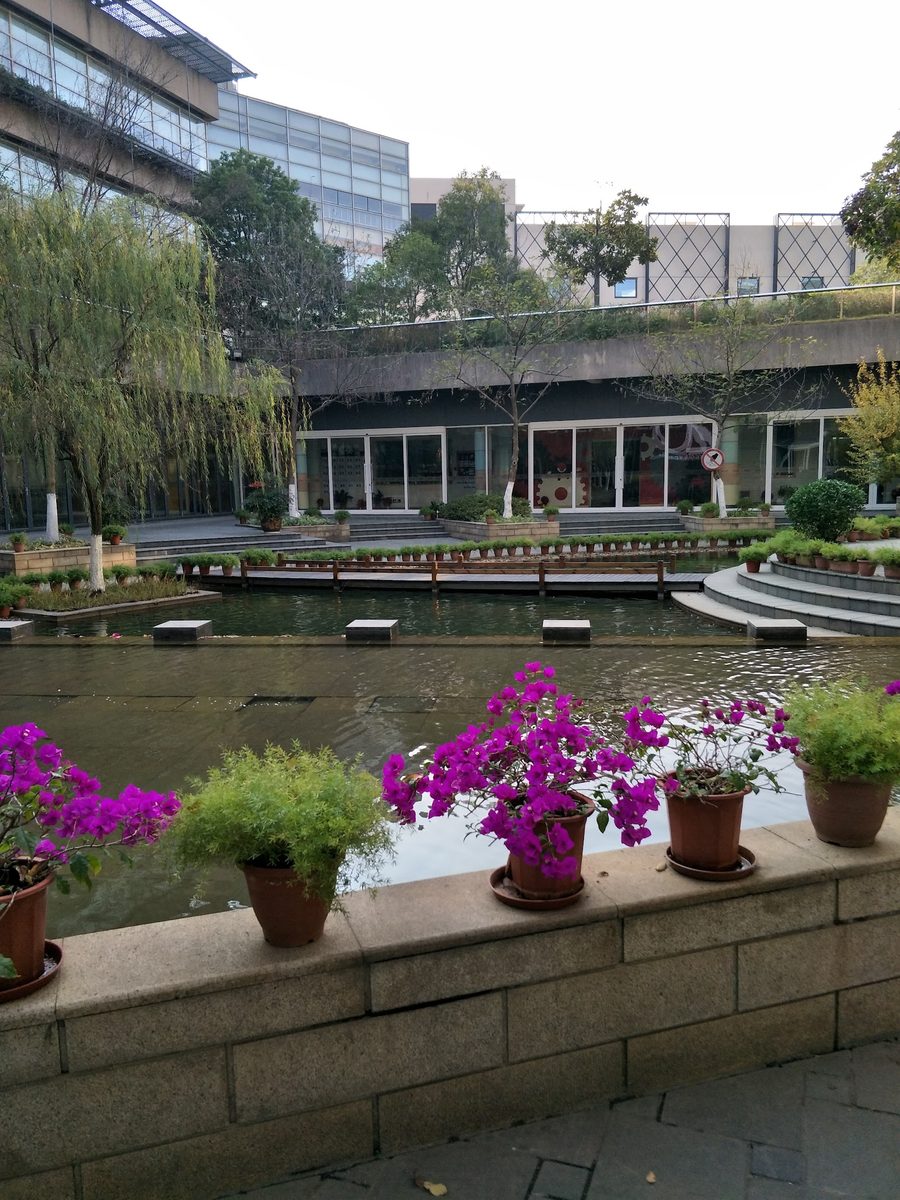
Shanghai Singapore International School
Shanghai · China
Singapore maths rigour anchors an IGCSE-to-IB pathway, threaded with banded Chinese immersion in Minhang's expatriate heartland.
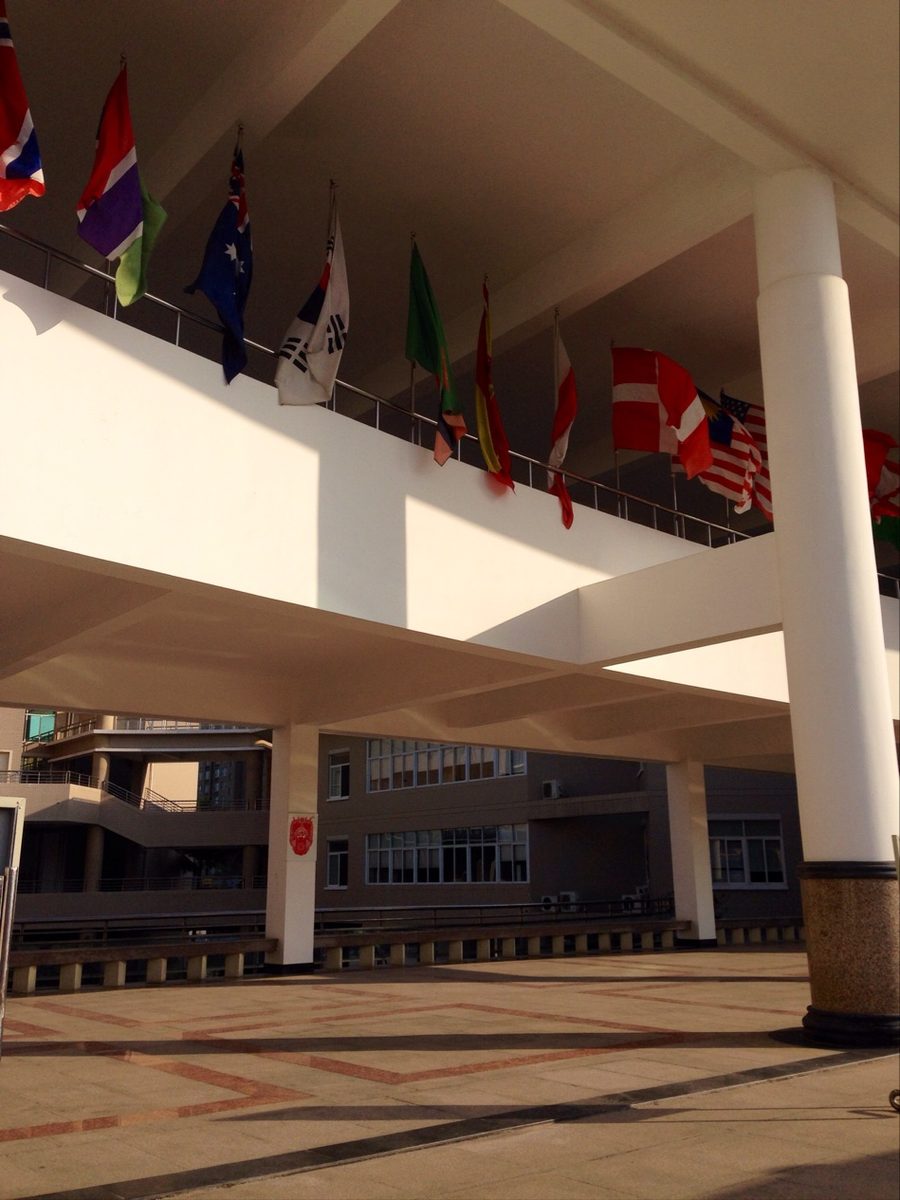
Xiamen International School
Xiamen · China
Grown from Xiamen's 1990s Kodak-era boom, this Fujian pioneer graduates seniors with bilingual IB diplomas at nearly triple the global rate.
Yew Chung International School of Shanghai
Shanghai · China
Since 1993, paired Chinese and English co-teachers lead every classroom, carrying bilingual immersion from nursery through the IB diploma.
Same country and curriculum — closest matches within ±10 points either way