
Federal Territory of Kuala Lumpur
British International School of Kuala Lumpur
MIT-designed STEAM labs and Juilliard-guided arts anchor a Cambridge curriculum on a leafy Petaling Jaya campus.

Photo © The British International School of Kuala Lumpur via Google Maps
Type
Day
Ages
3–18
Curriculum
British
Qualifications
IGCSE · A-Level
Ratio
—
The Verdict
Editor's commitment
Right for
Families wanting an English-medium, British curriculum from ages 3–18, with COBIS and BSO accreditation on a Kuala Lumpur day-school campus.
Wrong for
Parents seeking boarding, bilingual delivery or a non-British pathway; this 2009-founded school is day-only, secular and teaches in English.
Watch out for
Nord Anglia ownership brings scale and polish, but chain schools can feel standardised; test how much individuality survives inside COBIS-, Cambridge International- and BSO-accredited systems.
Ranking breakdown
British International School of Kuala Lumpur · #1230 of 1591
Composite score 57.0. 8 weighted criteria.
By criterion
Academic Outcomes
Weight 20%
#1084
of 1529 scored
University Placement
Weight 16%
#1201
of 1529 scored
Prestige & Heritage
Weight 12%
#1132
of 1571 scored
Alumni Network
Weight 12%
#1165
of 1530 scored
Facilities
Weight 12%
#559
of 1534 scored
Transparency & Communications
Weight 8%
#1150
of 1532 scored
Peer & Industry Review
Weight 10%
#1372
of 1548 scored
Admissions Selectivity & Demand
Weight 8%
#1419
of 1529 scored
Peer & Industry Review
How British International School of Kuala Lumpur is regarded in the sector
60
Respected · medium confidence
Within Kuala Lumpur's competitive British-curriculum sector, British International School of Kuala Lumpur (BISKL) is generally ranked just behind long-established rivals such as Garden International School and Alice Smith, reflecting its more recent growth under Nord Anglia's ownership. It holds full COBIS membership and a British Schools Overseas 'good' inspection rating, which peer heads and accreditation bodies treat as a credible benchmark rather than marketing. Its university progression benefits from Nord Anglia's global partnerships with UCL Institute of Education and MIT, which independent commentators (e.g. WhichSchoolAdvisor's Malaysia coverage) cite as a genuine academic differentiator versus purely local IB schools. Coverage in Good Schools Guide International and regional education press is respectful but measured, noting strong facilities and pastoral care while stopping short of the top-tier praise given to Malaysia's oldest British schools. University admissions officers in the UK circuit recognise the Nord Anglia brand for consistent IB/A-level results, though BISKL itself is rarely singled out individually in league tables, appearing instead as part of the wider Nord Anglia network's reputation for reliable, internationally mobile college placement.
Editors' overview
British International School of Kuala Lumpur sits in the premium end of the Kuala Lumpur day-school market: a British curriculum school for ages 3–18, founded in 2009, taught in English, and backed by Nord Anglia’s international network. Its clearest selling point is not novelty but packaging. Parents get a familiar Cambridge academic route, then a set of branded enrichments layered on top: MIT-designed STEAM provision, Juilliard-guided performing arts, and the scale and systems that come with a large private operator. That combination gives the school real pull with internationally mobile families who want a British academic spine without sacrificing specialist facilities or co-curricular breadth. That matters. So does the Petaling Jaya setting: leafy, established, and practical for families living on the western side of greater Kuala Lumpur.
What puts it on a shortlist is the mix of academic structure and enrichment architecture. Plenty of schools promise creativity; fewer can point to a built framework for it. The STEAM labs and arts partnerships signal a school that invests in visible, parent-legible provision rather than leaving innovation as a slogan. Accreditation also carries weight: COBIS, Cambridge International and BSO give parents external reference points, not just internal claims. This is a day school, not a pastoral cocoon. Families need to judge the daily commute, the social mix and the value equation with clear eyes. Nord Anglia schools know how to deliver a polished experience; they also charge for it, and parents paying premium fees should expect strong teaching, orderly communication and facilities that justify the tariff.
The best fit is a student who thrives in a structured English-medium environment and wants more than straight academic instruction. Children with genuine interest in music, drama, design, engineering or interdisciplinary project work will find more to work with here than at a plain-vanilla British school. Ambitious, outward-facing families who value international mobility, established quality controls and a globally mobile peer group will also see the appeal. This school suits students who like being busy, who benefit from clear academic scaffolding, and who want access to serious arts provision and hands-on STEAM work without giving up the recognisable shape of a British education from age 3 to 18.
Academic Performance
The school does not publish headline IGCSE or A level outcomes in the public domain, and that limits any serious academic judgement. For a premium British school, that is a real weakness. Parents can inspect facilities, partnerships and branding with ease; they cannot inspect the core proof point of academic quality with the same clarity. No aggregate pass rates, top-grade proportions or subject-by-subject trends sit front and centre. That leaves British International School of Kuala Lumpur in the opaque middle ground: not a school with poor results on record, but not a school making strong results easy to verify either.
Relative to peers, that matters. In Kuala Lumpur’s top tier, the strongest academic operators publish enough exam data to let families test value against outcomes. This school does not meet that standard publicly. That does not make it weak academically; it makes it hard to benchmark. The Nord Anglia name brings scale, systems and a degree of confidence that basic academic delivery is in place, but chain backing is not a substitute for disclosed results. Until the school publishes clear external examination data, it sits short of the city’s results-led heavyweights and closer to schools sold on the total package: campus, enrichment, pastoral order and international mobility, with academics assumed rather than demonstrated.
Facilities
The standout facilities are the specialist spaces that turn the school’s enrichment pitch into something concrete. The MIT-designed STEAM labs matter because they give design, engineering and applied science a proper home rather than leaving “innovation” to ordinary classrooms with better branding. The same goes for the Juilliard-guided arts offer: if a school wants families to take music, drama and performance seriously, it needs dedicated rehearsal and presentation space, not a token multipurpose hall. On that front, BSKL has the right priorities. The campus setting also counts for something. A leafy Petaling Jaya site gives students room, air and a less compressed feel than the tighter urban campuses that still trade at premium fees. That makes the physical environment more usable, not just more attractive.
Against Kuala Lumpur peers, this places BSKL in the city’s well-equipped upper tier, but not in a category of its own. Plenty of premium schools now offer smart science rooms, decent sports provision and polished classrooms. What lifts BSKL above the ordinary is the concentration of facilities around visible specialist learning rather than generic “all-round” claims. What holds it back is the absence of publicly detailed hard facts on scale: no headline campus acreage, no published inventory of standout venues, no sharp facility metrics parents can compare at a glance. The result is strong, credible provision with a premium-school finish, but not the kind of vast or singular estate that resets expectations across the market.
British International School of Kuala Lumpur carries solid commercial prestige rather than old-guard cachet
Prestige
British International School of Kuala Lumpur carries solid commercial prestige rather than old-guard cachet. Its standing comes from three things: the Nord Anglia name, the premium-fee international market it serves, and the polished enrichment architecture around the classroom. For many mobile families, that combination is enough. A school tied into a global operator with 80+ schools across multiple countries offers recognisable systems, smoother transfers and a brand other expatriate parents already know. That gives BSKL social credibility in the expatriate circuit and with employers relocating staff. It does not give the school automatic academic distinction, and parents should keep that distinction clear.
That is why the prestige rating stops short of the top echelon. In this market, the most prestigious schools pair strong name recognition with either deep local history, selective scarcity, or publicly documented academic dominance. BSKL has network muscle and premium polish, but not that rarer institutional weight. The arts and STEAM partnerships sharpen its profile and make it aspirational in a parent-legible way; they signal money, organisation and ambition. Yet prestige built on operator brand and facilities is different from prestige earned through decades of elite outcomes or a fiercely contested admissions reputation. The result is high-status but not untouchable: a school many families will be pleased to secure, but not one that sits beyond challenge in the regional hierarchy.
No aggregate pass rates, top-grade proportions or subject-by-subject trends sit front and centre
Communications
Parent communication carries the imprint of a large operator: orderly, brand-controlled and built to reassure. That has strengths. Families get a school that knows how to package information, maintain a consistent tone and keep routine touchpoints moving without chaos. For expatriate parents and dual-career households, that matters; they need timetables, notices, event information and policy updates delivered cleanly, not buried in a muddle of informal messaging. The school’s age span — 3–18 — also raises the communication burden, because early-years parents, primary families and sixth form households all need different kinds of detail. A school serving that full range needs disciplined systems. BSKL has them.
The question is whether communication is merely polished or genuinely informative. Here BSKL is strong on presentation and less strong on hard disclosure. The same pattern visible elsewhere in the school holds here too: parents can grasp the offer, the partnerships and the experience with ease, but core accountability data is thinner than it should be. That does not make communication poor; it makes it selective. Families who value atmosphere, events and a smooth parent-facing experience will find the school highly legible. Families who want blunt publication of outcomes, sharper comparative data and fewer layers of premium gloss will find the public-facing communication too managed. Effective, then, but not fully transparent.
Uniqueness
What marks BSKL out is the way it turns chain-scale partnerships into day-to-day student experience. Plenty of international schools bolt “innovation” and “creativity” onto the prospectus; this one has built them into visible school life through the MIT-designed STEAM setup and Juilliard-guided arts pathway. That gives students access to work that is structured rather than decorative: design projects with technical substance, performance training with an external frame of reference, and interdisciplinary activity that carries more weight than the usual enrichment-club filler. Within the Nord Anglia network, BSKL also benefits from a larger operating machine than an independent stand-alone school can offer. For families, that means a more systematised, less ad hoc experience.
For students, the gain is breadth with traction. Children who are strong in the classroom but do not want a narrow academic routine get a school that gives serious room to build competence in performance, design and collaborative problem-solving without treating those areas as second-tier. That matters most for families who want a premium all-rounder rather than a pure exam factory. The trade-off is clear too: this is not a school whose uniqueness rests on deep institutional heritage or publicly dominant results. Its distinctiveness lies in well-funded orchestration — a school engineered to give students a polished, opportunity-rich education with more range than a standard British model and more coherence than many schools that promise the same.
In Kuala Lumpur’s top tier, the strongest academic operators publish enough exam data to let families test value against outcomes
Student Profile
The best fit is a student who likes structure, pace and visible opportunity. This is not a school for children who want to drift quietly through the week doing the minimum. It suits pupils who respond well to adult direction, can handle a full timetable, and are willing to step into performance, projects and collaborative work rather than staying in a narrow academic lane. The social profile will also suit internationally mobile families. Children used to transition, new peer groups and a polished institutional culture will settle faster here than pupils who need a deeply rooted local identity or a more loose-textured, idiosyncratic school atmosphere. Across an age span of 3–18, the school needs students who can work within clear routines and families who value consistency.
The strongest match is the busy all-rounder: academically steady, open to the arts, and happy in environments where enrichment is not peripheral but built into the school’s self-definition. Students with real appetite for music, drama, design, engineering or interdisciplinary problem-solving will get more traction here than children who want a stripped-back exam grind. Equally, families chasing a hard-edged academic hothouse may find the school’s centre of gravity elsewhere. BSKL suits children who like being occupied, challenged and publicly engaged; it is less forgiving of passivity and more rewarding for students who will use the specialist offer rather than admire it from the sidelines.
The result is strong, credible provision with a premium-school finish, but not the kind of vast or singular estate that resets expectations across the market
Co-curricular strengths
Arts & sport, on a separate axis
Overall 8.9/10
Scored 0-10 from the school's own published evidence. This axis is editorial-only — it does not feed the main WTS ranking.
Sports
9/10
Drama
9/10
Dance
8.8/10
Music
9.2/10
Visual Arts
8.5/10
Strengths
- +Graded 'excellent' in all areas by the UK's Independent Schools Inspectorate, a benchmark comparable to top UK independent schools.
- +Offers a single continuous British curriculum pathway from age 2 through A-Level (EYFS to Sixth Form) on one campus, easing transitions between phases.
- +Genuinely international community, with students drawn from more than 60 nationalities.
- +Part of the Nord Anglia Education network, giving access to group-wide partnerships (e.g. Juilliard, MIT, UNICEF) and structured teacher training through Nord Anglia University.
- +Purpose-built campus in Bandar Utama with dedicated Lower, Junior and Secondary school buildings, the latter opened in 2016.
Considerations
- −Tuition is tiered steeply by age, rising from roughly RM56,395 a year in the Early Years Centre to over RM122,000 a year in Years 12-13, plus a non-refundable RM18,000 enrolment fee and RM1,500 application fee.
- −Campus is in Bandar Utama, Petaling Jaya, around 20 minutes from central Kuala Lumpur, which is a daily commute consideration for families based in the city centre.
- −Curriculum is limited to the British/IGCSE/A-Level pathway, with no International Baccalaureate or bilingual-immersion option for families wanting an alternative track.
- −As one school within a large, centrally managed international schools group, fee-setting and strategic decisions sit with the Nord Anglia network rather than a standalone local board.
Availability
Primary entry gate & tests
Academic Record + Assessment
Gallery
Photo © Akmal Bajwa via Google Maps
Photo © Akmal Bajwa via Google Maps
Photo © Akmal Bajwa via Google Maps
Photo © Chan Chee Keong via Google Maps
Photo © Chan Chee Keong via Google Maps
Photo © Chan Chee Keong via Google Maps
Parent reviews
Have you sent your child here?
Voice reviews carry the strongest trust badge — we transcribe them for you to tidy up before they go live. Prefer to type? A written review is fine too.
Add your voice
In 60 seconds, tell other parents: what's the best thing about British International School of Kuala Lumpur, and what surprised you when your child joined?
We ask for a Google sign-in so every review has a real face behind it — no anonymous drive-by attacks on schools, and no faked positive reviews. Your email is never shown publicly.
Send this profile to a friend
International parents rely on word-of-mouth. Share this review with someone weighing the same decision.
Schools with places
Similar schools to British International School of Kuala Lumpur with places available now.
Alice Smith School
Kuala Lumpur · Malaysia
- 2026-27
- WAITPOOLSpace-dependent
- 2027-28
- PLACES OPENRolling
International School of Kuala Lumpur
Kuala Lumpur · Malaysia
- 2026-27
- WAITPOOLSpace-dependent
- 2027-28
- PLACES OPENRolling
Availability first, then country, area, curriculum, price, co-curricular
Consider also
Also worth looking at alongside British International School of Kuala Lumpur.

Sri KDU International School
Kota Damansara · Malaysia
In Kota Damansara, a bilingual English-Chinese co-teaching model runs alongside the British-to-IB pathway through Sixth Form.
Uplands School
Penang · Malaysia
Born on Penang Hill in 1955, Malaysia's oldest international school now anchors IB rigor to a beachfront campus in Batu Ferringhi.
Tenby International School Setia Eco Park
Shah Alam · Malaysia
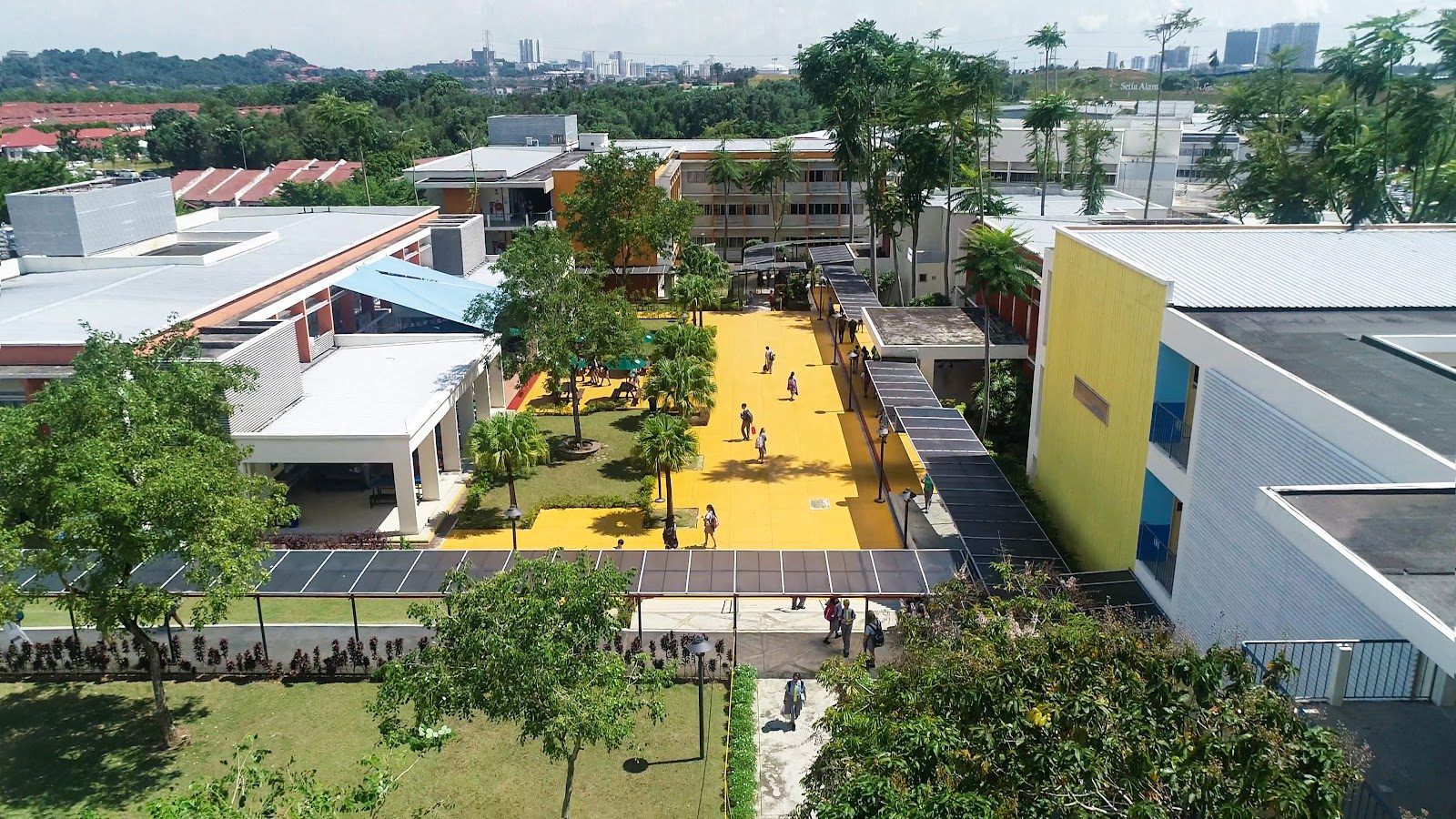
On a 20-acre Setia Eco Park campus, dual British and Malaysian pathways share one site from Early Years through A Level

Fairview International School
Kuala Lumpur · Malaysia
In Wangsa Maju since 1978, the first Malaysian campus to run the full IB continuum, from PYP to Diploma, alongside a character-building Falcon expedition programme.
Same country and curriculum — closest matches within ±10 points either way