
County Dublin
St. Andrew's College Dublin
medium confidence· 4/6 cats · 3.33 avg sourcesFirst in Ireland to gain IB Diploma authorisation, this interdenominational Booterstown day school still hosts its own Model UN each Easter.
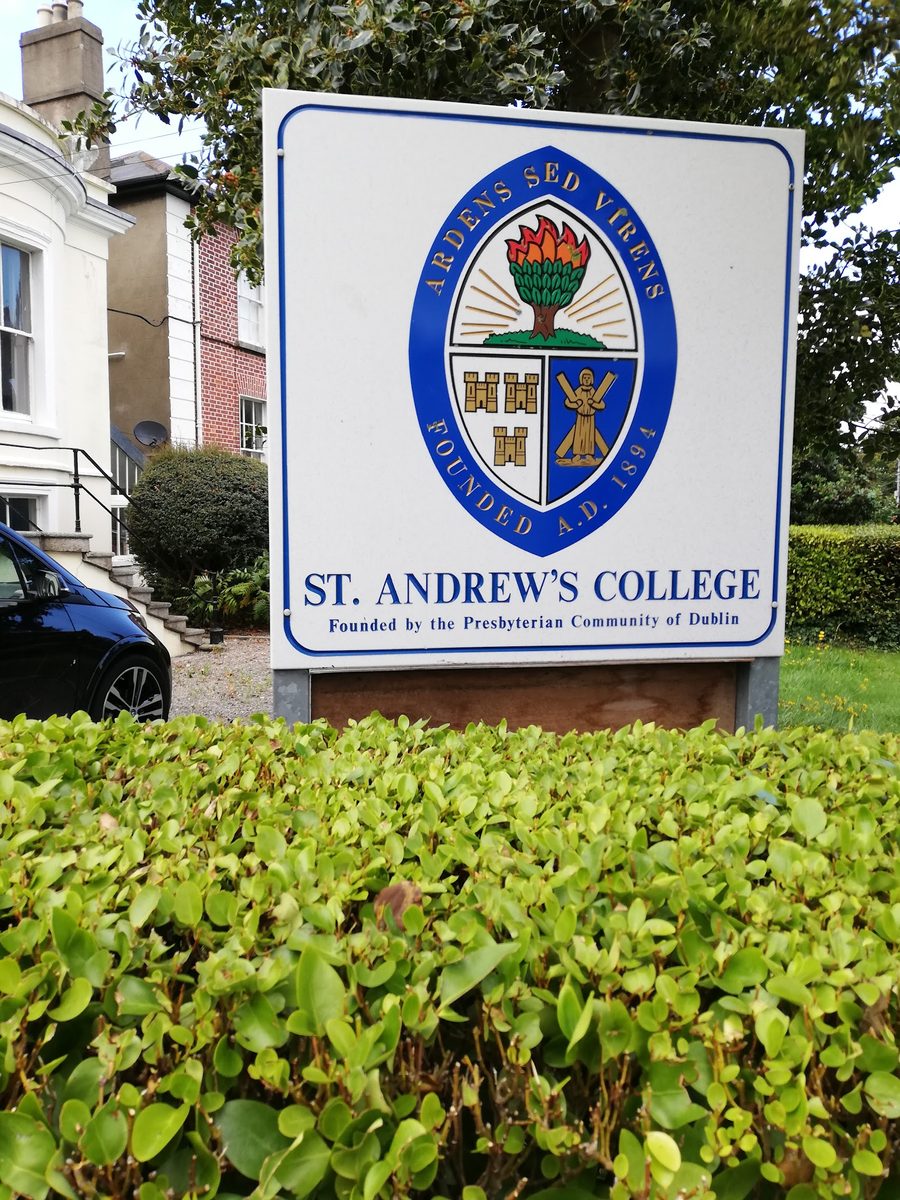
Photo © Blue Willow via Google Maps
Type
Day
Ages
4–18
Curriculum
IB
Qualifications
IB Diploma · Leaving Certificate
Ratio
—
The Verdict
Editor's commitment
Right for
Families wanting an English-medium, inter-denominational Dublin day school, founded in 1894, with IB World School status from age 4 to 18.
Wrong for
Parents chasing a broader university spread than three recent Australian destinations — RMIT Melbourne, Adelaide and Queensland — or any boarding option.
Watch out for
This is a day school only, and the school does not publish aggregate IB results here; Easter Model UN and long history do not replace outcomes data.
Ranking breakdown
St. Andrew's College Dublin · #619 of 1591
Composite score 67.5. 8 weighted criteria.
By criterion
Academic Outcomes
Weight 20%
#294
of 1529 scored
University Placement
Weight 16%
#305
of 1529 scored
Prestige & Heritage
Weight 12%
#139
of 1571 scored
Alumni Network
Weight 12%
#1333
of 1530 scored
Facilities
Weight 12%
#71
of 1533 scored
Transparency & Communications
Weight 8%
#93
of 1532 scored
Peer & Industry Review
Weight 10%
#250
of 1548 scored
Admissions Selectivity & Demand
Weight 8%
#1232
of 1529 scored
Score history
St. Andrew's College Dublin · 2026
Movement across 2024–2026. Peer average overlaid.
Overall — 2024–2026
67.5/ 100
▲ +23.4 vs 2025
year on year
Peer & Industry Review
How St. Andrew's College Dublin is regarded in the sector
65
Respected · medium confidence
St. Andrew's College Dublin consistently appears in the Irish Times' annual 'feeder schools' survey as one of the top fee-paying schools for progression to competitive university courses, and is generally listed among Dublin's well-regarded private secondary schools in local education press coverage. It lacks the international-tier recognition (e.g., no consistent Tatler UK or Good Schools Guide entries) seen with globally benchmarked schools, but maintains a solid, credible reputation within Irish education circles and among South Dublin expat/professional parent communities.
Evidence sources
- Paul McGuinness — Manager of U2, music business
- Ivan Yates — Businessman/Broadcaster, Politics/Media
- Andrew Trimble — Rugby player, Sport
Editors' overview
St Andrew’s College Dublin occupies a distinct niche in the Irish market: an old independent school with a Protestant foundation, a fully day-school model, and a long-standing IB identity. Founded in 1894, it moved to Booterstown in 1973, began admitting girls that same year, and first offered the IB in 1985. That date matters. The school was the first in Ireland to gain IB Diploma authorisation, which still sets it apart in a city where many legacy schools remain tied to local state examinations. Parents who want an Irish day school without the narrow social feel of some old establishments should pay attention. This is an interdenominational school, taught in English, with enough history to carry weight and enough curricular differentiation to avoid the standard route.
What is special here is not novelty for its own sake, but the combination of continuity and range. St Andrew’s has real institutional memory — rugby silverware reaches back to 1906, its own international Model United Nations has run since 1988, and the school’s timeline records a clear evolution from boys’ school to co-educational IB World School. The result is a school with serious academic intent and a lived sense of tradition, without boarding and without the cloistered atmosphere that boarding schools often import into day education. The annual SAIMUN conference is a concrete marker of the culture: intellectual theatre, public speaking, diplomacy, organisation, and the confidence to host peers rather than merely attend events elsewhere. The school’s public face also puts sport, music, arts and community work in plain view, which points to a broad, busy student experience rather than a single-track academic shop.
On a shortlist, St Andrew’s suits families who value the IB and want it inside an established Dublin school rather than an expatriate enclave or a new international start-up. It will appeal to students who are articulate, outward-looking and comfortable with a full programme: lessons, sport, co-curricular commitments, and a strong peer culture. It is a good fit for children who like structured busyness and visible participation — the kind of student who will play on a pitch, perform on a stage, help run a conference, and still keep pace academically. It is a weaker fit for families who want boarding, a deliberately small boutique school, or a school defined by radical progressive education. St Andrew’s offers something more traditional and more exacting: institutional confidence, co-educational breadth, and an IB route with deep roots in Dublin rather than borrowed international gloss.
Academic Performance
St Andrew’s does not publish the hard data that would let parents place it cleanly against Dublin’s strongest academic day schools. We have not seen aggregate IB Diploma averages, subject score distributions, pass rates, or points at the top end. That is a real weakness. In a market where serious schools increasingly understand that outcomes need public evidence, this level of opacity leaves families to infer standards from reputation, selectivity and university destinations rather than from results themselves. The destinations listed in the school context are too thin — 1, 1, 1 — to support any serious conclusions about cohort strength or international reach. For an established IB school, that is thin disclosure.
That does not mean weak academics; it means unproven academics in public view. The school’s long association with the IB, its visible senior-school guidance structure, and its culture of organised intellectual life point to serious academic intent rather than a casual or remedial model. Relative to peers, St Andrew’s sits in the group of established independent schools that expect solid university progression and a full co-curricular load, but it does not give parents the published exam evidence needed to rank it confidently against the city’s data-richer competitors. The judgement here is straightforward: academically credible, publicly under-evidenced, and less transparent than the best-run schools in this bracket.
Facilities
The physical estate covers the essentials of an established all-through day school, with sport carrying the clearest weight. The school has two Astroturf pitches, a sports hall and a swimming pool, alongside junior and senior sports provision flagged separately on the site. That places St Andrew’s in solid territory against Dublin day-school peers: better equipped than smaller city schools squeezed onto tight urban plots, but not in the league of the biggest campuses with extensive land, multiple specialist centres and standout architectural ambition. The current strength is breadth rather than spectacle. Families can expect a campus built for regular use, team sport and a full school week, not a showpiece estate designed to impress at open day first and educate second.
Indoors, the published history points to incremental expansion: a sixth form centre, a dedicated building added later, and a planned new classroom wing with library and social-performance space. That pattern matters. It tells you the campus has grown in response to need rather than through one grand masterplan. The upside is lived-in practicality; the downside is that older independent schools expanded this way can feel piecemeal beside newer rivals with cleaner spatial planning. Music, arts and co-curricular life are visible in the school’s navigation, and SAIMUN gives the performance and meeting spaces real use, but the school does not publish the kind of detailed facilities inventory that top competitors now provide. In editorial terms: well-equipped enough, sport-forward, and credible, but not a facilities leader.
We have not seen aggregate IB Diploma averages, subject score distributions, pass rates, or points at the top end
Prestige
St Andrew’s carries real prestige in the Irish independent sector, but it is a specific kind of prestige. This is not a school that trades on aristocratic mystique, brute selectivity or a flood of published elite university placements. Its standing rests on longevity, social recognition within Dublin professional circles, and the weight of a school culture that has produced durable institutions of its own. A school that has run its own international Model United Nations since 1988 signals institutional confidence. A rugby history that reaches back to early silverware, an established alumni body, and a campus expansion plan all reinforce that sense of a school with deep civic footing rather than fashionable noise. The fact that girls joined only later in the school’s life also tells parents something important: this is an old school that has adapted, not a new school inventing tradition.
That prestige has limits, and they matter. St Andrew’s does not command the same kind of automatic public awe as the most famous British-brand schools or the most aggressively outcomes-driven academic hothouses. Its Protestant roots, independent status and old-boy history give it social capital, but not universal cachet. The school’s public silence on aggregate exam outcomes also weakens its claim to top-tier academic prestige. In plain terms: this is a well-regarded, serious Dublin school with authentic heritage and strong local name recognition. It is not a school that closes the argument on reputation alone.
The school’s public silence on aggregate exam outcomes also weakens its claim to top-tier academic prestige
Communications
Parent communication looks functional, centralised and more practical than polished. The website gives families clear routes to the things they actually need: admissions, term dates, payments, sports, senior-school guidance, junior-school key dates, and separate logins for staff and students via VSware. That menu structure tells you a lot. This is a school that treats communication as operational infrastructure, not brand theatre. Junior and senior life are split cleanly, which helps parents navigate an all-through school without digging through irrelevant pages. News is visible, but the homepage also carried 0 upcoming events at the time of review, which undercuts the sense of a fully alive public calendar. For a school with a busy internal culture, that is slack public housekeeping.
The stronger point is that the school has built multiple channels rather than relying on one glossy front door. Instagram is linked directly, payments are integrated, and guidance has its own place rather than being buried inside general admissions copy. That signals a workmanlike seriousness about day-to-day parent use. The weakness is depth. We do not see much evidence of rich public academic reporting, detailed leadership commentary, or the kind of transparent outcomes communication that reassures demanding families. The principal’s welcome is warm but standard; it does not carry much hard information. Overall, communication is competent, serviceable and easy to navigate, but not a model of full-spectrum transparency.
Uniqueness
What separates St Andrew’s from other Dublin independents is the mix of old Protestant-school inheritance with a modern co-educational day-school reality, and the fact that it never narrowed itself into one tribe. It has institutional memory, but not the sealed social atmosphere that drifts into some legacy schools. That matters for students. They get the benefits of a school with rituals, alumni continuity and a settled sense of self, without being trapped inside a museum-piece culture. The interdenominational character also widens the aperture. For families who want moral seriousness without confessional narrowness, this is a useful middle ground.
The sharper point of difference is the school’s habit of building its own platforms rather than borrowing prestige from outside. Its international Model United Nations has run since 1988, and that is more than a nice extra. Hosting your own conference changes the student experience: pupils do not just attend, they organise, chair, negotiate, speak publicly and deal with peers on home ground. That builds real composure, institutional confidence and a stronger sense of ownership than schools that outsource ambition to branded competitions. The same pattern runs through the school’s long sporting tradition and visible co-curricular structure. St Andrew’s suits students who want to participate conspicuously, not hide in the background. For the right child, that produces a busy, high-accountability education with more responsibility than many day schools ask of teenagers.
Founded in 1894, it moved to Booterstown in 1973, began admitting girls that same year, and first offered the IB in 1985
Student Profile
The student who thrives at St Andrew’s is busy, self-managing and willing to be seen. This is not a school for children who want to drift anonymously through the week. The culture rewards pupils who will sign up, turn up and carry their share: on the pitch, on stage, in committee rooms, in community projects and in the classroom. The school’s own history gives that away. It has long prized organised participation, from team sport to student-led international forums, and its wartime record of 688 past pupils volunteering tells you something hard-edged about the old institutional temperament that still echoes through the place. Even in a modern co-educational setting, there is a strand of duty-conscious, high-participation expectation here.
The best fit is a child with energy, resilience and enough social confidence to handle a visible peer culture. Articulate students who like public speaking, debate, leadership roles and full timetables will find room to grow. So will sporty pupils who want school teams to matter, and all-rounders who do not want to choose between academics and co-curricular life too early. The weaker fit is just as clear: children who need a soft-edged, low-pressure environment, or who resist structure and organised commitment, will find the rhythm demanding. This school suits families who want their child stretched by institutional expectation and by peers who are also expected to contribute, not just attend.
Parents who want an Irish day school without the narrow social feel of some old establishments should pay attention
Co-curricular strengths
Arts & sport, on a separate axis
Overall 8.46/10
Scored 0-10 from the school's own published evidence. This axis is editorial-only — it does not feed the main WTS ranking.
Sports
8.8/10
Multiple sports—rugby, hockey, cricket, tennis, swimming, sailing and rowing—showing broad, structured participation, but gives no facility, specialist staff or competitive-results evidence.
Drama
8.5/10
The extracurriculars specifically mention 'Drama productions', which is stronger than a bare club listing because it indicates recurring staged activity, but there is no theatre, department or named production detail.
Dance
8/10
Music
8.8/10
Both a school orchestra and choir, indicating multiple organised ensembles and visible participation, but provides no dedicated music facility, department or competition evidence.
Visual Arts
8.2/10
Editor first-pass · editor-reviewable · 7/27/2026
Outcomes & destinations
Where students go next
Top destinations
112 placements
- RMIT University Melbourne· 1
- University of Adelaide· 1
- University of Queensland· 1
- Dalhousie University· 1
- Saint Mary's University, Halifax, Nova Scotia· 1
- University of Alberta· 1
- University of British Columbia· 1
- University of Carleton· 1
- University of Toronto· 1
- University of York· 1
- McMaster University· 1
- Universidad de La Habana· 1
- Le Cordon Bleu Culinary College· 1
- SciencesPo· 1
- HAS University of Applied Sciences· 1
- Strathmore University· 1
- United States International University· 1
- Nottingham University· 1
- International University of Management (IUM)· 1
- Hotel School, The Hague· 1
- Tu Delft University of Technology· 1
- Monash University· 1
- Rhodes University· 1
- University of Cape Town· 1
- University of Port Elizabeth· 1
- 43 Air School· 1
- American University Sharjah· 1
- Anglia Ruskin University· 1
- Bath Spa University· 1
- Brunel University London· 1
- Cardiff University· 1
- Coventry University· 1
- De Monfort University· 1
- Durham University· 1
- Falmouth University· 1
- Imperial College London· 1
- Keele University· 1
- Lancaster University· 1
- Leeds College of Art· 1
- Leeds Metropolitan University· 1
- London School of Economics· 1
- Loughborough University· 1
- Newcastle University· 1
- Nottingham Trent University· 1
- Oxford Brookes University· 1
- Queen Mary University· 1
- Regent’s University London· 1
- Sheffield Hallam University· 1
- University of Bath· 1
- University of Birmingham· 1
- University of Bradford· 1
- University of Brighton· 1
- University of Bristol· 1
- University of Cambridge· 1
- University of Creative Arts, Farnham· 1
- University of East Anglia· 1
- University of East London· 1
- University of Edinburgh· 1
- University of Essex· 1
- University of Glasgow· 1
- University of Hertfordshire· 1
- University of Huddersfield· 1
- University of Kent· 1
- University of Leeds· 1
- University of Leicester· 1
- University of Liverpool· 1
- University of Manchester· 1
- Manchester Metropolitan University· 1
- University of Newcastle· 1
- University of Nottingham· 1
- University of Oxford· 1
- University of Portsmouth· 1
- University of Reading· 1
- University of Sheffield· 1
- University of Southampton· 1
- University of Surrey· 1
- University of Sussex· 1
- University of the West England, Bristol· 1
- University of Warwick· 1
- American University· 1
- California Institute of Technology (CalTech)· 1
- Cornell University· 1
- Duke University· 1
- Georgia Institute of Technology· 1
- John Brown University· 1
- Le Tourneau University Texas· 1
- New York University· 1
- Pepperdine University· 1
- Saint Mary’s University Halifax· 1
- Saint Olaf College, Minnesota· 1
- Savannah College of Art and Design· 1
- St Michael’s College Vermont· 1
- Stanford University· 1
- Stetson University, Florida· 1
- Texas Christian University· 1
- Trinity University, San Antonio· 1
- University of Hartford· 1
- University of Illinois Urbana-Champaign· 1
- University of Maryland· 1
- University of Massachusetts Amhert· 1
- University of Miami· 1
- University of Minnesota· 1
- University of Pennsylvania· 1
- University of Southern Florida· 1
- University of Syracuse· 1
- University of Tampa· 1
- University of Texas· 1
- University of Virginia· 1
- University of York· 1
- Wheaton College, Illinois· 1
- Winthrop University· 1
- Yale University, Connecticut· 1
Reported by the school. Confirm with admissions.
Strengths
- +St. Andrew's became the first school in Ireland authorised to offer the IB Diploma Programme, teaching it since 1983 with first IBDP exams sat in 1985.
- +It is the only school in Ireland fully accredited by both the Council of International Schools and the New England Association of Schools and Colleges, a dual accreditation held since 1984.
- +The school community draws students from Ireland and roughly 40 other countries, giving it a genuinely international, interdenominational intake rather than a purely local one.
- +Sporting pedigree is well documented: the school has won the All-Ireland Schoolboys' Hockey Championship seven times, most recently in 2017, alongside Leinster Schools Senior Rugby Cup wins.
- +St. Andrew's runs its own Model United Nations conference (SAIMUN), held annually over the first week of Easter at the Royal Marine Hotel in Dun Laoghaire.
Considerations
- −The IB Diploma cohort is deliberately small, typically around 70 students, which limits the scale of the diploma-specific peer group and subject-combination options compared with larger IB schools.
- −It is a day school only; boarding was discontinued, so relocating families need to secure housing within commuting distance of Booterstown rather than relying on residential places.
- −Published fee tables show a wide range across age groups, from junior school charges up to considerably higher senior-year fees, plus additional charges for trips, materials and PTA contributions, making total cost planning less straightforward.
- −Most of the school's historic profile (rugby cup wins, founding narrative, WWI roll of honour) is rooted in its 1894 Presbyterian foundation and Irish schools' sporting leagues, so international families should not expect the same global brand recognition as larger multinational IB networks.
Availability
Primary entry gate & tests
Transcripts + Interview
Gallery
Photo © Анна Басарыгина via Google Maps
Parent reviews
Have you sent your child here?
Voice reviews carry the strongest trust badge — we transcribe them for you to tidy up before they go live. Prefer to type? A written review is fine too.
Add your voice
In 60 seconds, tell other parents: what's the best thing about St. Andrew's College Dublin, and what surprised you when your child joined?
We ask for a Google sign-in so every review has a real face behind it — no anonymous drive-by attacks on schools, and no faked positive reviews. Your email is never shown publicly.
Send this profile to a friend
International parents rely on word-of-mouth. Share this review with someone weighing the same decision.
Schools with places
Similar schools to St. Andrew's College Dublin with places available now.
Availability first, then country, area, curriculum, price, co-curricular
Consider also
Also worth looking at alongside St. Andrew's College Dublin.
King's Academy
Madaba · Jordan
On the hills of Madaba, a Deerfield-inspired boarding school built around Harkness-table classrooms and a multi-faith spiritual center.
American Community School Beirut
Beirut · Lebanon
Founded in 1905 by AUB faculty, this Corniche campus blends IB and American diplomas around Harkness-style seminar tables.
Roedean School South Africa
Johannesburg · South Africa
Founded in 1903 by two Cambridge-educated pioneers, this all-girls boarding school still occupies its original Herbert Baker campus in Parktown.
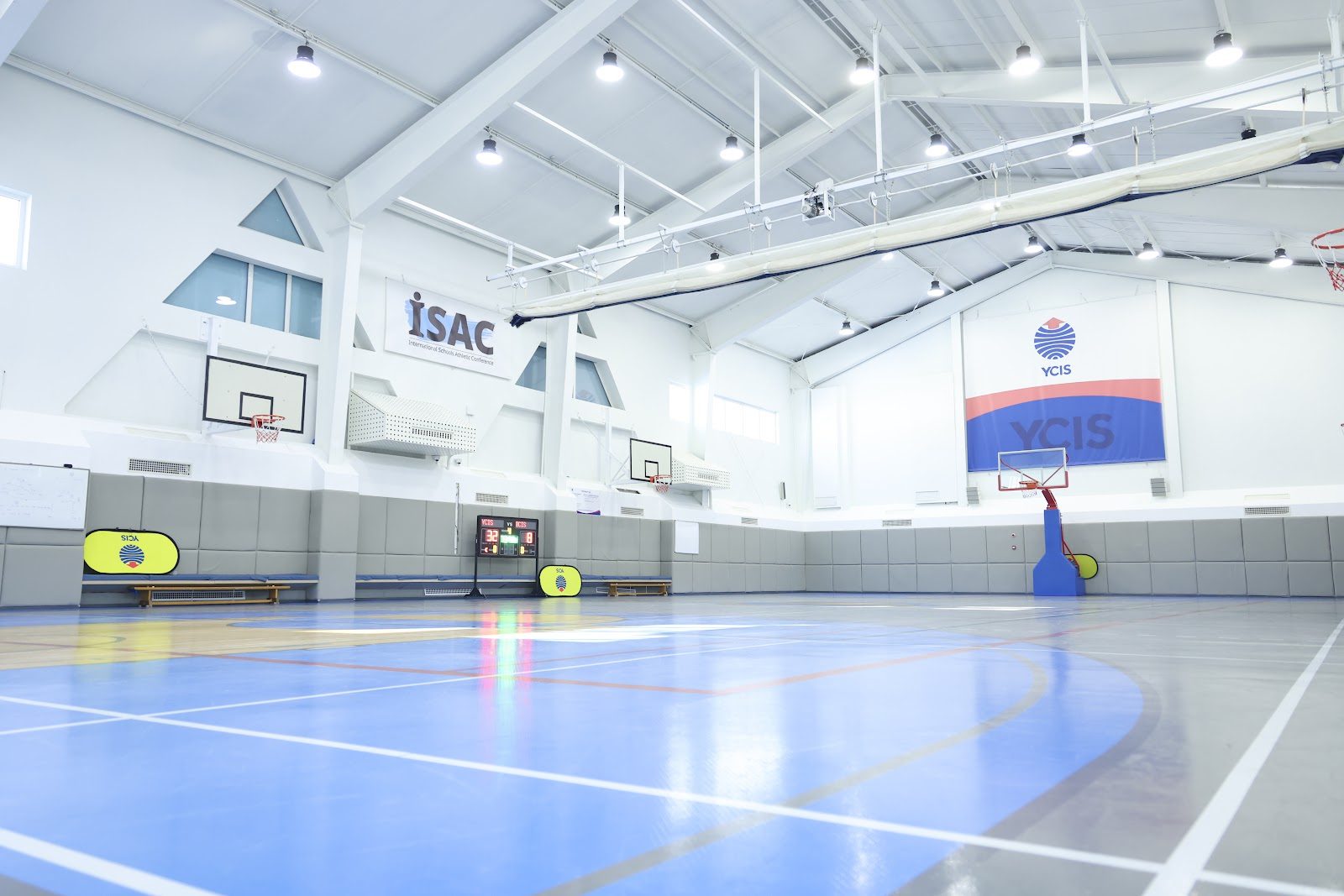
Yew Chung International School of Beijing
Beijing · China
Every classroom pairs a Western and a Chinese teacher, threading bilingual learning through a parkland Chaoyang campus.
Same country and curriculum — closest matches within ±10 points either way