
Greater London
A Hammersmith day school where admission itself is the only scholarship, and GCSE results already top the national table.
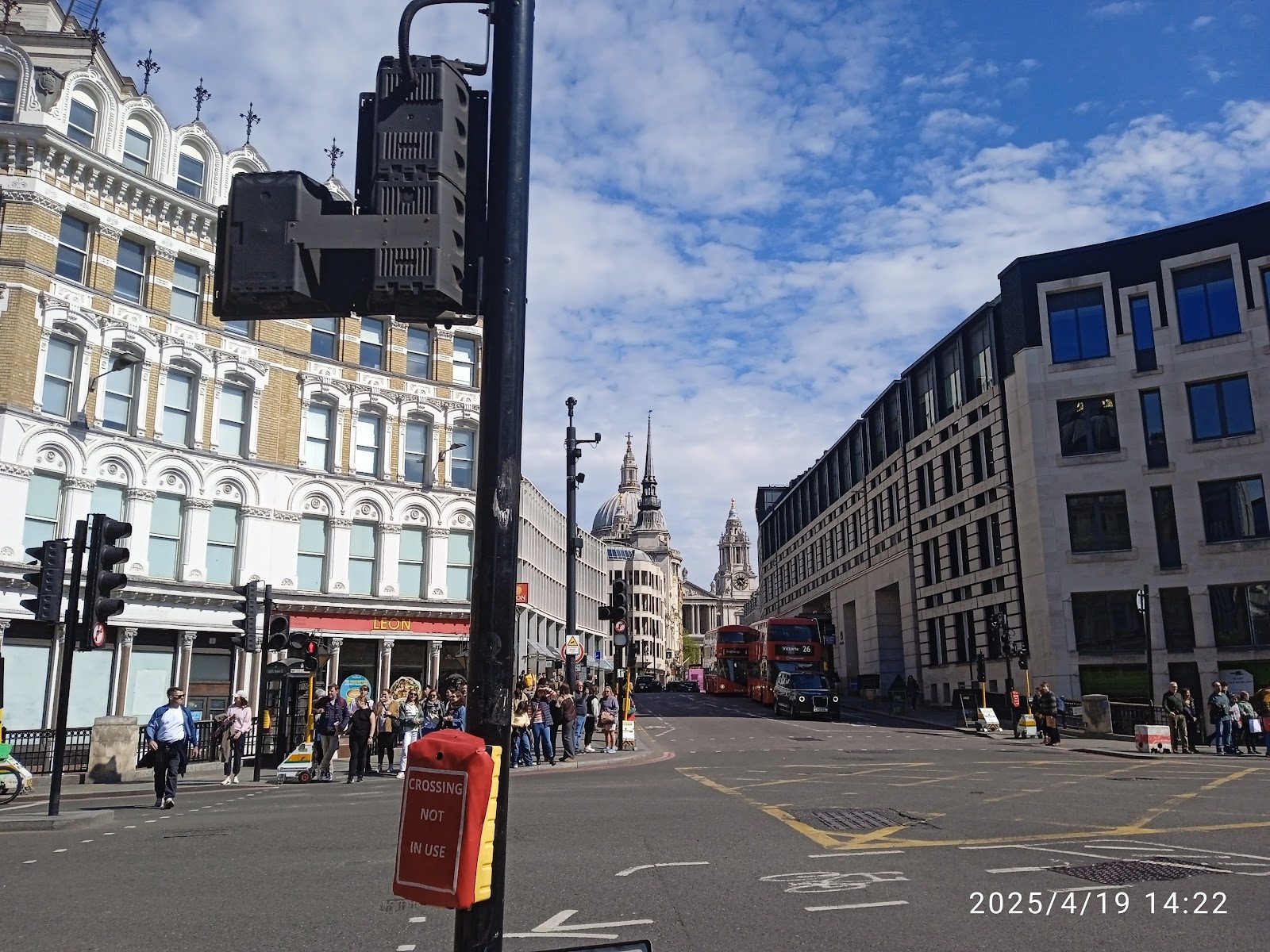
Photo © Puri G.S. via Google Maps
Type
Day
Ages
11–18
Curriculum
British
Qualifications
A-Level
Ratio
10:1
The Verdict
Editor's commitment
Right for
Girls who want unapologetically academic schooling: 99.5% 9–7 at GCSE, 88.7% A*–A at A level, and 32 Oxbridge places.
Wrong for
Families wanting a gentler, less selective culture; at £38,000 a year average, this 11–18 Anglican day school charges for intensity.
Watch out for
Admission is the first filter, then the pace stays high: 10:1 staffing, classes of 18, and 96% of 108 leavers to top-100 universities.
Ranking breakdown
St Paul's Girls' School · #16 of 1591
Composite score 81.6. 8 weighted criteria.
By criterion
Academic Outcomes
Weight 20%
#31
of 1529 scored
University Placement
Weight 16%
#24
of 1529 scored
Prestige & Heritage
Weight 12%
#31
of 1529 scored
Alumni Network
Weight 12%
#29
of 1529 scored
Facilities
Weight 12%
#502
of 1529 scored
Transparency & Communications
Weight 8%
#83
of 1529 scored
Peer & Industry Review
Weight 10%
#49
of 1529 scored
Admissions Selectivity & Demand
Weight 8%
#93
of 1529 scored
Score history
St Paul's Girls' School · 2026
Movement across 2024–2026. Peer average overlaid.
Overall — 2024–2026
81.6/ 100
▲ +12.1 vs 2025
year on year
Peer & Industry Review
How St Paul's Girls' School is regarded in the sector
96
Top-tier · high confidence
St Paul's Girls' School sits in the top tier of UK academic day schools, regularly cited alongside Westminster, North London Collegiate and City of London School for Girls as a benchmark for girls' education in London. It consistently appears at or near the top of the Sunday Times and Telegraph A-level league tables, and the Good Schools Guide describes its academic rigour and depth of subject offering (notably Further Maths, multiple sciences and languages) as exceptional even among super-selective schools. Its Oxbridge and Russell Group admission rates are frequently referenced by university access commentators as evidence of sustained high-end academic output, with a large proportion of leavers progressing to Oxford, Cambridge, Imperial and UCL. The school's endowed music department, funded via the same trust as St Paul's School, is often singled out in independent press coverage as a distinguishing strength versus academically comparable rivals. It is a fixture at HMC and GSA head conferences, reflecting its standing within the wider independent sector leadership community rather than marketing-driven positioning.
- Harriet Harman — Politician, UK Parliament
- Shirley Williams — Politician, UK Parliament/Cabinet
- Cressida Dick — Former Commissioner of the Metropolitan Police
Editors' overview
At St Paul’s Girls’ School, the first filter is the admissions gate itself. Once in, girls enter a fiercely academic day school that has little interest in hand-holding and no need to inflate its credentials. The numbers do the work: 99.5% of GCSE grades in 2025 were 9–7/A*–A, and 88.7% of A-level grades were A*–A. The school runs at a 10:1 student-teacher ratio, with average class sizes of 18, which gives teachers room to teach ambitiously and pupils little room to hide. This is a British curriculum school for ages 11 to 18, Anglican in foundation, inspected by ISI and a member of HMC. Its average annual fee across the full ladder is £38,237, which places it firmly in the top tier of the London day-school market.
What sets SPGS apart is not pastoral branding or glossy talk about “holistic” education. It is the scale of intellectual expectation, matched by real outcomes and institutional depth. The school itself foregrounds academic curiosity, expert teaching, collaboration with St Paul’s School, and a substantial programme beyond the classroom in drama, music, science, technology, sport, clubs and student journalism. It also has a serious outward-facing strand: 1,520 students across schools are involved in partnerships programmes, and 88 pupils are in receipt of a bursary. University destinations remain formidably strong: from 108 leavers in 2024, 96% progressed to top-100 universities, with 32 Oxbridge places, 35 to Russell Group universities and 8 to the Ivy League. That is a record built on sustained academic pressure, not selective storytelling.
This school belongs on a shortlist for families who want a high-voltage intellectual culture in a girls’ school and who care more about depth of teaching than corporate polish. It will suit bright, self-propelled pupils who enjoy argument, abstraction, reading, writing and the company of other able girls. It will also suit students who want their school life to stretch beyond the timetable, because SPGS has the scale and confidence to offer serious enrichment without losing academic discipline. It will not suit every child. Girls who need a gentler pace, more external reassurance or a lower-pressure environment will find it demanding to the point of unforgiving. For the right student, though, it is an academic engine room with the results, alumnae network and university record to justify its reputation.
Academic Performance
External results place St Paul’s Girls’ School in the topmost slice of British independent education. At GCSE, its outcomes sit at the level where the usual distinction between “excellent” and “elite” stops being useful: 99.5% of grades at the top bands leaves almost no slack in the system. A-level performance is equally forceful, with 88.7% at A*–A. That combination matters. Many schools post glittering GCSEs and then soften by sixth form when subject choice broadens and grading tightens; SPGS holds its line. In market terms, this is not merely strong against London girls’ schools. It is national-table territory among selective day schools of any kind.
The more telling point is consistency. These results fit a school with an *uncompromising academic centre of gravity*, not a one-off spike or a carefully edited story. The public case is also clean: the school publishes headline outcomes prominently, and they withstand comparison with the handful of names parents invoke when discussing the most academically exacting schools in the country. That does not make examination results the whole education; it does make them a hard proof of intellectual standards. For families weighing SPGS against other high-pressure, high-attainment peers, the academic case is blunt and decisive: this is one of the country’s benchmark schools for external examination performance.
Facilities
The school’s strongest facility asset is not a country-estate spread or a headline sports complex. It is a dense, urban, academically purposeful site that backs the way SPGS teaches. The school itself points families to a “modern and sophisticated” campus and, more usefully, to the things that matter inside it: serious departmental provision, a full drama and music life, science and technology, clubs, student journalism, and a constant traffic of visiting speakers, trips and higher-education programming. That mix places SPGS with the better-equipped London day schools for intellectual and cultural provision. The benchmark here is not acres; it is whether a school has enough specialist space and institutional confidence to sustain real scholarly range beyond lessons. SPGS does.
Against peers, the balance is clear. Some London rivals win on spectacle: larger grounds, more expansive sports fields, shinier public-facing architecture. SPGS wins on working density and on facilities that feed an exacting day-school culture rather than a resort-style pitch. Its collaboration with the boys’ school broadens that offer further, and its partnerships programme reaches 1,520 pupils across schools, which gives the campus an outward-facing seriousness that many elite independents talk about but do not match at scale. Families seeking vast green space or boarding-style infrastructure will find stronger options elsewhere. Families seeking a site built for high-level academic and cultural use will judge SPGS well above the London median.
Its average annual fee across the full ladder is £38,237, which places it firmly in the top tier of the London day-school market
Prestige
St Paul’s Girls’ School sits in the top rank of British independent education. Its prestige rests on three things that carry real weight with informed families: a brutally competitive admissions process, a long record of sending leavers to the universities that matter most in the UK and the US, and an alumnae base with unusual cultural reach. The latest destinations list is a strong marker of institutional pull, not just individual talent: 32 leavers to Oxbridge in a single cycle, alongside Russell Group and Ivy League destinations, places the school in the company of the country’s most selective academic names. Add a Wikidata floor of 151 notable alumnae across politics, scholarship, journalism, the arts and public life, and the picture is clear. This is not prestige built on old silver alone. It is prestige renewed through outcomes.
What lifts SPGS above many polished London competitors is that its reputation is hard-edged rather than decorative. It does not trade on a single specialism or a fashionable pastoral story. It carries status in the circles that are hardest to impress: universities, academic families, and employers who recognise intellectual training when they see it. The school’s partnership work and bursary provision also matter here, because they prevent prestige from curdling into sealed-off privilege. This remains an expensive, highly selective school, and its social cachet is obvious. But the core of its standing is intellectual seriousness, sustained over time, and that is a more durable form of prestige than branding.
External results place St Paul’s Girls’ School in the topmost slice of British independent education
Communications
Parent communication at SPGS is *structured, information-rich and adult in tone*. The public-facing architecture tells you a lot: clear admissions routes, a proper publications area, accessible policy and report pages, term dates, direct contact points for the front office and admissions, portal access for parents and students, and visible signposting to wellbeing, safeguarding, careers, higher education and support. That is not decorative admin. It is the communications framework of a school that expects families to read, absorb and act. The school also keeps a steady outward rhythm through news and events, with academic results, productions, trips and student-led activity all given space. For parents, that breadth matters. It means communication is not confined to emergencies and fee invoices; it tracks the real life of the school.
The effectiveness lies in clarity rather than charm. SPGS does not write like a school straining to reassure every anxiety, and that will suit some families better than others. The messaging is confident, institutional and sometimes brisk. Parents who want constant hand-holding, chatty updates or a soft-focus pastoral gloss will find stronger fits elsewhere. Parents who value fast navigation, clear lines of responsibility and a school that communicates expectations without waffle will rate it highly. The same directness runs through the school’s presentation of outcomes, bursary provision and partnerships activity, including 88 bursary recipients and 1,520 pupils involved across schools. That gives the communications style substance. It informs rather than flatters.
Uniqueness
What marks SPGS off from the crowded top end of London independents is the combination of extreme selectivity and an institutional refusal to dilute the pace once pupils are through the door. Many schools advertise stretch; SPGS builds the whole school around it. The website’s emphasis on intellectual curiosity, roaming beyond the syllabus, expert teaching and a heavy co-curricular load points to a place where bright girls are treated less as children to be managed than as minds to be worked hard. That produces a student culture with a distinctive voltage: argument is normal, ambition is assumed, and academic effort carries status. The collaboration with St Paul’s School adds another layer, widening the social and intellectual field without blurring the school’s girls’-school identity.
What students get from that is more than high grades. They get serious intellectual training in a peer group that does not punish cleverness, plus access to a school with enough confidence to invest in public speaking, student journalism, drama, music, science, technology, partnerships and higher-education preparation all at once. The bursary count of 88 also matters: not because it transforms the economics of an expensive school, but because it stops the place becoming entirely socially closed. Add partnerships activity involving 1,520 pupils across schools, and the distinctive picture sharpens. SPGS does not offer a softened version of excellence. It offers a *hard-driving, culturally literate, outward-facing* education for girls who want to be stretched every day.
St Paul’s Girls’ School sits in the top rank of British independent education
Student Profile
The SPGS student is a girl who likes being stretched and does not need her school life softened for comfort. She reads fast, thinks fast and can cope when a teacher pushes past the syllabus instead of slowing the room down. Intellectual confidence matters here, but so does stamina: this is a place for pupils who can absorb pressure, recover from setbacks and keep working in the company of other very able girls. The best fit is not a grind for the sake of grades, but a student with real appetite for ideas who enjoys argument, close reading, problem-solving, writing, performance or research and who gains energy from a high-pressure peer group. The school’s university destinations and exam record confirm the level of the cohort; the admissions process filters hard at the front end, and the culture inside stays demanding.
Personality counts as much as raw ability. Girls who thrive here tend to be self-directed, articulate and willing to join in beyond lessons, whether in journalism, drama, music, science activity, partnerships or service. The outward-facing side matters: 88 pupils receive bursaries and 1,520 pupils across schools are involved in partnership programmes, which gives SPGS more social range than the caricature of an elite London day school allows. Even so, this is not a gentle fit. Pupils who need frequent reassurance, a slower tempo or a school that prizes emotional cushioning over intellectual intensity will struggle. Girls who want serious company, hard work and high expectations will fit very well.
That produces a student culture with a distinctive voltage: argument is normal, ambition is assumed, and academic effort carries status
Co-curricular strengths
Arts & sport, on a separate axis
Overall 8.28/10
Scored 0-10 from the school's own published evidence. This axis is editorial-only — it does not feed the main WTS ranking.
Sports
8/10
Competes fiercely in netball and rowing on the Thames, balancing urban space constraints with dedicated, high-intensity training.
Drama
9/10
Renowned creative engine staging highly complex, experimental, and student-written theatrical works inside premium venues.
Dance
6.5/10
Dedicated dance studios offering strong composition paths that serve as a headline asset for school arts showcases.
Music
9.3/10
Unmatched musical lineage; students routinely perform massive symphonic concerts inside premier London music halls.
Visual Arts
8.6/10
Exceptional art school infrastructure running top-tier advanced studios for architecture, fine oil painting, and digital media.
Editor-verified · 8/6/2026
Outcomes & destinations
Where students go next
Editorial estimateClass of 2024
108 graduates
A-Level & Pre-U distribution
100% covered
- A*62%
- A27%
- B8%
- C3%
Top destinations
75 placements
- Oxford· 18
- Cambridge· 14
- Yale· 3
- Harvard· 3
- Brown· 2
- UCL· 12
- Imperial College London· 8
- Bristol· 6
- Durham· 5
- LSE· 4
Girls'-day school with consistently among the strongest Oxbridge conversion in the country.
Editor-approximated from the school's own leavers report. Awaiting school-attested figures.
Notable alumni · Wikidata
151notable alumni
57 historic (born pre-1930) · 23 modern (born post-1970)wikidata:2026-07-28 How we source this
The story in one line
86% achieved ≥ AAB in 2+ facilitating subjects·ISI Routine Inspection 2024
AAB with 2 facilitating subjects is the Department for Education's published predictor of admission to a top-third UK university: the pupil has scored high grades in at least two of the classic Russell-Group subjects (maths, sciences, English, history, geography, or a modern language). Independent schools don't appear in the state-only HE-destinations dataset, so this is the strongest DfE-verified sixth-form signal available. Source: DfE 16-18 school and college performance data · 2023/24. Value-added +0.25
DfE-verified statistics
Official GCSE data · 2024/2025
Progress 8
—
Value-added score. State-schools only; 0 = expected progress, +1 = one grade above.
Attainment 8
22.6
Average grade across 8 GCSEs (score out of 90). National ≈ 46.
EBacc average score
2.23
Avg grade across the 5 EBacc pillars (English, Maths, Sciences, Language, Humanity).
EBacc slots filled
2
How many of the 5 EBacc pillars pupils typically enter (max 5).
A-Level attainment
Cohort · 2023/24
Avg A-Level grade
A+
APS per entry: 54.75
Best 3 grade
A*-
Best-3 APS: 55.15
≥ AAB + 2 fac.
86.0%
Russell-Group predictor.
Progress (value-added)
+0.25
Above average
Read with care. Independent schools frequently sit IGCSEs or Pre-U qualifications instead of standard GCSEs — DfE data only counts standard GCSEs, so these numbers may reflect a partial cohort. For a fuller picture, cross-check with the school's own annually-published results.
URN 100366Verified · DfE 2024/2025
Official inspection
ISI report · 2024
Inspectorate
Independent Schools Inspectorate
The Government-approved inspectorate for English independent schools.
Latest report
27 February 2024
Routine Inspection
Report history
Verified · Independent Schools InspectorateSource-of-truth
WTS 300 badge
2025/26 editionSt Paul's Girls' School is one of the World's Top 300 Schools for 2025/26. Claim your listing to add it to your site →
Strengths
- +The school publishes strong results: in 2025, 88.7% of A-level entries reached A* or A, and 99.5% of GCSE entries were graded 9-7/A*-A (school website).
- +The 2024 ISI inspection found the school meets the standards in all sections, noting that attainment at GCSE and A level far exceeds national averages.
- +The school was named Sunday Times Independent School of the Year for Academic Excellence and London Independent School of the Year for Academic Excellence in 2025, and Sunday Times Independent School of the Year for GCSE results in 2026.
- +For the first three years pupils follow a genuinely broad curriculum, including English, mathematics, history, geography, Latin, religious studies, art and design, drama, music, the sciences, a Languages Discovery course involving linguistics, and taster courses in German, Mandarin and Russian.
- +The school sits in a well-served west London location in Brook Green, Hammersmith, with strong public-transport links making it accessible for students from across the city.
- +Performing arts are exceptional, with world-class music and drama and elite visual arts provision.
Considerations
- −It is a single-sex day school with only two entry points; the school takes around 180 girls at Year 7 (11+) and a smaller cohort at Sixth Form (Year 12, 16+), with no Year 9 or Year 10 entry, which limits options for families arriving mid-key-stage.
- −Fees are substantial at £30,000 a year for day pupils, and textbooks, public examination fees, music lessons, LAMDA classes, extra sports coaching and life drawing classes are charged as extras.
- −Admission is a demanding, multi-stage process for an 11-year-old: the 11+ has three stages - an on-screen cognitive ability test, three written papers in English, mathematics and comprehension, and a 20-minute interview with a senior member of staff.
- −The school is entering a new era of leadership, with a change of High Mistress from September 2025, meaning families currently applying have limited track record to judge the new tenure by.
Availability
Primary entry gate & tests
ISEB + Written Exams (11+)
Gallery
Photo © Puri G.S. via Google Maps
Photo © Robin Irwin via Google Maps
Photo © Nicholas Tonkes via Google Maps
Recommended reading
Independent write-ups of this school from editorial outlets we trust.
- St Paul's Girls' SchoolGood Schools Guide
Parent reviews
Have you sent your child here?
Voice reviews carry the strongest trust badge — we transcribe them for you to tidy up before they go live. Prefer to type? A written review is fine too.
Add your voice
In 60 seconds, tell other parents: what's the best thing about St Paul's Girls' School, and what surprised you when your child joined?
We ask for a Google sign-in so every review has a real face behind it — no anonymous drive-by attacks on schools, and no faked positive reviews. Your email is never shown publicly.
Send this profile to a friend
International parents rely on word-of-mouth. Share this review with someone weighing the same decision.
Schools with places
Similar schools to St Paul's Girls' School with places available now.
Availability first, then country, area, curriculum, price, co-curricular
Consider also
Also worth looking at alongside St Paul's Girls' School.
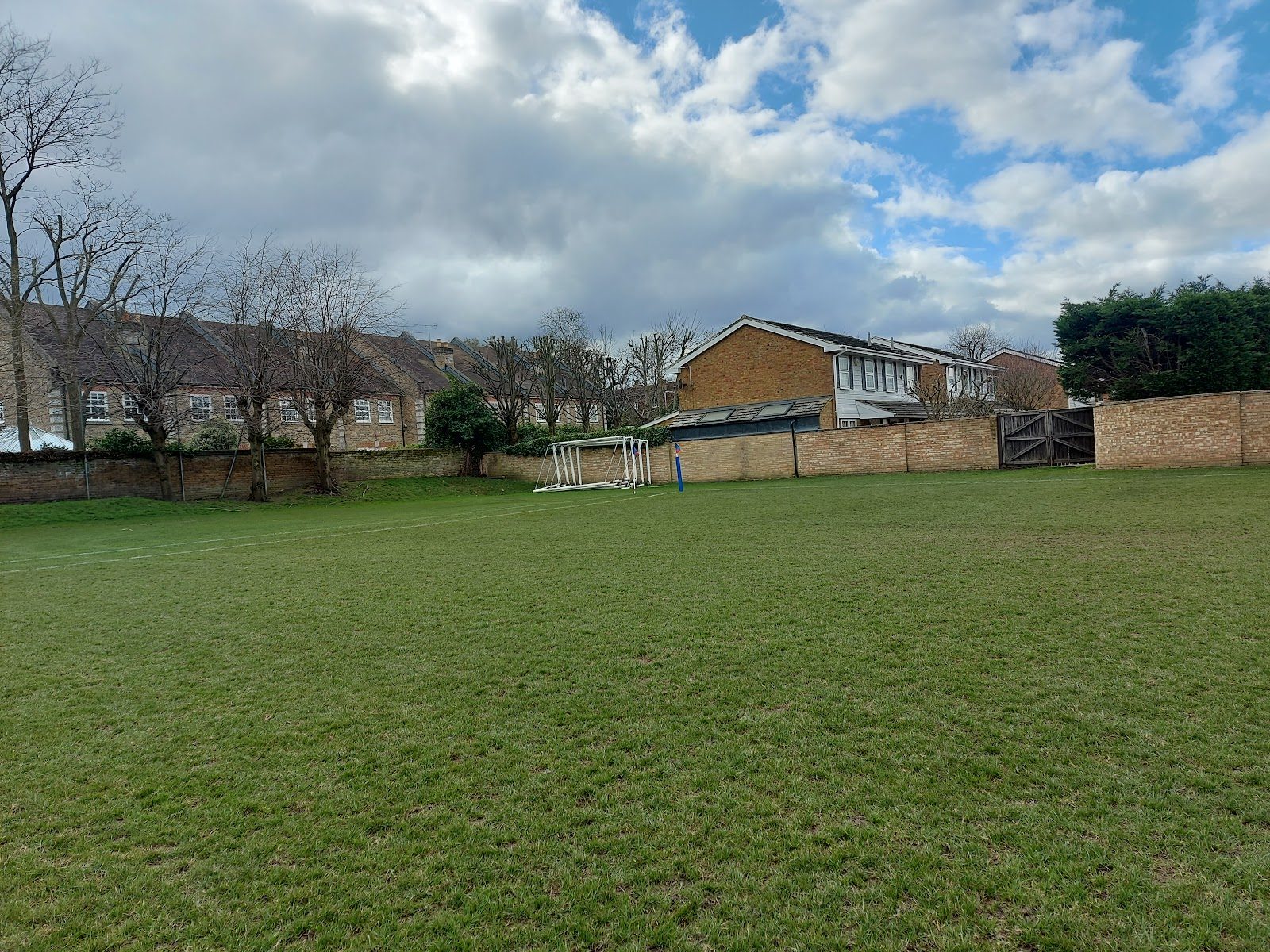
King's College School, Wimbledon
London · United Kingdom
Beside Wimbledon Common, a Royal Charter school where sixth-formers choose A-levels or the IB and rank among England's very best in both.
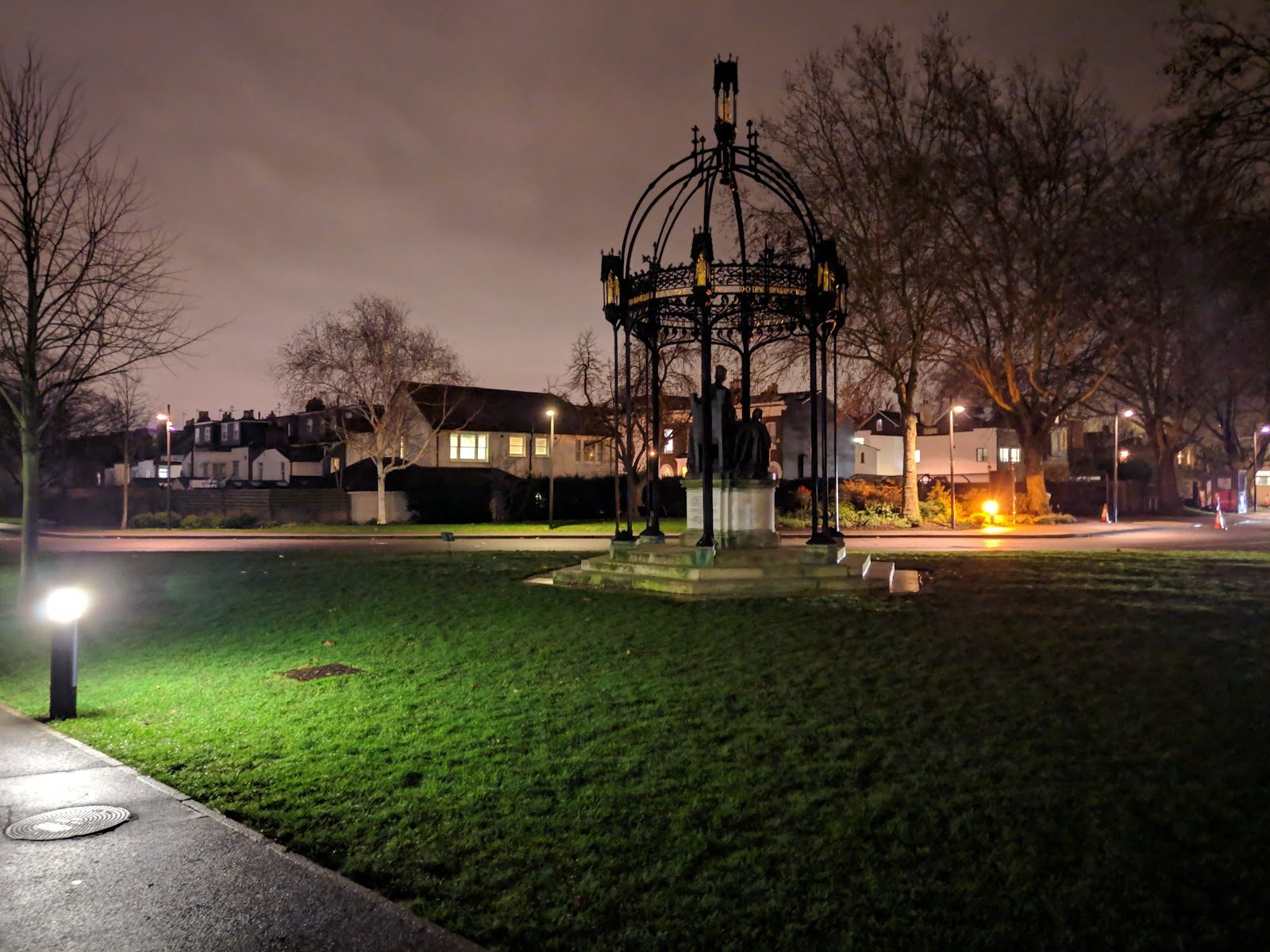
St Paul's School
London · United Kingdom
A 1509 founding charter to teach boys 'from all nacions and countres indifferently' still anchors this riverside Barnes campus on the Thames.
Westminster School
London · United Kingdom
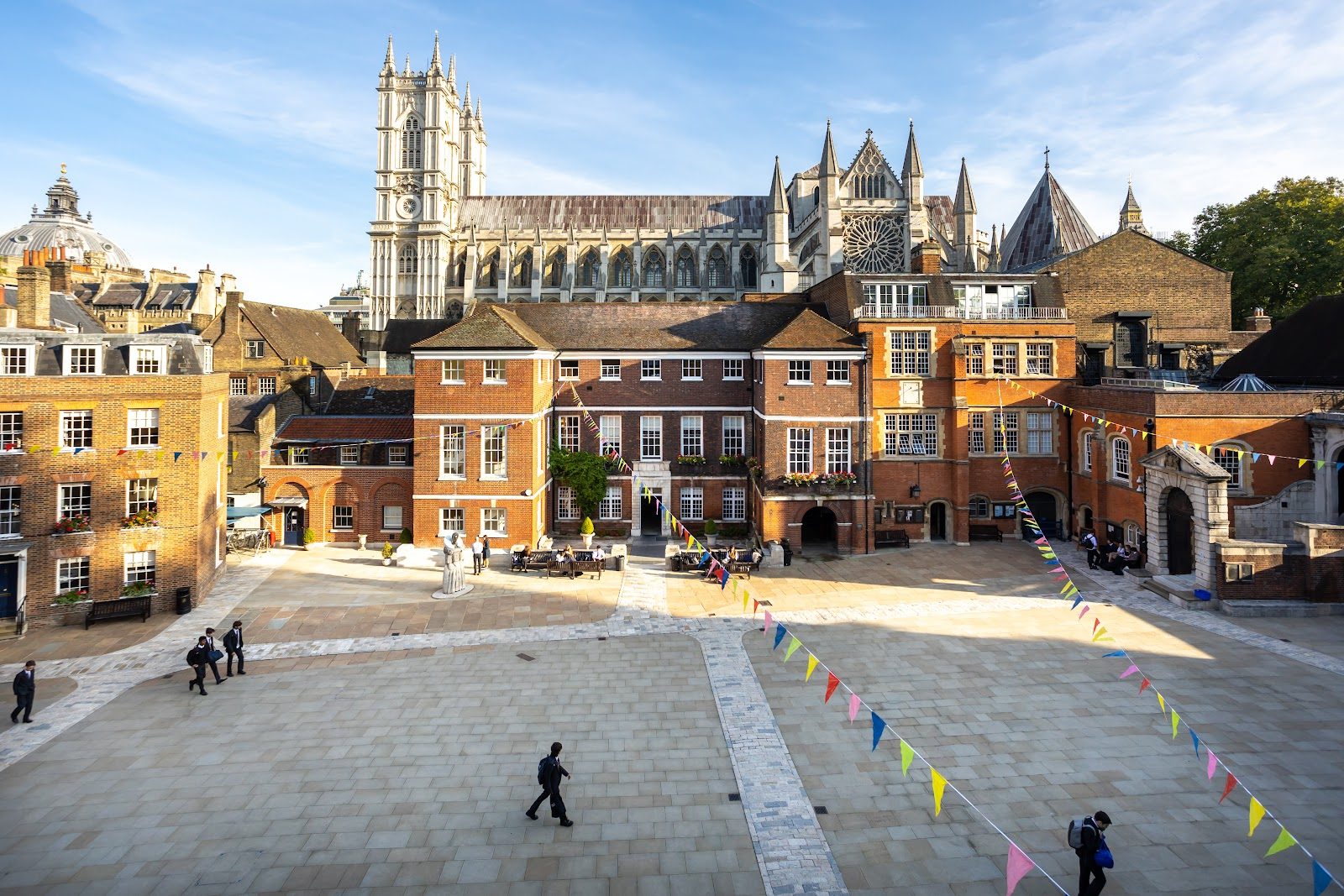
Sandwiched between Parliament and the Abbey, its Latin prayers and ancient halls send close to half of leavers on to Oxford or Cambridge.
Magdalen College School
Oxford · United Kingdom
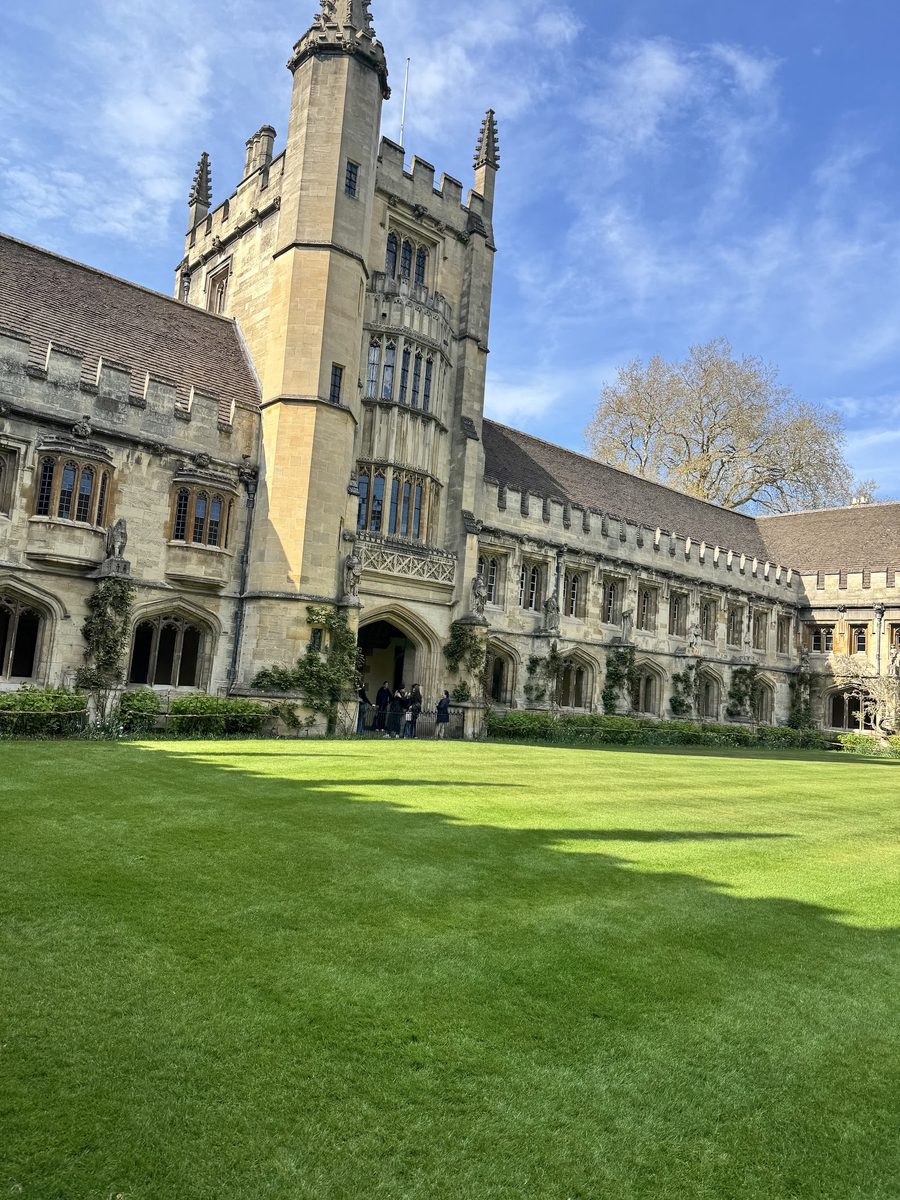
Educating Magdalen College's choristers since 1480, this Oxford day school is now opening its ancient choir stalls to girls for the first time.
Same country and curriculum — closest matches within ±10 points either way