
Europe
The Tiffin Girls' School
Kingston upon Thames’ selective girls’ school since 1880

Photo © Park watching around world via Google Maps
Type
Day
Ages
11–18
Curriculum
British
Ratio
—
Ranking breakdown
The Tiffin Girls' School · #493 of 1591
Composite score 69.1. 8 weighted criteria.
By criterion
Academic Outcomes
Weight 20%
#208
of 1529 scored
University Placement
Weight 16%
#516
of 1529 scored
Prestige & Heritage
Weight 12%
#1138
of 1571 scored
Alumni Network
Weight 12%
#872
of 1530 scored
Facilities
Weight 12%
#1220
of 1534 scored
Transparency & Communications
Weight 8%
#16
of 1532 scored
Peer & Industry Review
Weight 10%
#793
of 1548 scored
Admissions Selectivity & Demand
Weight 8%
#72
of 1529 scored
Peer & Industry Review
How The Tiffin Girls' School is regarded in the sector
Insufficient peer signal
We couldn't find enough independent third-party evidence to score this school's peer & industry standing with confidence. It doesn't mean the school isn't well regarded — only that public reputation sources we trust don't yet cover it. This axis is left blank for now and the composite score is median-imputed from the other six categories.
Editors' overview
The Tiffin Girls' School occupies a rare position in south-west London: a long-established, academically selective girls’ day school with state funding rather than private-school fees. Founded in 1880, it offers a British curriculum for girls aged 11–18 and has the brute attraction that drives this corner of the market: serious academic selection without the financial barrier of an independent school. That combination alone puts it on a shortlist for families who want high academic pressure, a selective peer group and clear sixth-form continuity in Kingston upon Thames.
What sets Tiffin Girls’ apart is not pastoral branding or glossy facilities talk; it is the structural proposition. This is a girls’ selective school, and that shapes the culture from the start. Parents should read that plainly. The school suits students who thrive on pace, competition and scrutiny, and who want to work in an environment where strong attainment is normal rather than exceptional. For the right pupil, that can be electrifying intellectual company. For the wrong one, it can feel unforgiving. Families who want a softer, looser or less exam-driven school experience should look elsewhere.
Its market position is therefore exact. Tiffin Girls’ sits in the space between the top state grammar tradition and the independent girls’ school sector. In practice, it competes not on luxury but on outcomes, selectivity and value. It is a day school, non-religious, taught in English, and it became an academy in 2011. That matters less to parents than the practical reality: entry is contested, expectations are high, and the school attracts families prepared to organise around exams, travel and ambition. The students who will want to go here are girls with strong academic self-discipline, real stamina and the appetite to be stretched every day by equally able classmates.
Academic Performance
Publicly available exam data places Tiffin Girls’ in the top tier of English state schools. GCSE outcomes are consistently exceptional: recent cohorts recorded well over 90% of entries at the top grades, with a very high share at grade 9. A-level results sit in the same bracket, with around four in five grades at A*–A in strong years. That matters because this is not a school trading on selective admissions alone; plenty of selective schools admit able pupils, fewer convert that intake into results at this level across both GCSE and sixth form. Relative to local comprehensives, the gap is stark. Relative to selective peers in London and the home counties, Tiffin Girls’ still holds its ground comfortably.
The more useful comparison for parents is with independent day schools that charge substantial fees. On raw academic output, Tiffin Girls’ competes directly with them, and in some years beats them. That gives the school its hard-edged advantage: no luxury proposition, no soft-focus messaging, just serious academic delivery. The trade-off is obvious. Results at this level are built in an environment of sustained pressure, fast teaching and a peer group for whom high attainment is routine. For ambitious students, that is a prize. For students who need academic slack, it is the wrong fit.
Facilities
Tiffin Girls’ is not a school that sells itself on acreage or spectacle. Parents should expect a compact, urban state-school estate geared to academic delivery, not the polished abundance of a major independent campus. The important facilities in that context are the teaching spaces that support high-level classroom work through to sixth form, alongside science provision, a library fit for serious study, IT access, and the specialist rooms needed for music, art and design. For a selective girls’ school of this type, those are the facilities that matter most. They do not need to be lavish; they need to be efficient, intensively used and properly maintained. What we have not seen is any public case for standout extras such as a theatre, extensive playing fields on site, or the kind of sports complex that fee-charging competitors use to justify their prices.
Against peer schools, that places Tiffin Girls’ in a clear bracket. Compared with strong local comprehensives, a selective intake and academically focused infrastructure carry real weight. Compared with top independent girls’ schools, the offer is leaner, less ornamental and almost certainly weaker on pure physical plant. That is not a defect unless a family wants swimming pools, expansive grounds or showpiece performing-arts buildings. For parents choosing on academic substance, the question is simpler: are the facilities good enough to sustain a demanding school day for able pupils? Yes. Are they a reason in themselves to choose the school over wealthy rivals? No.
GCSE outcomes are consistently exceptional: recent cohorts recorded well over 90% of entries at the top grades, with a very high share at grade 9
Prestige
Tiffin Girls’ carries serious academic prestige in the English state sector. Not the theatrical prestige of a fee-charging brand with manicured grounds and inherited social cachet, but the harder kind that matters in classrooms and university admissions: selection, results and scarcity. Entry is intensely competitive, and that alone shapes external perception. Families know a place here has been won, not bought. In the hierarchy of south-west London schooling, that gives Tiffin Girls’ unusual status: a state-funded girls’ school that sits in the same conversation as high-performing independents when parents talk about academic destination, sixth-form strength and intellectual calibre. Its standing also benefits from the grammar-school aura, even though it operates as an academy; the public still reads schools of this type through the lens of old selective prestige.
That prestige is real, but it has a specific texture. Tiffin Girls’ does not trade on polish, networking mythology or the social finishing-school appeal that underpins parts of the independent sector. It trades on earned esteem. Among informed local families, the badge carries weight because the school is hard to access and harder to coast through. The prestige therefore rests less on charm than on proof. A school producing top-flight outcomes in a state setting, for girls across 7 year groups and through to 18, commands respect. The caveat is clear: this is high-pressure prestige. Students who want recognition for academic seriousness will value it; students who want warmth, ease or institutional glamour will not.
Tiffin Girls’ sits in the space between the top state grammar tradition and the independent girls’ school sector
Communications
Tiffin Girls’ needs disciplined parent communication because the school asks a great deal of its pupils and, by extension, their families. In a selective state school with a long commute catchment and a heavy academic load, weak communication creates friction fast: deadlines get missed, trips become chaotic, sixth-form guidance turns opaque. The test is not warmth but clarity. On that measure, the school’s communication looks functional rather than charming. Parents choosing Tiffin are not buying concierge-style hand-holding; they need timely notices, reliable calendar management, straightforward policy publication and clear explanations around admissions, assessment, safeguarding and sixth-form transition. That style suits a school with a no-nonsense institutional culture.
How effective is it? Effective enough if you value order, less so if you want a high-touch relationship. The school’s public-facing information does the essentials: it establishes the school’s selective identity plainly, gives parents the core institutional facts, and avoids the inflated tone that clutters weaker school websites. That restraint is a strength. What we have not seen is evidence of unusually rich transparency around broader parental engagement, nor a strong public case for exceptional openness beyond the basics. That matters less for confident, organised families who can navigate systems independently. It matters more for parents who want frequent interpretive guidance rather than instructions. In short, the communication standard fits the school: efficient, exacting and built for families who keep up.
Uniqueness
What makes Tiffin Girls’ distinctive is not a niche programme or a theatrical campus proposition. It is the combination of state funding, girls-only education and ruthless academic selectivity in a part of London where comparable intellectual intensity usually comes with private-school fees. That creates a rare social and educational mix: pupils enter a school where high ability is assumed, ambition is normal and academic seriousness carries no stigma. In practical terms, students get the pace and peer competition of a high-voltage selective environment without the social coding of a fee-charging school. That matters. It widens access to a level of academic challenge that many families associate with the independent sector, while preserving the sharper meritocratic edge that selective state schools still hold.
For students, the benefit is clear. Daily life in this kind of school can be transformative for bright girls who want stretch, not protection. Lessons move quickly, classmates raise the floor as well as the ceiling, and sixth-form study sits within a culture that treats intellectual commitment as standard. The girls who thrive here gain confidence from being surrounded by other able students rather than having to downplay their strengths. They also learn to cope with pressure early, which is useful preparation for competitive university applications and demanding professional paths. The cost is just as clear: this is a hard-driving environment, not a gentle one, and its uniqueness rests precisely in that refusal to dilute itself.
Publicly available exam data places Tiffin Girls’ in the top tier of English state schools
Student Profile
The girls who fit Tiffin best are those who do not need coaxing into hard work. They are academically quick, internally driven and comfortable in a room where competence is the norm. A child who likes solving problems, reading beyond the syllabus, arguing a point properly and treating schoolwork as serious business will find strong company here. So will a student with the resilience to absorb correction without drama. The intake sits across 7 year groups, but the common thread is clear: this school suits girls with high tolerance for pressure, sharp self-management and the confidence to be measured against other able pupils every day. It does not suit students who rely on constant reassurance, drift without external structure or want their school life to revolve around social ease first and academic demand second.
Personality matters as much as raw ability. The strongest fit is a girl who is focused without being brittle, competitive without becoming consumed by competition, and mature enough to handle a selective environment without turning every result into a crisis. She needs stamina for homework, commuting and the plain fact of a demanding pace through to 18. There is room here for thoughtful, bookish, quietly ambitious students as much as for overt high-achievers, but there is less room for those who need a gentler tempo, looser expectations or a pastoral-heavy culture. In blunt terms, Tiffin works for girls who want stretch and can live with strain.
Compared with top independent girls’ schools, the offer is leaner, less ornamental and almost certainly weaker on pure physical plant
Co-curricular strengths
Arts & sport, on a separate axis
Overall 8.44/10
Scored 0-10 from the school's own published evidence. This axis is editorial-only — it does not feed the main WTS ranking.
Sports
8.8/10
Much stronger than its academic-grammar image implies: 75+ teams, hundreds of fixtures, local-to-national competition and recent national hockey championship success — approaching 9 territory.
Drama
8.4/10
Runs throughout the secondary curriculum with two principal productions annually, professional workshops, technical theatre, overseas theatre experiences and a broad repertoire.
Dance
7.5/10
Present, but without a comparable specialist pathway to the other categories.
Music
9.2/10
Exceptional: multiple choirs, orchestras and ensembles including a Symphony Orchestra requiring roughly Grade 6+, touring and music scholars — and a wider choral infrastructure performing with the Royal Opera, ENO, London Symphony Orchestra, Philharmonia, LPO and RPO.
Visual Arts
8.3/10
Academically substantial through A-level with pupils progressing to specialist art institutions.
Editor-verified · 8/27/2026
Gallery
Photo © Park watching around world via Google Maps
Photo © Park watching around world via Google Maps
Photo © Park watching around world via Google Maps
Parent reviews
Have you sent your child here?
Voice reviews carry the strongest trust badge — we transcribe them for you to tidy up before they go live. Prefer to type? A written review is fine too.
Add your voice
In 60 seconds, tell other parents: what's the best thing about The Tiffin Girls' School, and what surprised you when your child joined?
We ask for a Google sign-in so every review has a real face behind it — no anonymous drive-by attacks on schools, and no faked positive reviews. Your email is never shown publicly.
Send this profile to a friend
International parents rely on word-of-mouth. Share this review with someone weighing the same decision.
Schools with places
Similar schools to The Tiffin Girls' School with places available now.
Availability first, then country, area, curriculum, price, co-curricular
Consider also
Also worth looking at alongside The Tiffin Girls' School.
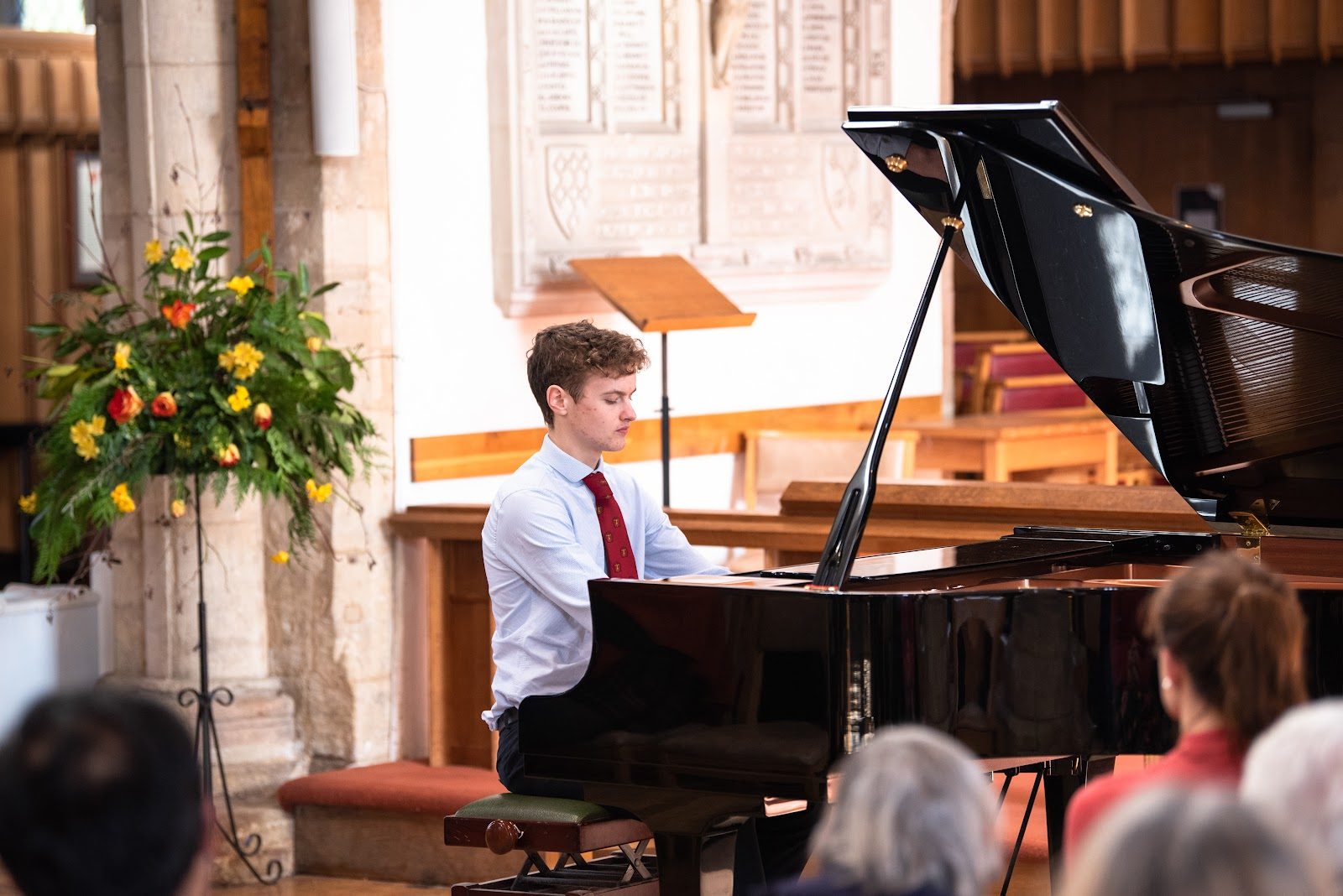
Oundle School
Oundle · United Kingdom
Boarding houses woven into a historic market town, and an engineering centre that 3D-prints titanium and carbon fibre.
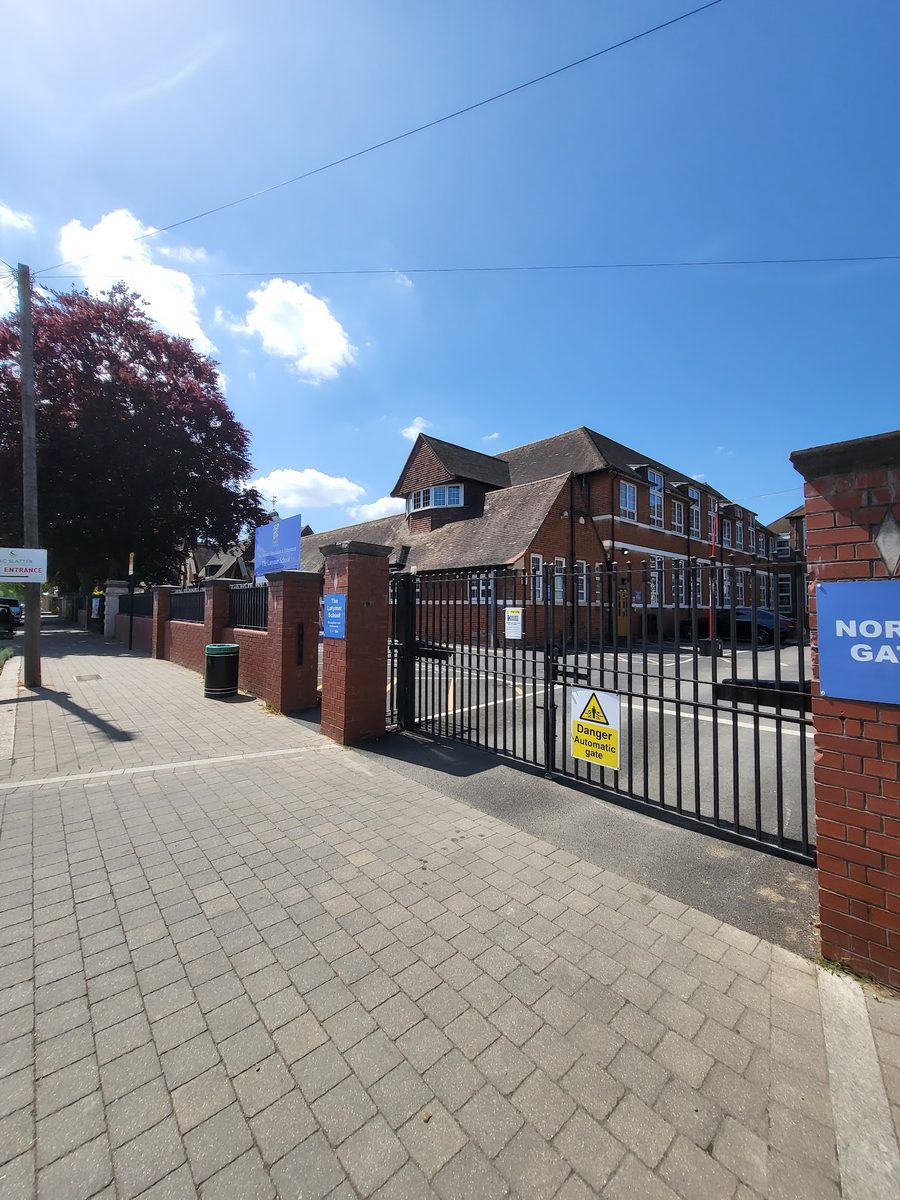
The Latymer School
London · United Kingdom
A 400-year-old state grammar in Edmonton where over 1,000 applicants compete yearly for just 192 places, with Cambridge college endowments still funding leavers.
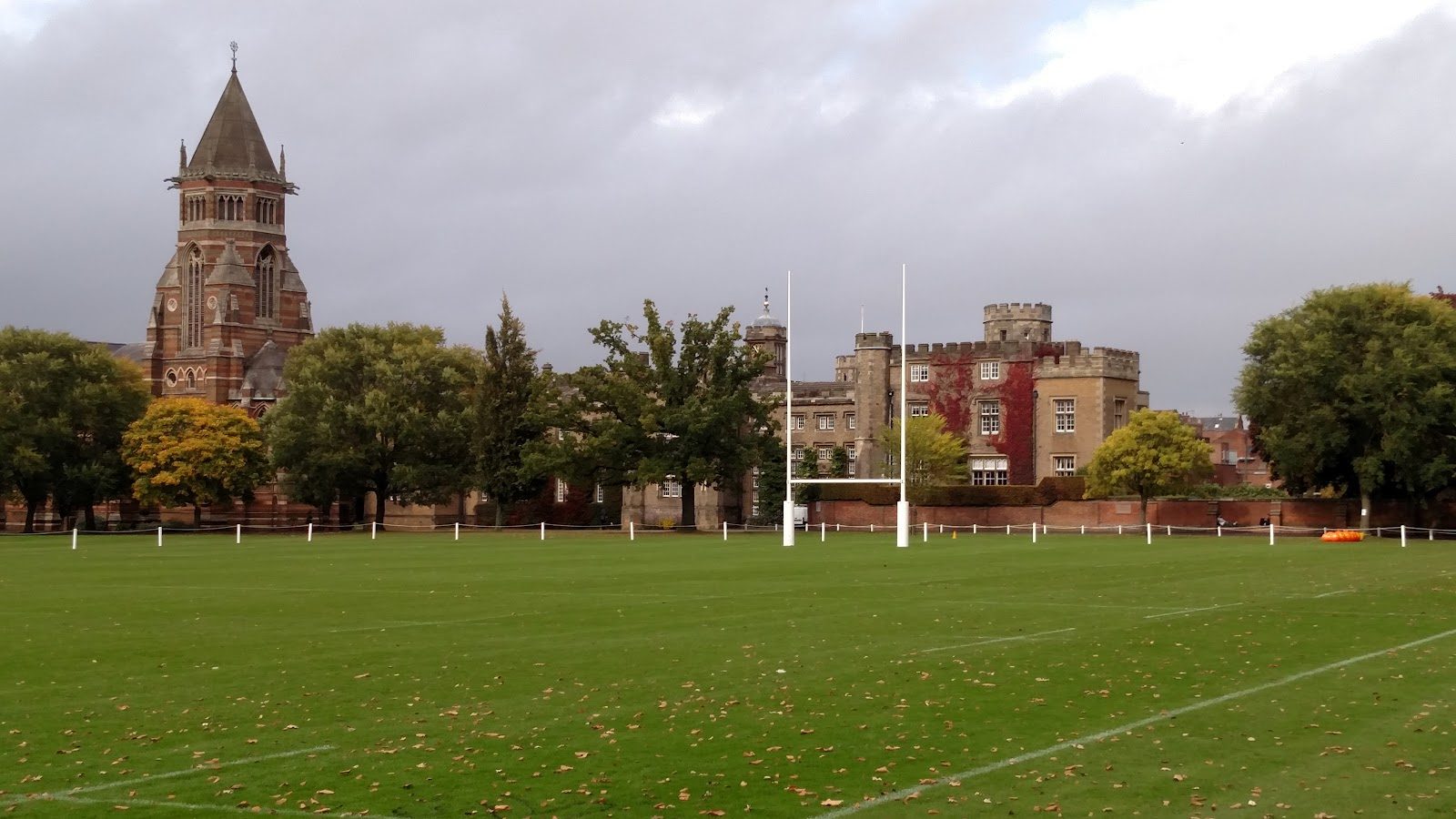
Rugby School
Rugby · United Kingdom
The Warwickshire close where a schoolboy's 1823 sprint with the ball gave rugby its name and its game.
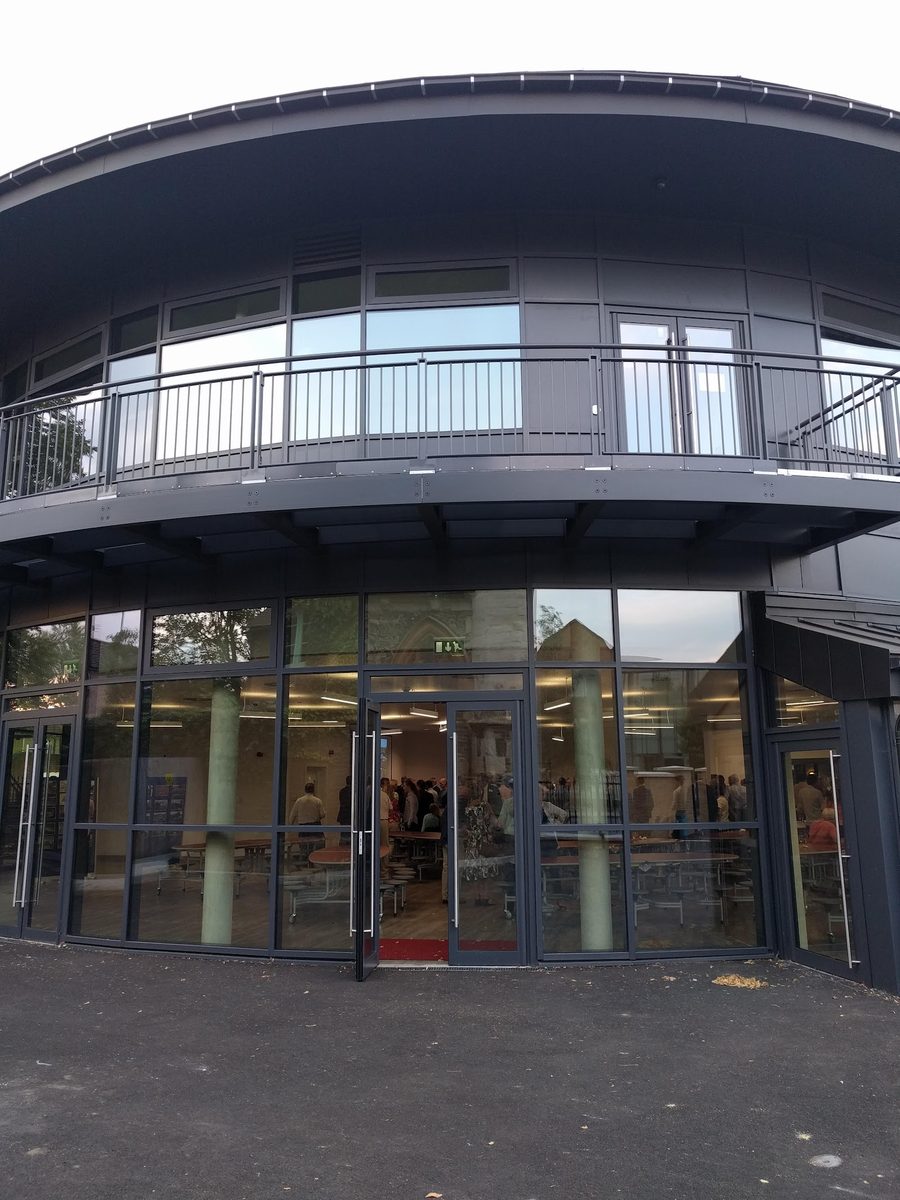
Tiffin School
Kingston upon Thames · United Kingdom
No fees, no let-up: a Kingston grammar school where two-stage testing turns 2,000 hopefuls into a class of 180.
Same country and curriculum — closest matches within ±10 points either way