
Himachal Pradesh
The Lawrence School, Sanawar
high confidence· 6/6 cats · 3.18 avg sourcesPerched at 1,750 metres in the Shivaliks, Asia's oldest co-educational boarding school sent the first team to summit Everest in 2013.
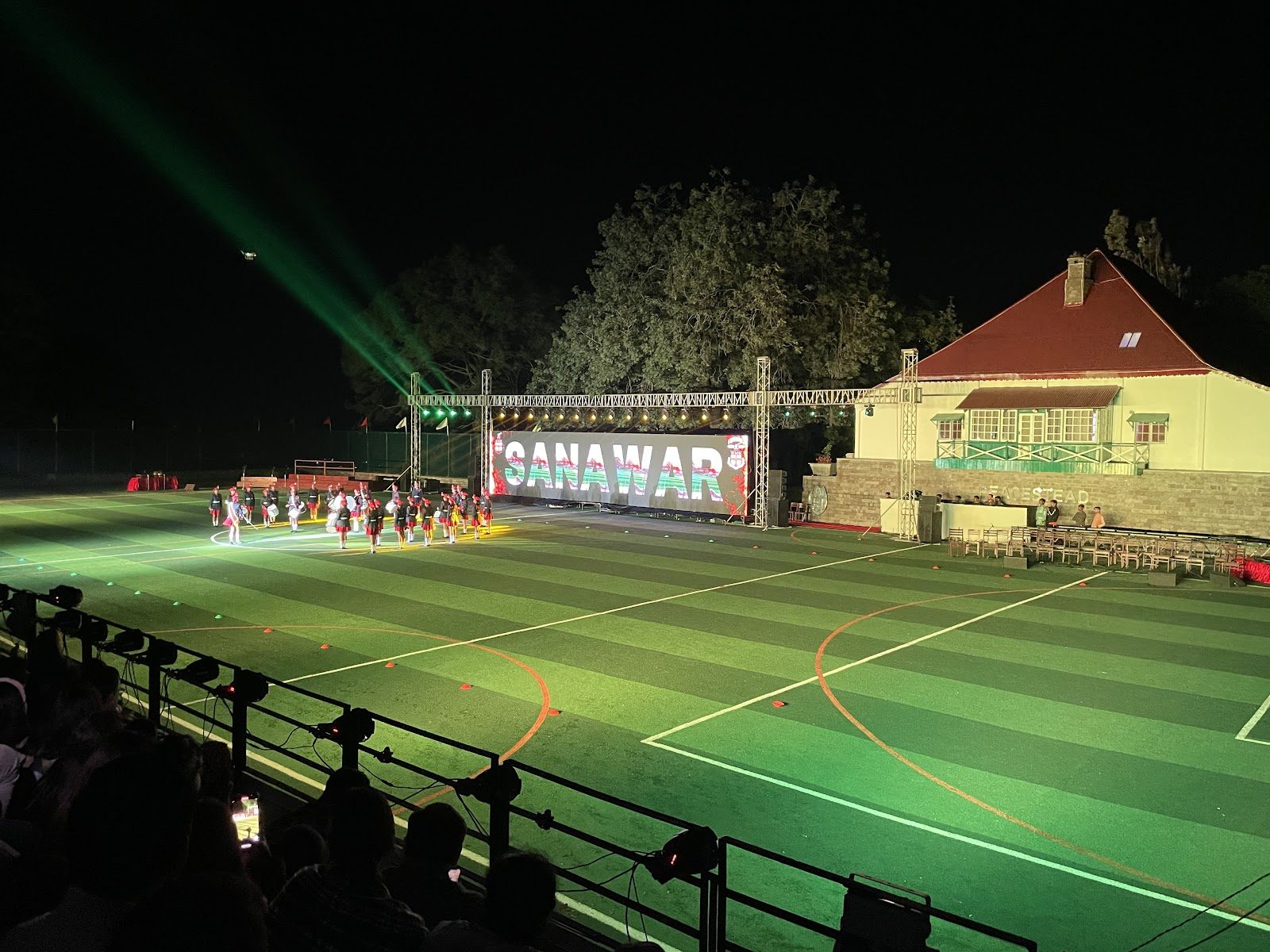
Photo © Amit Kejriwal via Google Maps
Type
Boarding
Ages
11–18
Curriculum
IB · Indian National · British
Qualifications
ISC · IGCSE
Ratio
—
The Verdict
Editor's commitment
Right for
Boarders aged 11–18 who want a co-educational hill school founded in 1847, with CIS accreditation and serious outdoor culture.
Wrong for
Families wanting a pure IB or pure British school: Sanawar states IB, Indian National and British, while the website foregrounds CBSE.
Watch out for
Boarding averages INR 1,427,400 a year, and the academic picture needs scrutiny because the school publishes no clear aggregate results here.
Ranking breakdown
The Lawrence School, Sanawar · #668 of 1591
Composite score 66.5. 8 weighted criteria.
By criterion
Academic Outcomes
Weight 20%
#957
of 1529 scored
University Placement
Weight 16%
#965
of 1529 scored
Prestige & Heritage
Weight 12%
#206
of 1571 scored
Alumni Network
Weight 12%
#139
of 1530 scored
Facilities
Weight 12%
#848
of 1534 scored
Transparency & Communications
Weight 8%
#1000
of 1532 scored
Peer & Industry Review
Weight 10%
#891
of 1548 scored
Admissions Selectivity & Demand
Weight 8%
#726
of 1529 scored
Score history
The Lawrence School, Sanawar · 2026
Movement across 2024–2026. Peer average overlaid.
Overall — 2024–2026
66.5/ 100
▲ +17.3 vs 2025
year on year
Peer & Industry Review
How The Lawrence School, Sanawar is regarded in the sector
78
Strong · medium confidence
The Lawrence School, Sanawar is one of India's oldest and most prestigious boarding schools (founded 1847), consistently featured in independent 'best boarding schools in India' rankings and education press alongside Doon School, Mayo College, and Welham. It has a strong, well-documented alumni network including military generals, civil servants, and business leaders that receives coverage in Indian press (e.g., Hindustan Times, The Tribune, India Today features on elite boarding schools). It lacks the same level of international press coverage (Tatler, Good Schools Guide) as UK-based institutions, but within the Indian and South Asian expat education context it holds a solidly strong regional-to-national reputation.
Evidence sources
Editors' overview
At 1,750 metres in the Shivaliks, The Lawrence School, Sanawar trades on something few Indian schools can match: altitude, age and institutional memory. Founded in 1847, it is Asia’s oldest co-educational boarding school, and that long history still matters because Sanawar reads as a school built around boarding first, not day-school routines with dormitories added on. The site itself sets the tone: self-contained, disciplined and physically removed from urban distraction. This is not a polished metropolitan international school for families who want easy access and constant hand-holding. It is a full boarding school in Solan, taught in English, non-religious, and clear in its public identity as a place for independence, routine and communal life.
The academic picture needs careful reading. Sanawar declares a mixed academic identity — IB, Indian National and British in the school context — while its own website foregrounds CBSE affiliation. Parents need to ask exactly where each pathway sits in the school and who takes what, because curriculum architecture matters more than branding. What is solid is the school’s external standing: it holds CIS and IBO accreditation, which gives it more international credibility than many historic Indian boarding schools. The average annual boarding fee is INR 1,427,400, which places Sanawar in the premium end of the Indian boarding market without pushing into the stratospheric pricing of some newer luxury campuses. This is a serious buy-in for families who want boarding culture, not spa-like infrastructure.
What puts Sanawar on a shortlist is not glossy futurism but depth of tradition and a strong record of producing public figures. Wikidata alone records 42 notable alumni, including 14 actors and directors, 11 politicians and statespersons, plus business leaders, writers and scholars. That does not prove current academic quality on its own, but it does confirm reach, networks and longevity. The school’s own tagline points to the first team to summit Everest in 2013, which captures the institutional character neatly: rugged, competitive, outward-bound, and attached to the idea that character is built through challenge.
The right pupil for Sanawar is not the child who needs a soft landing or a highly personalised boutique environment. It suits students from 11–18 who will relish structure, boarding intensity, sports, societies, service and a campus culture with real expectations attached. It will appeal to families who value legacy, resilience and peer networks across the subcontinent more than progressive classroom theatre. Sanawar’s attraction is old-school weight: a mountain campus, a long alumni arc, international accreditations, and a boarding culture that still feels demanding rather than decorative.
Academic Performance
Sanawar’s public academic reporting is thin. The school has a “Result” section and posts mandatory CBSE disclosures, but the extracts here do not publish aggregate board outcomes, subject averages, university destinations, IB diploma results, or year-on-year attainment data. That leaves parents without the hard comparative evidence that stronger academic operators now put in plain view. For a school with this level of heritage and fee, that is a material weakness. If academic results sit at the centre of your school search, ask for the last 3 years of board results by cohort, top grade distribution, mean scores, and destination lists split by country and course.
Where does that place Sanawar against peers? In the Indian boarding market, it sits in the group whose reputation rests heavily on legacy, alumni reach, culture and all-round formation rather than published academic transparency. That does not mean weak results; it means opaque results. The school’s own language stresses questioning, debate, co-curricular breadth, service, discipline and outdoor challenge, which points to a broad-gauge education rather than a narrowly exam-drilled one. Families choosing between historic hill schools may find that attractive. Families comparing academically explicit schools will rank Sanawar lower until it discloses more than rhetoric.
Facilities
Sanawar’s key facility is the campus itself: a self-contained hilltop boarding estate built for residential life rather than commuter convenience. The public site points to the pieces that matter in that model — boarding houses, a central dining hall, a school hospital, counselling provision, sports, societies and clubs, hobby activities, service projects, NCC, IAYP and an international exchange programme. That adds up to a school where facilities are organised around constant occupation of pupils’ time, not occasional enrichment after lessons. The hospital is a serious practical asset in a remote boarding setting, and the presence of structured service, outdoor and leadership platforms fits the school’s hard-edged institutional culture. Parents who want glossy STEM showcases, black-box theatre branding or a conspicuous performing-arts complex will not find that emphasis in the school’s public case.
Against peer boarding schools in India, that puts Sanawar in the camp where infrastructure matters for durability, supervision and range of activity rather than architectural spectacle. The campus has the advantage of altitude and seclusion at 1,750 metres, which strengthens sport, outdoor life and immersion, but it also means this is a closed-world school by design. Elite competitors with newer capital expenditure can outgun it on sheer polish and specialist build. Sanawar’s strength lies elsewhere: facilities that support a demanding boarding routine, strong communal life and the institutional machinery of an old residential school. For families choosing historic hill schools, that still counts for more than shinier façades.
At 1,750 metres in the Shivaliks, The Lawrence School, Sanawar trades on something few Indian schools can match: altitude, age and institutional memory
Prestige
Sanawar carries real prestige in the Indian and wider subcontinental boarding market because its reputation rests on three assets that newer schools cannot manufacture quickly: age, alumni reach and institutional continuity. This is a school that still holds weight with families who care about old networks, public life and the social confidence that residential schools can confer. The alumni footprint matters here. Wikidata alone records 42 notable former pupils, including 11 politicians and statespersons and 14 actors and directors. That is not a trivia list; it points to a school with long-standing access to elite circles in politics, culture and business. The name has recognition beyond education, and in prestige terms that counts.
That prestige is not the same as academic supremacy. Sanawar’s standing is *historic and social before it is data-driven*. The school projects discipline, endurance, service and outward-bound seriousness more than intellectual glamour or published results culture. For some families, that is exactly the appeal: a high-status, tradition-heavy education with a strong sense of belonging and a powerful old-school network. For others, the cachet will feel more inherited than evidenced because the school does not match its reputation with clear public academic data. The verdict is straightforward: Sanawar remains one of India’s best-known boarding names, and the badge still carries force, but its prestige today rests more on legacy and connections than on transparent proof of current academic dominance.
Sanawar’s key facility is the campus itself: a self-contained hilltop boarding estate built for residential life rather than commuter convenience
Communications
Sanawar’s parent communication has a clear institutional shape: formal, centralised and school-led. The website carries a dedicated Parent Area, a Headmaster’s communication channel, a news feed, calendars, newsletters, photo and video galleries, admissions notices, syllabi, sample papers, compliance certificates and policy pages that include discipline and counselling. That breadth matters. Parents can find the machinery of the school in one place, which is what a full residential school needs. The tone is top-down, institution-first and steeped in tradition rather than customer service language. For many boarding parents, that will feel reassuringly old-school. For others, it will read as remote.
The weakness is not absence of channels but the quality of decision-useful disclosure. The school publishes process, notices and institutional messaging well enough; it does not publish the hard performance data that informed parents now expect. That gap affects communication directly. A school asking families to commit more than INR 1.4 million a year needs to communicate outcomes with the same clarity it gives entrance tests and campus life. The site is also crowded, with repeated slogans and a navigation structure that puts heritage, galleries and promotional copy ahead of sharp academic explanation. Parents will get a strong sense of culture, routine and authority. They will get a thin account of results and destinations. Verdict: communication is competent on administration, weak on transparency, and strongest when explaining how the institution works rather than what it delivers.
Uniqueness
What Sanawar has that very few schools can match is a boarding culture with real historical weight and a setting that still shapes daily life rather than decorating the prospectus. The hilltop estate, the house system, the central dining model, the hospital, the discipline committees, the service project structure and the outward-bound ethos all point in the same direction: this is a school built to train endurance, self-command and collective responsibility. The school’s own language — “Never Give In”, “Learn, Build & Serve”, a “questioning mind” — is not subtle, and neither is the institutional character. Sanawar offers a hard-edged, tradition-heavy adolescence in which routine, peer culture and expectation do much of the educating.
That brings clear gains for the right student. Pupils get immersion, not fragmentation: sport, societies, service, leadership platforms, international exchange and Model United Nations sit inside one high-intensity residential ecosystem. The alumni footprint strengthens that distinctiveness. With 42 notable former pupils catalogued on Wikidata across politics, business, scholarship, writing and screen, Sanawar offers more than nostalgia; it offers a network with serious social range. The Everest claim in the school’s own tagline sharpens the point. Sanawar prizes grit, not polish. For students who thrive on challenge, hierarchy and shared identity, that can be formative in the best sense. For children who need warmth, flexibility and close adult cushioning, it is a poor fit.
The tone is top-down, institution-first and steeped in tradition rather than customer service language
Student Profile
Sanawar suits pupils who can live comfortably inside a high-structure institution and do not need constant negotiation, softness or urban stimulation. The intake opens at Class V, with admissions also flagged for VI and VII, and the school’s own testing regime in English, Mathematics, Science and Hindi tells you something important: this is not a casual, lifestyle boarding option. It wants children who can handle academic routine, formal assessment and a house-based communal life from an early stage. Students who relish teams, competition, organised activity and adult authority will fit. So will children who like being busy. Between sports, societies, service, hobby work, NCC, IAYP, Model United Nations and exchange opportunities, idleness has little room here. The best Sanawar pupils are robust, self-propelling and happy to be measured against peers.
The weaker fit is just as clear. Children who need heavy emotional cushioning, flexible boundaries or a highly personalised pastoral style will find the culture demanding. So will teenagers who bridle at rules or want a more informal relationship with staff. The school draws students from different parts of the subcontinent and from varied backgrounds, which gives the community breadth, but the dominant code is shared institutional identity rather than individual tailoring. This is a place for pupils who want to belong to something bigger than themselves and are willing to submit to its habits, rituals and discipline. For the right child, that produces real steel. For the wrong one, it grinds.
The site itself sets the tone: self-contained, disciplined and physically removed from urban distraction
Co-curricular strengths
Arts & sport, on a separate axis
Overall 8.72/10
Scored 0-10 from the school's own published evidence. This axis is editorial-only — it does not feed the main WTS ranking.
Sports
9.3/10
Multiple named sports including cricket, football, hockey, athletics and basketball, extensive playing fields, courts and outdoor training areas, and notable sports alumni including Olympians and international-level athletes.
Drama
8/10
School Theatre, and a deep bench of notable performing-arts alumni including actors, directors and comedians, which establishes a clear drama pedigree.
Dance
8.5/10
Music
8.8/10
The extracurriculars explicitly list Choir and Western Music, showing more than a bare mention through multiple named music activities.
Visual Arts
9/10
External evidence identifies Kiran Nadar, founder of the Kiran Nadar Museum of Art, as a notable visual-arts alumnus, which is enough to evidence the dimension but not enough for a higher score without programme or facility detail.
Editor first-pass · editor-reviewable · 7/28/2026
Notable alumni · Wikidata
42notable alumni
1 historic (born pre-1930) · 14 modern (born post-1970)wikidata:2026-07-28 How we source this
Strengths
- +Founded 1847; exceptional historical continuity
- +Asia's oldest co-educational boarding school
- +Offers IB, ISC and IGCSE
- +10:1 student-teacher ratio; average class size 18
Considerations
- −Boarding only; no day places listed
- −Annual boarding fee: USD 20,000
- −Curriculum mix may complicate pathway choice
Availability
Primary entry gate & tests
Academic Record
Gallery
Photo © sant bux singh dutt via Google Maps
Photo © Pankaj Narang via Google Maps
Photo © Srikanta Goswami via Google Maps
Photo © Srikanta Goswami via Google Maps
Photo © Zen via Google Maps
Photo © PRASHANT CHANDRA via Google Maps
Photo © Robin Xavier via Google Maps
Photo © Amit Kumar via Google Maps
Photo © Shubham Paik via Google Maps
Parent reviews
Have you sent your child here?
Voice reviews carry the strongest trust badge — we transcribe them for you to tidy up before they go live. Prefer to type? A written review is fine too.
Add your voice
In 60 seconds, tell other parents: what's the best thing about The Lawrence School, Sanawar, and what surprised you when your child joined?
We ask for a Google sign-in so every review has a real face behind it — no anonymous drive-by attacks on schools, and no faked positive reviews. Your email is never shown publicly.
Send this profile to a friend
International parents rely on word-of-mouth. Share this review with someone weighing the same decision.
Schools with places
Similar schools to The Lawrence School, Sanawar with places available now.
Availability first, then country, area, curriculum, price, co-curricular
Consider also
Also worth looking at alongside The Lawrence School, Sanawar.
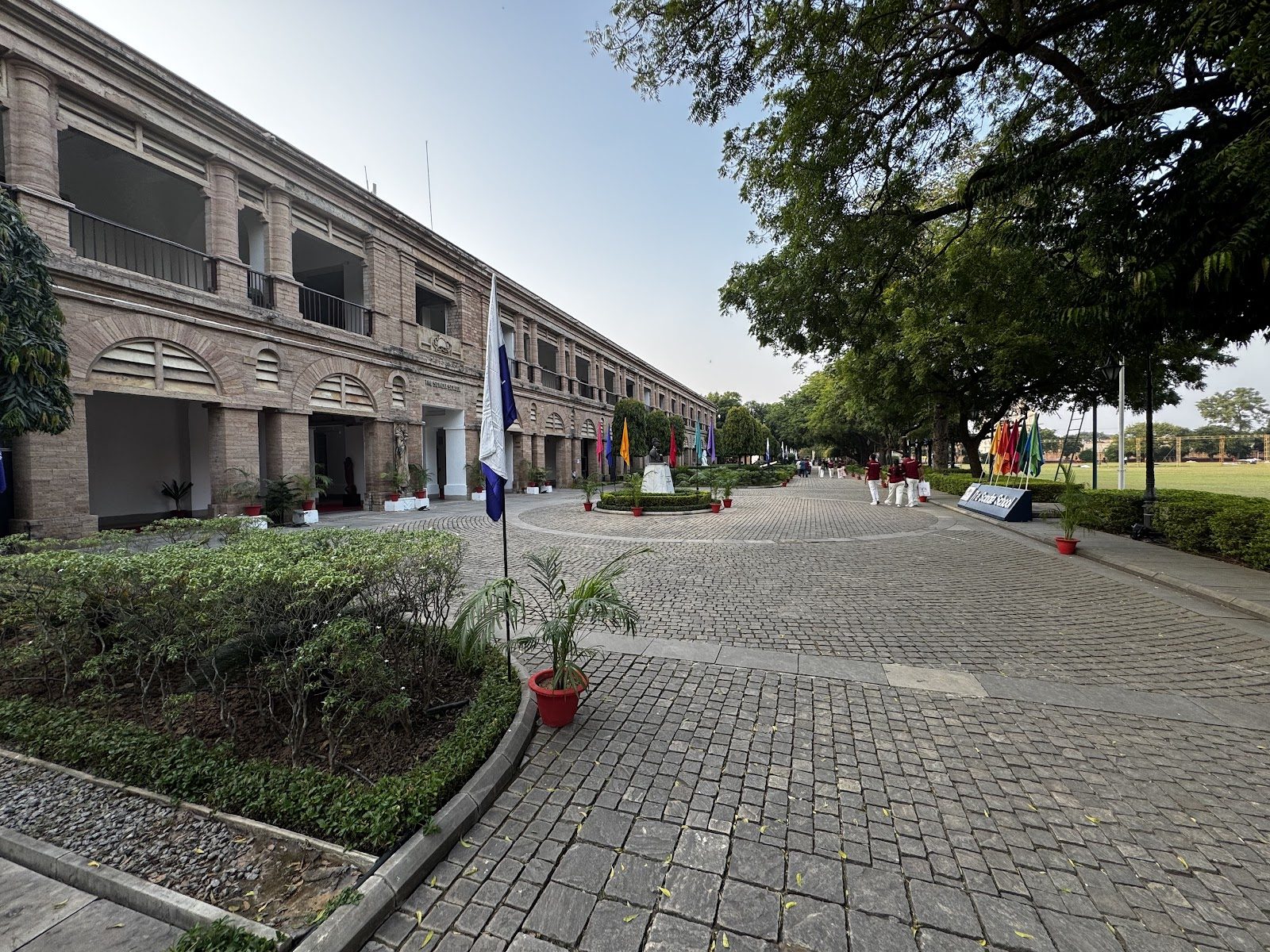
The Scindia School
Gwalior · India
Storied boys' boarding school inside Gwalior Fort, delivering a CBSE curriculum with a British public-school ethos.
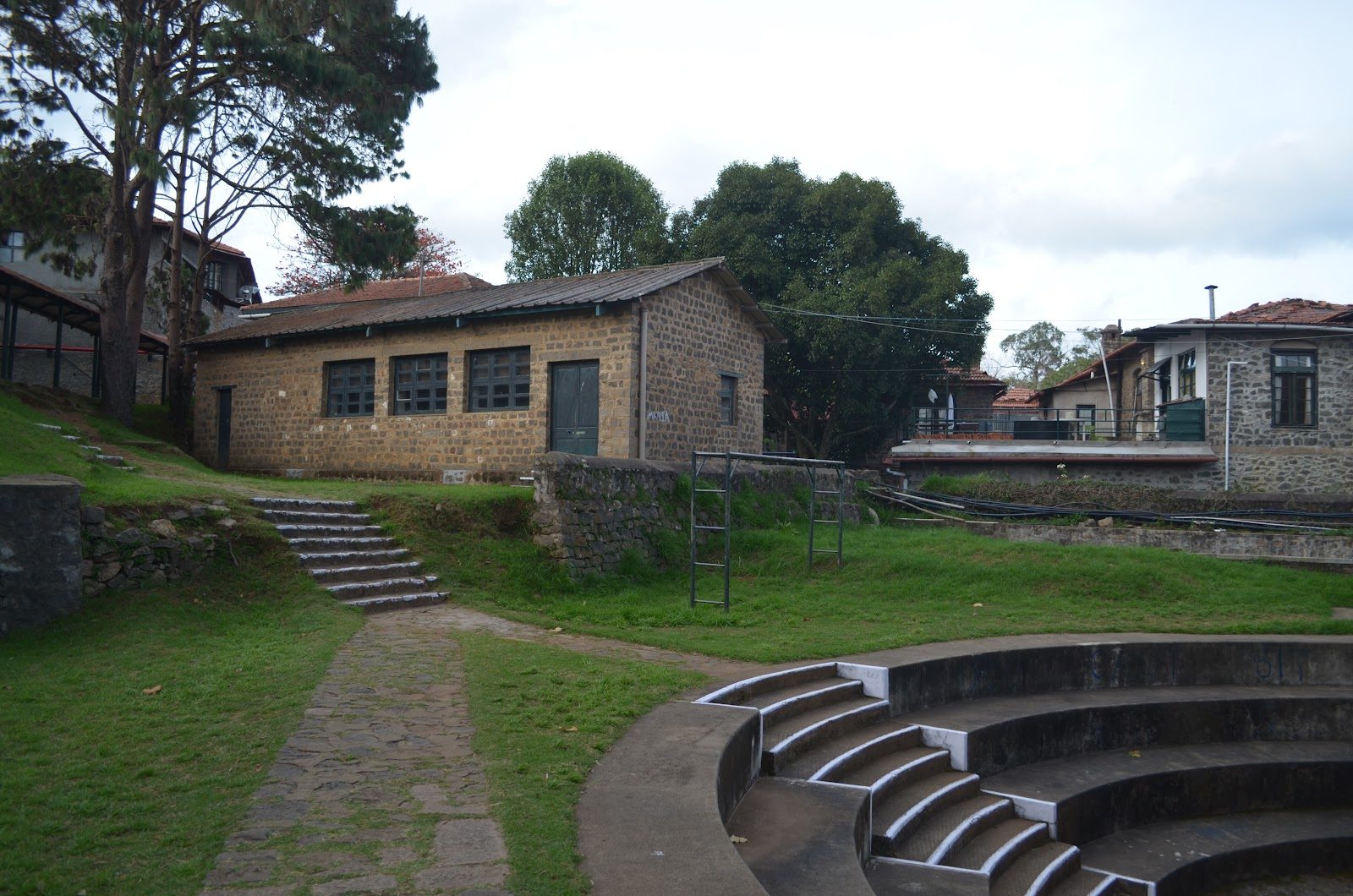
Kodaikanal International School
Kodaikanal · India
Founded in 1901 at 6,998 feet in the Palani Hills, it became India's first IB school and runs its own 135-acre wilderness campus for outdoor learning.
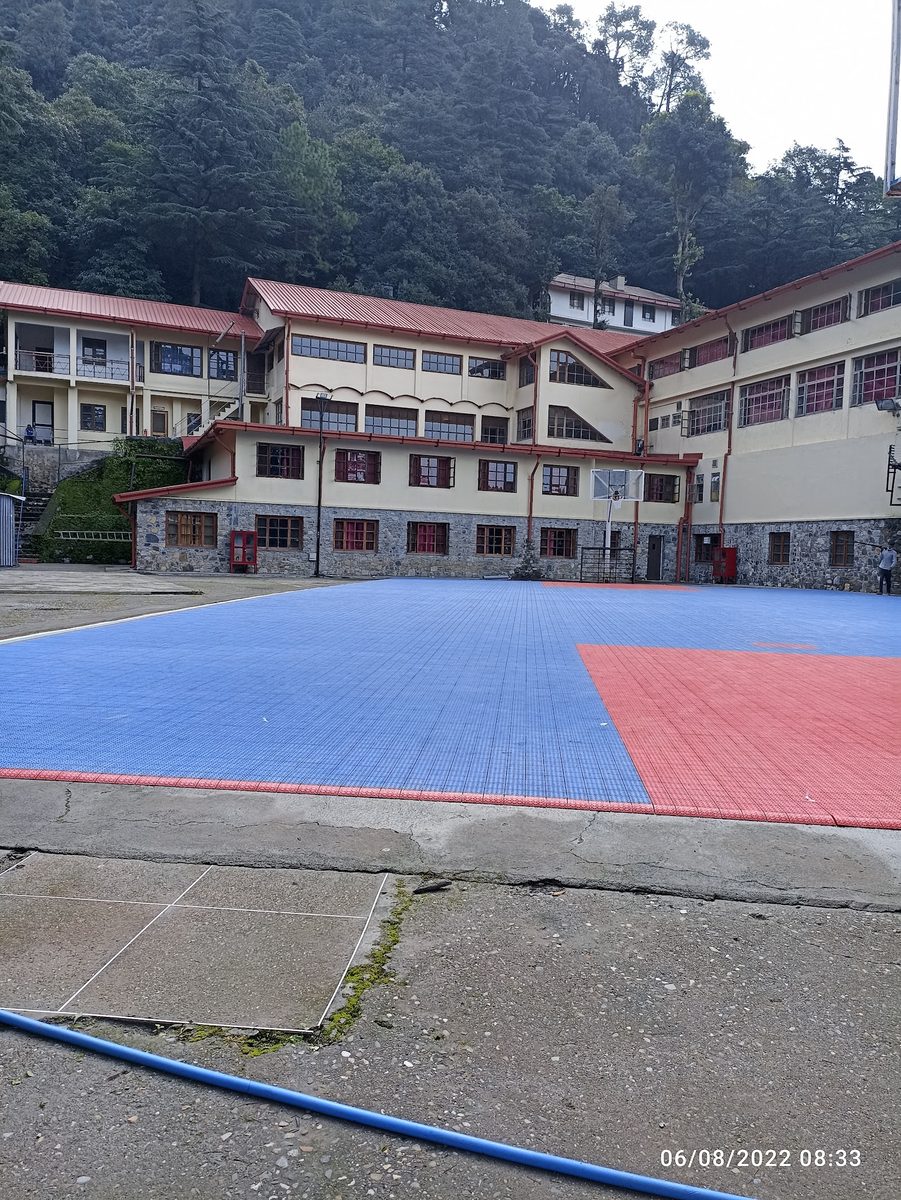
Woodstock School
Mussoorie · India
IB, American Diploma and Cambridge boarding amid the Himalayan foothills since 1854
American International School Chennai
Chennai · India
Born of a 1995 US-India accord, this Taramani campus blends AP and IB rigor with the world's first K-12 LEED Platinum campus
Same country and curriculum — closest matches within ±10 points either way