
California
Seventeen conservatories and a half-day devoted to pre-professional training turn this Santa Ana charter school into a proving ground for young artists.
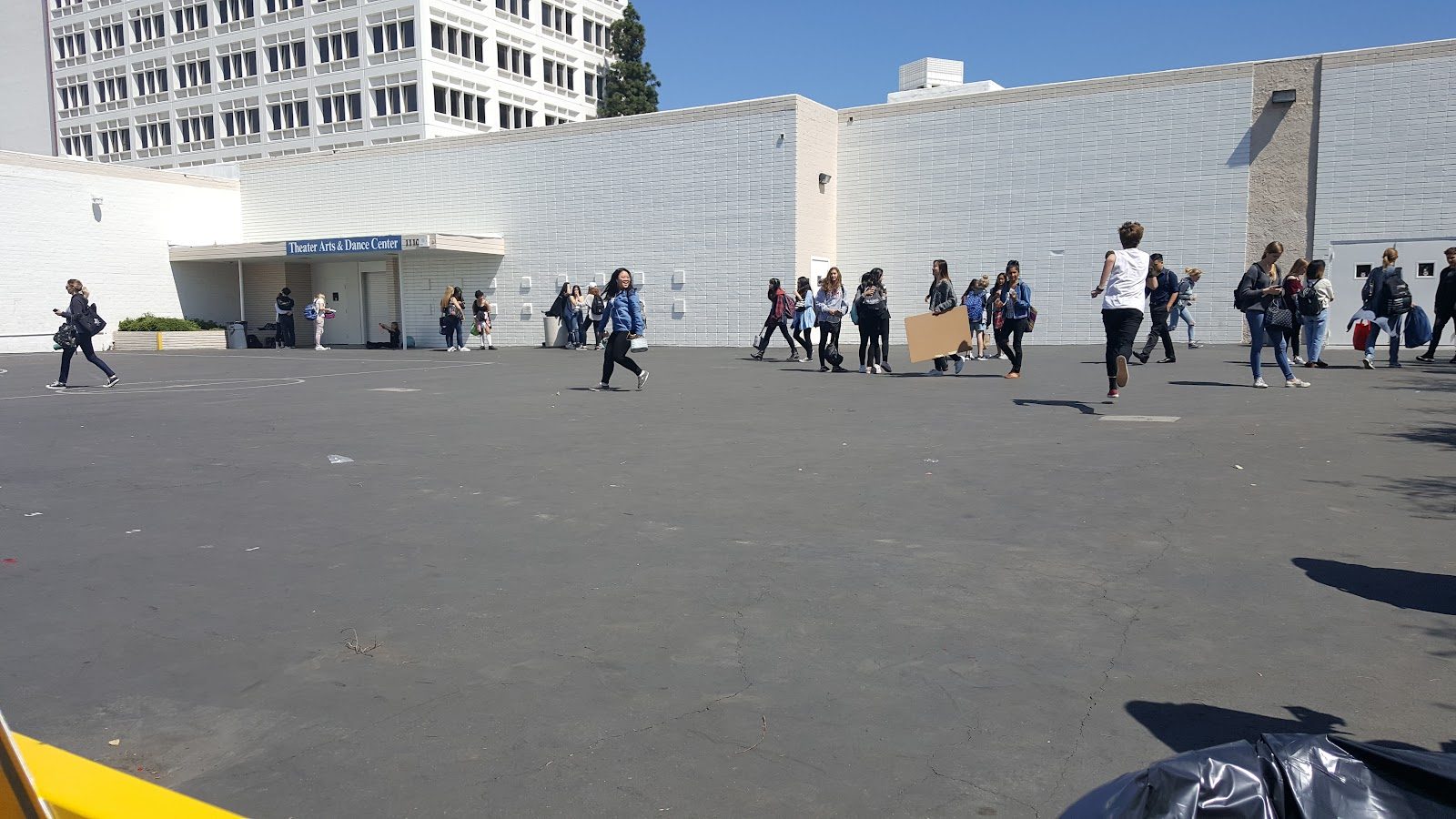
Photo © Iris Lopez via Google Maps
Type
Day
Ages
11–18
Curriculum
American
Qualifications
AP
Ratio
—
The Verdict
Editor's commitment
Right for
Young artists aged 11–18 who want an American college-prep curriculum plus pre-professional training across 17 conservatories at a 2,300-student charter school.
Wrong for
Families wanting a conventional comprehensive, a low-intensity timetable, or a school without arts at its centre; this Santa Ana day school was built for specialists.
Watch out for
OCSA is WASC-accredited and public, but it must raise about $15 million yearly for conservatories; donation dependence is built into the model.
Ranking breakdown
Orange County School of the Arts · #957 of 1591
Composite score 61.2. 8 weighted criteria.
By criterion
Academic Outcomes
Weight 20%
#385
of 1529 scored
University Placement
Weight 16%
#459
of 1529 scored
Prestige & Heritage
Weight 12%
#805
of 1571 scored
Alumni Network
Weight 12%
#1469
of 1530 scored
Facilities
Weight 12%
#848
of 1534 scored
Transparency & Communications
Weight 8%
#592
of 1532 scored
Peer & Industry Review
Weight 10%
#467
of 1548 scored
Admissions Selectivity & Demand
Weight 8%
#400
of 1529 scored
Peer & Industry Review
How Orange County School of the Arts is regarded in the sector
71
Respected · medium confidence
Among American arts-focused public schools, OCSA is most often mentioned alongside New York's LaGuardia High School and Michigan's Interlochen Arts Academy as one of the country's leading pre-professional training grounds, a comparison that recurs in US education press and in Niche and US News rankings of top public performing-arts schools. Its conservatory graduates are tracked into competitive university and conservatory programmes - CalArts, USC's School of Dramatic Arts, NYU Tisch, Berklee and similar - cited informally by Southern California admissions staff as evidence of strong pre-professional preparation in acting, dance and instrumental music. Because it is a public charter rather than an independent school, it sits outside the traditional private-school guides, such as the Good Schools Guide or WhichSchoolAdvisor, that benchmark UK and international independent schools, limiting its visibility in that peer set. Regional press, including the Los Angeles Times and Orange County Register, covers it as a flagship charter success story rather than a genteel prep school, with its standing resting on artistic outcomes and audition selectivity rather than conventional academic league tables.
Award
Elite Film 50
World's Top School · The Global Ranking
Orange County School of the Arts is featured on our Global Top 50 ranking at #4. This seal is available for the school's marketing team to use on their website, prospectus and social channels.
Award
Elite Drama 50
World's Top School · The Global Ranking
Orange County School of the Arts is featured on our Global Top 50 ranking at #27. This seal is available for the school's marketing team to use on their website, prospectus and social channels.
Award
Elite Visual & Fine Arts 76
World's Top School · The Global Ranking
Orange County School of the Arts is featured on our Global Top 76 ranking at #16. This seal is available for the school's marketing team to use on their website, prospectus and social channels.
- Sofia Carson — Actress/Singer, Entertainment
- Vincent Rodriguez III — Actor, Entertainment
- Ashley Argota — Actress, Entertainment
Editors' overview
Orange County School of the Arts occupies a rare place in the American market: a public charter school that runs as a serious pre-professional arts institution, not an ordinary school with strong extracurriculars. The defining feature is structural. Students in grades 7–12 follow a college-preparatory American curriculum and then spend a half-day in one of 17 conservatories across applied arts, dance, fine and media arts, music and theatre. That scale matters. With approximately 2,300 students drawn from more than 100 California cities, OCSA has the breadth to offer genuine specialisation while still operating at enough size to field high-level ensembles, productions and technical pathways. For families who want full-immersion arts training, serious daily practice and a school culture built around performance, audition and portfolio standards, this is one of the strongest options in California.
What puts OCSA on a shortlist is the combination of access, intensity and infrastructure. Admission sits in an unusual middle ground: applicants explore conservatories and complete a workshop or review process, then a lottery decides entry when applications outstrip places. That means the school selects for fit with its conservatory model without operating as a pure fee-paying conservatoire. It also means parents need clear eyes about the demands once a place is secured. This is not a gentle arts-enriched education. It is a high-pressure creative environment with long days, public performance expectations and a student body that has chosen to organise adolescence around an art form. The school’s funding model also deserves scrutiny: as a public charter school, it states that it must privately raise about $15 million each year for its arts conservatory programmes and that it relies heavily on families and the wider community. No student is admitted or refused on financial capacity, but parents should expect a strong culture of fundraising and institutional philanthropy.
The right student for OCSA is disciplined, ambitious and already committed to the arts, not merely “interested” in them. A child who wants to sample drama, try a bit of dance and keep sport or campus life at the centre of school life has better options elsewhere. OCSA suits the young musician who wants rehearsal embedded into the school day, the visual artist building a serious portfolio, the actor who wants frequent stage time, and the technically minded student drawn to production, design or applied arts. It also suits families comfortable with a non-religious, English-medium day school in Santa Ana where artistic identity drives the culture. For that student, OCSA offers a real proving ground, professional-grade expectations, an unusually focused peer group and a route into higher education with arts training already woven into daily life.
A Global Elite 50 Film school
Orange County School of the Arts, in downtown Santa Ana, California, sits at rank four on the Global Elite 50 Film because it runs a genuine production pipeline rather than a token media-arts elective. The Film & Television Conservatory trains students in grades 9 through 12 in production, editing, screenwriting, sound design, cinematography, directing, and producing inside a working studio environment, and its graduates matriculate directly into Chapman University, NYU, USC, and Art Center College of Design, the exact pathway a serious pre-professional film track is judged on.
The specialism is built on facilities rather than theory: a full working TV studio, a dedicated film studio, a Foley stage, digital cameras, and editing suites give students hands-on production experience from age fourteen. Faculty carry professional backgrounds in film and television with degrees from Syracuse, Chapman, and the American Film Institute, meaning the craft is taught by working practitioners rather than generalist media teachers. Coursework sits inside a wider School of Fine & Media Arts alongside Digital Media and Creative Writing conservatories, but Film & Television is the conservatory with a direct, named festival and alumni-award culture, not a shared arts-survey class.
Notable named alumni specific to the film pathway are still emerging as a cohort, which is honest given how recently the conservatory has scaled its output: the school's clearest recent case is Morgan Ang, a 2024 Film & Television graduate honored with OCSA's 2025 Outstanding Alumni Award for directing award-winning short films at festivals shortly after graduation. The stronger, harder evidence remains institutional: consistent matriculation into USC, NYU, Chapman, and Art Center film programs.
International openness here is limited and must be stated plainly. OCSA is a day-only public charter school under the Orange County Board of Education with no boarding facilities, so overseas families must arrange a host family or local guardian. As a public secondary school, F-1 visa students may attend for a maximum of twelve months and must pay the district's full, unsubsidized per-capita cost of education before a visa is issued. Admission is separately brutal: the school drew 3,400 applicants for 400 seats in one recent year, an acceptance rate near 11 percent, tighter than Andover or Exeter. Parent conservatory donations run several thousand dollars annually on top of this. For a film-focused overseas family, OCSA is best used as a single, carefully timed capstone year rather than a full high-school plan, applied for at least a year in advance.
An Elite Visual & Fine Arts 76 school
Orange County School of the Arts, in Santa Ana, California, sits at rank sixteen on the Elite Visual & Fine Arts 76 because it delivers professional studio training inside a free, selective public charter school. Founded in 1987, OCSA runs a dedicated Visual Arts Conservatory, the second largest of its fourteen after-school conservatories, and in 2021, 95 percent of graduating students continued to college, 76 percent to four-year universities. That combination of tuition-free access and disciplined arts output is rare.
The specialism is built into a structured conservatory curriculum: Visual Arts students follow a fixed sequence of foundation studio classes across grades seven through nine - drawing, painting, ceramics and design - before choosing college-level electives from tenth grade onward, including jewelry and metal arts, illustration and digital media. The program pairs traditional art-making with contemporary practice and brings in working professionals, such as jewelry designer Mark Schneider, who has critiqued the metal-arts track. Portfolio culture is embedded from entry: every applicant must pass a juried Placement Activity review, and the annual senior show serves as each cohort's public capstone exhibition.
OCSA's most visible alumni successes sit in its performing-arts conservatories - Glee actor Matt Morrison, pianist and composer Kit Armstrong, and choreographer Lauren Lim Jackson, credited on Cirque du Soleil's Michael Jackson ONE and Broadway's Motown: The Musical - reflecting those programs' scale. Notable named alumni from the Visual Arts Conservatory are still emerging into public prominence; the strongest evidence of the studio track's rigor remains its juried admissions process and structured progression toward portfolio-based college placement, rather than a settled roster of famous working artists.
International openness is the limiting factor. OCSA is a tuition-free, donation-dependent public charter school admitting day students by lottery from more than one hundred cities across Southern California; it has no boarding houses, no advertised F-1 visa sponsorship, and no dedicated overseas-admissions office. Instruction is in English with no separate ESL track, and the school runs on voluntary parent donations rather than published international tuition. Families relocating from abroad would need to establish California residency before applying, since lottery admission is not built around visa sponsorship. OCSA suits only families resettling in Orange County ahead of the January conservatory placement-testing deadline; it is not a viable destination for families seeking boarding or visa support.
Academic Performance
OCSA does not publish the external examination data a parent would need for a hard academic verdict. We have not seen aggregate SAT or ACT results, AP participation rates, AP score distributions, National Merit outcomes, university matriculation breakdowns, or subject-by-subject attainment against California or national comparators. That opacity matters. In a school that asks families to buy into an intense dual-track model of academics plus conservatory training, the academic side needs the same level of public accountability as the arts side. Instead, the strongest academic claims in the public domain sit at the level of honours and broad recognition, including a past U.S. News silver-medal listing and a college-preparatory framing, not current examination evidence.
Relative to peers, that places OCSA in an unusual category. Against specialist arts schools, the absence of published exam data is not unique; many trade on conservatory outcomes, selectivity by discipline and post-secondary destinations in the arts rather than clean comparative score tables. Against academically ambitious American independents and transparent public magnets, OCSA gives parents less to measure. The school’s real academic proposition rests on whether it can sustain strong classroom performance inside a schedule dominated by arts training across 17 conservatories. Families who need forensic proof of exam strength will find the public record thin. Families prepared to judge success through the combined lens of artistic development, college preparation and selective post-school pathways will find OCSA’s case stronger, but still under-documented.
Facilities
Facilities at OCSA are defined less by a single showpiece campus than by the operational demands of a school built around 17 conservatories. The important question is not whether it has manicured grounds or a classic American campus feel; it is whether students have the specialist rooms, rehearsal spaces, studios and production environments needed for daily serious practice across music, dance, theatre, fine and media arts, and applied disciplines. On that test, the school has clear structural strength. A programme of this breadth requires substantial arts infrastructure and technical support, and the scale of the operation points to real working capacity, not token specialist rooms used after school. Parents weighing OCSA against conventional public schools will find a far more purpose-built arts environment.
Against peer specialist arts schools, the picture is strong but not fully transparent. The school talks confidently about conservatory training and institutional scale, yet it does not publish the kind of detailed facilities inventory that top independent schools now use to prove advantage: named theatres, black box spaces, recording suites, gallery provision, fabrication labs, instrument resources or square footage by department. That leaves parents with a credible sense of depth, but not a forensic map of what sits behind each discipline. In market terms, OCSA stands above arts-heavy schools where facilities function as enrichment, and closer to a pre-professional training ground with serious production needs. It is less legible, though, than peers that document every studio, venue and technical asset in plain view.
The rating stops short of the top tier of institutional prestige because the school’s public case rests more on reputation than on hard destination data
Prestige
OCSA has real prestige in its field, but it is specialist prestige, not broad American prep-school cachet. The school carries national recognition in arts education, including an Exemplary School designation from Arts Schools Network and a string of public honours in arts and special education. More important than badges, it operates at a scale that few arts schools match: 17 conservatories spread across applied arts, dance, fine and media arts, music and theatre. That breadth gives the school credibility with serious young performers, makers and technicians because it can support distinct pathways rather than folding everyone into a generic “arts” programme. The student catchment also matters. Drawing students from more than 100 cities gives OCSA reach beyond a neighbourhood charter and turns admission into a competition for access to a recognised talent hub.
The rating stops short of the top tier of institutional prestige because the school’s public case rests more on reputation than on hard destination data. We have not seen a published ledger of conservatory placements, university offers by discipline, or aggregate academic results that would let parents test the school’s standing against elite magnets or famous independents. Its fundraising dependence also complicates the picture: a public charter that must privately raise $15 million each year projects institutional ambition, but also a constant need for donor energy and family buy-in. In plain terms, OCSA is high-status within arts education, well known in California, and less authoritative on paper than its reputation warrants.
What puts OCSA on a shortlist is the combination of access, intensity and infrastructure
Communications
Parent communication at OCSA runs through a distinctly institutional model: central leadership is visible, senior administrators are named publicly with direct email addresses, and the admissions journey is laid out in a practical sequence rather than buried in slogans. That matters in a school with 17 conservatories, a large catchment and an admissions process that includes preview events, a conservatory review stage and, when oversubscribed, a lottery by discipline. The school explains that machinery clearly. It also states bluntly that the arts programme depends on private fundraising and that families and the wider community play a major role in meeting that target. That level of candour is a strength. Parents are not left to infer the school’s financial culture; they are told it is fundraising-heavy, operationally complex and built on a public-private hybrid.
The weakness is that communication looks stronger on institutional narrative than on hard parent evidence. OCSA publishes mission, leadership, awards and process well, but not the academic outcome data that would answer the questions many parents ask first. That gap limits trust. A school that communicates confidently about scale, recognition and organisational leadership should also publish clearer academic reporting, conservatory outcomes and parent-facing performance measures. As it stands, OCSA communicates with professional polish and administrative clarity, but with selective transparency. Families who value procedural detail and access to named staff will find a competent operation. Families who want full disclosure on results will find the public picture incomplete.
Uniqueness
What makes OCSA unusual is not just that it is an arts school. America has plenty of schools with strong music, theatre or visual arts departments. OCSA reorganises the entire school day around conservatory training and does so across 17 separate pathways, from performance disciplines to literary, production and applied arts. That creates real specialisation at school age. Students do not sit in a generic “creative” environment where everyone dabbles. They work inside a structure that asks for discipline, critique, repetition and technical progress in a chosen field. The admissions model reinforces that seriousness: students explore conservatories, go through a workshop or review process, and then enter by conservatory-based lottery when demand exceeds places. The result is a peer group built around shared ambition, not casual interest.
That structure brings clear benefits. Students grow up among other young people who treat an art form as central rather than extracurricular, and that changes standards fast. Ensembles, productions, portfolios and collaborative work all improve when the surrounding culture is intensely practice-led. OCSA also reaches far beyond its local area, drawing students from more than 100 communities, which gives it a wider talent pool than a district arts programme. For the right child, that produces rare daily immersion, professional habits and an early understanding of how artistic work functions under pressure. The trade-off is plain: this is not a broad, leisurely adolescence. It is a focused training ground for students who want their education shaped by the arts at full strength.
That means the school selects for fit with its conservatory model without operating as a pure fee-paying conservatoire
Student Profile
The OCSA student is not an arts dabbler. This school suits young people who already organise their week around rehearsal, practice, critique or making, and who gain energy from being surrounded by peers with the same intensity. With approximately 2,300 students drawn from more than 100 communities, the social mix extends well beyond a local school catchment, but the common denominator is clear: students arrive with a defined artistic direction or a strong appetite to develop one fast. The fit works best for adolescents who handle feedback well, recover quickly from disappointment and do not need constant reassurance. Conservatory life rewards stamina, self-management and a tolerance for comparison. It also rewards students who can cope with a day split between academic demands and serious artistic training without treating one as an excuse to neglect the other.
The strongest fit is a child who wants technical development, public outcomes and peers who care deeply about standards. Actors, musicians, dancers, visual artists, writers and applied-arts students who want daily immersion will find a home here. So will students with professional instincts early: punctual, prepared, resilient and willing to repeat work until it improves. The weaker fit is easy to identify. A child who wants school sport, campus breadth or a more easy-going adolescence at the centre of school life will feel boxed in. OCSA is demanding company for the uncertain, the casually creative or the thin-skinned. It suits the driven young artist who wants pressure, structure and a peer group that takes the work seriously.
It also means parents need clear eyes about the demands once a place is secured
Co-curricular strengths
Arts & sport, on a separate axis
Overall 8.56/10
Scored 0-10 from the school's own published evidence. This axis is editorial-only — it does not feed the main WTS ranking.
Sports
3.5/10
Drama
9.8/10
Dance
9.9/10
Music
9.8/10
Visual Arts
9.8/10
Strengths
- +OCSA serves a diverse student body and is accessible to all students regardless of socioeconomic standing, as the school is tuition-free and donation dependent, so no family pays fees to attend.
- +Students select from one of 17 arts conservatories offered within the schools of applied arts, dance, fine & media arts, music, and theatre, giving a genuine choice of pre-professional specialisms alongside academics.
- +The AP participation rate at Orange County School of the Arts is 82%, indicating a substantial academic-rigour track running in parallel with the arts training.
- +Orange County School of the Arts is ranked #281 in the National Rankings and 33rd within California by U.S. News, placing it among the stronger public options in the state.
- +Notable alumni associated with the school's Wikipedia alumni category and public profiles include performers such as Vanessa Hudgens, Matthew Morrison, Ashley Benson and Drake Bell, reflecting a track record of graduates entering the entertainment industry.
Considerations
- −Admission to OCSA is very competitive, and decisions are made solely by the OCSA admissions committee, so a place is never guaranteed regardless of prior training.
- −The school's location in an urban area of Santa Ana raises some safety concerns, especially related to the presence of homeless individuals near campus, which OCSA acknowledges and is working to address.
- −The school does not have traditional sports teams, so families prioritising interscholastic athletics will not find that here.
- −One parent reviewer noted "It is a very long day, and you have to be disciplined in keeping everything in check", reflecting the demands of combining a full academic load with conservatory training.
Availability
Primary entry gate & tests
Audition + Portfolio
Gallery
Photo © Jeff M via Google Maps
Photo © Jeff M via Google Maps
Photo © Jeff M via Google Maps
Photo © Jeff M via Google Maps
Photo © Jeff M via Google Maps
Parent reviews
Have you sent your child here?
Voice reviews carry the strongest trust badge — we transcribe them for you to tidy up before they go live. Prefer to type? A written review is fine too.
Add your voice
In 60 seconds, tell other parents: what's the best thing about Orange County School of the Arts, and what surprised you when your child joined?
We ask for a Google sign-in so every review has a real face behind it — no anonymous drive-by attacks on schools, and no faked positive reviews. Your email is never shown publicly.
Send this profile to a friend
International parents rely on word-of-mouth. Share this review with someone weighing the same decision.
Schools with places
Similar schools to Orange County School of the Arts with places available now.
Head-Royce School
Oakland · United States
- 2026-27
- CLOSEDRegular cycle
- 2027-28
- OPENS SOONOpens Sept '26
The Webb Schools
Claremont · United States
- 2026-27
- CLOSEDRegular cycle closed
- 2027-28
- PLACES OPENPortal live
The Branson School
Ross · United States
- 2026-27
- CLOSEDRegular cycle
- 2027-28
- OPENS SOONOpens Sept '26
Crystal Springs Uplands School
Hillsborough · United States
- 2026-27
- CLOSEDRegular cycle
- 2027-28
- OPENS SOONOpens Sept '26
Availability first, then country, area, curriculum, price, co-curricular
Consider also
Also worth looking at alongside Orange County School of the Arts.

G-Star School of the Arts
West Palm Beach, Florida · United States
A tuition-free arts charter where film students earned Raindance's top high-school-for-film honor in London, backed by IB and Cambridge AICE rigor.
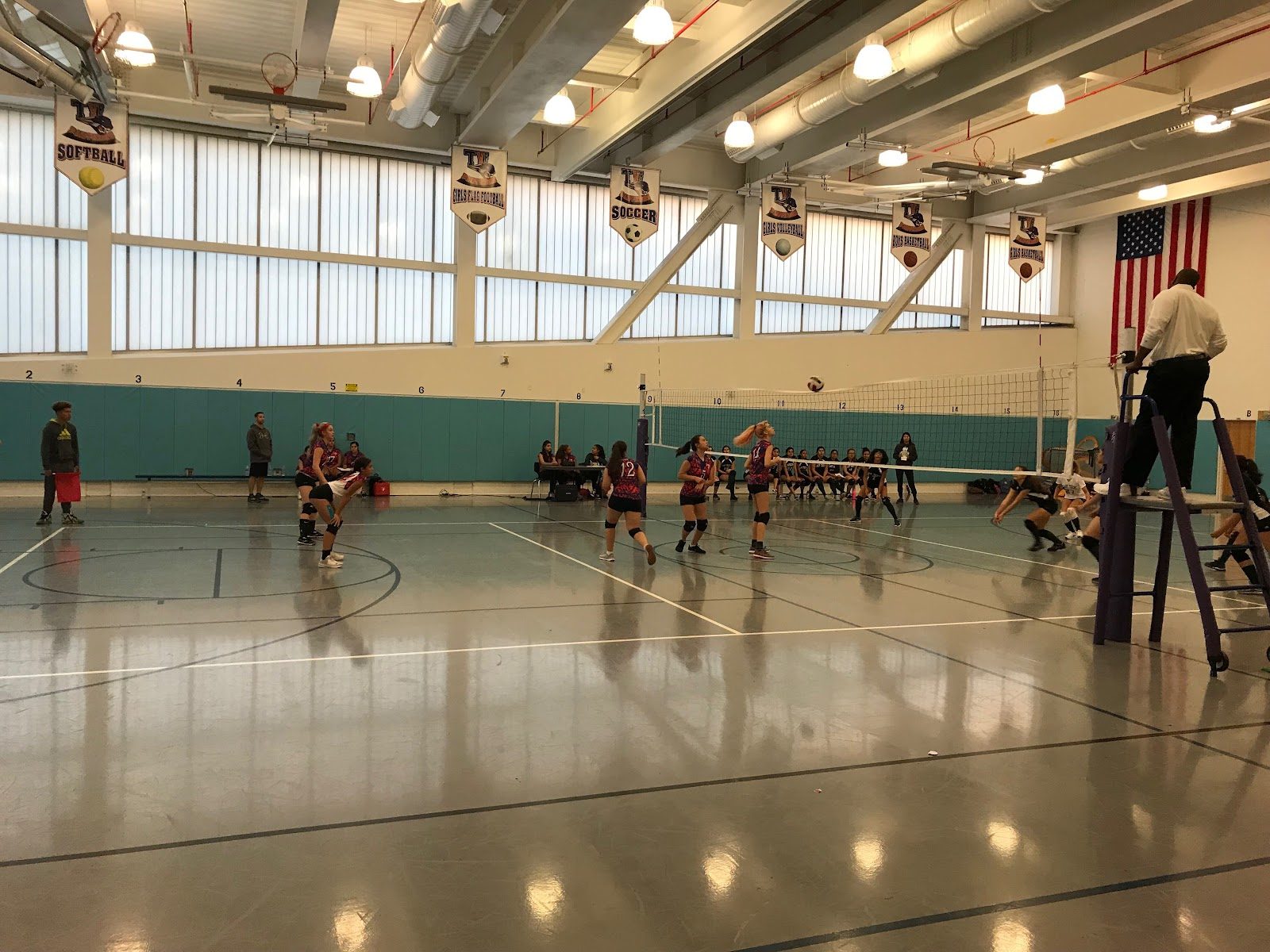
Academy for Careers in Television & Film
Long Island City, New York · United States
A waterfront Queens campus where students edit and shoot films against the Manhattan skyline, backed by a million-dollar production arsenal.
The Cinema School
Bronx, New York · United States
A South Bronx public high school built with Ghetto Film School, where seniors write, shoot, and produce original movies on real sets.
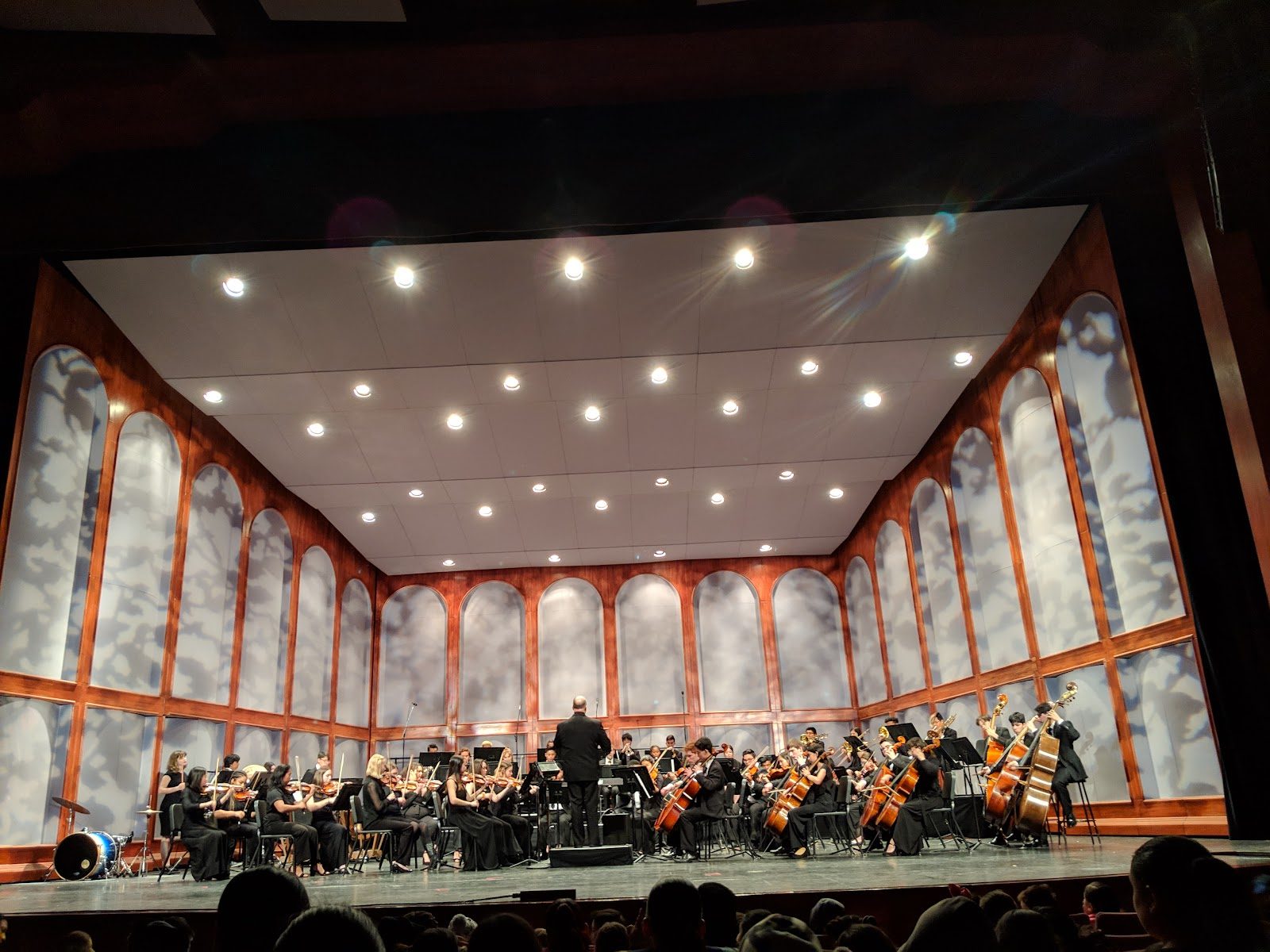
Los Angeles County High School for the Arts
Los Angeles · United States
A tuition-free public conservatory embedded on a Cal State LA campus, where audition, not address, decides who studies art
Same specialism, country and curriculum — closest matches within ±10 points either way