
Bangkok
King's College International School Bangkok
Southeast Asia's first King's Wimbledon offshoot pairs British rigor with kindness and good manners on Ratchada-Rama 3.
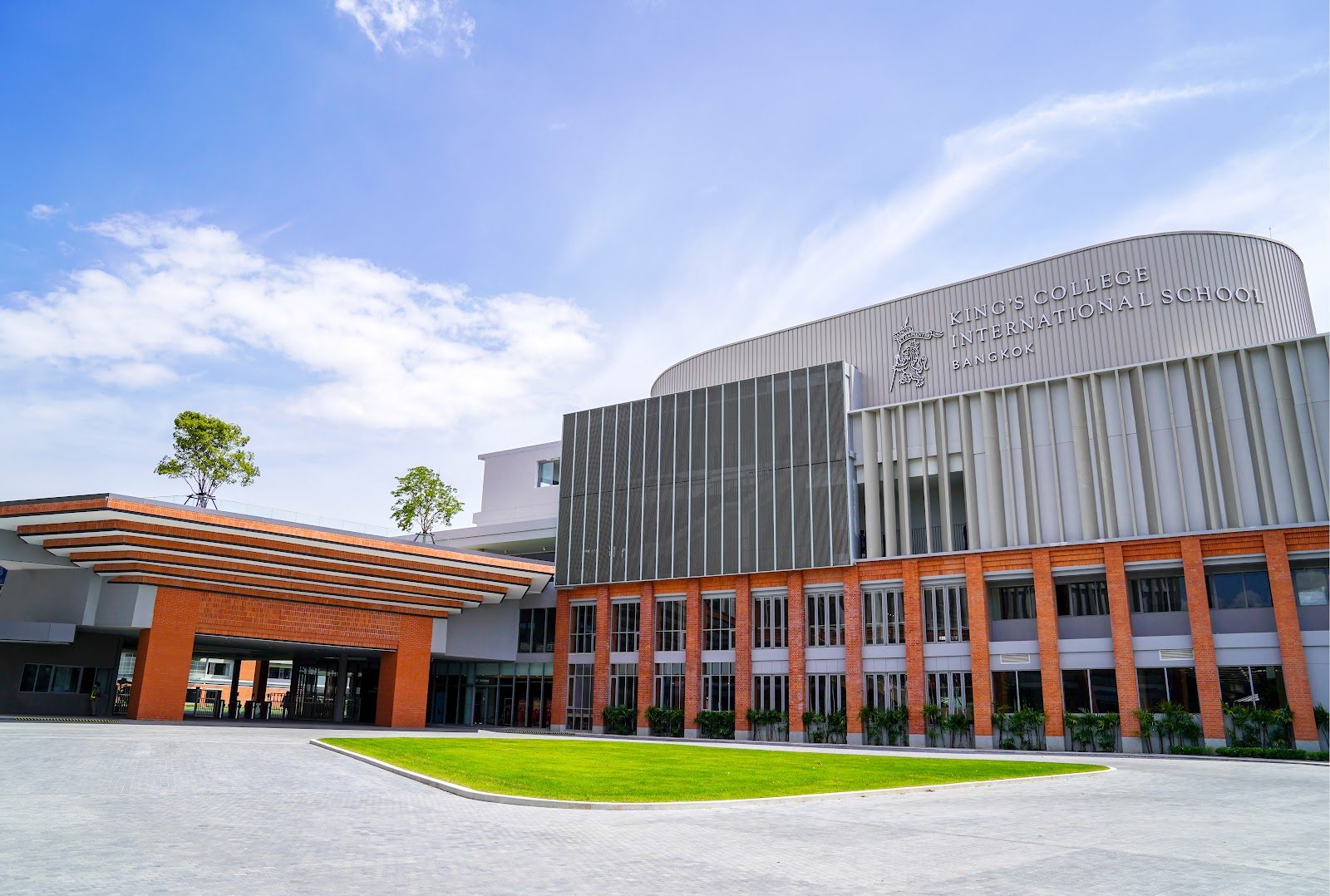
Photo © Linux - Chadatip Charurattanachai via Google Maps
Type
Day
Ages
12–18
Curriculum
British
Qualifications
IGCSE · A-Level
Ratio
—
The Verdict
Editor's commitment
Right for
Bangkok families wanting a British sixth-form school in English, with King's Wimbledon pedigree and BSO and COBIS accreditation.
Wrong for
Children under 12, boarders, and families wanting anything beyond a day school founded in 2020 on the British model.
Watch out for
The average annual fee is THB 934,725 for ages 12–18; this is a young, expensive Bangkok day school.
Ranking breakdown
King's College International School Bangkok · #1533 of 1591
Composite score 46.2. 8 weighted criteria.
By criterion
Academic Outcomes
Weight 20%
#1455
of 1529 scored
University Placement
Weight 16%
#1488
of 1529 scored
Prestige & Heritage
Weight 12%
#1381
of 1571 scored
Alumni Network
Weight 12%
#1222
of 1530 scored
Facilities
Weight 12%
#1102
of 1534 scored
Transparency & Communications
Weight 8%
#1324
of 1532 scored
Peer & Industry Review
Weight 10%
#1495
of 1548 scored
Admissions Selectivity & Demand
Weight 8%
#1471
of 1529 scored
Peer & Industry Review
How King's College International School Bangkok is regarded in the sector
50
Credible · medium confidence
King's College International School Bangkok trades heavily on its lineage to King's College School Wimbledon, a historically strong UK independent school, and this affiliation is the main basis on which regional peers and parents place it alongside newer British-curriculum entrants competing with more established Bangkok institutions such as Harrow, Shrewsbury, NIST, and Bangkok Patana. However, independent verification is thin: the school does not yet have a substantive WhichSchoolAdvisor or Good Schools Guide International write-up comparable to its longer-established competitors, and it is rarely cited in Thai or regional English-language press league tables or rankings. As a relatively recent opening, it lacks a multi-year track record of published university destination lists, so claims about Russell Group or international placement cannot be independently confirmed from public sources. There is no evidence of rival heads publicly commenting on it, nor of prominent conference or accreditation-body presence (e.g., COBIS, HMC) beyond group-level marketing material. Overall, its industry standing currently rests more on brand association with the UK parent school than on demonstrated, independently documented outcomes or peer commentary.
Editors' overview
King’s College International School Bangkok opened in 2020 with a very clear brief: transplant the King’s Wimbledon formula into Thailand without diluting it. That matters. Plenty of British-branded schools borrow the language of tradition; fewer carry the discipline, manners and academic expectation that sit behind it. This school is a day school for ages 12 to 18, taught in English, non-religious, and explicitly British in curriculum and culture. It is also the first King’s Wimbledon offshoot in Southeast Asia, which gives it a sharper identity than the generic premium-school crowd. Parents looking for a serious British secondary education in Bangkok, rather than a loose international hybrid, will understand the appeal immediately.
The market position is straightforward: this is a premium, academically ambitious option aimed at families who want UK-style structure and who are willing to pay for a direct brand extension rather than a local imitation. The average annual day fee is 934,725 THB, which places it firmly in Bangkok’s upper tier. Accreditation from both BSO and COBIS adds substance. BSO matters because it tests whether an overseas school meets the standards expected of British schools abroad; COBIS membership signals that the school sits inside the established British international circuit rather than outside it. For a school founded in 2020, that external validation carries weight. It also cuts through one of the usual concerns with new schools: whether the polish exceeds the practice.
What is special here is the combination of old-school British expectations with a Bangkok setting that serves internationally minded families who still want order, formality and clear standards of conduct. The school’s own editorial line — British rigour with kindness and good manners on Ratchada-Rama 3 — gets to the point. This is not the school for families who want a progressive, loose, student-led atmosphere with lots of curricular experimentation. It is for children who thrive with routine, adult authority, explicit expectations and a culture that prizes courtesy as much as attainment. The best fit is a student who is bright, resilient and teachable: one who wants academic stretch, can handle a high-expectation environment, and does not need endless hand-holding to stay organised. For that child, King’s College International School Bangkok belongs on a shortlist.
Academic Performance
King’s Bangkok has one unavoidable limitation on the academic front: it is still a young school, so the public results record is short. That does not excuse opacity. We have not seen a deep run of published external exam data across multiple cohorts, and without that, any claim to sustained academic strength remains unproven. For parents comparing Bangkok’s exam-driven British schools, that matters. Established competitors can point to years of A-level and GCSE outcomes, subject-by-subject patterns and university destinations at scale. King’s Bangkok cannot yet match that depth of evidence in the public domain. What it does have is a brand association with serious academic expectations and a school culture built for formal assessment rather than loose internal benchmarking.
Relative to peers, that places the school in an interesting but incomplete category: high promise, limited track record. If a family wants a school with long-cycle proof on external examinations, there are older Bangkok rivals with a stronger published record. If a family is comfortable backing a newer institution with a clear academic model, King’s Bangkok remains credible. The crucial question is not whether standards are high in principle, but whether those standards translate into results cohort after cohort. Until the school publishes a fuller set of outcomes — headline pass rates, top grades and destination data — its academic reputation rests more on institutional design than on hard exam evidence.
Facilities
For a school in this bracket, the facilities question is simple: does the campus support a full secondary programme without the compromises that dog many newer urban schools? At King’s Bangkok, the answer is yes. The site gives pupils access to the essentials a serious British senior school needs — specialist science space, dedicated arts provision, sports areas and performance capacity — rather than a token collection of multipurpose rooms dressed up as breadth. That matters in Bangkok, where premium schools on tight city plots can charge top-tier fees while asking older students to make do with compressed or improvised infrastructure. King’s does not sit in that category. The campus reads as purpose-built for teenagers, with the scale and layout to support subject specialisation, movement between lessons and a more adult rhythm to the school day.
Against peers, the verdict is strong rather than unrivalled. The school competes well with other premium day schools that serve older pupils and need to deliver academic, artistic and sporting range on one site. It does not have the advantage of a vast legacy estate or the acreage of Bangkok’s biggest all-through campuses, so parents should not expect the grand sprawl or excess of a boarding-school transplant. What it offers instead is a tight, well-resourced environment that fits its age range and educational model. For families choosing between polished branding and actual utility, that distinction matters. The campus has the equipment and specialist space to do the job properly; it avoids the all-foyer, no substance problem that weakens too many glossy competitors.
The rating stops short of the top rank for one reason: prestige needs proof as well as polish
Prestige
A King’s Bangkok education carries real cachet in one specific lane: the premium British-school market where pedigree matters and parents know the difference between a borrowed name and a direct institutional extension. The King’s Wimbledon link gives this school status that many newer international schools cannot buy. That brand has weight with families who value old-established British standards, polished manners and a more formal academic culture. The price reinforces the point. At an average annual fee of 934,725 THB, this sits in the bracket where parents expect more than a pleasant campus and competent teaching; they expect social confidence, strong peer quality and a name that travels. King’s delivers that level of recognition inside Bangkok’s expatriate and internationally mobile professional circles.
The rating stops short of the top rank for one reason: prestige needs proof as well as polish. The school has the right inheritance and the right market position, but not yet the decades-deep local reputation or publicly documented outcomes that turn a respected name into an unquestioned one. In Bangkok, prestige at the very top rests on a combination of brand, results, alumni and time. King’s already has the first of those in abundance; the others are still being built. So the verdict is clear: this is a high-status school with strong symbolic value and serious parent appeal, but its prestige still depends more on inherited institutional capital than on a long, locally earned record.
In Bangkok, prestige at the very top rests on a combination of brand, results, alumni and time
Communications
Parent communication matters more here than at a loose, low-stakes school, because the culture runs on clear rules, adult authority and follow-through. Families need to know not only what their children are studying, but how behaviour, deadlines, routines and sanctions work in practice. On that test, King’s has an advantage built into its model: a school that values formality tends to communicate in a more structured way than a school built on improvisation. The public-facing communication is orderly, polished and easy to navigate, which points to an administration that understands the value of clarity and professional discipline. That said, polish is not the same thing as depth. We have not seen the kind of detailed public reporting that answers harder parent questions on outcomes, cohort performance or long-range destination patterns. For a premium school charging an average of 934,725 THB a year, that gap matters.
So the verdict is competent rather than exceptional. Day-to-day messaging and institutional presentation look tight and well controlled; strategic transparency is thinner. Parents who want clean logistics, prompt notices and a school that sets expectations plainly will find a reassuringly organised operation. Parents who want exhaustive public disclosure, especially on academic performance, will find the picture too guarded. In other words, King’s communicates well on culture and operational intent, less well on the hard evidence that seasoned parents use to test a school’s claims.
Uniqueness
What sets King’s Bangkok apart is not the generic promise of a British education, but the attempt to import a specific house style: the King’s Wimbledon mix of scholarship, restraint, courtesy and adult authority. Many international schools borrow British symbols; fewer enforce the social code that sits behind them. Here, manners are not decorative. They are part of the operating model. That brings a clear benefit for students who work best in an environment with firm edges and a settled hierarchy: classrooms run with purpose, expectations are explicit, and conduct has a shape to it. For the right child, that creates valuable clarity. They know where the boundaries are, what good work looks like, and how to carry themselves in a room.
The age range sharpens that identity. With no attempt to be an all-through school for everyone from nursery upward, the focus stays on the adolescent years when academic habits, self-command and exam temperament matter most. That gives the place a more senior-school feel than many competitors with younger children driving the tone. Students get a setting built around teenage rhythms rather than a diluted whole-school compromise. The gain is not only academic. In a market crowded with polished but interchangeable premium schools, King’s offers a more tradition-bound, more exacting culture that can build confidence, poise and independence. It is not for the faint-hearted, but for students who respond to structure, the model has real force.
King’s College International School Bangkok opened in 2020 with a very clear brief: transplant the King’s Wimbledon formula into Thailand without diluting it
Student Profile
The best fit here is a teenager who does not need a school to entertain them into working. King’s suits students with strong self-command, solid study habits and enough resilience to take correction without drama. Children who value routine, respond well to adult authority and can cope with a more formal social code will settle faster than those who need constant negotiation, emotional cushioning or a highly personalised pace. The peer group this school attracts is high-aspiration and polished; that brings stretch, but also pressure. A pupil who is bright yet disorganised can still do well here, but only if they accept structure instead of fighting it. A child who resists rules on principle, works only when inspired, or wants maximum freedom in how to learn will find the culture constricting.
Socially, this is a better match for families who prize courtesy, presentation and clear standards of behaviour than for those who want a deliberately relaxed atmosphere. Students who like a senior, grown-up tone to school life, and who are comfortable being held to account, will read that as seriousness rather than stiffness. The age range helps: there is less of the softened whole-school culture that younger pupils bring, and more of the focus older students need. In practice, that means the school suits the teachable, ambitious, composed child far better than the flamboyant rule-tester. For the right student, the fit is excellent; for the wrong one, the friction starts quickly.
Plenty of British-branded schools borrow the language of tradition; fewer carry the discipline, manners and academic expectation that sit behind it
Co-curricular strengths
Arts & sport, on a separate axis
Overall 8.28/10
Scored 0-10 from the school's own published evidence. This axis is editorial-only — it does not feed the main WTS ranking.
Sports
8.8/10
Drama
8.5/10
Dance
7/10
Music
8.6/10
Visual Arts
8.5/10
Strengths
- +Delivers the English National Curriculum through to IGCSE and A-Level, a pathway recognised for entry to UK and international universities.
- +Operates as a day school, which typically keeps overall fees lower than boarding-inclusive international schools in the same city.
- +Trades under the King's College name, part of a wider group of schools that license curriculum design and pastoral frameworks from UK-based institutions.
- +Based in Bangkok, a city with a large and mature international-schools market, giving relocating families a wide basis for comparison.
Considerations
- −As a newer, lower-profile school, it lacks the multi-decade exam-results history and alumni network of established Bangkok institutions such as Bangkok Patana or NIST.
- −No independent website or published inspection report (e.g. British Schools Overseas) was found at time of writing, limiting transparency on facilities, fees and staffing.
- −Day-only structure means the school cannot serve families who require boarding provision.
- −Public information on class sizes, teacher qualifications and results is currently sparse, so due diligence relies heavily on direct contact with the school.
Availability
Primary entry gate & tests
Academic Record
Gallery
Photo © Marketing Team King's Bangkok via Google Maps
Photo © kinnai paigun via Google Maps
Photo © kinnai paigun via Google Maps
Photo © Mitthida C via Google Maps
Photo © Kim Meaden-Kendrick via Google Maps
Photo © Rapeephan Maude via Google Maps
Photo © Naruebet Bunrit (Guitar) via Google Maps
Parent reviews
Have you sent your child here?
Voice reviews carry the strongest trust badge — we transcribe them for you to tidy up before they go live. Prefer to type? A written review is fine too.
Add your voice
In 60 seconds, tell other parents: what's the best thing about King's College International School Bangkok, and what surprised you when your child joined?
We ask for a Google sign-in so every review has a real face behind it — no anonymous drive-by attacks on schools, and no faked positive reviews. Your email is never shown publicly.
Send this profile to a friend
International parents rely on word-of-mouth. Share this review with someone weighing the same decision.
Schools with places
Similar schools to King's College International School Bangkok with places available now.
NIST International School
Bangkok · Thailand
- 2026-27
- WAITPOOLSpace-dependent
- 2027-28
- PLACES OPENRolling
Bangkok Patana School
Bangkok · Thailand
- 2026-27
- CLOSEDThai closed / Non-Thai open
- 2027-28
- OPENS SOONThai 1 Sept / Non-Thai rolling
Shrewsbury International School Bangkok
Bangkok · Thailand
- 2026-27
- WAITPOOLSpace-dependent
- 2027-28
- PLACES OPENRolling
International School Bangkok
Bangkok · Thailand
- 2026-27
- WAITPOOLSpace-dependent
- 2027-28
- OPENS SOONOpens Sept '26
Availability first, then country, area, curriculum, price, co-curricular
Consider also
Also worth looking at alongside King's College International School Bangkok.
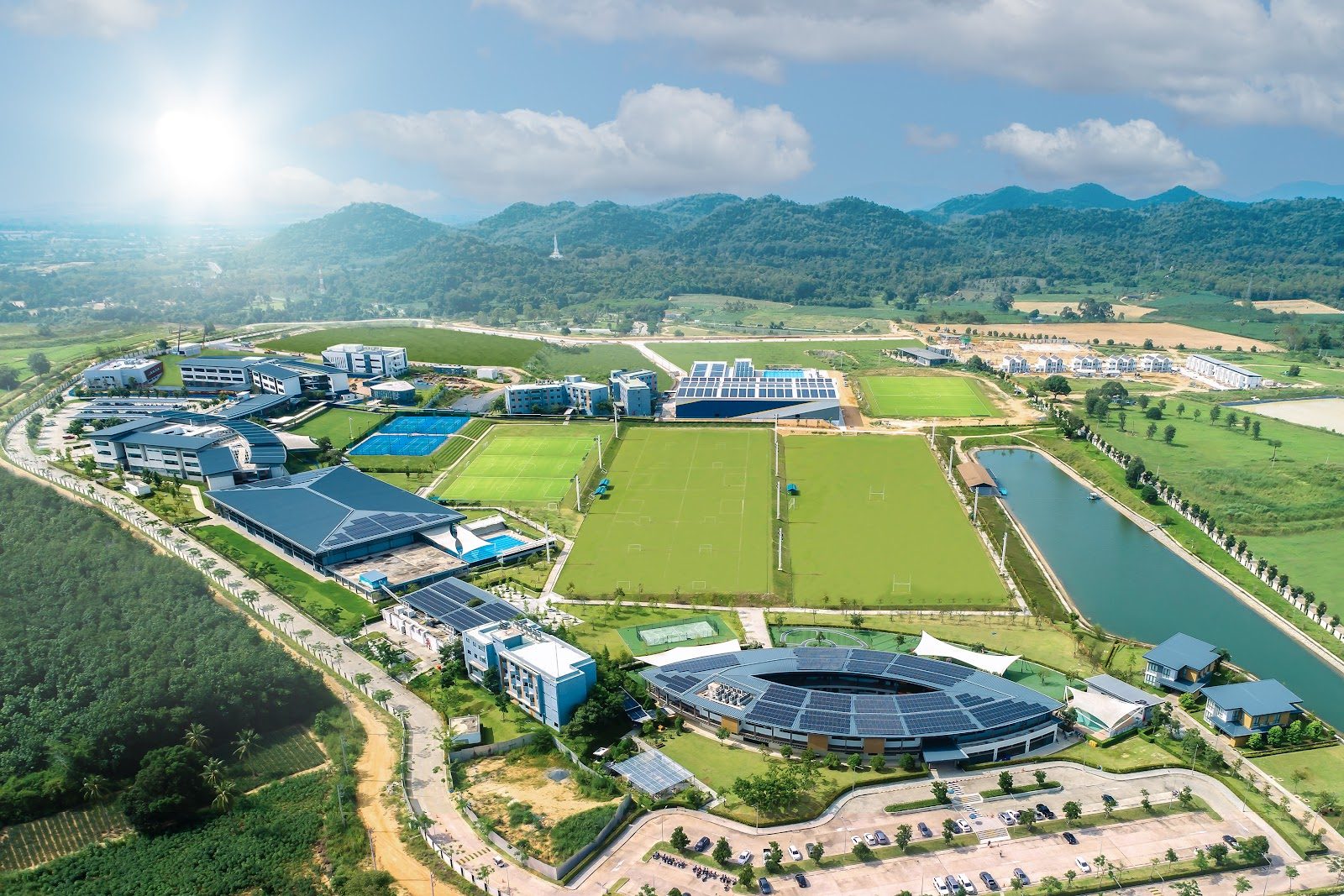
Rugby School Thailand
Chonburi · Thailand
The birthplace of rugby football's sister campus takes root in Chonburi, backed by rare double Beacon-status boarding.
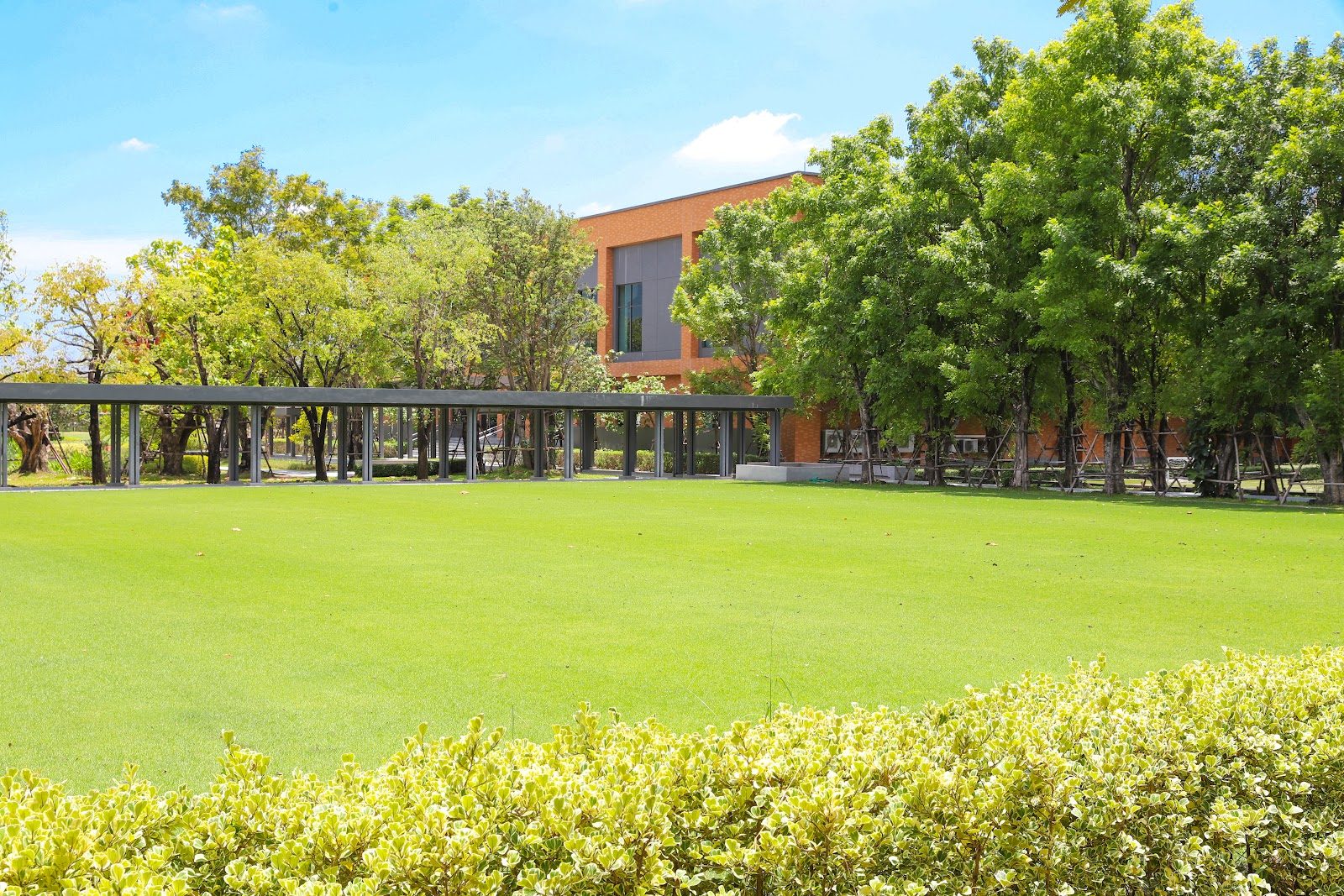
Wellington College International Bangkok
Bangkok · Thailand
The 1859 Berkshire house system replanted on a 28-acre Bangkok campus, complete with golf greens and an Olympic pool.
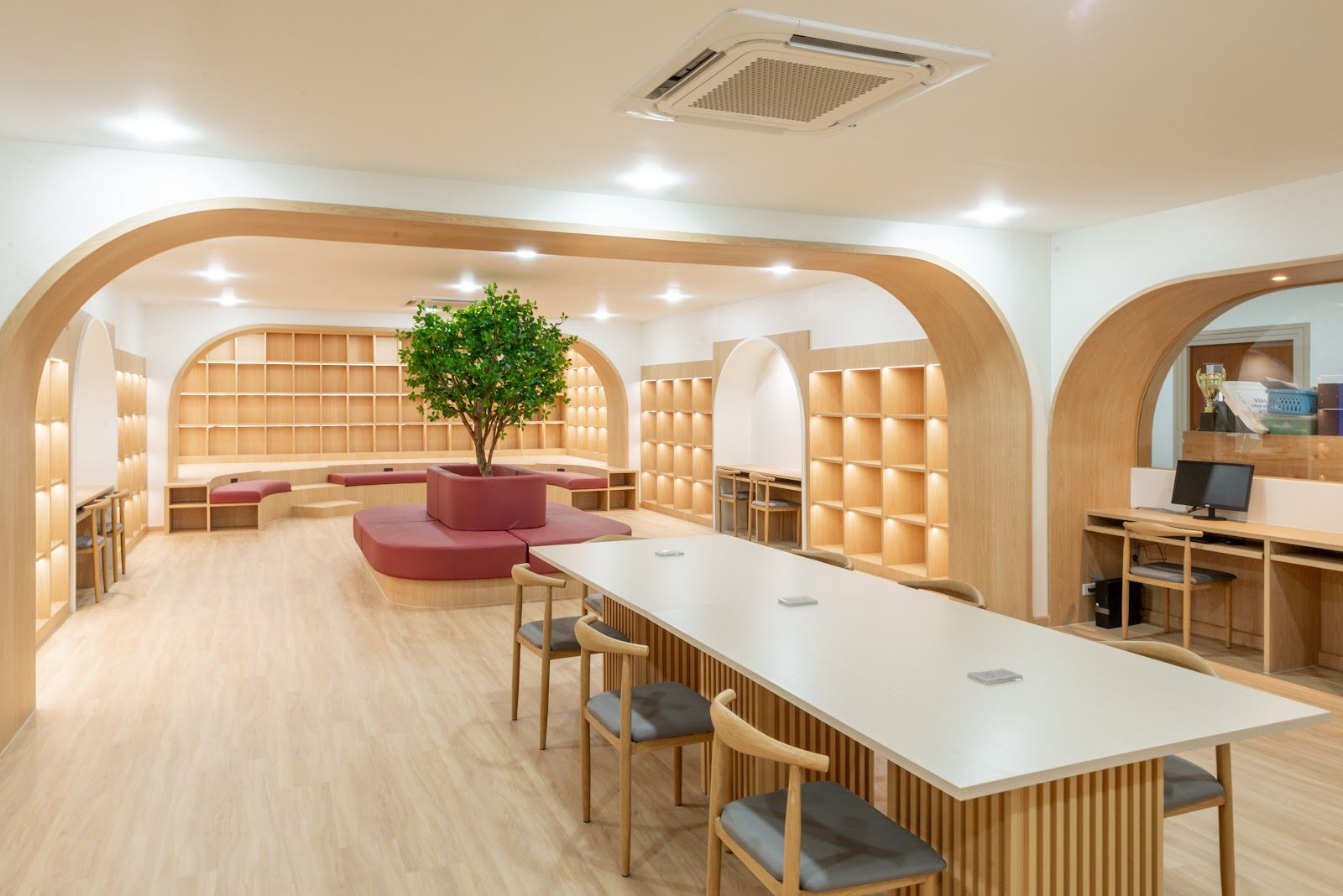
Regents International School Bangkok
Bangkok · Thailand
British curriculum through IGCSE gives way to the IB Diploma at Sixth Form, a pairing rare among Bangkok's boarding schools.
Concordian International School
Samut Prakan · Thailand
Where English-Chinese immersion meets full IB rigor, the only trilingual PYP-MYP-DP campus on Bangna-Trad Road.
Same country and curriculum — closest matches within ±10 points either way