
Nairobi County
International School of Kenya
high confidence· 5/6 cats · 2.87 avg sourcesNestled on a former Nairobi coffee plantation, this embassy-backed campus channels a demanding IB pathway into global universities.
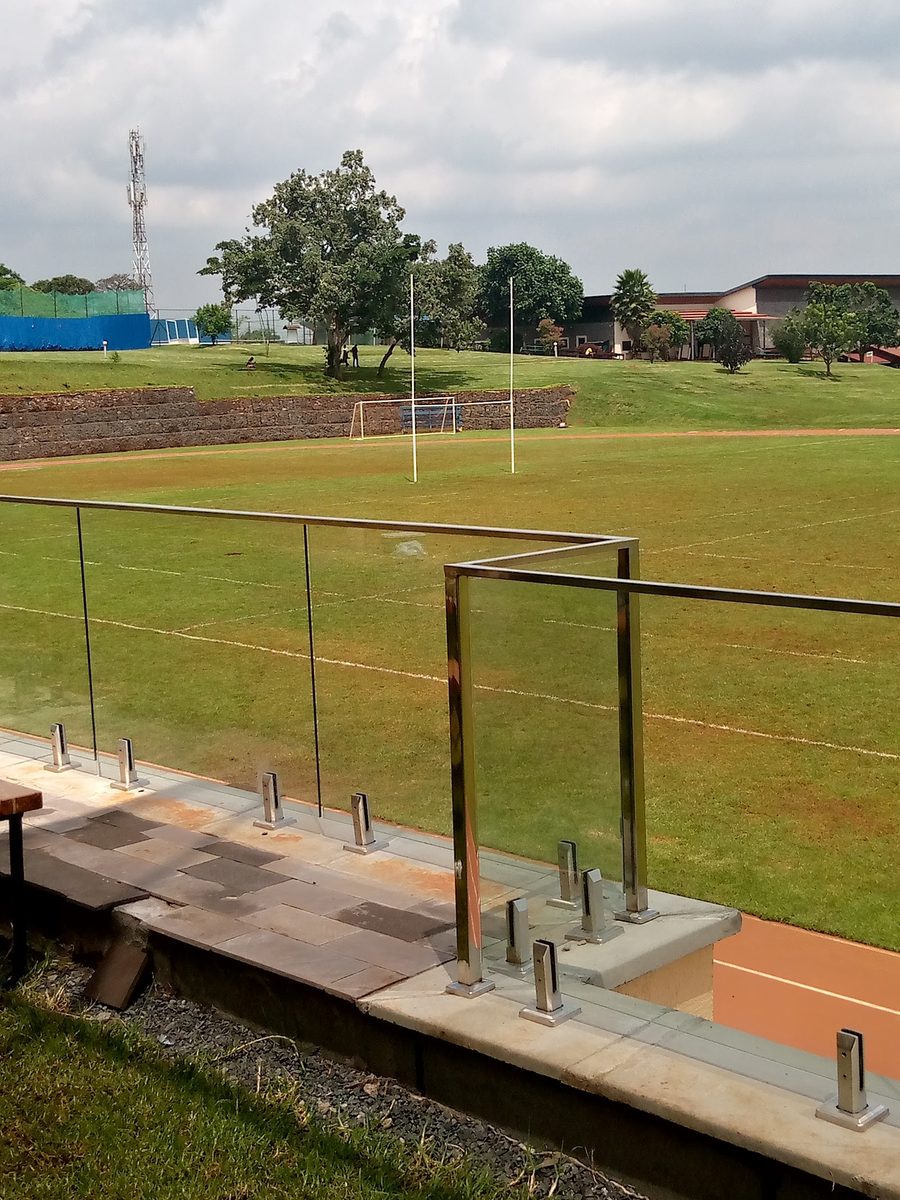
Photo © Gilbert Ombuge via Google Maps
Type
Both
Ages
3–18
Curriculum
British · IB
Ratio
—
The Verdict
Editor's commitment
Right for
Families in Nairobi who want English-medium schooling from age 3 to 18, with British foundations feeding a full IB pathway.
Wrong for
Parents wanting a cheap option, a faith school or a local curriculum; average annual fees run to $25,000 day or $40,000 boarding.
Watch out for
Founded in 1976 and CIS- plus IBO-accredited, ISK sends pupils to places such as Boston University, but published destination breadth is thin.
Ranking breakdown
International School of Kenya · #431 of 1591
Composite score 71.3. 8 weighted criteria.
By criterion
Academic Outcomes
Weight 20%
#449
of 1529 scored
University Placement
Weight 16%
#459
of 1529 scored
Prestige & Heritage
Weight 12%
#462
of 1529 scored
Alumni Network
Weight 12%
#386
of 1529 scored
Facilities
Weight 12%
#419
of 1529 scored
Transparency & Communications
Weight 8%
#554
of 1529 scored
Peer & Industry Review
Weight 10%
#523
of 1529 scored
Admissions Selectivity & Demand
Weight 8%
#334
of 1529 scored
Score history
International School of Kenya · 2026
Movement across 2024–2026. Peer average overlaid.
Overall — 2024–2026
71.3/ 100
▲ +25.3 vs 2025
year on year
Peer & Industry Review
How International School of Kenya is regarded in the sector
68
Respected · medium confidence
International School of Kenya (ISK) is consistently cited as one of Nairobi's leading international schools in expat-parent forums (InterNations, ExpatExchange) and education directories such as ISC Research and International Schools Database, and is well known for its long-standing IB Diploma results and diplomatic-community ties. It lacks coverage in flagship prestige rankings like Tatler or Good Schools Guide, but among peer international schools in East Africa it is consistently benchmarked as a top-tier option alongside Rosslyn Academy and Braeburn.
Evidence sources
- Lupita Nyong'o — Actress, Film
Editors' overview
Set on a former Nairobi coffee plantation, the International School of Kenya has the physical scale and institutional heft that many city schools lack. It is a private, non-profit school in Nairobi for ages 3 to 18, founded in 1976, with English as the language of instruction and CIS and IBO accreditation. The academic shape matters: this is not an American school wearing an IB badge at the top, but a British-and-IB proposition that asks families to buy into an international track with real academic demands. The average annual fee is $25,000 for day pupils and $40,000 for boarding, which places ISK firmly in the premium tier for East Africa.
What puts ISK on a serious shortlist is the combination of campus, governance and outcomes. Embassy-linked schools can drift into social-club territory; ISK’s draw is that it couples that diplomatic and expatriate base with a hard-edged academic route to university. Recent destinations listed in the school context include Boston University, Carleton College and the School of the Art Institute of Chicago. That is a small sample, not a triumphalist spray of names, but it points to a school with genuine global mobility rather than a narrow UK-only or local-university pipeline. The non-religious stance also broadens its appeal for internationally mobile families who want a school that is culturally mixed without a confessional frame.
This is best for students who thrive in a cosmopolitan, high-expectation environment and who will use the size of the campus and the international peer group rather than hide inside them. Families who want close doctrinal identity, a softer academic pace or a bargain fee point should look elsewhere. ISK suits ambitious, outward-facing children who can handle transition, mix easily across nationalities and aim for overseas higher education. It has at least 2 notable alumni catalogued in Wikidata and a history stretching back to 1976; more important than either figure is the school’s enduring role as Nairobi’s upper-tier international default for parents who want an established English-medium school with recognised accreditation and a clear route into the IB years.
Academic Performance
ISK’s academic profile is serious, but public disclosure is thinner than top-flight rival schools in Europe, the Gulf or Singapore. We have not seen a published run of cohort-wide IB outcomes — no average diploma score, no pass-rate series, no subject breakdowns, no share scoring at the top end. That matters. In the upper tier of international schooling, strong schools publish results cleanly and consistently. When a school does not, parents lose a key tool for judging whether university destinations rest on broad academic depth or a smaller group of high achievers. The university list points to genuine overseas placements, but placements alone do not replace hard exam data.
Relative to peers in East Africa, ISK still sits in the serious academic bracket by reputation, programme mix and the expectations attached to its intake. The question is not whether pupils can reach competitive universities; they can. The question is how far the school pushes the full cohort, and the public record does not answer that with enough precision. For families comparing premium schools, this puts ISK in a strong but opaque category: academically credible, internationally mobile, but not transparent enough on outcomes to claim the results-led elite status that the best IB schools secure with published numbers. At this fee level, that gap is hard to excuse.
Facilities
The campus is one of ISK’s strongest assets. A former plantation site gives the school something scarce in major African capitals: room. That matters. Space changes the texture of a school day, especially for younger children and for older students carrying a heavy extracurricular load. Compared with premium city-centre internationals that squeeze sport and outdoor learning into tight footprints, ISK offers a proper campus experience rather than an urban compromise. For boarders paying an average of $40,000, that breadth is not a luxury; it is part of the justification. Parents should expect serious outdoor provision, full-scale sports use and the kind of circulation that keeps a large all-through school from feeling boxed in.
Against peer schools, the advantage is not architectural glamour but usable scale. Many international schools in the region sell aspiration and deliver constrained facilities; ISK has the land to support daily sport, informal play, events and the social life that makes boarding tolerable. That gives it a clear operational edge over smaller Nairobi rivals and over newer schools still building out their estates. The caveat is straightforward: the public domain does not give a detailed facility inventory, so parents cannot yet test headline campus appeal against specifics such as theatre quality, specialist labs or aquatics provision. At this price point, facility transparency should be sharper. The setting is a major strength; the published detail does not match it.
Set on a former Nairobi coffee plantation, the International School of Kenya has the physical scale and institutional heft that many city schools lack
Prestige
ISK carries real prestige in Nairobi and across the East African international-school market, but it is earned prestige, not mystique. The school benefits from an embassy-linked parent base, a long-established place in the city’s expatriate circuit and fees that sit in the top tier of the region, with an average annual cost of $25,000 for day pupils and $40,000 for boarders. That combination gives it social weight. So does the fact that families use it as a default option when they want an established international school with global university ambitions. In practical terms, an ISK education travels well: admissions teams abroad will recognise the school as part of a serious international ecosystem, and parents in Nairobi will read the name as a marker of access, mobility and network.
That said, prestige here stops short of the results-dominant status enjoyed by the most transparent international schools worldwide. The school does not publish the sort of detailed cohort outcome data that turns reputation into hard proof. Its standing therefore rests on history, constituency, price point and university destinations more than on publicly demonstrated exam performance. That still places ISK in the upper rank locally and regionally. It does not place it in the undisputed global elite. For many families, that distinction matters: this is a school with genuine cachet and reach, not an automatic trump card.
ISK’s academic profile is serious, but public disclosure is thinner than top-flight rival schools in Europe, the Gulf or Singapore
Communications
ISK communicates with parents with the confidence of an established institution, and that cuts both ways. Schools with a diplomatic and internationally mobile parent body need disciplined, timely communication: calendar changes, trip details, safeguarding updates, university deadlines and pastoral issues all carry more weight when families move between countries or travel frequently. ISK has the organisational maturity to understand that. The basic public-facing identity is clear, the school’s non-profit status is easy to establish, and there is no fog about what kind of institution parents are dealing with. That matters. What is missing is the next layer: hard evidence of communication culture. We have not seen a detailed public window into parent bulletins, leadership letters, policy updates, complaint routes or the rhythm of day-to-day operational messaging.
That leaves the verdict at competent but under-exposed. For a school charging an average of $25,000 for day families and $40,000 for boarders, parents can expect communication that is not just functional but meticulous, fast and transparent. The premium tier buys responsiveness. It also buys clarity when things go wrong. ISK’s stature and constituency create pressure to deliver that standard, but the public picture does not prove it. Families considering entry should test this directly: ask to see recent parent communications, ask how emergencies are handled, ask who answers routine concerns, and ask how quickly. A school of this weight has no excuse for vague or slow parent contact.
Uniqueness
What sets ISK apart is not a gimmick or a branded specialism. It is the combination of a non-profit structure, embassy-backed roots and a large, established international community in a market where many schools are either smaller, more locally weighted or more aggressively commercial. That mix changes the school’s centre of gravity. Families are not buying into a founder-led project or a franchise import; they are entering an institution with durable ties to diplomatic and globally mobile circles. For students, that brings a peer group shaped by movement across countries, systems and expectations. In plain terms, children grow up around classmates for whom relocation, cultural translation and overseas university planning are normal, not exceptional. The floor on notable alumni is modest at 2, but the more important point is the school’s long-standing role as a serious international crossroads.
The other distinctive factor is scale with purpose. Plenty of schools claim to be international; fewer operate as a full social and academic ecosystem from the early years to graduation. That continuity matters for students who need stability while living globally mobile lives. It allows friendships, staff knowledge and institutional habits to compound over time instead of resetting every few years. Combined with a premium fee level of $25,000 for day pupils and $40,000 for boarders, that produces a school with high-entry expectations and a self-selecting parent body. The benefit is access: to ambitious peers, to a globally legible school name and to an environment where international transition is handled as routine. The cost is that this is a demanding social world as well as an academic one.
That said, prestige here stops short of the results-dominant status enjoyed by the most transparent international schools worldwide
Student Profile
The students who fit best here are internationally mobile, socially confident and comfortable in a school where ambition is normal. This is not the place for children who need a tightly sheltered environment or a gentle social tempo. The peer group will include diplomat, expatriate and globally minded local families, which creates a cosmopolitan, high-pressure mix: students who have changed countries before, who adapt fast, and who treat overseas university plans as a standard part of school life. New joiners who are curious, self-possessed and willing to enter busy friendship circles will do well. Children who struggle to find their footing in large, status-aware communities may find the culture hard to crack.
The school also suits pupils who want breadth as well as academics. On a campus of this scale, the strongest students tend to be the ones who use the whole place: sport, activities, performances, service, leadership. Boarders in particular need a degree of independence and social stamina; paying an average of $40,000 a year for boarding only makes sense for families whose children will embrace the full rhythm of school life rather than retreat from it. For day families, an average annual cost of $25,000 buys access to a demanding international circle with real expectations around maturity, participation and outlook. In blunt terms, this suits outward-facing, resilient children. It does not suit the diffident or thin-skinned.
In plain terms, children grow up around classmates for whom relocation, cultural translation and overseas university planning are normal, not exceptional
Co-curricular strengths
Arts & sport, on a separate axis
Overall 8.88/10
Scored 0-10 from the school's own published evidence. This axis is editorial-only — it does not feed the main WTS ranking.
Sports
9.3/10
Multiple competitive sports and the tennis courts and a gym on campus, which establishes dedicated sports facilities.
Drama
9.2/10
Drama is explicitly listed and Wikipedia cites a Performing Arts Centre with a 547-seat theater, giving both a named dedicated facility and clear theatre infrastructure.
Dance
7.5/10
Music
9.2/10
Choir is explicitly listed in extracurriculars and performance spaces, which supports a named music offering with dedicated supporting facilities.
Visual Arts
9.2/10
Specialist teaching rooms for art, but there is no stronger evidence of a dedicated visual arts centre, department, exhibitions, or notable results.
Editor first-pass · editor-reviewable · 7/28/2026
Outcomes & destinations
Where students go next
Top destinations
20 placements
- School of the Art Institute of Chicago· 1
- Boston University· 1
- Carleton College· 1
- Duke University· 1
- University of Edinburgh· 1
- Georgetown University· 1
- London School of Economics· 1
- Mount Holyoke College· 1
- Rensselaer Polytechnic Institute· 1
- Savannah College of Art and Design· 1
- University of St Andrews· 1
- University of British Columbia· 1
- University of Cape Town· 1
- University College London· 1
- University of Michigan, Ann Arbor· 1
- University of Warwick· 1
- University of Toronto· 1
- Vassar College· 1
- University of Waterloo· 1
- Wellesley College· 1
Reported by the school. Confirm with admissions.
Strengths
- +Long-established school founded in 1976 through a partnership between the US Embassy and Canadian High Commission, giving it a well-documented institutional history in Nairobi.
- +Dual accreditation from the Council of International Schools and the Middle States Association of Colleges and Schools provides external quality assurance.
- +Sizeable, genuinely international student body of roughly 1,000 students drawn from more than 65 nationalities, offering a highly diverse peer group.
- +Spacious 40-acre campus with a competition swimming pool, five tennis courts, multiple playing fields, a Track & Field facility added in 2023-24, and a 30,000-book library.
- +Around 70 percent of graduates complete the full IB Diploma alongside the school's own accredited High School Diploma, and the school runs a scholarship covering full costs for selected Kenyan students.
Considerations
- −Fees are substantial for the region, with published tuition ranging roughly from $14,550 to $34,800 a year plus a one-off capital levy reported at around $10,000-$11,000 for new entrants.
- −The school's own admissions priority list places children of US and Canadian government staff, ISK employees, scholarship recipients and siblings ahead of other applicants when grade places are limited, which can disadvantage unaffiliated expatriate or local families.
- −The curriculum is North American/IB in structure rather than a true British national curriculum, so families specifically seeking GCSEs or A-Levels will not find them here despite the school's broad international label.
- −The 40-acre campus sits on the outskirts of Nairobi, meaning families living centrally face a longer commute or reliance on the optional bus service, which carries its own additional fee.
Availability
Primary entry gate & tests
Academic Record
Gallery
Photo © Patric Kanja via Google Maps
Photo © Patric Kanja via Google Maps
Photo © Bibhor Baral via Google Maps
Photo © Delvin Agesa via Google Maps
Photo © Delvin Agesa via Google Maps
Photo © Edward Gachigua via Google Maps
Photo © Allan Kaitila via Google Maps
Photo © Allan Kaitila via Google Maps
Photo © Allan Kaitila via Google Maps
Parent reviews
Have you sent your child here?
Voice reviews carry the strongest trust badge — we transcribe them for you to tidy up before they go live. Prefer to type? A written review is fine too.
Add your voice
In 60 seconds, tell other parents: what's the best thing about International School of Kenya, and what surprised you when your child joined?
We ask for a Google sign-in so every review has a real face behind it — no anonymous drive-by attacks on schools, and no faked positive reviews. Your email is never shown publicly.
Send this profile to a friend
International parents rely on word-of-mouth. Share this review with someone weighing the same decision.
Schools with places
Similar schools to International School of Kenya with places available now.
Availability first, then country, area, curriculum, price, co-curricular
Consider also
Also worth looking at alongside International School of Kenya.
Markham College
Lima · Peru
Founded in 1946 by British expatriates, this Lima day school pairs house traditions with a bilingual IB-British curriculum.
Brighton College Dubai
Dubai · United Arab Emirates
In Al Barsha South, this outpost of England's Brighton College turns a 'cool to care' culture into record-breaking A-level results.
GEMS Modern Academy
Dubai · United Arab Emirates
Where the CISCE curriculum and the IB Diploma share one campus, and the only Indian-curriculum school in Dubai rated Outstanding by KHDA.
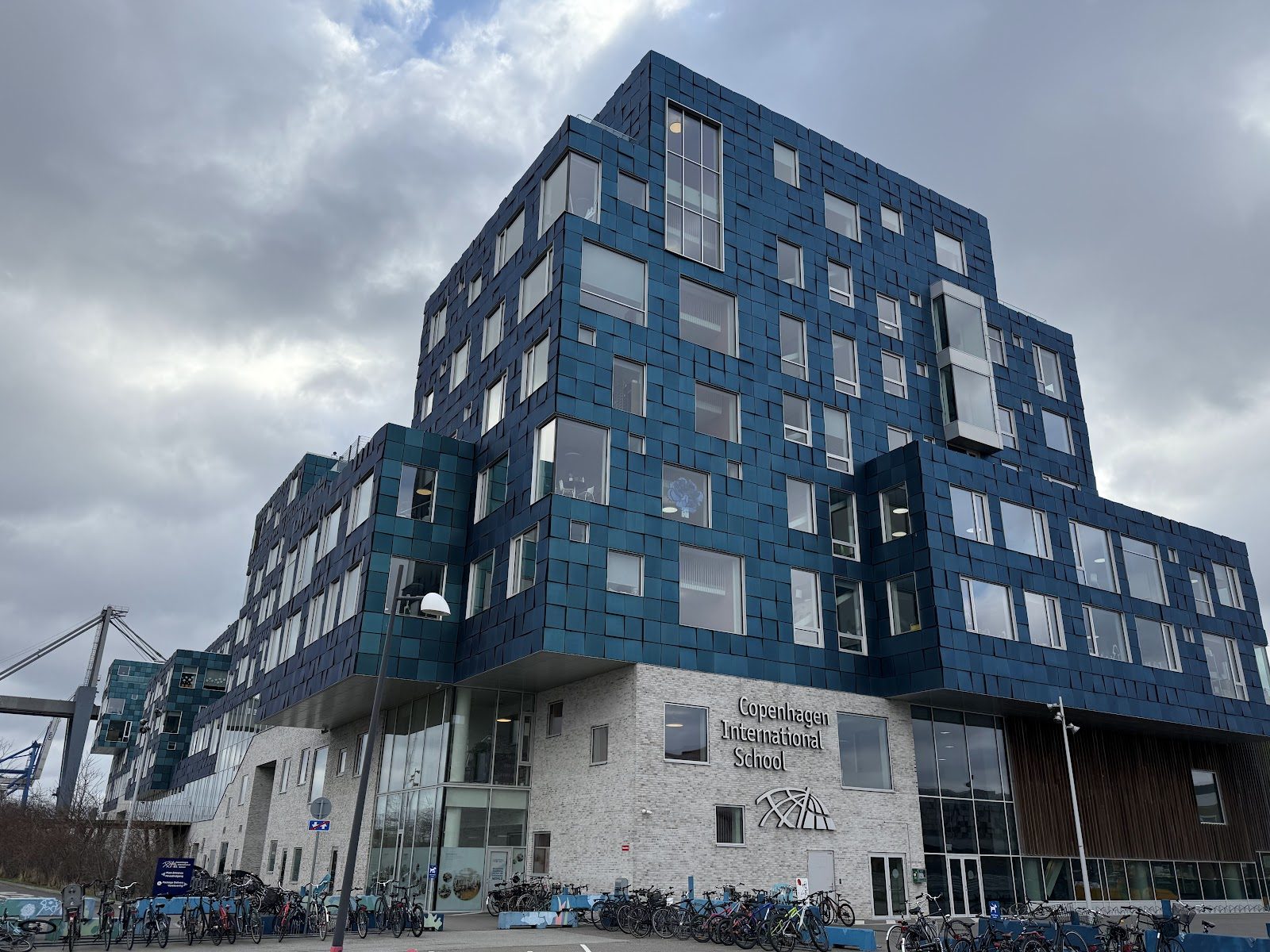
Copenhagen International School
Copenhagen · Denmark
On Copenhagen's harbour edge, an IB campus wrapped in 12,000 sea-green solar tiles powers half its own classrooms
Same country and curriculum — closest matches within ±10 points either way