
Antwerp
Antwerp International School
low confidence· 4/6 cats · 1.2 avg sourcesBorn from Antwerp's diamond-trade expat community in 1967, now a full IB continuum in leafy Ekeren.
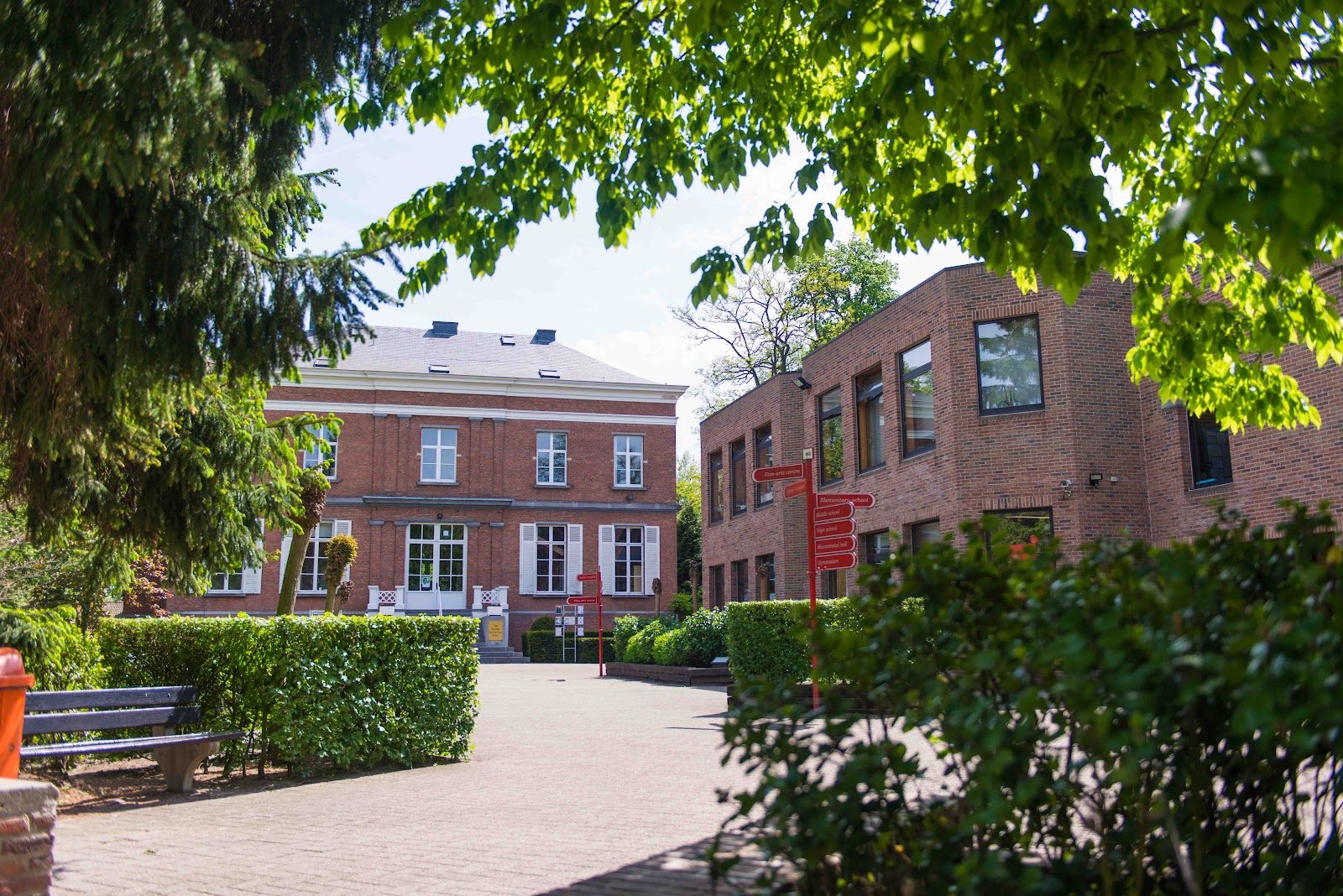
Photo © Antwerp International School via Google Maps
Type
Day
Ages
3–18
Curriculum
IB
Qualifications
IB Diploma · IB MYP · IB PYP
Ratio
—
The Verdict
Editor's commitment
Right for
Families wanting a small 1967-founded IB World School: ages 3-18 in English, with PYP, MYP and Diploma under one roof.
Wrong for
Parents chasing scale or anonymity. AIS has about 400 students, 35 nationalities and a tight community that leaves little room to drift.
Watch out for
The average annual day fee is EUR 28,658. AIS publishes a 100% IB Diploma pass rate for 2025, but no aggregate score data.
Ranking breakdown
Antwerp International School · #749 of 1591
Composite score 64.8. 8 weighted criteria.
By criterion
Academic Outcomes
Weight 20%
#900
of 1529 scored
University Placement
Weight 16%
#911
of 1529 scored
Prestige & Heritage
Weight 12%
#845
of 1571 scored
Alumni Network
Weight 12%
#532
of 1530 scored
Facilities
Weight 12%
#848
of 1534 scored
Transparency & Communications
Weight 8%
#927
of 1532 scored
Peer & Industry Review
Weight 10%
#791
of 1548 scored
Admissions Selectivity & Demand
Weight 8%
#686
of 1529 scored
Peer & Industry Review
How Antwerp International School is regarded in the sector
50
Credible · low confidence
Antwerp International School is one of the older established international schools in Belgium (IB World School, part of expat education networks), and appears in general expat-parent forum discussions (e.g. InterNations, Expat.com threads on Antwerp schooling) as a credible option, but it is rarely singled out in higher-tier specialist press like Tatler or Good Schools Guide International, which tend to focus on Brussels-area schools such as ISB, BSB or St John's International. Peer reputation appears solid but local/regional rather than internationally benchmarked.
Evidence sources
Editors' overview
Antwerp International School sits in a niche that few schools fill well: a small-scale international school with the full IB continuum, from the Primary Years Programme through the Middle Years Programme to the Diploma Programme, on one campus in Ekeren. Founded in 1967, it grew out of Antwerp’s expat economy rather than a grand educational project, and that history still matters. This is a school built for internationally mobile families who need continuity, English-medium teaching and a community that settles children fast. The school has about 400 students, draws families from at least 35 countries and trades hard on intimacy. Its published 1:1 teacher to student ratio is plainly a website glitch, but the wider point stands: AIS is deliberately small, and that scale is central to its appeal.
What puts it on a shortlist is not glamour or brute academic firepower. It is coherence. AIS is an IB World School across ages 3 to 18, with CIS and NEASC accreditation, which gives parents a clear read on standards and transferability. For families who know they want the IB route from the early years onwards, that matters. So does the school’s 100% IB Diploma pass rate in 2025. That is a strong headline, though the school does not publish the cohort size alongside it, so parents should ask how many students sat the Diploma and what score distribution sat behind the pass rate. Still, in a city where some families end up weighing local systems against a patchwork of international options, AIS offers a cleaner proposition: one curriculum family, one language of instruction, one compact community.
The average annual day fee across the full age range is €28,658, which places AIS in the serious but not stratospheric bracket for European international schooling. That matters in Antwerp, where the market is smaller and less status-driven than Brussels. AIS will suit children who thrive when adults know them well, who benefit from a close-knit setting, and who want breadth across arts, languages, sport and after-school activities without the impersonality of a much larger campus. It will not suit families chasing the cachet of a giant capital-city international school or those who want a national curriculum with a sharper exam tradition. This is a school for internationally minded students who value continuity, manageable scale and the IB’s broad, inquiry-led framework over prestige theatre.
Academic Performance
AIS publishes one hard academic headline: a 100% Diploma pass rate for the most recent cohort. That is a strong result by any measure. It puts the school on solid ground against international peers, many of which advertise pass rates in the low-to-mid 90s and reserve score detail for private conversations. The catch is obvious: AIS does not publish the cohort size, the average Diploma score, the top score, subject breakdowns or university destinations alongside that headline. Without those figures, parents cannot judge whether this was a genuinely high-performing year group, a small and carefully supported cohort, or both. A full pass rate tells you that students crossed the line; it does not tell you how far above it they finished.
That leaves AIS in a credible but opaque position academically. There is enough public evidence to say the school clears the baseline that matters most in external examinations: students complete the Diploma successfully. There is not enough to place it in the top-flight IB bracket occupied by schools that publish average points in the high 30s or above, plus score distribution and destination data. In other words, AIS has a reassuring outcome but not a fully transparent one. Families serious about academic stretch should ask direct questions: how many students sat the Diploma, what the average points total was, how many earned bilingual diplomas, and where graduates went next. Without that, the school’s exam profile remains sound rather than fully proven.
Facilities
The campus pitch centres on usability, not spectacle. AIS gives families what a compact international school needs: classrooms, arts, sport, technology and a substantial after-school programme, plus holiday camps and student activities that help new arrivals settle fast. The school also pushes access: it invites families to tour classrooms and facilities rather than hiding behind polished claims. That matters, because schools of this size live or die on whether the physical environment feels well used and coherently organised. Against peer schools, AIS holds a sensible middle ground. It does not read like a vast purpose-built complex with theatres, elite sports infrastructure or specialist centres competing for brochure space. It reads like a practical, community-first campus where the important spaces support daily school life rather than institutional vanity.
The strongest facility signal sits outside the timetable. AIS advertises an extensive after-school offer spanning arts, athletics, activities and the International Award, with parent involvement woven into school events. For an international population, that is not decorative; it is part of the school’s operating model. Smaller peers often rely on intimacy but underdeliver on breadth once the bell goes. AIS has built more around the school day than many schools in its bracket. The trade-off is obvious. Families chasing high-gloss performing arts venues, competition-level sports provision or the arms-race amenities of larger capital-city schools will find a more modest proposition here. Families who want a campus that feels lived-in, socially connective and serviceable across the week will find the essentials in place.
Without those figures, parents cannot judge whether this was a genuinely high-performing year group, a small and carefully supported cohort, or both
Prestige
AIS carries modest prestige, not social cachet. In the international-school market, prestige comes from scale, selectivity, published academic detail, university placement power and brand recognition beyond the local catchment. AIS does not compete on those terms. It is a small-community school with roughly 400 pupils and families from at least 35 countries, and its appeal rests on continuity, familiarity and ease of landing rather than elite sheen. For parents in globally mobile work, that has real value. Children join a school where newcomers do not vanish into the machinery. But that is a different proposition from the grander names in Brussels, Geneva or London that trade on diplomatic networks, old alumni circles or a long public record of top-end results.
That is why the school’s prestige sits in the credible middle tier. The full IB pathway gives it seriousness, and the recent 100% Diploma pass headline adds reassurance. Even so, the school does not publish the wider outcome data that would lift it into a more academically formidable category. Nor does it project the kind of institutional scale that creates automatic status. AIS has earned local respect as a stable, internationally minded school that serves its community well. It has not built the aura of a destination school that families pursue for prestige alone. Parents choosing AIS are buying fit, consistency and a humane environment, not a badge.
Founded in 1967, it grew out of Antwerp’s expat economy rather than a grand educational project, and that history still matters
Communications
AIS communicates like a school that knows parent confidence depends on access, rhythm and human contact, not brand varnish. The public-facing side is clear enough: admissions, calendar, contact points, FAQs, jobs, news and tour booking sit in plain view, and the school runs its day-to-day parent life through Toddle rather than burying families in disconnected channels. That matters in a small international school, where confusion travels fast. The site also gives parents a direct read on the wider life of the school — after-school activities, holiday camps, parent organisations, alumni links and community events all have visible space. That breadth points to a well-structured communications culture rather than a last-minute administrative scramble. The invitation to visit classrooms and campus also signals a refreshingly open stance.
The limits sit in what AIS does not publish. Beyond the headline 100% Diploma pass rate, public academic communication is thin: no score distribution, no aggregate points data, no destinations list. That weakens the school’s claim to full transparency and leaves parents to do more of the probing themselves. There is also a stray 0:1 teacher-to-student ratio on the homepage, an obvious error that a sharper communications operation would have caught. So the verdict is mixed but positive. For current and prospective parents, AIS communicates warmly, accessibly and with a strong community instinct. For families who want rigorous public disclosure on outcomes, it still falls short of first-rate.
Uniqueness
What marks AIS out is the combination of genuine small-school intimacy with an all-through international pathway. Plenty of schools offer warmth; plenty offer continuity. Far fewer do both without tipping into parochialism or administrative sprawl. Here, children move through one community rather than a chain of disconnected phases, and that has practical force. Teachers know families over time. New arrivals do not need to decode a new institutional culture every few years. Friendships, expectations and support systems carry forward. For internationally mobile families, that creates a rare kind of stability: a school built to absorb transition rather than merely tolerate it.
The other distinctive feature is the social texture. With around 35 nationalities in a school of around 400 students, AIS operates on a scale where diversity is visible in daily life, not reduced to a slogan on an admissions page. That matters. In very large international schools, children can disappear into nationality clusters or year-group silos. At AIS, the smaller community pushes contact across backgrounds, ages and interests, helped by a busy programme beyond lessons and active parent involvement. The result is a school that gives students a grounded internationalism rather than prestige theatre: they learn in a setting where being new is normal, where adults notice when a child is drifting, and where belonging does not depend on social bravado. For the right family, that is quietly powerful.
This is a school built for internationally mobile families who need continuity, English-medium teaching and a community that settles children fast
Student Profile
The student body is built for mobility. Children who have changed countries, joined schools mid-stream or need to find their footing fast will fit better here than pupils who want the churn and anonymity of a giant campus. With around 35 nationalities in a school of about 400, AIS draws the kind of internationally mixed cohort where being new does not mark a child out for long. The social environment suits students who are open, adaptable and comfortable mixing across backgrounds, ages and friendship groups. It also suits parents who want adults to know their children properly and to notice changes in mood, confidence or engagement. More self-sufficient teenagers who prefer a bigger social field, sharper internal competition or a stronger sense of hierarchy may find the atmosphere too contained.
This is also a strong fit for children who benefit from steady pastoral attention without being wrapped in cotton wool. The school’s scale favours participation: in class, in activities and in the wider life of the community. Quiet children who need encouragement to step forward can do well here because they have fewer places to hide, and that cuts both ways. Students who resist involvement or thrive on intense academic swagger will get less mileage from a culture built around belonging, visibility and daily contact. AIS suits families who want an international but grounded peer group, a low-ego social scene and a school where relationships matter as much as polish.
The school has about 400 students, draws families from at least 35 countries and trades hard on intimacy
Co-curricular strengths
Arts & sport, on a separate axis
Overall 8.38/10
Scored 0-10 from the school's own published evidence. This axis is editorial-only — it does not feed the main WTS ranking.
Sports
8.8/10
Drama
8.8/10
Dance
6.5/10
Music
8.8/10
Visual Arts
9/10
Editor first-pass · editor-reviewable · 7/30/2026
Strengths
- +Offers a full IB continuum (Primary Years, Middle Years and Diploma Programmes), allowing one seamless curriculum from early years through age 18.
- +Long-established presence in the Antwerp area, having served the region's expatriate and corporate relocation community for decades.
- +Set in Ekeren, a green, low-density suburb of Antwerp, giving the campus more space and a quieter setting than typical city-centre international schools.
- +Single, non-selective campus structure means siblings across a wide age range can attend the same school community.
- +Positioned to serve Antwerp's port, chemical and diamond-trade multinational workforce, giving it a clear, stable local expat catchment.
Considerations
- −Smaller scale than flagship international schools in Brussels, Amsterdam or Geneva, meaning a narrower range of extracurricular societies, sports leagues and elective subjects.
- −Antwerp is a secondary expat hub compared with EU capital cities, so the school's alumni and professional networking reach is more limited.
- −As a 'rising star' rather than an established top-tier name, international brand recognition and inspection-body accolades are less extensive than at longer-tenured global schools.
- −Fees represent a significant outlay for families without a corporate education allowance, as with most private IB day schools in Belgium.
Availability
Primary entry gate & tests
Academic Record
Gallery
Photo © Antwerp International School via Google Maps
Photo © Antwerp International School via Google Maps
Photo © Antwerp International School via Google Maps
Photo © Antwerp International School via Google Maps
Photo © Antwerp International School via Google Maps
Parent reviews
Have you sent your child here?
Voice reviews carry the strongest trust badge — we transcribe them for you to tidy up before they go live. Prefer to type? A written review is fine too.
Add your voice
In 60 seconds, tell other parents: what's the best thing about Antwerp International School, and what surprised you when your child joined?
We ask for a Google sign-in so every review has a real face behind it — no anonymous drive-by attacks on schools, and no faked positive reviews. Your email is never shown publicly.
Send this profile to a friend
International parents rely on word-of-mouth. Share this review with someone weighing the same decision.
Schools with places
Similar schools to Antwerp International School with places available now.
St. John's International School
Waterloo · Belgium
- 2026-27
- WAITPOOLSpace-dependent
- 2027-28
- PLACES OPENRolling
International School of Brussels
Brussels · Belgium
- 2026-27
- WAITPOOLSpace-dependent
- 2027-28
- PLACES OPENRolling
The British School of Brussels
Brussels · Belgium
- 2026-27
- WAITPOOLSpace-dependent
- 2027-28
- PLACES OPENRolling
Availability first, then country, area, curriculum, price, co-curricular
Consider also
Also worth looking at alongside Antwerp International School.

St. John's International School
Waterloo · Belgium
In quiet Waterloo, one of the few Belgian schools running the full IB continuum alongside AP, staged in a 400-seat theatre.
International School of Brussels
Brussels · Belgium
A 40-acre campus tucked into the Foret de Soignes beside a UNESCO site, pairing British roots with one of the world's earliest IB programmes.

The British School of Brussels
Brussels · Belgium
In woodland Tervuren near Brussels, the only Belgian school pairing A Levels, IB Diploma and BTEC under one roof.
Markham College
Lima · Peru
Founded in 1946 by British expatriates, this Lima day school pairs house traditions with a bilingual IB-British curriculum.
Same country and curriculum — closest matches within ±10 points either way