
Oregon
Oregon Episcopal School
low confidence· 2/6 cats · 2.33 avg sourcesSince 1869, the oldest Episcopal school west of the Rockies pairs Olympic-level saber fencing with a nationally recognized science research program.
Type
Both
Ages
3–18
Curriculum
American
Qualifications
IB Diploma · AP
Ratio
7:1
The Verdict
Editor's commitment
Right for
Families wanting a 3–18 Episcopal school with a 7:1 ratio, serious STEM credentials and boarding in Portland.
Wrong for
Parents who want a secular school, another curriculum beyond American, or a cheaper option than the US$43,235 day average.
Watch out for
At US$82,200 average boarding and US$43,235 day fees, this 1869 school charges at the top end; NAIS membership is not academic transparency.
Ranking breakdown
Oregon Episcopal School · #303 of 1591
Composite score 72.2. 8 weighted criteria.
By criterion
Academic Outcomes
Weight 20%
#386
of 1529 scored
University Placement
Weight 16%
#398
of 1529 scored
Prestige & Heritage
Weight 12%
#446
of 1571 scored
Alumni Network
Weight 12%
#293
of 1530 scored
Facilities
Weight 12%
#339
of 1533 scored
Transparency & Communications
Weight 8%
#388
of 1532 scored
Peer & Industry Review
Weight 10%
#385
of 1548 scored
Admissions Selectivity & Demand
Weight 8%
#438
of 1529 scored
Peer & Industry Review
How Oregon Episcopal School is regarded in the sector
73
Respected · medium confidence
Within Northwest independent-school circles, OES is consistently grouped with Catlin Gabel and Jesuit High School as one of Portland's top college-preparatory options, distinguished from them by its boarding programme and Episcopal chapel life, both cited in NWAIS-affiliated commentary as points of differentiation. University reception is solid rather than headline-grabbing: graduates are regularly placed at flagship West Coast institutions such as the University of Oregon and University of Washington alongside a smaller, steady stream to selective national universities, a pattern consistent with a strong regional feeder rather than a national pipeline school. Independent education press coverage is largely local (Portland Business Journal, The Oregonian) rather than featuring in national league tables or UK-oriented guides such as the Good Schools Guide or WhichSchoolAdvisor, which focus more heavily on schools with international boarding markets. Its reputation, in effect, is that of a respected, well-established regional institution with a genuine outdoor-education niche, rather than a school with the cross-border prestige signalling of the most nationally recognised American independent schools.
Editors' overview
Oregon Episcopal School occupies a rare niche in the US market: a long-established Episcopal school founded in 1869 that combines a full age range, day and boarding provision, and a serious academic culture without reading like a test-prep factory. The school’s own messaging leans hard on character, inquiry and global citizenship; the more useful point for parents is that OES has built tangible infrastructure around those claims. The EC3 Design Center gives project-based learning an actual home. Winterim pushes Upper School students into fieldwork and applied research. The boarding offer is not an afterthought bolted onto a day school; it is a central part of the school’s identity. For families looking at Portland, that matters. So does the 1:8 student–teacher ratio. This is a school with substance, not just polish.
What distinguishes OES is the breadth of high-end provision across academics, sport and residential life. The school cites a nationally visible STEM reputation, including Niche’s #1 Best High School for STEM in Oregon ranking, and pairs that with unusual co-curricular depth: a dedicated fencing facility, updated turf and track in 2025, and an Athletic Center built in 2020. The no-cut athletics policy tells you something important about ethos: OES values participation as well as excellence. That mix is hard to find. At one end, you have ambitious students using science research, engineering design and creative coding as part of daily school life; at the other, you have boarders living in a close, structured community with organised outings across the Pacific Northwest. That combination has real pull. It gives OES a market position stronger than many independent schools that excel in one lane and dilute the rest.
Parents should still read it clearly. This is not the right school for children who want anonymity, a loose academic culture, or a purely local day-school experience. OES suits students who thrive in a close-knit environment, respond to adult guidance, and want school to feel immersive. It will appeal to the academically motivated child who also wants sport, design, outdoor education or residential life to count for something. It will also suit internationally minded families who want boarding in an English-speaking American school without the scale and social sprawl of a giant East Coast institution. The atmosphere is purposeful. The ambition is built in. The boarding life has weight. Put simply: OES belongs on a shortlist for families seeking an American school with real intellectual seriousness, visible pastoral structure and enough range to develop a student beyond the classroom.
Academic Performance
Oregon Episcopal School does not publish the exam data parents need for a hard academic verdict. We have not seen aggregate SAT or ACT averages, AP participation rates, AP score distributions, IB results, or a university matriculation table. That is a real weakness in a market where strong independent schools increasingly understand that families expect clean, comparable evidence. OES talks at length about inquiry, science research, design thinking and college preparedness, and it advertises a top STEM reputation through Niche’s ranking, but rankings and ethos are not results. For a school that trades on academic seriousness, the absence of public outcome data leaves too much to inference. That opacity matters.
Relative to peers, OES sits in an awkward middle ground: more intellectually ambitious than many broad-based American independents, yet less transparent than the best schools in this bracket. The school’s case rests on programme quality rather than published attainment metrics — Winterim fieldwork, science research, engineering design, creative coding and a culture that treats academic work as applied, not ornamental. That has value, especially for students who learn through making and investigation rather than narrow test rehearsal. But parents comparing OES with academically selective day and boarding schools will want more than narrative. Until the school publishes external exam outcomes and clearer post-secondary destinations, its academic profile remains credible but under-evidenced, with a strong intellectual proposition and an incomplete public record.
Facilities
OES has put money into the facilities that most directly shape daily school life, and that focus is sharper than at many peer independents. The academic standout is the EC3 Design Center, built around THINK, MAKE and MOVE spaces rather than a token makerspace bolted onto a library. That matters. It gives engineering design, creative coding, music production and prototype work a proper base, which fits the school’s inquiry-heavy teaching better than a conventional classroom block. In sport, the campus offer is stronger than parents might expect from a school of this scale: an Athletic Center opened in 2020, a separate sports and recreation complex, indoor and outdoor tennis, racquetball, a basketball and volleyball court, and a dedicated fencing facility. That last point is genuinely unusual. Even strong American independents rarely provide fencing with this level of permanence.
The outdoor and performance-sport infrastructure also sits above the peer norm. The school states that both turf and track were updated in 2025, with sustainability claims built into the specification rather than added as a slogan. For boarders, the more important point is practical: OES has facilities that support an immersive, all-day school life, not a narrow academic day followed by drift. What it does not advertise is a grand parade of specialist buildings across every discipline, so parents hunting for conservatoire-level arts infrastructure or university-scale science labs will need to ask sharper questions. Even so, against comparable US day-boarding schools, this is a well-equipped, coherent campus with real competitive strength in design, athletics and fencing.
Oregon Episcopal School does not publish the exam data parents need for a hard academic verdict
Prestige
Oregon Episcopal School carries real local and regional prestige, but it does not sit in the tiny national tier whose name alone closes the argument. Its standing rests on three things parents can identify quickly: longevity, selectivity of culture, and breadth of provision done to a high standard. This is an Episcopal independent with the confidence to run serious academics, a full residential offer, and unusually strong co-curricular infrastructure without slipping into country-club complacency. The school’s public case for itself is strongest in STEM and inquiry-led learning, and the Niche distinction as the #1 high school for STEM in the state gives that claim market force. So does the combination of a dedicated fencing facility, a specialist design centre, and a no-cut sports policy that expands participation rather than rationing it. That mix gives OES distinctive prestige, not generic private-school shine.
Why not rate it higher still? Because top prestige in this market depends on public academic proof as well as programme quality, and OES does not publish enough of it. Families can see the ambition, the facilities, the structure and the seriousness. They cannot see the clean outcome data that would move the school from highly regarded to indisputably elite. Even so, for parents in the Pacific Northwest — and for international families who want an American school with a close, intentional culture rather than a sprawling brand-name institution — OES has substantial pull. The low staffing ratio at 1:8 reinforces that impression: this is a school where attention is part of the product, and prestige comes from substance more than mythology.
Oregon Episcopal School carries real local and regional prestige, but it does not sit in the tiny national tier whose name alone closes the argument
Communications
OES communicates with parents in a polished, mission-heavy register that tells you a lot about institutional priorities. The website is clean, current and easy to navigate, with clear signals around academics, boarding, athletics and student life. Parents can identify the school’s major themes fast: inquiry, character, STEM strength, residential community and broad participation in sport. The strongest communication work happens where words meet concrete provision. The EC3 Design Center, Winterim, the no-cut athletics policy and the fencing facility give shape to claims that many schools leave vague. The low staffing ratio of 1:8 also carries communicative weight: it supports the school’s case that students are known well. This is confident, well-managed communication with a strong sense of institutional identity.
The weakness is transparency. OES communicates ethos and programme quality far better than outcomes. Parents get a full portrait of values, experiences and facilities, but not the hard academic reporting that serious school comparison requires. That imbalance limits trust. A school asking families to buy into a high-commitment, high-cost educational environment needs to publish cleaner evidence on attainment and destinations, not just narrative about excellence and inquiry. The tone is also highly curated. Some families will welcome that coherence; others will find it over-scripted. In practical terms, OES does a strong job of explaining what school life feels like. It does a weaker job of proving, in public, what that experience delivers.
Uniqueness
What marks OES out is not any single badge of excellence, but the way several uncommon strands are built into one school and treated as core rather than decorative. Plenty of independent schools talk about inquiry. Fewer give it visible shape through science research, engineering design, Winterim fieldwork and a design centre used by children from the youngest years upwards. Plenty offer sport. Few pair a no-cut athletics policy with a dedicated fencing facility and the kind of culture that can support Olympic-level saber. Plenty run boarding. Fewer make it part of the school’s identity rather than a side business for international recruitment. That combination makes OES distinctive in the American market: intellectually ambitious, physically active and genuinely immersive.
For students, the gain is breadth with coherence. A child does not need to choose between being academic, inventive, athletic or residentially engaged, because the school has organised itself around all four. That matters most for teenagers who want substance beyond standard college-prep routines. They get a school where applied research has status, prototyping and presentation start early, outdoor and residential experiences carry educational weight, and participation in sport is not reserved for an inner circle. The low staffing ratio of 1:8 reinforces that structure. So does the age range from 3–18, which gives the school a continuous institutional culture rather than a fragmented one. For the right student, OES offers a rarely well-integrated education: serious without being narrow, values-led without piety, and high-achieving without social sprawl.
That combination makes OES distinctive in the American market: intellectually ambitious, physically active and genuinely immersive
Student Profile
The OES student is busy, capable and willing to be known. This is not a school for the child who wants to drift through the day unnoticed or keep school in a narrow academic box. It suits students who can handle a high-participation culture: sport matters, design and inquiry matter, presentation matters, and community life carries real expectations. The no-cut athletics policy widens the door, but it does not remove the pressure to join in. Boarders need a further layer of resilience and social maturity, because residential life here is active, supervised and intentionally communal rather than loose or anonymous. The low staffing ratio of 1:8 reinforces that reality. Adults will know when a student is thriving and when one is hanging back.
The best fit is an intellectually curious student who likes doing as much as discussing: prototyping, fieldwork, research, team sport, outdoor trips, collaborative projects. There is room here for the serious STEM child, the committed fencer, the globally minded boarder and the student who wants school to feel immersive rather than transactional. There is less room for the teenager who resists structure, dislikes group participation, or wants a purely conventional college-prep routine. Socially, OES fits students comfortable in a close-knit, adult-guided environment where character is treated as part of education, not a decorative extra. Families choosing it need to want that density of experience, not just the badge.
That mix gives OES distinctive prestige, not generic private-school shine
Co-curricular strengths
Arts & sport, on a separate axis
Overall 8.82/10
Scored 0-10 from the school's own published evidence. This axis is editorial-only — it does not feed the main WTS ranking.
Sports
9.3/10
Drama
9/10
Dance
8/10
Music
8.8/10
Visual Arts
9/10
Strengths
- +Founded in 1869 as St. Helen's Hall, OES is the oldest independent Episcopal school west of the Rockies, giving it a long institutional track record in the Pacific Northwest.
- +Classes are small and student-focused: the average class size of 14 enables students to develop meaningful connections with knowledgeable, passionate, and approachable faculty, and each student joins an advisory group kept through graduation.
- +OES is the only school in Portland with a boarding program for grade 9-12, bringing students from around the world to live and learn on campus, giving day students exposure to an international cohort.
- +College outcomes are strong on paper: ninety-nine percent of graduates attend four-year colleges, and the school does not rank students or weight GPAs, reducing internal competitive pressure.
- +The school runs a distinctive experiential-learning block: Winterim experiences take place over the six class days before spring vacation each year and reflect an intentional time set aside for experiential and immersive education, with courses run locally, domestically, and internationally.
Considerations
- −Fees are substantial for a non-elite-tier US day/boarding school: Grades 6-8 tuition is $43,300, Grades 9-12 Day Student tuition is $43,800, and Grades 9-12 Boarding Student tuition is $75,500 for 2024-25, and OES does not offer merit-based scholarships, but it does offer Flexible Tuition based on family financial need.
- −Admission is selective rather than open: the acceptance rate of Oregon Episcopal School is 23%, which is lower than the national average, and Upper School applicants must clear a standardized testing hurdle via SSAT, ISEE, or an in-house assessment.
- −The boarding cohort is small in absolute terms—as a boarding school OES houses 60 boarding students—and is restricted to Grades 9-12, since the Beginning, Lower, and Middle schools consist entirely of day students, so younger relocating families cannot access residential life.
- −The school retains a distinct religious identity as an Episcopal-affiliated private school with chapel traditions tied to its 1869 founding, which is a defining cultural feature some secular or non-Christian international families will want to weigh even though admission itself is non-discriminatory on religious grounds.
Availability
Primary entry gate & tests
SSAT/ISEE + Interview
Parent reviews
Have you sent your child here?
Voice reviews carry the strongest trust badge — we transcribe them for you to tidy up before they go live. Prefer to type? A written review is fine too.
Add your voice
In 60 seconds, tell other parents: what's the best thing about Oregon Episcopal School, and what surprised you when your child joined?
We ask for a Google sign-in so every review has a real face behind it — no anonymous drive-by attacks on schools, and no faked positive reviews. Your email is never shown publicly.
Send this profile to a friend
International parents rely on word-of-mouth. Share this review with someone weighing the same decision.
Schools with places
Similar schools to Oregon Episcopal School with places available now.
The Pingry School
Basking Ridge · United States
- 2026-27
- CLOSEDRegular cycle closed
- 2027-28
- PLACES OPENActive now
Delbarton School
Morristown · United States
- 2026-27
- CLOSEDRegular cycle closed
- 2027-28
- OPENS SOONOpens Sept '26
Newark Academy
Livingston · United States
- 2026-27
- CLOSEDRegular cycle closed
- 2027-28
- OPENS SOONOpens Sept '26
Blair Academy
Blairstown · United States
- 2026-27
- CLOSEDRegular cycle closed
- 2027-28
- PLACES OPENActive now — opened 1 Aug
Availability first, then country, area, curriculum, price, co-curricular
Consider also
Also worth looking at alongside Oregon Episcopal School.
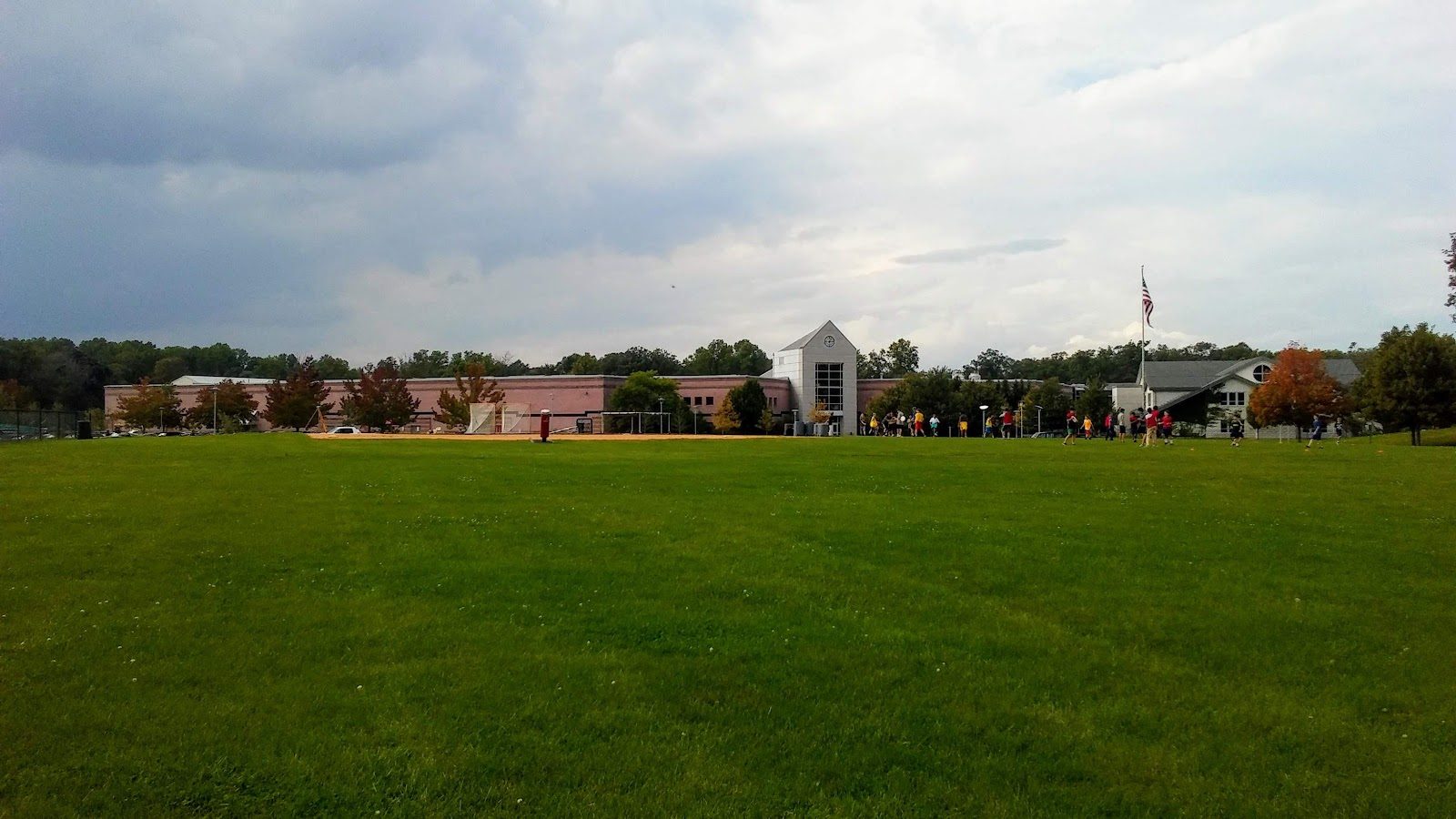
The Pingry School
Basking Ridge · United States
A 1861-founded New Jersey day school whose soccer pitches were deemed fit to host Morocco's 2026 World Cup training camp.
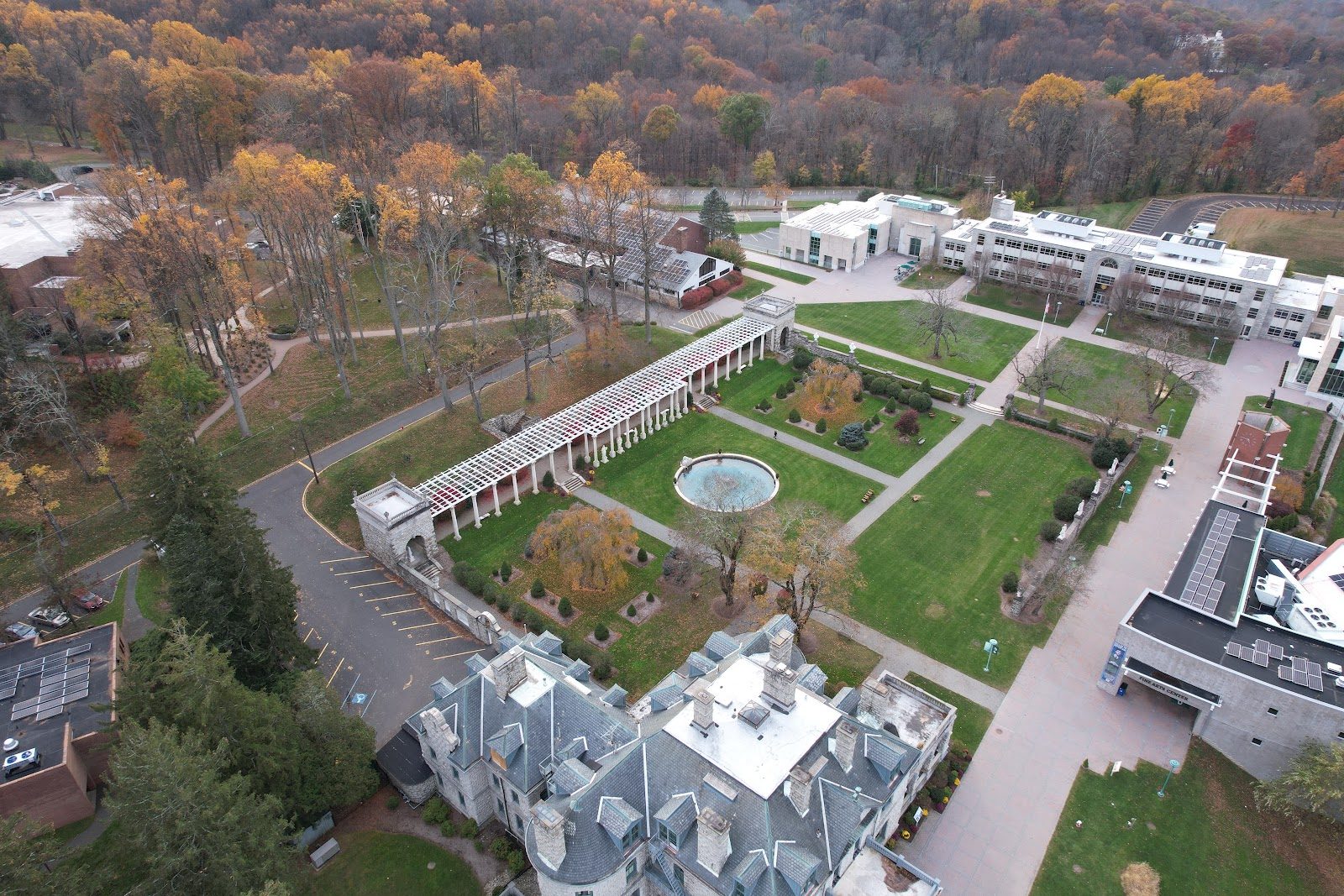
Delbarton School
Morristown · United States
On a 187-acre abbey campus outside Morristown, Benedictine monks still guide a rigorous, near-1,500-year-old liberal arts tradition.
Newark Academy
Livingston · United States
Founded in 1774, this Livingston day school remains New Jersey's only private IB Diploma provider
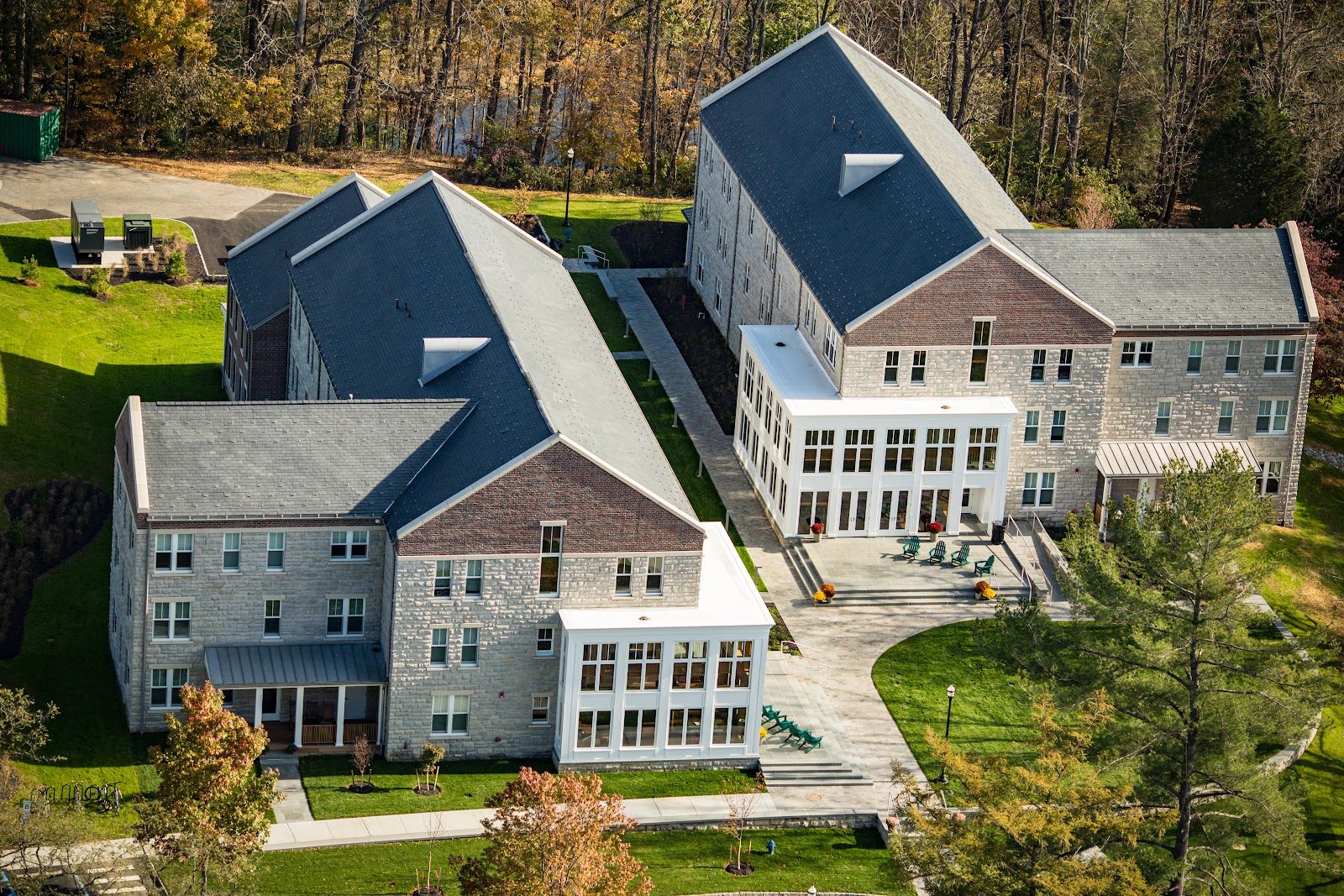
Blair Academy
Blairstown · United States
A hilltop New Jersey campus, founded 1848, where the weekly Society of Skeptics turns global debate into a signature course of study
Same country and curriculum — closest matches within ±10 points either way