
New York
Trinity School
high confidence· 6/6 cats · 3 avg sourcesFounded in 1709 as a charity school, now the oldest continuously operating school in New York City, still built on a rare full Classics department
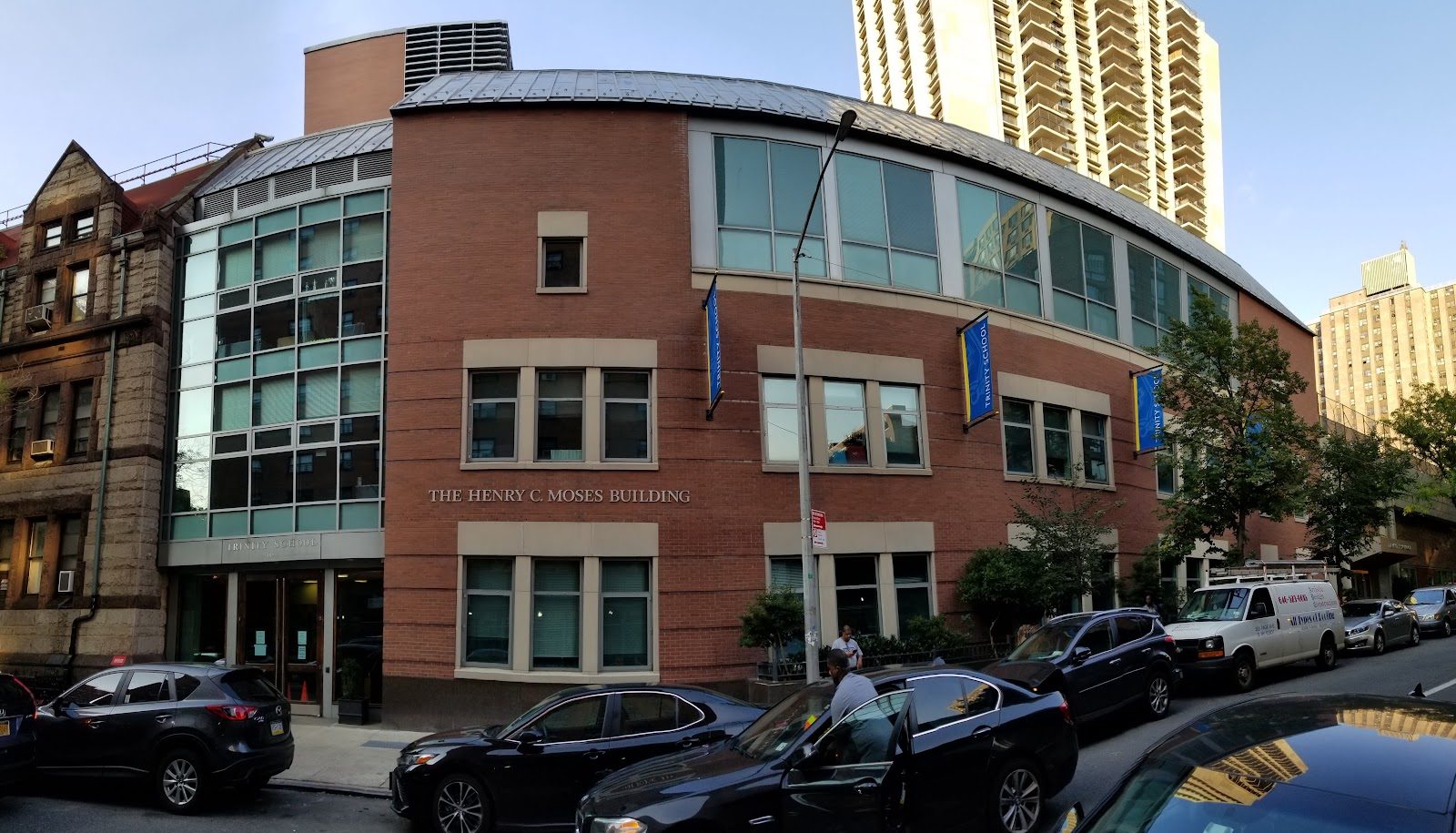
Photo © Pedro Diaz via Google Maps
Type
Day
Ages
5–18
Curriculum
American
Qualifications
AP
Ratio
13:1
The Verdict
Editor's commitment
Right for
Families who value a full Classics department, Episcopal roots and a serious K-12 day school founded in 1709.
Wrong for
Those wanting a cheaper option: the average annual fee is US$71,500, with class size 18 and no boarding at all.
Watch out for
Oldest continuously operating school in New York City carries weight, but prestige is not the same thing as fit; the ratio is 13:1.
Ranking breakdown
Trinity School · #365 of 1591
Composite score 71.1. 8 weighted criteria.
By criterion
Academic Outcomes
Weight 20%
#66
of 1529 scored
University Placement
Weight 16%
#41
of 1529 scored
Prestige & Heritage
Weight 12%
#122
of 1571 scored
Alumni Network
Weight 12%
#1372
of 1530 scored
Facilities
Weight 12%
#666
of 1533 scored
Transparency & Communications
Weight 8%
#93
of 1532 scored
Peer & Industry Review
Weight 10%
#83
of 1548 scored
Admissions Selectivity & Demand
Weight 8%
#120
of 1529 scored
Score history
Trinity School · 2026
Movement across 2024–2026. Peer average overlaid.
Overall — 2024–2026
71.1/ 100
▲ +11.8 vs 2025
year on year
Peer & Industry Review
How Trinity School is regarded in the sector
95
Top-tier · high confidence
Trinity School NYC is consistently ranked as one of the top private schools in the United States, frequently cited by Niche.com and other education directories as the #1 or top private K-12 school in New York City and among the best in the nation. It has a highly prominent alumni network including notable figures in finance, media, and politics, and is a perennial benchmark institution referenced alongside peer schools like Dalton, Collegiate, and Brearley in NYC private school admissions press coverage (e.g., New York Times, New York Magazine). Its reputation is reinforced by extremely low acceptance rates and its status as one of the oldest continuously operating schools in the US, frequently discussed in specialist education press covering elite NYC private school admissions.
Evidence sources
- Humphrey Bogart — Actor
- John V. Lindsay — Politician, Former NYC Mayor
- Robert Caro — Author, Historian
Editors' overview
A school founded in 1709 in Manhattan has every excuse to trade on heritage; Trinity’s stronger claim is that it still runs a full Classics department in a market that has stripped Latin and Greek out of many rivals. That matters because it tells you what kind of place this is: intellectually old-fashioned in the best sense, serious about scholarship, and unimpressed by educational fashion. The structure is clear enough. Trinity is a day school for ages 5 to 18, it teaches in English, and it works within an American curriculum. The academic setting is controlled rather than sprawling, with a 13:1 student-teacher ratio and average class sizes of 18. For parents who want close adult attention without the performative cosiness that some independents sell, that is a strong operating model.
This is also an expensive school. The average annual fee across the full age range is $71,500, which places Trinity firmly at the top end of the New York day-school market. That price buys scarcity, continuity and institutional confidence more than glossy excess. The school’s Episcopal foundation still matters to its identity, but this does not read as a pious niche school; it reads as a long-established city institution with a moral vocabulary as well as an academic one. Its accreditations, NEASC and NAIS, give it the standard external markers parents expect, but the more distinctive point is cultural: Trinity has the dense, high-expectation atmosphere of a school that assumes children are there to read, write, think and argue.
The children who thrive here are bright, articulate and comfortable in a demanding environment. They do not need constant hand-holding, and they do not need a school to dilute academic ambition in the name of balance. A student who enjoys literature, languages, history and the disciplined habits of close reading will find a natural home here, especially with Classics still given real institutional weight. Families who want overt vocationalism, broad-spectrum educational experimentation, or a softer, more therapeutic school culture should look elsewhere. Trinity belongs on a shortlist because it offers something genuinely rare: a still-living link between old academic ideals and modern New York schooling, delivered at scale and with evident self-belief.
Academic Performance
Trinity sits in the part of the American independent-school market where families expect elite university placements, but the school does not publish the kind of aggregate external-results data that would let parents test that expectation cleanly. We have not seen schoolwide SAT or ACT averages, AP score distributions, or a consolidated annual outcomes table in the public domain. That is a real gap. In a sector crowded with schools eager to advertise every marginal gain, Trinity asks families to trust reputation, selectivity and institutional standing. For some parents, that is enough. For others, it is needlessly opaque. The college-preparatory framing is clear, and the school foregrounds standardised testing and matriculation as part of its upper-school architecture, but it stops short of giving the market hard comparative numbers.
That leaves Trinity best understood through peer position rather than disclosed score data. It belongs with New York’s most exacting independent day schools: the kind of school where the academic floor is high, the competition for entry is intense, and weak outcomes would surface fast in parent and alumni circles. Its full Classics provision also signals a stubbornly intellectual culture rather than a test-prep factory. That distinction matters. Trinity’s strength is not glossy score-chasing; it is the production of students trained to read closely, write precisely and hold their ground in demanding classrooms. Among top Manhattan peers, that places it in the serious upper tier academically, even if the school’s refusal to publish headline exam metrics leaves its external-performance case less transparent than it should be.
Facilities
Trinity’s facilities profile is constrained by geography and strengthened by intent. This is not the kind of school that sells itself through acreage, arena sports or a resort-campus fantasy. The address on West 91st Street signals a dense urban footprint, and parents should expect a vertical city school rather than a sweeping suburban estate. What the school does foreground is a well-developed internal programme structure: dedicated lower, middle and upper school divisions; a library, media and technology function; performing and visual arts; athletics; chapel; an Office of Public Service; after-school provision; a swim club; summer camp; and an upper-school “Minimester” built around strands called Explore, Magnify, Make, Move and Unplug. That reads as deliberately programmed rather than architecturally flashy. It also fits Trinity’s hard-edged academic culture: the infrastructure serves study, performance, service and organised activity, not brand theatre.
Against New York peers, that puts Trinity in an interesting bracket. Some rivals offer more visibly expansive campuses, more purpose-built specialist space and a stronger first impression on a tour. Trinity’s advantage lies elsewhere: institutional density, coherent use of limited space and a programme that extends well beyond the timetable without drifting into gimmickry. The school’s public description of its classrooms as the centre of gravity rings true because the facilities story is secondary to the academic one. Parents hunting for showpiece physical plant will find stronger options elsewhere. Parents who care more about whether a school has the right spaces for reading, rehearsal, service, clubs and sustained intellectual work will find Trinity’s provision credible and serious.
The average annual fee across the full age range is $71,500, which places Trinity firmly at the top end of the New York day-school market
Prestige
Trinity carries top-tier prestige in the New York independent-school market because its reputation rests on three things parents and universities both respect: fierce admissions competition, durable institutional status, and a scholarly culture that has not been watered down for fashion. Plenty of schools trade on polish; Trinity trades on intellectual seriousness. The signal here is not only selectivity but substance. A school that still maintains a full Classics department, alongside a college-preparatory structure and a conspicuous public-service ethos, tells families exactly what it values: disciplined reading, argumentative confidence, academic range and a sense of obligation beyond self-advancement. That combination is rare, and it gives the school a prestige that feels earned rather than manufactured.
The pricing reinforces that status. At an average annual fee of $71,500, Trinity sits in the most expensive bracket of the day-school sector, and the market does not tolerate mediocrity at that level. Its 13:1 staffing ratio and average class size of 18 support the sort of close, exacting teaching that prestige schools need to deliver if they want their name to keep carrying weight. The caveat is plain: Trinity does not publish the hard aggregate test data that would strengthen the case further. That opacity matters. Even so, the school’s standing remains formidable because its prestige is cultural as much as statistical. This is a name with real cachet among educated New York families, and with good reason.
Trinity is a day school for ages 5 to 18, it teaches in English, and it works within an American curriculum
Communications
Trinity communicates with parents in the voice of a school that expects them to keep up. The public-facing architecture is extensive and tightly organised: dedicated admissions pages split by age phase, separate lower, middle and upper school sections, registrar and contact pages, a named strategic plan, college-counselling resources, standardised-testing signposts, alumni channels, giving pages, and clearly signposted strands for arts, athletics, service, spiritual life and after-school provision. That breadth matters because it tells parents where responsibility sits. The school does not bury core functions inside vague lifestyle messaging. Even the head’s letter, for all its rhetorical flourish, states the school’s priorities plainly: academic intensity, service, and a shared moral vocabulary. For a school charging an average of $71,500 a year, that level of navigability is not a luxury; it is a minimum requirement, and Trinity meets it.
The communication style itself is high-register, institutionally confident and at points self-dramatising. Some families will enjoy that; others will find it heavy with self-belief. The stronger point is coherence. Trinity’s messaging lines up across admissions, programmes and school culture, which gives parents a stable picture of what they are buying into. The weaker point is disclosure. For all the richness of the site structure, the school withholds some of the hard comparative data parents increasingly want, especially around aggregate academic outcomes. That limits trust at the margins. So the verdict is clear: communication is strong on identity and structure, weaker on hard proof. For the right families, that reads as confidence. For sceptical ones, it reads as control.
Uniqueness
What makes Trinity distinct is not age alone but continuity of intellectual temperament. Plenty of old schools have modernised themselves into sameness; Trinity has kept a clear scholarly spine. The strongest marker is the full Classics department, which is now rare in American day schools and rarer still as a live part of a school’s identity rather than a decorative survival. That choice shapes the atmosphere. It privileges language, argument, memory, textual discipline and a respect for difficult things done properly. Add the school’s Episcopal inheritance and its conspicuous emphasis on public service, and the result is a place with a moral and academic seriousness that reaches beyond university preparation. Even the school’s own language — vocation, obligation, promise, means — tells you that Trinity expects children to think about duty as well as achievement.
For students, that brings a very specific education. They get a school culture that treats ideas as work, not performance; service as an obligation, not a résumé device; and teaching as something more exacting than cheerful facilitation. The dedicated public-service office, chapel life, peer leadership and the upper-school minimester all reinforce that broader formation. So does the absence of gimmickry. At an average annual fee of $71,500, families are not buying educational novelty; they are buying entry into a high-pressure, high-expectation institution that still believes schools should form judgement, taste and character. For the right child, that is genuinely distinctive. For the wrong one, it is unforgiving.
The academic setting is controlled rather than sprawling, with a 13:1 student-teacher ratio and average class sizes of 18
Student Profile
The Trinity student is academically hungry, verbally agile and unbothered by pressure. This is a school for children who like being taught by adults who know their subjects and who expect pupils to meet the standard. They do not need lessons sugar-coated, and they do not need every disagreement smoothed into consensus. A child who enjoys books, discussion, precise writing and the slow discipline of mastering difficult material will fit well. So will a pupil who can move comfortably between scholarship and organised activity, because the school puts real weight on arts, athletics, service, clubs and spiritual life rather than treating them as decorative extras. With average classes of 18 and a staffing ratio of 13:1, there is room to be known; there is also nowhere to hide.
The social fit is just as specific. Trinity suits families who value institutional seriousness, high expectations and a demanding peer group. Children who like clever company and can tolerate comparison will find stimulation here. Children who need a gentler tempo, constant reassurance or a more therapeutic culture will struggle. The public-service ethos matters too: this is not a school built only for private ambition. Pupils are expected to think beyond themselves, and the Episcopal inheritance gives that expectation a moral frame. For the right child, the result is formative and intellectually bracing. For the wrong one, it is hard-edged and exhausting.
For parents who want close adult attention without the performative cosiness that some independents sell, that is a strong operating model
Co-curricular strengths
Arts & sport, on a separate axis
Overall 8.5/10
Scored 0-10 from the school's own published evidence. This axis is editorial-only — it does not feed the main WTS ranking.
Sports
8.5/10
Strong Ivy Preparatory League performance, maximizing its vertical Manhattan footprint with state-of-the-art indoor fitness and turf facilities.
Drama
9/10
Highly sophisticated theatrical seasons running demanding classical texts and contemporary plays inside premium theater spaces.
Dance
7/10
Active and competitive choreography modules designed to anchor their massive, high-production collaborative musicals.
Music
9/10
Top-tier jazz combos, chamber orchestras, and choral ensembles that frequently perform across New York's major cultural halls.
Visual Arts
9/10
Sun-drenched studio spaces running advanced design pipelines, ceramics, and photography to clear elite university portfolios.
Editor-verified · 8/7/2026
Strengths
- +Trinity traces its founding to 1709 and is recognized as the fifth-oldest school in the United States and the oldest continuously operating school in New York City.
- +The school maintains a 6:1 student-teacher ratio across an enrollment of roughly 1,000 students in grades K-12.
- +Trinity's need-based financial aid program assists close to 20% of the student body and does not offer merit aid, concentrating resources on demonstrated need.
- +The campus occupies seven connected, partly landmarked buildings on the Upper West Side, including two theaters, two chapels and a rooftop turf field.
- +Niche data indicates 100% of graduates go on to four-year colleges, reflecting the school's college-preparatory focus.
Considerations
- −Tuition sits among the highest in Manhattan, reported at $69,000 for the 2025-26 school year, before any additional fees.
- −Admission outside the two main entry points (Kindergarten and Grade 9) is limited to attrition-based openings in Grades 1-4, 5-7, 10 and 11, which creates real uncertainty for families relocating mid-cycle.
- −The school does not publish an official acceptance rate, but third-party estimates place entry-point admission in the roughly 9-15% range, indicating a highly selective process with no guarantee of a place even for qualified applicants.
- −As an urban day campus built across historic buildings, outdoor athletic space is constrained relative to suburban or boarding-school campuses, relying partly on a rooftop field.
Availability
Primary entry gate & tests
ISEE/SSAT + Interview
Gallery
Photo © Maxwell Feinglass via Google Maps
Photo © Dervla Hammett-Ryan via Google Maps
Photo © Pedro Diaz via Google Maps
Photo © Pedro Diaz via Google Maps
Photo © Pedro Diaz via Google Maps
Photo © Pedro Diaz via Google Maps
Photo © Pedro Diaz via Google Maps
Photo © Nathaniel Shalam via Google Maps
Parent reviews
Have you sent your child here?
Voice reviews carry the strongest trust badge — we transcribe them for you to tidy up before they go live. Prefer to type? A written review is fine too.
Add your voice
In 60 seconds, tell other parents: what's the best thing about Trinity School, and what surprised you when your child joined?
We ask for a Google sign-in so every review has a real face behind it — no anonymous drive-by attacks on schools, and no faked positive reviews. Your email is never shown publicly.
Send this profile to a friend
International parents rely on word-of-mouth. Share this review with someone weighing the same decision.
Schools with places
Similar schools to Trinity School with places available now.
Grace Church School
New York City · United States
- 2026-27
- CLOSEDConfirmed full
- 2027-28
- OPENS SOONOpens post-Labor Day '26
Rye Country Day School
Rye · United States
- 2026-27
- CLOSEDRegular cycle
- 2027-28
- PLACES OPENActive now (Opened 1 Aug)
Saint Ann's School
Brooklyn · United States
- 2026-27
- WAITPOOLLate / attrition-dependent
- 2027-28
- OPENS SOONOpens 8 Sept '26
Packer Collegiate Institute
Brooklyn · United States
- 2026-27
- CLOSEDRegular cycle
- 2027-28
- OPENS SOONOpens post-Labor Day '26
Availability first, then country, area, curriculum, price, co-curricular
Consider also
Also worth looking at alongside Trinity School.
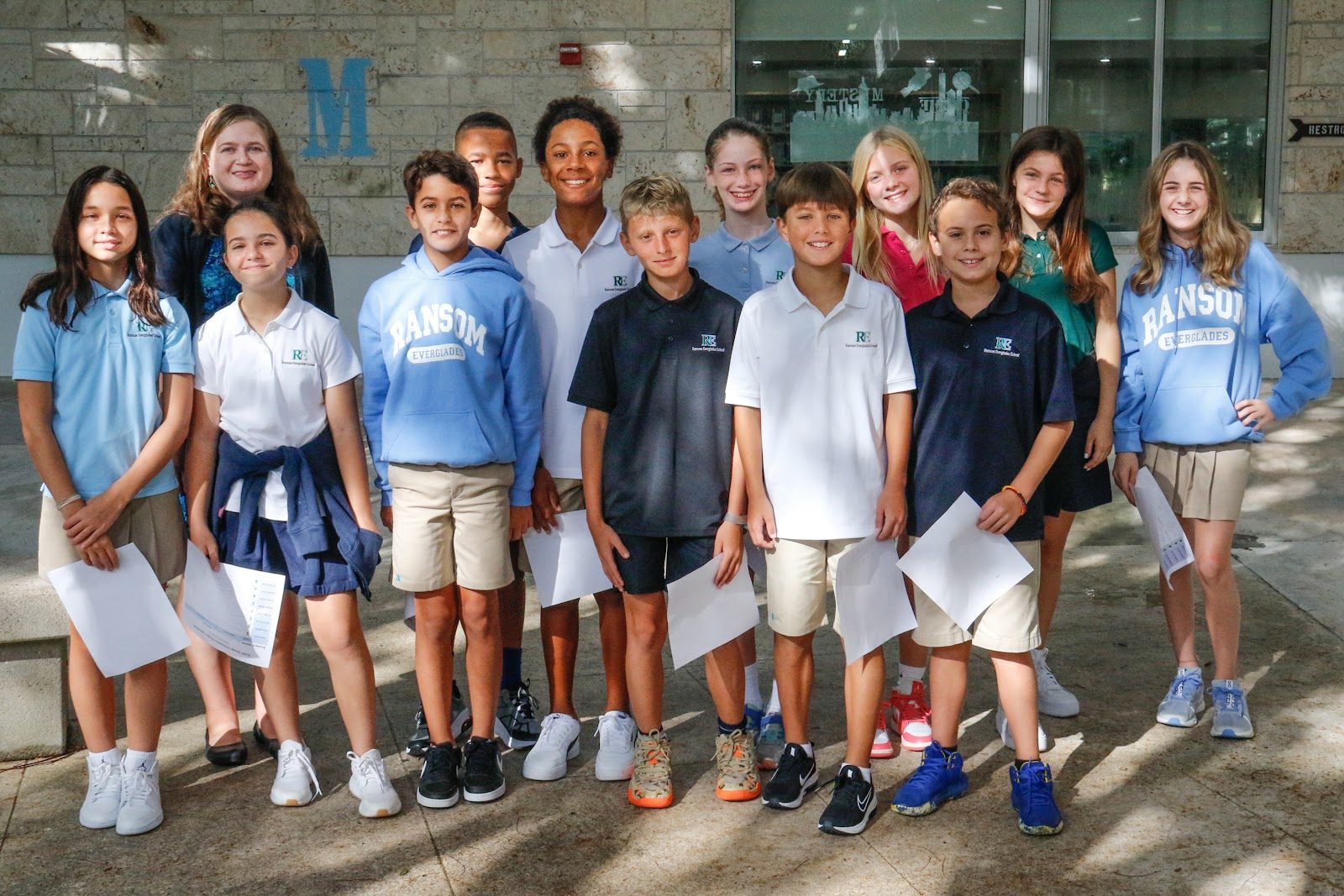
Ransom Everglades School
Miami · United States
On Biscayne Bay since 1903, where sailing and marine science turn the water itself into a classroom
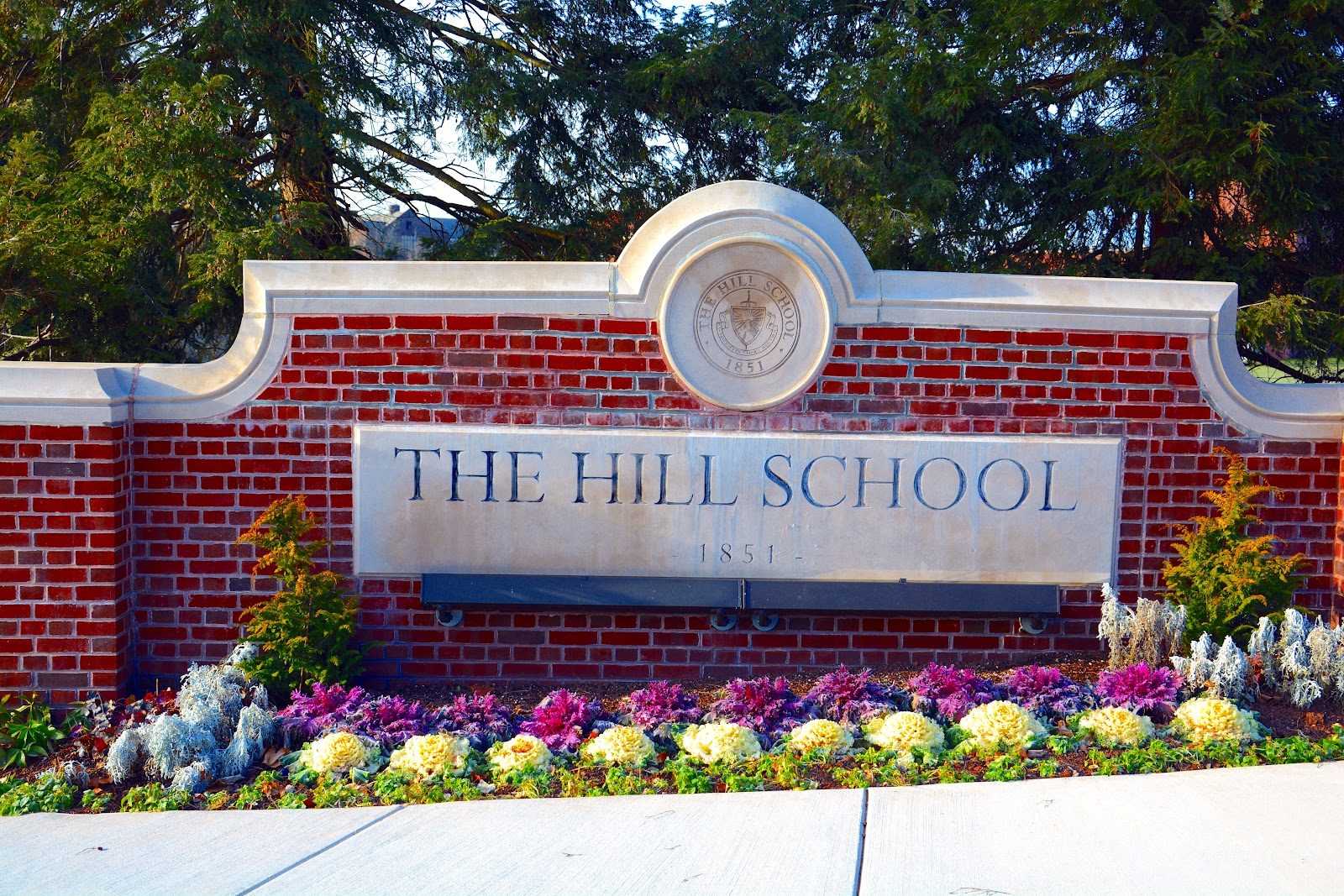
The Hill School
Pottstown · United States
Born in 1851 as the nation's first family boarding school, still pairing faculty and students under one roof on a Pottstown hilltop.
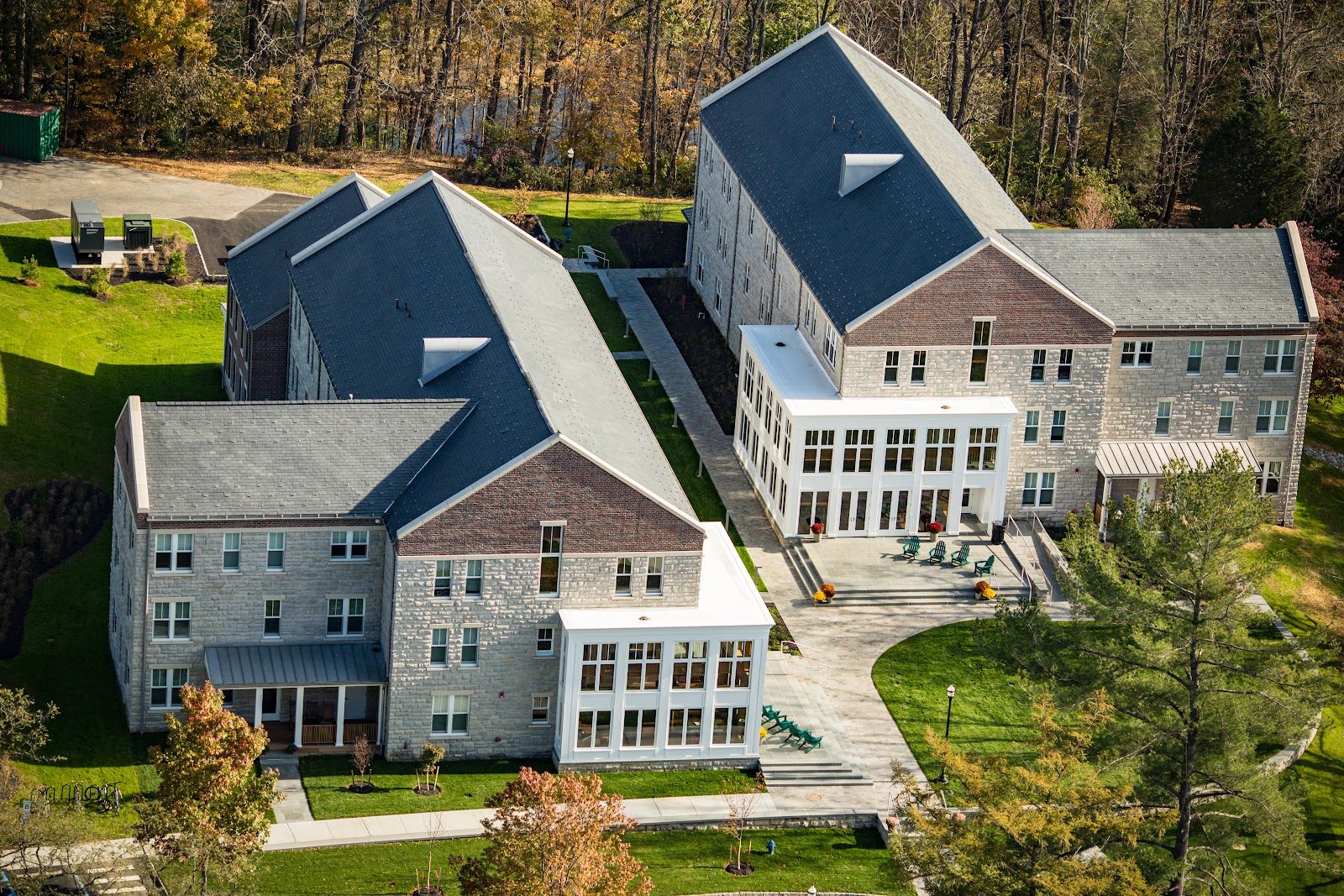
Blair Academy
Blairstown · United States
A hilltop New Jersey campus, founded 1848, where the weekly Society of Skeptics turns global debate into a signature course of study
Newark Academy
Livingston · United States
Founded in 1774, this Livingston day school remains New Jersey's only private IB Diploma provider
Same country and curriculum — closest matches within ±10 points either way