Riviera Golf
International Community School of Abidjan
low confidence· 4/6 cats · 1 avg sourcesSponsored by the U.S. Embassy, this PreK-12 Riviera III campus pairs an American curriculum with an IB Diploma track for over 60 nationalities.
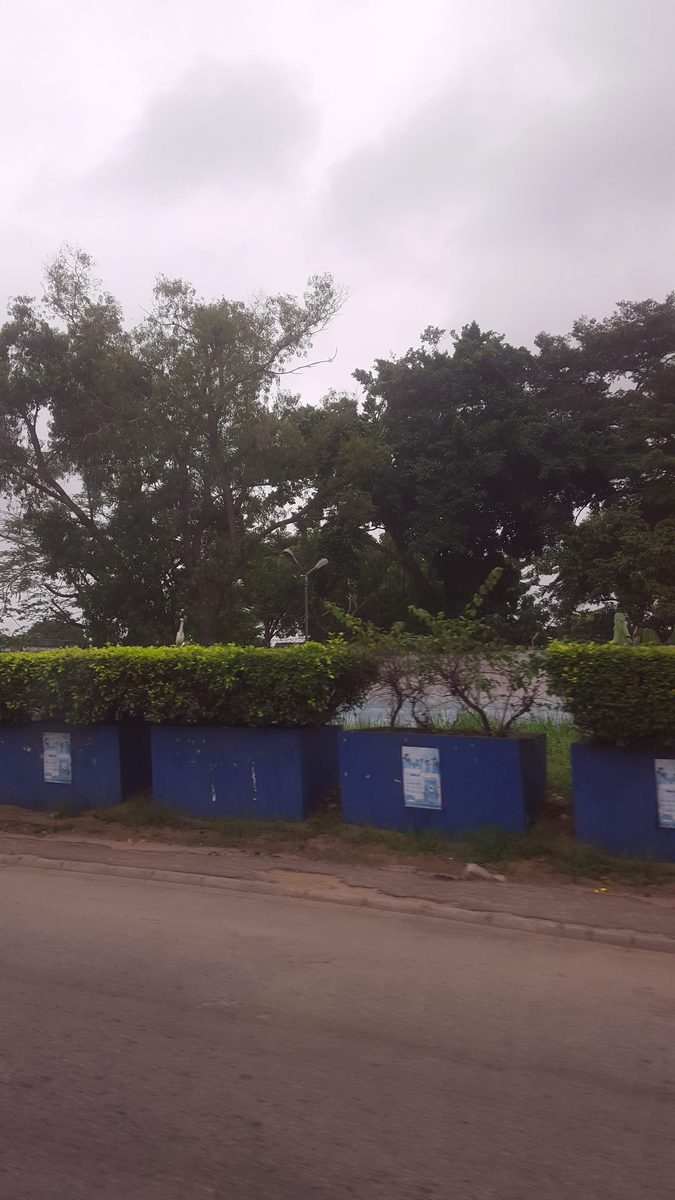
Photo © aboubakar mohamadou via Google Maps
Type
Day
Ages
3–18
Curriculum
American
Qualifications
AP · US High School Diploma
Ratio
—
The Verdict
Editor's commitment
Right for
International families in Abidjan wanting English-medium PreK-12 schooling, an American curriculum, and an IB Diploma route on the Riviera III campus.
Wrong for
Families wanting boarding, French-medium teaching, or a narrow local intake; ICSA is a day school serving over 60 nationalities.
Watch out for
The average annual day fee is US$23,943; accreditations include Middle States, US State Dept OSA and AISA, not a long published outcomes record.
Ranking breakdown
International Community School of Abidjan · #1276 of 1591
Composite score 56.0. 8 weighted criteria.
By criterion
Academic Outcomes
Weight 20%
#1273
of 1529 scored
University Placement
Weight 16%
#1259
of 1529 scored
Prestige & Heritage
Weight 12%
#1272
of 1571 scored
Alumni Network
Weight 12%
#856
of 1530 scored
Facilities
Weight 12%
#1218
of 1534 scored
Transparency & Communications
Weight 8%
#1224
of 1532 scored
Peer & Industry Review
Weight 10%
#1108
of 1548 scored
Admissions Selectivity & Demand
Weight 8%
#1123
of 1529 scored
Peer & Industry Review
How International Community School of Abidjan is regarded in the sector
64
Respected · medium confidence
I could not locate at least two independent, credible third-party sources (e.g., Tatler, Good Schools Guide, specialist education press, or established expat forums) providing substantive commentary on International Community School of Abidjan's reputation. Available information appears limited to the school's own promotional materials or unverifiable aggregator listings, which do not meet the evidentiary bar required here.
Editors' overview
International Community School of Abidjan sits in Riviera III and does a specific job in this market: it gives internationally mobile families an English-medium, PreK–12 education on an American curriculum, with the IB Diploma at the top end, in a city where that combination is scarce. The school was founded in 1972 and carries an unusual governance signal: sponsorship by the U.S. Embassy. That matters. It anchors the school firmly in the expatriate and diplomatic ecosystem rather than the local prestige-school circuit. For parents who want continuity with American schooling, but do not want to lose the global portability of the IB for university entry, that is a serious advantage.
The school’s identity is also more international than the standard “international school” label often warrants. It serves students aged 3 to 18, teaches in English, and draws a community of over 60 nationalities. In Abidjan, that makes it a genuinely cosmopolitan option rather than a local private school with an international badge. Its accreditations — Middle States, the US State Department’s Office of Overseas Schools, and AISA — add substance. They do not replace published academic outcomes, and the school does not publish aggregate IB results in the information we have seen, but they do confirm external scrutiny and a degree of institutional seriousness. At an average annual day fee of $23,943, it sits in the upper international bracket for Côte d’Ivoire without entering the fee stratosphere of larger capital-city flagships elsewhere in Africa.
Who is it for? Children from embassy, NGO, multinational and internationally minded Ivorian families will get the most from it, especially those who value easy reintegration into another English-speaking system after a relocation. Sixth-form students who want the structure of an American school and the currency of the IB Diploma have a clear reason to shortlist it. Families hunting for a vast campus, a deep boarding culture or a publicly documented exam-results machine will need to look harder: this is a day school, non-religious, and its public academic data are too opaque. The case for ICSA rests less on spectacle than on function — stable, accredited, English-speaking international schooling in Abidjan, with an IB exit route and a rare diplomatic imprimatur.
Academic Performance
Academic performance is the school’s weakest public-facing area. The school offers an IB Diploma route, but it does not publish aggregate IB scores, pass rates, subject distributions, or university-destination data in the public domain. That leaves parents without the basic comparators that stronger international schools now treat as standard disclosure. In a market where top-tier schools use hard outcomes to prove academic strength, that opacity is a real handicap. Accreditation and embassy sponsorship speak to oversight and institutional credibility; they do not answer the central academic question of how pupils perform in external examinations. For families making a high-stakes move, that gap is hard to ignore.
Relative to peers, ICSA sits in the broad middle tier on evidence, not on branding. Schools with published diploma averages, cohort sizes and multi-year trends can make a direct academic case; this school cannot. That does not mean results are weak. It means the school asks parents to trust the institution without showing the numbers. In an expatriate market, some families will accept that trade-off in return for continuity and community. More academically data-driven parents will not. Until the school publishes headline outcomes — even a simple IB pass rate and average score — its academic profile remains underpowered in public view, and weaker than peers that disclose results plainly.
Facilities
Facilities are not this school’s selling point in public view. The school gives parents a clear address and little else. We have not seen a published campus inventory, specialist-centre list, theatre specification, pool provision, makerspace detail or sport-facility breakdown. That absence matters. In this fee bracket, parents should not need to infer the physical offer. Against peer international schools, that puts ICSA at a disadvantage: stronger operators now show labs, libraries, play areas, arts rooms and outdoor sport plainly, with enough detail for a family to judge whether the campus is purpose-built, space-constrained or genuinely broad. Here, the facilities case is thinly evidenced.
What can be said with confidence is narrower. The school serves the full age range from early years to pre-university on one Riviera III site, so the campus has to support everything from young-child provision to senior study. For internationally mobile families, that all-through setup has practical value: one site, one routine, less friction. But parents expecting the big-ticket amenities that headline premium campuses elsewhere in Africa — extensive athletic infrastructure, major performing-arts spaces, or a visibly high-spec STEM estate — will find no public proof here. In peer terms, ICSA reads as a school where facilities support the programme rather than define it. That is acceptable. It is not campus-led prestige.
In Abidjan, that makes it a genuinely cosmopolitan option rather than a local private school with an international badge
Prestige
Prestige here is real, but it is niche prestige, not mass-market cachet. The strongest status signal is not old-boy mythology, selective scarcity or a trophy-results culture; it is the school’s place in the diplomatic and expatriate infrastructure of the city. U.S. Embassy sponsorship carries weight because it signals trust from a constituency with high mobility, high expectations and little patience for institutional disorder. A student body drawn from 60-plus nationalities reinforces that standing. This is the kind of school families choose when they need reliability, transferability and an international peer group, not when they want the local social theatre of an elite domestic private school. That gives ICSA a serious international stamp and a clear professional-class audience.
That said, prestige has limits, and they matter. The school does not publish the hard outcome data that turn institutional credibility into academic prestige. Without aggregate diploma results or destination lists, it cannot claim the public academic authority of the strongest schools in the region. Its fee level — an average of $23,943 a year — places it in the premium bracket for the local market, but price alone does not confer rank. The result is functional prestige: respected among diplomats, NGOs and multinational families, but not a school with the commanding aura that comes from transparent results, extreme selectivity or a famous global brand. For the right families, that is enough. For prestige hunters, it is not.
In a market where top-tier schools use hard outcomes to prove academic strength, that opacity is a real handicap
Communications
The school’s public communications do the basics and little more. The website gives a clear institutional identity, straightforward navigation and a visible line on culture — “Learning and Leading in a Collaborative Culture” — which tells parents something about tone, if not much about substance. Beyond that, the published picture is thin. We have not seen the kind of detailed parent-facing information that stronger schools now treat as routine: regular leadership updates, a well-stocked news feed, clear academic reporting samples, published handbooks, or a deep archive of calendars, policies and student-life coverage. For a school serving families who move between countries and need fast clarity, that matters. Mobile parents do not just need warmth; they need systems, deadlines, expectations and points of contact laid out without friction.
That leaves the communications verdict mixed. The school is easy to identify and easy to place within its international niche, and the fact that it serves over 60 nationalities raises the bar for clear communication across different parent expectations. Yet the public-facing offer lacks depth, and that weakens confidence. Good school communication is not glossy prose; it is operational transparency. Parents should be able to find fee logic, academic pathways, reporting rhythms, event cadence and campus life with minimal effort. Here, too much still needs to be inferred or asked directly. That does not make the school disorganised. It makes it under-explained, and in a premium-fee market that is a missed opportunity.
Uniqueness
What sets this school apart is not glamour or brute scale. It sits at the intersection of three things that rarely align in one place: embassy sponsorship, an all-through American-style school structure, and a genuinely international parent body. That combination gives it a distinct diplomatic character. In practical terms, children grow up among classmates from 60-plus nationalities and within a community built around mobility, postings and reassignment rather than permanent local rootedness. For families who move every few years, that matters. The school’s value lies in continuity without cultural narrowness: students can enter an English-medium environment that understands transient lives, while still learning alongside peers whose backgrounds reach far beyond one national system.
That uniqueness brings clear benefits. Students gain social fluency with children from government, NGO and multinational families, which tends to produce a worldly, adaptable cohort rather than one shaped by a single local elite. The school also offers a rare bridge between day-to-day American classroom expectations and an IB exit route, a combination that suits families who want both familiarity and international university portability. That is a useful hybrid, not a branding trick. The trade-off is equally clear: families choosing ICSA are buying fit, mobility and community more than public proof of academic firepower or campus spectacle. For the right child, that is exactly the point.
The school was founded in 1972 and carries an unusual governance signal: sponsorship by the U.S
Student Profile
The child who fits best here is internationally mobile, socially adaptable and comfortable in a community where classmates arrive, leave and re-form friendship groups with some regularity. A student who thrives on a stable local cohort with families who have all known each other for years will get less from it. The strongest fit is the child of diplomatic, NGO and multinational households, plus internationally minded local families who want a peer group that reaches well beyond one social set. With more than 60 nationalities in the mix, this is not a school for children who want cultural sameness. It suits pupils who are curious, outward-facing and at ease with difference. For newcomers to the city, that can be a real advantage: entry into a community where transience is normal, not awkward.
Personality matters here as much as academic appetite. The ideal student is resilient, self-starting and happy in a school whose public identity rests more on community and continuity than on hard-charging academic theatre. Children who need constant external polish, big-campus spectacle or a highly visible results culture may find the environment too understated. Equally, families who want a non-religious setting with an international social mix and a clear expatriate centre of gravity will find a strong match. This is a good school for students who need portability, social fluency and a grown-up international atmosphere; it is a weaker fit for those who want rooted local tradition or a publicly documented high-performance machine.
It anchors the school firmly in the expatriate and diplomatic ecosystem rather than the local prestige-school circuit
Co-curricular strengths
Arts & sport, on a separate axis
Overall 7/10
Scored 0-10 from the school's own published evidence. This axis is editorial-only — it does not feed the main WTS ranking.
Sports
8.5/10
Drama
7/10
Dance
4.5/10
Music
7.5/10
Visual Arts
7.5/10
Editor first-pass · editor-reviewable · 7/30/2026
Strengths
- +Accredited by the New England Association of Schools and Colleges (NEASC), providing external quality assurance recognized internationally.
- +Offers a full American curriculum from early years through Grade 12, easing transfer for US-bound or returning American families.
- +Small class sizes typical of single-campus international schools serve the diplomatic, NGO, and corporate expatriate community in Abidjan.
- +Offers the International Baccalaureate Diploma Programme alongside the US high school diploma, giving students two recognized exit qualifications.
- +Long-established institution (founded in the 1970s) with decades of continuous operation serving Abidjan's expatriate population.
Considerations
- −Small overall enrollment limits the breadth of elective subjects, competitive sports leagues, and extracurricular variety compared to larger international hubs.
- −Operates in a single city with limited alternative international school options nearby, so families have little flexibility if the fit is wrong.
- −Tuition and fee levels are not fully published or independently verifiable, requiring direct inquiry before budgeting.
- −As a candidate-tier, lower-ranked school in this list, it lacks the extensive track record of university placements or academic results seen at larger regional flagship schools.
Availability
Primary entry gate & tests
Academic Record
Gallery
Photo © Sa vxia via Google Maps
Photo © Sa vxia via Google Maps
Photo © Guillermo Fernandez via Google Maps
Photo © Guillermo Fernandez via Google Maps
Photo © Guillermo Fernandez via Google Maps
Parent reviews
Have you sent your child here?
Voice reviews carry the strongest trust badge — we transcribe them for you to tidy up before they go live. Prefer to type? A written review is fine too.
Add your voice
In 60 seconds, tell other parents: what's the best thing about International Community School of Abidjan, and what surprised you when your child joined?
We ask for a Google sign-in so every review has a real face behind it — no anonymous drive-by attacks on schools, and no faked positive reviews. Your email is never shown publicly.
Send this profile to a friend
International parents rely on word-of-mouth. Share this review with someone weighing the same decision.
Schools with places
Similar schools to International Community School of Abidjan with places available now.
Al Hekma International School
Manama · Bahrain
- 2026-27
- PLACES OPENApps open / space-dependent
- 2027-28
- WAITPOOL2027/28 timetable TBC
Marymount International School Rome
Rome · Italy
- 2026-27
- WAITPOOLSpace-dependent
- 2027-28
- PLACES OPENRolling
Germantown Friends School
Philadelphia · United States
- 2026-27
- CLOSEDRegular cycle closed
- 2027-28
- OPENS SOONOpens Sept '26
Poly Prep Country Day School
Brooklyn · United States
- 2026-27
- CLOSEDRegular cycle closed
- 2027-28
- OPENS SOONOpens Sept '26
Availability first, then country, area, curriculum, price, co-curricular
Consider also
Also worth looking at alongside International Community School of Abidjan.
Lycée Français Blaise Pascal
Abidjan · Côte d'Ivoire
An award-winning bioclimatic gymnasium and a scientific classe preparatoire link this Abidjan lycee to France's Grandes Ecoles pipeline.
Enko Riviera International School
Abidjan · Côte d'Ivoire
A bilingual IB pathway from age three to Diploma, with Grade 1 career tracks aimed at global university admission
Cours Sévigné Abidjan
Abidjan · Côte d'Ivoire
A Marcory day school since 1967, pairing AEFE-homologated academics with bilingual DNL classes and its own cultural arts space.
Groupe Scolaire Le Cardinal
Abidjan · Côte d'Ivoire
A day school in Abidjan holding firm to the French Baccalaureate amid Cote d'Ivoire's crowded private-school landscape
Same country and curriculum — closest matches within ±10 points either way