
Botafogo + Barra + Urca
British School Rio de Janeiro
low confidence· 4/6 cats · 1 avg sourcesA century-old British foundation in Rio pairs the IB Diploma with Brazil's Ensino Medio in the shadow of Christ the Redeemer.
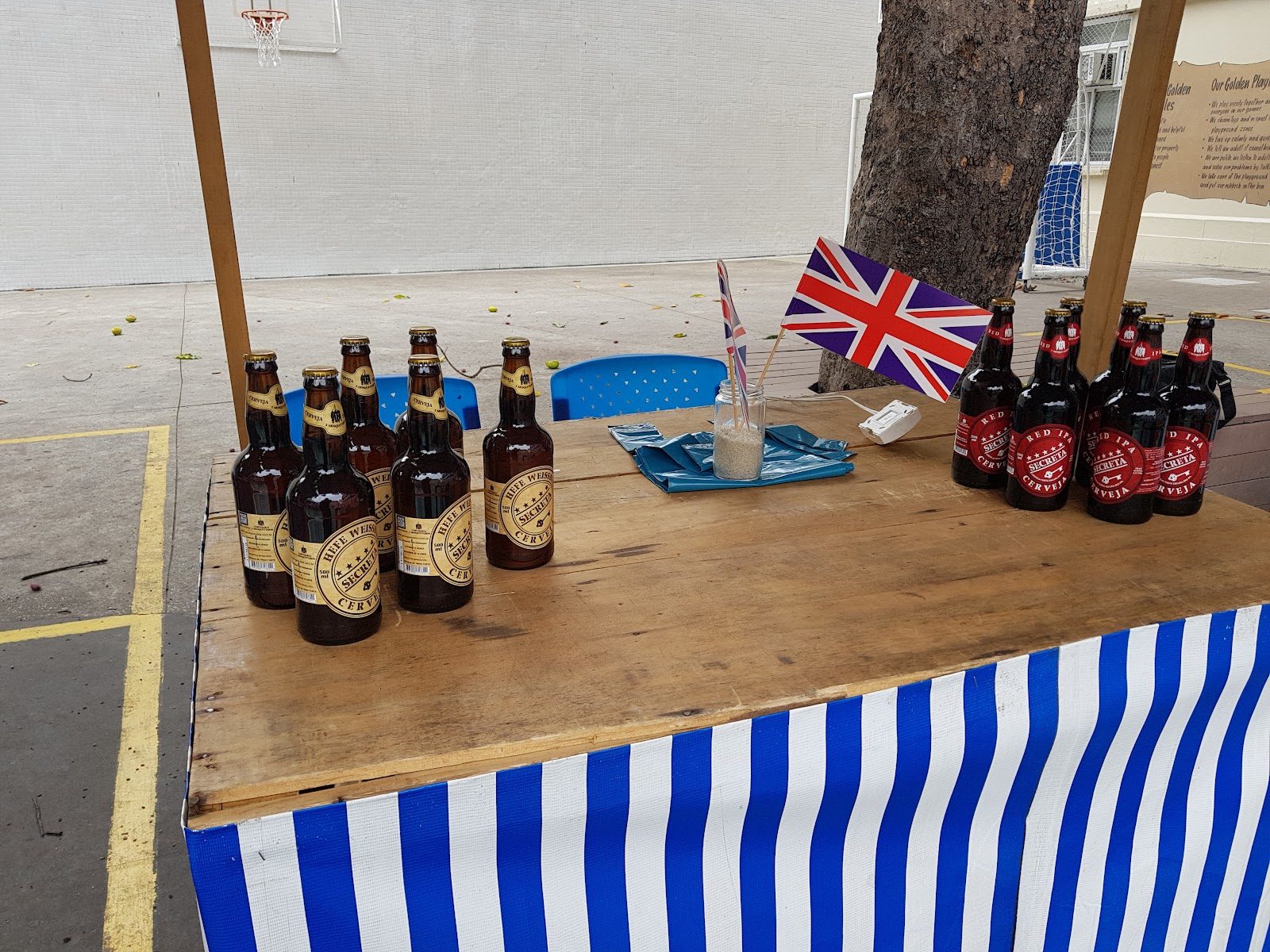
Photo © Sula W via Google Maps
Type
Day
Ages
2–18
Curriculum
British · IB
Qualifications
IGCSE · IB Diploma
Ratio
—
The Verdict
Editor's commitment
Right for
Families in Rio wanting a day school, ages 2–18, that runs British and IB pathways in English and Portuguese.
Wrong for
Parents chasing boarding, a religious ethos, or a single-curriculum school; this 1924 Rio institution is non-religious, day-only, British and IB.
Watch out for
BSO, COBIS, CIS and IB World School badges signal external scrutiny, but accreditations are not outcomes; the school does not publish them here.
Ranking breakdown
British School Rio de Janeiro · #314 of 1591
Composite score 73.2. 8 weighted criteria.
By criterion
Academic Outcomes
Weight 20%
#293
of 1529 scored
University Placement
Weight 16%
#219
of 1529 scored
Prestige & Heritage
Weight 12%
#307
of 1529 scored
Alumni Network
Weight 12%
#306
of 1529 scored
Facilities
Weight 12%
#207
of 1529 scored
Transparency & Communications
Weight 8%
#123
of 1529 scored
Peer & Industry Review
Weight 10%
#338
of 1529 scored
Admissions Selectivity & Demand
Weight 8%
#1232
of 1529 scored
Peer & Industry Review
How British School Rio de Janeiro is regarded in the sector
52
Credible · low confidence
British School Rio de Janeiro (Escola Britânica do Rio) appears in COBIS (Council of British International Schools) and British Schools of Latin America (BSLA) member directories, indicating recognized accreditation and peer network standing, but it is rarely featured in specialist education press like Tatler, Good Schools Guide, or Sunday Times rankings, and independent alumni-network coverage is scarce. Expat parent forums mention it as a solid, established option in Rio but without the depth of third-party commentary seen for top-tier international schools in Brazil like St Paul's or British School São Paulo.
Evidence sources
Editors' overview
British School Rio de Janeiro occupies a narrow and valuable space in the city’s market: an established international school with a 1924 foundation, a British spine and a full-through age range from 2–18. In Rio, that matters. Many schools can offer English-medium teaching; fewer can offer institutional continuity, a clear academic identity and a route that connects early years to sixth form without a change of system halfway through. Here, the defining feature is the dual track at the top end: the IB Diploma paired with Brazil’s Ensino Médio. For families who want international mobility without losing local university recognition, that combination has real force. The setting adds its own pull: a dramatic Rio backdrop, a strong sense of place, and a school old enough to have moved beyond startup volatility.
What puts it on a shortlist is not novelty but coherence. This is a non-religious day school with teaching in English and Portuguese, and that bilingual reality suits internationally minded families who still want children grounded in Brazil. The British influence gives it shape; the IB gives it global currency. That is a serious proposition, not a fashionable one. Accreditations — BSO, COBIS, CIS and IB World School — do not guarantee excellence, but they do place the school inside demanding international quality frameworks. For parents filtering a crowded market, that reduces guesswork. Academic portability, institutional credibility and city-specific character are the three strongest reasons to look closely.
The best fit is a student who thrives in a structured, outward-facing academic environment and can handle life across two languages. This school suits children from international, binational and globally mobile families, and Brazilian families who want more than a local private school with extra English lessons. It will appeal to students with university options in more than one country, and to families who value a school with history over one chasing educational trends. It also suits pupils who want a day-school life in Rio rather than a boarding culture. Ambitious without being gaudy, rooted yet internationally usable: that is the core of its appeal.
Academic Performance
The school does not publish enough hard attainment data for a confident judgement against Rio’s strongest international competitors. We have not seen aggregate IB Diploma averages, subject breakdowns, bilingual diploma rates, top scores, university matriculation patterns by destination, or multi-year trend lines. That matters. In a market where serious schools use results to prove academic weight, silence creates avoidable opacity. Parents can infer that pupils sit externally benchmarked courses at the senior end; they cannot verify how far the school pushes beyond baseline completion into genuinely high attainment. For a school with this level of institutional standing, the absence of public data is a clear weakness.
That does not place it in poor company; many schools in Latin America still publish less than their peers in Europe or parts of Asia. But it does place British School Rio behind the best international schools in transparency. The top tier gives parents enough to judge consistency: cohort size, pass rates, score distributions, selective university destinations, and at least a few years of context. Here, that public case is not made. The result is a school that may perform well, yet asks families to rely on private reassurance rather than public proof. For some parents that is acceptable. For anyone comparing academically exacting schools, it is not enough.
Facilities
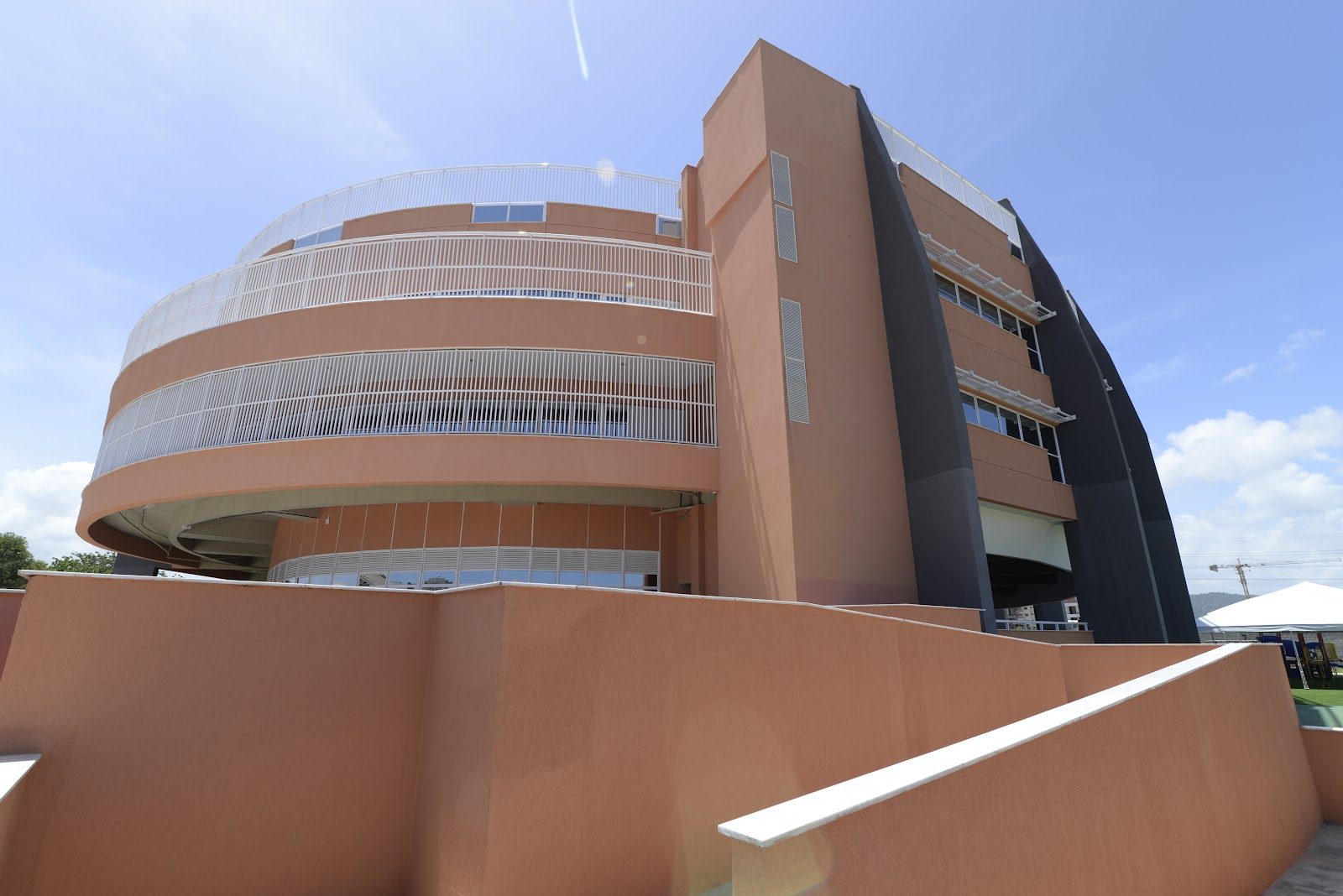
Facilities are not the school’s headline advantage. The public case points to a compact urban campus rather than the land-rich model seen at the biggest international schools in Brazil. For families expecting vast playing fields, equestrian centres or the resort-style sports complexes found in some premium competitors, this is the wrong benchmark. The draw lies elsewhere: a city campus with the essentials for a full academic programme and a setting that folds Rio directly into school life. Christ the Redeemer looms over the site, which gives the school a distinctive sense of place that newer, edge-of-city campuses cannot match. For younger children, that intimacy can work well; for older pupils, it means a school day shaped by urban practicality rather than sprawl.
Against peer schools, that places British School Rio in the middle of the pack for physical plant. It does not read as a facilities-first institution, and parents should ask hard questions about specialist spaces for science, arts, indoor sport and sixth-form study before assuming top-tier provision. The school’s strength is coherence, not spectacle. In a market where some schools sell acreage and architecture as proxies for quality, this one relies on a more contained environment. That suits families who care more about daily usability than campus grandeur. It will disappoint those who equate premium fees with showpiece infrastructure.
Here, the defining feature is the dual track at the top end: the IB Diploma paired with Brazil’s Ensino Médio
Prestige
Prestige here rests on durability, selectivity of fit and social recognition inside Rio’s international set, not on a flood of published outcomes. This is one of the city’s established foreign schools, and that status carries weight with expatriate families, binational households and Brazilian parents who want an education with real international currency. The school’s age range gives it another advantage: children can enter early and stay through to university applications without a disruptive handover to another institution. That continuity builds alumni networks, parent loyalty and a reputation that newer schools cannot manufacture. In local terms, the name has genuine cachet. In global terms, it sits below the handful of schools whose prestige is driven by relentlessly public results, elite university placement lists and a brand recognised far beyond their home market.
That is why the rating lands in the upper-middle tier rather than the absolute top rank. The school has the ingredients of a serious, socially credible education: long institutional memory, a recognised British lineage, and a senior pathway that keeps doors open in more than one system. But prestige at the highest level requires public academic proof, and British School Rio does not publish enough of it. Families will still find a school with solid standing and old-guard credibility. They will not find the kind of institution whose reputation ends arguments on its own.
Christ the Redeemer looms over the site, which gives the school a distinctive sense of place that newer, edge-of-city campuses cannot match
Communications
Parent communication reads as organised and serviceable rather than exemplary. The school runs a substantial annual calendar, with 200 teaching days for pupils and 40 working weeks for teachers, and that kind of operational complexity forces schools to communicate cleanly. British School Rio does enough of the practical work in public: term dates, opening hours, contact routes and fee structures are easy to find, and there is a visible attempt to separate admissions information from day-to-day school life. That helps new families. What is missing is the deeper layer that marks out first-rate communication: richer academic reporting in the public domain, clearer evidence of how parents are kept informed about pupil progress, and more substance on how the school explains outcomes rather than just processes.
The strongest point is tone. The school does not bury parents under inflated language or glossy self-congratulation; it keeps things orderly, adult and usable. The weakness is transparency. A school can communicate politely and still tell parents too little. That is the issue here. Families will get the essentials and a workable route to the right office, but not a forensically clear picture of standards, expectations and results. For current parents, direct channels inside the community may well fill that gap. For prospective parents comparing schools at arm’s length, the public-facing communication is competent, not compelling.
Uniqueness
What marks British School Rio out is not novelty but an unusual educational junction. Few schools in the city give students a route that keeps one foot in Brazil’s national system and the other in an outward-facing senior qualification recognised well beyond it. For families who do not want to choose between local legitimacy and international mobility, that matters. It gives pupils a wider set of exits at the end of school, and it does so inside one institution rather than through a patchwork of tutoring, transfers or parallel credentials assembled outside school hours. That structure is practical, hard-headed and genuinely useful.
The other point of difference is cultural rather than academic. This is a British-founded school embedded in Rio, with Christ the Redeemer above the campus and the city woven into daily life. That produces a school experience with more texture than the placeless premium model common in international education. Students grow up in a setting that is visibly Rio, while working inside a school culture shaped by British habits of organisation and an international university horizon. The result is a blend that suits children from mixed-nationality homes and globally mobile families who still want a grounded education rather than an airport-lounge version of one. It is a niche proposition, but a strong one: students leave with academic portability and a firmer sense of where they come from.
That is why the rating lands in the upper-middle tier rather than the absolute top rank
Student Profile
The best fit is a child comfortable switching codes: between home cultures, between English and Portuguese, and between a local social world and an international one. This school suits binational families, expatriates staying long enough to want continuity, and Brazilian families who want more than ornamental internationalism. Pupils need to cope with a school year built on 200 teaching days; that calls for stamina, routine and a household that values attendance, deadlines and follow-through. The social mix will reward students who are socially adaptable, self-possessed and able to join an established community without constant hand-holding. Children who need a very loose, experimental atmosphere or a highly sheltered pastoral cocoon will find the culture a poor match.
It also suits students with a clear academic destination beyond school, even if the public results picture remains thin. This is not the right environment for families shopping for a glamorous campus or a performative version of elite schooling. It is better for pupils who can work steadily, handle expectations in two linguistic registers, and live comfortably inside a community with old-school standards and adult expectations. New arrivals to Rio can fit well here if they are resilient and open rather than fragile or status-driven. The strongest candidates are children who want an education that is international without being rootless and structured without being joyless.
That structure is practical, hard-headed and genuinely useful
Co-curricular strengths
Arts & sport, on a separate axis
Overall 8.1/10
Scored 0-10 from the school's own published evidence. This axis is editorial-only — it does not feed the main WTS ranking.
Sports
8.5/10
Drama
8.5/10
Dance
6.5/10
Music
8.5/10
Visual Arts
8.5/10
Editor first-pass · editor-reviewable · 7/30/2026
Strengths
- +Founded in 1924, The British School, Rio de Janeiro (TBSRJ) is a co-educational, non-selective, non-denominational, non-profit school serving ages 2 to 18, giving it a century of continuous operation in the city.
- +The school is fully accredited by the Council of International Schools (CIS), is a member of the Latin American Heads Conference (LAHC) and is an IB World School, providing external quality benchmarks beyond the school's own marketing.
- +Each year some students achieve in excess of 40 points in the IB Diploma and TBSRJ graduates secure places at some of the finest universities around the world including Ivy League, Oxbridge and Russell Group institutions, evidencing a credible track record at the top end.
- +Programmes of study include Early Years Foundation Stage (EYFS) and International Primary Curriculum (IPC) for 2 to 11 year olds; Key Stage 3 of the UK National Curriculum for 11 to 14 year olds; Cambridge IGCSE for 14 to 16 year olds; and the International Baccalaureate (IB) Diploma for 16 to 18 year olds, giving a clearly sequenced British-to-IB pathway through a single institution.
- +The school has an enrolment of around 2,160 students across 3 school sites in the city: Botafogo (Primary), Urca (Secondary), and Barra (Primary and Secondary), offering families a choice of location across Rio's South and West Zones.
Considerations
- −Fees are not published on the school's own materials; third-party aggregators note that this school does not make their fees public for the academic year 2026/2027, so budgeting requires direct enquiry rather than a transparent published scale.
- −Priority admissions are given to British and Commonwealth citizens, siblings of students already on roll, returning families and the children of former The British School, Rio de Janeiro students, which structurally disadvantages unconnected newcomer families competing for scarce places.
- −Over 82% of students are Brazilian and the remainder are from over 48 different countries, meaning the school's day-to-day culture is predominantly local Brazilian rather than a broadly mixed expatriate community, despite the 'British' name.
- −Students on the Diploma track pursue a demanding dual load, as an IB learner at the school navigates a rigorous dual-curriculum path, simultaneously pursuing the IB Diploma and the Brazilian Ensino Medio, which adds workload compared with a single-curriculum IB school.
Availability
Primary entry gate & tests
Academic Record + Interview
Gallery
Photo © Sula W via Google Maps
Photo © Sula W via Google Maps
Photo © Sula W via Google Maps
Photo © Sula W via Google Maps
Photo © Sula W via Google Maps
Parent reviews
Have you sent your child here?
Voice reviews carry the strongest trust badge — we transcribe them for you to tidy up before they go live. Prefer to type? A written review is fine too.
Add your voice
In 60 seconds, tell other parents: what's the best thing about British School Rio de Janeiro, and what surprised you when your child joined?
We ask for a Google sign-in so every review has a real face behind it — no anonymous drive-by attacks on schools, and no faked positive reviews. Your email is never shown publicly.
Send this profile to a friend
International parents rely on word-of-mouth. Share this review with someone weighing the same decision.
Schools with places
Similar schools to British School Rio de Janeiro with places available now.
Availability first, then country, area, curriculum, price, co-curricular
Consider also
Also worth looking at alongside British School Rio de Janeiro.
Escola Americana do Rio de Janeiro
Rio de Janeiro · Brazil
Perched at the edge of Tijuca National Forest with Christ the Redeemer in view, a 1937 campus layers IB, American and Brazilian diplomas.
Graded - The American School of São Paulo
São Paulo · Brazil
Born in 1920 as a corporate venture of Citibank, Ford and GE, this Morumbi campus still sends seniors off with three diplomas at once.
St. Paul's School
São Paulo · Brazil
The first British school in Latin America accredited as a British School Overseas, blending UK curriculum with Brazilian roots in Jardins.

Marlborough College Malaysia
Johor · Malaysia
Wiltshire's first overseas campus pairs British boarding houses with the IB on a 90-acre farm-and-lake site near Singapore.
Same country and curriculum — closest matches within ±10 points either way