Gyeonggi Province
Anyang Arts High School
Tracing its roots to a 1960s film academy, this Anyang campus pairs literary, theater and dance training under one arts-focused roof.
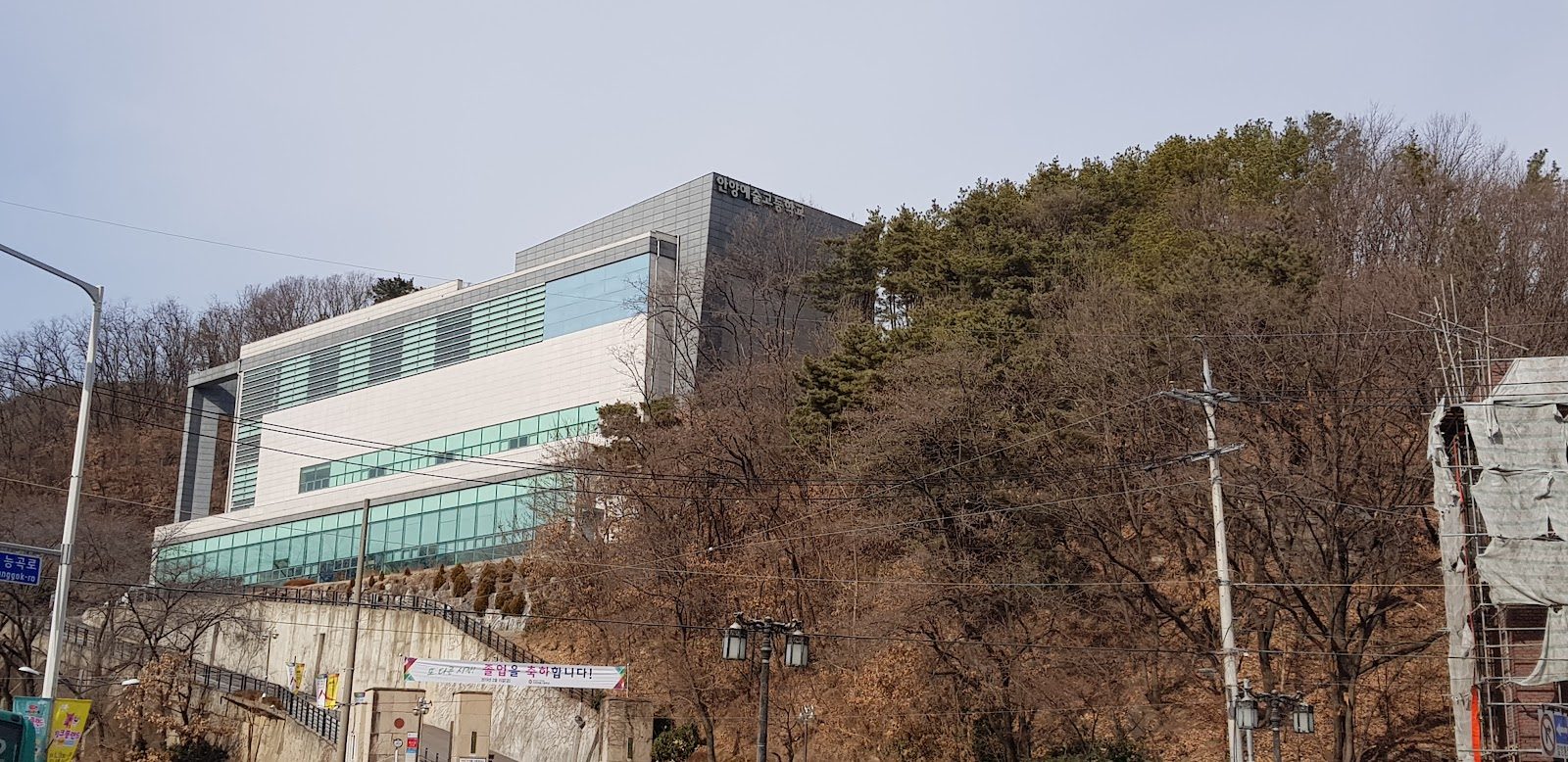
Photo © Myunghyun Lee via Google Maps
Type
Day
Ages
16–19
Curriculum
Korean National Curriculum
Ratio
—
The Verdict
Editor's commitment
Right for
Sixth-form-age students, 16–19, who want an arts-only day school in Anyang under the Korean National Curriculum.
Wrong for
Families seeking boarding, English-medium teaching or a broad all-through school: this is a secular Korean-language day school in Anyang.
Watch out for
The public facts are thin beyond Anyang, ages 16–19 and the Korean National Curriculum; the school does not publish much for international scrutiny.
Ranking breakdown
Anyang Arts High School · # of 1591
Composite score 52.1. 8 weighted criteria.
By criterion
Academic Outcomes
Weight 20%
#1219
of 1529 scored
University Placement
Weight 16%
#793
of 1529 scored
Prestige & Heritage
Weight 12%
#841
of 1571 scored
Alumni Network
Weight 12%
#965
of 1530 scored
Facilities
Weight 12%
#1045
of 1534 scored
Transparency & Communications
Weight 8%
#943
of 1532 scored
Peer & Industry Review
Weight 10%
#1433
of 1548 scored
Admissions Selectivity & Demand
Weight 8%
#647
of 1529 scored
Peer & Industry Review
How Anyang Arts High School is regarded in the sector
57
Credible · medium confidence
Within Korea's film and drama training ecosystem it is recognized as a credible feeder school for conservatory-level theatre and film study, though it is less internationally cited among industry professionals than Seoul's flagship arts high schools.
Award
Elite Film 50
World's Top School · The Global Ranking
Anyang Arts High School is featured on our Global Top 50 ranking at #14. This seal is available for the school's marketing team to use on their website, prospectus and social channels.
Award
Elite Drama 50
World's Top School · The Global Ranking
Anyang Arts High School is featured on our Global Top 50 ranking at #13. This seal is available for the school's marketing team to use on their website, prospectus and social channels.
Editors' overview
Anyang Arts High School occupies a distinct niche in South Korea’s secondary market: a state-recognised arts school for older teenagers who want vocational intensity inside the Korean National Curriculum, not an all-purpose academic education with a few studio electives attached. The age range, 16–19, matters. This is a school for students who have already chosen a direction and want daily immersion in performance, writing or movement. That gives it a sharper profile than a mainstream high school with a respectable arts department. The attraction is not breadth. It is focus, discipline and serious artistic intent. For families who want a campus built around creative training rather than exam-drill alone, that focus puts Anyang Arts High School on the shortlist.
What makes it special is the combination of specialism and lineage. The school traces its roots to a 1960s film academy, which gives it more cultural weight than a newly assembled “arts programme” branded for admissions copy. The editorial tagline points to literary, theatre and dance training under one roof; that mix matters because it creates a school culture organised around rehearsal, critique, technique and public performance, not passive appreciation of the arts. Students here enter a demanding creative environment where talent is only the starting point. They need stamina, receptiveness to correction and the appetite to spend long hours refining work in front of teachers and peers. Parents looking for a cushioned, low-pressure sixth-form experience should look elsewhere. This is an institution for driven young artists.
Its market position is clear. Anyang Arts High School serves families who want a Korean-language, day-school route in South Korea for students aged 16–19 who are already committed to the arts. That gives it a narrower audience than international schools and a stronger proposition for the right child. The school will suit students who want their peer group to care deeply about scripts, choreography, stagecraft and literary craft; who thrive in intense peer competition; and who can tolerate a specialist environment where the arts are the point, not the decoration. It will not suit students who need wide subject optionality, an English-medium education, boarding, or a conventional academic identity with arts on the side. In short: shortlist it for a teenager with clear vocational purpose, creative resilience and the confidence to train in Korean inside a specialist day school.
A Global Elite 50 Film school
Anyang Arts High School in Anyang, Gyeonggi Province, South Korea, sits at rank fourteen on the Global Elite 50 Film ranking because it runs the oldest and most decorated theatre-film department installed in any Korean high school, a lineage that traces back to 1967 when director Shin Sang-ok founded the Anyang Film Arts School that became today's campus. That single fact anchors everything else: no other secondary school in the country can claim a longer unbroken history of training screen practitioners before university.
The specialism is delivered through the Department of Theatre and Film, split into an Acting track and a Film and Screenwriting track enrolling roughly eighty students a year, with about fifteen in the dedicated film major. First-year students study Art History, Film Creation and Expression, and Film Technique before moving into hands-on production from second year, with each student typically completing one to three original short films before graduation. Finished work screens annually at the school's own Yeonam Film Festival, and graduates progress heavily into Korea National University of Arts, Chung-Ang University and Dongguk University, all core pipelines into the Korean film industry.
Notable alumni span acting and directing. Actor-singer Rain built an international film and television career after training here; comedian Park Na-rae and actor Kim Moo-yeol also passed through the department, while director Shin Jung-gyun is listed among its film-track graduates. Actor Lee Sang-yi, who went on to Korea National University of Arts alongside Kim Go-eun and Park So-dam, began his screen training here too. The throughline is a culture built around production practicum rather than general arts exposure.
International openness is limited, and families should be clear-eyed about it. Anyang Arts High School is a Korean-curriculum day school with no dormitories, no dedicated ESL stream and no distinct international-applicant track; entry is via a competitive practical exam in scriptwriting, performance or filmmaking held each October, conducted entirely in Korean. Overseas applicants need existing Korean fluency, a local guardian, and standard resident-family visa arrangements rather than a bespoke international pathway. Tuition sits within Korea's private specialist-arts-high-school band rather than international pricing, and is best confirmed directly with the school each cycle. This suits a family already resident in Korea with a fluent, audition-ready teenager, not a first stop for relocating overseas parents.
Academic Performance
Public exam performance is opaque. The school does not publish aggregate university entrance data, subject pass rates, cohort attainment bands or comparative figures against other specialist arts high schools. That absence matters. In a market where academic schools trumpet admissions outcomes and exam distributions, Anyang Arts High School asks families to buy into a specialist training model without the usual scoreboard. For an arts-focused institution, that is not disqualifying: conservatoire-style routes, auditions, portfolios and performance assessments carry real weight. It does, however, leave parents without a hard-edged view of how strong the academic floor is for students whose ambitions shift away from the arts.
Relative to peers, the school sits in a different competitive lane from conventional university-prep high schools. Success here rests less on headline exam tables than on progression into arts study and on the quality of discipline-specific training. Yet the school does not disclose the destination data that would prove that case cleanly. That makes Anyang Arts High School a high-conviction choice: compelling for families who value specialist artistic formation over published exam metrics, weaker for those who want transparent external validation. The result is a school with a clear vocational identity but an academic performance profile that remains insufficiently evidenced in the public domain.
Facilities
Facilities matter more in a specialist arts school than in a general secondary: the campus has to support practice, repetition and critique, not just classroom delivery. Here, the important spaces are the ones implied by the school’s core disciplines — rehearsal rooms for theatre and dance, performance space, and teaching areas that can handle sustained practical work in writing and stagecraft. If those spaces are well run, they give students the daily grind that specialist training demands; if they are thin or improvised, the whole proposition weakens. That is the standard Anyang Arts High School has to meet. Against peer arts high schools, a credible campus needs more than ordinary classrooms and a hall borrowed for showcases. It needs rooms built for movement, voice projection and ensemble work, plus staff oversight that keeps those rooms in constant use.
What the school does not publish is the detail parents need to judge that estate properly. We have not seen a clear public inventory of studios, theatres, practice rooms, specialist labs, technical production facilities or seat counts. That opacity is a weakness. Strong arts schools tend to show their working here because facilities are part of the education, not an afterthought. Without that specificity, Anyang Arts High School’s facilities case rests on institutional fit rather than proof. For families comparing specialist options, that places it in the trust-us category, not the evidence-led one. In this segment, that is a meaningful gap.
For families who want a campus built around creative training rather than exam-drill alone, that focus puts Anyang Arts High School on the shortlist
Prestige
Anyang Arts High School carries real niche prestige, not broad social prestige. In South Korea, specialist arts schools command respect inside the performing and creative world because admission filters for commitment early and the daily regime is harder than the casual observer assumes. That matters here. This is not the kind of school parents choose for a polished badge alone; they choose it because the institution offers a serious pre-professional track for teenagers who want to train among peers with the same fixation. Prestige, then, comes from selectivity of purpose and from immersion in an arts-first culture, not from the all-purpose status markers attached to elite academic schools. Outside that lane, its name carries less force.
That is why the school sits in the specialist-respected tier rather than the nationally dominant one. It has a clear identity, a long institutional memory and a vocational seriousness that give it credibility with families who know the arts market. What it lacks is the public proof that turns specialist respect into undisputed prestige: published destination lists, headline university or conservatoire outcomes, and a transparent record of where top graduates land. Without that, the school’s reputation rests on sector recognition and internal intensity rather than on publicly verifiable outcomes. For the right student, that is enough. For parents chasing a universally legible brand, it is not.
Without that specificity, Anyang Arts High School’s facilities case rests on institutional fit rather than proof
Communications
Parent communication looks functional rather than polished. The school’s public face is its official website, and that matters because this is a specialist institution asking families to commit to a demanding track. In that context, parents need crisp explanations of department life, audition or admissions steps, calendar changes, performance schedules and day-to-day expectations. What the school gives the public is enough to establish identity and purpose, but not enough to count as fully transparent communication. Key practical detail is thin. We have not seen the kind of clear parent-facing architecture that strong schools use to reduce friction: thorough English-language guidance for overseas families, detailed handbooks, published outcome data, or a deep archive of operational information. For a local family already fluent in the system, that is manageable. For anyone outside that circle, it is a real handicap.
That gap affects trust. Good school communication does not mean glossy prose; it means parents can find what they need, when they need it, without guesswork. Here, the pattern is more institution-first than parent-first. The school communicates its specialism clearly, but it does not publish enough to answer the harder parental questions about results, destinations, facilities or the practical mechanics of student life. That leaves communication effective at the level of identity and weaker at the level of evidence. For a specialist arts school, where family buy-in is high and student workload is intense, that is a meaningful weakness rather than a minor flaw.
Uniqueness
What marks Anyang Arts High School out is not simple “arts provision” but concentration. This is a school built for older teenagers who have already narrowed their ambitions and are prepared to work inside a single-minded, pre-professional culture. The combination of literary study, theatre and dance under one roof creates a training environment with more cross-pollination than a siloed conservatoire track: writers learn what performers need from text, actors work in a culture shaped by movement and staging, and dancers train alongside peers whose days also revolve around rehearsal, criticism and public presentation. That matters. Students do not just take arts classes; they live in a peer group where creative work is the main currency and where seriousness carries social weight. For the right teenager, that is galvanising.
The school’s roots in a film academy add another layer of distinction. That lineage gives the institution a harder artistic edge than schools that assembled specialist branding later. It points to a culture shaped by craft, interpretation and performance rather than by enrichment rhetoric. For students, the benefit is intensity: constant exposure to disciplined peers, teachers who can demand polish rather than participation, and a daily rhythm that rewards resilience. The cost is plain too. This is not a forgiving environment for the half-committed, the chronically undecided or the student who wants a broad sixth-form menu before choosing a path. Its uniqueness lies in that refusal to dilute the mission.
Anyang Arts High School carries real niche prestige, not broad social prestige
Student Profile
The students who fit here are the ones who already know that art is not an extracurricular but the centre of their working life. This school suits teenagers who can tolerate correction in public, repetition without applause and peers who take rehearsal seriously. They need stamina, self-command and a thick skin. In a specialist setting for 16–19 year olds, indecision becomes expensive: the student who still wants to sample everything will feel trapped, while the student who wants depth, routine and exacting feedback will feel properly challenged. Talent matters, but temperament matters more. The best fit is not the flashy performer who coasts on promise; it is the student who can turn up prepared, absorb criticism and do the same passage again until it is right.
Socially, this will suit young people who are comfortable in a high-pressure, arts-saturated peer group where identity and output are tightly linked. That can be energising for ambitious writers, actors and dancers. It can also be bruising for students who need anonymity, broad subject choice or a lighter emotional climate. Families should expect a cohort with strong opinions, visible drive and a low tolerance for half-commitment. Students who need extensive hand-holding, or who want school to function as a conventional academic fallback with arts on the side, are a poor fit. This is a place for the single-minded, the self-disciplined and the not for the faint-hearted.
What marks Anyang Arts High School out is not simple “arts provision” but concentration
Co-curricular strengths
Arts & sport, on a separate axis
Overall 8.48/10
Scored 0-10 from the school's own published evidence. This axis is editorial-only — it does not feed the main WTS ranking.
Sports
4/10
Drama
9.6/10
Dance
9.6/10
Music
9.6/10
Visual Arts
9.6/10
Strengths
- +Operates as a public specialised arts high school, keeping tuition far below private or international-school fee levels.
- +Offers dedicated film and drama/theatre tracks alongside fine art and music majors within the Korean National Curriculum.
- +Located in Anyang, Gyeonggi Province, giving easy commuting access from southern Seoul metropolitan areas.
- +Day-only structure allows students to remain living at home while pursuing specialised arts training.
Considerations
- −As a Korean-medium public school, instruction is not designed for non-Korean-speaking expatriate students.
- −Day-only format means no boarding option for families relocating from outside commuting distance.
- −Admission and coursework are geared to Korean university arts-entrance exams, offering limited international-curriculum portability.
- −Specific published rankings, fee schedules and detailed admissions statistics are not consistently available in English-language sources.
Gallery
Photo © Myunghyun Lee via Google Maps
Photo © Myunghyun Lee via Google Maps
Photo © Myunghyun Lee via Google Maps
Photo © Myunghyun Lee via Google Maps
Photo © Myunghyun Lee via Google Maps
Parent reviews
Have you sent your child here?
Voice reviews carry the strongest trust badge — we transcribe them for you to tidy up before they go live. Prefer to type? A written review is fine too.
Add your voice
In 60 seconds, tell other parents: what's the best thing about Anyang Arts High School, and what surprised you when your child joined?
We ask for a Google sign-in so every review has a real face behind it — no anonymous drive-by attacks on schools, and no faked positive reviews. Your email is never shown publicly.
Send this profile to a friend
International parents rely on word-of-mouth. Share this review with someone weighing the same decision.
Schools with places
Similar schools to Anyang Arts High School with places available now.
Availability first, then country, area, curriculum, price, co-curricular
Consider also
Also worth looking at alongside Anyang Arts High School.
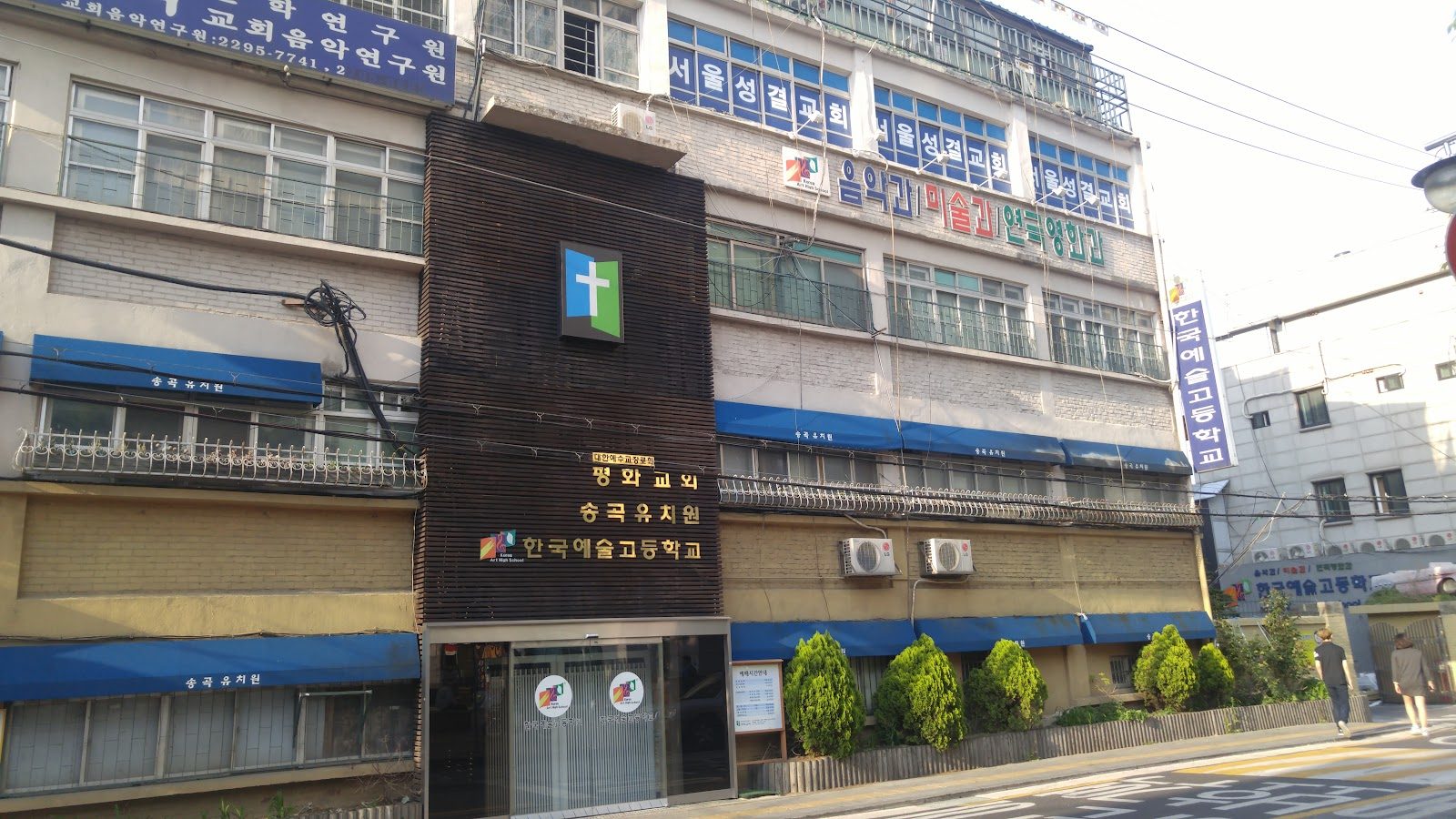
Korean Arts High School
Jongno-gu, Seoul · South Korea
An audition-only conservatory since 1953, pairing academics with classical music, ballet and visual art in Jongno-gu's arts quarter.
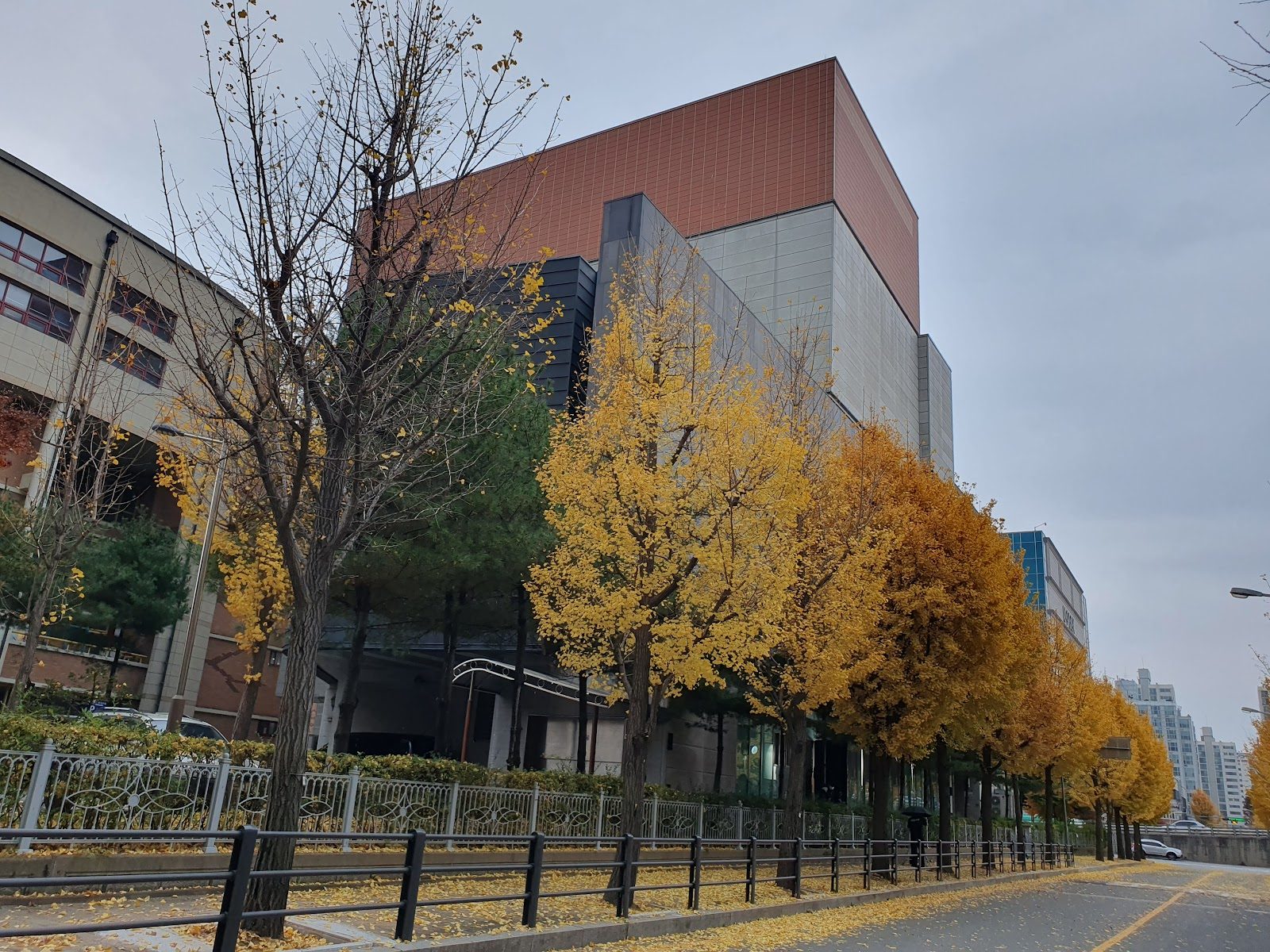
Gyeonggi Arts High School
Uijeongbu, Gyeonggi · South Korea
Gyeonggi's only publicly funded arts high school, housing music, fine art, theatre-film and animation studios under one dormitory roof.
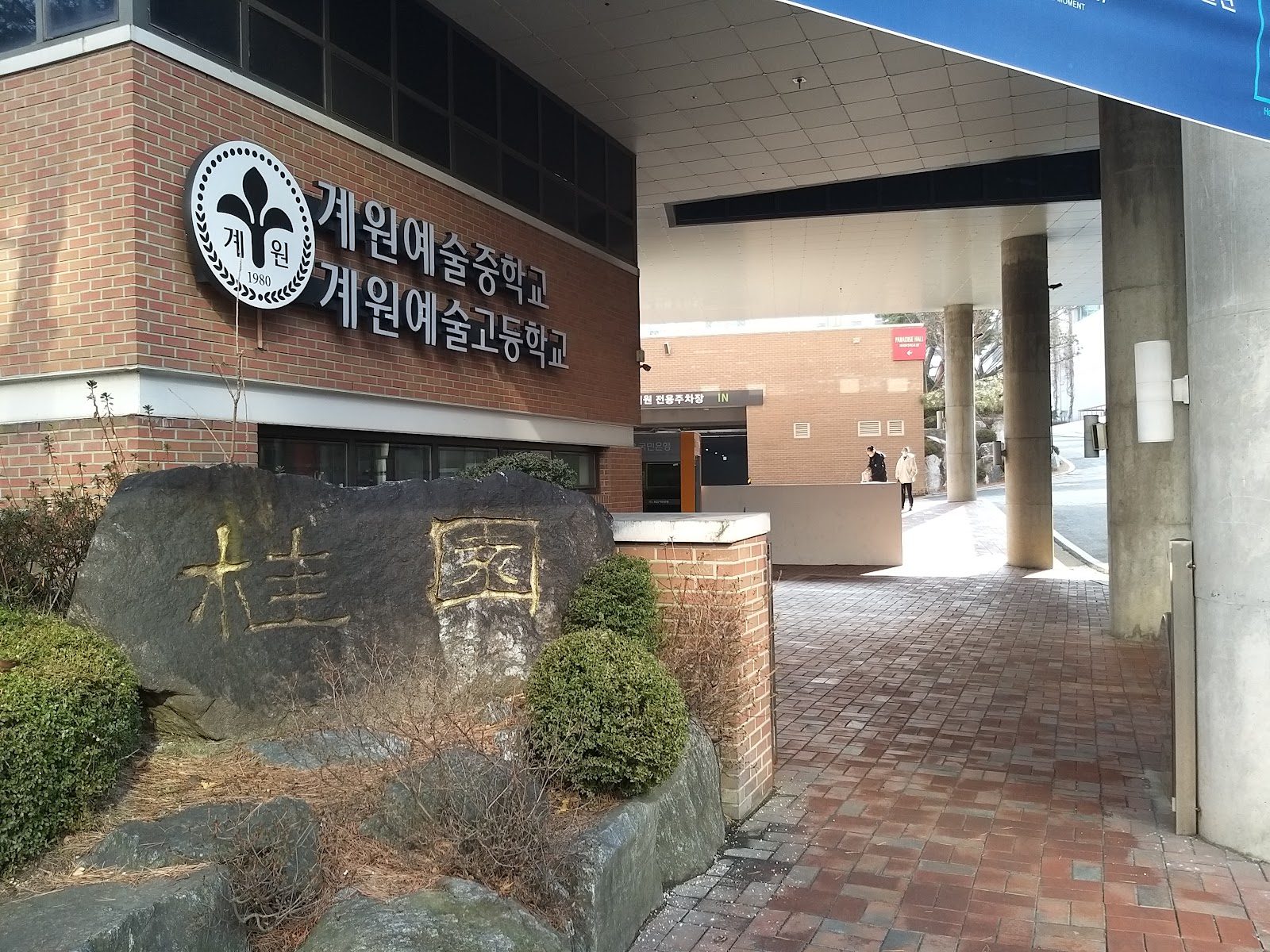
Kaywon High School of Arts
Uiwang, Gyeonggi · South Korea
Since 1980, a Gyeonggi campus splits fine art, music, dance and theatre into four dedicated conservatory tracks under one roof.

School of Performing Arts Seoul
Guro, Seoul · South Korea
Once a night school for Guro's factory workers, now a state-designated arts academy shaping Korea's stage, screen and dance talent.
Same specialism, country and curriculum — closest matches within ±10 points either way