
Seoul
School of Performing Arts Seoul
Once a night school for Guro's factory workers, now a state-designated arts academy shaping Korea's stage, screen and dance talent.

Photo © Sh 20 via Google Maps
Type
Day
Ages
15–18
Curriculum
Korean National Curriculum
Ratio
—
The Verdict
Editor's commitment
Right for
Performers aged 15–18 who want a Korean National Curriculum inside a Seoul arts high school, not a generic academic route.
Wrong for
Families needing English-medium teaching, boarding or a broad international curriculum; SOPA is a day school in Guro, Seoul, taught in Korean.
Watch out for
The annual day fee is KRW 2,500,000, but public data stay thin: no published aggregate outcomes, and arts specialism narrows the school’s purpose.
Ranking breakdown
School of Performing Arts Seoul · # of 1591
Composite score 46.5. 8 weighted criteria.
By criterion
Academic Outcomes
Weight 20%
#955
of 1529 scored
University Placement
Weight 16%
#134
of 1529 scored
Prestige & Heritage
Weight 12%
#1566
of 1571 scored
Alumni Network
Weight 12%
#1121
of 1530 scored
Facilities
Weight 12%
#1533
of 1534 scored
Transparency & Communications
Weight 8%
#1524
of 1532 scored
Peer & Industry Review
Weight 10%
#1546
of 1548 scored
Admissions Selectivity & Demand
Weight 8%
#1123
of 1529 scored
Peer & Industry Review
How School of Performing Arts Seoul is regarded in the sector
52
Credible · medium confidence
Within Korea, SOPA is respected as a legitimate pipeline into entertainment and performing arts careers, but it does not carry the international festival or critical-circuit reputation of dedicated film conservatories.
Award
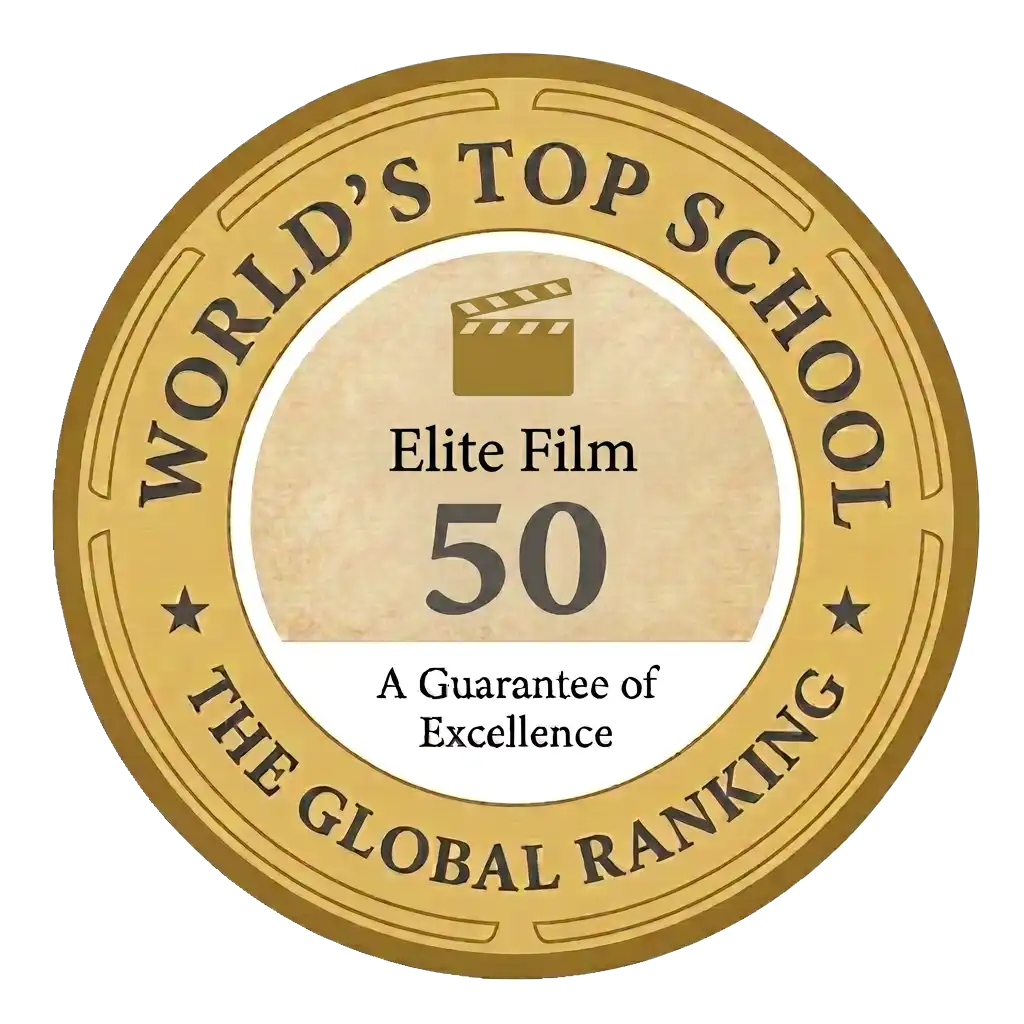
Elite Film 50
World's Top School · The Global Ranking
School of Performing Arts Seoul is featured on our Global Top 50 ranking at #27. This seal is available for the school's marketing team to use on their website, prospectus and social channels.
Editors' overview
School of Performing Arts Seoul occupies a narrow, important niche. This is a specialist state-designated arts high school in Guro, not a broad academic all-rounder with a glossy arts wing attached. It teaches the Korean National Curriculum in Korean, serves ages 15 to 18, and charges KRW 2,500,000 a year. That combination matters. In Seoul’s crowded education market, a serious performing arts education at this fee level is unusual. The school’s origin story sharpens its identity: once a night school for factory workers in Guro, it now trains teenagers for stage, screen and dance within a public-facing arts framework. There is real social history here, not imported branding.
What puts SOPA on a shortlist is focus. Families choosing this school are not buying breadth; they are buying commitment. A student here enters an environment built around performance disciplines and peers with the same ambition. That has clear advantages: daily artistic immersion, a culture that treats rehearsal and presentation as core work, and a peer group that pulls standards upward. It also brings constraints. Parents looking for a conventional academic campus with expansive subject choice, multiple languages of instruction, or a gentler balance between arts and academics will find a tighter proposition. SOPA is for students ready to specialise at 15–18, not students who need years of drift before deciding what they care about.
The right student for School of Performing Arts Seoul is disciplined, resilient and already committed to performance. Talent matters; stamina matters more. This is the place for teenagers who want serious vocational preparation, who can handle correction, repetition and public scrutiny, and who draw energy from a competitive creative environment. It suits families who value clear artistic direction over status signalling and who want access to a recognised arts route without private-school fees. At KRW 2.5 million annually, the school sits in a striking position: affordable for a specialist school, selective in spirit, and shaped by purpose rather than polish. For the right child, that makes it a sharp, credible choice.
Academic Performance
Academic performance here does not lend itself to the usual international-school metrics. This is not a school that publishes IB averages, AP distributions or university-style score tables, and families should not expect that level of disclosure. We have not seen aggregate external examination results in the public domain. That leaves a blunt conclusion: if you want a school whose academic strength is legible through published exam data, SOPA is opaque. Relative to mainstream academic high schools, it sits outside the usual comparison set. Relative to specialist arts schools, that opacity is less unusual, but it still limits scrutiny.
The more useful comparison is with conservatoire-track secondary education, where success is measured as much by progression into performance training and industry pipelines as by conventional headline grades. On that front, SOPA carries serious sector recognition inside Korea’s entertainment and performing arts ecosystem, and that matters. It does not erase the absence of published score data. Parents need to read this school correctly: the academic offer supports an arts pathway rather than competing with the country’s exam-maximising academic elite. For students chasing a single-minded performance route, that is coherent. For families who want hard published proof of broad academic outperformance, it is a weak fit. The fee level, at KRW 2.5 million, makes that trade-off easier to stomach than it would at premium private-school prices.
Facilities
The school’s facilities matter here because the whole proposition rises or falls on specialist practice space. At a minimum, families need proper dance studios, rehearsal rooms and performance spaces that support daily repetition, correction and ensemble work; anything less turns an arts high school into a badge with timetables attached. We have not seen a detailed public inventory of SOPA’s campus facilities, and that lack of disclosure is a weakness. No published theatre specifications, studio counts, technical equipment lists or specialist-room details are in the public domain. Against strong peer arts schools, that is a real gap. The better specialist institutions spell out their black-box spaces, sprung floors, music rooms, recording provision and production support because those details determine training quality. SOPA trades instead on reputation and function, which is less transparent than it should be.
That does not make the facilities poor; it makes them hard to verify. Given the school’s narrow mission, dedicated arts spaces are a baseline requirement, not a luxury. Families can assume focused provision for performance disciplines, but they should press for specifics before enrolling: room availability, condition of studios, backstage and costume support, and whether performance opportunities happen on site or depend on external venues. At an annual fee of KRW 2,500,000, parents are not buying lavish architecture. They are buying usable specialist infrastructure. In this bracket, functional beats glossy. Against expensive private competitors, SOPA’s estate is unlikely to win on polish; against low-cost general schools, a serious arts setup is its make-or-break advantage.
School of Performing Arts Seoul occupies a narrow, important niche
Prestige
SOPA carries real domestic cachet in one specific market: Korean youth performance training. That prestige does not rest on broad academic dominance or luxury-school signalling. It rests on sector recognition, selectivity of ambition, and a public profile that extends beyond the classroom into the entertainment ecosystem. In plain terms, people in Korea know what SOPA is. For families targeting stage, dance or screen, that matters more than polished campus mythology. The school’s status also draws force from rarity: a specialist arts high school with annual fees of KRW 2,500,000 occupies a strikingly accessible position in a field where serious pre-professional training often costs far more, formally or informally.
That said, prestige here is narrow, not universal. Within conservative academic circles, an arts-secondary route does not command the same esteem as the country’s top exam-driven schools. SOPA’s name carries weight with performers, trainees and industry-watchers; it carries less with families whose definition of status begins and ends with conventional university placement metrics. That split is exactly why the school’s reputation is strong rather than all-purpose. It offers recognisable cultural capital inside its lane, and limited prestige outside it. We rate it as high-prestige for committed young performers, and a poor status purchase for parents chasing old-fashioned academic brand hierarchy.
The right student for School of Performing Arts Seoul is disciplined, resilient and already committed to performance
Communications
Parent communication is serviceable, not polished. The public-facing website does the basic job: identity, location and core school facts are easy to establish, and the school is not hiding what it is. Beyond that, the picture thins out fast. We have not seen the kind of detailed parent information architecture that stronger schools now treat as standard: clear academic handbooks, deep pastoral explanation, transparent facilities pages, easy-to-find policy libraries, or a robust admissions narrative in multiple layers. For a specialist school with a high-profile youth market, that is a clear weakness. Families can grasp the broad proposition quickly; they get far less help understanding the lived experience behind it. At KRW 2,500,000 a year, that does not read as neglect, but it does read as lean and functional.
That matters because arts education generates practical parent questions: rehearsal schedules, performance commitments, attendance expectations, injury management, safeguarding during productions, and how academic obligations are balanced against training demands. Strong communication in this category needs precision, routine and trust. SOPA’s public communication does not yet project that level of institutional clarity. The school’s reputation carries part of the load, but reputation is not a substitute for parent-facing detail. Our verdict: communication is adequate rather than exemplary — enough to establish purpose, not enough to remove friction. Parents who value sharp, proactive communication will need to ask direct questions and judge the answers carefully.
Uniqueness
What marks SOPA out is not just specialism but origin. This school did not start life as a polished feeder for the entertainment industry; it grew out of a night-school role tied to Guro’s industrial workforce, then shifted into a formal arts-track institution. That gives it a character few performing arts schools can claim: social history with teeth. The result for students is an environment where performance training sits inside a tradition of upward mobility and disciplined work, not luxury branding. In a market full of expensive aspiration, SOPA offers a hard-edged vocational route at KRW 2,500,000 a year. That price changes who gets access to serious arts schooling. It opens the door to families who want focused training without accepting private-school economics.
Its other distinctive feature is concentration. SOPA is not trying to be everything at once. Teenagers enter a peer group built around rehearsal, critique and public performance, and that intensity shapes habits fast. For the right student, this is accelerated artistic socialisation: you learn your craft, you learn how to take correction, and you learn how to function among equally driven peers. That brings confidence, technical discipline and industry realism early. It also narrows the teenage experience. Students who need broad experimentation or a softer pace will feel boxed in. Students who already know their lane will find something rare and purposeful: a school that treats performing arts not as enrichment, but as the main event for ages 15–18.
Within conservative academic circles, an arts-secondary route does not command the same esteem as the country’s top exam-driven schools
Student Profile
The students who fit here are not dabblers. They already have a performance identity, or they want one badly enough to accept routine, repetition and criticism as normal parts of school life. This suits teenagers who can tolerate being measured in public: auditions, casting, line correction, ensemble discipline, physical fatigue and the social pressure of working alongside peers with the same goal. In that environment, confidence helps, but toughness matters more. A student who needs constant reassurance, wide academic wandering or a low-stakes timetable will struggle. A student who learns fast through practice, absorbs blunt feedback and wants to spend the school day among other single-minded young performers will feel at home.
There is also a social fit. This is a school for adolescents comfortable with ambition being visible. Creative schools can produce intense hierarchies: who gets noticed, who gets parts, who improves, who stalls. Some teenagers find that energising; others find it draining and unforgiving. The strongest fit is a student with professional habits early — punctual, physically resilient, coachable and able to separate correction from personal insult. Families also need realism. The annual fee, at KRW 2,500,000, keeps the school within reach of households priced out of elite private options, but affordability does not make the day-to-day culture gentle. This is not for the faint-hearted. It is for students who want an arts school to shape their identity, not decorate it.
This is a specialist state-designated arts high school in Guro, not a broad academic all-rounder with a glossy arts wing attached
Co-curricular strengths
Arts & sport, on a separate axis
Overall 7.7/10
Scored 0-10 from the school's own published evidence. This axis is editorial-only — it does not feed the main WTS ranking.
Sports
4/10
Drama
9.3/10
Dance
9.6/10
Music
9.6/10
Visual Arts
6/10
Strengths
- +Specialised public arts high school under the Seoul Metropolitan Office of Education, giving graduates a direct pipeline into Korea's film and entertainment industry.
- +Offers dedicated tracks in theatre, film, dance, traditional Korean performing arts and musical theatre alongside the standard Korean National Curriculum.
- +Located in Seoul, giving students proximity to the country's major studios, agencies and audition circuit.
- +As a public school, tuition is set and regulated by the education office, making it markedly cheaper than private or international arts schools.
- +Entry is by audition/portfolio, meaning cohorts are pre-selected for genuine performing arts aptitude rather than general academic ability alone.
Considerations
- −Instruction is conducted almost entirely in Korean, making it unsuitable for expat children without strong Korean language proficiency.
- −Follows the Korean National Curriculum only, with no IB, A-Level or other internationally transferable qualification offered.
- −Admission is highly competitive and geared toward domestic students already embedded in the Korean arts-school audition system.
- −As a day school with no boarding option, it is impractical for families not resident within commuting distance of Guro, Seoul.
Gallery
Photo © Seohee Im (임서희) via Google Maps
Photo © tripleworld xox via Google Maps
Photo © マカダミアナッツ via Google Maps
Photo © Wan Yun Chang via Google Maps
Photo © Wan Yun Chang via Google Maps
Photo © Wan Yun Chang via Google Maps
Photo © Hanifa via Google Maps
Parent reviews
Have you sent your child here?
Voice reviews carry the strongest trust badge — we transcribe them for you to tidy up before they go live. Prefer to type? A written review is fine too.
Add your voice
In 60 seconds, tell other parents: what's the best thing about School of Performing Arts Seoul, and what surprised you when your child joined?
We ask for a Google sign-in so every review has a real face behind it — no anonymous drive-by attacks on schools, and no faked positive reviews. Your email is never shown publicly.
Send this profile to a friend
International parents rely on word-of-mouth. Share this review with someone weighing the same decision.
Schools with places
Similar schools to School of Performing Arts Seoul with places available now.
Availability first, then country, area, curriculum, price, co-curricular
Consider also
Also worth looking at alongside School of Performing Arts Seoul.
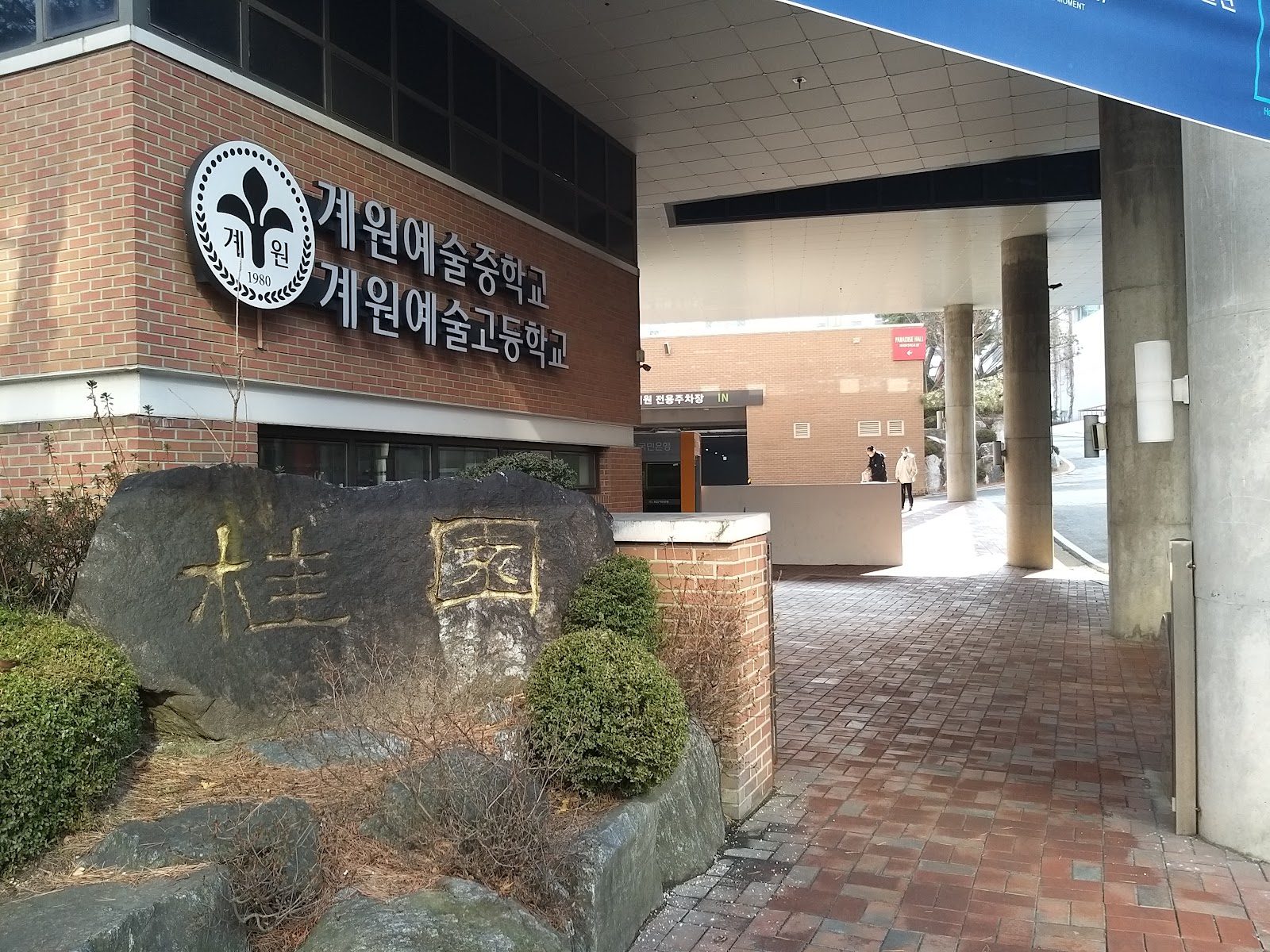
Kaywon High School of Arts
Uiwang, Gyeonggi · South Korea
Since 1980, a Gyeonggi campus splits fine art, music, dance and theatre into four dedicated conservatory tracks under one roof.
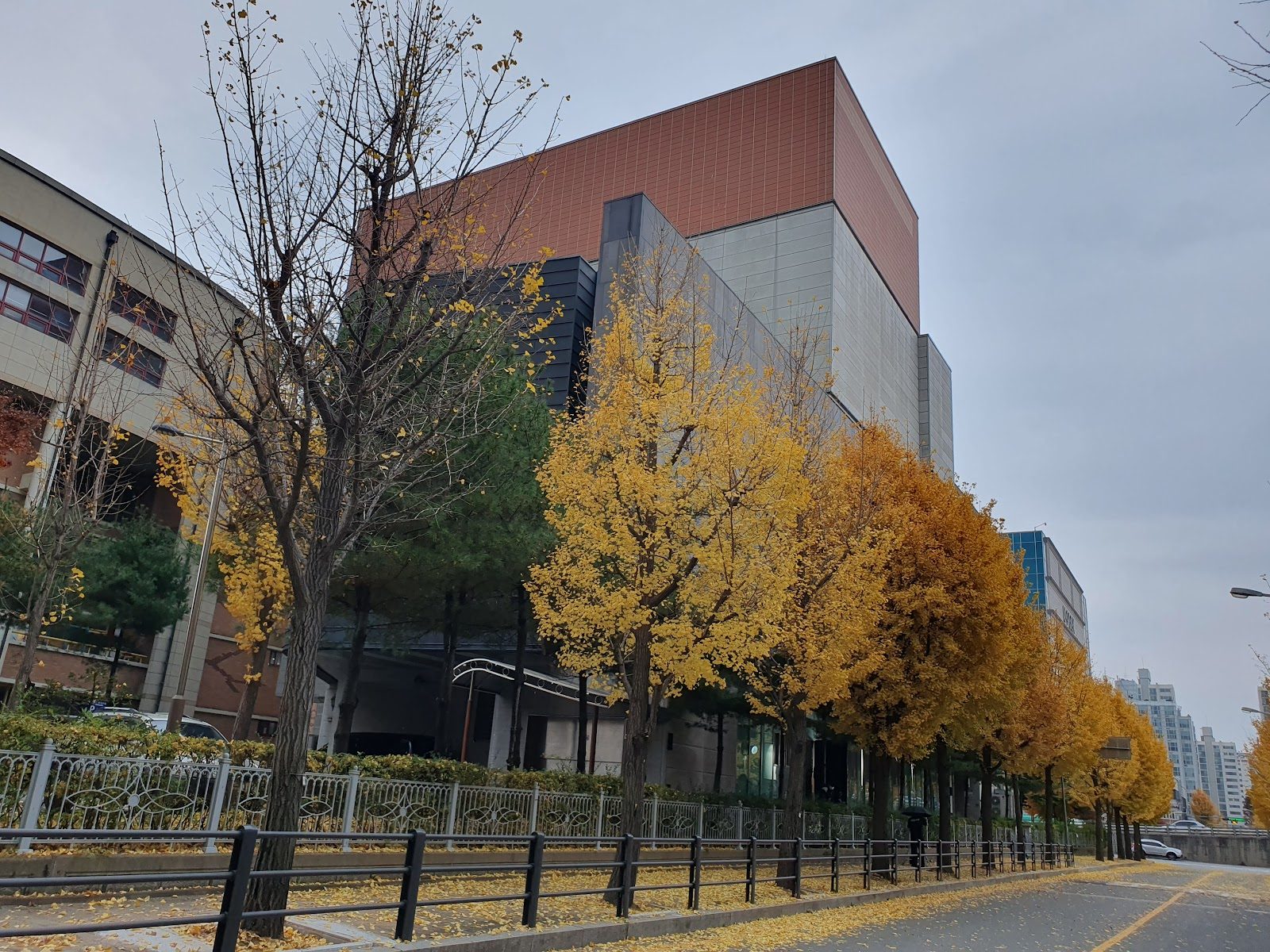
Gyeonggi Arts High School
Uijeongbu, Gyeonggi · South Korea
Gyeonggi's only publicly funded arts high school, housing music, fine art, theatre-film and animation studios under one dormitory roof.
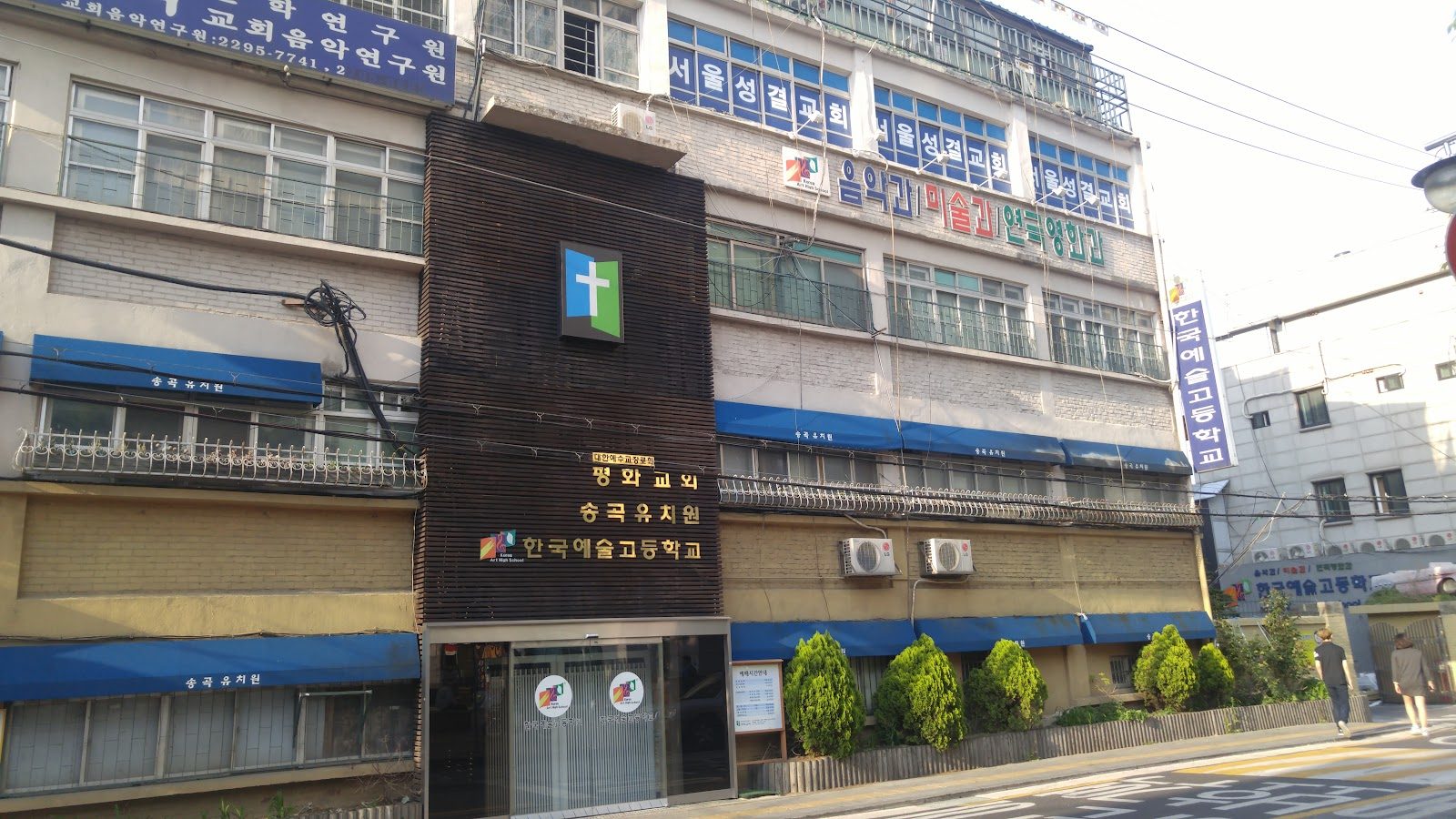
Korean Arts High School
Jongno-gu, Seoul · South Korea
An audition-only conservatory since 1953, pairing academics with classical music, ballet and visual art in Jongno-gu's arts quarter.
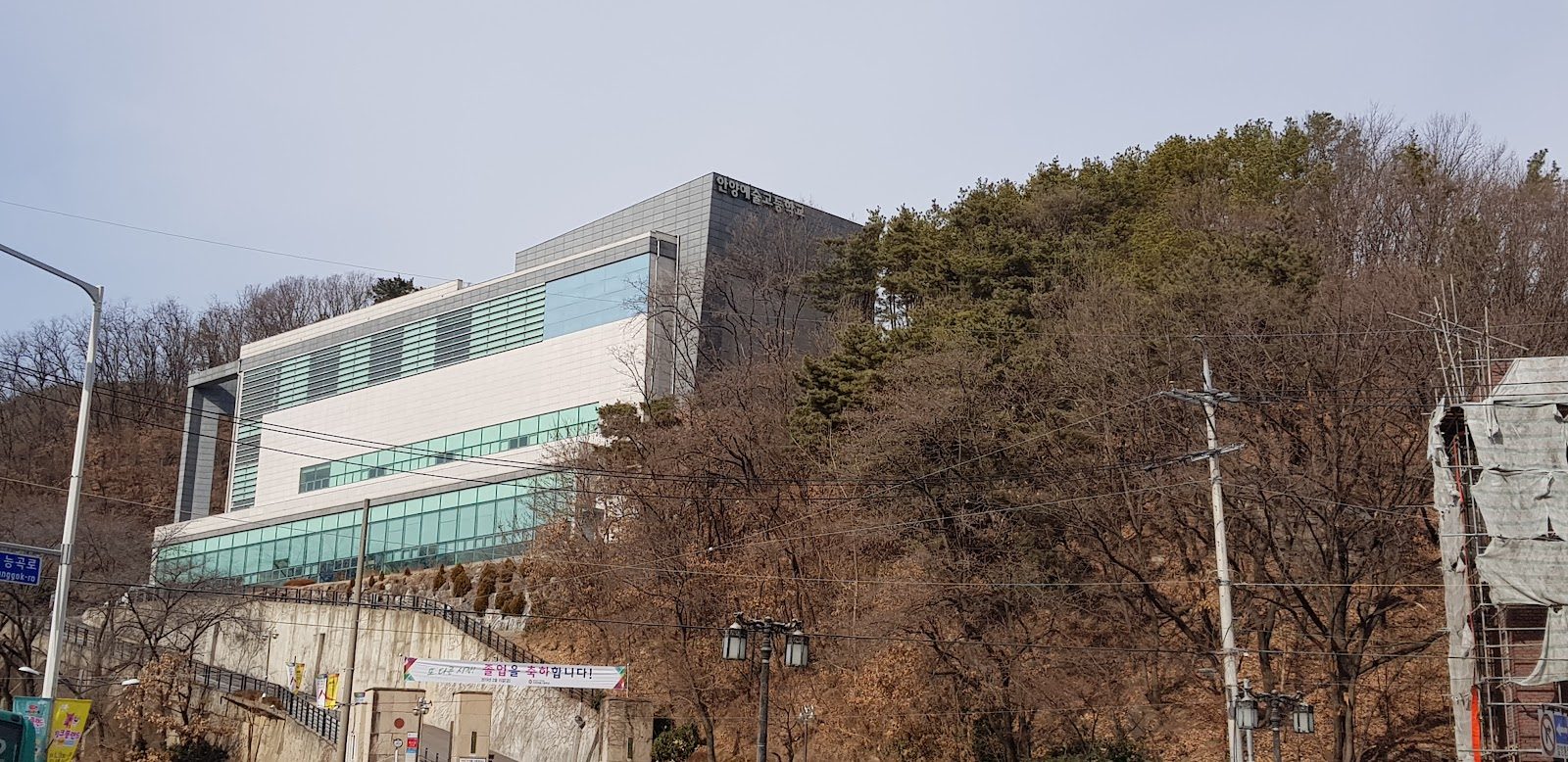
Anyang Arts High School
Anyang · South Korea
Tracing its roots to a 1960s film academy, this Anyang campus pairs literary, theater and dance training under one arts-focused roof.
Same specialism, country and curriculum — closest matches within ±10 points either way