
Vaud
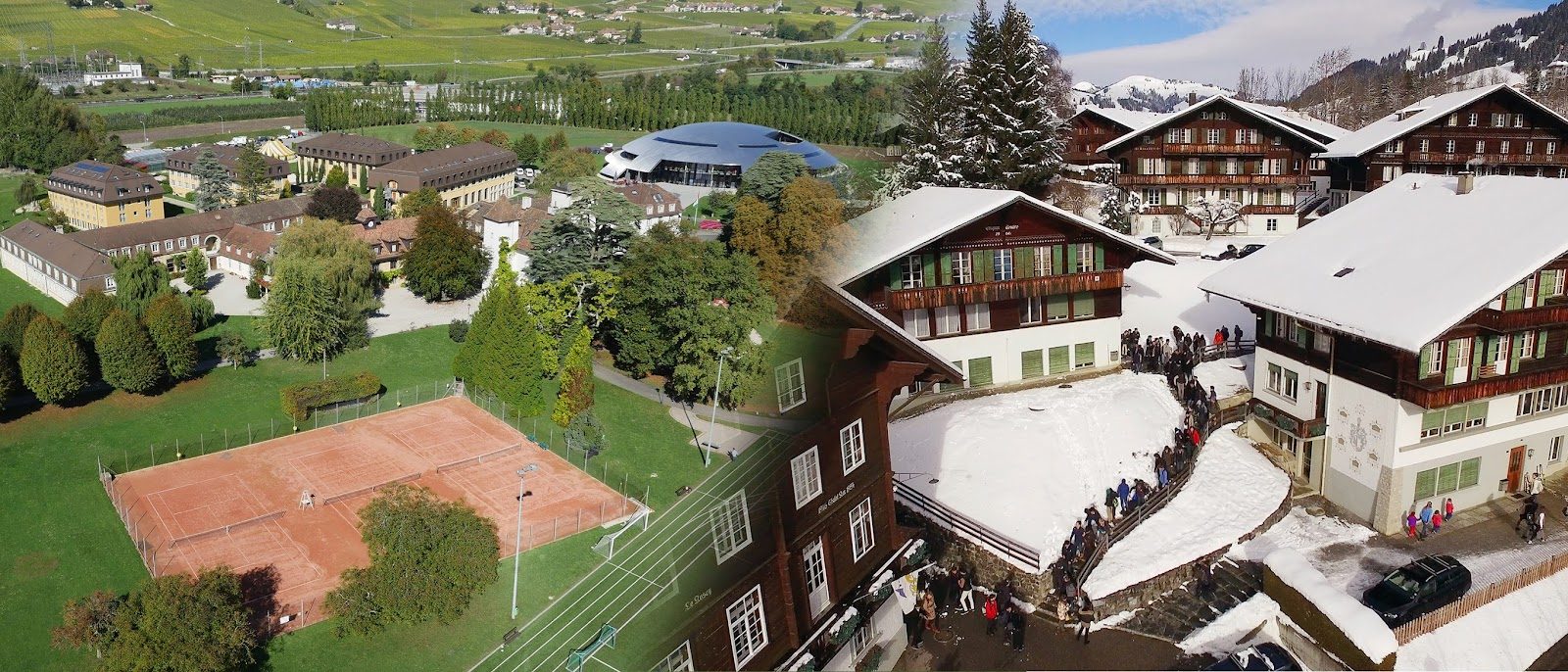
Term time splits between Lake Geneva and the Alps, a 140-year migration built around bilingual IB and French Baccalaureate study.
Type
Boarding
Ages
7–18
Curriculum
IB · French Baccalaureate
Ratio
5:1
The Verdict
Editor's commitment
Right for
Families who want 100% boarding, a 5:1 student-teacher ratio, and a real IB or French Baccalaureate choice.
Wrong for
Anyone seeking day places, one-campus stability, or monolingual schooling; teaching runs in English and French across Rolle and Gstaad.
Watch out for
This is a rarefied, intensely international enclave: average class size is 10, CIS and NEASC accreditations are strong, and Harvard drew 3.
Ranking breakdown
Institut Le Rosey · # of 1591
Composite score 80.9. 8 weighted criteria.
By criterion
Academic Outcomes
Weight 20%
#667
of 1529 scored
University Placement
Weight 16%
#398
of 1529 scored
Prestige & Heritage
Weight 12%
#5
of 1571 scored
Alumni Network
Weight 12%
#1
of 1530 scored
Facilities
Weight 12%
#1
of 1534 scored
Transparency & Communications
Weight 8%
#389
of 1532 scored
Peer & Industry Review
Weight 10%
#147
of 1548 scored
Admissions Selectivity & Demand
Weight 8%
#334
of 1529 scored
Score history
Institut Le Rosey · 2026
Movement across 2024–2026. Peer average overlaid.
Overall — 2024–2026
80.9/ 100
▲ +24.5 vs 2025
year on year
Peer & Industry Review
How Institut Le Rosey is regarded in the sector
95
Top-tier · high confidence
Institut Le Rosey is consistently cited as the world's most expensive and most prestigious boarding school, frequently referenced in Tatler, Forbes, and Business Insider 'best/most elite boarding schools' rankings, with alumni including royalty (King Felipe VI of Spain, Aga Khan, Prince Rainier III's family) widely covered in international press. Peer schools and education press (e.g., Good Schools Guide International, Elite Traveler) routinely benchmark other Swiss boarding schools against Le Rosey's reputation for exclusivity and elite networking.
Evidence sources
Editors' overview
Institut Le Rosey occupies a rare corner of the boarding market: an old Swiss institution with a fully international brief and a structure no rival replicates. The defining fact is the annual migration between Rolle on Lake Geneva and Gstaad in the Alps. That split term is not gimmickry; it shapes school life, sport, logistics and identity. Every pupil boards, and the school is small by elite boarding standards, with a 5:1 student–teacher ratio and average classes of 10. Academically, the offer is clear and serious: bilingual teaching in English and French, leading to the IB Diploma or the French Baccalaureate, with scope for additional languages. Parents looking for *a conventional country-house boarding school* are in the wrong market. Parents looking for *an international school with real theatre, ritual and range* should pay attention.
What sets Le Rosey apart is not only wealth, prestige or scenery, though all three are part of the proposition. It is the combination of total boarding immersion, bilingual academic ambition and a student body drawn to a mobile, highly structured, intensely communal life. The school sells a holistic education, and in this case the claim has substance: the dual-campus model, the scale of extracurricular expectations, and the emphasis on arts, sport, service and languages all point in the same direction. There is also hard evidence of reach beyond school age. Recent university destinations include Harvard, Yale and Princeton, and the verified alumni footprint is substantial, with 50 notable alumni catalogued in Wikidata across politics, business, journalism, the arts and music. That does not make Le Rosey an automatic route to elite universities; it does confirm a *long-established culture of access, confidence and international connection*.
The school belongs on a shortlist for families who want *cosmopolitan intensity rather than pastoral gentleness*. It suits students who can handle movement, high visibility and a very social boarding environment, and who gain energy from multilingual classrooms and peers from across the world. It also suits ambitious all-rounders: pupils who want strong academics but do not want a narrow exam factory. The wrong candidate is just as easy to identify. A child who needs anonymity, a low-pressure social setting or a rooted day-school rhythm will find Le Rosey hard work. This is a school for students who enjoy performance in the broadest sense — academic, artistic, athletic and social — and who want *a polished, high-expectation, unmistakably international education* built across 1880 to the present.
Academic Performance
Le Rosey does not publish the exam data that serious comparison requires. We have not seen aggregate IB averages, subject score distributions, French Baccalaureate mention rates, pass rates over time, or a clean breakdown between the two leaving routes. That absence matters. In the upper tier of international boarding schools, parents should not need to infer academic strength from brand, selectivity or university anecdotes. They should be able to inspect hard results. On this measure, Le Rosey is opaque. The school’s academic offer is clearly structured and the teaching conditions are plainly favourable, but public accountability on outcomes is thin.
Where does that leave it against peers? In reputation terms, Le Rosey sits among the high-prestige European boarding names. In published academic evidence, it sits behind the strongest disclosers: schools that release full IB averages, bilingual cohort data and multi-year trends. That does not mean weak results; it means unverified excellence. The recent destinations listed by the school point to a cohort with access to elite universities, and the scale of guidance and expectation is clear. But destination headlines are not the same as exam transparency. Parents choosing between Le Rosey and academically comparable rivals should press for the numbers directly: recent IB point averages, score ranges, French Baccalaureate distinctions, and the proportion of each year group taking each route. Until then, Le Rosey’s academic performance remains *impressive by inference, not by disclosure*.
Facilities
Facilities are central to Le Rosey’s proposition because the school operates across 2 distinct settings, not one. In Rolle, the estate setting gives it the kind of physical presence that elite Swiss boarding schools trade on: space, formality and a sense of institutional permanence. In Gstaad, the winter campus shifts the emphasis from grandeur to mobility and mountain sport. That seasonal transfer is genuinely unusual even at the top end of the market, and it gives pupils access to a broader physical environment than rivals with a single flagship campus. The school also foregrounds the Rosey Concert Hall, which matters. Many prestigious boarding schools claim seriousness in the arts; fewer can point to a venue of real cultural weight on site. Add a rigorous co-curricular structure spanning sport, technology, arts and service, and the facilities read as high-functioning infrastructure, not decorative extras.
Against peers, Le Rosey stands out less for laboratory detail or headline sporting complexes in the public domain than for the sheer theatricality of the whole estate-and-Alps arrangement. Schools such as Aiglon or Beau Soleil compete strongly on mountain access and outdoor sport; major British boarders often match or exceed breadth in pitches, theatres and specialist teaching blocks. Le Rosey’s edge lies elsewhere: a rare level of environmental range, a concert venue with serious profile, and a campus model that turns place into part of the education. The weakness is disclosure. The school does not publish the kind of room-by-room facilities detail that exacting parents may want, so the broad picture is compelling while the fine-grain specification stays frustratingly opaque.
Institut Le Rosey occupies a rare corner of the boarding market: an old Swiss institution with a fully international brief and a structure no rival replicates
Prestige
Le Rosey sits in the top prestige bracket of European boarding schools. That status rests on more than old-school glamour. The school has a singular institutional identity, a fully international intake, and a social network that extends well beyond the classroom. The verified alumni record matters here: 50 notable alumni catalogued in Wikidata is a strong floor for public prominence, spanning politics, finance, media and the arts. Add recent placements at elite American universities and the picture is clear: Le Rosey delivers high-status access as well as education. The school’s name carries weight in international circles that value polish, discretion and inherited confidence. Few schools occupy that territory so completely.
That prestige also has a harder edge. Le Rosey is not admired for public academic transparency; on results disclosure, it lags the best-run competitors. Its status therefore rests more on history, clientele, visibility and outcomes at the top end than on open academic proof. Parents need to understand that distinction. This is brand power of a rare order, but it is still brand power. The school’s all-boarding structure and unusually ritualised way of life intensify that effect: pupils do not just attend Le Rosey, they are absorbed into a world. For families who want maximum cachet in an international setting, that carries real force. For families who rank measurable academic disclosure above social capital, the prestige counts for less.
That seasonal transfer is genuinely unusual even at the top end of the market, and it gives pupils access to a broader physical environment than rivals with a single flagship campus
Communications
Le Rosey communicates with parents through a highly managed, brand-conscious public face. The website does the central jobs well: it explains the school’s two-campus rhythm, makes the academic routes clear, and gives a clean account of the co-curricular offer. News output is active and current, with visible references to university guidance, visiting speakers and external partnerships. That matters because it shows a school keen to project momentum, not just heritage. The weakness is depth. For a school with this level of fee gravity and social prominence, public communication stays selective. It highlights experience, culture and opportunity far more readily than hard comparative data. Parents get atmosphere and institutional confidence; they get less operational detail than exacting families may want.
That pattern points to communications that are effective for reassurance, recruitment and prestige maintenance, but less effective for scrutiny. The school’s small classes and low staffing ratio — 10 and 5:1 — imply close day-to-day contact once a child is enrolled, and a fully residential school has every incentive to keep families regularly informed. Yet the public-facing standard still feels carefully stage-managed. We have not seen the kind of granular parent information that settles practical questions fast: reporting rhythms, examples of academic tracking, or a fuller picture of how concerns move through the system. In short, Le Rosey communicates with polish and discipline. It does not communicate with maximum transparency.
Uniqueness
What no rival truly matches is Le Rosey’s institutional choreography. Pupils do not just board; they live inside a school year that physically relocates, with all the discipline, adaptability and collective rhythm that demands. The move between lakeside estate and alpine village turns environment into timetable, not backdrop. That changes student life in practical ways: friendships intensify because everyone shares the same transitions, independence grows because movement and routine are built into the year, and sport gains an importance that many schools claim but few can sustain at this level. The result is highly managed freedom: students get range, pace and stimulation, but inside a structure that leaves little room for drift or passivity.
The second point of difference is the combination of social concentration and international range. Every child lives in the same boarding culture, class sizes stay at around 10, and the staffing ratio is an arresting 5:1. That creates unusual adult visibility. Students are known, watched and pushed. For the right child, that is formative; talents get spotted early, habits sharpen, and confidence builds through repeated public participation across lessons, arts, sport and community life. For the wrong child, it is intense. Privacy is scarce, anonymity does not exist, and the school’s polished, high-expectation social world asks for poise as well as ability. That pressure is part of the offer, not a flaw in execution.
Le Rosey sits in the top prestige bracket of European boarding schools
Student Profile
Le Rosey suits students who thrive in a high-visibility, adult-run environment and do not need much private space to steady themselves. This is a school for children who can live publicly: in class, in houses, in sport, in the arts, and within a peer group that is international, affluent and socially confident. The low staffing ratio of 5:1 and small classes of 10 mean weak habits are spotted fast and strong habits are reinforced fast. That works well for articulate, energetic pupils who respond to close attention and are willing to be stretched across more than one domain. It also suits children with social ease, or at least the appetite to build it. A shy student can do well here; a child who wants invisibility will not.
The best fit is an ambitious all-rounder with stamina, curiosity and a taste for organised busyness. Linguistically able pupils gain more from the place than monolingual minimalists. So do students who enjoy ceremony, movement and a school culture with real social theatre. The wrong fit is clear. A child who wants a casual boarding experience, a loose institutional grip or a softly pastoral atmosphere will find Le Rosey demanding to the point of abrasion. It rewards polish, resilience and engagement. It does not indulge drift.
The school has a singular institutional identity, a fully international intake, and a social network that extends well beyond the classroom
Co-curricular strengths
Arts & sport, on a separate axis
Overall 9.32/10
Scored 0-10 from the school's own published evidence. This axis is editorial-only — it does not feed the main WTS ranking.
Sports
9.6/10
Phenomenal dual-campus resort infrastructure (Rolle and Gstaad) hosting a private equestrian center, sailing fleet, and ski teams.
Drama
9/10
Features the spectacular Paul & Henri Carnal Hall, a futuristic performing arts center staging grand international productions.
Dance
8.8/10
Offered as a premium artistic track with dedicated studio spaces for classical ballet and contemporary choreography.
Music
9.7/10
Staggering musical breadth; hosts a world-class on-campus concert hall with regular visits from global philharmonic coaches.
Visual Arts
9.5/10
Sun-drenched, state-of-the-art studio workshops specialized for fine art, digital graphic design, and high-end architecture drafting.
Editor-verified · 8/7/2026
Outcomes & destinations
Where students go next
90 graduates
Top destinations
68 placements
- Harvard University· 3
- Yale University· 2
- Princeton University· 2
- Stanford University· 2
- Cornell University· 2
- Columbia University· 3
- University of Pennsylvania· 3
- Brown University· 2
- Cambridge· 4
- Oxford· 4
- LSE· 4
- Imperial College London· 3
- UCL· 3
- King's College London· 3
- ETH Zurich· 3
- EPFL· 3
- Bocconi University· 5
- IE University· 3
- HEC Paris· 3
- Sciences Po· 3
- University of St. Gallen· 3
- University of Edinburgh· 3
- University of St Andrews· 2
Reported by the school. Confirm with admissions.
Notable alumni · Wikidata
50notable alumni
9 historic (born pre-1930) · 10 modern (born post-1970)wikidata:2026-07-28 How we source this
WTS 300 badge
2026/27 editionInstitut Le Rosey is one of the World's Top 300 Schools for 2026/27. Claim your listing to add it to your site →
Strengths
- +Founded in 1880, making Le Rosey one of the oldest continuously operating boarding schools in Switzerland with a documented history spanning more than 140 years. It was founded in 1880 by Paul-Emile Carnal on the site of the 14th-century Chateau du Rosey in the town of Rolle in the canton of Vaud.
- +Operates a distinctive dual-campus calendar, based at lakeside Rolle for autumn and spring terms before the entire school relocates to Gstaad in the Alps for the winter term. The school also owns a campus in the ski resort village of Gstaad in the canton of Bern, to where the student body, faculty and staff move during the months of January through March.
- +Accredited by NEASC, IBO and CIS, and offers two recognized exit qualifications, the IB Diploma and the French Baccalaureate, giving graduates multiple university pathways. Accreditation includes NEASC, IBO, CIS and the French Baccalaureate Group. Institut Le Rosey is a full boarding school at Rolle on Lake Geneva, teaching pupils from around age 8 to 18 in a bilingual French and English programme that leads to the IB Diploma or the French Baccalaureat.
- +Maintains a genuinely international student body of roughly 400 pupils drawn from around 70 nationalities. Institut Le Rosey has 400 pupils, instruction in English and French, and is represented by about 70 nationalities.
- +Reports a low staff-to-student ratio, with the school citing a teacher ratio of around 1:4. The reported student to teacher ratio is 4:1.
Considerations
- −Annual boarding and tuition fees reach CHF 159,600 for 2026/27, plus a separate CHF 3,000 registration fee, placing the school among the most expensive in the world. The annual boarding and tuition fee is CHF 159,600. There is also a non-refundable one-time registration fee of CHF 3,000. Annual tuition at the school ranges from CHF 56,100 to CHF 159,600 for the 2026/27 year depending on age group.
- −The school is full boarding only, with no day, weekly-boarding or part-time options, which removes flexibility for locally based expat families. Institut Le Rosey is a full boarding school only, with no day students, no weekly boarding options and no part-time enrolment.
- −In 2020 the school was the subject of a widely reported lawsuit from parents alleging it failed to address bullying and cyberbullying of their daughter, generating sustained international press scrutiny. In 2020, billionaires Pankaj and Radhika Oswal initiated legal proceedings against the school in Swiss courts, alleging it failed to protect their 14-year-old daughter from severe bullying during her enrollment starting in 2018.
- −The alumni network is close-knit but opaque: the school does not publish a list of former students and its alumni events are restricted to members. The school's list of alumni is not published and access to AIAR events and meetings is exclusive to former students.
Availability
Primary entry gate & tests
Interview + Nationality Quota
Gallery
Photo © Institut Le Rosey via Google Maps
Photo © Long Hoàng via Google Maps
Photo © Magda “KLEONIKI” G. via Google Maps
Photo © Victor Jeldes Colon via Google Maps
Photo © Magda “KLEONIKI” G. via Google Maps
Photo © Magda “KLEONIKI” G. via Google Maps
Photo © Magda “KLEONIKI” G. via Google Maps
Parent reviews
Have you sent your child here?
Voice reviews carry the strongest trust badge — we transcribe them for you to tidy up before they go live. Prefer to type? A written review is fine too.
Add your voice
In 60 seconds, tell other parents: what's the best thing about Institut Le Rosey, and what surprised you when your child joined?
We ask for a Google sign-in so every review has a real face behind it — no anonymous drive-by attacks on schools, and no faked positive reviews. Your email is never shown publicly.
Send this profile to a friend
International parents rely on word-of-mouth. Share this review with someone weighing the same decision.
Schools with places
Similar schools to Institut Le Rosey with places available now.
Aiglon College
Chesières · Switzerland
- 2026-27
- WAITPOOLSpace-dependent
- 2027-28
- PLACES OPENRolling
Collège Alpin International Beau Soleil
Villars-sur-Ollon · Switzerland
- 2026-27
- WAITPOOLSpace-dependent
- 2027-28
- PLACES OPENRolling
Availability first, then country, area, curriculum, price, co-curricular
Consider also
Also worth looking at alongside Institut Le Rosey.
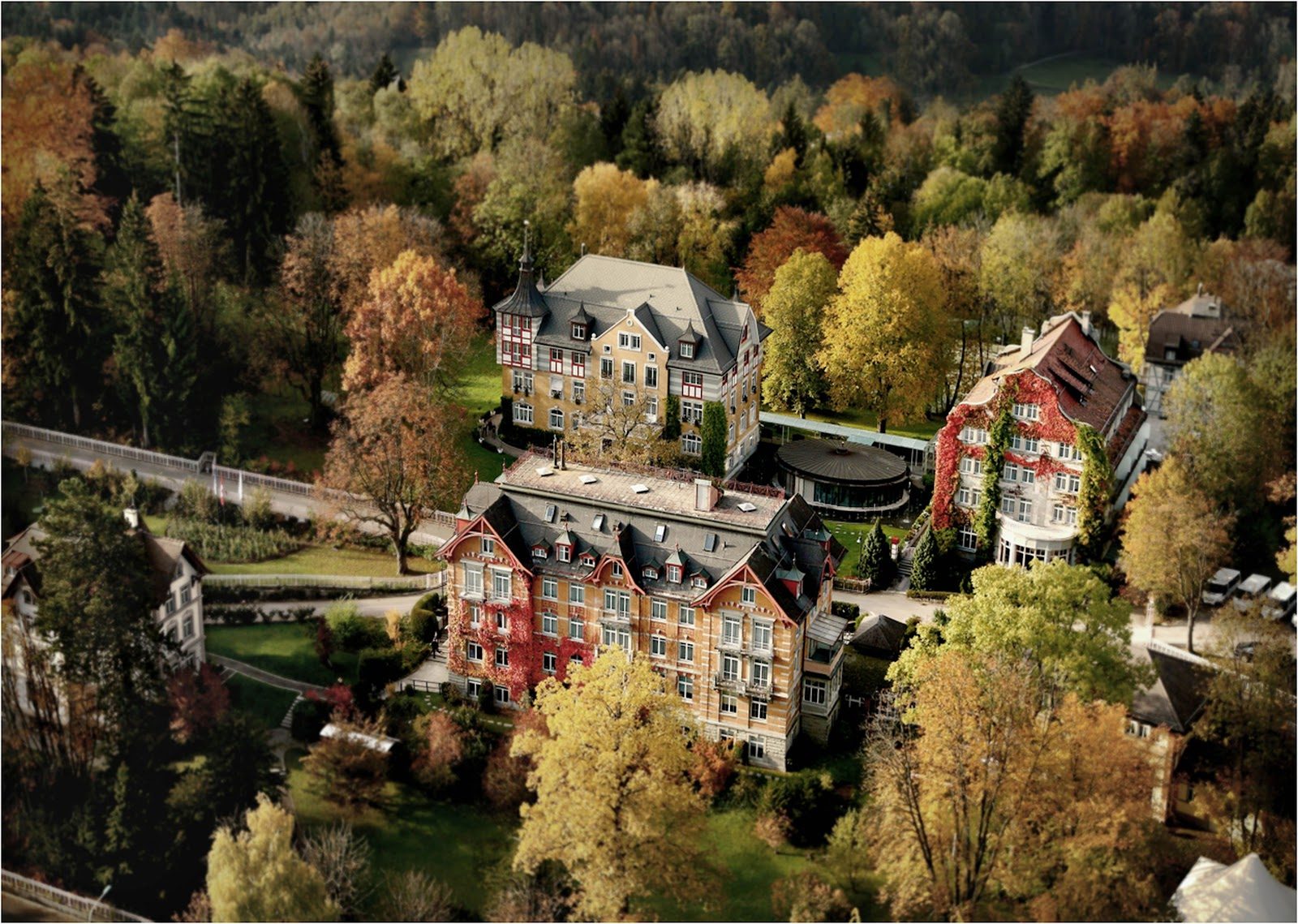
Institut auf dem Rosenberg
St Gallen · Switzerland
Above St Gallen's art-nouveau villas, a 1:2 staff ratio powers a 40-course Talent and Enrichment path from robotics to hospitality.
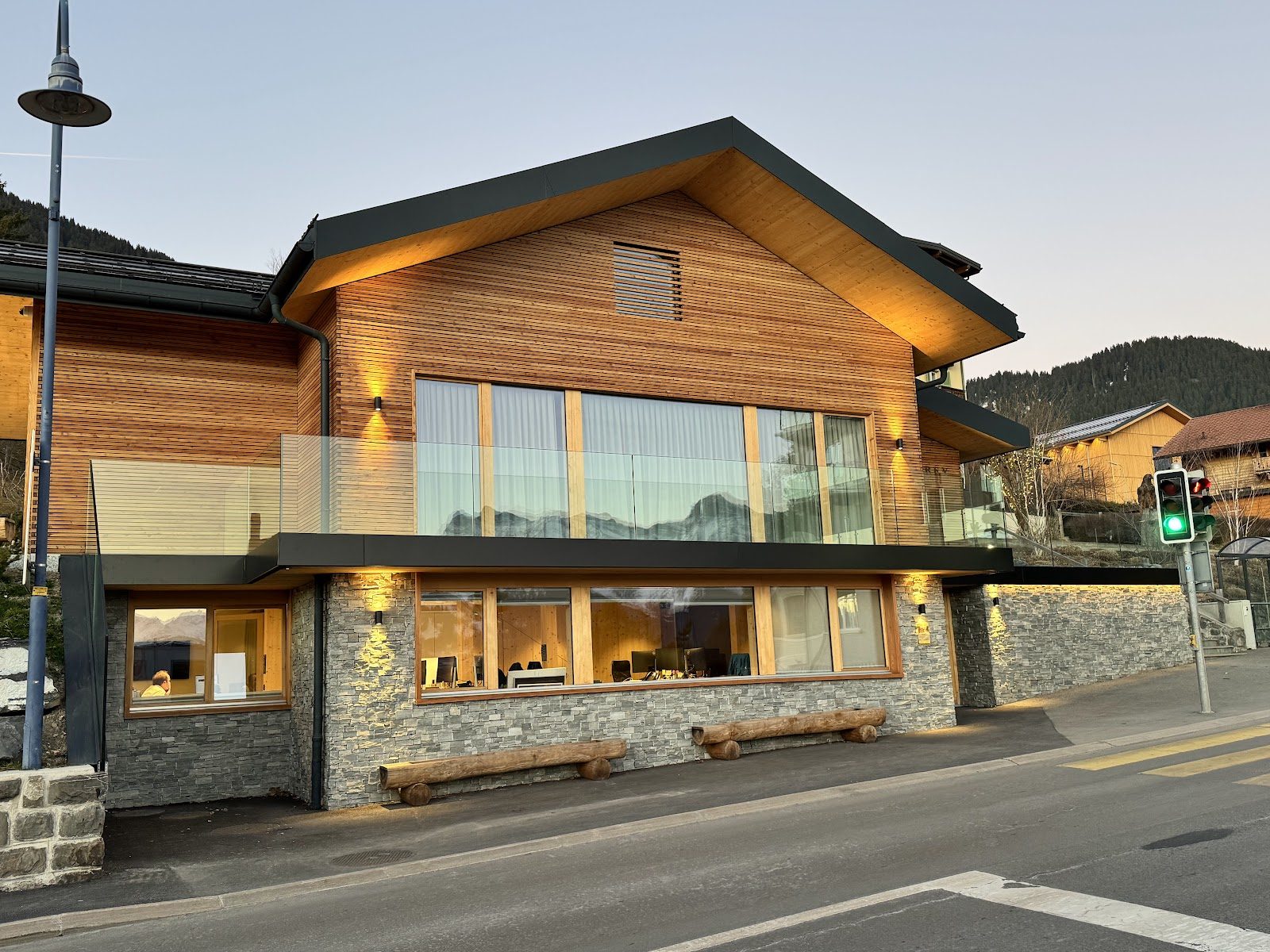
Aiglon College
Chesières · Switzerland
Perched at 1,200 metres in the Swiss Alps, meditation and expedition learning are as core to the timetable as the IB Diploma.
Lycée Louis-le-Grand
Paris · France
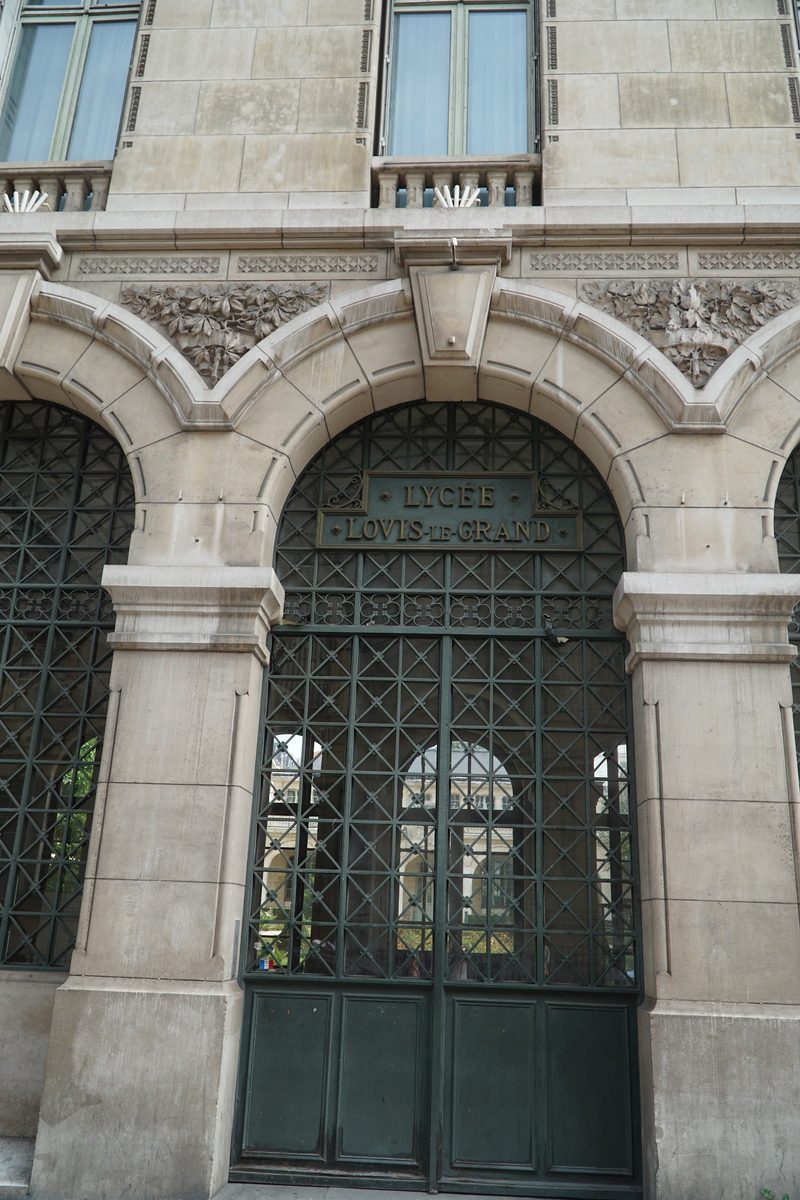
A Jesuit foundation from 1563 in the Latin Quarter, its prepa classes top national rankings across nearly every track.
St. Paul's Co-educational College
Hong Kong · Hong Kong
Hong Kong's first co-educational school runs DSE and IB side by side on its Mid-Levels campus, posting the city's top IB averages.
Same country and curriculum — closest matches within ±10 points either way