
Pennsylvania
A North Philadelphia public magnet where fifth-graders enter at a 3 percent acceptance rate and the payoff is a top-10 U.S. News ranking.
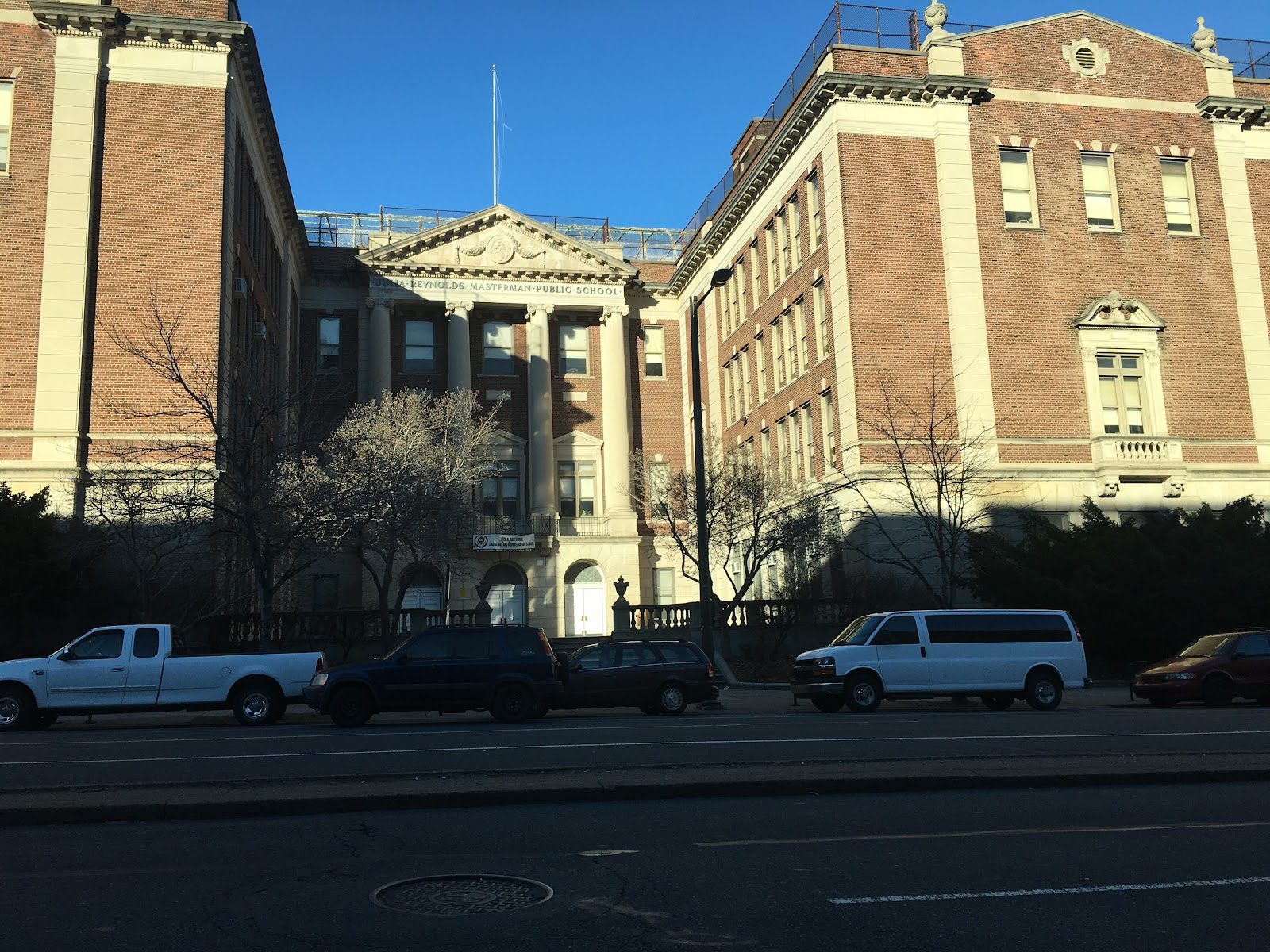
Photo © Steven B Mason via Google Maps
Type
Day
Ages
10–18
Curriculum
American
Qualifications
AP
Ratio
10:1
The Verdict
Editor's commitment
Right for
Able pupils ready to enter a public magnet at age 10, with a 10:1 ratio and a top-10 U.S. News ranking.
Wrong for
Families wanting a private-school cocoon, faith framework or boarding; Masterman is a non-religious Philadelphia day school for ages 10–18.
Watch out for
The school website currently points to spam, so basic public information is a mess despite a 1977 founding and American curriculum.
Ranking breakdown
Julia R. Masterman Secondary School · # of 1591
Composite score 75.7. 8 weighted criteria.
By criterion
Academic Outcomes
Weight 20%
#66
of 1529 scored
University Placement
Weight 16%
#136
of 1529 scored
Prestige & Heritage
Weight 12%
#438
of 1571 scored
Alumni Network
Weight 12%
#334
of 1530 scored
Facilities
Weight 12%
#994
of 1534 scored
Transparency & Communications
Weight 8%
#93
of 1532 scored
Peer & Industry Review
Weight 10%
#283
of 1548 scored
Admissions Selectivity & Demand
Weight 8%
#81
of 1529 scored
Score history
Julia R. Masterman Secondary School · 2026
Movement across 2024–2026. Peer average overlaid.
Overall — 2024–2026
75.7/ 100
▲ +17.2 vs 2025
year on year
Peer & Industry Review
How Julia R. Masterman Secondary School is regarded in the sector
75
Strong · medium confidence
Julia R. Masterman is consistently ranked by U.S. News & World Report and Niche.com as one of the top public schools in Pennsylvania and among the top in the nation, reflecting strong standardized test scores and college matriculation data. It is widely recognized regionally as Philadelphia's premier selective public school, frequently cited in local press (Philadelphia Inquirer) as the most competitive public school admission in the city, though it lacks the global brand recognition or international alumni network coverage of elite private/international schools.
Evidence sources
Editors' overview
At Julia R. Masterman Secondary School, the first hard fact parents need to clock is the age of entry: this is a public magnet that starts at 10, not 14, and the school’s own editorial context ties that to a 3% acceptance rate for fifth grade. That single number tells you most of what matters. Masterman is fiercely selective, academically driven and built for children who want a fast pace from the start of secondary-style schooling, not a gentle easing-in. It is a day school in Philadelphia, founded in 1977, non-religious, and teaches the American curriculum in English. The 10:1 student-teacher ratio points to a school that can sustain close academic oversight rather than leave bright pupils to drift.
What puts it on a shortlist is not warm rhetoric but market position. In the US public-school landscape, a magnet with this level of demand, an age span of 10–18 and a top-10 U.S. News ranking occupies rare air. It offers the upside parents chase in expensive private schools — high academic concentration, serious peer effects, and a culture where achievement is normal — inside a public framework. That mix is unusually attractive. It also brings pressure. Children who need heavy hand-holding, broad-spectrum remedial support or a relaxed classroom culture will find the environment unforgiving. The school’s own website currently fails a basic credibility test: the listed domain resolves to irrelevant commercial content, which is a striking lapse for a school with this reputation.
The right student for Masterman is the child who likes being surrounded by other very able pupils and does not need coaxing to work hard. This is a place for self-propelled learners with strong academic stamina, sound organisational habits and enough resilience to handle a selective culture without folding under it. Families looking for a serious academic engine in a public day school, and who understand that admission is brutally competitive, should keep Masterman high on the list. Families looking for breadth first, pressure second, should look elsewhere.
Academic Performance
Masterman’s academic standing is easy to place even with thin public disclosure on exam data: it sits in the top tier of American public schools. The strongest external marker is its presence in the national top 10 in U.S. News, which reflects a mix of state assessment performance, college-readiness indicators and outcomes at scale. That does not give parents the granularity an independent school would publish — there are no aggregate AP score tables, no subject-by-subject pass rates, no SAT or ACT averages in the public domain here — but the school’s reputation among selective public magnets rests on hard academic competition, not branding. In practice, that puts Masterman alongside the country’s elite public exam factories: schools where the peer group itself drives attainment upward.
Relative to local and national peers, the school occupies the sharp end of the market. Most public secondaries do not combine selective intake with this level of national placement, and that matters when judging academic performance. The caution is straightforward: parents who want forensic transparency on external results will find the published picture too opaque. There is a difference between a school with strong outcomes and a school that documents them clearly. Masterman clears the first bar. It does not clear the second. Even so, among academically selective U.S. public schools, its standing is undeniably strong.
Facilities
Facilities are the one area where Masterman does not trade on spectacle, and parents need to understand that plainly. This is an urban public magnet, not a suburban private campus built to impress on an open day. We have not seen a functioning school website that sets out laboratories, arts spaces, sports provision or specialist centres in usable detail, which leaves a serious information gap. Against elite U.S. independent schools and the best-funded exam magnets, that is a weakness. Those schools publish floorplans, theatre specifications, athletics assets and STEM infrastructure. Masterman does not. The low 10:1 staffing ratio matters more here than any glossy building claim: for an academically selective school, close teaching access can outweigh a thinner physical plant.
That does not mean facilities are irrelevant. A school serving upper-elementary through secondary pupils needs competent science rooms, library provision, standard arts teaching space and indoor sports access at minimum, and Masterman’s academic standing would be hard to sustain without that baseline. The issue is not whether the school functions; it does. The issue is whether it matches top-flight private-school provision. On public evidence, it does not clear that bar. Parents comparing it with high-fee peers should expect a workmanlike, city-school environment rather than a lavish campus experience. For families choosing on teaching calibre and peer quality first, that trade-off is acceptable. For families who want first-rate specialist infrastructure laid out clearly and proudly, Masterman gives them little to inspect.
In the US public-school landscape, a magnet with this level of demand, an age span of 10–18 and a top-10 U.S
Prestige
Masterman carries real civic prestige and serious academic cachet in a way few American public schools do. The key point is scarcity. Entry at 3% acceptance for the first intake year places it in a category closer to selective independents and exam-magnet flagships than to an ordinary district school. Add a national top-10 U.S. News position and the brand value is obvious: this is a school name that signals high attainment, disciplined admissions and a peer group built around competition. In Philadelphia, that matters a great deal. Among parents who track selective pathways, Masterman sits near the top of the local hierarchy, and outside the city it still carries national-level recognition because the ranking cuts through regional noise.
The prestige is not social-polish prestige; it is meritocratic pressure-cooker prestige. Families do not choose Masterman for sprawling grounds, glossy communications or old-money networks. They choose it because admission is hard, exit routes are strong and the pupil body confers status on itself through concentration of ability. That distinction matters. A place can be eminent without being luxurious, and Masterman fits that category exactly. The current state of the school website is a reputational embarrassment and beneath a school of this standing, but it does not alter the core judgement. As an academic badge inside the U.S. public sector, Masterman is formidable.
Masterman’s academic standing is easy to place even with thin public disclosure on exam data: it sits in the top tier of American public schools
Communications
Parent communication is weak at the most basic level because the school’s main public channel is unusable. A school of this standing needs a functioning website that sets out leadership contacts, calendars, policies, admissions mechanics, academic expectations and day-to-day parent information with precision. Instead, the listed domain resolves to irrelevant commercial content. That is not a minor glitch; it is a serious operational failure and a plain credibility problem. For current families, schools can compensate through internal systems such as district portals, email bulletins and direct staff contact. For prospective families, though, the first point of contact is broken, and that makes the school needlessly opaque.
That matters more here than at a soft-touch neighbourhood school. A selective academic environment with an acceptance rate of 3% demands disciplined, high-trust communication: parents need clear timelines, accurate instructions and confidence that the institution runs tightly. We have not seen a public-facing communications platform from the school itself that clears that bar. The rest of Masterman’s reputation carries the weight for now, but reputation is doing work that communications should do. In editorial terms, the judgement is straightforward: internal communication may function well for enrolled families, but outward-facing communication is poor, dated and beneath a school with this level of demand.
Uniqueness
What makes Masterman distinctive is not a branding flourish or a niche programme; it is the structure of the school itself. Children enter before the standard high-school stage and then stay through graduation inside one selective academic culture. That creates a rare continuity: pupils are not spending early adolescence gearing up for a second round of school admissions, a campus move, or a reset in expectations. They are inducted early into a high-pressure scholarly culture and have years to grow inside it. For the right child, that brings real advantages: stronger academic habits earlier, a peer group that takes work seriously as a norm, and sustained access to teachers who know how to stretch able students rather than merely keep them busy.
The other point of difference is that this intensity sits inside a public-school framework. That is highly unusual in the American market. Families are not buying polished extras; they are gaining access to an elite academic ecosystem without the private-school model around it. For students, that can be transformative. Bright children from families who want intellectual pace over social varnish get a route into a concentrated, competitive environment without crossing into fee-paying education. The trade-off is plain. Such a school rewards independence, stamina and self-command. It does not cushion pupils from pressure, and it offers little of the country-club comfort that softens demanding schools elsewhere.
The strongest external marker is its presence in the national top 10 in U.S
Student Profile
The pupils who thrive here are not just bright; they are self-directed, competitive and comfortable in a room full of other high performers. This is not the right setting for a child who needs frequent reassurance, loose deadlines or a classroom culture built around confidence-building first and scholarship second. The school selects hard and then sustains that standard, so the social norm tilts towards preparation, precision and academic stamina. A low staffing ratio helps, but it does not turn the place into a pastoral cocoon. The strongest fit is a student who can absorb correction without drama, manage workload without parental micromanagement and treat ambitious classmates as fuel rather than threat. With entry running at 3%, families are not buying into a broad church; they are entering a narrow-band academic culture.
Personality matters as much as attainment. Children who enjoy intellectual argument, organise themselves well and take satisfaction in mastery will settle faster than those who need constant external motivation. There is also a public-school directness here: less hand-holding, less polish, more expectation that pupils will get on with it. That suits families who value substance over pampering. It does not suit children whose strengths sit far more in performance, sport or social ease than in sustained classroom focus. For an able student who wants stretch, can handle pressure and does not need the atmosphere softened, Masterman is a serious fit; for everyone else, it is hard-edged.
The issue is whether it matches top-flight private-school provision
Co-curricular strengths
Arts & sport, on a separate axis
Overall 6.94/10
Scored 0-10 from the school's own published evidence. This axis is editorial-only — it does not feed the main WTS ranking.
Sports
8/10
High-energy Blue Dragons teams dominate the local public leagues in tennis and cross-country, but lack private prep club fields.
Drama
6.5/10
Highly active student-run theater clubs mounting creative annual plays inside their landmark, historic central auditorium.
Dance
4.5/10
Integrated primarily as an auxiliary enrichment asset for multi-cultural assemblies and musical theater choreography.
Music
8.2/10
Highly competitive, award-winning concert bands and string orchestras that serve as a massive point of school pride.
Visual Arts
7.5/10
Rigorous studio focus tightly designed to clear maximum scores in the advanced AP Art and Design portfolio matrices.
Editor-verified · 8/6/2026
WTS 300 badge
2025/26 editionJulia R. Masterman Secondary School is one of the World's Top 300 Schools for 2025/26. Claim your listing to add it to your site →
Strengths
- +American curriculum with AP courses available
- +Covers ages 10–18 in one school
- +Philadelphia location suits US university pathways
- +Secondary-only focus from age 10 onward
Considerations
- −Website appears compromised; key school information unavailable
- −No verified accreditations provided in available sources
- −No published fees, results, or admissions details
Availability
Primary entry gate & tests
PSSA Scores + Grades (Philly Res.)
Gallery
Photo © H Watson via Google Maps
Photo © H Watson via Google Maps
Photo © Brian Sim via Google Maps
Photo © Brian Sim via Google Maps
Photo © Kianna via Google Maps
Parent reviews
Have you sent your child here?
Voice reviews carry the strongest trust badge — we transcribe them for you to tidy up before they go live. Prefer to type? A written review is fine too.
Add your voice
In 60 seconds, tell other parents: what's the best thing about Julia R. Masterman Secondary School, and what surprised you when your child joined?
We ask for a Google sign-in so every review has a real face behind it — no anonymous drive-by attacks on schools, and no faked positive reviews. Your email is never shown publicly.
Send this profile to a friend
International parents rely on word-of-mouth. Share this review with someone weighing the same decision.
Schools with places
Similar schools to Julia R. Masterman Secondary School with places available now.
The Baldwin School
Bryn Mawr · United States
- 2026-27
- CLOSEDRegular cycle closed
- 2027-28
- OPENS SOONOpens 1 Sept '26
The Hill School
Pottstown · United States
- 2026-27
- CLOSEDRegular cycle closed
- 2027-28
- OPENS SOONOpens Sept '26
The Haverford School
Haverford · United States
- 2026-27
- CLOSEDRegular cycle closed
- 2027-28
- OPENS SOONOpens Sept '26
Germantown Friends School
Philadelphia · United States
- 2026-27
- CLOSEDRegular cycle closed
- 2027-28
- OPENS SOONOpens Sept '26
Availability first, then country, area, curriculum, price, co-curricular
Consider also
Also worth looking at alongside Julia R. Masterman Secondary School.
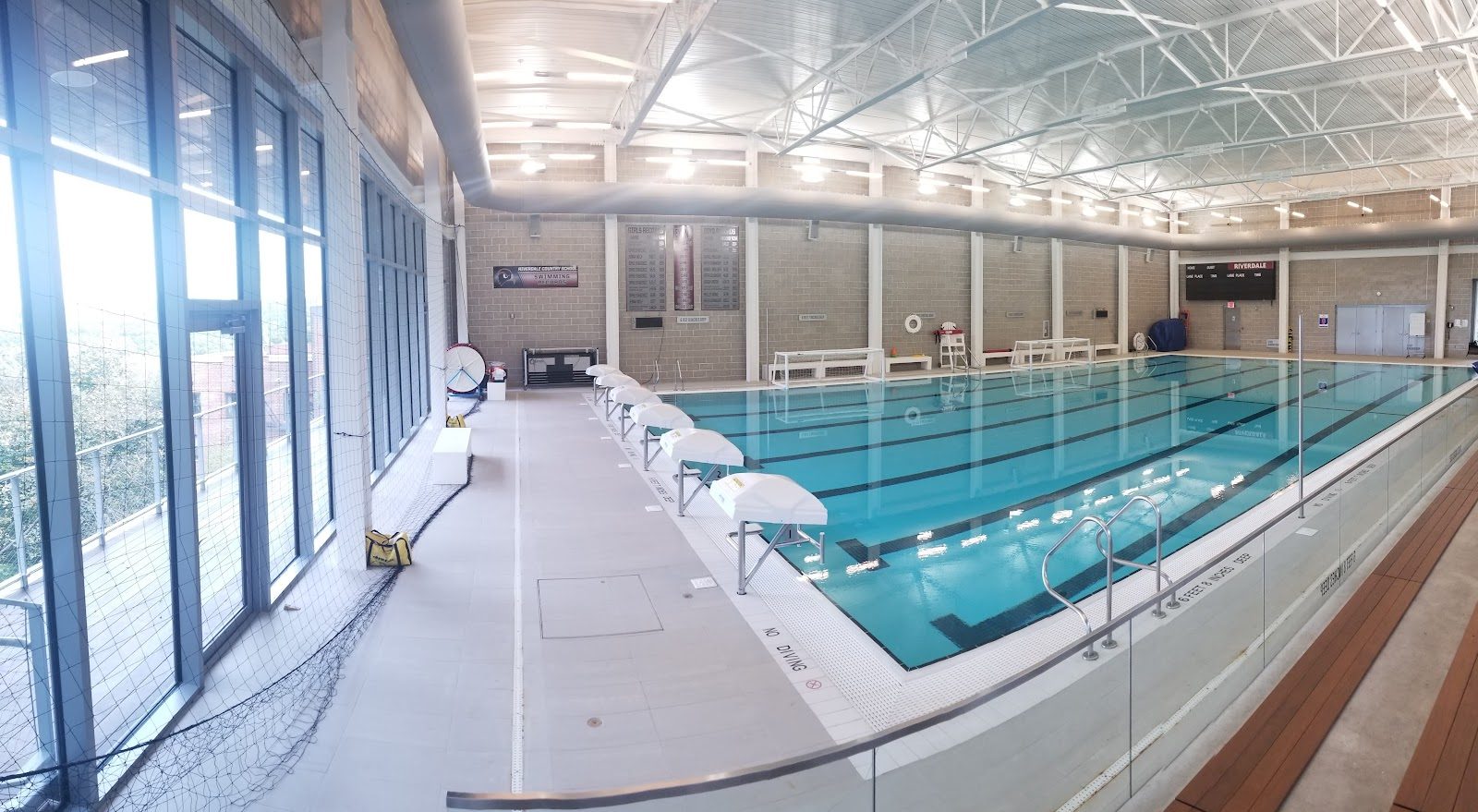
Riverdale Country School
New York City · United States
A century-old Bronx country day school split between a Hudson River campus and a Van Cortlandt Park hilltop, built on the motto Mind, Character, Community.
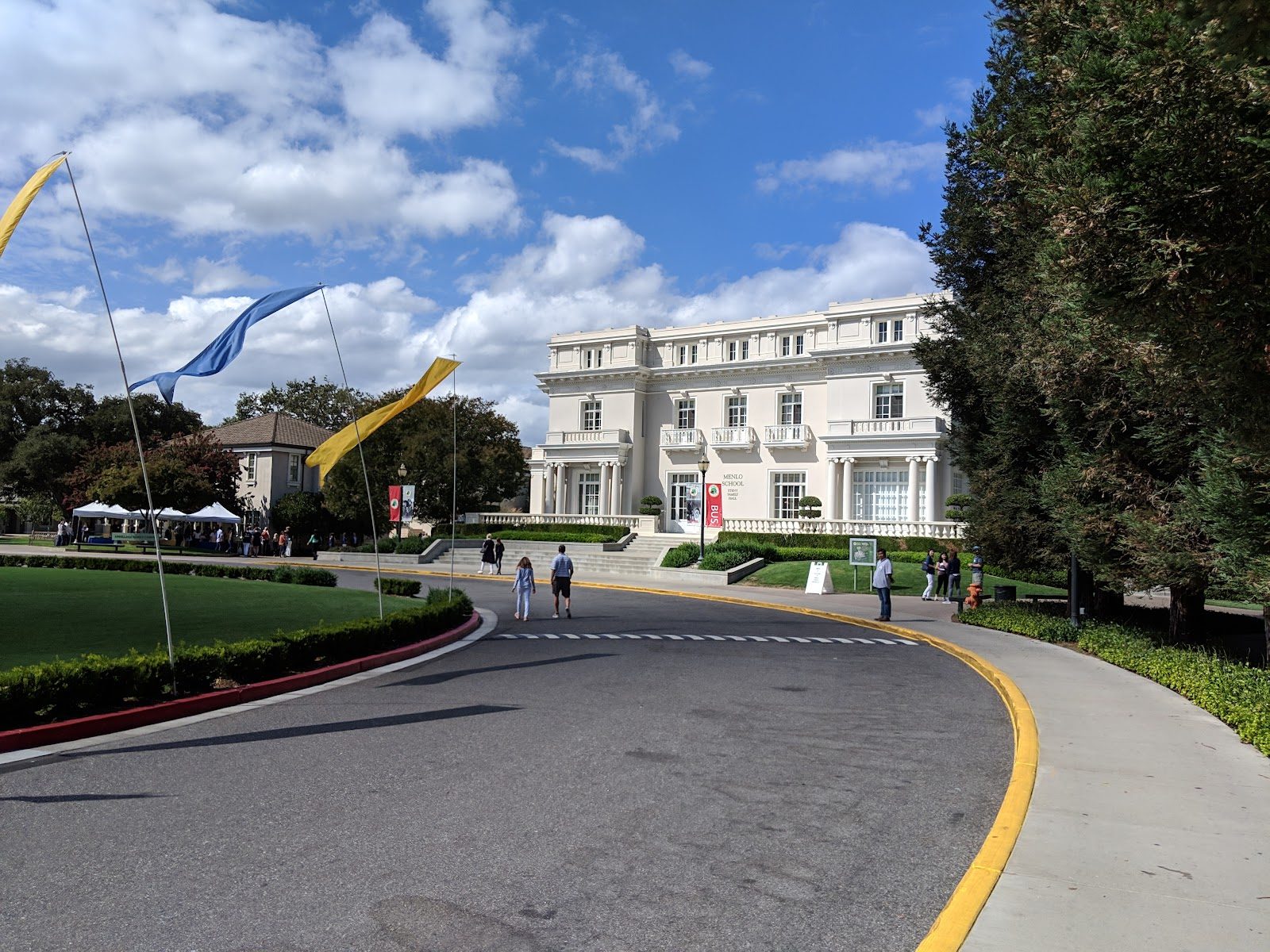
Menlo School
Atherton · United States
A 1915 Atherton campus near Stanford where an 8:1 ratio lets students chart their own humanities, STEM, or arts path.
Brunswick School
Greenwich · United States
An all-boys Greenwich day school since 1902, building character alongside a coeducational bond with Greenwich Academy.
The College Preparatory School
Oakland · United States
Seminar-style rigor in Rockridge, where an 8:1 ratio once helped earn a Wall Street Journal top-six national ranking
Same country and curriculum — closest matches within ±10 points either way