
South Holland
Nord Anglia International School Rotterdam
medium confidence· 5/6 cats · 2 avg sourcesBorn from a 1959 American community, this Hillegersberg school pairs IB rigor with MIT-designed STEAM and Juilliard arts training.
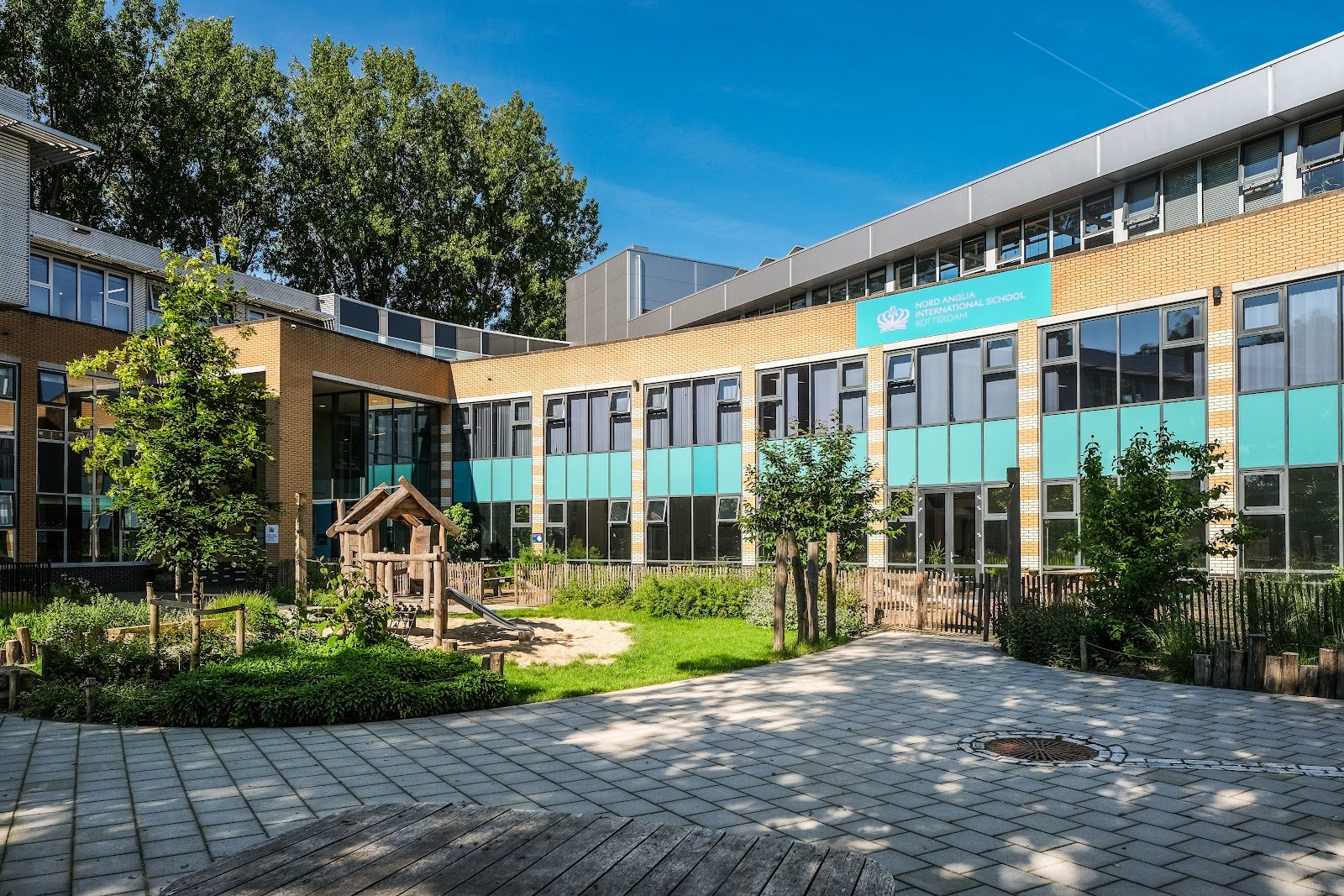
Photo © Nord Anglia International School Rotterdam via Google Maps
Type
Day
Ages
3–18
Curriculum
American · IB
Qualifications
IB PYP · IB MYP · IB Diploma
Ratio
7:1
The Verdict
Editor's commitment
Right for
Families wanting a small school: more than 230 students, a 7:1 ratio, and an American-plus-IB route in English.
Wrong for
Parents chasing scale or breadth will find 230 students limiting, despite Cambridge, Imperial and Manchester destinations in the latest list.
Watch out for
Founded in 1985 but tracing heritage to 1959, it trades on intimacy; the average annual day fee is €21,085.
Ranking breakdown
Nord Anglia International School Rotterdam · # of 1591
Composite score 65.4. 8 weighted criteria.
By criterion
Academic Outcomes
Weight 20%
#855
of 1529 scored
University Placement
Weight 16%
#848
of 1529 scored
Prestige & Heritage
Weight 12%
#845
of 1571 scored
Alumni Network
Weight 12%
#532
of 1530 scored
Facilities
Weight 12%
#799
of 1534 scored
Transparency & Communications
Weight 8%
#910
of 1532 scored
Peer & Industry Review
Weight 10%
#791
of 1548 scored
Admissions Selectivity & Demand
Weight 8%
#647
of 1529 scored
Score history
Nord Anglia International School Rotterdam · 2026
Movement across 2024–2026. Peer average overlaid.
Overall — 2024–2026
65.4/ 100
▲ +22.1 vs 2025
year on year
Peer & Industry Review
How Nord Anglia International School Rotterdam is regarded in the sector
67
Respected · medium confidence
I could not identify at least two independent, third-party sources (e.g., Tatler, Good Schools Guide, Sunday Times, Dutch Inspectorate reviews, expat forum consensus) that substantively assess Nord Anglia International School Rotterdam's reputation; available information is limited to the school's own marketing and general Nord Anglia group materials.
Editors' overview
What marks out Nord Anglia International School Rotterdam is scale. This is a small, deliberate school, not a sprawling international campus: just more than 230 students, drawn from over 35 countries, with a 7:1 student-teacher ratio. That matters because the school’s central promise — individual attention in an English-medium setting for ages 3 to 18 — is credible at this size. The academic offer also has more range than many small schools manage. It combines an American and IB framework, then layers on Nord Anglia’s network collaborations, including MIT-designed STEAM work and Juilliard-linked arts training. For parents who want IB seriousness without the impersonality that often comes with larger city schools, that is a genuinely distinctive proposition in Rotterdam.
The other point in its favour is heritage with a clear expatriate logic. The school traces its roots to a 1959 American community in Rotterdam; the current school was founded in 1985, and that history still explains its shape. This is an international school built for mobile, English-speaking families, not a local Dutch school with an international stream attached. That gives it a close-knit, expatriate character that many parents value, especially in the younger years. The average annual day fee is €21,085, which places it in the serious-fee bracket without pushing into the most inflated tier of the European market. Recent university destinations include Cambridge, Imperial and Manchester — a useful signal of academic ambition, even if the school does not publish broader destination data or aggregate exam outcomes in the context here.
Why shortlist it? Because it offers something hard to find in one package: a through-school from nursery to sixth form, English-language teaching, IB rigour, and a scale that still allows teachers to know families properly. Why not shortlist it? The same reason. Parents who want a bigger peer group, more subject depth, larger sports provision or the social energy of a 1,000-pupil international school may find it too intimate. This is best for students who thrive on attention, benefit from strong adult oversight, and want an international cohort without getting lost in it. It suits academically capable, globally mobile children, including those who like the arts and interdisciplinary STEAM work, and those who need a school that can track them closely across the whole age range. For independent teenagers who want anonymity and a huge sixth-form scene, there are bigger options. For families who want high-touch international schooling in Rotterdam, NAIS Rotterdam earns a place on the shortlist.
Academic Performance
Academic performance here rests on a small-cohort reality: individual outcomes can be strong, but one class can swing the headline. The clearest published marker is the Diploma Programme result from one recent cohort, when students recorded an average of 36.9 points — well above the world average and, by the school’s own account, its best result to date. That is a strong number in any market. It places the school comfortably ahead of the global IB baseline and in credible company among solid international schools, even if it does not push into the rarefied band occupied by the most relentlessly selective IB operators in Europe. The recent list of university destinations adds some weight at the top end, but it is a thin data set rather than a full outcomes picture.
That caveat matters. The school does not publish a run of year-by-year IB results, subject-level breakdowns, pass rates, higher-level score profiles, or broader destination tables in the public domain here. For parents trying to judge consistency against peers, that leaves an incomplete record. In practical terms, the school has proved it can produce strong IB outcomes; it has not published enough for outsiders to judge whether that strength is sustained across multiple cohorts. Relative to Rotterdam peers, this reads as a school with credible academic teeth and close support, but not one that offers the deep results transparency of the most data-confident competitors.
Facilities
Facilities fit the school’s scale. This is not a flagship campus built to impress on first sight; it is a compact working school in Hillegersberg, with the practical advantage that younger children and older students are not spread across a vast site. The public detail is thinner than strong schools should allow. The school highlights campus facilities and a virtual tour, but it does not publish a crisp, parent-useful inventory of specialist spaces, performance venues, indoor sports provision or science infrastructure. That matters because peers at the top end of the international market now spell this out room by room. Here, the case for the campus rests less on spectacle than on day-to-day usability and the school’s close-supervision model. For families who prize scale and oversight, that works. For parents hunting for a showpiece campus, it does not.
Where the school has more bite is in how it uses space rather than how lavishly it builds it. Arts, music, athletics and after-school activities all feature prominently, and the Nord Anglia link brings structured STEAM and performing-arts enrichment that can compensate for a smaller physical footprint. Against larger Rotterdam-area internationals, the likely trade-off is clear: less breadth in specialist facilities, more access to staff, less crowding, and a less anonymous daily experience for children. With more than 230 students, the school avoids the timetable pressure and competition for rooms that burden bigger campuses. That is a real strength. The weakness is equally plain: families who want extensive sports infrastructure or a big-school facilities arms race will find richer estates elsewhere.
What marks out Nord Anglia International School Rotterdam is scale
Prestige
This school’s prestige sits in the credible but limited bracket. It has real standing with internationally mobile families in Rotterdam because it offers continuity across the full age range, a long-established expatriate identity, and a scale that gives parents direct access to staff and leadership. The former American International School of Rotterdam name still carries weight with families who value that heritage. Its inclusion in the Nord Anglia network adds another layer of status: not automatic academic distinction, but a recognised global brand with tangible enrichment attached. A community of more than 230 students from over 35 countries gives it international legitimacy, even if this remains a small-market reputation rather than a school with continent-wide cachet.
That distinction matters. Prestige in this sector comes in different forms: social cachet, academic dominance, selectivity, alumni power, or local trust. NAIS Rotterdam scores best on local confidence and expatriate credibility. It does not command the same aura as Europe’s largest, most selective international schools, and its public academic record is too thin to justify that level of esteem. Nor does a school of this size generate the institutional muscle, subject breadth or sixth-form visibility that feed top-tier prestige. What it offers instead is intimate seriousness: a school parents talk about because children are known, supported and pushed, not because the name alone opens doors. For many families, that is the more useful kind of status.
The recent list of university destinations adds some weight at the top end, but it is a thin data set rather than a full outcomes picture
Communications
Parent communication is organised around the standard international-school channels: a dedicated admissions team, direct email and phone contacts, open days, a virtual tour, parent workshops, a school calendar and a “Parent Essentials” hub. That gives families multiple entry points, and the practical basics are easy to find. The school also foregrounds community touchpoints such as the weekly stay-and-play group, which matters in a small school where parent confidence rests on direct access and day-to-day visibility. The advantage of a community of just over 230 pupils is obvious here: messages do not need to travel through layers of bureaucracy, and parents can expect a more personal, less corporate line of contact than at a very large campus.
The weakness is depth. The website is heavy on invitation — enquire, visit, join, discover more — and lighter on the hard operational detail that experienced parents value once they move past first impressions. We have not seen a strong public archive of newsletters, leadership updates, policy explainers, or the kind of transparent academic and pastoral reporting that signals disciplined communication rather than simple friendliness. That does not make the school opaque; it makes it selectively informative. For prospective families, communication is warm, open and easy to initiate. For parents comparing schools at the sharper end of the market, it lacks some of the matter-of-fact clarity and documentary depth that the best-run international schools now publish as routine.
Uniqueness
What makes this school unusual is not one headline feature but the combination: an expatriate institution with deep local roots, a through-school age range, and the operating advantages of a small, high-attention community. Plenty of international schools promise individual care; few can make it credible across the whole school. Here, children move through one contained environment instead of being repeatedly reset between separate junior and senior campuses. That brings continuity in relationships, quicker intervention when a child drifts, and more room for personality to count. The school’s American inheritance still matters too. Even under its current name, that origin gives it a distinct expatriate logic: this was built for internationally mobile families, not retrofitted for them.
The other point of difference is how that intimacy is paired with network access. A pupil body of more than 230 from over 35 countries is small enough for staff to know families properly, but large enough to avoid becoming insular. Add Nord Anglia’s collaborations and the school offers opportunities that many compact schools cannot: MIT-linked STEAM work, Juilliard-connected arts input, and wider global projects through the group. That mix gives students a rare balance — close adult oversight without a narrow, parochial feel. The trade-off is plain. Children who want anonymity, a vast friendship pool or the social charge of a much larger campus will outgrow it. For pupils who benefit from being known, stretched and watched carefully, this is a distinctive fit.
That matters because peers at the top end of the international market now spell this out room by room
Student Profile
The student body fits the school’s core shape: internationally mobile families who want children known properly, watched carefully and taught in a community where adults notice changes quickly. This suits pupils who do their best work with structure, recognition and steady relationships rather than social anonymity. Children arriving mid-posting, third-culture students, and families who value continuity across the whole age range will find a natural home here. With more than 35 nationalities in a roll of just over 230, the peer group is international without becoming impersonal. The old American-school inheritance still leaves its mark too: this feels built for expatriate families first, with the rhythms, transitions and expectations that cohort brings.
The best fit is a child who is academically capable, socially open and comfortable in a tight-knit environment where visibility cuts both ways. Talented artists, musically engaged students and pupils who enjoy interdisciplinary projects have more to work with here than the school’s size might first imply. So do younger children who need reassurance and older students who benefit from close adult oversight. The weaker fit is easy to identify. Teenagers who want a vast friendship pool, a huge sixth form, or the freedom to disappear into the background will find the atmosphere too close-grained. This is not a school for performative independence or adolescent detachment. It is for families who want an intentional, high-contact education and are happy with the loss of anonymity that comes with it.
Nor does a school of this size generate the institutional muscle, subject breadth or sixth-form visibility that feed top-tier prestige
Co-curricular strengths
Arts & sport, on a separate axis
Overall 7.72/10
Scored 0-10 from the school's own published evidence. This axis is editorial-only — it does not feed the main WTS ranking.
Sports
8.3/10
Football and Basketball as extracurricular sports, indicating a real but limited sports offering with no facilities, multiple tiers, or competitive results described.
Drama
7.8/10
'Drama productions', and recurring productions count as named productions, which meets the threshold for a notable drama strength.
Dance
6.5/10
Music
8/10
A Choir ensemble, showing a defined music activity.
Visual Arts
8/10
A Visual arts club, indicating a concrete visual arts offering, but with no named facility, specialist staff, or exhibition programme described.
Editor first-pass · editor-reviewable · 7/27/2026
Outcomes & destinations
Where students go next
Class of 2024
Top destinations
6 placements
- University of Cambridge· 1
- University of Manchester· 1
- Imperial College London· 1
- Saint Louis University Madrid· 1
- University of Southhampton· 1
- University of Amsterdam· 1
Reported by the school. Confirm with admissions.
Strengths
- +Ages 3–18 on one campus
- +American and IB curricula offered
- +English-medium teaching throughout
- +12:1 student-teacher ratio
Considerations
- −Day school only; no boarding
- −Average class size is 20
- −Hillegersberg location may limit commute
Availability
Primary entry gate & tests
Academic Record
Gallery
Parent reviews
Have you sent your child here?
Voice reviews carry the strongest trust badge — we transcribe them for you to tidy up before they go live. Prefer to type? A written review is fine too.
Add your voice
In 60 seconds, tell other parents: what's the best thing about Nord Anglia International School Rotterdam, and what surprised you when your child joined?
We ask for a Google sign-in so every review has a real face behind it — no anonymous drive-by attacks on schools, and no faked positive reviews. Your email is never shown publicly.
Send this profile to a friend
International parents rely on word-of-mouth. Share this review with someone weighing the same decision.
Schools with places
Similar schools to Nord Anglia International School Rotterdam with places available now.
Availability first, then country, area, curriculum, price, co-curricular
Consider also
Also worth looking at alongside Nord Anglia International School Rotterdam.
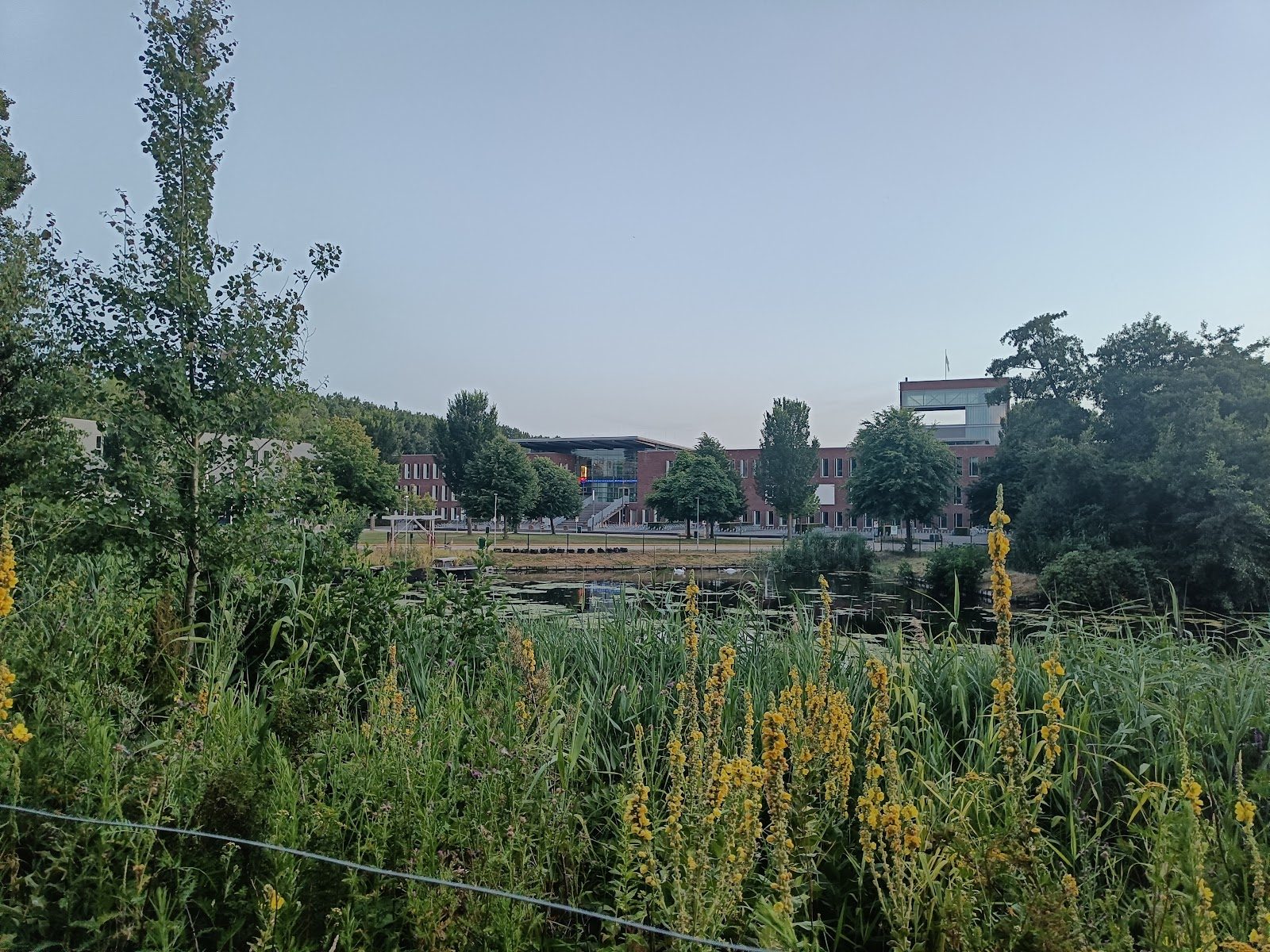
The International School of The Hague
The Hague · Netherlands
In the Kijkduin dunes, this IB day school runs MUNISH, Europe's second-largest student Model UN conference.
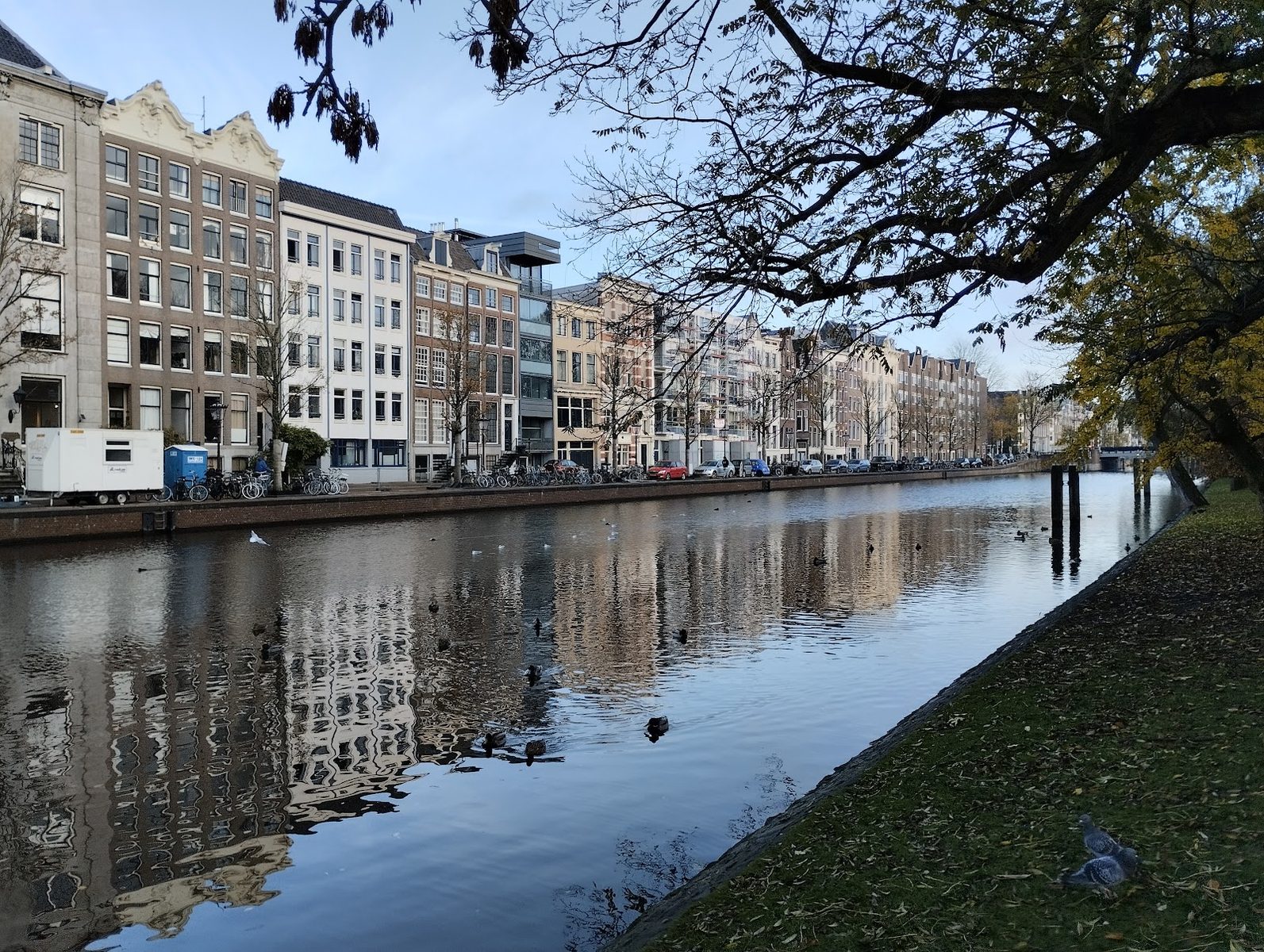
Amsterdam International Community School
Amsterdam · Netherlands
A public alternative to Amsterdam's private international schools, running the full IB continuum from a climate-neutral campus.

Lower Canada College
Montreal · Canada
Rooted in an 1861 boarding-school lineage, the only English-language Quebec school running both IB Middle Years and Diploma Programmes side by side
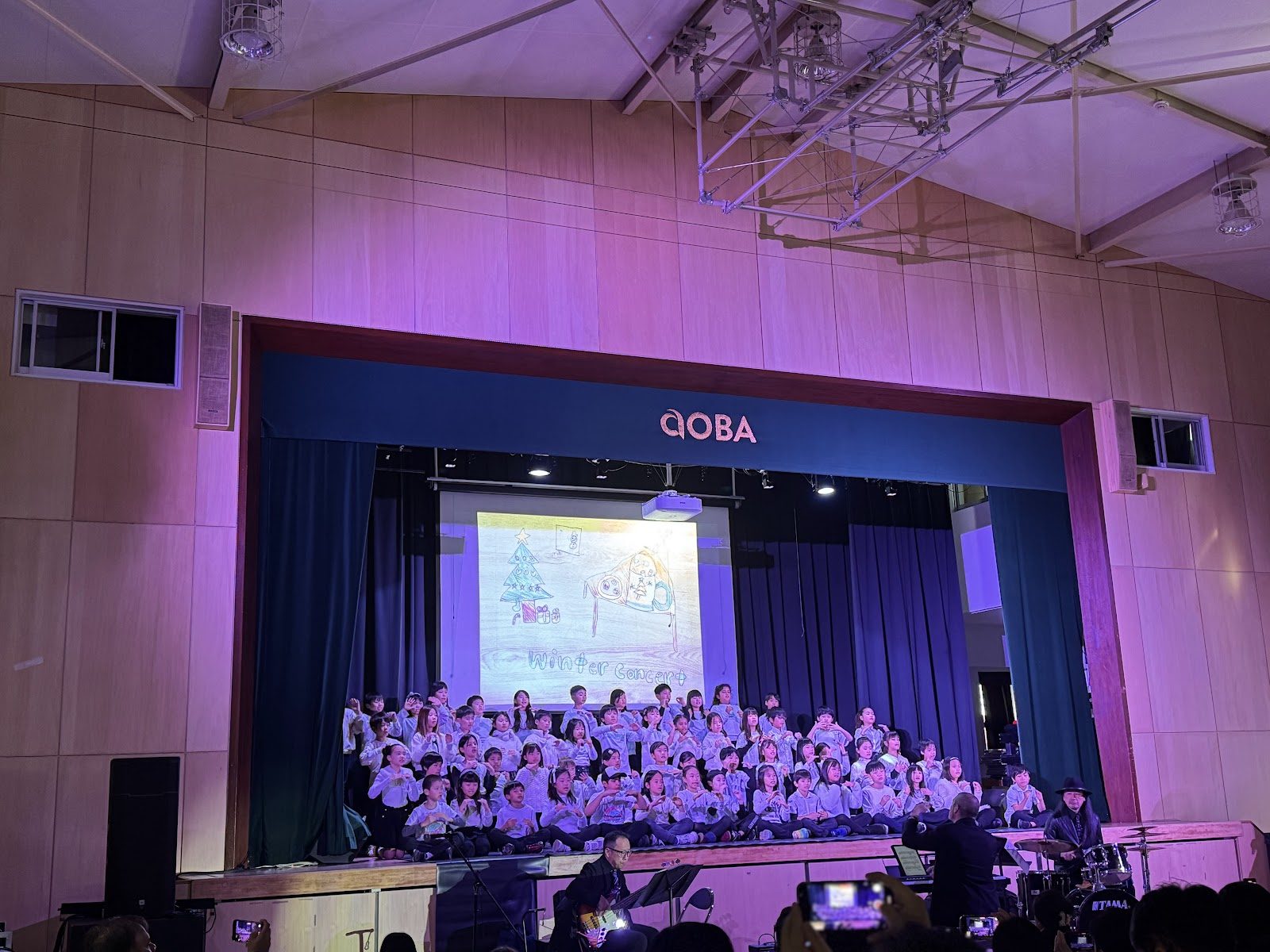
Aoba-Japan International School
Tokyo · Japan
Home to Asia's first online IB Diploma pilot, this Tokyo IB Continuum school pairs the DP with its own Global Leadership Diploma track.
Same country and curriculum — closest matches within ±10 points either way