
Northamptonshire
Oundle School
high confidence· 6/6 cats · 3.05 avg sourcesBoarding houses woven into a historic market town, and an engineering centre that 3D-prints titanium and carbon fibre.
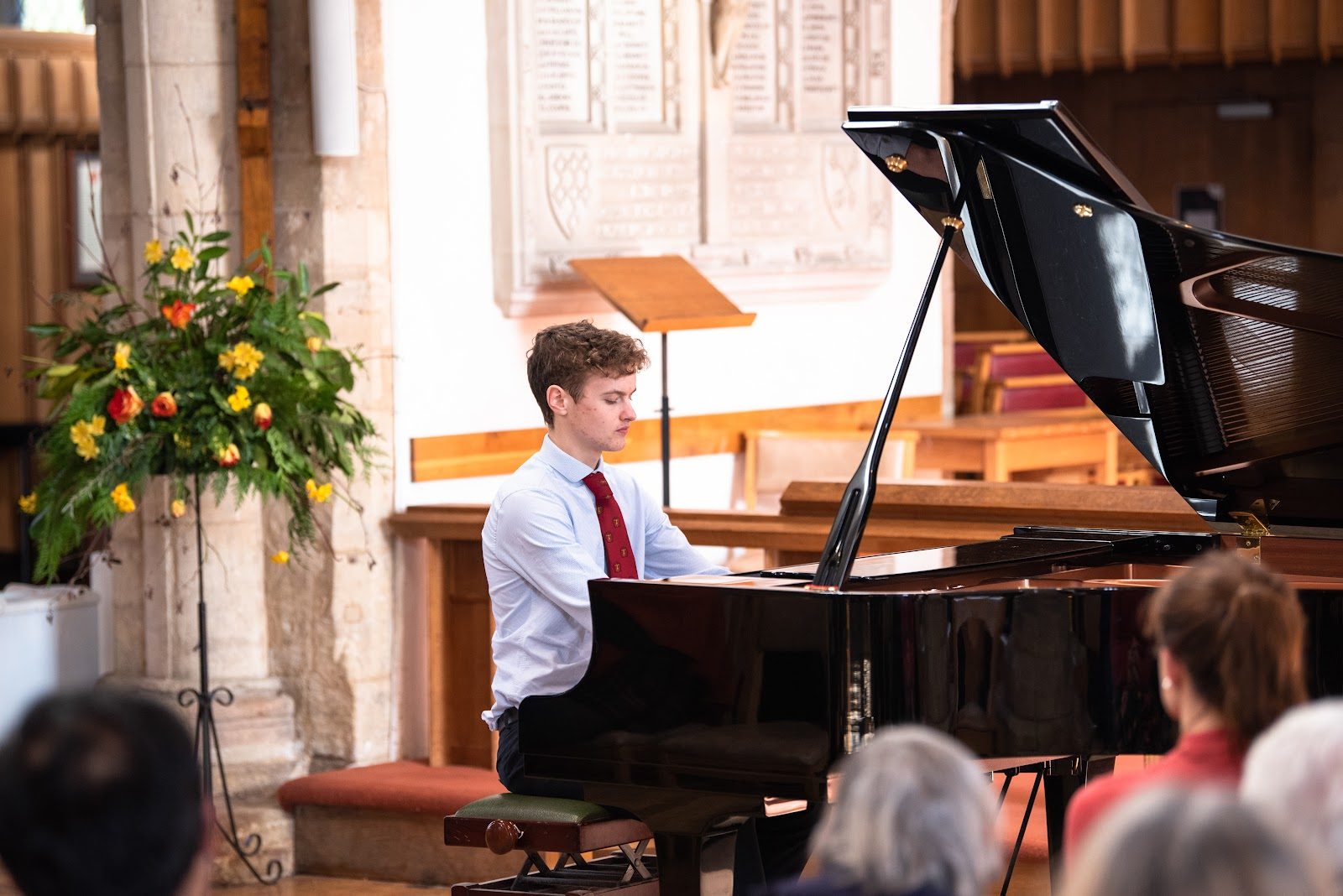
Photo © Oundle School via Google Maps
Type
Both
Ages
11–18
Curriculum
British
Qualifications
A-Level
Ratio
—
The Verdict
Editor's commitment
Right for
Families wanting full boarding-school immersion in a real town, with 84% of 195 leavers reaching top-100 universities and 17 Oxbridge places.
Wrong for
Children who need an intimate campus or low-cost schooling; Oundle runs 11–18 across town buildings, with average fees at £37,864 day and £54,048 boarding.
Watch out for
The Anglican foundation and Grocers' Company governance date from 1556; that heritage carries weight, and the school's scale can swallow less robust pupils.
Ranking breakdown
Oundle School · # of 1591
Composite score 69.1. 8 weighted criteria.
By criterion
Academic Outcomes
Weight 20%
#667
of 1529 scored
University Placement
Weight 16%
#649
of 1529 scored
Prestige & Heritage
Weight 12%
#438
of 1571 scored
Alumni Network
Weight 12%
#289
of 1530 scored
Facilities
Weight 12%
#559
of 1534 scored
Transparency & Communications
Weight 8%
#722
of 1532 scored
Peer & Industry Review
Weight 10%
#640
of 1548 scored
Admissions Selectivity & Demand
Weight 8%
#547
of 1529 scored
Score history
Oundle School · 2026
Movement across 2024–2026. Peer average overlaid.
Overall — 2024–2026
69.1/ 100
▲ +9.3 vs 2025
year on year
Peer & Industry Review
How Oundle School is regarded in the sector
82
Strong · high confidence
Oundle School enjoys a strong, longstanding reputation among sector peers as one of England's great full-boarding schools, ranked the country's third-largest boarding institution and consistently featured in Tatler's Schools Guide, which praises its "world-class facilities, serious scholastic firepower and proud tradition of doing things properly." The Good Schools Guide is emphatic in its endorsement, calling Oundle "a high-flyer and yet firmly grounded" and an "understated winner" among the academically selective Midlands cluster, while WhichSchoolAdvisor highlights its selective academic profile and full-boarding ethos. Tatler previously named it Public School of the Year, and recent royal interest, with Oundle reported among the schools toured by the Prince and Princess of Wales for Prince George, has further sharpened its profile in the expat and domestic parent community. The main caveat is that its WhichSchoolAdvisor entry remains a placeholder pending a full review, so coverage on that specific platform is thinner than on Tatler or Good Schools Guide.
Editors' overview
Oundle’s defining advantage is structural: this is not a self-contained campus on the edge of nowhere, but a senior school woven through a Northamptonshire market town, with day and boarding provision for pupils aged 11 to 18. That gives it a different social texture from more insulated boarding schools. Houses, school buildings and town life sit together, which suits pupils who want independence without being cut off from ordinary life. The other clear point of difference sits in the school’s own tagline: an engineering centre that 3D-prints titanium and carbon fibre. That is not a decorative flourish. It signals a school that takes making, designing and applied science seriously, not one that treats STEM as a line in a prospectus.
Academically, Oundle has the results to justify a place on a serious shortlist. In the Class of 2024, there were 195 leavers; 84% progressed to top-100 universities; 17 won Oxbridge places; and 52 went to Russell Group institutions, with Oxford, Cambridge and Durham the most frequent named destinations. Those figures place the school firmly in the upper tier of academically ambitious British independents, while stopping short of the ultra-narrow hothouse model. The alumni base also carries weight: 129 notable former pupils are catalogued in Wikidata, including scientists, politicians, writers and elite athletes. That breadth matters. It points to a school that has long produced influence across fields, not just examination technicians.
Oundle is expensive, as this end of the market is expensive. The average annual fee is £54,000 for boarders and £38,000 for day pupils across the full 11–18 ladder. Parents are paying for scale, history, boarding infrastructure and specialist facilities, and they need to want all of that. This school fits students who are bright, energetic and ready for a busy, high-expectation environment with real institutional weight behind it. It will suit children who like the idea of a full boarding-school life but do not want a sealed compound; pupils with serious interests in science, engineering or design; and teenagers who will use the town setting as a training ground for independence. It is less compelling for families seeking a small, soft-edged school or a deliberately progressive culture. Oundle’s appeal lies in substance, seriousness and a distinctly English boarding-school model done on a large, confident scale.
Academic Performance
Oundle sits in the serious academic bracket of British independents, but not in the monocultural, exam-factory corner of the market. The destination data already places it clearly: a school that sends a large share of leavers to selective universities, including 17 to Oxbridge, without narrowing its identity to one admissions treadmill. That matters when placing it against peers. At the very top of the sector, the benchmark is relentless concentration into Oxford, Cambridge and a tiny cluster of London institutions. Oundle operates one rung below that hothouse group and squarely within the country’s academically strong major boarding schools: ambitious, high-performing and credible with demanding universities, but with a broader operating model and a wider range of pupil profiles.
What is missing is the piece many hard-nosed parents will want first: published aggregate GCSE and A-level grade distributions. The school does not disclose them here, so direct comparison on raw exam outcomes is constrained. That opacity is a weakness. Schools competing at this price and status level benefit from publishing clean attainment tables, and Oundle has not done that in the sources we have seen. Even so, the onward progression data is strong enough to rule out middling academic performance. The picture is of a school with real sixth-form depth, strong university guidance and outcomes that place it securely in the upper tier, even if it stops short of the white-heat results culture of the most narrow, intensely selective names.
Facilities
The facility that matters most at Oundle is the engineering centre flagged in the school’s own tagline: a place built for actual design-and-make work, not token STEM theatre. A school that can 3D-print titanium and carbon fibre sits in a small group nationally. Among British boarding peers, many have polished science blocks and competent DT workshops; far fewer have a technical set-up with genuine industrial edge. For pupils serious about engineering, product design, robotics or fabrication, that shifts Oundle out of the generic “strong STEM” category and into the properly distinctive one. It also signals institutional priorities. Schools do not build and run facilities at that level by accident.
The second strength is the physical relationship between school and town. This is not one concentrated campus where every building sits behind the same gates. Houses and teaching spaces are distributed through the town, which gives the estate a lived-in, adult character and changes how pupils move through the day. Some families will love that independence; others will prefer the containment and convenience of a tighter campus. Against peers, that trade-off is clear. Oundle has less of the immaculate, self-contained showpiece feel found at some big-name boarding schools, but more texture and more reality. If you want a school with a theatre-like front drive and everything in one visual sweep, look elsewhere. If you want specialist engineering provision and a setting that trains autonomy, Oundle has a clear competitive advantage.
Those figures place the school firmly in the upper tier of academically ambitious British independents, while stopping short of the ultra-narrow hothouse model
Prestige
Oundle carries old-established British independent-school prestige, but of a specific kind. This is not the tiny London day-school route into the same universities, nor the ultra-rarefied, exam-obsessed boarding names that trade on near-mythic scarcity. Its standing rests on durability, scale and reach. Governance by the Grocers’ Company gives it that deep institutional backbone older English public schools still draw authority from, and the alumni record reinforces the point: 129 notable former pupils catalogued in Wikidata across politics, science, writing, business and sport is a serious public footprint. Prestige here is not a matter of one glamorous niche. It is broad-based, institutional and hard to dismiss.
The school also avoids the trap of living on heritage alone. The specialist engineering identity sharpens the brand in a crowded field and gives Oundle a modern claim to distinction beyond chapel, houses and tradition. That matters, because prestige without present-tense performance curdles into museum status. Oundle escapes that. University destinations remain strong, the alumni network has real professional spread, and the town-integrated model gives it a social confidence that more sealed boarding campuses do not have. My rating sits high, not absolute topmost. In plain terms: this is a serious national name with real cachet among British boarding schools, but it does not command the same instant, universal status as the handful of schools that dominate the sector’s prestige hierarchy.
At the very top of the sector, the benchmark is relentless concentration into Oxford, Cambridge and a tiny cluster of London institutions
Communications
Oundle’s communications burden is heavier than that of a single-gate campus, because the school is spread through a town and runs both day and boarding life. Parents need crisp logistics, clear lines of responsibility and fast notice when routines shift. On that test, the school has no room for vagueness. A place with 195 leavers in one year and a large house structure cannot rely on charm and institutional tradition; it needs disciplined, operationally sharp parent communication. The public-facing information that is visible does the core job: it establishes the school’s identity, its governing structure and its main points of distinction without fluff. That said, the school does not publish some of the hard data exacting parents now expect, including aggregate public exam breakdowns. That weakens trust at the margins. Strong schools communicate not only ethos and opportunity, but also results in a form that invites scrutiny.
So the verdict is mixed, but not muddled. Oundle gives the impression of a school that communicates competently on day-to-day institutional basics and is confident about its character, but also keeps a tighter grip than necessary on performance detail. For current families, that house-based structure often produces closer, more human contact than a centralised megaschool model, because communication runs through smaller pastoral units as well as the centre. For prospective parents, though, the standard is higher. At average annual fees of £54,048 for boarding and £37,864 for day places, opaque academic disclosure is a real weakness, not a quirk. The school communicates its culture well; it communicates measurable outcomes less well.
Uniqueness
Oundle’s real distinction lies in structure. Most British boarding schools ask pupils to live inside a bounded institutional world; Oundle disperses that world through a working market town. That changes daily life. Moving between houses, classrooms and town streets gives teenagers a steadier dose of autonomy than the sealed-campus model, and it does so before university. For the right child, that is serious preparation for adult life. It builds judgment, self-management and social confidence in ways a more cosseted school does not. The trade-off is plain: this is not a softly supervised environment, and families who want constant containment will find stronger fits elsewhere.
The other point of difference is the engineering centre, and it matters because it is concrete rather than rhetorical. A school that can 3D-print titanium and carbon fibre offers pupils access to real technical ambition, not a token workshop dressed up as innovation. That has value well beyond future engineering degrees. It rewards students who like building, testing, iterating and solving practical problems, and it gives academic high-achievers another route to seriousness besides essay-writing and exam technique. Add a long-governed public-school culture with a large old-boy network and you get a school that is distinctly English, operationally grown-up and not interchangeable with prettier but more generic boarding names. For independent-minded adolescents, that combination is powerful.
That gives it a different social texture from more insulated boarding schools
Student Profile
The pupil who thrives at Oundle is not one who needs constant corralling. This school suits teenagers with self-command, stamina and a taste for a busy, high-pressure day. The town-based layout asks students to move around sensibly, manage their time and handle a degree of freedom without wasting it. That alone narrows the field. It will work well for pupils who like structure but do not need hand-holding; who can live inside a house system, a strong institutional culture and a full co-curricular programme without buckling under the weight of expectation. There is room here for scholars, makers, athletes and performers, but the common trait is drive. The school’s university outcomes and the pull of its alumni base — with 129 notable figures catalogued — tell you the ceiling is high and the culture rewards ambition.
It is an especially good fit for students drawn to serious technical work as well as conventional academic success. A child who wants to build things, test ideas and use specialist equipment will get more traction here than at boarding schools where innovation stops at branding. Socially, Oundle fits pupils who can handle a grown-up environment: not hardened, not slick, but ready to mix independence with accountability. It is less suited to fragile confidence, low motivation or families seeking a soft-edged, intensely nurturing atmosphere. At average annual fees of £54,048 for boarding and £37,864 for day places, this is a school for families who want substance, pace and expectation, not a protective cocoon.
Houses, school buildings and town life sit together, which suits pupils who want independence without being cut off from ordinary life
Co-curricular strengths
Arts & sport, on a separate axis
Overall 8.8/10
Scored 0-10 from the school's own published evidence. This axis is editorial-only — it does not feed the main WTS ranking.
Sports
9.5/10
Massive athletic infrastructure; fields ultra-competitive teams across independent leagues, backed by the state-of-the-art JM Mills Pavilion.
Drama
9/10
The spectacular Stahl Theatre functions as a professional public venue, providing a conservatory-style track for actors and technicians.
Dance
7.5/10
Offered primarily as a movement asset within theatrical physical training rather than an independent classical track.
Music
9.5/10
Deep, traditional choral lineage anchored by the historic chapel choir, paired with advanced instrumental ensembles and rock societies.
Visual Arts
8.5/10
Large, dedicated studio networks specializing in ceramics, fine painting, and architecture, culminating in major public campus exhibitions.
Editor-verified · 8/6/2026
Outcomes & destinations
Where students go next
Editorial estimateClass of 2024
195 graduates
A-Level distribution
97% covered
- A*32%
- A33%
- B26%
- C6%
Top destinations
69 placements
- Oxford· 9
- Cambridge· 8
- Durham· 14
- Edinburgh· 10
- Exeter· 9
- Newcastle· 8
- Nottingham· 6
- Bristol· 5
Northamptonshire co-ed boarding; strong sciences and engineering flow.
Editor-approximated from the school's own leavers report. Awaiting school-attested figures.
Notable alumni · Wikidata
129notable alumni
87 historic (born pre-1930) · 11 modern (born post-1970)wikidata:2026-07-28 How we source this
The story in one line
35% achieved ≥ AAB in 2+ facilitating subjects·ISI Routine Inspection 2024
AAB with 2 facilitating subjects is the Department for Education's published predictor of admission to a top-third UK university: the pupil has scored high grades in at least two of the classic Russell-Group subjects (maths, sciences, English, history, geography, or a modern language). Independent schools don't appear in the state-only HE-destinations dataset, so this is the strongest DfE-verified sixth-form signal available. Source: DfE 16-18 school and college performance data · 2023/24. Value-added +0.34
DfE-verified statistics
Official GCSE data · 2024/2025
Progress 8
—
Value-added score. State-schools only; 0 = expected progress, +1 = one grade above.
Attainment 8
16.1
Average grade across 8 GCSEs (score out of 90). National ≈ 46.
EBacc average score
0.66
Avg grade across the 5 EBacc pillars (English, Maths, Sciences, Language, Humanity).
EBacc slots filled
0.9
How many of the 5 EBacc pillars pupils typically enter (max 5).
A-Level attainment
Cohort · 2023/24
Avg A-Level grade
A-
APS per entry: 47.27
Best 3 grade
A-
Best-3 APS: 45.13
≥ AAB + 2 fac.
35.0%
Russell-Group predictor.
Progress (value-added)
+0.34
Above average
Read with care. Independent schools frequently sit IGCSEs or Pre-U qualifications instead of standard GCSEs — DfE data only counts standard GCSEs, so these numbers may reflect a partial cohort. For a fuller picture, cross-check with the school's own annually-published results.
URN 122129Verified · DfE 2024/2025
Official inspection
ISI report · 2024
Inspectorate
Independent Schools Inspectorate
The Government-approved inspectorate for English independent schools.
Latest report
8 October 2024
Routine Inspection
Report history
Verified · Independent Schools InspectorateSource-of-truth
Strengths
- +Founded 1556; long institutional continuity under the Worshipful Company of Grocers
- +Co-educational boarding and day provision for ages 11–18 with a full boarding ethos
- +84% of 2024 leavers progressed to top-100 universities, with 17 to Oxbridge
- +World-class sport, music and drama; elite visual arts
- +Published, verified 2024 A-Level results (32% A*, 33% A)
Considerations
- −Boarding fees of around £55,000 a year sit at the premium end of the market
- −Day fees of around £30,000 a year
- −A-Level only; no IB or bilingual pathway
- −Traditional Anglican, structured culture will not suit every family
Availability
Primary entry gate & tests
13+ ISEB / 16+ Exams
Gallery
Photo © Oundle School via Google Maps
Photo © Oundle School via Google Maps
Photo © Oundle School via Google Maps
Photo © Oundle School via Google Maps
Photo © Binbao Jin (Bb Jin) via Google Maps
Photo © V De Carlo via Google Maps
Photo © David Nicholson via Google Maps
Photo © David Nicholson via Google Maps
Photo © Oundle School via Google Maps
Recommended reading
Independent write-ups of this school from editorial outlets we trust.
- Oundle SchoolGood Schools Guide
Parent reviews
Have you sent your child here?
Voice reviews carry the strongest trust badge — we transcribe them for you to tidy up before they go live. Prefer to type? A written review is fine too.
Add your voice
In 60 seconds, tell other parents: what's the best thing about Oundle School, and what surprised you when your child joined?
We ask for a Google sign-in so every review has a real face behind it — no anonymous drive-by attacks on schools, and no faked positive reviews. Your email is never shown publicly.
Send this profile to a friend
International parents rely on word-of-mouth. Share this review with someone weighing the same decision.
Schools with places
Similar schools to Oundle School with places available now.
Tiffin School
Kingston upon Thames · United Kingdom
- 2026-27
- CLOSEDStandard route
- 2027-28
- PLACES OPENCloses 1 Sept '26, 12pm
Fettes College
Edinburgh · United Kingdom
- 2026-27
- CLOSEDStandard route closed
- 2027-28
- PLACES OPEN
University College School
London · United Kingdom
- 2026-27
- CLOSEDStandard route
- 2027-28
- PLACES OPEN11+ (9 Nov); 16+ (28 Sept)
Emanuel School
London · United Kingdom
- 2026-27
- CLOSEDStandard route closed
- 2027-28
- PLACES OPEN11+ / 16+ active
Availability first, then country, area, curriculum, price, co-curricular
Consider also
Also worth looking at alongside Oundle School.
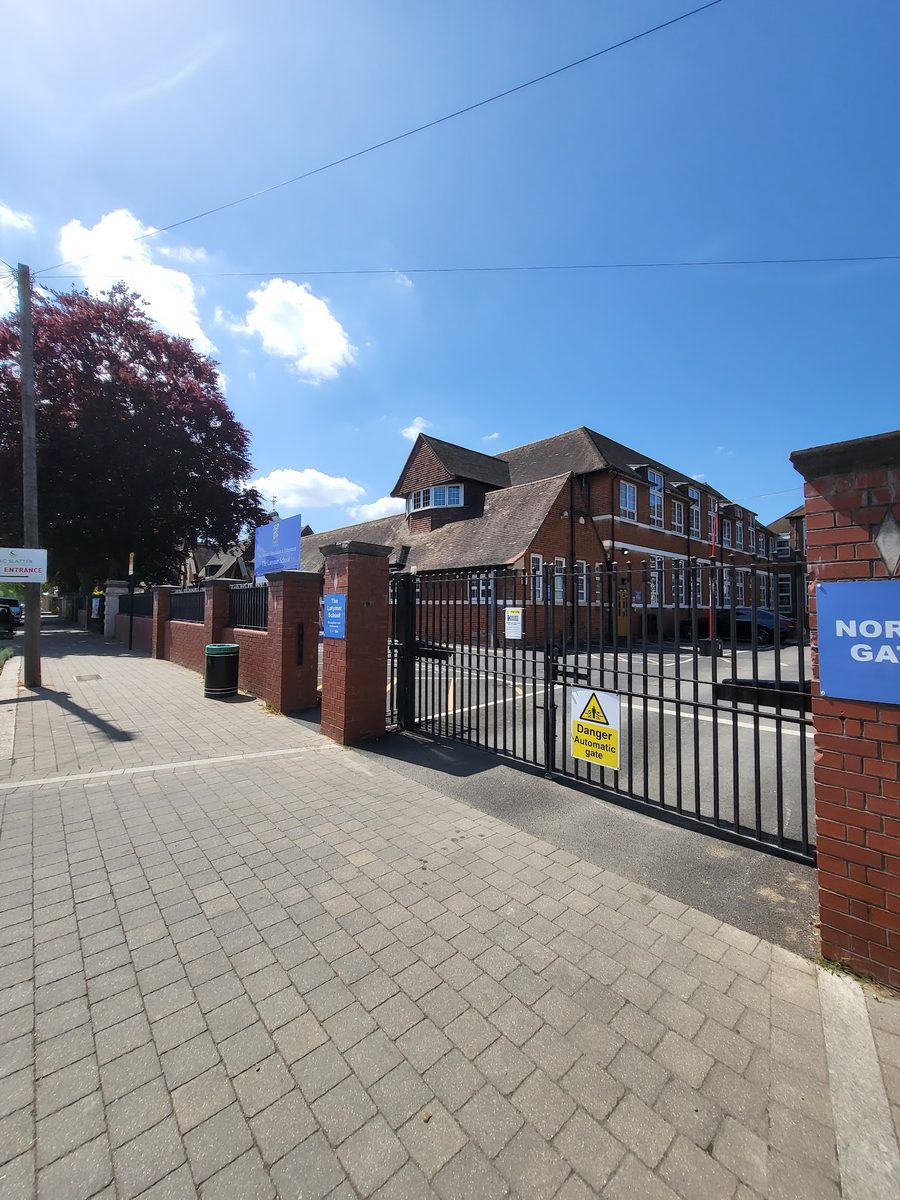
The Latymer School
London · United Kingdom
A 400-year-old state grammar in Edmonton where over 1,000 applicants compete yearly for just 192 places, with Cambridge college endowments still funding leavers.
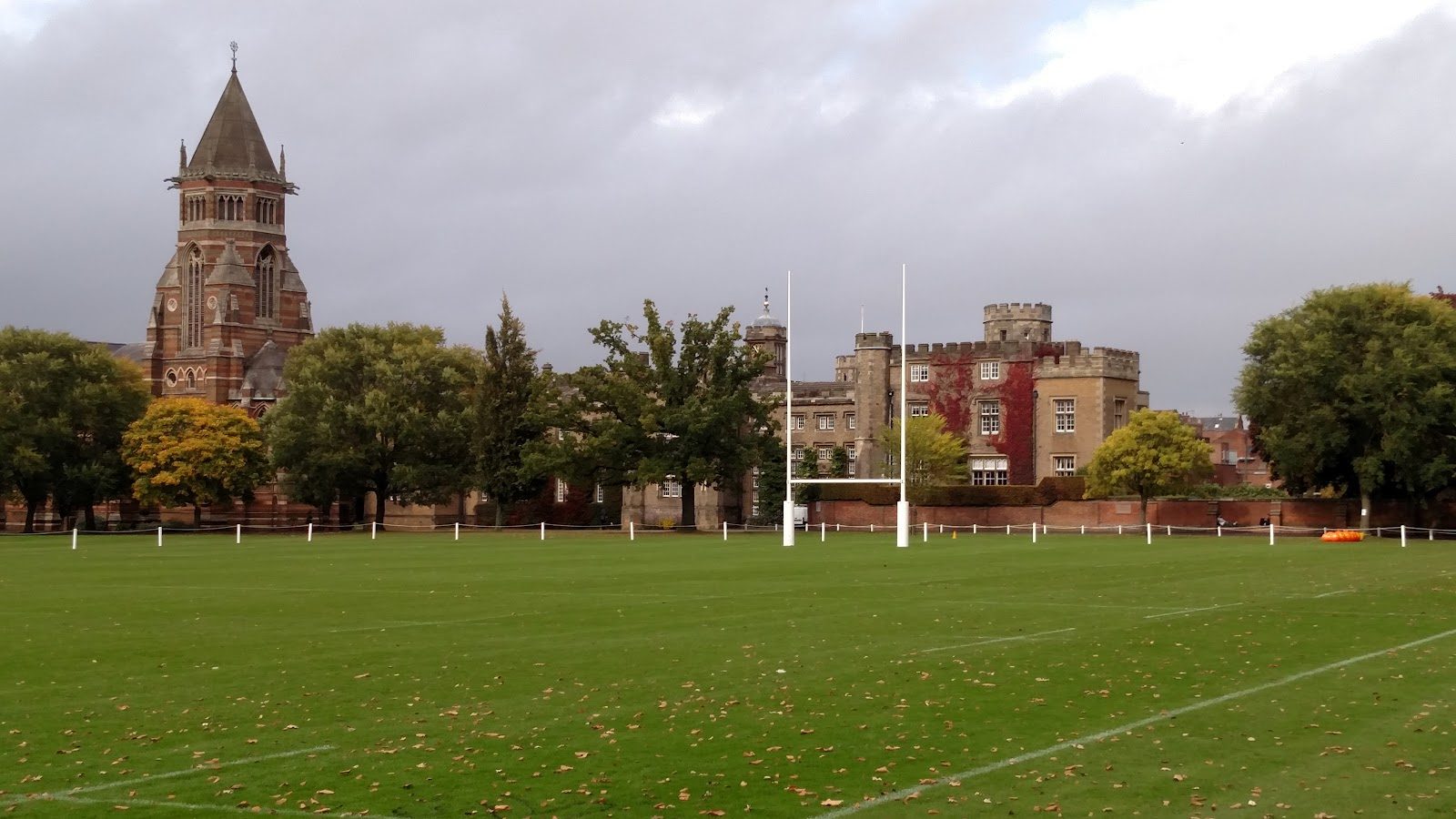
Rugby School
Rugby · United Kingdom
The Warwickshire close where a schoolboy's 1823 sprint with the ball gave rugby its name and its game.
Tiffin School
Kingston upon Thames · United Kingdom
No fees, no let-up: a Kingston grammar school where two-stage testing turns 2,000 hopefuls into a class of 180.
Fettes College
Edinburgh · United Kingdom
Gothic turrets said to have inspired Hogwarts frame Scotland's only sixth form pairing A Levels with a full IB Diploma pathway.
Same country and curriculum — closest matches within ±10 points either way