
Ontario
The York School
medium confidence· 4/6 cats · 1.71 avg sourcesFirst English-speaking school in Canada certified for the full IB continuum, JK to Grade 12, on midtown Toronto's Yonge Street corridor.
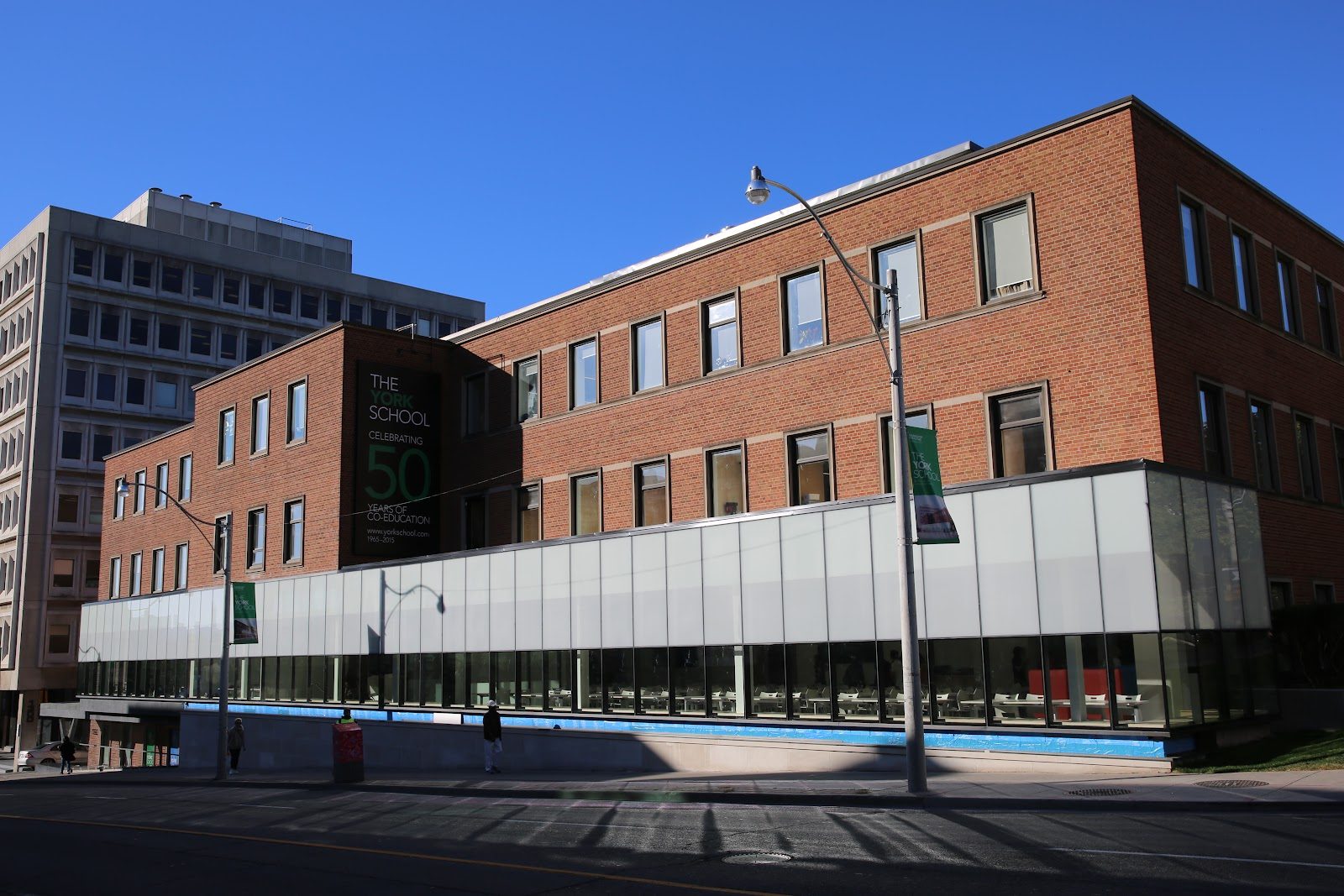
Photo © The York School via Google Maps
Type
Day
Ages
3–18
Curriculum
Canadian · IB · American
Qualifications
AP
Ratio
—
The Verdict
Editor's commitment
Right for
Toronto families wanting a non-religious JK–12 day school with the full IB continuum, CIS backing and two urban campuses.
Wrong for
Parents after boarding, a faith setting or a cheaper option: the average annual fee is CAD 45,065.
Watch out for
The school declares Canadian, IB and American strands; parents need clarity on how that mix works in each grade.
Score history
The York School · 2026
Movement across 2024–2026. Peer average overlaid.
Overall — 2024–2026
67.1/ 100
▲ +21.3 vs 2025
year on year
Peer & Industry Review
How The York School is regarded in the sector
58
Credible · low confidence
The York School is consistently listed among Toronto's established independent IB schools in local media rankings (e.g., Toronto Life 'Best Private Schools' features) and is accredited by Canadian Accredited Independent Schools (CAIS) and a member of the Round Square network, indicating solid regional peer standing. However, it lacks significant coverage in international specialist press (Tatler, Good Schools Guide) or notable alumni network visibility beyond local circles.
Evidence sources
Editors' overview
The York School’s clearest point of difference is structural, not cosmetic: it runs the full IB continuum from JK to Grade 12, and it was the first English-speaking school in Canada to secure that status. In Toronto, that matters. Plenty of independent schools bolt the Diploma Programme on at the top; York builds its academic identity around IB from the start, then layers that on to a school-declared Canadian, IB and American mix. Add two urban campuses on Yonge Street in midtown Toronto and you get a school designed for families who want city access, not a leafier, cloistered version of private schooling. The average annual day fee across the full age range is CAD 45,065, which places it firmly in the expensive end of Toronto day schooling. Parents paying that premium are buying a very specific proposition: an urban, internationalist education with IB embedded all the way through, not just in the sixth form.
The school’s self-definition is also unusually direct. It talks about experiential learning, global citizenship, technology-rich teaching and a gender-inclusive JK–12 environment, and those claims fit the institutional shape: founded in 1965, non-religious, English-medium, day-only, and accredited by both IBO and CIS. That combination gives York a clear market position. It is not a traditional old-guard Canadian independent with a chapel-and-playing-fields identity, and it is not a bargain route into IB either. It is a deliberately cosmopolitan school for families who value inclusion, outward-facing curriculum design and a daily connection to the city around it. The upside is coherence and modernity. The trade-off is just as clear: parents looking for a more conventional single-curriculum model, heavier institutional tradition or a lower fee point will find stronger fits elsewhere.
The students who thrive here are intellectually agile, comfortable with discussion and reflection, and energised by learning that moves beyond the classroom. York will suit children who want a broad academic frame, who are at ease in a diverse peer group, and who benefit from a school culture that is open-textured rather than rigid. It will also appeal to internationally minded families who want continuity from the early years through graduation under one educational philosophy. It is less compelling for families who want an overtly high-pressure, exam-drilled atmosphere or a school whose identity rests on heritage and hierarchy. York’s appeal is sharper than that: *modern, values-conscious, globally literate* and fully committed to the IB model from ages 3–18.
Academic Performance
York does not publish the kind of hard outcome data that lets parents place it cleanly against Toronto’s stronger independent-school field. We have not seen aggregate IB Diploma averages, subject scores, score distributions, pass rates, university destination breakdowns or multi-year trends. That is a real gap. For a school charging premium fees and trading on a full-through academic identity, the absence of public results leaves too much to inference. Parents comparing York with peers that publish mean diploma scores, cohort sizes and destination lists get less clarity than they should. The school talks confidently about post-secondary progression and an education aimed at leading universities, but without disclosed headline metrics, that claim remains under-evidenced in public.
What can be said with confidence is narrower. A school built around the full IB pathway from the early years through the senior grades has a coherent academic structure, and that continuity matters for students who thrive on inquiry, writing, reflection and cross-disciplinary study. It also means York sits in the part of the market where families expect serious academic follow-through, not just polished rhetoric. But expectations are not results. Until the school publishes comparable senior outcomes, York belongs in the category of academically ambitious schools with opaque external proof. For some families, that is acceptable. For data-minded parents, it is a material weakness.
Facilities
The York School’s facilities story starts with its split-site, inner-city model. The school operates across 2 purpose-built campuses, and that matters because urban schools live or die by how well they convert constrained footprints into usable teaching space. York’s own account points to technology-rich learning and buildings designed for an urban setting, which places it in the same bracket as metropolitan independents that trade acreage for access. Parents should not expect the sweeping grounds, major outdoor sports stock or country-house scale that define Toronto’s more traditional rivals. This is a city-first physical plant: practical, connected and built around daily movement through the surrounding neighbourhood rather than insulated campus life. For families who want leafy grandeur, York is the wrong buy. For families who value centrality and modern classrooms, it has a clear, credible advantage.
What stands out more is fit than spectacle. The school ties its facilities directly to experiential learning, technology and co-curricular breadth, with the city itself used as an extension of the campus. That gives York a more agile infrastructure than peers whose selling point rests on land and legacy. The trade-off is plain: if your benchmark is specialist provision on a grand scale — extensive playing fields, heavyweight athletics plant, major standalone arts complexes — York does not read as that kind of school. If your benchmark is a contemporary urban independent with purpose-built space and a teaching model that pushes beyond the classroom, the facilities are well aligned to the mission even without the grand physical theatre.
The York School’s facilities story starts with its split-site, inner-city model
Prestige
York carries real cachet in a narrow, intelligible lane. Its status as the first English-speaking school in Canada to secure the full IB continuum gives it a distinctive claim in the independent market, and that matters more than generic talk of excellence. Among families who prize international mobility, inquiry-led teaching and a school culture tied to global citizenship, York has serious brand strength. The address also helps: two purpose-built urban campuses on the Yonge corridor place it in a part of the city associated with professional families who want proximity, polish and access rather than a country-estate version of private education. The fee level — CAD 45,065 on average each year — reinforces that position. This is *expensive, self-conscious metropolitan schooling*.
That said, prestige here is specialist rather than universal. York does not command the old-line social weight of Canada’s most entrenched independent names, and it does not publish the public academic outcome data that would harden its standing on results alone. Its reputation rests instead on coherence of educational model, a clear internationalist identity and a modern, inclusive culture that many current independent-school parents actively want. In that segment, York is high-status and credible. Outside it, the school has less pull. That is why the prestige rating lands below the most dominant legacy institutions but comfortably above schools with weaker identity, thinner differentiation or less market confidence.
The York School will suit students who are comfortable in a discussion-led classroom and willing to take learning beyond neat subject boxes
Communications
York’s parent-facing communication is polished, value-led and easy to navigate, but it is stronger on identity than on scrutiny. The school states its case with confidence: learning beyond the classroom, technology at students’ fingertips, experiential opportunities, diversity and inclusion, and a gender-inclusive environment. That gives parents a clear institutional voice. The two-campus urban model is also explained in a way that fits the school’s educational pitch rather than reading like a logistical afterthought. For prospective families, that coherence matters. You can grasp what the school wants to be, who it is for and why it costs what it costs. At an average annual fee of CAD 45,065, that baseline clarity is the minimum standard, and York meets it.
Where communication weakens is in substance that parents use to test claims. The school’s public messaging is highly controlled, fluent and mission-heavy, but it does not disclose enough hard outcome data to match the confidence of its rhetoric. That affects trust. Good school communication does not stop at tone, welcome and values; it also publishes the uncomfortable numbers, the measurable results and the evidence behind big promises. York does the first part well and leaves the second part thin. For families drawn to culture, inclusion and educational philosophy, the communication will feel reassuringly modern. For parents who judge schools by disclosed performance, it will feel too curated and not transparent enough.
Uniqueness
What makes York distinctive is not a slogan but a through-line: children enter one educational philosophy at the start of school and stay inside it until graduation. That matters. In many independent schools, the senior years carry the intellectual weight while the earlier stages function as prelude; here, inquiry, reflection and internationally framed learning are built in from the beginning. The result for students is unusual continuity. Habits of discussion, independent thinking and cross-subject connection do not arrive late; they are trained early and reinforced over time. York also couples that academic structure with a genuinely urban model. The city is not background scenery. It is part of the school’s working environment, which gives experiential learning more credibility than the term gets in most prospectuses.
The other point of difference is cultural rather than academic. York states plainly that it is gender-inclusive and welcoming to diverse families, and that stance is central to the school’s identity rather than an add-on. For the right student, that brings a modern, outward-facing peer culture with fewer of the old social codes that shape more traditional independents. Its operation across 2 campuses adds another layer: students move through a school designed around transition, adaptability and age-appropriate spaces rather than one monumental site. Put together, York offers a coherent, cosmopolitan education with a clear internal logic. The gain is breadth, confidence and intellectual fluency. The cost is equally clear: families wanting a more conventional, insulated or tradition-heavy experience will not get it here.
York also couples that academic structure with a genuinely urban model
Student Profile
The York School will suit students who are comfortable in a discussion-led classroom and willing to take learning beyond neat subject boxes. The school’s own language centres on global citizenship, experiential learning and diversity; that points to children who are curious, articulate and ready to engage with people whose backgrounds or views differ from their own. It will work well for pupils who like reflection, can handle a degree of academic self-management and do not need a rigidly traditional environment to stay on track. The gender-inclusive culture matters here too: families looking for a more modern social atmosphere and fewer inherited rules about identity or belonging will find a better fit than they would in a more conservative independent school. At an average annual fee of CAD 45,065, the intake will also skew towards families buying into a deliberate educational worldview, not just paying for smaller classes and a private-school badge.
The weaker fit is just as clear. Children who want a heavily hierarchical culture, a more old-fashioned social setting or constant external pressure may find York too open-textured. Students who need blunt structure, intensive exam drilling or a visibly competitive pecking order are not the natural audience. This school suits the self-aware, internationally minded child who likes ideas, adapts well and is energised by learning that connects school with the wider world.
The average annual day fee across the full age range is CAD 45,065, which places it firmly in the expensive end of Toronto day schooling
Co-curricular strengths
Arts & sport, on a separate axis
Overall 8.02/10
Scored 0-10 from the school's own published evidence. This axis is editorial-only — it does not feed the main WTS ranking.
Sports
8.3/10
Show a substantial athletics programme with about 50 competitive teams, CISAA and OFSAA membership, around 70 certified coaches, and dedicated facilities including a double gymnasium, turf soccer pitch, indoor 100-metre track, and fitness centre.
Drama
8.5/10
Drama is explicitly offered through drama productions, plus a dedicated drama room, which clears the notable-strength threshold.
Dance
6.5/10
Music
8.3/10
The school supports music through choir and dedicated music rooms in the external evidence.
Visual Arts
8.5/10
Visual arts are supported by dedicated art rooms, arts-integrated learning, and named activities such as landscape painting and art projects in the external evidence.
Editor first-pass · editor-reviewable · 7/27/2026
Strengths
- +Offers Canadian, IB, and AP curricula
- +Non-denominational JK–12 in Toronto
- +10:1 student-teacher ratio
- +Average class size 18
Considerations
- −Day fees reach 38,000 CAD
- −Boarding fees reach 78,000 CAD
- −Accreditations limited to IBO and CIS
Availability
Primary entry gate & tests
SSAT / Internal + Interview
Gallery
Photo © The York School via Google Maps
Photo © The York School via Google Maps
Photo © The York School via Google Maps
Photo © The York School via Google Maps
Photo © The York School via Google Maps
Photo © The York School via Google Maps
Photo © The York School via Google Maps
Photo © The York School via Google Maps
Photo © The York School via Google Maps
Parent reviews
Have you sent your child here?
Voice reviews carry the strongest trust badge — we transcribe them for you to tidy up before they go live. Prefer to type? A written review is fine too.
Add your voice
In 60 seconds, tell other parents: what's the best thing about The York School, and what surprised you when your child joined?
We ask for a Google sign-in so every review has a real face behind it — no anonymous drive-by attacks on schools, and no faked positive reviews. Your email is never shown publicly.
Send this profile to a friend
International parents rely on word-of-mouth. Share this review with someone weighing the same decision.
Schools with places
Similar schools to The York School with places available now.
Ridley College
St Catharines · Canada
- 2026-27
- WAITPOOLLimited Lower/Middle day
- 2027-28
- PLACES OPENActive now
Branksome Hall
Toronto · Canada
- 2026-27
- CLOSEDRegular cycle closed
- 2027-28
- PLACES OPENDay 1 Dec / boarding rolling
Havergal College
Toronto · Canada
- 2026-27
- CLOSEDRegular cycle closed
- 2027-28
- OPENS SOONOpens 1 Sept '26 (Day) / Boarding active
Ashbury College
Ottawa · Canada
- 2026-27
- CLOSEDRegular cycle closed
- 2027-28
- PLACES OPENDay Dec / Boarding rolling
Availability first, then country, area, curriculum, price, co-curricular
Consider also
Also worth looking at alongside The York School.
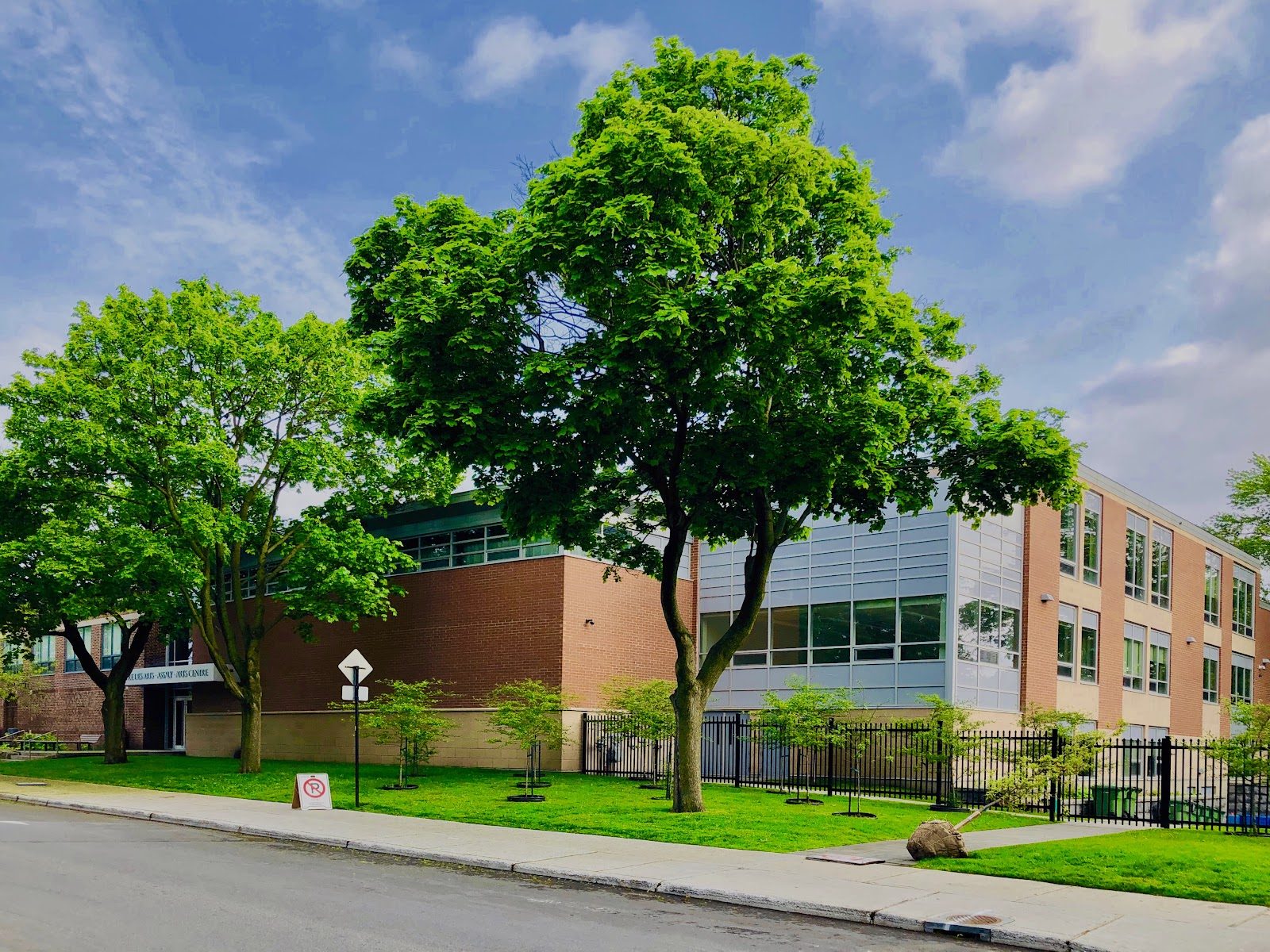
Lower Canada College
Montreal · Canada
Rooted in an 1861 boarding-school lineage, the only English-language Quebec school running both IB Middle Years and Diploma Programmes side by side
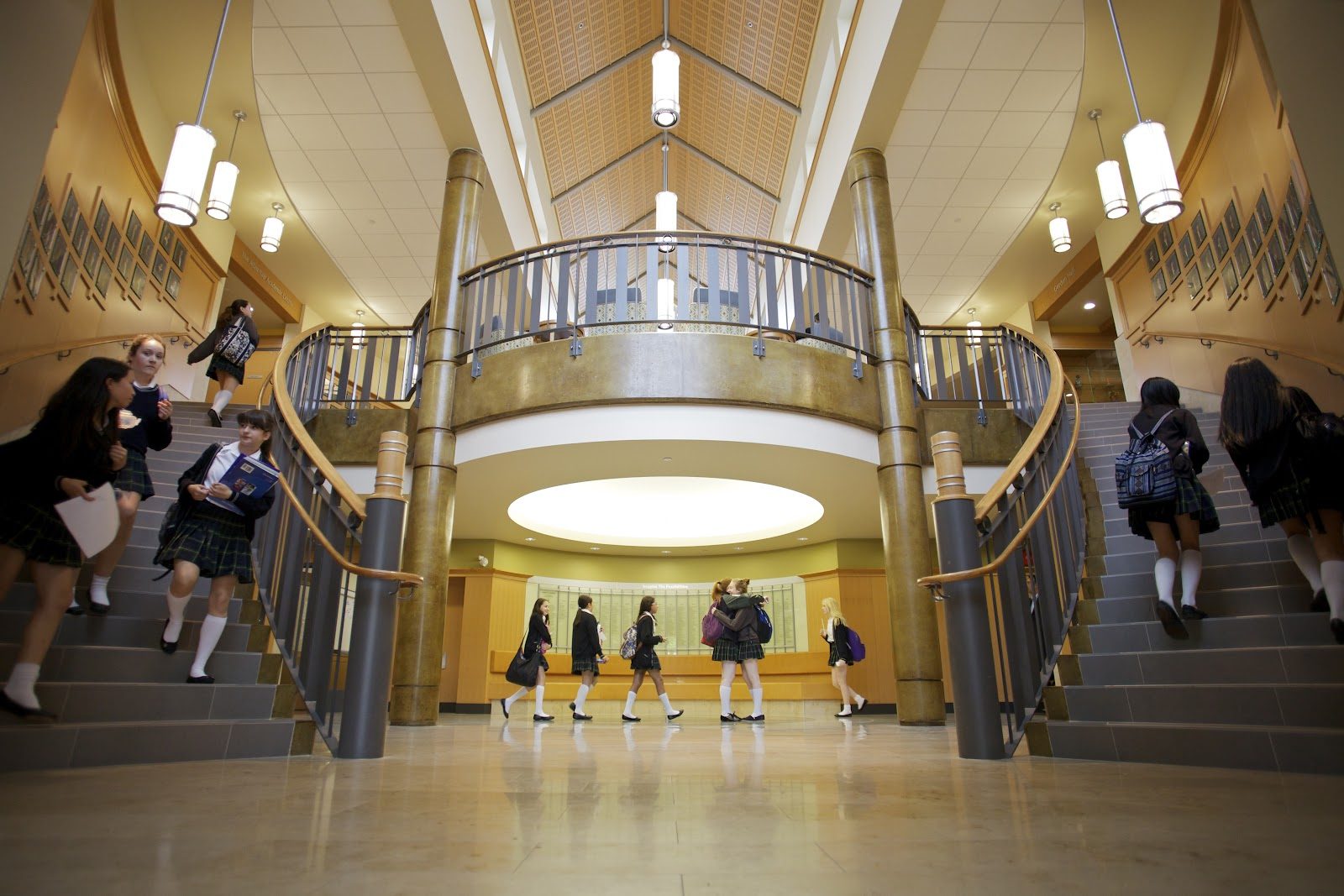
Crofton House School
Vancouver · Canada
West of Toronto's oldest independent school, a Kerrisdale campus builds IB scholars through its four-quadrant Ivy Compass program.
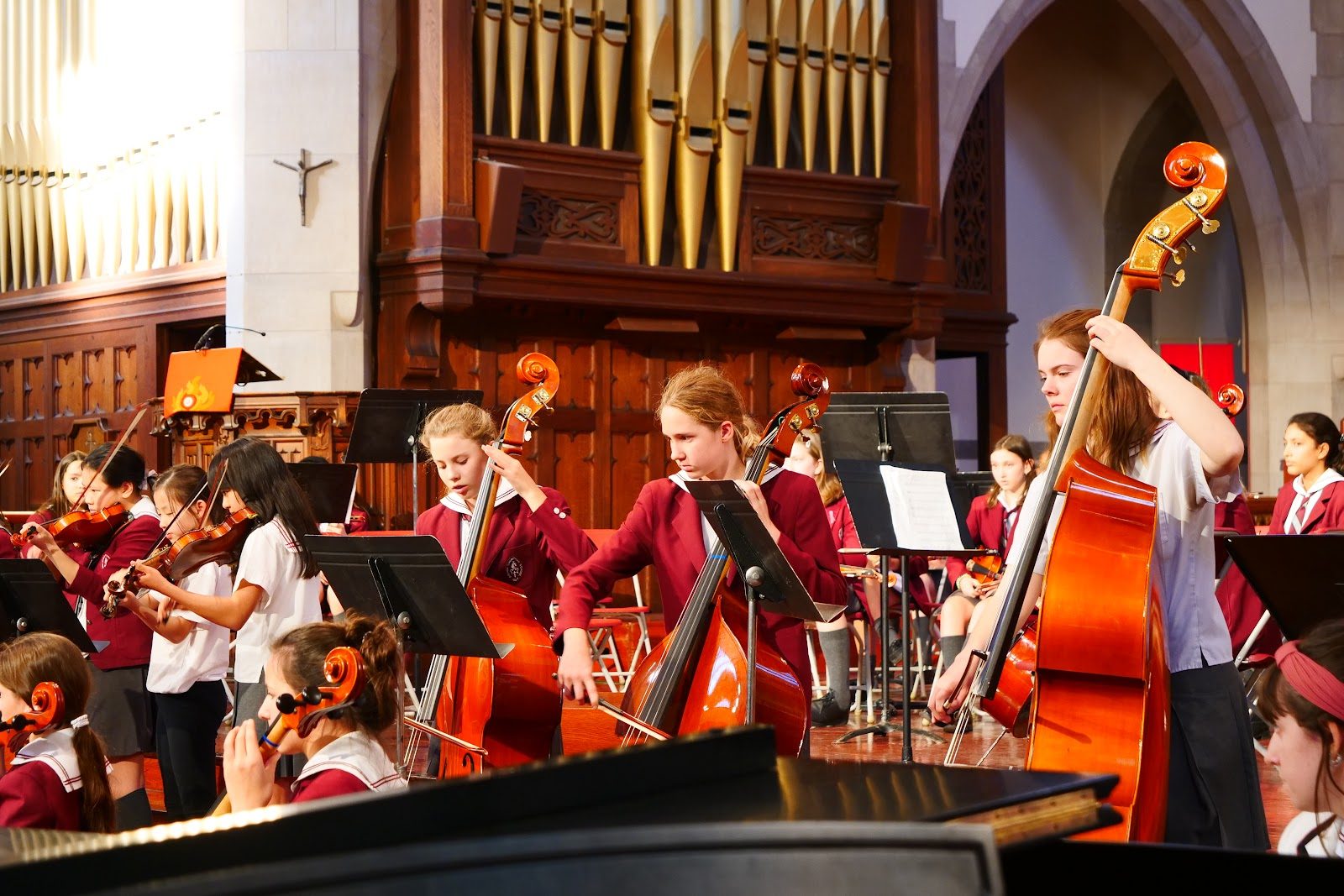
The Bishop Strachan School
Toronto · Canada
Founded in 1867 in Forest Hill, this Anglican school remains Canada's oldest continuously operating girls' day and boarding institution.
Collège Jean-de-Brébeuf
Montreal · Canada
Once a Jesuit seminary, now a secular Francophone college spanning secondary school and CEGEP, IB-authorized since 1982.
Same country and curriculum — closest matches within ±10 points either way