
Hong Kong
Yew Chung International School of Hong Kong
low confidence· 6/6 cats · 0 avg sourcesTwin teachers, one Western and one Chinese, co-teach every class at this Kowloon Tong pioneer of bilingual education since 1932.
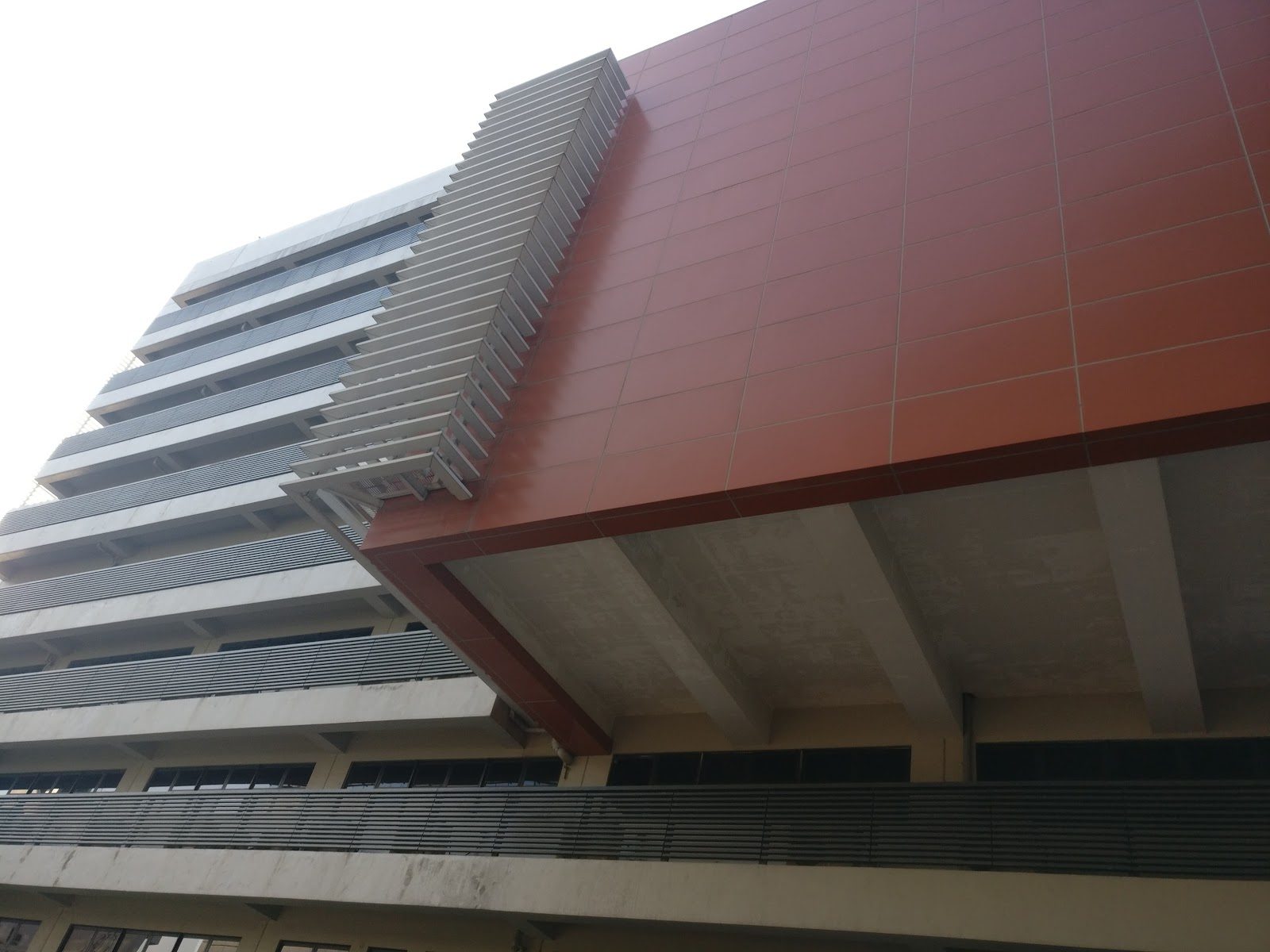
Photo © Julian March via Google Maps
Type
Day
Ages
5–18
Curriculum
IB (Diploma) · IGCSE
Ratio
—
The Verdict
Editor's commitment
Right for
Families who want Hong Kong bilingual education with teeth: founded in 1932, ages 5–18, with English and Mandarin embedded from Kindergarten.
Wrong for
Parents set on a monolingual British track will balk: YCIS Hong Kong pairs bilingual schooling with IGCSE and the IB Diploma.
Watch out for
Kowloon Tong is only part of the picture: YCIS runs campuses across Kowloon Tong and Kowloon City District, so daily logistics matter.
Ranking breakdown
Yew Chung International School of Hong Kong · #312 of 1591
Composite score 72.0. 8 weighted criteria.
By criterion
Academic Outcomes
Weight 20%
#385
of 1530 scored
University Placement
Weight 16%
#398
of 1529 scored
Prestige & Heritage
Weight 12%
#437
of 1571 scored
Alumni Network
Weight 12%
#289
of 1530 scored
Facilities
Weight 12%
#323
of 1534 scored
Transparency & Communications
Weight 8%
#513
of 1532 scored
Peer & Industry Review
Weight 10%
#527
of 1548 scored
Admissions Selectivity & Demand
Weight 8%
#308
of 1529 scored
Peer & Industry Review
How Yew Chung International School of Hong Kong is regarded in the sector
66
Respected · medium confidence
Yew Chung International School of Hong Kong is a well-established fixture of the territory's bilingual education scene rather than a headline-grabbing top performer. WhichSchoolAdvisor's dedicated primary and secondary reviews highlight it as a well-established primary school in Kowloon Tong, which has been teaching for more than 80 years in Hong Kong, praising its bilingual advantage that may be lacking in other international schools. Tatler Asia has repeatedly featured YCIS in its Best International Schools in Hong Kong roundups, citing its flexible learning spaces and Global Learning Centre, while the Good Schools Guide notes it has provided bilingual education to students in Hong Kong for over 90 years across a wider Greater China network. Academically it remains solid rather than exceptional, its 2026 IB cohort producing two perfect scorers against the five or more posted by peers such as Diocesan Boys' School and St Stephen's College, meaning industry regard sits comfortably in the respected-regional-player tier rather than the very top bracket.
Editors' overview
Twin teachers in every classroom is the point of difference here, not a decorative slogan. Yew Chung International School of Hong Kong has built its identity around a co-teaching model that pairs one Western teacher with one Chinese teacher, and that matters because it shapes the school day rather than sitting in a mission statement. In Kowloon Tong, that gives YCIS a distinctive place in a crowded Hong Kong market: this is a non-religious day school founded in 1932, serving ages 5–18, with English as the language of instruction and Mandarin Chinese embedded from the early years. French enters later in secondary. The academic route is clear enough too: IGCSE followed by the IB Diploma.
What puts YCIS on a parent’s shortlist is not brute academic signalling or old-boys’ prestige. It is the school’s serious commitment to bilingual and bicultural education, delivered in a structure that few competitors copy with the same consistency. Parents who want their children to move confidently between English and Chinese contexts, and who value Hong Kong fluency without surrendering an international curriculum, will find YCIS a compelling option. The school’s long history in Hong Kong carries weight, but the more important point is operational: bilingualism here sits inside classroom teaching, not just in a timetable slot for language lessons.
That also defines the child who will thrive. YCIS suits students who are intellectually flexible, comfortable with two teaching voices in the room, and open to a school culture that asks them to navigate more than one academic and cultural frame at once. It is a strong fit for internationally minded Hong Kong families, mixed-nationality households, and expatriate parents who want more than an English-medium bubble. It is less suited to families chasing a single-track, exam-drilled British experience or a school whose identity rests on league-table theatre. YCIS offers something narrower and more substantial: a bilingual education model with real structure behind it, for families who know that is exactly what they want.
Academic Performance
YCIS does not publish the kind of hard outcome data that lets parents place it cleanly against Hong Kong’s top exam-driven internationals. We have not seen aggregate IGCSE grade distributions, IB Diploma averages, pass rates, highest scores, subject-level strengths, or multi-year trends in the public domain. That leaves a real transparency gap. In a market where stronger schools use results to prove academic muscle, silence counts against you. Parents can infer that the school values a broader bilingual education more than scoreboard bravado, but inference is not evidence, and families paying Hong Kong international-school fees deserve published results.
That does not put YCIS in the weak-academics bracket; it puts it in the hard-to-benchmark bracket. The school’s structure and long-established reputation give it academic credibility, and the route through public examinations is orthodox enough to reassure. But relative to peers, YCIS sits outside the group that leads with headline numbers and outside the group that dominates conversation through blunt results power. For some families, that will be acceptable because the school’s appeal lies elsewhere. For parents who want external proof of academic performance, the absence of published metrics is a material drawback. Without IB averages or IGCSE breakdowns in the public domain, YCIS cannot claim a top-table academic position on evidence.
Facilities
YCIS’s facilities matter less as a spectacle than as a delivery system for the school’s bilingual model. Parents choosing this school are not buying a vast green campus with first-rank sports infrastructure; they are buying urban Hong Kong practicality, with teaching spaces spread across its Kowloon sites and designed to keep daily learning moving efficiently. That places YCIS behind the city’s biggest all-through internationals on acreage, playing fields and grand specialist complexes. If your benchmark is the showpiece campus arms race — cavernous theatres, Olympic-scale pools, acres of outdoor land — this is not that school. If your benchmark is whether the physical environment supports a serious, well-organised academic day for children from the early years to sixth form, YCIS clears the bar.
The more relevant comparison is with other established city schools working within Hong Kong’s land constraints. On that measure, YCIS sits in the credible middle ground: functional rather than lavish, established rather than flashy, and stronger in classroom identity than in hardware theatre. The school educates children from 6 months through to 18, and that age spread demands specialist provision across very different stages, even if YCIS does not trade publicly on a catalogue of headline facilities. We have not seen the kind of detailed public breakdown — labs, studios, sports assets, performance spaces, maker facilities — that would let parents rank it precisely against better-documented rivals. That opacity matters. Strong schools do not need to oversell buildings, but they do need to show parents what children actually use.
YCIS does not publish the kind of hard outcome data that lets parents place it cleanly against Hong Kong’s top exam-driven internationals
Prestige
YCIS carries real name recognition in Hong Kong’s international-school market, but it does not trade in the same prestige currency as the city’s most selective, results-led incumbents. Its status rests on identity and longevity: families know what it stands for, and the dual-teacher model gives it a clear institutional signature that parents can describe in a sentence. That matters. In a crowded sector, many schools offer polished internationalism; fewer have a classroom model that people associate with them directly. YCIS also benefits from serving children from the early years through to 18, which gives it a deeper family relationship than stand-alone secondary schools. The result is established prestige, but of a specific kind: cultural and educational distinctiveness, not cachet built on brute exclusivity.
That is why the school sits in the upper tier of recognised Hong Kong internationals without commanding the automatic deference reserved for the handful of schools that dominate through published academic outcomes or ultra-competitive admissions mythology. Parents choose YCIS because they want a bilingual, bicultural education delivered with conviction, not because they want the social theatre of a brand-name badge. That gives the school a serious, self-confident standing among internationally minded families and mixed-language households. It also caps its glamour. YCIS has substance, a clear educational proposition, and durable respect; it does not have the rarefied aura or result-driven prestige hierarchy that defines the most coveted names in the territory.
Without IB averages or IGCSE breakdowns in the public domain, YCIS cannot claim a top-table academic position on evidence
Communications
YCIS’s parent communication has a clear built-in advantage: families are not dealing with a monocultural school voice. A school that teaches children through two adult perspectives every day has to explain itself cleanly to parents too, and that pressure tends to produce communication with more context than the standard diary-and-deadlines model. The bilingual core of the school’s identity gives parents a strong sense of what their children are doing and why. That matters for mixed-nationality households and for families raising children across English and Chinese settings. The school also spans an unusually wide age range, from 6 months to 18, so communication needs to work for nursery parents, primary families and older students preparing for public exams. That demands discipline, clarity and operational consistency.
The weakness is transparency at the sharper end. We have not seen the kind of public-facing detail that marks out the best communicators in Hong Kong: published academic outcomes, granular facilities information, or a richer picture of day-to-day school life beyond the headline educational model. That leaves parents with a strong narrative about the school’s philosophy but a thinner evidential trail on performance and provision. In other words, YCIS communicates its identity well; it communicates its proof points less well. For families already sold on the school’s bilingual premise, that may be enough. For harder-nosed parents who want plain facts, data and specifics before committing, the communication is competent but incomplete.
Uniqueness
What sets YCIS apart is that bilingualism is built into teaching itself, not bolted on as an enrichment layer. The twin-teacher model gives pupils two adult reference points in the room at once: one Western teacher and one Chinese teacher, working in tandem rather than in sequence. That is structurally unusual in an international school market full of schools that talk about global outlook while teaching through a single cultural lens. Here, children learn to switch register, absorb different classroom cues, and handle more than one way of explaining the same idea. That produces a deeper intellectual flexibility than a standard English-medium model with a few Chinese lessons on the timetable. Add Mandarin from the early years and French later in secondary, and the school’s offer becomes genuinely bicultural, not just cosmetically international.
For students, the gain is practical as much as philosophical. They get daily experience of collaboration across cultures, and they learn that authority, interpretation and communication do not arrive in one fixed form. In a place like Hong Kong, that has real strategic value. Children who thrive here will leave with more than exam preparation: they will have spent every class navigating dual perspectives as a matter of routine. That sharpens listening, adaptability and social confidence. It also makes YCIS a poor fit for families who want a simpler, single-voice classroom or a more conventional British academic atmosphere. This school asks pupils to operate in stereo. For the right child, that is a serious advantage.
The result is established prestige, but of a specific kind: cultural and educational distinctiveness, not cachet built on brute exclusivity
Student Profile
The children who fit best here are the ones who do not need school to be culturally simple. YCIS suits pupils who can handle two frames of reference at once and who gain energy from that complexity rather than shrinking from it. That does not require a polished bilingual child at the outset; it requires a child with mental agility, decent listening habits and tolerance for difference in tone, expectation and classroom rhythm. Mixed-nationality families, internationally minded local families and parents who want their children grounded in Hong Kong without living inside an expatriate bubble will find a natural constituency here. Students who enjoy discussion, collaboration and switching between social codes tend to settle well. With an age span running from 6 months to 18, the school also draws families looking for continuity rather than a sequence of unrelated institutions.
The weaker fit is just as clear. Children who want one dominant style of teaching, one cultural centre of gravity and a more straight-line academic experience may find the environment frustrating. So will families chasing a hard-edged, exam-first culture with constant public proof of performance. YCIS asks for openness, adaptability and a measure of patience: not every child wants to learn in a setting that prizes bicultural fluency as much as conventional academic signalling. For confident, curious pupils, that is a serious advantage. For children who prefer a single-voice classroom and a more standard international-school script, it is the wrong match.
Add Mandarin from the early years and French later in secondary, and the school’s offer becomes genuinely bicultural, not just cosmetically international
Co-curricular strengths
Arts & sport, on a separate axis
Overall 8.56/10
Scored 0-10 from the school's own published evidence. This axis is editorial-only — it does not feed the main WTS ranking.
Sports
8.7/10
Drama
8.5/10
Dance
8/10
Music
8.8/10
Visual Arts
8.8/10
Strengths
- +Every classroom is staffed by both a Western and a Chinese co-teacher, a distinctive bilingual, co-cultural teaching model used across the school.
- +Founded in 1932, YCIS Hong Kong is described as the first homegrown international school in Hong Kong, giving it a long operating track record.
- +The school runs as a through-train from age six months to Year 13 across nine campuses in Kowloon Tong and Tseung Kwan O, avoiding re-application at transition points.
- +In the 2024 IBDP cohort, two students scored a perfect 45 points and 27 of 122 candidates scored 40 or above.
- +A notable share of leavers earn the IB Bilingual Diploma alongside the standard Diploma, reflecting the school's dual-language focus.
Considerations
- −Entry to primary and secondary years requires a one-off debenture/capital levy on top of tuition, reported at HK$350,000-470,000 for a first child depending on year group.
- −Class sizes are reported at around 25 pupils, higher than some rival international schools, even though the co-teaching model lowers the effective adult-to-child ratio.
- −The network spans multiple campuses across two separate districts of Kowloon, so families should confirm which specific site and year-group intake applies to them.
- −As a challenger-tier school by editorial rank, it sits outside Hong Kong's most selective international school bracket, which may matter to families chasing top league-table placement.
Availability
Primary entry gate & tests
Academic Record + Interview
Gallery
Photo © Yew Chung International School Secondary via Google Maps
Photo © Yew Chung International School Secondary via Google Maps
Photo © Yew Chung International School Secondary via Google Maps
Photo © Yew Chung International School Secondary via Google Maps
Photo © Yew Chung International School Secondary via Google Maps
Photo © Cyril Ha via Google Maps
Photo © Kenneth Tsang via Google Maps
Photo © Ray Cheng via Google Maps
Photo © Yew Chung International School Secondary via Google Maps
Parent reviews
Have you sent your child here?
Voice reviews carry the strongest trust badge — we transcribe them for you to tidy up before they go live. Prefer to type? A written review is fine too.
Add your voice
In 60 seconds, tell other parents: what's the best thing about Yew Chung International School of Hong Kong, and what surprised you when your child joined?
We ask for a Google sign-in so every review has a real face behind it — no anonymous drive-by attacks on schools, and no faked positive reviews. Your email is never shown publicly.
Send this profile to a friend
International parents rely on word-of-mouth. Share this review with someone weighing the same decision.
Schools with places
Similar schools to Yew Chung International School of Hong Kong with places available now.
Kellett School
Hong Kong · Hong Kong
- 2026-27
- WAITPOOLSpace-dependent
- 2027-28
- PLACES OPENRolling
German Swiss International School
Hong Kong · Hong Kong
- 2026-27
- PLACES OPENRolling
- 2027-28
- PLACES OPENRolling
Harrow International School Hong Kong
Hong Kong · Hong Kong
- 2026-27
- WAITPOOLSpace-dependent
- 2027-28
- OPENS SOONOpens 1 Sept '26
Li Po Chun United World College of Hong Kong
Hong Kong · Hong Kong
- 2026-27
- CLOSEDStandard route closed
- 2027-28
- WAITPOOLVaries by National Committee / Direct
Availability first, then country, area, curriculum, price, co-curricular
Consider also
Also worth looking at alongside Yew Chung International School of Hong Kong.
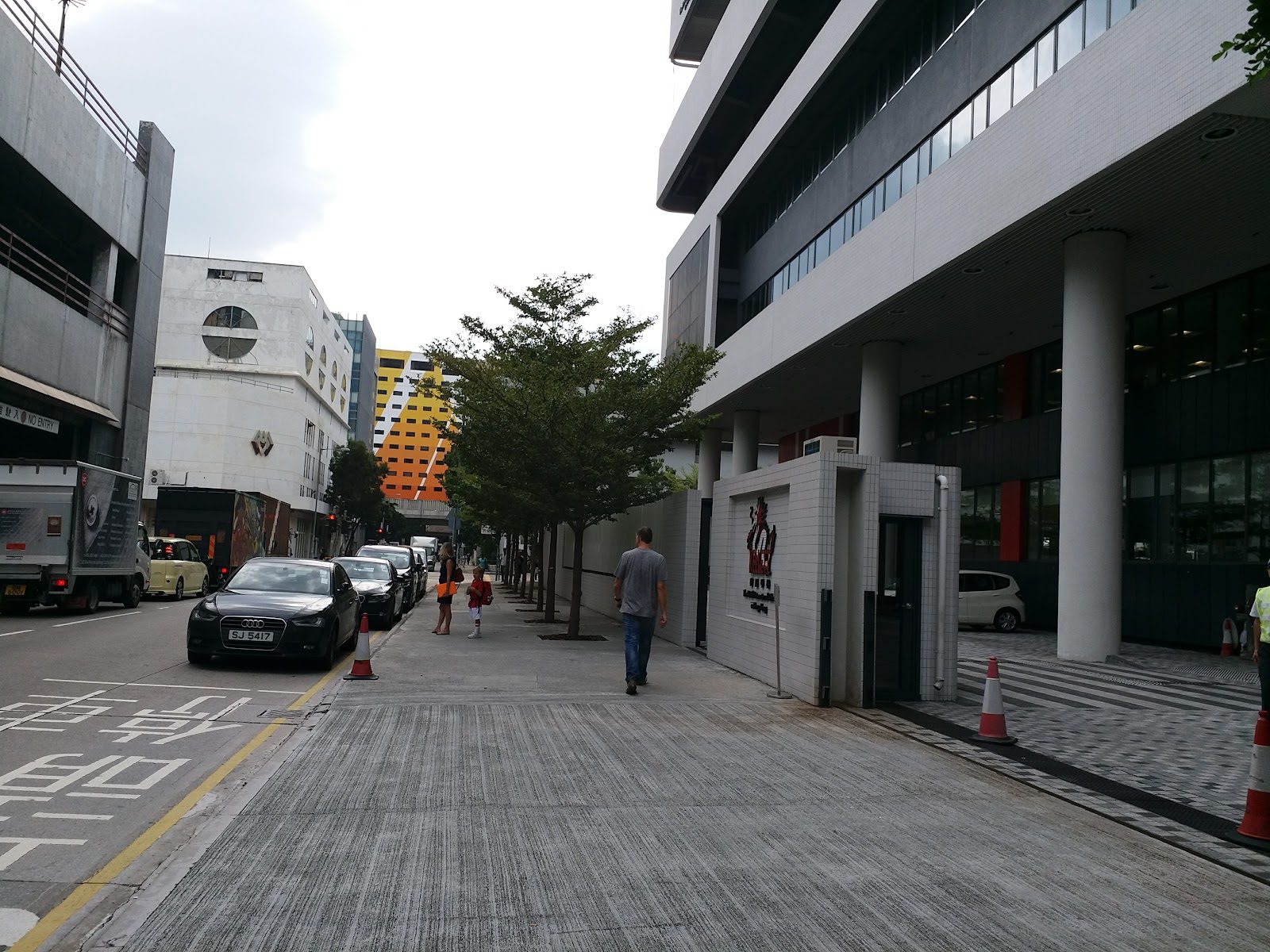
Kellett School
Hong Kong · Hong Kong
Long-established, parent-founded British international day school in Hong Kong, taking pupils through GCSEs and A-Levels from age 4 to 18.
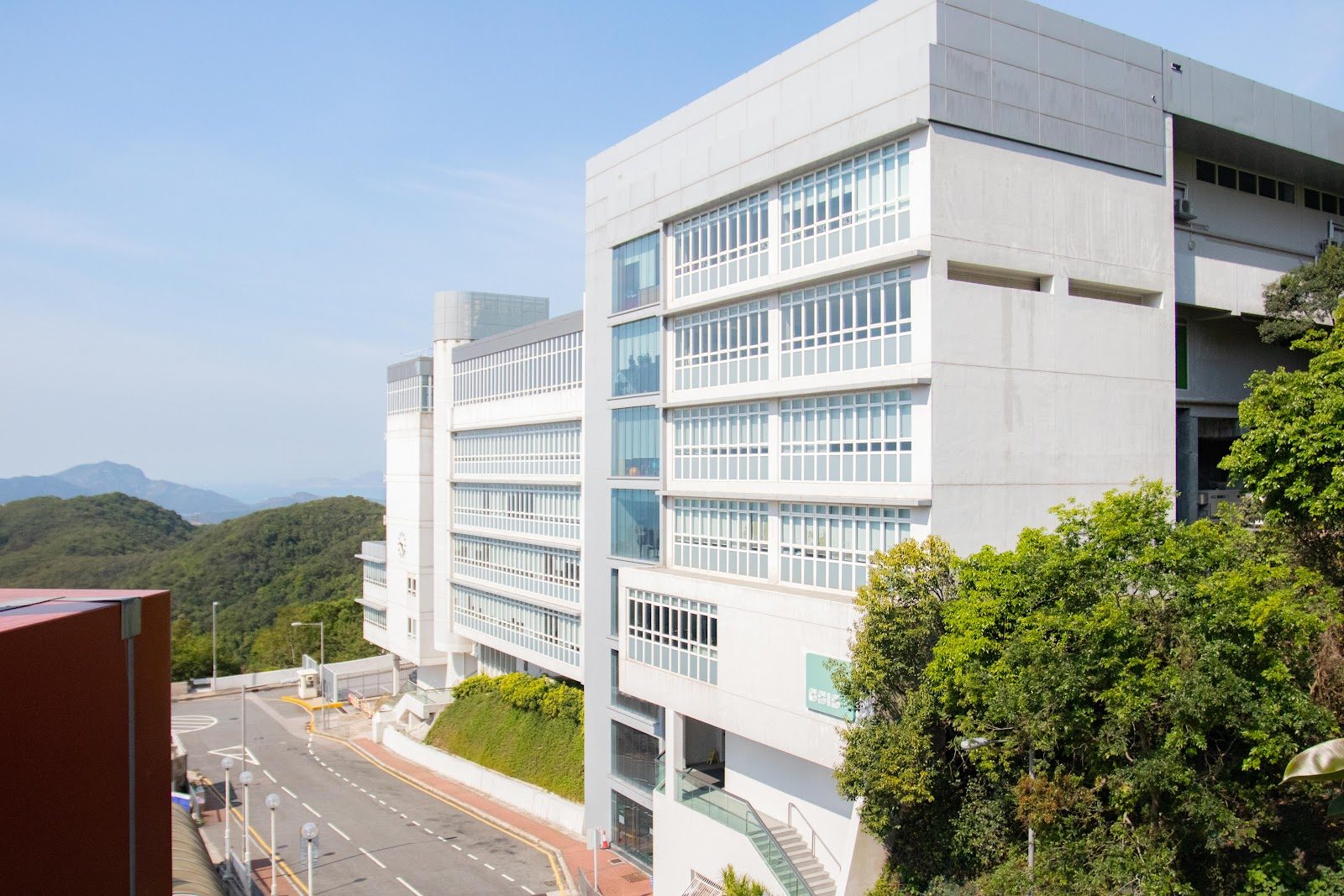
German Swiss International School
Hong Kong · Hong Kong
Perched on the Peak since 1969, twin German Abitur and IB streams share one campus and one house system.
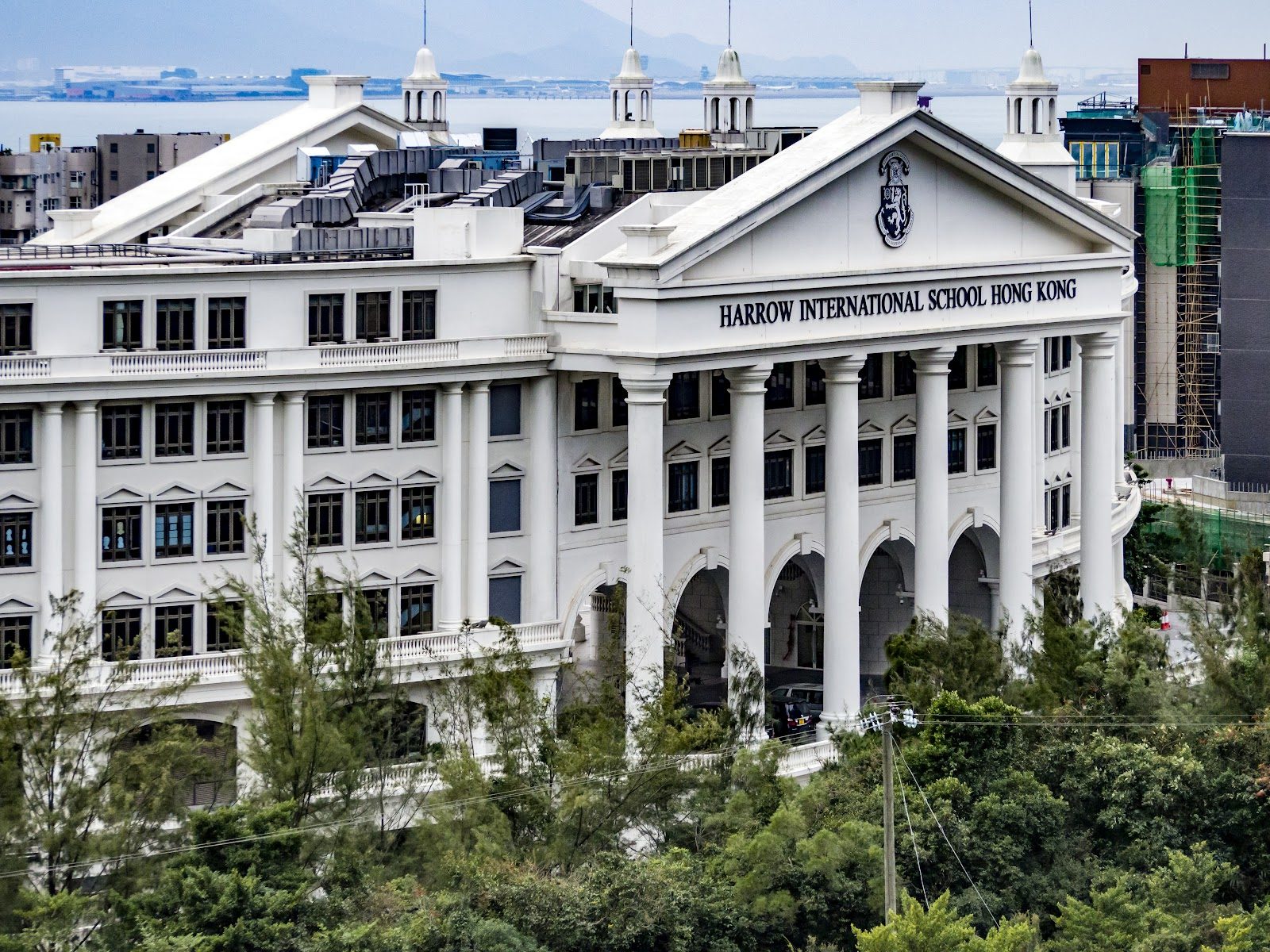
Harrow International School Hong Kong
Hong Kong · Hong Kong
A crescent-shaped Tuen Mun campus, modelled on Bath's Royal Crescent, houses Hong Kong's only formal weekly boarding and house system.
Li Po Chun United World College of Hong Kong
Hong Kong · Hong Kong
Perched above Tolo Harbour, this United World College gathers scholars from 90 nations for a service-driven IB Diploma.
Same country and curriculum — closest matches within ±10 points either way