
Central Jutland
International School of Billund
low confidence· 4/6 cats · 1 avg sourcesBorn of the LEGO Foundation in Denmark's toy capital, pairing IB rigor with a Harvard-researched pedagogy of play.

Photo © International School of Billund via Google Maps
Type
Day
Ages
3–16
Curriculum
IB
Qualifications
IB MYP · IB PYP
Ratio
—
The Verdict
Editor's commitment
Right for
Families in Billund who want an English- and Danish-medium IB World School, ages 3-16, with play built into daily teaching.
Wrong for
Anyone wanting sixth form, boarding, or a conventional academic grind; this is a day school in Billund that stops at 16.
Watch out for
CIS and IB World credentials add credibility, but the LEGO Foundation-backed pedagogy of play is the main bet here.
Ranking breakdown
International School of Billund · #1425 of 1591
Composite score 50.8. 8 weighted criteria.
By criterion
Academic Outcomes
Weight 20%
#1378
of 1529 scored
University Placement
Weight 16%
#1371
of 1529 scored
Prestige & Heritage
Weight 12%
#1421
of 1571 scored
Alumni Network
Weight 12%
#1059
of 1530 scored
Facilities
Weight 12%
#1419
of 1534 scored
Transparency & Communications
Weight 8%
#1411
of 1532 scored
Peer & Industry Review
Weight 10%
#1216
of 1548 scored
Admissions Selectivity & Demand
Weight 8%
#1326
of 1529 scored
Peer & Industry Review
How International School of Billund is regarded in the sector
42
Regional · low confidence
International School of Billund attracts niche third-party attention primarily for its distinctive architecture and LEGO Foundation-backed 'learning through play' philosophy, covered in design/architecture press (e.g., Dezeen, ArchDaily) rather than mainstream 'best schools' rankings. It lacks the alumni-network visibility, inclusion in Good Schools Guide/Tatler-style lists, or sustained specialist education press coverage seen in top-tier internationally reputed schools, suggesting a specialized but limited peer reputation.
Evidence sources
Editors' overview
International School of Billund occupies a narrow, distinctive niche. It is a 2013-founded day school in Billund for ages 3–16, teaching in English and Danish, and it does not try to be a conventional international school with a thin layer of “creativity” pasted over standard academics. Its core proposition is explicit: IB education taught through play. That matters because many schools talk about curiosity; ISB has built its identity around the pedagogy of play, with direct backing from the LEGO Foundation and a location in Denmark’s toy capital that gives the idea cultural credibility rather than marketing gloss. For parents who want an IB World School without an arid, exam-drilled atmosphere, this is a serious option.
What sets ISB apart is the degree of alignment between philosophy and structure. The school runs the Primary Years Programme and Middle Years Programme, and starts that journey in a kindergarten shaped by the Danish belief in learning through play. The school’s own case studies point to play being used for wellbeing, space design and stress reduction, not just for the early years. That gives ISB a coherent educational argument: joyful learning, intellectual risk-taking, real-world connection and a culture without fear of failure. It also gives the school a clear market position. This is not the choice for families who want heavy formalism, relentless testing signals or a school built around sixth-form outcomes, because ISB stops at age 16 and the public story is stronger on pedagogy than on hard performance data.
Why shortlist it? Because few schools execute this combination with conviction: IB rigour, bilingual context, non-religious ethos, CIS accreditation and a play-centred method that runs beyond the nursery years. For internationally mobile families in or near Billund, that mix is rare. The school will suit children who are energised by inquiry, discussion and making; children who learn best through hands-on exploration, warm community and interdisciplinary work; and children who need room to test ideas rather than recite them. It will also suit parents who value character formation as much as academic structure. Students who want a traditional, high-pressure academic culture with constant external benchmarks may find the atmosphere too progressive. Students who thrive on curiosity, agency and genuine delight in learning will not.
Academic Performance
Academic performance is where the public picture thins out. ISB does not publish aggregate PYP or MYP attainment data, cohort-wide assessment trends, or any external benchmark figures that would let parents place the school cleanly against other IB schools. There is no Diploma Programme here, so there are no headline IB diploma averages to act as a market shorthand. That matters. In a sector where many schools trade hard on exam statistics, university destinations and comparative outcomes, ISB asks parents to buy into pedagogy first and measurable attainment second. For families comfortable with a philosophy-led school, that is acceptable. For parents who want hard comparative proof, it is a weakness.
That does not mean weak academics; it means opaque academics. The school’s published case studies and public messaging focus on playful learning, student agency, wellbeing and interdisciplinary work. That aligns well with the PYP and MYP and can produce thoughtful, independent learners. It tells you little about top-end attainment, consistency across year groups, or how strong the middle years are relative to more results-forward international schools in Denmark and across northern Europe. Relative to peers, ISB sits in the camp of schools judged more by educational method than by disclosed exam output. Parents who need published external results will find the evidence base thin. Parents who value engagement, inquiry and a less mechanised route through the IB will find the trade-off clear enough.
Facilities
The school’s public case studies point to the facilities that matter here: classrooms and shared spaces designed to support movement, making, collaboration and independent inquiry rather than rows of desks and formal instruction. The clearest clue sits in its own phrase, “environment as the third teacher”, which tells parents how the campus works. This is a school where space is part of the method. The playground also carries academic and pastoral weight, not just break-time utility; one featured project used a student-designed game to improve wellbeing during recess. That gives the physical environment a genuinely functional role in daily school life. Against peer international schools, that is a distinctive strength: many talk about flexible learning environments, fewer tie them so directly to pedagogy and student behaviour.
What is missing is just as important. The school does not publish the kind of facilities inventory that allows a hard comparison on specialist provision: no detailed account of science labs, performing arts spaces, sports infrastructure, libraries or design workshops is in public view. Parents therefore get a strong sense of educational use, and a weak sense of physical scale. Compared with larger, more established international schools, that leaves ISB at a disadvantage for families who want visible proof of big-ticket campus assets. Compared with progressive peers, the picture is more coherent than comprehensive: the spaces support the school’s ideas, but the public case for breadth and depth of provision remains thin.
International School of Billund occupies a narrow, distinctive niche
Prestige
International School of Billund has niche prestige, not mass-market cachet. Its status rests on intellectual credibility in one area: the serious application of playful learning inside an IB framework. The LEGO Foundation connection gives the school a recognisable anchor that few competitors can match, and the school has done more than borrow the language. It has built a public identity around pedagogy, student agency, wellbeing and interdisciplinary work, then reinforced that through case studies rather than glossy slogans. For parents in international education circles, that carries real professional interest. For families who judge prestige by selective admissions, published league-table style outcomes or famous alumni, it does not. This is a school with idea-led distinction, not old-brand prestige.
That is why the rating sits in the middle-to-upper range rather than at the top. The age span stops at 16, which limits the school’s market status against all-through schools that culminate in headline senior qualifications and university placement narratives. Public academic data is also sparse, and opacity always caps prestige. Schools at the highest level of reputation combine a clear philosophy with hard proof of results; ISB only delivers half of that equation in public. Still, within the narrower field of progressive international schools, it carries unusual weight. Parents who want a conventional badge school will look elsewhere. Parents who value educational substance over social signalling will read ISB as genuinely distinctive.
International School of Billund has niche prestige, not mass-market cachet
Communications
ISB communicates with parents in the same way it teaches: through culture, narrative and examples. The website is clear on the school’s priorities and easier to read than the jargon-heavy norm in international education. Parents can see how the school thinks, what it values and how that translates into daily practice, with sections that move cleanly from kindergarten to primary and middle school and then into “life after” the school. The case studies help. They show concrete pieces of school life — stress reduction, recess design, learning-space changes — rather than dumping abstract mission language on the reader. That makes the public voice coherent, intelligible and more thoughtful than slick. For a school serving ages 3–16, that consistency matters.
The weakness is equally clear: communication is strong on philosophy and weaker on operational and performance detail. Parents get a rich picture of ethos, but a thin picture of outcomes, systems and institutional hard edges. There is little public evidence on academic tracking, comparative attainment, leadership accountability, or the mechanics of parent-school reporting. Testimonials add warmth, but they do not replace hard information. Nor does the school publish enough about facilities to answer practical family questions in one pass. So the verdict is mixed but firm: ISB communicates its educational identity exceptionally well; it communicates measurable school performance and practical specifics less well. For parents who buy schools on ideas, that works. For parents who want forensic clarity, it falls short.
Uniqueness
What makes ISB unusual is not that it talks about play, but that play governs the school’s whole educational logic. Many schools confine that language to the early years, then switch to standard classroom routines. ISB carries it through from Kindergarten to Middle School, and treats it as a method for inquiry, wellbeing, problem-solving and student agency. The school’s own examples are concrete: play used to reduce stress, redesign learning spaces and improve social life at recess. That gives the idea real operational force. It also reflects its setting. In Billund, with the LEGO Foundation behind the project, playful learning has cultural and intellectual ballast rather than the thin, decorative feel it has elsewhere.
For students, that brings a form of schooling that prizes experimentation without embarrassment. Children who learn by making, testing and revising get a rare degree of permission to think out loud, take risks and recover from mistakes. The gains are clear: stronger independence, better habits of collaboration, and a school culture where curiosity has status instead of being squeezed out by routine compliance. There is also a limit. This model suits pupils who thrive on openness and participation; it will not suit every child who wants tightly directed instruction and constant external proof of standing. But for the right student, ISB offers something genuinely hard to replicate: a coherent school experience where intellectual seriousness and visible joy in learning occupy the same space.
Parents who value educational substance over social signalling will read ISB as genuinely distinctive
Student Profile
The best fit is a child who wants to participate, not hide. ISB suits students who learn by doing, talking, testing and revising — the child who will build an idea, argue for it, scrap it and try again without folding at the first mistake. The school’s own student voice points in that direction: teachers do not simply hand over answers, and peers are expected to include one another. That combination favours children who respond well to high-agency learning, social openness and a classroom culture where curiosity has status. With ages running from 3–16, the student body also spans children at very different stages, but the common thread is clear: this is a place for engaged learners, not passive passengers.
The weaker fit is just as clear. A student who wants tightly scripted lessons, constant ranking signals or a dry, compliance-first atmosphere will chafe here. So will children who need heavy external structure before they can work independently, unless parents are confident that the school’s pastoral and teaching systems can supply it; the public picture on that front is incomplete. ISB will work best for internationally minded families who value intellectual playfulness, emotional ease and room to think aloud. It is also a strong match for children who have lost confidence in more rigid settings and need a school where error is treated as part of learning rather than public failure. For the right child, that is liberating. For the wrong one, it is too open-ended.
That gives the physical environment a genuinely functional role in daily school life
Co-curricular strengths
Arts & sport, on a separate axis
Overall 5.3/10
Scored 0-10 from the school's own published evidence. This axis is editorial-only — it does not feed the main WTS ranking.
Sports
6.5/10
Drama
4.5/10
Dance
4.5/10
Music
5.5/10
Visual Arts
5.5/10
Editor first-pass · editor-reviewable · 7/30/2026
Strengths
- +Established with support from the LEGO Foundation, embedding an inquiry-based, play-oriented pedagogy into its IB delivery.
- +Offers the full IB continuum (PYP, MYP and Diploma Programme), giving continuity for relocating families across all age groups.
- +Purpose-built, modern campus in Billund designed around collaborative and hands-on learning spaces.
- +Serves as the designated international school for the concentrated expatriate workforce at LEGO Group's global headquarters.
- +Small overall enrolment allows for close staff-student contact typical of a young, purpose-built international school.
Considerations
- −Located in a small, remote Danish town with limited urban amenities, dining and broader expat infrastructure compared with Copenhagen international schools.
- −A relatively young institution (founded in the early 2010s), so it lacks the long track record, alumni network and IB exam history of longer-established schools.
- −Student intake is closely tied to the hiring cycles of a handful of major local employers, chiefly LEGO Group, making enrolment demographics narrow.
- −Extracurricular and sporting facilities are more modest in scale than those at larger international schools in major European cities.
Availability
Primary entry gate & tests
Academic Record
Gallery
Photo © International School of Billund via Google Maps
Photo © International School of Billund via Google Maps
Photo © International School of Billund via Google Maps
Photo © International School of Billund via Google Maps
Photo © International School of Billund via Google Maps
Parent reviews
Have you sent your child here?
Voice reviews carry the strongest trust badge — we transcribe them for you to tidy up before they go live. Prefer to type? A written review is fine too.
Add your voice
In 60 seconds, tell other parents: what's the best thing about International School of Billund, and what surprised you when your child joined?
We ask for a Google sign-in so every review has a real face behind it — no anonymous drive-by attacks on schools, and no faked positive reviews. Your email is never shown publicly.
Send this profile to a friend
International parents rely on word-of-mouth. Share this review with someone weighing the same decision.
Schools with places
Similar schools to International School of Billund with places available now.
Availability first, then country, area, curriculum, price, co-curricular
Consider also
Also worth looking at alongside International School of Billund.
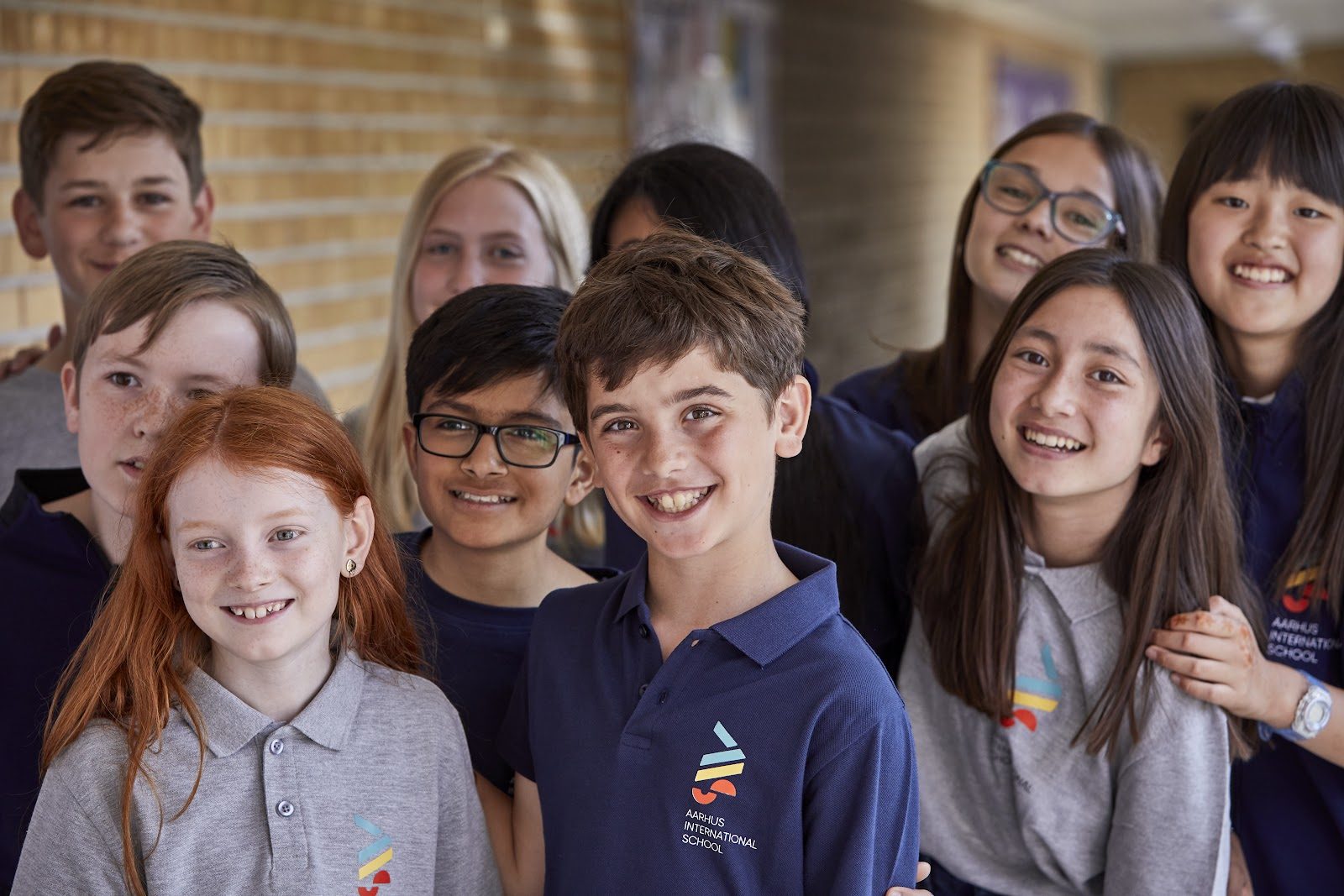
Aarhus International School
Aarhus · Denmark
PYP through MYP under one Aarhus roof, where 34 nationalities share a single Dalgas Avenue campus built for inquiry-based learning
Bernadotteskolen
Copenhagen · Denmark
Named for wartime Red Cross rescuer Folke Bernadotte, this Hellerup reform school pairs Danish grundskole roots with IB pathways.
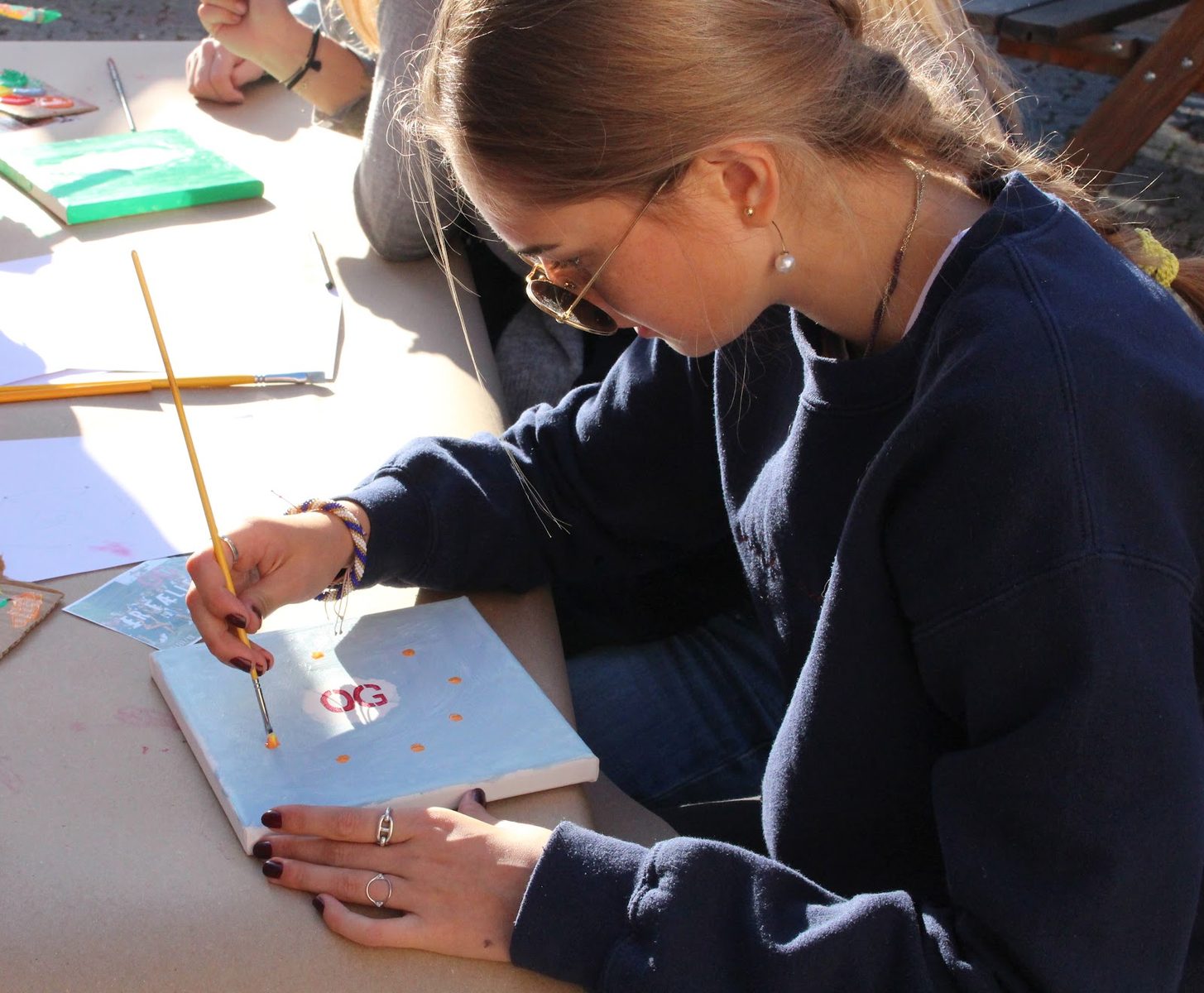
Ordrup Gymnasium
Charlottenlund · Denmark
Founded in 1873 as a pioneer of coeducation and outdoor learning, now pairing IB with Danish stx in leafy Charlottenlund.
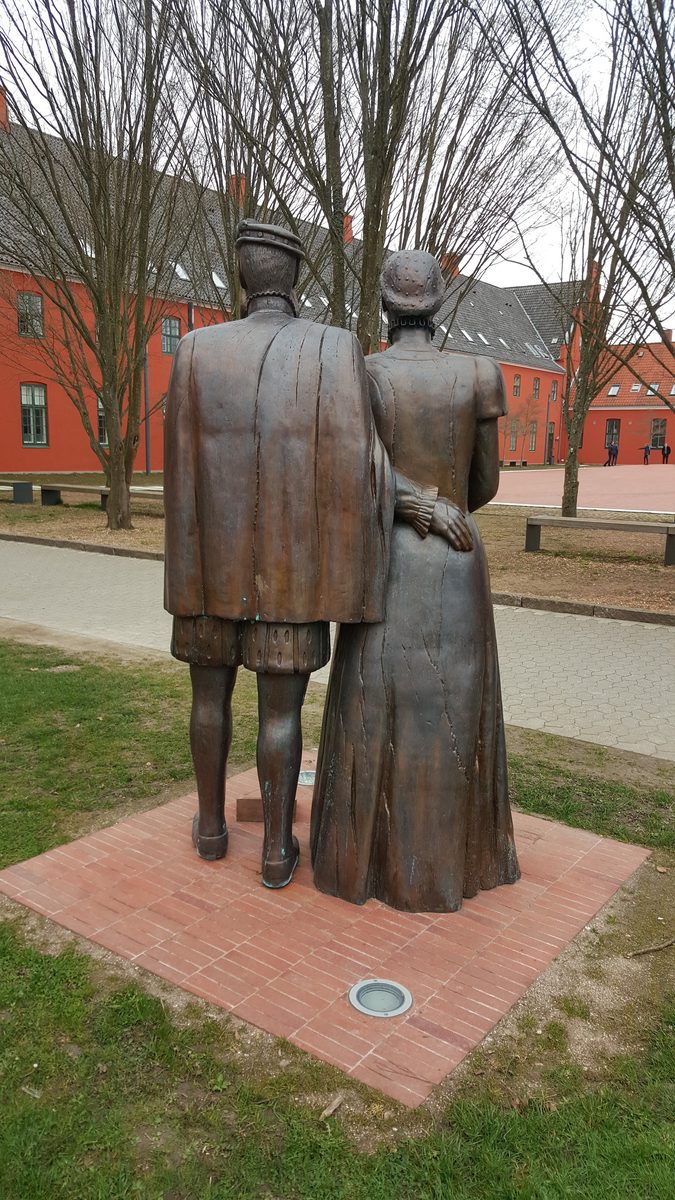
Herlufsholm
Næstved · Denmark
Founded in 1565 on a Benedictine monastery site by the River Susaa, pairing Danish national rigor with an English-taught IB Diploma.
Same country and curriculum — closest matches within ±10 points either way