
Pennsylvania
Mercersburg Academy
high confidence· 6/6 cats · 3 avg sourcesIn the Pennsylvania hills, a century-old aquatics program has sent more than two dozen swimmers to the Olympics.
Photo © Thiago Beloti (FoxGamer2800) via Google Maps
Type
Both
Ages
14–18
Curriculum
American (US High School Diploma) · AP (Advanced Placement)
Ratio
4:1
The Verdict
Editor's commitment
Right for
Boarders aged 14–18 who want a US diploma plus AP, a 4:1 ratio, and a 300-acre campus with serious sport.
Wrong for
Families wanting a through-school, younger entry, or low fees: Mercersburg starts at 14 and averages $53,340 day, $81,600 boarding.
Watch out for
This is a small, intensive high school: average class size is 12, 38 countries are represented, and residential life sits at the centre.
Ranking breakdown
Mercersburg Academy · #395 of 1591
Composite score 70.7. 8 weighted criteria.
By criterion
Academic Outcomes
Weight 20%
#586
of 1529 scored
University Placement
Weight 16%
#516
of 1529 scored
Prestige & Heritage
Weight 12%
#377
of 1571 scored
Alumni Network
Weight 12%
#195
of 1530 scored
Facilities
Weight 12%
#406
of 1533 scored
Transparency & Communications
Weight 8%
#594
of 1532 scored
Peer & Industry Review
Weight 10%
#604
of 1548 scored
Admissions Selectivity & Demand
Weight 8%
#438
of 1529 scored
Peer & Industry Review
How Mercersburg Academy is regarded in the sector
78
Strong · medium confidence
Mercersburg Academy is consistently listed among top American boarding schools in specialist directories (e.g., Boarding School Review, The Best Schools rankings) and is a member of the Ten Schools Admissions Organization, a peer group of historically elite Northeastern boarding schools alongside Deerfield, Hotchkiss, and Andover. Its notable alumni network (including Nobel laureates and business leaders) receives independent press coverage, and its strong athletic and academic reputation is corroborated by third-party boarding school guides, though it is generally viewed as slightly below the very top tier (Exeter, Andover, Groton) in peer prestige rankings.
Evidence sources
Editors' overview
In rural Pennsylvania, Mercersburg trades on scale, money and intensity. The campus runs to 300 acres, the student-to-faculty ratio is 4:1, average classes sit at 12, and the school reports a $453 million endowment. That combination puts it firmly in the top bracket of US boarding schools by resource. It is a high school only, serving ages 14 to 18, with an American high school diploma and AP courses rather than the broader K–12 model many international families know. The boarding/day mix matters here: this is a full residential school with day students included, not a day school with a token boarding house.
What distinguishes Mercersburg is the breadth of a traditional American boarding education delivered with unusual density. The school states 26 varsity sports teams, 30-plus clubs and organisations, nine music, dance and theatre groups, and students drawn from 38 countries. That gives it a campus life that is structured, busy and adult-like. The editorial hook is the aquatics tradition: a century-old swimming programme with Olympic reach gives the school a real sporting signature, not a generic “strong athletics” claim. Parents looking for a school where serious swimmers can train inside a mainstream academic setting will put Mercersburg straight on the list. So will families who want small classes, heavy faculty access and a boarding environment that expects students to use their time well.
This is not a cheap education. The average annual boarding fee is $81,600 and the average annual day fee is $53,340. Those figures place Mercersburg in the expensive end of the US independent-school market, where parents expect strong teaching, close supervision and facilities that justify the bill. The school also flags wellness, access and affordability among its strategic priorities, which is worth noting, though no public figure here sets out how far that reaches in practice. NAIS accreditation is standard for this tier; it confirms market standing, not distinctiveness.
The right student for Mercersburg wants a contained, residential, high-expectation adolescence rather than a loose day-school experience. Boarders who like routine, competitive athletes, students who value close contact with teachers, and internationally minded teenagers who want a US college-prep track will fit. Teenagers who need anonymity, a huge city at the gate, or a narrow academic life stripped of sport and residential commitments will not. Mercersburg’s appeal lies in immersion: a serious boarding school with real resources, a conspicuous swimming tradition, and the scale to offer breadth without losing grip on individual students.
Academic Performance
Mercersburg does not publish the exam data that would let parents place it cleanly against top US boarding-school peers. We have not seen aggregate AP entries, mean AP scores, score distributions, SAT or ACT averages, Ivy-plus matriculation splits, or a college destination list broken down with enough precision to test academic strength year by year. That leaves a gap. At this fee level, and in this part of the market, serious families expect hard outcomes, not just claims about transformation, character or readiness for college. The school’s public case for academic quality rests instead on structural indicators: small classes, heavy teacher access, and a college-preparatory model built for close supervision. That is a credible foundation for strong results, but it is not the same thing as published proof.
Relative to peers, Mercersburg sits in the resource-rich American boarding bracket where parents can demand both breadth and measurable attainment. Schools in that tier that disclose AP performance, testing profiles and destination patterns make comparison easy; Mercersburg does not. That weakens its academic transparency. It does not mean the school underperforms. It means the school asks families to trust the environment more than the numbers. For some parents, especially those choosing on fit, faculty access and residential structure, that will suffice. For academically hard-nosed buyers comparing elite boarding options, the absence of public exam reporting is a real drawback and leaves Mercersburg less legible than the strongest competitors.
Facilities
Facilities are one of Mercersburg’s strongest cards. A campus of 300 acres gives the school room for proper separation between academic, residential and athletic life, which matters in a full-immersion boarding environment. The standout is the aquatics infrastructure implied by the school’s long, Olympic-linked swimming tradition: that is not the product of a token pool bolted onto a general sports hall, but of a serious performance setup built to sustain elite training inside a school timetable. Beyond swimming, the school publishes 26 varsity sports teams and 9 music, dance and theatre groups, which points to a facilities base with real range rather than a narrow athletic bias. For parents, the practical conclusion is clear: Mercersburg has the physical plant to support students whose lives extend well beyond lessons.
Against peer US boarding schools, that puts Mercersburg in the resource-heavy tier. Many rivals offer handsome grounds and decent sports provision; fewer combine extensive land, deep athletic capacity and enough arts infrastructure to keep non-athletes equally occupied. The school’s scale also reduces the cramped, overbooked feel that weakens daily life at less well-endowed campuses. What we have not seen is a published, itemised account of specialist academic spaces — laboratories, libraries, maker facilities or signature sixth-form-style study centres — so the academic estate is less visible than the sporting one. That does not sink the case for Mercersburg’s facilities. It does leave the school *better evidenced in sport and co-curricular life than in teaching spaces*, which is an odd imbalance at this price point.
That combination puts it firmly in the top bracket of US boarding schools by resource
Prestige
Mercersburg has real prestige, but it is a specific kind of prestige. This is not a school that dominates public conversation in the way a tiny handful of US boarding names do. Its standing rests instead on depth, wealth and endurance inside the independent-school world: a serious old institution with a vast endowment, a substantial alumni base and the staffing levels to deliver an intensely supported education. The student body drawn from 38 countries adds reach beyond the local and national market, which matters for international families assessing whether a school’s reputation travels. Within American boarding-school circles, Mercersburg carries genuine weight; outside them, name recognition drops.
What lifts it above the crowded field is distinction in lived school culture rather than sheer brand glamour. The aquatics tradition gives Mercersburg a rare sporting signature, and the breadth of organised student life signals a campus with real internal energy rather than a hollow badge of prestige. An endowment of $453 million reinforces that standing: money at that level buys faculty depth, programme continuity and institutional confidence. The price tag — $81,600 for boarders on average across the full ladder — places it in a market where families expect elite peers, strong supervision and durable outcomes. I rate its prestige as high but not untouchable: a school respected by people who know US boarding well, and less potent as a shorthand status symbol to those who do not.
NAIS accreditation is standard for this tier; it confirms market standing, not distinctiveness
Communications
Mercersburg communicates like a mature boarding school with a clear sense of itself. The public-facing message is coherent: mission, priorities and campus life are laid out plainly, without the jargon soup or inflated future-talk that clutters so many school sites. Parents can grasp the essentials quickly — the educational philosophy, the weight given to residential life, and the school’s current strategic pillars, including wellness and affordability. The website also does a competent job of signalling scale and reach through memorable facts such as 38 countries represented, 30+ clubs and 26 varsity teams. That matters because schools of this type need to reassure families that life outside lessons is organised, supervised and worth paying for. Mercersburg does that cleanly and with institutional confidence.
Where the communication weakens is in the area that matters most once a parent moves past the first impression: proof. The school is strong on narrative and less strong on disclosure. We have not seen the kind of published academic outcome data, fee-context detail or sharply granular destination reporting that helps families test performance against competitors. Nor does the public presentation give much texture on how leadership communicates with current parents once a child is enrolled — for example through regular head updates, transparent policy notes or detailed reporting on school decisions. So the verdict is mixed but clear: Mercersburg is effective at framing the experience and weaker at supplying the hard evidence that demanding parents want before committing.
Uniqueness
Mercersburg’s distinctiveness sits in the overlap between serious residential schooling and a sporting identity with real historical force. Plenty of American boarding schools offer broad athletics; far fewer are defined by one discipline strongly enough to shape outside perception. Here, swimming does that work. A programme with Olympic reach gives talented athletes a clear reason to choose the school, but the benefit runs wider than the top lane. It creates a culture where training, repetition, stamina and time discipline carry status across campus. Students absorb that ethic whether they compete in the pool, on the field, on stage or in class. Add a student body spanning 38 countries, more than 30 clubs and 26 varsity teams, and the result is a school where participation is not ornamental. It is the engine of daily life.
What this brings to students is high-contact, high-structure adolescence in a setting with enough money and institutional confidence to sustain it properly. Mercersburg is not unique because it offers sport, arts and pastoral care; elite schools all claim that. It is unique because the whole model has real density. Teenagers live in an environment that expects commitment, rewards organised ambition and leaves limited room for drifting. For the right student, that is formative in the best sense: stronger habits, closer adult oversight, and a more purposeful use of late adolescence than a looser school can deliver. For the wrong student, it is simply too contained.
Mercersburg does not publish the exam data that would let parents place it cleanly against top US boarding-school peers
Student Profile
The students who thrive here want a full life, not a narrow academic lane. Mercersburg suits teenagers who can handle adults knowing them well, days with shape, and a culture that expects them to join in. With a staffing ratio of 4:1 and classes averaging 12, there is limited room to disappear. That will suit pupils who respond to accountability, steady pressure and regular contact with teachers. It also suits adolescents ready for a community larger than their home country: the school draws students from 38 countries, so ease with difference matters. The best fit is a student who is self-starting, socially game and happy moving between classroom demands, organised activities and residential routines without constant coaxing.
This is also a strong match for teenagers who want their school identity to extend beyond lessons. Athletes, performers and joiners will find a campus built for participation, and serious swimmers have an obvious reason to look hard at it. Students who value structured busyness and high-expectation peer culture will benefit; students who need long stretches of anonymity, resist communal living, or prefer an unpressurised sixth-form style will not. Mercersburg is for adolescents prepared to commit to a contained, adult-supervised environment and make use of it. The right child leaves with stronger habits and more range. The wrong one feels managed.
Mercersburg’s distinctiveness sits in the overlap between serious residential schooling and a sporting identity with real historical force
Co-curricular strengths
Arts & sport, on a separate axis
Overall 9.32/10
Scored 0-10 from the school's own published evidence. This axis is editorial-only — it does not feed the main WTS ranking.
Sports
9.5/10
Historic powerhouse in the Mid-Atlantic MAPL league; features world-class indoor swimming facilities and track infrastructure that routinely produce Olympic athletes.
Drama
9.3/10
The magnificent Burgin Center for the Arts operates as a pre-professional training facility for mainstage theater and technical design.
Dance
9.3/10
Offers structured performance groups running contemporary ballet and jazz composition classes as an afternoon activity.
Music
9.3/10
Deeply institutionalized choral and chapel music programs paired with highly active jazz and classical ensembles.
Visual Arts
9.2/10
Sprawling studio footprint across the Burgin Center, tracking advanced student portfolios in sculpture, ceramics, and photography.
Editor-verified · 8/6/2026
Strengths
- +A 4:1 student-to-faculty ratio and average class size of about 12 allow for close academic attention across grades 9-12 and a postgraduate year.
- +The school covers full demonstrated financial need for admitted families and awarded nearly $12 million in financial aid in a recent school year.
- +A 300-acre rural Pennsylvania campus, including a National Register of Historic Places historic district, houses roughly 150 academic courses and 26-27 varsity sports teams.
- +The student body draws from roughly 28 US states and over 30 countries, with international students making up about a fifth of enrollment.
- +Alumni include Nobel physics laureate Burton Richter and Academy Award winners Jimmy Stewart and Benicio Del Toro, indicating a long track record of producing high-achieving graduates.
Considerations
- −Boarding tuition for 2026-2027 is set at $81,600 (day tuition $53,340), placing it among the costlier US boarding schools regardless of aid availability.
- −Admission is competitive, with acceptance rate estimates from independent trackers ranging roughly from the low-20s to low-30s percent, so entry is not guaranteed even for strong applicants.
- −The campus sits in a small rural Pennsylvania town, meaning families wanting proximity to a major city or international airport will face a longer commute for visits.
- −The school follows a single American diploma/AP curriculum track rather than offering an IB diploma option, which may not suit families set on that specific pathway.
Availability
Primary entry gate & tests
SSAT/ISEE + Interview
Gallery
Photo © Thiago Beloti (FoxGamer2800) via Google Maps
Photo © M Pib via Google Maps
Photo © Mercersburg Academy via Google Maps
Photo © Brian Crum via Google Maps
Photo © Brian Crum via Google Maps
Photo © David Yates via Google Maps
Photo © M Pib via Google Maps
Photo © william arnold via Google Maps
Photo © M Pib via Google Maps
Parent reviews
Have you sent your child here?
Voice reviews carry the strongest trust badge — we transcribe them for you to tidy up before they go live. Prefer to type? A written review is fine too.
Add your voice
In 60 seconds, tell other parents: what's the best thing about Mercersburg Academy, and what surprised you when your child joined?
We ask for a Google sign-in so every review has a real face behind it — no anonymous drive-by attacks on schools, and no faked positive reviews. Your email is never shown publicly.
Send this profile to a friend
International parents rely on word-of-mouth. Share this review with someone weighing the same decision.
Schools with places
Similar schools to Mercersburg Academy with places available now.
The Hill School
Pottstown · United States
- 2026-27
- CLOSEDRegular cycle closed
- 2027-28
- OPENS SOONOpens Sept '26
The Baldwin School
Bryn Mawr · United States
- 2026-27
- CLOSEDRegular cycle closed
- 2027-28
- OPENS SOONOpens 1 Sept '26
The Haverford School
Haverford · United States
- 2026-27
- CLOSEDRegular cycle closed
- 2027-28
- OPENS SOONOpens Sept '26
Germantown Friends School
Philadelphia · United States
- 2026-27
- CLOSEDRegular cycle closed
- 2027-28
- OPENS SOONOpens Sept '26
Availability first, then country, area, curriculum, price, co-curricular
Consider also
Also worth looking at alongside Mercersburg Academy.

Ransom Everglades School
Miami · United States
On Biscayne Bay since 1903, where sailing and marine science turn the water itself into a classroom
The Hill School
Pottstown · United States
Born in 1851 as the nation's first family boarding school, still pairing faculty and students under one roof on a Pottstown hilltop.
Trinity School
New York City · United States
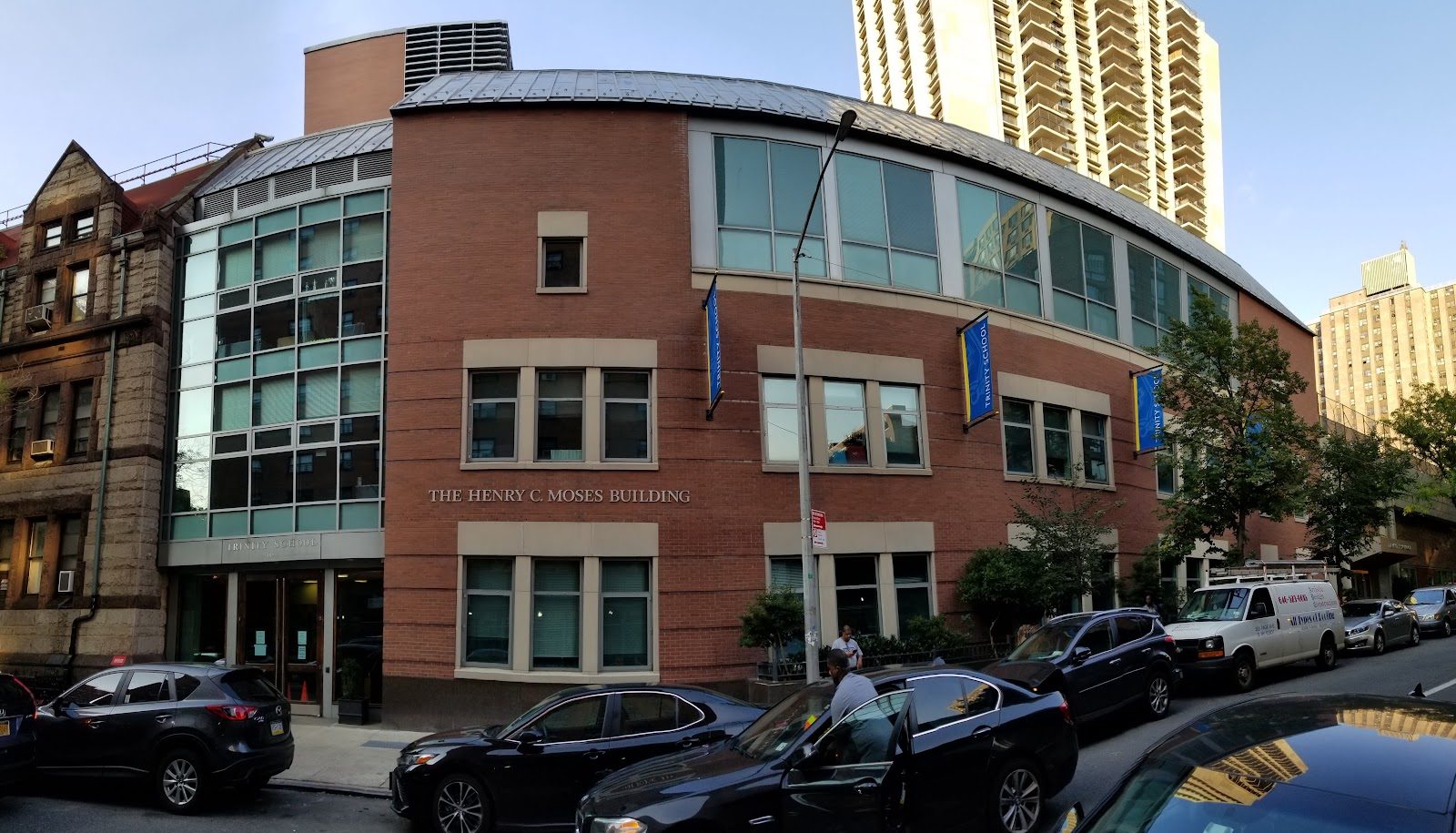
Founded in 1709 as a charity school, now the oldest continuously operating school in New York City, still built on a rare full Classics department
Episcopal High School
Alexandria · United States
A 130-acre hilltop campus 10 minutes from the Capitol, running America's only fully residential school of its caliber in a major metro area.
Same country and curriculum — closest matches within ±10 points either way