
Bosques de las Lomas
Instituto Cumbres México
low confidence· 4/6 cats · 1 avg sourcesThe founding campus of a Legion of Christ network born in 1954, pairing Catholic formation with IB rigor in the hills of Cuajimalpa.

Photo © Juan Uribe via Google Maps
Type
Day
Ages
3–18
Curriculum
Mexican · IB
Qualifications
IB Diploma · AP
Ratio
—
The Verdict
Editor's commitment
Right for
Boys aged 3–18 who want a Catholic, Legionaries of Christ education in Cuajimalpa with Mexican and IB programmes.
Wrong for
Girls, boarders, and families who want a secular school: Instituto Cumbres México is day-only, Catholic and for boys.
Watch out for
The average annual day fee is MXN 150,560, and Regnum Christi formation sits at the centre, not the margins.
Peer & Industry Review
How Instituto Cumbres México is regarded in the sector
64
Respected · medium confidence
I could not identify at least two independent, verifiable third-party sources (e.g., Tatler, Good Schools Guide, specialist education press, or established expat forums) that substantively assess Instituto Cumbres México's reputation. Available information appears limited to the school's own communications or unverified aggregator listings, which do not meet the bar for independent evidence.
Editors' overview
Instituto Cumbres México sits in Cuajimalpa’s Lomas de Vista Hermosa and does something few Mexico City schools manage cleanly: it binds a Mexican academic base to the IB while keeping Catholic formation at the centre of school life. This is the founding campus of a Legionaries of Christ network that dates to 1954, and that history matters. Parents are not buying an experimental blend here; they are buying an established institutional model with clear priorities, disciplined identity and a long memory. The school is a boys’ day school for ages 3–18, teaching in Spanish and English, with IB World School status alongside SEP recognition in Mexico and membership of the Regnum Christi Network. That combination gives it a distinctly defined offer: local rootedness, international academic currency and an overt religious framework, all in one package.
What is special about Instituto Cumbres México is not novelty but coherence. Plenty of schools offer bilingual teaching; plenty claim values; plenty bolt on the IB. Cumbres’ edge is that its Catholic and Legionary character is not decorative. Families who choose it are choosing a school where formation, conduct and worldview carry real weight, and where that framework runs through the full age range rather than being confined to assemblies and branding. The average annual day fee across the school is MXN 150,560, which places it in Mexico City’s serious private-school bracket, but not in a market segment built on imported glamour or inflated international-school theatre. It is a school for parents who want structure, cultural conservatism and academic ambition in the same institution.
That same coherence narrows the audience, and rightly so. This is not the obvious choice for families who want a liberal, loosely defined atmosphere, or for parents uneasy with a strong confessional line. It is also not a co-educational environment: the school is for boys, and that alone will rule it in or out for many households. The students who fit best are boys who do well with clear expectations, steady routine and an environment that prizes belonging, discipline and purpose over self-invention. For the right family, that makes Instituto Cumbres México a compelling shortlist school: established, ideologically clear, academically portable through the IB, and unambiguous about the kind of young man it intends to form.
Academic Performance
Instituto Cumbres México does not publish aggregate IB results, average diploma scores, pass rates, university destination tables or any other hard attainment data in the public domain. That matters. In a market where strong schools use outcomes to prove academic quality, silence leaves parents without the single clearest test of sixth-form performance. The school’s academic case therefore rests less on disclosed results than on institutional reputation, programme mix and the expectations built into a high-discipline, tradition-bound environment. That is not worthless, but it is not the same thing as evidence. For families comparing academically ambitious schools, the absence of published numbers is a real weakness.
Relative to peers, Cumbres sits in the group of established private schools whose standing draws heavily on network identity, parental confidence and internal culture rather than transparent external benchmarking. That can still deliver a demanding classroom and strong individual outcomes, but parents must ask for specifics: cohort size, diploma entries, score distribution, top marks, subject breadth and destinations after graduation. Without that, it is impossible to place the school securely against the city’s more data-disclosing academic operators. The fee level — MXN 150,560 on average each year — sets a standard that justifies scrutiny. At this price, opaque results reporting is a material drawback, not a minor omission.
Facilities
Instituto Cumbres México does not publish the kind of facilities inventory that lets parents judge specialist provision with confidence. There is no clear public breakdown of science labs, performing arts spaces, design and technology rooms, libraries, sports infrastructure or sixth-form study areas. That absence matters because facilities are one of the easiest things for a school to show when the estate is a genuine strength. What can be stated securely is more basic: this is a long-established boys’ campus in Cuajimalpa, serving a full school-age range in one setting. That usually brings operational advantages — continuity, shared identity and room for age-specific zones — but without a published campus map or detailed estate summary, the physical offer remains strikingly opaque. For a school charging an average of MXN 150,560 a year, that lack of detail is a clear weakness.
Against peer schools in Mexico City’s premium private sector, that puts Cumbres on the back foot. Its competitors do not all have spectacular campuses, but the stronger operators make their academic and co-curricular spaces visible and legible. Here, parents are left to infer quality from institutional standing rather than inspect it directly. That does not mean the campus is weak; it means the school has not done the work of proving strength in public. Families comparing serious options need to ask blunt questions on sports provision, laboratory quality, arts spaces, security, traffic flow and the condition of classrooms. On facilities, the school reads as credible but under-evidenced, with too much left unstated for a school in this bracket.
What is special about Instituto Cumbres México is not novelty but coherence
Prestige
Instituto Cumbres México carries real prestige within a specific slice of the Mexican private-school market: conservative Catholic families who want social continuity, firm discipline and a school name that signals membership of an established Legionary world. This is not prestige built on published academic trophies or global-brand cachet. It rests on lineage, religious alignment and the strength of the Cumbres name among families who value formation as much as examination outcomes. In that circle, the school has serious social weight. Outside it, the picture is narrower. Families hunting for broad metropolitan status across every social group, or for the kind of international-school prestige tied to heavily advertised results and overseas university placement, will find the school’s standing more bounded.
That is why the rating sits in the upper tier, not at the absolute top. The school has history, a recognisable network and a parent body that knows exactly what it is buying. Those factors matter in Mexico City, where prestige still travels through family recommendation, religious affiliation and old institutional loyalties as much as through raw data. But prestige at the highest level also requires transparency and public proof of performance. Cumbres does not publish the numbers that close that case. At an average annual fee of MXN 150,560, that omission limits its status with hard-nosed, comparison-driven parents. The result is strong but specialised prestige: high value for the right constituency, less universal pull beyond it.
Instituto Cumbres México does not publish the kind of facilities inventory that lets parents judge specialist provision with confidence
Communications
Instituto Cumbres México communicates in the way many old-guard confessional schools do: with a strong internal line, clear expectations and little appetite for public over-explanation. That suits a parent body already aligned with the school’s ethos. It suits outsiders less well. The public-facing picture is thin, with little of the operational detail that serious comparison-minded families now expect: no rich flow of published academic data, no proper facilities breakdown, and no strong evidence of a communication culture built around transparency. That does not signal chaos. It signals a school that prioritises inward coherence over outward display. For current parents who value authority, order and a closed-loop community, that can work perfectly well. For families who want frequent updates, hard numbers and easy public access to practical information, it is a frustratingly opaque model.
Effectiveness therefore depends heavily on fit. Within a loyal Catholic parent community, a school like this can communicate efficiently because so much is already understood: values, tone, boundaries and the role of the school in family life. Across a broader market, the communication offer is less convincing. At an average annual fee of MXN 150,560, parents are entitled to expect sharper public information and stronger evidence of institutional openness. The school’s communications do the job for believers and insiders. They do not do enough for sceptical, analytical parents deciding where to spend serious money.
Uniqueness
What marks Instituto Cumbres México out is not a rare programme or a flashy campus story. It is the tight fit between faith, schooling and social identity. This is a boys’ school tied to the Legionaries of Christ, and that connection gives it a hard-edged clarity that many schools avoid. The point is not only classroom learning. The point is formation: conduct, hierarchy, duty, belonging and a Catholic moral frame carried through the whole school journey. For families who want that, the offer is unusually coherent. For families who do not, it is a fast no. The boys who thrive here are those who respond well to structure, shared codes and an institution that tells them plainly what kind of man it wants them to become.
That distinctiveness brings both strength and constraint. On the strength side, students get a strong sense of collective identity and a school culture with fewer mixed signals than at values-lite competitors. There is less ambiguity about expectations, behaviour or the adult worldview behind the rules. That can produce confidence, loyalty and steadiness in adolescence. The constraint is just as clear: the model leaves less room for ideological looseness, personal reinvention or a more open-ended school experience. At an average annual fee of 150,560 MXN, parents are paying for a defined institutional worldview, not a neutral platform. In a crowded market, that is the school’s real point of difference.
What marks Instituto Cumbres México out is not a rare programme or a flashy campus story
Student Profile
The boys who fit best here are those who do not need a school to negotiate every boundary with them. Cumbres suits students who respond to clear authority, steady routine and a culture where conduct carries weight. Boys who like belonging to a defined group, wearing tradition comfortably and working within an established moral frame tend to settle faster than those who want constant personal latitude. This is a good match for families raising sons with a conservative outlook, respect for hierarchy and patience for institutional rules. It is a poor match for boys who resist adult direction on principle, want a more experimental social atmosphere or need a school that treats identity as an open-ended project.
Socially, the school fits pupils who are comfortable in a tight-knit Catholic environment where peer culture and family culture are expected to align. That can be stabilising for boys who benefit from consistency between home and school. It can feel narrowing for students from less observant households or for families who want a more plural setting. Parents are paying MXN 150,560 a year on average for a school with a strongly defined internal culture, not a broad church. The boys who thrive are the ones who find security in that clarity and motivation in shared expectations, rather than those who need looseness, reinvention or a wider range of social outlooks around them.
That is why the rating sits in the upper tier, not at the absolute top
Co-curricular strengths
Arts & sport, on a separate axis
Overall 7.24/10
Scored 0-10 from the school's own published evidence. This axis is editorial-only — it does not feed the main WTS ranking.
Sports
8/10
Drama
7/10
Dance
6.5/10
Music
7.2/10
Visual Arts
7.5/10
Editor first-pass · editor-reviewable · 7/30/2026
Strengths
- +Offers a dual pathway combining the Mexican national (SEP) curriculum with the International Baccalaureate, giving families a locally recognised plus internationally portable qualification.
- +Part of the long-established Cumbres/Regnum Christi Catholic school network in Mexico, which has operated day schools in Mexico City for several decades.
- +Single-sex (boys') structure supports a consistent faith-based pastoral and values programme across the network's affiliated schools.
- +Day-school format keeps fees and logistics simpler than boarding alternatives, with straightforward access for Mexico City resident families.
- +Established feeder relationship into the Universidad Anahuac system, a well-known private Catholic university network in Mexico.
Considerations
- −Single-sex education narrows appeal for families who prefer co-educational schooling throughout.
- −Explicit Catholic/Regnum Christi religious ethos may not suit secular, non-Catholic, or interfaith families.
- −Limited independently published inspection reports, exam-result data, or international benchmarking are publicly available compared to globally ranked IB schools.
- −As a lower-tier 'candidate' entry in independent rankings, third-party verification of academic outcomes and IB programme scope is sparse.
Availability
Primary entry gate & tests
Academic Record
Gallery
Photo © Juan Uribe via Google Maps
Photo © Raul G via Google Maps
Photo © CUMBRES INTERNATIONAL SCHOOL MÉXICO via Google Maps
Photo © CUMBRES INTERNATIONAL SCHOOL MÉXICO via Google Maps
Photo © CUMBRES INTERNATIONAL SCHOOL MÉXICO via Google Maps
Parent reviews
Have you sent your child here?
Voice reviews carry the strongest trust badge — we transcribe them for you to tidy up before they go live. Prefer to type? A written review is fine too.
Add your voice
In 60 seconds, tell other parents: what's the best thing about Instituto Cumbres México, and what surprised you when your child joined?
We ask for a Google sign-in so every review has a real face behind it — no anonymous drive-by attacks on schools, and no faked positive reviews. Your email is never shown publicly.
Send this profile to a friend
International parents rely on word-of-mouth. Share this review with someone weighing the same decision.
Schools with places
Similar schools to Instituto Cumbres México with places available now.
Availability first, then country, area, curriculum, price, co-curricular
Consider also
Also worth looking at alongside Instituto Cumbres México.
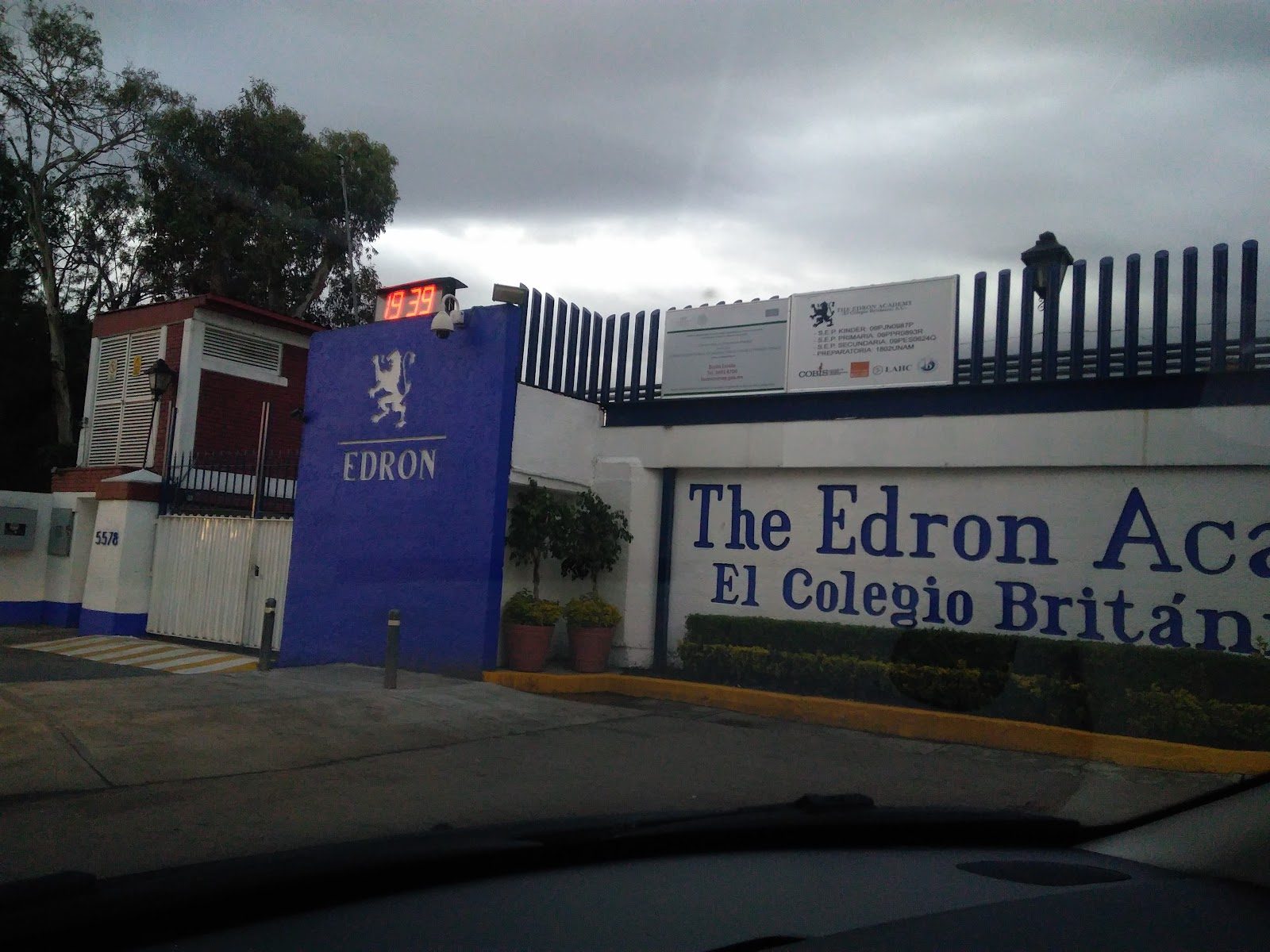
The Edron Academy
Mexico City · Mexico
Mexico City's oldest British school since 1963, blending SEP and IB study into a genuinely bicultural sixth form
Colegio Peterson
Mexico City · Mexico
Montessori roots since 1965, four Mexico City campuses now converging on a single IB diploma track

Puebla American School Foundation
Puebla · Mexico
Since 1942, this bilingual Puebla day school became the city's first to run the full IB continuum, from PYP to Diploma.
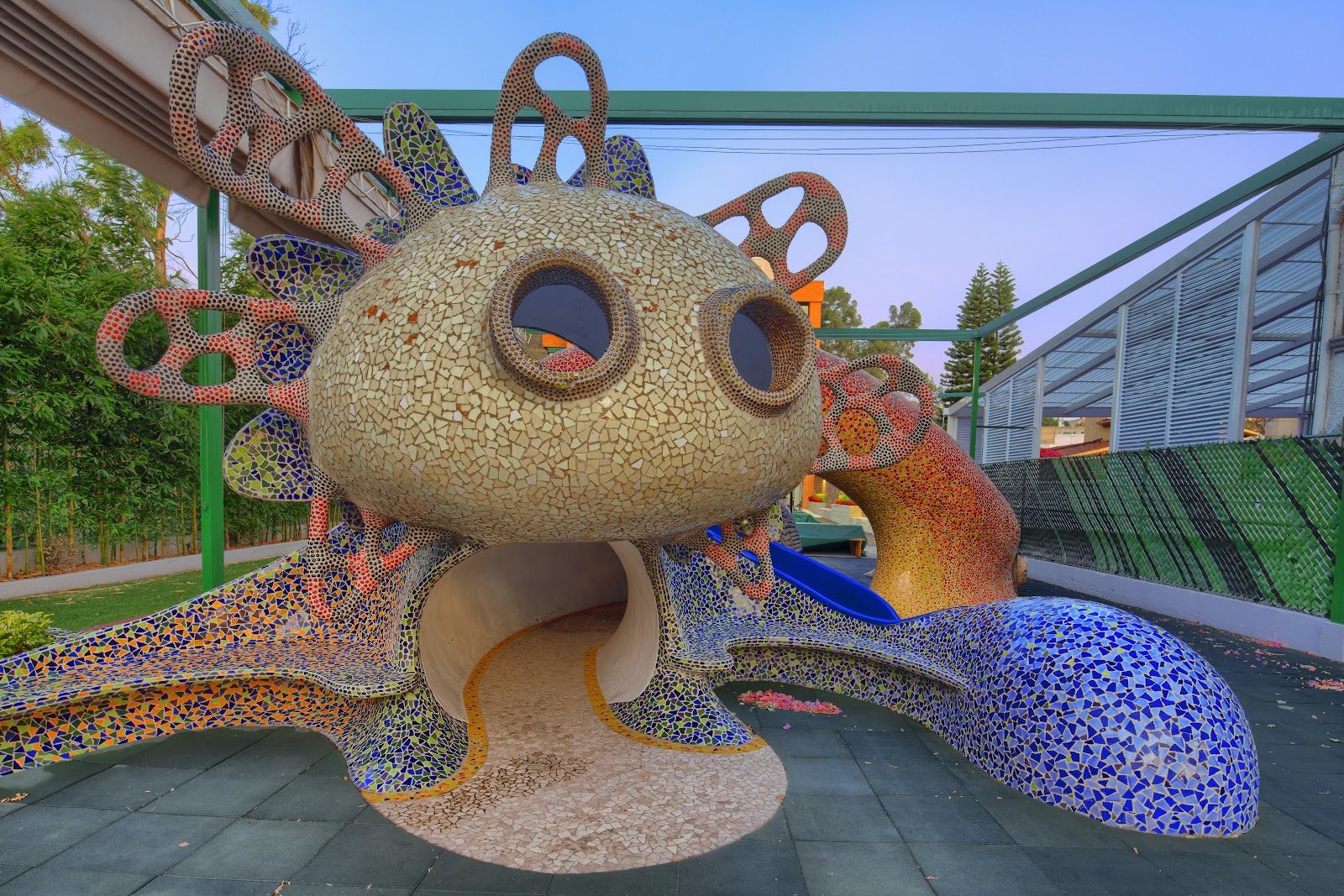
Greengates School
Mexico City · Mexico
Since 1951 in Naucalpan, the only Mexico City school requiring every sixth-former to sit the full IB Diploma, with results to match
Same country and curriculum — closest matches within ±10 points either way