
West Sussex
Christ's Hospital
high confidence· 6/6 cats · 3.38 avg sourcesTudor bluecoat uniforms unchanged since 1552 meet a bursary scheme that funds most pupils, set across 1,200 acres of Sussex countryside.
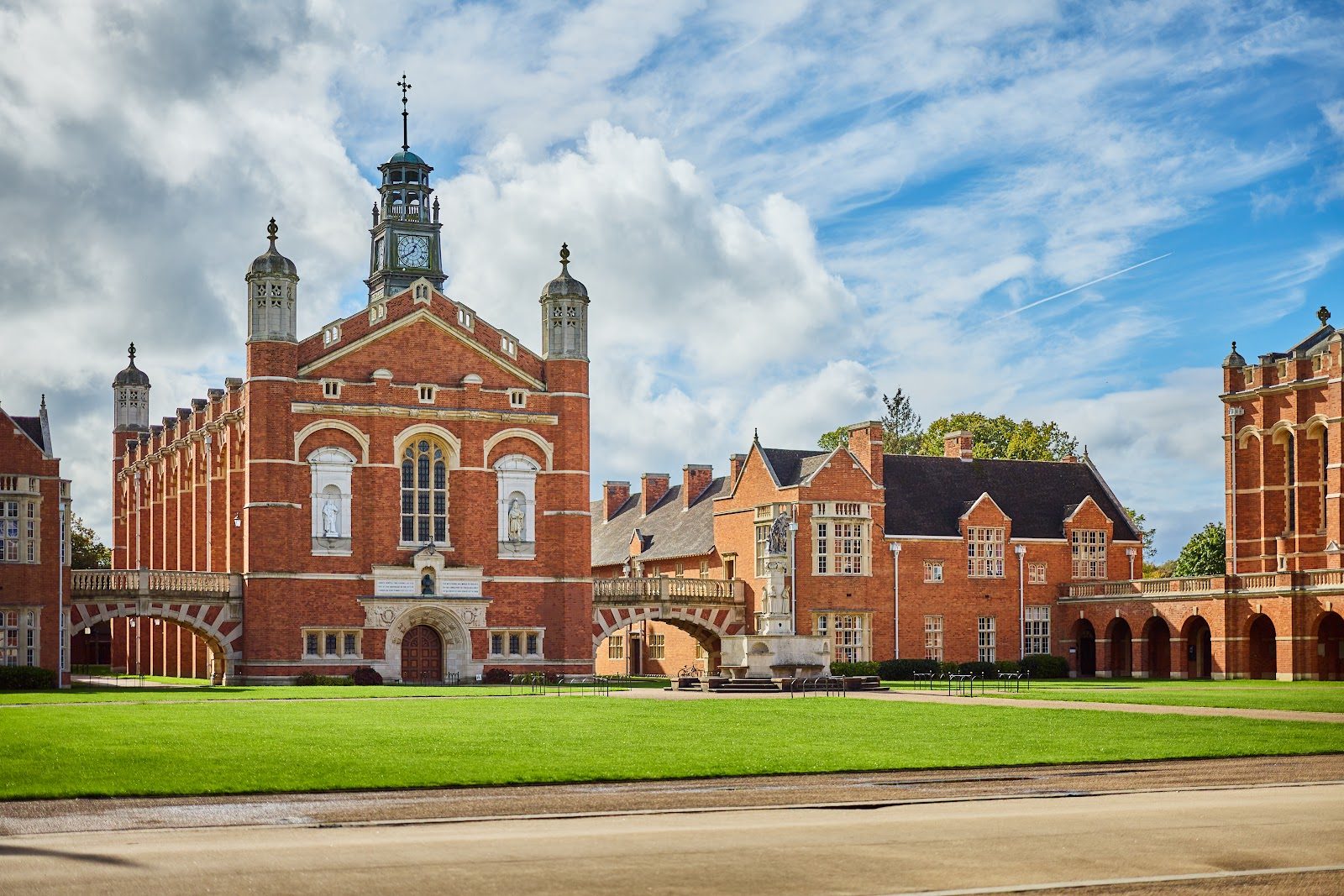
Photo © Christ's Hospital via Google Maps
Type
Boarding
Ages
11–18
Curriculum
British
Qualifications
A-Level
Ratio
—
The Verdict
Editor's commitment
Right for
Families who want a British boarding school with a social mission, 1,200 Sussex acres, and 82% of leavers entering top-100 universities.
Wrong for
Parents who dislike Anglican culture, boarding from 11 to 18, or a school where Tudor uniform and institutional ritual still shape daily life.
Watch out for
Average annual fees run to £48,000 boarding and £31,000 day; the upside is 11 Oxbridge places in a 155-strong Class of 2024.
Ranking breakdown
Christ's Hospital · #1008 of 1591
Composite score 62.7. 8 weighted criteria.
By criterion
Academic Outcomes
Weight 20%
#1050
of 1529 scored
University Placement
Weight 16%
#1089
of 1529 scored
Prestige & Heritage
Weight 12%
#835
of 1529 scored
Alumni Network
Weight 12%
#702
of 1529 scored
Facilities
Weight 12%
#976
of 1529 scored
Transparency & Communications
Weight 8%
#1097
of 1529 scored
Peer & Industry Review
Weight 10%
#988
of 1529 scored
Admissions Selectivity & Demand
Weight 8%
#760
of 1529 scored
Score history
Christ's Hospital · 2026
Movement across 2024–2026. Peer average overlaid.
Overall — 2024–2026
62.7/ 100
▲ +6.6 vs 2025
year on year
Peer & Industry Review
How Christ's Hospital is regarded in the sector
66
Respected · medium confidence
Christ's Hospital occupies a distinctive niche in British independent education, defined less by exam-league dominance than by its historic charitable mission, with the Good Schools Guide noting that roughly 75 per cent of pupils receive full or part bursaries and calling it "a truly unique school, where historic traditions are still upheld and valued". It also features in Tatler's Schools Guide, giving it credible cross-publication visibility beyond its own marketing, while its WhichSchoolAdvisor profile confirms an active but relatively thin editorial footprint compared with top-tier peers. Parent sentiment is largely warm in curated reviews, though open platforms show sharper dissent on pastoral consistency, and the school's history includes a well-documented historic safeguarding scandal addressed through a national inquiry. The result is a respected regional heavyweight with a genuinely singular social mission, but a peer reputation shaped as much by its charitable distinctiveness as by academic prestige.
Editors' overview
The detail that matters at Christ’s Hospital is not the Tudor uniform, though the bluecoat is real and unchanged since 1552. It is the funding model. This is a full boarding school in Sussex with a charitable mission at its centre, and that changes the character of the place. The school states that it exists to bring together pupils from all backgrounds; that is not boilerplate when set against fees that average £48,054 a year for boarding and £30,884 for day pupils across ages 11–18, alongside a bursary structure serious enough to define the institution’s identity. In market terms, Christ’s Hospital sits in a rare bracket: a historic HMC boarding school with Anglican foundations, a 1,200-acre campus and the reach of a major independent school, but with a social purpose that gives it a different intake story from the polished, purely fee-driven Sussex competitors.
Parents should shortlist it for three reasons. First, the school offers a classic British boarding education without the usual veneer of inherited privilege as its only organising principle. Second, outcomes are strong and clearly evidenced: in 2024, 82% of 155 leavers went to top-100 universities, with 11 to Oxbridge and 45 to Russell Group institutions; Oxford, Cambridge and Durham feature prominently. Third, the alumni footprint is exceptionally deep: 245 notable alumni catalogued in Wikidata across politics, science, writing, the arts and sport. That matters because it points to a school with genuine historical range, not a sixth-form results factory built for league-table optics. Christ’s Hospital also carries the right institutional signals for a British independent school buyer: ISI and HMC accreditation, boarding at scale, and a campus large enough to support serious breadth in music, sport and co-curricular life.
The child who will want Christ’s Hospital is not one hunting gloss or easy comfort. This suits pupils who can handle ritual, uniform, chapel, boarding structure and a strong communal code without chafing at them. It will appeal to academically ambitious children who also want substance beyond the timetable: band, theatre, sport, Saturdays that are actually programmed, and a sense of belonging to something older, stricter and more distinctive than the average modern independent school. It is *not for families who want anonymity, casual culture or a frictionless luxury experience. Christ’s Hospital is idiosyncratic*, visibly traditional and mission-driven. For the right student, that combination is precisely the point.
Academic Performance
Christ’s Hospital publishes enough to support a clear judgment: this is a school with serious academic traction, not one trading on costume, history and campus theatre. The headline destination figures place it in the strong upper tier of British independent schools without putting it in the tiny group of exam-obsessed hothouses. In the latest leavers’ cohort, 82% moved on to top-100 universities, with 11 to Oxbridge and 45 to Russell Group institutions. That is a robust conversion rate for a school that also asks pupils to absorb a demanding co-curricular and communal life. The school itself states that academic standards are high and that teaching drives pupils to strive; the outcomes support that claim.
Relative to peers, the picture is impressive but not monastic. Christ’s Hospital sits above the broad independent-school middle and below the narrow band of London and south-east schools built almost entirely around A-level extraction and university placement. For many families, that is the attraction. The academic culture has ambition, but not the single-track intensity of institutions that reduce sixth form to an admissions conveyor belt. Publicly available destination data are strong and specific. What is missing here is the full examination profile by subject and grade distribution, which matters when comparing it with the most results-driven competitors. Even with that caveat, the school lands as a high-performing all-rounder with real academic credibility.
Facilities
Facilities are a major part of the Christ’s Hospital proposition, and not in the token “nice campus” sense. The school itself points to a truly exceptional campus with world-class facilities, and the list of activity built around it gives that claim substance. Music has unusual weight here: the band is woven into school identity rather than treated as an add-on, and the school runs lunchtime concerts, theatre productions and a visible performance culture. Sport also has scale, with Bluecoat Sports carrying enough institutional prominence to signal a serious operation rather than a few pitches and a gym. Add a library, theatre, chapel, medical centre and boarding-house pastoral infrastructure, and the result is a campus built for a full institutional life, not just classroom delivery.
Against peer boarding schools, the strength lies less in conspicuous luxury than in breadth, land and use. Many rivals in the south-east have smart facilities; fewer have the room, tradition and programmed activity to make them feel structural to daily life. Christ’s Hospital also uses its estate in a way that matters: outward-bound activity, community events, public performances and a long-running community action programme all point to facilities that are lived in hard. What is missing from the public picture is the level of technical detail that top-tier schools now publish on science spaces, design labs, elite sports provision and specialist arts kit. That opacity stops it short of the clearest facilities brief in the market. Even so, the school reads as *substantial, well-used and culturally distinctive* rather than glossy.
Third, the alumni footprint is exceptionally deep: 245 notable alumni catalogued in Wikidata across politics, science, writing, the arts and sport
Prestige
Christ’s Hospital carries real British independent-school prestige, but of a different kind from the polished social cachet of the better-known aristocratic boarders. Its status rests on endurance, recognisable traditions and a charitable mission with institutional weight, not on finishing-school glamour. The uniform gives it instant public recognition; the school’s place in the story of English education gives it depth; and the old-boy network is plainly substantial. 245 notable alumni catalogued in Wikidata is a serious figure by any measure, with strength across public life, scholarship, writing and the arts rather than one narrow field. That breadth matters. It marks a school that has fed talent into the national bloodstream for generations, not one that has only recently learnt how to market outcomes.
The prestige also has an internal quality that many schools cannot manufacture: earned distinctiveness. Christ’s Hospital does not sell a generic “excellent all-round education” in expensive packaging. It offers a highly specific culture — ritual, chapel, band, community action, a visible sense of duty — and that specificity gives it standing. Among informed British families, that reads as serious, old-institution prestige rather than luxury-school gloss. The bursary structure strengthens that reputation rather than diluting it. A school charging an average of £48,054 a year for boarding while funding access at scale carries moral authority that many fee-driven rivals lack. That does not make it the most fashionable name in the market. It makes it one of the most respected.
In the latest leavers’ cohort, 82% moved on to top-100 universities, with 11 to Oxbridge and 45 to Russell Group institutions
Communications
Christ’s Hospital communicates like an old institution that has learnt the mechanics of modern parent service without diluting its character. The website is dense, navigable and unusually rich in practical signposts: senior team and teaching staff, term dates, policies, publications, medical centre, learning support, careers and UCAS, leavers’ destinations, fees, admissions routes and a parent portal all sit in plain view. That matters. Parents do not need to excavate for the basics or decode a haze of lifestyle branding. There is also a striking amount of public-facing school life on display — chapel, band, boarding life, Saturdays, theatre, community action and student interviews — which gives families a concrete sense of rhythm and expectation. The international-entry pages in multiple languages add another useful layer. This is institutional communication, not sales patter.
Its weakness is volume and texture. The site throws a great deal at the reader, and the navigation carries the weight of a large, tradition-heavy school with many moving parts. Families new to British boarding will need time to sort essentials from atmosphere. There is also a strong house style: mission, heritage and community sit at the centre of almost every page. That is honest, but it can crowd out sharper operational detail on points parents scrutinise hard, such as assessment breakdowns or specialist provision. Still, the broad judgement is clear. For a school with a highly specific culture and a parent body with mixed fee arrangements, communication is serious, serviceable and more transparent than many grander rivals.
Uniqueness
What sets Christ’s Hospital apart is not heritage on its own but heritage tied to function. The Tudor uniform is not a costume for open days; it is the visible edge of a school built around continuity, discipline and collective identity. Few schools ask teenagers to inhabit such a deliberately distinctive culture every day, and fewer still combine that with a charitable mission that reaches deep into admissions rather than sitting as a philanthropic sidebar. The result is a pupil body shaped by more than fee power alone. That changes conversation, expectation and social texture. Add a band with roots stretching back generations, chapel, formal ritual and a boarding-house system that underpins the pastoral programme, and the school delivers a thick institutional culture that many rivals no longer possess.
For students, that uniqueness brings both gain and demand. The gain is a school life with unusual coherence: music, community action, Saturdays, house loyalty and public performance all sit inside one high-commitment framework rather than as optional extras. The school states that more than 200 pupils take part in community action each week, which tells you something important: service is built into the rhythm of the place. Children who want to belong to something older, stricter and more purposeful will find real traction here. Children who want a loose, private, consumer-style education will not. Christ’s Hospital gives pupils identity, structure and a sense of duty. It also asks them to submit to a strong culture in return.
The school itself points to a truly exceptional campus with world-class facilities, and the list of activity built around it gives that claim substance
Student Profile
The pupil who fits Christ’s Hospital is sturdy, outward-facing and willing to buy into a high-structure school life. This is not a place for teenagers who want to drift, negotiate every rule or treat school as a loose daytime service. Uniform, chapel, house life, organised Saturdays and a strong communal code ask for tolerance of ritual and a capacity to live closely with others. The school’s charitable mission also shapes the social mix in a way many expensive British schools do not. That matters. It gives the student body a broader spread of backgrounds and a culture less dominated by easy affluence. A child with social confidence, self-command and an appetite for shared endeavour will get more from this than one who wants privacy, polish and low demands.
It also suits pupils who want to do more than collect grades. The school’s own account of daily life points to music, theatre, sport, public performance and service as central, not decorative. The band tradition has real weight, and the community action programme involves over 200 students each week; that tells you the place rewards participation, reliability and institutional loyalty. Academically ambitious children fit here, but so do those whose identity rests on contribution to a house, an ensemble or a team. The misfit profile is clear: students who resist conformity, dislike visible tradition or need a soft-edged, highly personalised environment will find Christ’s Hospital demanding and, at times, unforgiving.
That opacity stops it short of the clearest facilities brief in the market
Co-curricular strengths
Arts & sport, on a separate axis
Overall 8.9/10
Scored 0-10 from the school's own published evidence. This axis is editorial-only — it does not feed the main WTS ranking.
Sports
9.5/10
Highly competitive independent tracking across expansive West Sussex grounds, running dominant rugby, cricket, and fives programs.
Drama
9.4/10
Home to the spectacular, thrust-stage Court Theatre running professional-level contemporary and classical stagings.
Dance
6.5/10
Offers dedicated studio tracks that provide core choreography and synchronization assets for major mainstage musicals.
Music
9.8/10
Unrivaled musical giant; universally famous for its monumental Marching Band, cathedral choirs, and exceptional royal performance history.
Visual Arts
9.3/10
Stunning visual arts school precinct providing pre-conservatory technical depth in painting, sculpture, and traditional textiles.
Editor-verified · 8/6/2026
Outcomes & destinations
Where students go next
Editorial estimateClass of 2024
155 graduates
A-Level & IB distribution
98% covered
- A*28%
- A32%
- B30%
- C8%
Top destinations
56 placements
- Oxford· 6
- Cambridge· 5
- Durham· 10
- Exeter· 9
- Bristol· 8
- Edinburgh· 7
- Warwick· 6
- Newcastle· 5
Sussex co-ed boarding funded largely on means-tested bursaries.
Editor-approximated from the school's own leavers report. Awaiting school-attested figures.
Notable alumni · Wikidata
245notable alumni
Includes
173 historic (born pre-1930) · 19 modern (born post-1970)wikidata:2026-07-28 How we source this
The story in one line
Average A-Level grade B (APS 39.7)·ISI Routine Inspection 2026
AAB with 2 facilitating subjects is the Department for Education's published predictor of admission to a top-third UK university: the pupil has scored high grades in at least two of the classic Russell-Group subjects (maths, sciences, English, history, geography, or a modern language). Independent schools don't appear in the state-only HE-destinations dataset, so this is the strongest DfE-verified sixth-form signal available. Source: DfE 16-18 school and college performance data · 2023/24.
DfE-verified statistics
Official GCSE data · 2024/2025
Progress 8
—
Value-added score. State-schools only; 0 = expected progress, +1 = one grade above.
Attainment 8
9.8
Average grade across 8 GCSEs (score out of 90). National ≈ 46.
EBacc average score
0.53
Avg grade across the 5 EBacc pillars (English, Maths, Sciences, Language, Humanity).
EBacc slots filled
0.5
How many of the 5 EBacc pillars pupils typically enter (max 5).
A-Level attainment
Cohort · 2023/24
Avg A-Level grade
B
APS per entry: 39.69
Best 3 grade
B-
Best-3 APS: 38.14
≥ AAB + 2 fac.
27.6%
Russell-Group predictor.
Progress (value-added)
-0.05
Average
Read with care. Independent schools frequently sit IGCSEs or Pre-U qualifications instead of standard GCSEs — DfE data only counts standard GCSEs, so these numbers may reflect a partial cohort. For a fuller picture, cross-check with the school's own annually-published results.
URN 126107Verified · DfE 2024/2025
Official inspection
ISI report · 2026
Inspectorate
Independent Schools Inspectorate
The Government-approved inspectorate for English independent schools.
Latest report
28 April 2026
Routine Inspection
Report history
Verified · Independent Schools InspectorateSource-of-truth
Strengths
- +Founded 1552 with a royal charter and a long charitable tradition
- +Boarding and day school for ages 11-18 with world-class music and sport
- +A-Levels taught in English, with 28% A* and 32% A in 2024
- +82% of 2024 leavers reached top-100 universities, including 11 Oxbridge places
- +Publishes scholarship, bursary and fee-assisted day support
Considerations
- −Annual boarding fees reach £55,000
- −Day fees still cost £30,000
- −Anglican foundation and traditional culture may not suit all families
- −Boarding from age 11 requires early independence
Availability
Primary entry gate & tests
Written Exams + Interview
Gallery
Photo © Christ's Hospital via Google Maps
Photo © Freddie North via Google Maps
Photo © Jane Jeffery via Google Maps
Photo © Daniel Foster da Silva via Google Maps
Photo © franz van egas via Google Maps
Photo © franz van egas via Google Maps
Photo © franz van egas via Google Maps
Photo © franz van egas via Google Maps
Photo © franz van egas via Google Maps
Recommended reading
Independent write-ups of this school from editorial outlets we trust.
- Christ's HospitalGood Schools Guide
Parent reviews
Have you sent your child here?
Voice reviews carry the strongest trust badge — we transcribe them for you to tidy up before they go live. Prefer to type? A written review is fine too.
Add your voice
In 60 seconds, tell other parents: what's the best thing about Christ's Hospital, and what surprised you when your child joined?
We ask for a Google sign-in so every review has a real face behind it — no anonymous drive-by attacks on schools, and no faked positive reviews. Your email is never shown publicly.
Send this profile to a friend
International parents rely on word-of-mouth. Share this review with someone weighing the same decision.
Schools with places
Similar schools to Christ's Hospital with places available now.
Availability first, then country, area, curriculum, price, co-curricular
Consider also
Also worth looking at alongside Christ's Hospital.

Lady Eleanor Holles School
Hampton · United Kingdom
Since 1710 on a 24-acre Hampton site, a Thames boathouse has bred record-holding rowing eights alongside Oxbridge-track academics.
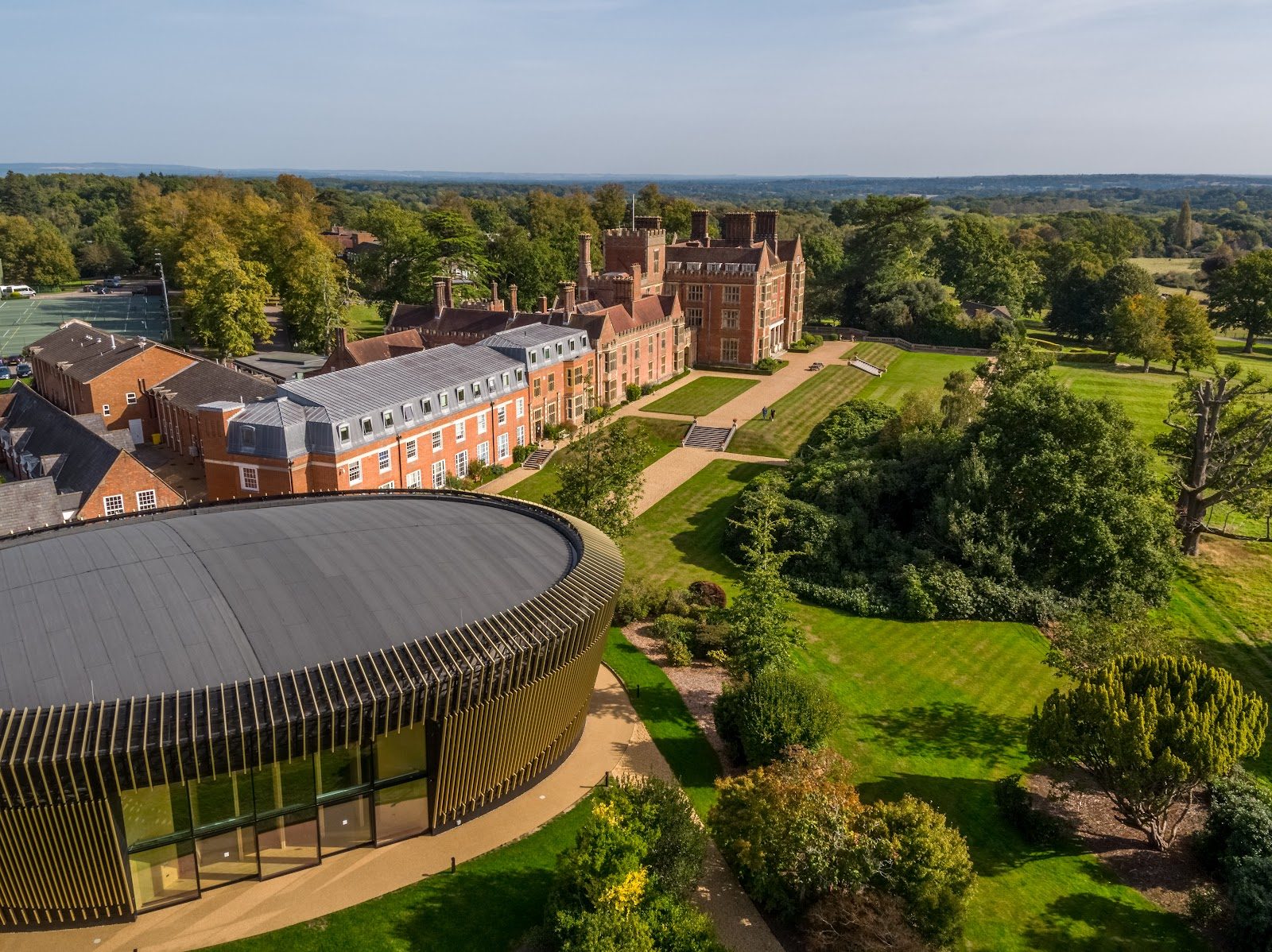
Benenden School
Cranbrook · United Kingdom
Amid 250 acres of Wealden parkland, the full-boarding spirit that inspired Malory Towers still runs through ten close-knit houses
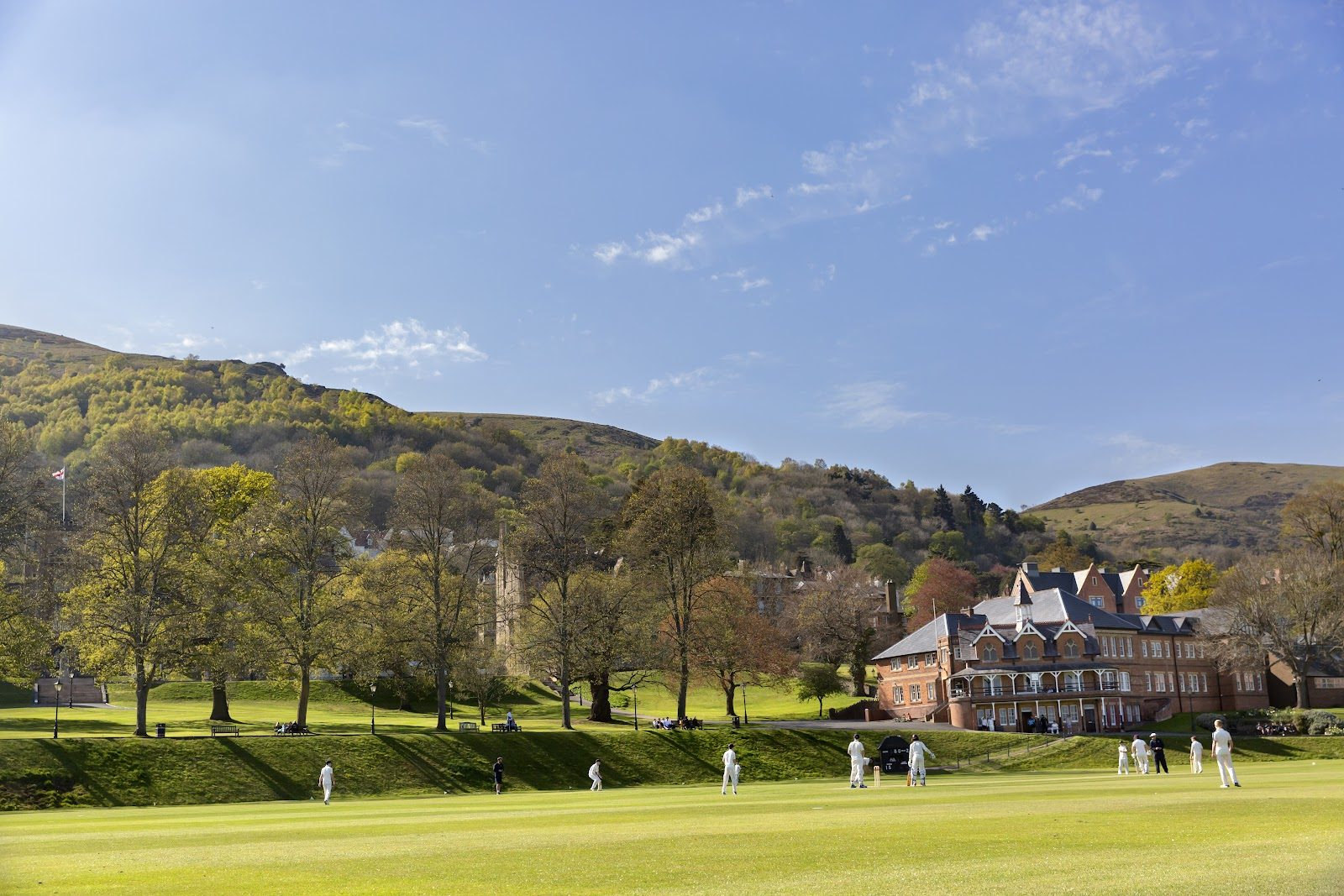
Malvern College
Malvern · United Kingdom
Beneath the Malvern Hills, a campus that once housed wartime radar research has produced four Nobel Prize winners.
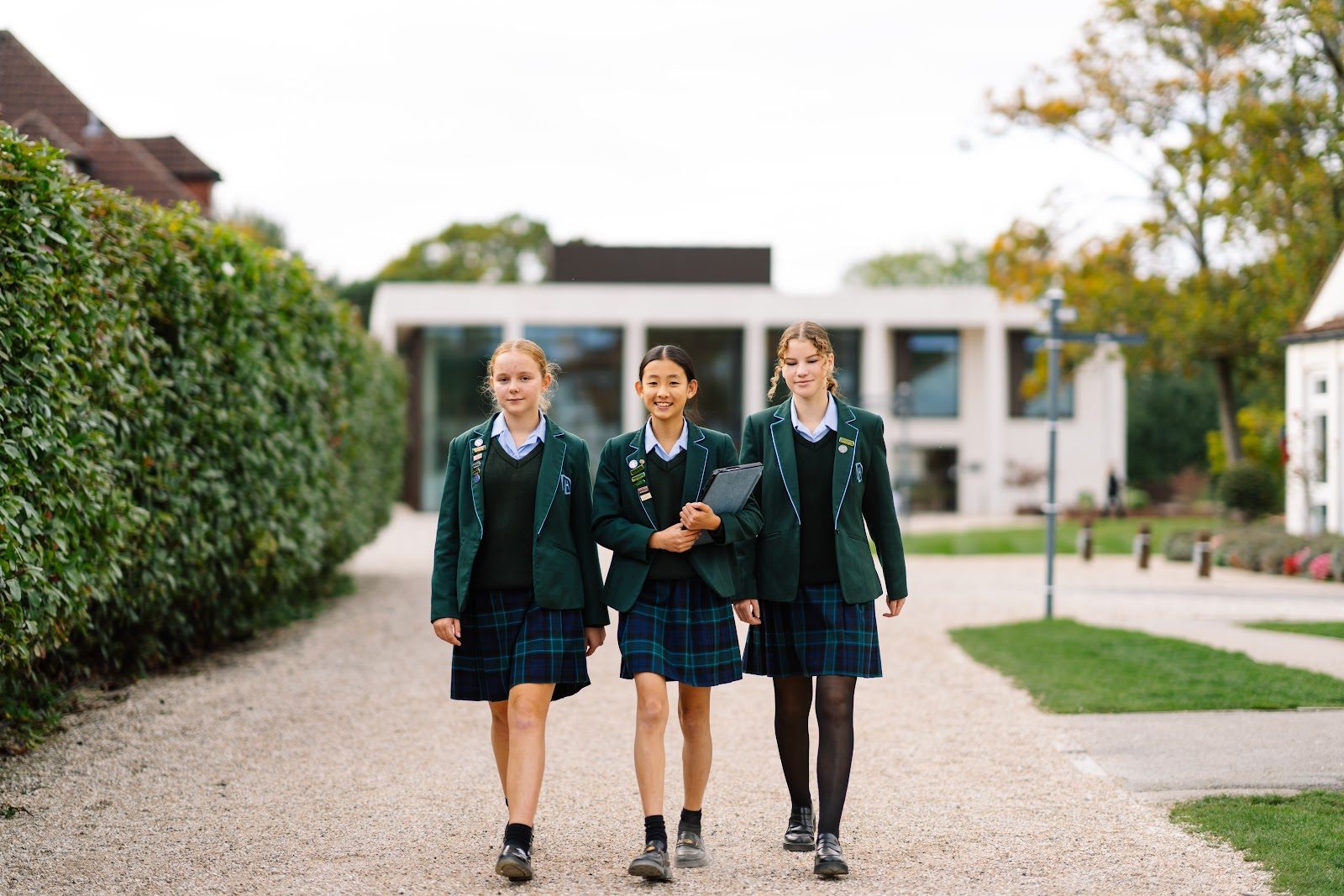
Downe House School
Cold Ash · United Kingdom
Rooted in Charles Darwin's former home, now a 110-acre Berkshire estate where science thrives and Oxbridge ambition runs deep.
Same country and curriculum — closest matches within ±10 points either way