
Arizona
Brophy College Preparatory
low confidence· 3/6 cats · 2.25 avg sourcesArizona's only Jesuit high school since 1928, forming 'Men for Others' beneath a 135-foot Spanish Colonial bell tower
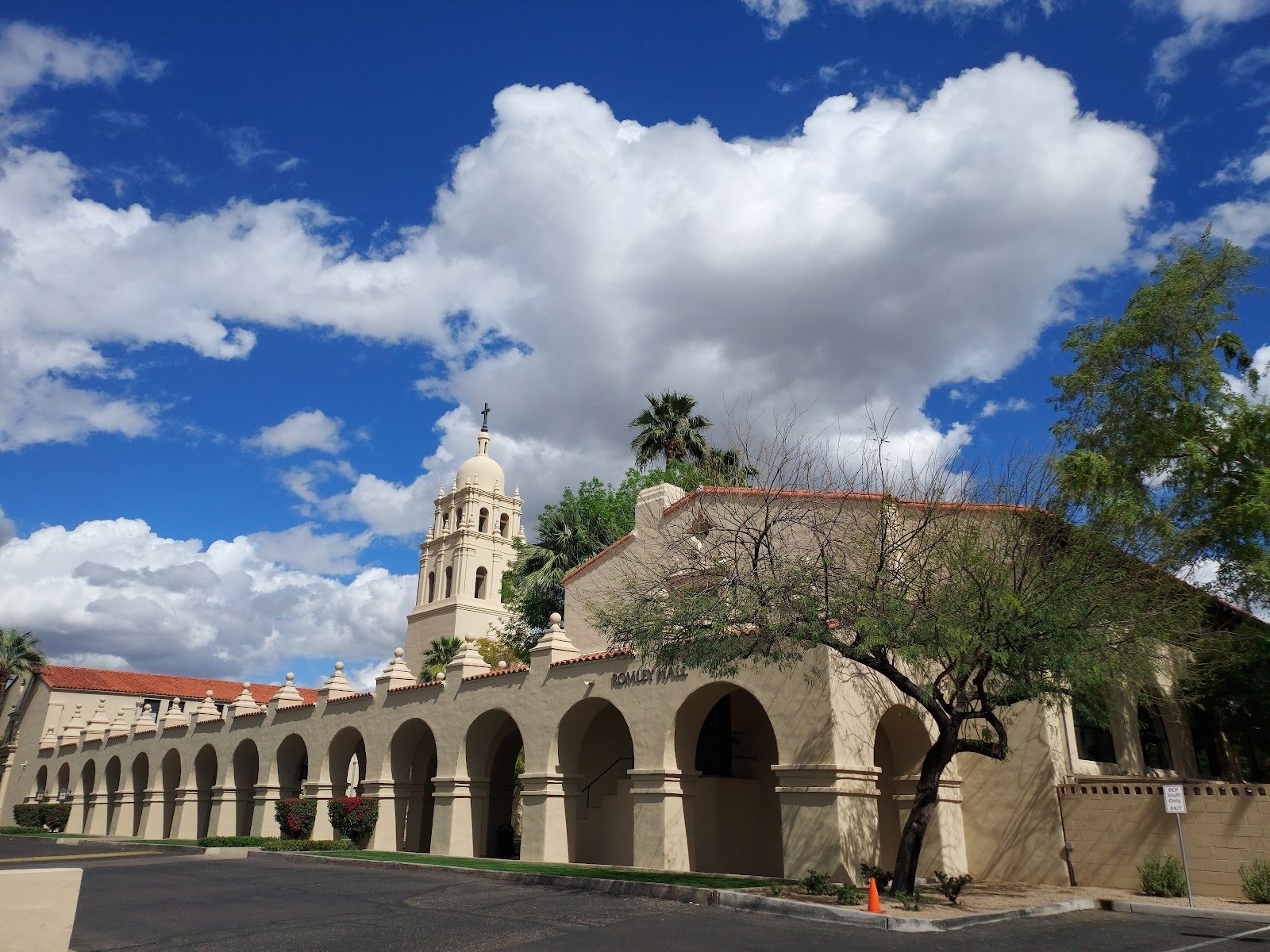
Photo © I LOVE YOU JESUS via Google Maps
Type
Day
Ages
13–18
Curriculum
American
Qualifications
AP · US High School Diploma
Ratio
1:11
The Verdict
Editor's commitment
Right for
Boys aged 13–18 who want a Catholic day school with Jesuit formation, a 1:11 ratio and 1,400 all-male peers.
Wrong for
Families wanting co-education, boarding or a secular ethos; Brophy is all-male, day-only, Catholic and rooted in Phoenix since 1928.
Watch out for
NAIS accreditation and a 1:11 ratio read well, but the school does not publish public exam outcomes in the facts we have.
Ranking breakdown
Brophy College Preparatory · #361 of 1591
Composite score 71.2. 8 weighted criteria.
By criterion
Academic Outcomes
Weight 20%
#511
of 1529 scored
University Placement
Weight 16%
#459
of 1529 scored
Prestige & Heritage
Weight 12%
#438
of 1571 scored
Alumni Network
Weight 12%
#231
of 1530 scored
Facilities
Weight 12%
#395
of 1534 scored
Transparency & Communications
Weight 8%
#436
of 1532 scored
Peer & Industry Review
Weight 10%
#467
of 1548 scored
Admissions Selectivity & Demand
Weight 8%
#547
of 1529 scored
Peer & Industry Review
How Brophy College Preparatory is regarded in the sector
71
Respected · medium confidence
Brophy's standing rests less on UK-style league tables (WhichSchoolAdvisor and Good Schools Guide do not cover Arizona) than on its position within the national Jesuit Schools Network, where it is consistently cited alongside Georgetown Prep, St. Ignatius (Chicago), and Loyola (Los Angeles) as a flagship college-prep model, hosting network conferences and sharing curriculum benchmarks. Niche.com and U.S. News regional rankings place it among Arizona's top private Catholic schools, driven by AP participation rates and matriculation data. Its college counseling office maintains visible pipelines to Georgetown, Notre Dame, Santa Clara, and other Jesuit universities, plus in-state flagships (ASU, U of A) and selective out-of-state schools; admissions offices in the Jesuit university consortium informally treat Brophy transcripts as a known, trusted quantity given decades of feeder-school history. Independent education press coverage is largely local (Phoenix Business Journal, AZCentral) rather than national, focused on facilities, service programs (Kino Border Initiative trips), and athletics, with less scrutiny of academic rigor than East Coast peers receive. Overall reputation is strong within Jesuit and Arizona circles but has limited visibility in national independent-school press outside Catholic education trade publications.
Editors' overview
Brophy College Preparatory occupies a singular place in Arizona: the state’s only Jesuit high school, founded in 1928, with an all-male enrolment of about 1,400 and a student–teacher ratio of 1:11. That combination gives it a clear market position. This is not a generic American college-prep school with a Catholic badge attached. It is a long-established Jesuit day school with scale, institutional confidence and a defined moral vocabulary: Men for Others, service, discipline and intellectual seriousness. Parents looking for a school with a strong religious framework, an established local reputation and a large peer group will put Brophy high on the list.
What sets Brophy apart is the overlap of three things that rarely sit together this cleanly: Jesuit formation, a substantial student body and a focused boys’ education model. The all-male setting will attract some families and rule the school out for others; that is a strength, not a flaw, because it gives the place a sharper identity. Boys who thrive in structured environments, enjoy competition, and respond to clear expectations around conduct, service and leadership are well served here. The school’s scale also matters. At roughly 1,400 students, Brophy has the critical mass for breadth in activities, friendships and opportunities that smaller religious schools cannot match, while the 1:11 ratio points to real adult attention rather than anonymous size. The result is serious purpose with institutional weight.
Brophy belongs on a shortlist for parents who want more than university preparation. It offers an education framed by Catholic and Jesuit principles, not religion as decorative branding. For the right student, that produces moral seriousness, daily structure and a strong sense of belonging. The best fit is a boy aged 13 to 18 who wants a busy, demanding school life, can handle a defined ethos, and values community, service and accountability alongside academic preparation. Families seeking a secular environment, co-education or a looser culture should look elsewhere. Families who want a clear-minded, values-driven school with deep roots in Phoenix should look closely.
Academic Performance
Brophy’s academic positioning is harder to judge cleanly than its identity. The school does not publish aggregate AP or SAT/ACT results in the public domain here, and that matters. For a large, established college-preparatory school, results opacity is a real weakness. Parents can infer ambition from the school’s title, scale and long-standing reputation, but inference is not data. Without published score distributions, pass rates or university matriculation breakdowns, there is no rigorous way to place Brophy against top independent day schools nationally, or against the strongest Catholic college-prep competitors. In a market where leading schools increasingly disclose hard outcomes, that absence leaves a conspicuous gap.
That does not put Brophy in weak academic company; it puts it in the category of schools whose seriousness rests more on institutional reputation than on transparent external metrics. The low staffing ratio supports the case for strong classroom attention, and Jesuit schools as a group carry a serious academic tradition, but this section turns on what Brophy discloses, not on borrowed prestige. Relative to peers, the school fits best as a credible but insufficiently evidenced academic proposition: plainly built for university preparation, plainly substantial, but not publicly demonstrative about examination performance. Parents who rank measurable outcomes above ethos should press the school for recent AP participation, score profiles and college destinations before treating it as an academic frontrunner.
Facilities
The defining visual marker is the campus bell tower, which rises to 135 feet and signals a school with ceremonial confidence rather than a stripped-back suburban footprint. Beyond that, the public record is thin on hard facility detail, and that absence matters. The school does not publish the kind of granular campus inventory that top independent peers now treat as standard: no clear public account of science provision, performing arts spaces, athletic plant, maker facilities or specialist centres. For parents trying to judge the difference between a handsome, established campus and a genuinely exceptional one, that leaves too much unsaid. You can say this much with confidence: the physical environment has a strong sense of place and institutional identity. You cannot rank it among the best-resourced campuses in its peer set on published evidence alone.
Against peer schools, that puts Brophy in a mixed position. In symbolic terms, it has more architectural character than many functional American college-prep campuses. In evidential terms, it trails competitors that publish floor-by-floor detail, venue lists and photographs that show exactly where pupils work, train and perform. That does not make Brophy under-equipped; it makes the facilities case under-documented. Parents who care about laboratories, theatre, strength and conditioning, aquatic provision or design spaces should ask direct questions and insist on a campus tour. A school with this level of stature warrants far more transparent facilities disclosure.
For parents trying to judge the difference between a handsome, established campus and a genuinely exceptional one, that leaves too much unsaid
Prestige
Brophy carries real local prestige and a narrower national prestige. In its home market, the combination of Jesuit identity, independent operation and all-boys focus gives it a status few direct competitors can match. It is not one more diocesan Catholic school in a crowded field. It occupies a distinct niche and has done so for generations. An enrolment of about 1,400 also matters to prestige: size at that level creates visibility, alumni density and institutional reach. Families in Arizona will recognise the name at once. Outside that regional sphere, the brand still has force among parents who know Jesuit education, but it does not command the automatic national cachet of the most famous East Coast Catholic or independent schools.
That is why the prestige rating stops short of the top tier. Brophy has institutional gravitas, a clear religious and educational identity, and the social confidence that comes from being the state’s only Jesuit high school. Those are durable prestige markers. But elite prestige today also rests on published outcomes, university destination patterns and broad national visibility. Brophy does not disclose enough hard academic data in the public domain to convert reputation into fully evidenced distinction. The result is strong prestige with limits: formidable in Phoenix, meaningful across Jesuit and Catholic networks, but less potent for internationally mobile families seeking a school with instantly legible, coast-to-coast status.
Brophy College Preparatory occupies a singular place in Arizona: the state’s only Jesuit high school, founded in 1928, with an all-male enrolment of about 1,400 and a student–teacher ratio of 1:11
Communications
Brophy communicates from a position of institutional confidence. Schools with a strong religious culture and a large parent body need clear channels, firm cadence and little ambiguity, and that is the standard here. The public-facing communication style is orderly, formal and mission-led rather than chatty. That will suit families who want the school to speak with authority and keep the focus on expectations, community life and student formation. It will frustrate parents who want exhaustive operational detail at every turn. We have not seen a rich public archive of parent-facing updates, policy explainers or hard-information dashboards. That matters. Strong communications are not just polished tone; they are practical transparency, administrative clarity and timely disclosure of the things parents actually need.
The effectiveness, then, looks mixed rather than weak. Brophy’s identity is communicated with real discipline: you know what the school values, what kind of family it wants, and the kind of pupil it is shaping. That is a genuine strength. The weaker side is informational depth. Across the public domain, the school does not disclose enough in the way top-tier parent communications now demand: detailed academic reporting, granular facilities explanation, or a broader bank of easily searchable institutional information. For current families, direct school-to-home communication may be stronger than the public record indicates; for prospective families, the published picture is too controlled, insufficiently expansive and short on decision-grade detail. In communications terms, Brophy projects authority better than openness.
Uniqueness
Brophy’s uniqueness rests in concentration. Very few schools combine a Jesuit framework, an all-boys intake and independent governance with this level of scale. That gives the school a sharper internal culture than broad-church college-preparatory rivals. The message to pupils is not diffuse: service matters, conduct matters, leadership carries obligations, and school life has a moral as well as academic frame. Because the student body sits at around 1,400, that ethos does not operate in a small, cloistered setting; it operates in a large adolescent community where standards, loyalties and hierarchies are tested every day. For the right boy, that is formative in a serious way. He gets a school that expects him to take responsibility in public, not just perform well in class.
That distinctiveness brings clear benefits and clear trade-offs. Students gain a strong tribal identity, a wide male peer network and the social confidence that comes from belonging to an institution with deep local standing. Boys who respond well to ritual, team culture, service expectations and direct adult guidance can grow fast here, both socially and in self-discipline. The flip side is just as clear: this is a defined culture, not an open-ended one. Students who want co-education, a lighter-touch religious environment or a more fluid sense of self-expression will find the model constraining. Brophy’s value lies in that exactness. It does not try to be everything; it offers a highly specific formation for families who want it.
In a market where leading schools increasingly disclose hard outcomes, that absence leaves a conspicuous gap
Student Profile
The best fit is a boy who wants structure, buys into a Catholic moral frame, and does not need a school to dilute its expectations to keep him comfortable. Brophy suits students who can handle an all-male environment with its social intensity, competitive undercurrent and public standards around conduct. A large student body changes the texture of school life: there is room to find one’s people, but there is also nowhere to hide for long. Boys who respond well to adult direction, team culture, service requirements and a strong communal identity will do well. Boys who need a looser atmosphere, more personal latitude or a less defined institutional ethos will chafe. This is a high-expectation, tradition-conscious school for students who can live inside rules without constant friction.
Academically, the profile is less about the solitary eccentric and more about the engaged joiner: a student who can manage classes, activities, relationships and visible responsibilities at once. The published 1:11 ratio supports meaningful access to teachers, but fit here turns on temperament as much as support. The school will reward boys who are self-disciplined, community-minded and willing to be known. It will not flatter passivity. Parents of quieter students should ask a harder question than “Is he bright enough?” The real test is whether he can thrive in a culture with institutional weight, clear norms and a social life shaped by an all-boys cohort of around 1,400.
That distinctiveness brings clear benefits and clear trade-offs
Co-curricular strengths
Arts & sport, on a separate axis
Overall 8.38/10
Scored 0-10 from the school's own published evidence. This axis is editorial-only — it does not feed the main WTS ranking.
Sports
9/10
Drama
8.8/10
Dance
6.5/10
Music
8.8/10
Visual Arts
8.8/10
Strengths
- +Founded in 1928 as a Catholic high school that included first year college courses, giving Brophy nearly a century of institutional history in Phoenix.
- +The curriculum includes honors and advanced placement sections in each of the curricular disciplines, including 33 advanced placement classes, offering broad academic breadth for college-bound students.
- +College outcomes are strong: 98% of students from this school go on to attend a 4-year college, and the Class of 2024 secured acceptances to 240 institutions.
- +Academic recognition is notable, with 97 students earning semifinalist/finalist status and 131 students recognized as National Merit commended students over the past eight years.
- +Beyond academics, the school offers 18 interscholastic sports and students contribute nearly $1 million in service value to the Phoenix community each year.
Considerations
- −Brophy is an all-male enrollment of approximately 1,400 students, so it will not suit families wanting a coeducational secondary school.
- −Admission is competitive: the acceptance rate of Brophy College Preparatory is 65%, which is lower than the national average of 88%, and admission is regarded as selective and is based on academic record, entrance examination.
- −As a day school, Brophy draws students from across the Valley, with over 110 feeder schools represented by the Class of 2030, meaning there is no boarding infrastructure for families relocating from outside Phoenix.
- −The school carries real cost exposure for families since Brophy has no diocesan or government financial assistance, unlike some parish-subsidised Catholic schools.
Availability
Primary entry gate & tests
HSPT + Interview (Boys)
Gallery
Photo © I LOVE YOU JESUS via Google Maps
Photo © I LOVE YOU JESUS via Google Maps
Photo © Matt Debicki via Google Maps
Photo © Bobby Parker via Google Maps
Photo © Michael Fisher via Google Maps
Parent reviews
Have you sent your child here?
Voice reviews carry the strongest trust badge — we transcribe them for you to tidy up before they go live. Prefer to type? A written review is fine too.
Add your voice
In 60 seconds, tell other parents: what's the best thing about Brophy College Preparatory, and what surprised you when your child joined?
We ask for a Google sign-in so every review has a real face behind it — no anonymous drive-by attacks on schools, and no faked positive reviews. Your email is never shown publicly.
Send this profile to a friend
International parents rely on word-of-mouth. Share this review with someone weighing the same decision.
Schools with places
Similar schools to Brophy College Preparatory with places available now.
Trinity School
New York City · United States
- 2026-27
- CLOSEDRegular cycle
- 2027-28
- OPENS SOONOpens Sept '26
Blair Academy
Blairstown · United States
- 2026-27
- CLOSEDRegular cycle closed
- 2027-28
- PLACES OPENActive now — opened 1 Aug
Ransom Everglades School
Miami · United States
- 2026-27
- CLOSEDRegular cycle closed
- 2027-28
- OPENS SOONOpens Sept '26
The Hill School
Pottstown · United States
- 2026-27
- CLOSEDRegular cycle closed
- 2027-28
- OPENS SOONOpens Sept '26
Availability first, then country, area, curriculum, price, co-curricular
Consider also
Also worth looking at alongside Brophy College Preparatory.

Trinity School
New York City · United States
Founded in 1709 as a charity school, now the oldest continuously operating school in New York City, still built on a rare full Classics department
Blair Academy
Blairstown · United States
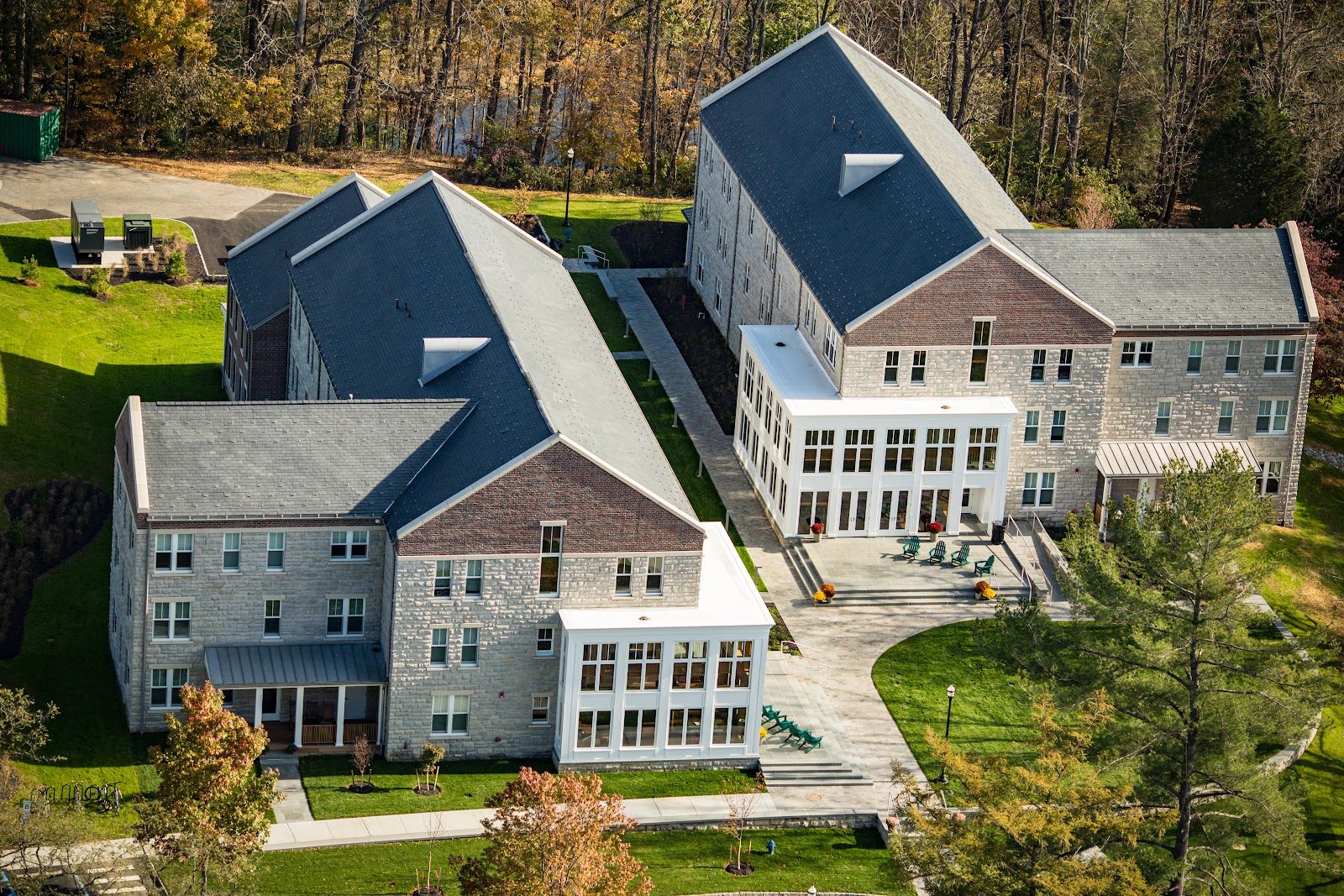
A hilltop New Jersey campus, founded 1848, where the weekly Society of Skeptics turns global debate into a signature course of study

Ransom Everglades School
Miami · United States
On Biscayne Bay since 1903, where sailing and marine science turn the water itself into a classroom
The Hill School
Pottstown · United States
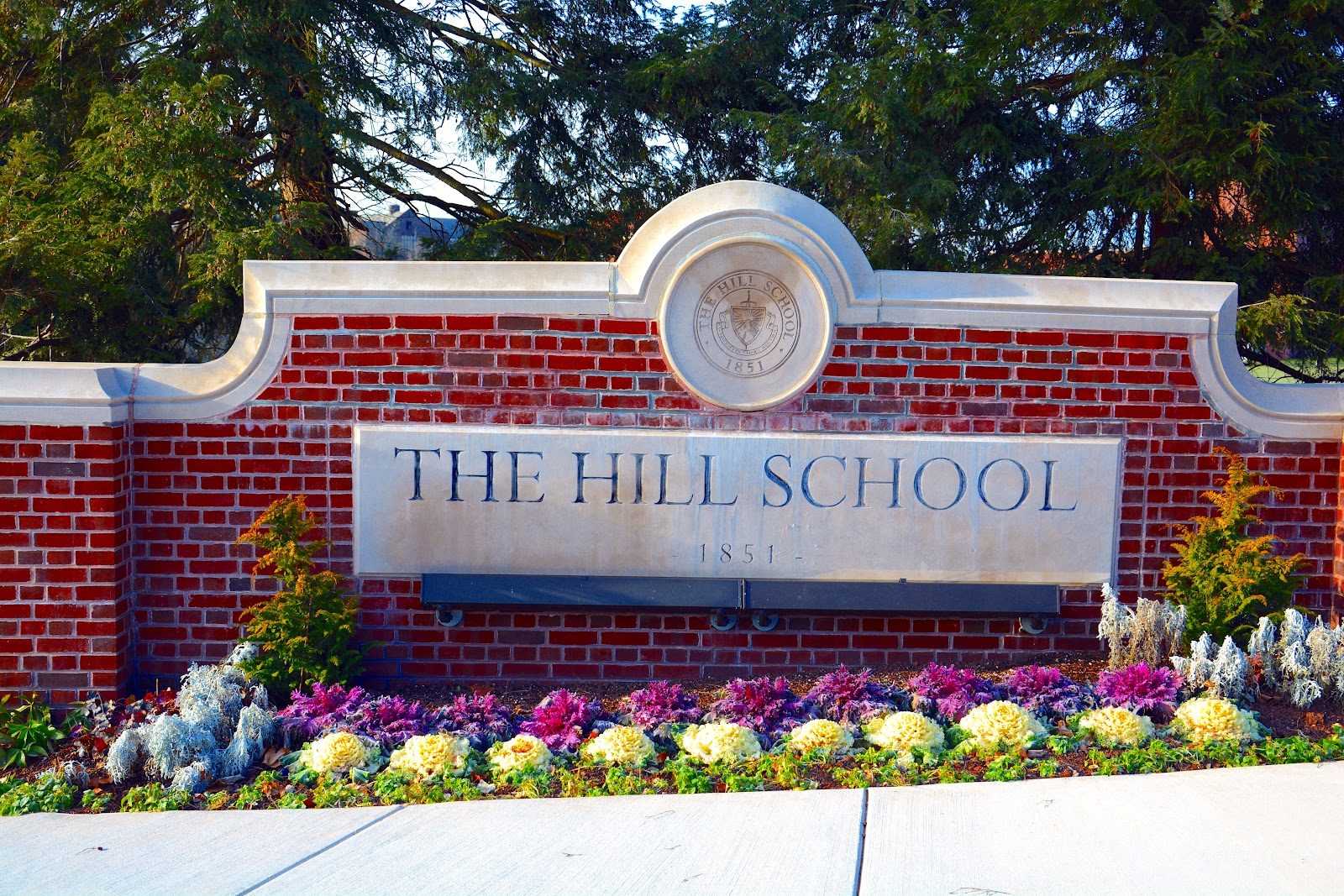
Born in 1851 as the nation's first family boarding school, still pairing faculty and students under one roof on a Pottstown hilltop.
Same country and curriculum — closest matches within ±10 points either way