
Nicosia District
The Grammar School Nicosia
medium confidence· 4/6 cats · 3.12 avg sourcesFirst in Cyprus to embed STEM schoolwide, this Nicosia day school blends Cambridge A Levels with the Apolytirion.
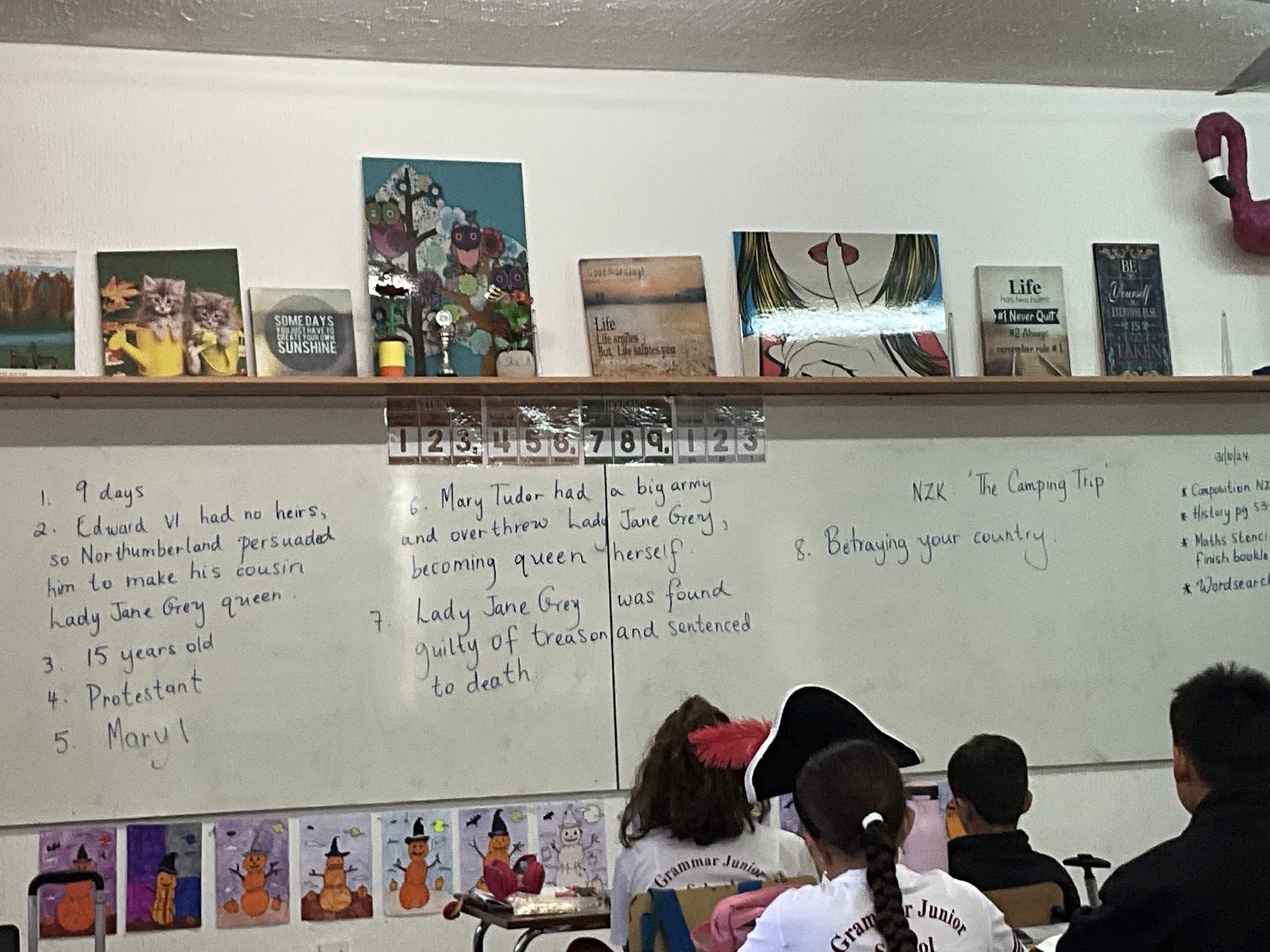
Photo © Maria Polycarpou via Google Maps
Type
Day
Ages
3–18
Curriculum
British
Qualifications
A-Level · IGCSE
Ratio
—
The Verdict
Editor's commitment
Right for
Families in Nicosia who want a day school founded in 1963, teaching in English from age 3 to 18.
Wrong for
Parents who want boarding, a religious ethos, or a single-track system: this day school combines Cambridge A Levels with the Apolytirion.
Watch out for
At an average annual day fee of EUR 6,986, value is clear; the harder question is whether the British curriculum plus Apolytirion suits your child.
Ranking breakdown
The Grammar School Nicosia · #992 of 1591
Composite score 62.3. 8 weighted criteria.
By criterion
Academic Outcomes
Weight 20%
#1003
of 1529 scored
University Placement
Weight 16%
#1015
of 1529 scored
Prestige & Heritage
Weight 12%
#967
of 1571 scored
Alumni Network
Weight 12%
#619
of 1530 scored
Facilities
Weight 12%
#1090
of 1533 scored
Transparency & Communications
Weight 8%
#1073
of 1532 scored
Peer & Industry Review
Weight 10%
#893
of 1548 scored
Admissions Selectivity & Demand
Weight 8%
#760
of 1529 scored
Score history
The Grammar School Nicosia · 2026
Movement across 2024–2026. Peer average overlaid.
Overall — 2024–2026
62.3/ 100
▲ +22.0 vs 2025
year on year
Peer & Industry Review
How The Grammar School Nicosia is regarded in the sector
66
Respected · medium confidence
I could not identify at least two independent, verifiable third-party sources (e.g., Tatler, Good Schools Guide, specialist education press, or established expat forums) that specifically assess The Grammar School Nicosia's reputation. Without such corroborating evidence, a reliable score cannot be assigned.
Editors' overview
The point of difference here is clear: The Grammar School Nicosia is not just another English-medium private school in Cyprus. It is a 3–18 day school in Nicosia, founded in 1963, and it has built its case around a dual academic proposition that matters to ambitious families: Cambridge A Levels alongside the Apolytirion. That combination gives pupils a route into the local system without giving up international mobility. Add the school’s claim to be the first in Cyprus to embed STEM across the whole school, and the pitch sharpens further. This is a school for parents who want academic range with structure, not a soft progressive model dressed up in innovation language.
Its market position sits in the serious middle of the independent sector: established, academically oriented, English-medium, non-religious, and priced below the stratospheric bracket. An average annual day fee of €6,986 across ages 3 to 18 puts it in a strikingly accessible position for a long-through private school with a British curriculum. That fee alone makes it worth attention, because schools offering a full ladder from nursery to sixth form in English do not often sit at this price point. The age range also matters. A through-school from 3–18 can offer continuity, but parents should read that correctly: continuity suits children who thrive with a stable institutional culture over time; it does not suit families that want a dramatic reset at 11 or 16.
The child who will do well here is academically purposeful, comfortable in an environment that values maths, science and disciplined examination pathways, and keen to keep more than one higher-education route open. The child who wants a highly alternative, arts-first, or deliberately loose educational culture should look elsewhere. The Grammar School Nicosia belongs on a shortlist because it offers an unusually practical blend of local and international qualifications, a long-established base in Nicosia, and fees that place it in a strong value category rather than a prestige-price one. For families in Cyprus who want English-medium schooling with clear academic intent and no religious framing, this is a serious contender.
Academic Performance
The school publishes enough headline outcomes to place it in the serious academic bracket, even if the picture is not as complete as strong editorial practice demands. In Cambridge International A Levels, it reports an A*–A rate of 44.83% and an A*–B rate of 72.41%. At IGCSE, it gives 44.47% at grades 9–7 and 70.23% at 9–6. Those are strong numbers by any ordinary market standard: comfortably above the broad global pass baseline and solid enough to signal a cohort that is being pushed beyond mere pass accumulation. The school also states a 100% pass rate in both A Levels and IGCSE. That matters less than the high-grade profile; affluent private schools are judged on top-end attainment, not simple passes.
Where the school sits relative to peers is clearer at the top than in the round. These results put it ahead of many mid-market English-medium schools and in contention with the better academic operators in Cyprus. They do not, on the published figures alone, place it in the rarefied top tier occupied by schools that disclose subject-level distributions, multi-year trend lines, university destinations and larger shares of A* at sixth-form level. The omission is material. A school asking parents to trust its exam culture should publish the full pattern, not just the best summary statistics. Even so, the available results point to a disciplined, exam-focused school with real academic traction.
Facilities
The school’s facilities story turns on function rather than spectacle. Its public identity is tied to STEM, so the important question is whether the physical plant supports that claim across age groups rather than in one token senior lab. Parents should look for the depth of science laboratories, computing provision and maker-style spaces, because that is where this school either earns or weakens its serious academic pitch. The same applies to mathematics classrooms and specialist teaching rooms: at a school built around examination routes and technical confidence, these need to be well used, not merely new. Sport and outdoor provision matter too, but here the benchmark is adequacy and regular access, not the resort-style arms race that defines richer campuses elsewhere in the region.
Against peer schools, that places The Grammar School Nicosia in a practical middle ground. Schools at the luxury end of the market win on theatre complexes, vast sports estates and architectural polish. This school’s advantage sits elsewhere: families are paying an average of €6,986 a year across the full age range, so the test is whether facilities are fit for purpose and aligned with classroom ambition. We have not seen a detailed public inventory of labs, arts spaces, sports assets or campus square footage, and that lack of precision matters. Strong schools publish it. Without that disclosure, the facilities case rests more on academic intent than on a fully evidenced campus offer.
The point of difference here is clear: The Grammar School Nicosia is not just another English-medium private school in Cyprus
Prestige
This is a school with local weight and practical prestige, not the glossy international cachet of a famous global brand. Its standing rests on longevity, exam discipline and utility. In the Cyprus market, a school that offers both the local leaving route and Cambridge sixth-form qualifications carries real status with families who care about university options and measurable academic output. The published results reinforce that standing: 44.83% at A–A and 72.41% at A–B at A Level are strong enough to command respect. So is the school’s decision to build a STEM identity across the full age range. That gives it a sharper profile than the many schools whose academic proposition collapses into generic promises about excellence.
The limit on prestige is equally clear. This is not an elite halo school in the sense that top global names are elite halo schools, and it does not trade on inherited social exclusivity. Its fees place it in a high-value, accessible bracket, which broadens appeal but lowers scarcity. The school also does not publish the fuller set of outcome data that top-rank academic institutions now treat as standard public evidence. That matters. Prestige at the highest level depends not just on good headline grades but on total academic transparency, selective social pull and a reputation that extends well beyond the domestic market. The Grammar School Nicosia has genuine stature, but it is earned prestige, not mystique.
Against peer schools, that places The Grammar School Nicosia in a practical middle ground
Communications
The school communicates with parents in a way that matches its academic identity: structured, exam-conscious and geared towards information with a purpose. The public-facing website is orderly and easy to navigate, with clear signposting around admissions, school stages, news and results. That matters because schools serving ambitious families need to explain pathways, deadlines and expectations without clutter. The school also puts hard outcome data into the public domain, including its 100% pass-rate headlines and upper-band exam breakdowns. That is a mark in its favour. Many schools ask parents to trust the brand; this one gives them at least some measurable basis for judgment. The weakness is depth. Communication is stronger on headline performance and institutional messaging than on the fuller disclosure that exacting parents now expect, such as richer trend data, fuller destination reporting and a more detailed account of day-to-day school life.
For existing families, the tone one infers is formal rather than warm, serious rather than chatty. That suits a school whose main business is academic delivery. Parents who want constant lifestyle-style updates, glossy storytelling and an orchestrated social-media feed may find the approach plain-spoken. Parents who want clarity on standards, assessment and progression will find it more useful. The test of effectiveness is simple: does communication help families understand what the school values and how pupils move through it? Here, the answer is yes. The school communicates its priorities with discipline. It does not yet communicate the full internal picture with enough granularity.
Uniqueness
What sets this school apart is not a vague claim to innovation but a structural academic choice: pupils do not have to pick between a locally recognised school-leaving route and an internationally portable sixth-form pathway. That dual-track model is genuinely useful. It gives families room to keep university options open while avoiding the false choice between local legitimacy and outward mobility. For students, the benefit is practical rather than rhetorical: more flexibility at the point when subject choices start to shape admissions outcomes, and a school culture that treats examinations as the main business rather than an administrative afterthought. Add the published high-grade profile — 44.83% at the top A Level band and 44.47% at the upper IGCSE range — and the distinction sharpens. This is not just a school that offers parallel qualifications; it drives pupils towards serious attainment within them.
The second point of difference is its whole-school STEM emphasis. Plenty of schools bolt robotics or coding clubs onto a conventional academic model and call that modernisation. This school has tied its identity to STEM across the age range, which creates a clearer intellectual centre of gravity than the all-purpose private schools that try to sell everything to everyone. For students, that brings coherence: stronger mathematical confidence, earlier exposure to technical problem-solving, and a culture that rewards precision and method. The trade-off is plain. Children who want an arts-led or free-form education will find the centre of the school’s attention elsewhere.
The Grammar School Nicosia has genuine stature, but it is earned prestige, not mystique
Student Profile
The pupil who fits best here is goal-directed, comfortable with structure and willing to be measured against hard academic standards. This is not a school for children who need a loose pace, constant pastoral cushioning or an anti-exam culture. It suits students who like clear expectations, cope well with formal routines and are prepared to work steadily across a broad age span without craving a reinvention at each transition point. The strongest fit is a child with solid mathematical confidence, an interest in science or technical subjects, and the patience for a school culture that puts attainment at the centre. The published outcomes — including a 100% pass profile and strong top-grade bands — point to a cohort that is taught to deliver in examinations, not merely participate in them.
Socially, the school will suit families who value discipline over dazzle and substance over status theatre. Students who thrive here will not need a highly performative campus culture to stay engaged; they will get more from consistency, adult direction and peers who take school seriously. The dual qualification route also suits pragmatic families who want to keep more than one university path open without unnecessary drama. Children who want an arts-dominant, free-ranging environment, or who flourish through experimentation untethered from assessment pressure, will find the centre of gravity elsewhere. This is a serious-minded school for students who want their effort to count.
That matters less than the high-grade profile; affluent private schools are judged on top-end attainment, not simple passes
Co-curricular strengths
Arts & sport, on a separate axis
Overall 8.8/10
Scored 0-10 from the school's own published evidence. This axis is editorial-only — it does not feed the main WTS ranking.
Sports
9.5/10
The extracurriculars explicitly list multiple sports—football, basketball, volleyball, swimming, athletics and tennis—showing a solid multi-sport offering.
Drama
9/10
Drama is explicitly named in the extracurriculars list, but there is no further detail on productions, staff, department or facilities.
Dance
7.8/10
Music
9.2/10
Choir is offered, but there is no further evidence of ensembles, specialist staff, music facilities or department provision.
Visual Arts
8.5/10
Editor first-pass · editor-reviewable · 7/27/2026
Strengths
- +English instruction throughout ages 3–18
- +British curriculum from early years to sixth form
- +Day school suits families avoiding boarding
- +Non-religious ethos may suit secular families
Considerations
- −Day-only model excludes boarding-dependent families
- −English-only teaching may not suit non-English speakers
- −British curriculum may narrow non-British pathway options
Availability
Primary entry gate & tests
Academic Record
Gallery
Photo © R C via Google Maps
Photo © R C via Google Maps
Photo © R C via Google Maps
Photo © The Grammar School via Google Maps
Photo © The Grammar School via Google Maps
Parent reviews
Have you sent your child here?
Voice reviews carry the strongest trust badge — we transcribe them for you to tidy up before they go live. Prefer to type? A written review is fine too.
Add your voice
In 60 seconds, tell other parents: what's the best thing about The Grammar School Nicosia, and what surprised you when your child joined?
We ask for a Google sign-in so every review has a real face behind it — no anonymous drive-by attacks on schools, and no faked positive reviews. Your email is never shown publicly.
Send this profile to a friend
International parents rely on word-of-mouth. Share this review with someone weighing the same decision.
Schools with places
Similar schools to The Grammar School Nicosia with places available now.
Availability first, then country, area, curriculum, price, co-curricular
Consider also
Also worth looking at alongside The Grammar School Nicosia.
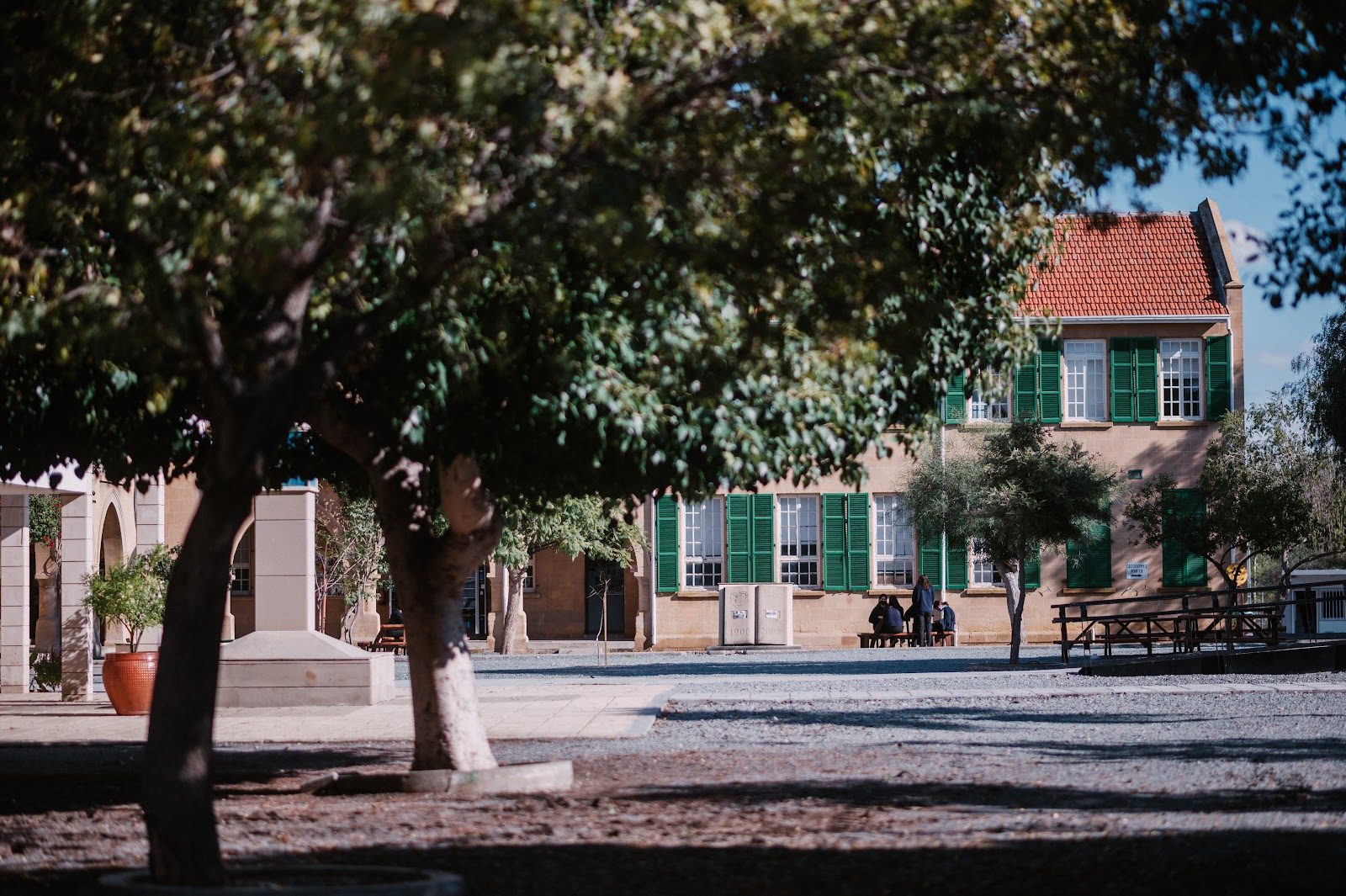
The English School, Nicosia
Nicosia · Cyprus
A 1900 foundation opposite the Presidential Palace, uniting Greek and Turkish Cypriot pupils under a rigorously British curriculum.
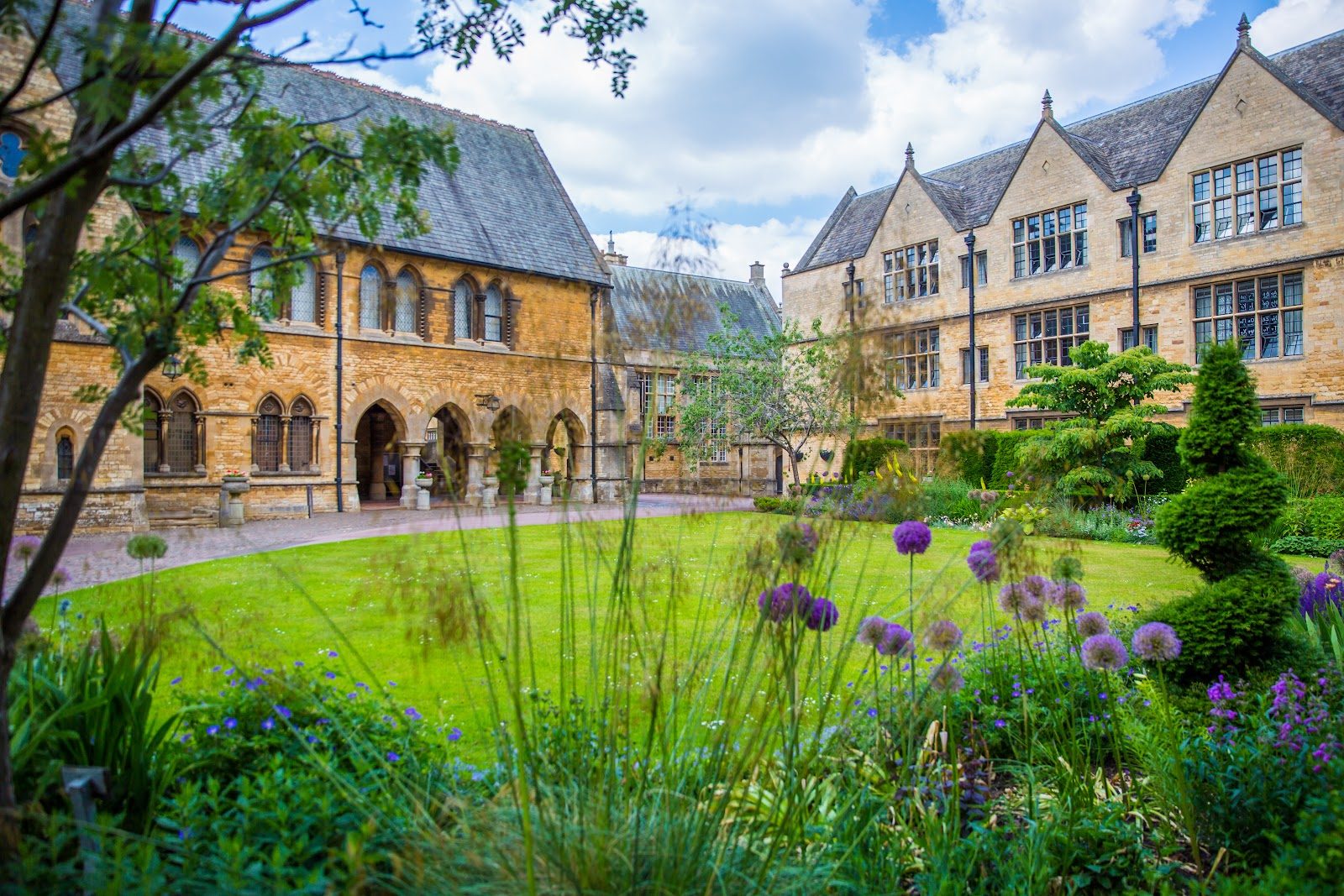
Uppingham School
Uppingham · United Kingdom
A Rutland boarding school where Thring's music-first Victorian philosophy still shapes seven-day house life today
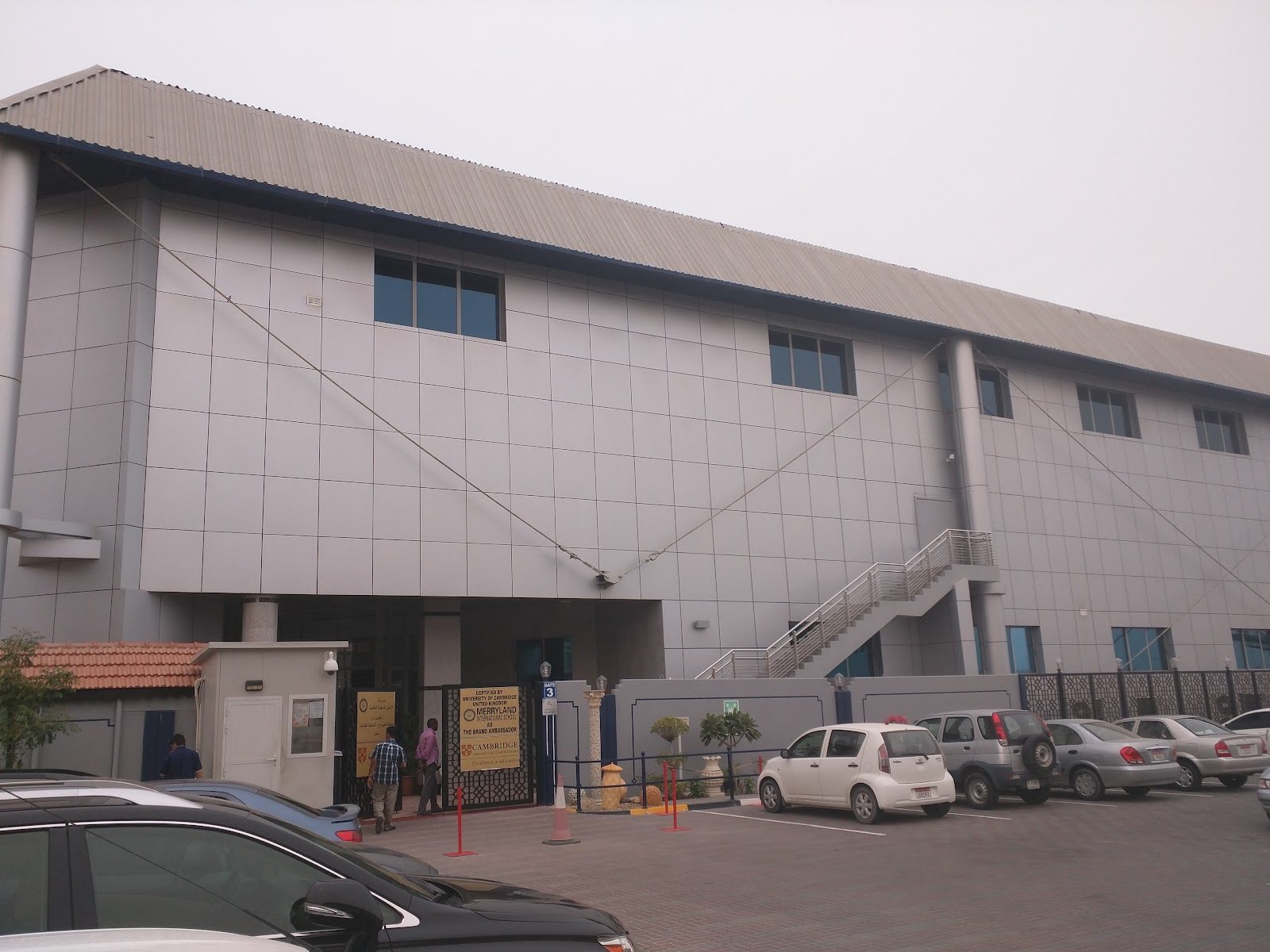
Merryland International School
Abu Dhabi · United Arab Emirates
In Mussaffah, this Cambridge pilot school holds Abu Dhabi's top ADEK rating at a fraction of premium British-school fees.

The British School of Beijing, Shunyi
Beijing · China
Behind air-filtered domes sits Beijing's longest-running British campus, pairing an MIT-built STEAM centre with a Juilliard performing arts partnership.
Same country and curriculum — closest matches within ±10 points either way