
Dorset
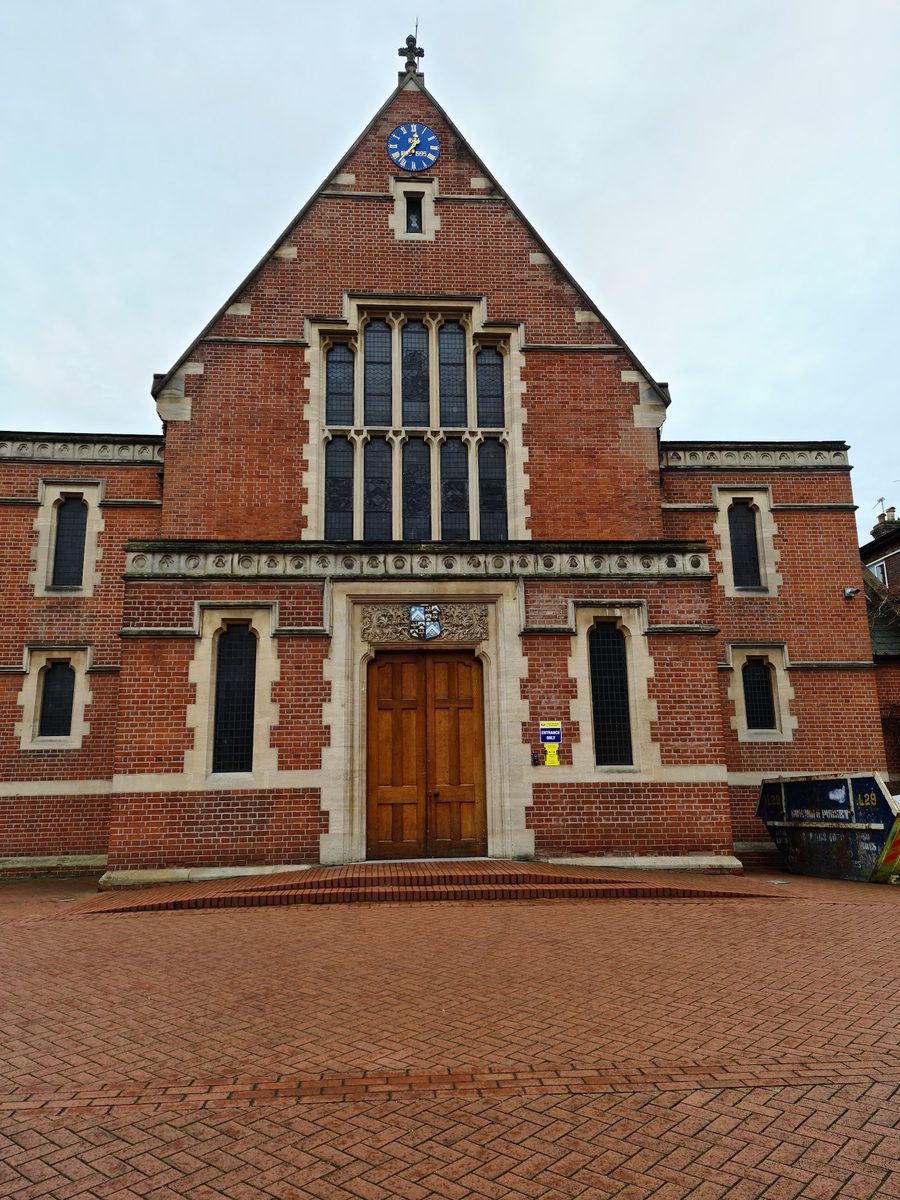
A Sir Charles Barry-designed Grade I manor on the River Stour, home to one of England's last two working real tennis courts.
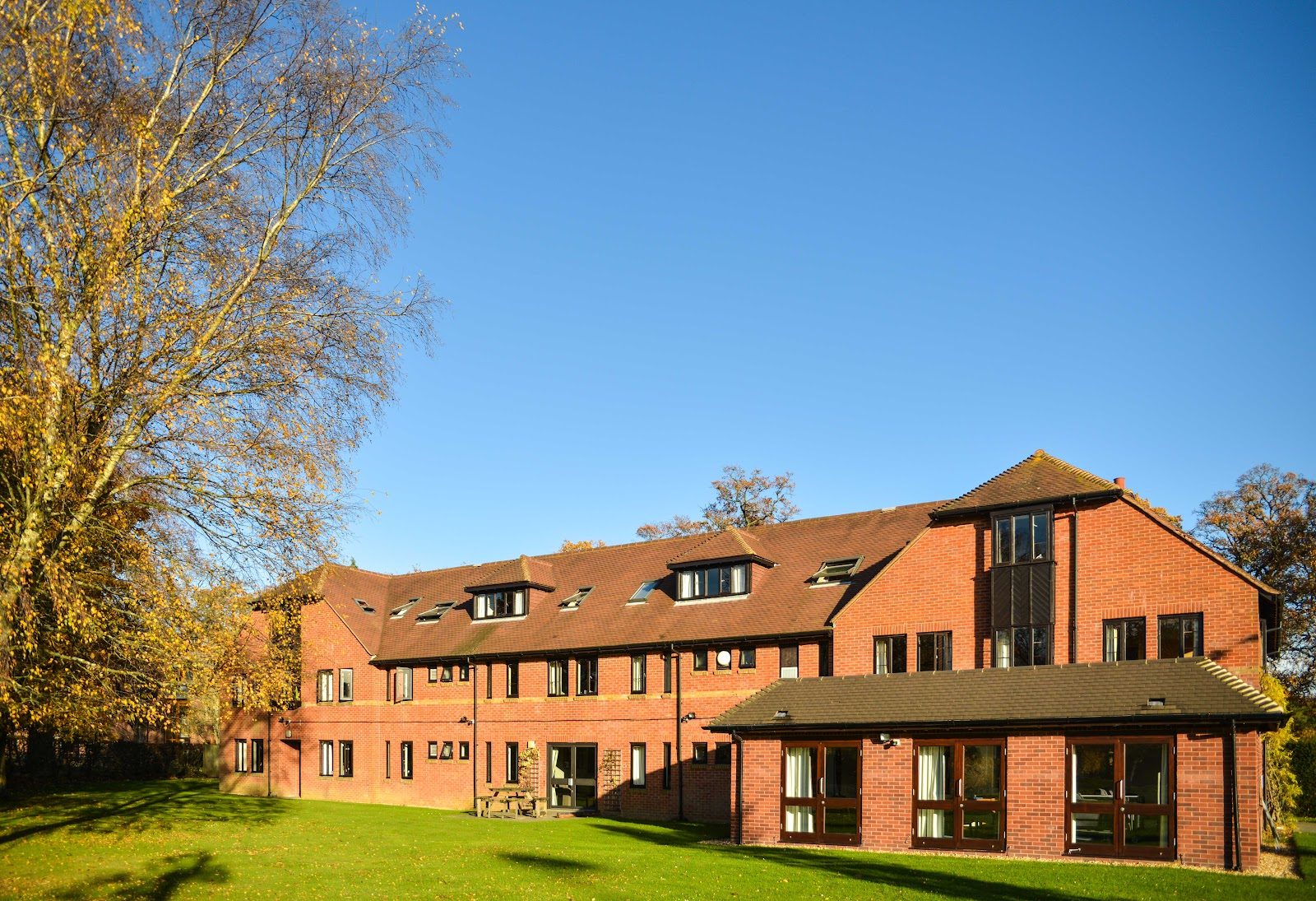
Photo © Canford School via Google Maps
Type
Boarding
Ages
11–18
Curriculum
British
Qualifications
A-Level
Ratio
10:1
The Verdict
Editor's commitment
Right for
Pupils who want full boarding, 250 acres and a serious academic push: 25% A* grades at A level, 87% A*–B.
Wrong for
Families wanting a gentler, cheaper day school: average day fees are £43,000, boarding £57,000, and Canford runs as a 24/7 campus.
Watch out for
This is a 650-pupil Anglican school with a 10:1 ratio and 18 average class size; the setting is grand, but standards are exacting.
Ranking breakdown
Canford School · #298 of 1591
Composite score 72.2. 8 weighted criteria.
By criterion
Academic Outcomes
Weight 20%
#449
of 1529 scored
University Placement
Weight 16%
#459
of 1529 scored
Prestige & Heritage
Weight 12%
#255
of 1571 scored
Alumni Network
Weight 12%
#155
of 1530 scored
Facilities
Weight 12%
#271
of 1534 scored
Transparency & Communications
Weight 8%
#551
of 1532 scored
Peer & Industry Review
Weight 10%
#527
of 1548 scored
Admissions Selectivity & Demand
Weight 8%
#369
of 1529 scored
Score history
Canford School · 2026
Movement across 2024–2026. Peer average overlaid.
Overall — 2024–2026
72.2/ 100
▲ +20.3 vs 2025
year on year
Peer & Industry Review
How Canford School is regarded in the sector
78
Strong · high confidence
Canford School has built a genuinely national reputation over the past decade, culminating in its September 2025 shortlisting for the Tatler Schools Guide's five best public schools in the country alongside Eton, Brighton College and Gresham's. WhichSchoolAdvisor's review notes its Excellent ISI inspection grading and highlights an innovative, cross-curricular approach that "challenges the very academic but also supports those whose talents lie elsewhere." The Good Schools Guide is equally emphatic, judging that for a school barely a century old Canford has "done well to establish itself on the national stage," pairing stand-out academics with exceptional facilities. Consistent Sunday Times Parent Power rankings as the South West's top co-educational boarding school, plus a recent Tatler Public School of the Year award, reinforce a peer standing that is strong and sector-visible rather than merely locally admired, though it sits just below the handful of schools regarded as unconditionally top-tier nationally.
Evidence sources
Editors' overview
A Sir Charles Barry house on the River Stour, 250 acres of landscaped grounds and one of England’s last two working real tennis courts give Canford instant distinction; the harder question is whether the school has substance beyond the setting. It does. This is a full boarding school in the proper sense, with no weekly or flexi option, and that matters: the culture is organised around a seven-day community rather than a day-school timetable with dormitories attached. At 650 pupils, Canford sits in a useful middle ground — large enough to field serious academic, sporting and cultural programmes, small enough for staff to know pupils properly. The published 10:1 student-teacher ratio and average class size of 18 support that claim. For families who want a traditional English boarding school without the scale, noise and social sprawl of the biggest brands, Canford is a serious contender.
Academically, the picture is strong and unusually clear. The school states that 25% of A level grades were A and 87% A–B, against national figures of 9.7% and 55.8%. Destinations carry weight too: from 155 leavers in 2024, 80% went to top-100 universities, with 7 to Oxbridge and 43 to Russell Group institutions; Bristol took 10, Oxford 4 and Cambridge 3. That does not place Canford in the tiny group of exam factories built around relentless academic sorting. It places it in a more attractive bracket for many families: high-performing, ambitious, but still broad in character. ISI and HMC accreditation add credibility, and the school’s latest ISI report singled out pupil leadership as a significant strength, which fits the institutional style — polished, organised, and keen on responsibility rather than raw swagger.
The fees place Canford exactly where its peers sit in the upper tier of British independent education: an average annual day fee of £43,000 and an average annual boarding fee of £57,000 across the full age range. Parents are paying for a lot more than buildings. They are buying a complete boarding environment, scale without impersonality, and a campus that supports sport, culture and outdoor life with unusual ease. The school’s Anglican foundation still forms part of its identity, but this is not a confessional school in tone; the stronger impression is of a well-drilled, socially fluent boarding community with real expectations around contribution and conduct.
The pupil who will want Canford is not the one chasing the hardest academic hothouse, nor the one who wants a loose, bohemian sixth form. Canford suits students who like structure, enjoy being busy, and will use a full boarding environment properly: evenings, weekends, sport, music, leadership, house life. It will also suit families who value civilised ambition over edge. The school’s alumni footprint is substantial — 51 notable alumni catalogued in Wikidata across politics, business, science, the arts and sport — which reinforces the point. Canford belongs on a shortlist because it offers a rare combination: beauty without flimsiness, tradition without stagnation, and results without turning adolescence into a production line.
Academic Performance
Canford’s exam profile is strong enough to command respect, but it does not belong in the tiny band of schools that define themselves through brutal score maximisation. The published A-level picture is still impressive: 57.6% of grades at A*/A in 2025, with 87% at A*–B in the earlier set of results the school highlights against national comparisons. That places Canford firmly in the upper tier of co-educational boarding schools in the South West and in the wider market of academically ambitious, all-round independents. The important point is consistency. This is not a school scraping together one photogenic year and building a narrative around it. The pattern points to a well-run, high-output academic operation with enough depth to deliver serious results without narrowing the school into an exam mill.
Relative to sharper academic specialists, Canford sits a notch below the most hard-edged London and Home Counties names where A*/A rates climb higher and university entry is more aggressively concentrated. For many families, that is a strength, not a weakness. Canford offers credible academic stretch with stronger breadth than the pure-score machines. The university record backs that up: a steady Oxbridge flow, heavy Russell Group traffic and international placements, all from a school whose identity still rests on more than grades alone. The academic standard is decidedly strong; the distinguishing feature is balance.
Facilities
Canford’s physical assets sit well above the norm for co-educational boarding schools outside the topmost fee bracket. The estate gives it room to do things properly: games, outdoor activity, house life and weekend boarding all benefit from a campus that is not cramped or improvised. The standout is the working real tennis court, one of only 2 still in use at English schools, and exactly the kind of facility that signals old-money confidence rather than performative luxury. Add the Sir Charles Barry house and riverside setting, and the school has serious architectural presence without tipping into museum-piece stiffness. In market terms, that places Canford ahead of many strong regional peers whose teaching is sound but whose campuses lack the same breadth, atmosphere or sense of inheritance.
What matters more is that the facilities support a full-school life rather than a prospectus fantasy. The school runs 1,000+ sports matches a year, 20 music groups and ensembles, and a wide co-curricular menu; that level of activity needs infrastructure with real capacity. Against direct competitors, Canford is stronger on grounds, boarding environment and the sheer usability of the site across evenings and weekends. It is less singular in specialist academic infrastructure: nothing in the public domain marks out science, design or performing arts provision as sector-leading in the way the estate marks out sport and community life. That is the distinction. Canford offers a rich, high-functioning campus with rare heritage features, not a trophy collection of flashy new buildings.
Canford’s physical assets sit well above the norm for co-educational boarding schools outside the topmost fee bracket
Prestige
Canford carries real prestige in the English boarding market, but it is a measured, old-guard version of prestige rather than the louder, more socially theatrical kind. The estate matters here. A Barry-designed house, riverside grounds and a working real tennis court give the school instant cachet in a sector where setting still shapes perception. So does the structure of school life: this is a place built around boarding habits, house identity and organised participation, which gives it the proper public-school texture many international families are paying for. The school’s standing is strengthened by a visible record of university progression, a healthy notable-alumni base, and the fact that it still sends pupils into high-status destinations without turning itself into a monoculture of grind. That combination gives Canford durable social capital: it is known, respected and legible to British employers, universities and professional families.
I rate it below the handful of top-table names whose brands travel on recognition alone, but clearly above the mass of competent independents that lack national pull. The prestige rests on substance, setting and continuity, not on hype. Canford’s recent leavers moved in strong numbers to elite universities, with 7 to Oxbridge and 43 to Russell Group institutions, and the school cites 39 Oxbridge offers across the past five years. That record matters. So does the alumni footprint across politics, business, scholarship, the arts and sport. The result is serious, established prestige — not maximal, not fashion-driven, but strong enough to open doors.
Canford publishes strong top-line indicators, but not the kind of granular breakdown that the most transparent schools now give as routine
Communications
Canford communicates with parents in a controlled, polished way. The public-facing message is clear: this is a busy boarding school with a strong communal life, and the school gives families plenty of concrete signals to support that claim. It publishes headline academic outcomes, university destinations, inspection praise, bursary reach, community-action totals and activity volumes, including 50+ co-curricular options and 40 pupil leadership roles each year. That range matters. Parents can see not just that pupils do well, but what the school counts as success beyond grades. The tone is confident and highly curated, with a steady flow of upbeat news and institutional messaging. That works for first impressions, visits and admissions. It also tells you something important about the school itself: organised, image-aware, and serious about keeping the narrative tight.
Where the communication is less satisfying is in depth. Canford publishes strong top-line indicators, but not the kind of granular breakdown that the most transparent schools now give as routine. We have not seen richer public detail on how results distribute across subjects, how pastoral systems operate in practice, or how the school handles the day-to-day mechanics of a boarding community beyond broad claims about care and belonging. For current parents, that gap matters less if internal communication is prompt and disciplined; for prospective families, it leaves parts of the picture too managed and less revealing than it should be. The school communicates competence and momentum very well. It communicates institutional texture less well.
Uniqueness
What sets Canford apart is not just beauty, but the way heritage still functions in daily school life. Plenty of British boarding schools trade on old stone and old names; fewer have a campus where the setting still shapes behaviour, rhythm and ambition. The real tennis court is the obvious symbol: one of only 2 still working at English schools, and a reminder that Canford offers a version of boarding-school culture with real continuity, not a themed imitation. The same applies to the house structure, the riverside estate and the expectation that pupils use the place fully beyond lessons. This gives Canford a distinctive social texture: more rooted, more communal and more self-contained than schools where boarding is secondary to the day-school timetable.
That matters for students because it produces an education with stronger form outside the classroom. Leadership, sport, music, service and evening life are not decorative extras bolted onto academics; they are built into the institution’s daily operating model. The school backs that up with unusual evidence of organised participation, from 50+ activities and societies to 40 pupil leadership roles each year. For the right child, that creates a high-structure, high-opportunity adolescence in which confidence is trained through use, not talk. The trade-off is clear too: pupils who want anonymity, looseness or a more urban sixth-form culture will find Canford too enclosed and too programmed. Its uniqueness lies in offering a fully inhabited boarding world, and doing it with more substance than theatre.
Its uniqueness lies in offering a fully inhabited boarding world, and doing it with more substance than theatre
Student Profile
Canford suits students who are happy inside a structured, all-in school culture. The best fit is not a teenager who wants to drift in and out of school life, keep weekends separate, or treat co-curricular activity as optional decoration. This is a place for pupils who can handle expectation and pace: lessons, house commitments, sport, music, leadership, community work, and the social demands of living in close company. The school advertises more than 50 activities and societies, over 20 music groups, and a large annual programme of matches; that tells you the student body is expected to participate, not spectate. The prevailing type is capable, busy, socially fluent and comfortable with adult oversight.
It will work well for children with civilised ambition: motivated, conscientious, and willing to contribute without needing the sharper competitive edge of a pure academic hothouse. Pupils who thrive here will enjoy tradition, routine and belonging to something larger than themselves. They do not need to be polished on arrival, but they do need enough resilience to live in a community with clear standards and limited room for detachment. The school’s bursary provision, with 38 pupils on substantial support, adds some social breadth, but Canford still reads as a well-brought-up, high-expectation environment. Pupils who want anonymity, rebellious looseness or a more urban, independent sixth-form atmosphere will not fit well.
The published 10:1 student-teacher ratio and average class size of 18 support that claim
Co-curricular strengths
Arts & sport, on a separate axis
Overall 8.82/10
Scored 0-10 from the school's own published evidence. This axis is editorial-only — it does not feed the main WTS ranking.
Sports
9.6/10
Expansive 250-acre parkland site in Dorset; holds historic dominance in school field hockey, rowing, and real tennis (hosting its own rare court).
Drama
9.3/10
The magnificent Layard Theatre operates as a professional-grade venue for both public commercial performances and complex student productions.
Dance
6.5/10
Offered as a popular afternoon activity, providing core movement and synchronization training for musical theatre setups.
Music
9.5/10
Strong instrumental and vocal infrastructure feeding active chamber orchestras, wind groups, and chapel ensembles.
Visual Arts
9.2/10
Excellent fine art and printmaking layouts designed to clear elite portfolios, frequently hosting regional art exhibitions.
Editor-verified · 8/17/2026
Outcomes & destinations
Where students go next
Editorial estimateClass of 2024
155 graduates
A-Level distribution
98% covered
- A*26%
- A32%
- B32%
- C8%
Top destinations
50 placements
- Oxford· 4
- Cambridge· 3
- Bristol· 10
- Exeter· 10
- Durham· 8
- Bath· 6
- Cardiff· 5
- Warwick· 4
Dorset co-ed boarding with a strong sports and estate-based curriculum.
Editor-approximated from the school's own leavers report. Awaiting school-attested figures.
Notable alumni · Wikidata
51notable alumni
22 historic (born pre-1930) · 4 modern (born post-1970)wikidata:2026-07-28 How we source this
The story in one line
42% achieved ≥ AAB in 2+ facilitating subjects·ISI Routine Inspection 2025
AAB with 2 facilitating subjects is the Department for Education's published predictor of admission to a top-third UK university: the pupil has scored high grades in at least two of the classic Russell-Group subjects (maths, sciences, English, history, geography, or a modern language). Independent schools don't appear in the state-only HE-destinations dataset, so this is the strongest DfE-verified sixth-form signal available. Source: DfE 16-18 school and college performance data · 2023/24. Value-added +0.24
DfE-verified statistics
Official GCSE data · 2024/2025
Progress 8
—
Value-added score. State-schools only; 0 = expected progress, +1 = one grade above.
Attainment 8
26.8
Average grade across 8 GCSEs (score out of 90). National ≈ 46.
EBacc average score
0.94
Avg grade across the 5 EBacc pillars (English, Maths, Sciences, Language, Humanity).
EBacc slots filled
2
How many of the 5 EBacc pillars pupils typically enter (max 5).
A-Level attainment
Cohort · 2023/24
Avg A-Level grade
A-
APS per entry: 45.15
Best 3 grade
A-
Best-3 APS: 45.42
≥ AAB + 2 fac.
41.8%
Russell-Group predictor.
Progress (value-added)
+0.24
Above average
Read with care. Independent schools frequently sit IGCSEs or Pre-U qualifications instead of standard GCSEs — DfE data only counts standard GCSEs, so these numbers may reflect a partial cohort. For a fuller picture, cross-check with the school's own annually-published results.
URN 113922Verified · DfE 2024/2025
Official inspection
ISI report · 2025
Inspectorate
Independent Schools Inspectorate
The Government-approved inspectorate for English independent schools.
Latest report
11 November 2025
Routine Inspection
Report history
Verified · Independent Schools InspectorateSource-of-truth

WTS 300 badge
2026/27 editionCanford School is one of the World's Top 300 Schools for 2026/27. Claim your listing to add it to your site →
Strengths
- +Runs a genuinely full boarding model, with the school reporting that on average 80 per cent or more of boarders remain on campus at weekends, sustaining a residential co-curricular culture.
- +Occupies a large historic estate beside the River Stour with extensive on-site provision, including a 25-metre pool, a nine-hole golf course, a Real Tennis court, 12 grass pitches and the 300-seat Layard Theatre.
- +In 2024, 26 per cent of A-Level grades were A* and 58 per cent were A*/A, with 80 per cent of leavers going on to top universities.
- +Publishes its examination results and destinations openly, reporting 39 Oxbridge offers over the past five years.
- +Canford's latest Independent Schools Inspectorate report highlights a significant strength in the development of pupil leadership.
Considerations
- −Boarding fees are listed at £55,000 a year, placing the school at the premium end of its fee bracket.
- −Admissions are designated Selective by the Department for Education, and competition for places is strong.
- −The school operates a full boarding ethos rather than a weekly or flexi model, with structured exeat weekends the main breaks, limiting flexibility for families wanting looser boarding arrangements.
- −As a senior school for ages 13-18 only, families must secure a separate prep-school stage beforehand, and the merger with Dumpton to form The Canford Schools Group means some structural change is still bedding in.
Availability
Primary entry gate & tests
13+ ISEB / 16+ Exams
Gallery
Photo © Canford School via Google Maps
Photo © Canford School via Google Maps
Photo © Canford School via Google Maps
Photo © Canford School via Google Maps
Photo © Canford School via Google Maps
Photo © kfLeoungGB via Google Maps
Photo © Canford School via Google Maps
Photo © Canford School via Google Maps
Photo © ALF WAHED via Google Maps
Recommended reading
Independent write-ups of this school from editorial outlets we trust.
- Canford School ReviewGood Schools Guide
Parent reviews
Have you sent your child here?
Voice reviews carry the strongest trust badge — we transcribe them for you to tidy up before they go live. Prefer to type? A written review is fine too.
Add your voice
In 60 seconds, tell other parents: what's the best thing about Canford School, and what surprised you when your child joined?
We ask for a Google sign-in so every review has a real face behind it — no anonymous drive-by attacks on schools, and no faked positive reviews. Your email is never shown publicly.
Send this profile to a friend
International parents rely on word-of-mouth. Share this review with someone weighing the same decision.
Schools with places
Similar schools to Canford School with places available now.
St Paul's Girls' School
London · United Kingdom
- 2026-27
- CLOSEDStandard route
- 2027-28
- PLACES OPEN11+ Nov 6 / 16+ Sept 25
Haileybury
Hertford · United Kingdom
- 2026-27
- CLOSEDStandard route
- 2027-28
- PLACES OPEN16+ Active; 13+ Std Closed; 13+ Late enquire
Latymer Upper School
London · United Kingdom
- 2026-27
- CLOSEDStandard route
- 2027-28
- PLACES OPENCloses Nov
City of London School
London · United Kingdom
- 2026-27
- CLOSEDStandard route
- 2027-28
- PLACES OPEN11+/16+ Active
Availability first, then country, area, curriculum, price, co-curricular
Consider also
Also worth looking at alongside Canford School.
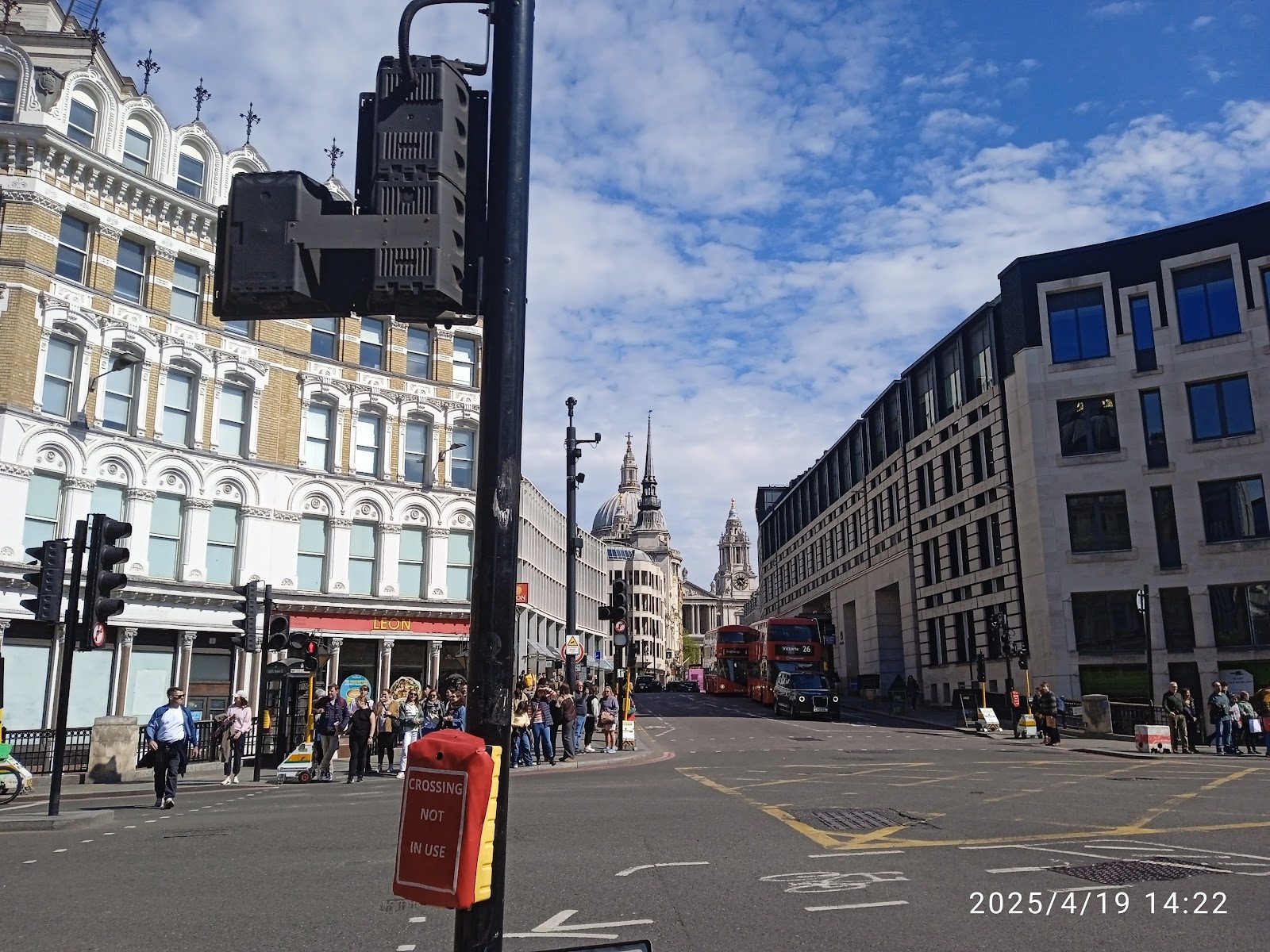
St Paul's Girls' School
London · United Kingdom
A Hammersmith day school where admission itself is the only scholarship, and GCSE results already top the national table.
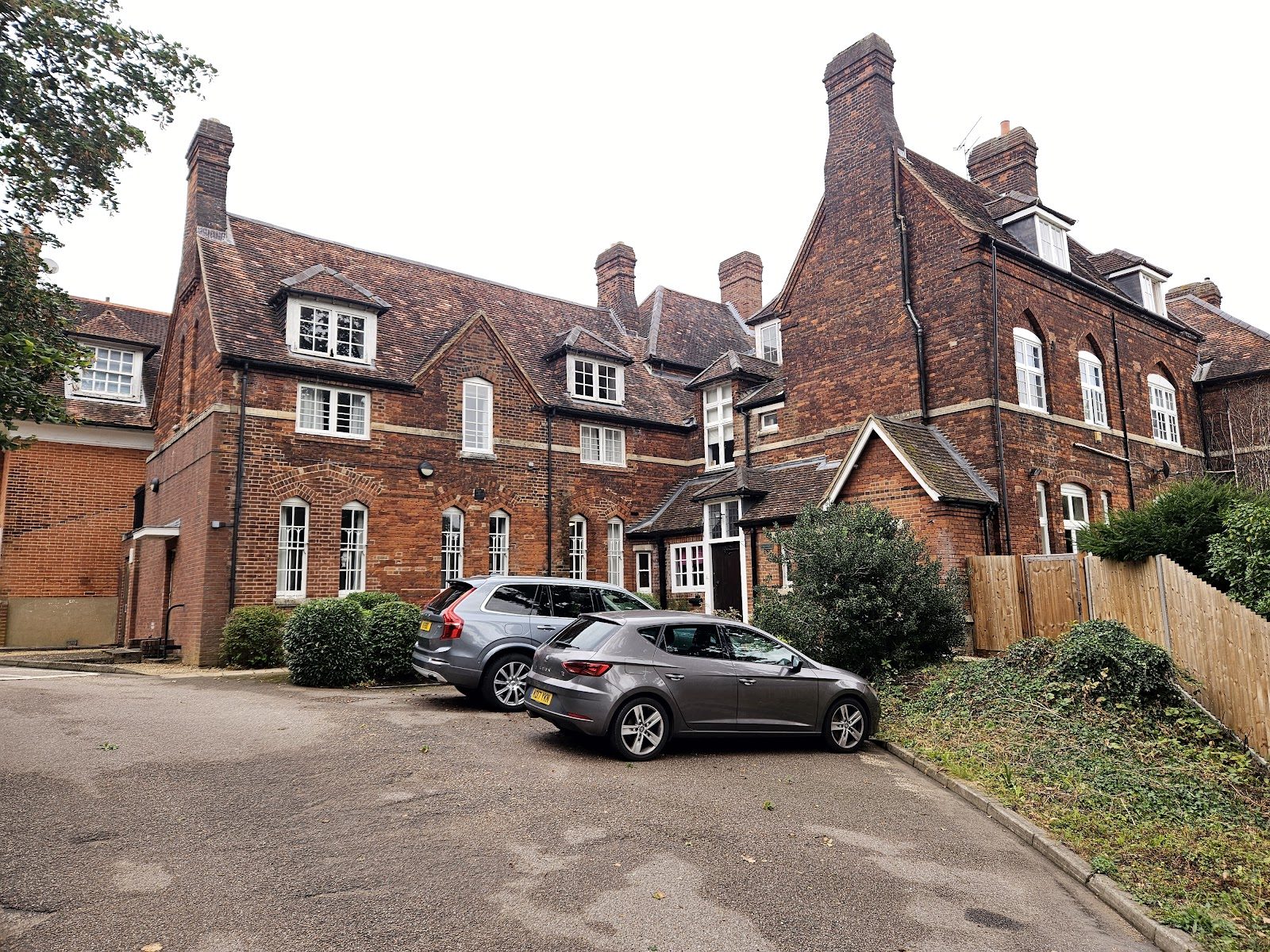
Haileybury
Hertford · United Kingdom
A neoclassical quadrangle built for East India Company recruits now anchors this Hertfordshire boarding school, second-largest of its kind in Britain.
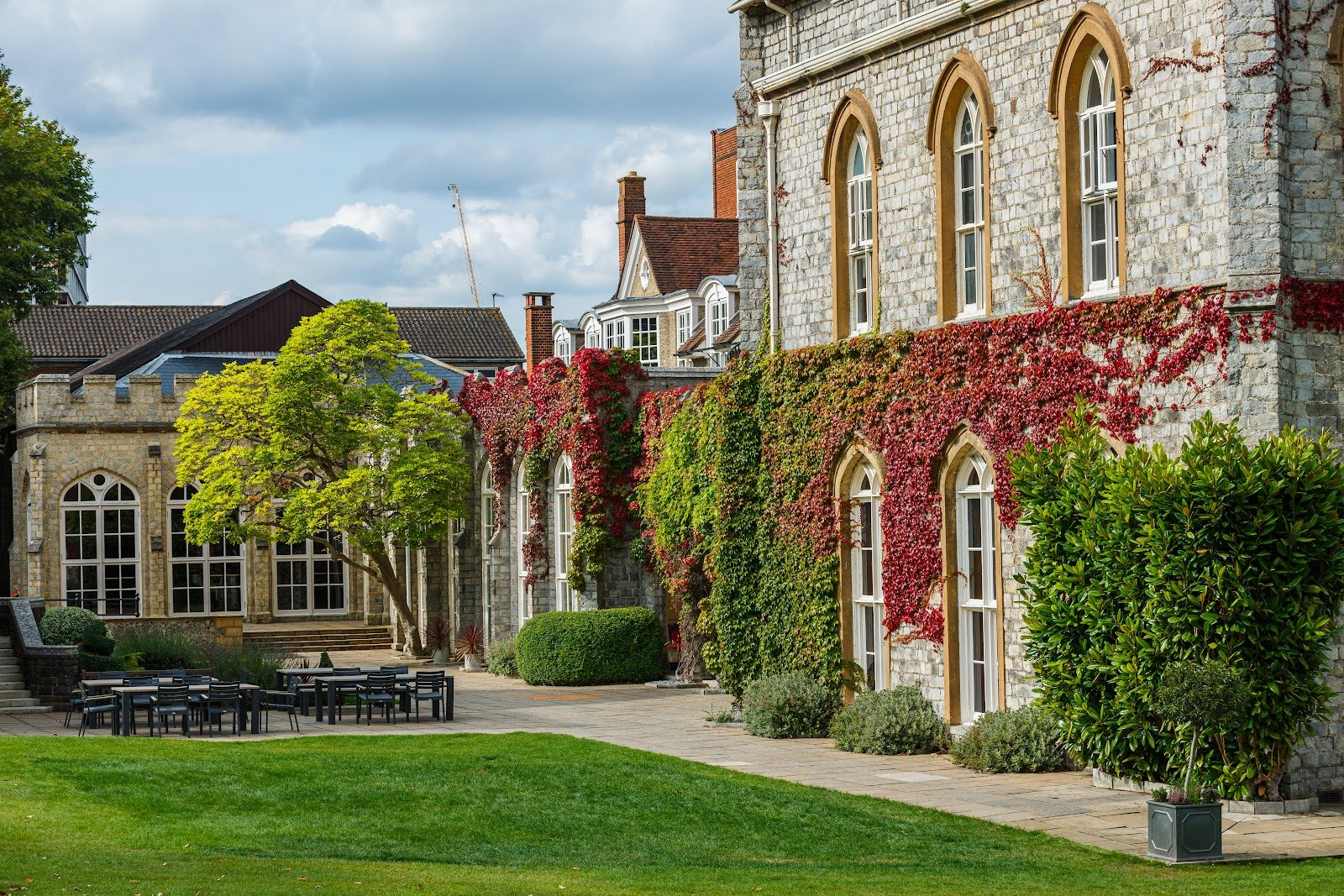
Wycombe Abbey
High Wycombe · United Kingdom
A Victorian pioneer's 1896 foundation, this Chiltern hills estate blends mixed-age boarding houses with one-in-five Oxbridge offers.
Latymer Upper School
London · United Kingdom
A 1624-founded, non-denominational day school in Hammersmith prized for its stellar Oxbridge and Russell Group outcomes.
Same country and curriculum — closest matches within ±10 points either way