
Seoul
Seoul Science High School for Gifted Students
A credit-based accelerator for the nation's top 0.01% of middle schoolers, racing to KAIST two years early behind Seoul's old fortress wall.
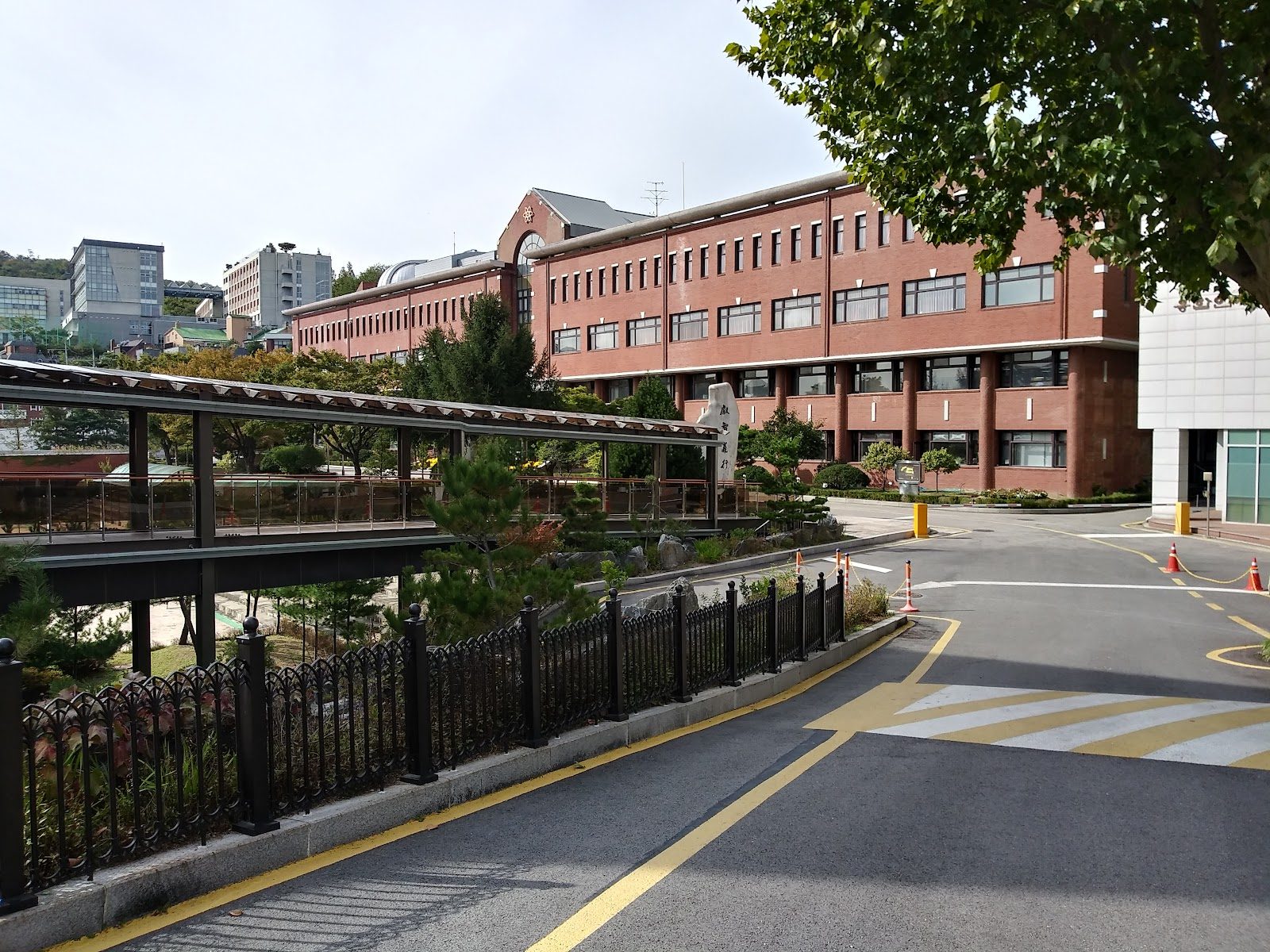
Photo © YS P via Google Maps
Type
Day
Ages
15–18
Curriculum
Korean
Qualifications
Korean national gifted-track curriculum
Ratio
—
The Verdict
Editor's commitment
Right for
Exceptionally able 15–18 year-olds who want a Korean credit-based science track in Seoul, with average classes of 20 and no boarding.
Wrong for
Families wanting breadth over acceleration: this 1989 secular day school exists for gifted scientists, not generalists, artists or late developers.
Watch out for
Teaching runs in Korean and English, and entry targets the nation’s top 0.01%; if your child needs easing in, this school will not oblige.
Ranking breakdown
Seoul Science High School for Gifted Students · #297 of 1591
Composite score 72.2. 8 weighted criteria.
By criterion
Academic Outcomes
Weight 20%
#92
of 1529 scored
University Placement
Weight 16%
#59
of 1529 scored
Prestige & Heritage
Weight 12%
#139
of 1571 scored
Alumni Network
Weight 12%
#900
of 1530 scored
Facilities
Weight 12%
#1110
of 1533 scored
Transparency & Communications
Weight 8%
#1326
of 1532 scored
Peer & Industry Review
Weight 10%
#300
of 1548 scored
Admissions Selectivity & Demand
Weight 8%
#5
of 1529 scored
Peer & Industry Review
How Seoul Science High School for Gifted Students is regarded in the sector
75
Strong · medium confidence
Within Korea's gifted-education tier, Seoul Science High School is consistently grouped with Gyeonggi Science High School and Korea Science Academy of KAIST as the country's 'big three' science high schools, a classification repeated across Chosun Ilbo and JoongAng Ilbo education rankings and in Ministry of Education gifted-track reviews. University admissions offices at KAIST, POSTECH and Seoul National University treat its diploma as a strong signal, reflected in disproportionately high early-admission and science-talent-track acceptance rates cited in Korean university recruitment data. Domestic education press coverage focuses on Olympiad pipeline strength, noting frequent representation of its students on Korea's national teams for International Mathematical and Physics Olympiads, rather than on lifestyle or campus marketing. Rival gifted-school administrators and hagwon counselors in Gangnam education forums routinely rank it alongside Gyeonggi Science High as the most competitive entry point in Seoul for STEM-focused families. International commentary is thinner than for Gyeonggi Science, since English-language guides like Good Schools Guide International rarely profile Korean specialized public schools, leaving its reputation almost entirely domestic and academically, rather than pastorally, defined.
Award
Elite Science & Research 58
World's Top School · The Global Ranking
Seoul Science High School for Gifted Students is featured on our Global Top 58 ranking at #7. This seal is available for the school's marketing team to use on their website, prospectus and social channels.
Award
Elite Computing & AI 60
World's Top School · The Global Ranking
Seoul Science High School for Gifted Students is featured on our Global Top 60 ranking at #18. This seal is available for the school's marketing team to use on their website, prospectus and social channels.
Award
Elite Mathematics 60
World's Top School · The Global Ranking
Seoul Science High School for Gifted Students is featured on our Global Top 60 ranking at #1. This seal is available for the school's marketing team to use on their website, prospectus and social channels.
Editors' overview
Seoul Science High School for Gifted Students occupies a narrow, elite corner of the Korean market: a state science high school turned Ministry-designated academy for gifted students in 2009, built for teenagers who move faster than the standard system allows. Founded in 1989 in Jongno-gu, it serves ages 15–18 on a day-school model, with the Korean curriculum taught in Korean and English. The school’s own framing is plain: this is a specialist academy for gifted students interested in science. The distinguishing feature is not pastoral breadth, sport, or lifestyle. It is acceleration, selection and concentration. For families hunting an all-round international school experience, this is the wrong shortlist. For families chasing intellectual velocity and a hard academic edge, it belongs near the top.
What sets it apart is the level of academic compression implied by the model. Science high schools in South Korea exist to gather a tiny slice of the national cohort and move them quickly into advanced study; Seoul Science High School sits at the sharp end of that system as one of only 8 academies for gifted students in the country. Average class size is 20, which matters in a school built around high-calibre peer groups and rapid instruction. The attraction is clear: serious pace, deep subject focus and a student body that removes the drag of mixed ability teaching. The trade-off is just as clear. This is a narrow school for a narrow student. Parents wanting broad extracurricular glamour, soft landings or a gentle adolescence will find the proposition unforgiving.
It deserves a place on a shortlist for students with genuine mathematical and scientific appetite, strong self-discipline and no need for hand-holding. The ideal pupil is not just bright, but hungry for competition, comfortable with pressure and energised by being surrounded by equally able peers. A child who wants room for arts-led exploration or a balanced generalist education will feel fenced in. A child who wants peer intensity, academic compression and a clear runway into top-level science and engineering study will find the school’s purpose unusually coherent. In market terms, Seoul Science High School is not a prestige finishing school. It is a selective academic engine.
An Elite Science & Research 58 school
Seoul Science High School for Gifted Students, tucked into Jongno-gu in central Seoul, sits at rank seven on the Elite Science & Research 58, anchored by a result no other Korean school currently matches: at the 2026 International Physics Olympiad in Colombia, Kim Mu-yeon, Oh Ju-ha, Lee Gwon-heon, Lee Seung-jun and Jeong Min-gwon, all third-years at Seoul Science High, each won gold medals, with Oh Ju-ha placing first overall among the competitors from 91 countries and 381 students. That single sweep sits atop a longer run: in 2023 the school won ten gold and six silver medals, totaling sixteen, the best result of any Korean high school at that year's International Science Olympiads.
The engine behind this is a mentored research pipeline rather than generic AP-style coursework. The R&E program pairs students for a full year with practicing scientists and science teachers who mentor them through genuine research tasks, feeding into a non-graded, credit-based graduation system built around strengthened research activity and an interdisciplinary curriculum, requiring 170 credits. Selection is brutal — the school accepts only the top 0.01% of middle school graduates nationally — and the payoff is direct: SSHS pioneered an acceleration system letting students finish in two years and enroll at KAIST, with roughly half of graduates proceeding there. Students also work with an on-campus observatory to chart the night sky alongside coursework in programming and Fourier analysis.
Among named alumni, politician Lee Jun-seok entered Seoul Science High, graduated a year early, and briefly attended KAIST's mathematics department before withdrawing, later becoming the founding leader of the People Power Party before founding the Reform Party and winning a National Assembly seat in 2024 and running as the Reform Party's 2025 presidential candidate.
International openness is limited and families should know this going in. This is a Korean public gifted academy: admission runs through a nationwide process involving interviews, writing, and team research presentations, conducted entirely in Korean with no ESL support, though a separate document track exists for Korean returnees and students currently enrolled at overseas or international schools. Boarding is standard for all admitted students, and because public science high schools charge no tuition, families cover only modest dormitory, meal, and operational fees. This is not a conventional international school; it suits Korean-fluent families willing to compete through the official national admissions portal roughly a year ahead, not families seeking an English-medium entry point.
An Elite Computing & AI 60 school
Seoul Science High School for Gifted Students in Jongno-gu, Seoul, South Korea sits at rank eighteen because of a competitive-programming output that few gifted-education academies anywhere can match. In the national trials that pick South Korea's four-student International Olympiad in Informatics team, Seoul Science High has landed at least one seat in most seasons this decade, including two of the four national spots in both 2022 and 2023. That density of informatics-Olympiad selection, produced by a single day school with roughly 380 pupils, is what anchors its place among the world's most competitive pre-university computing pipelines.
Academically, Seoul Science High runs on a university-style credit system that lets pupils assemble individualized course loads rather than sit through fixed year-group timetables. Its informatics track has been formalized inside the school rather than outsourced entirely to private academies: an Artificial Intelligence advanced-elective course was added to the curriculum for students entering from 2021, alongside standing offerings such as Robot Programming. Before pupils even arrive, admitted students complete the school's mandatory Bridge Program, a pre-enrollment curriculum covering mathematics, physics and informatics problem sets submitted through Google Classroom. As with its peer science academies nationally, senior pupils are channeled into individual or university-linked research placements culminating in a graduation research paper, the R&E model that underpins Korea's broader science-olympiad training system.
Notable alumni include Su-In Lee, who attended Seoul Science High before earning her KAIST computer science degree and completing a PhD in the Stanford Artificial Intelligence Laboratory under Daphne Koller; she is now a leading machine-learning researcher. Politician and entrepreneur Lee Jun-seok graduated early from Seoul Science High before studying computer science at Harvard. Beneath these headline names sits a steady annual harvest of national informatics-Olympiad team seats, the clearest evidence of a functioning competition pipeline rather than isolated individual brilliance.
International openness here is limited and should be stated plainly. Seoul Science High is a public Korean government school teaching entirely in Korean, admitting through a notoriously rigorous multi-stage written exam and interview aimed at Korean nationals, with a separate documentary application track for overseas Korean returnees and international-school pupils. A mandatory on-campus dormitory operates for enrolled students during the school week, but it functions as domestic boarding for admitted pupils rather than an international boarding programme, and there is no ESL track. Sticker costs are modest by international-school standards, with dormitory and meal fees running to several hundred thousand won a month and total annual costs estimated in the low millions of won, though family-facing accounts suggest scholarships often halve the real cost. For a globally mobile family without Korean fluency, this is not a workable entry point; it suits Korean-passport or Korean-fluent returnee families, who should begin the returnee documentation and entrance-exam preparation at least a year ahead of the winter application window.
An Elite Mathematics 60 school
Seoul Science High School for Gifted Students, tucked into Jongno-gu in central Seoul, sits at rank one on the Elite Mathematics 60. At the 67th International Mathematical Olympiad in Shanghai in 2025, Hyun-joon Lee, Seoul Science High School, grade 3, won a gold medal, and scored a perfect 42 points to rank first individually, competing for a second straight year and winning a gold medal. He was not an outlier: Seong-jin Shim, also of Seoul Science High School, won gold, while Dong-hyun Kim and Seung-wook Hong, both Seoul Science High School, won silver medals, and Chae-min Kim, Seoul Science High School, received an honourable mention — five of Korea's six-student national team, and every one of them medaled.
The specialism is delivered through genuine structural depth, not a handful of star pupils. From the second year, students move onto classes using university textbooks such as General Physics, General Chemistry, General Biology, and Calculus, and olympiad-track students layer on further electives in number theory and linear algebra. Graduation requires 170 credits in overall course work, consisting of 140 credits in academic courses and 30 credits in research, under a non-graded, credit-based system built around strengthened research activities. Historically, about one-third of sophomore students graduated one year earlier than typical Korean high schoolers. Roughly half the student body is functionally training for national olympiads at any given time, and around half of SSHS students pursue studies at KAIST after graduation.
Alumni bear this out. From 1994 to 1996 when he was in Seoul Science High School, Sug Woo Shin won two gold medals, including a perfect score in 1995, and one bronze medal at the IMO, before graduating from Seoul National University with a mathematics degree and completing a Harvard PhD under Richard Taylor; he is now a professor of mathematics at UC Berkeley working in number theory, automorphic forms, and the Langlands program. A decade earlier, Kim Dong-Ryul became the first Korean participant to win an IMO gold medal three years in a row, ranking second individually with 40 out of 42 points in 2012.
International openness is limited and should be stated plainly. This is one of the most elite schools in Korea, accepting only the top 0.01% of middle school graduates, selected through a Korean-language nationwide exam; instruction, testing and campus life run entirely in Korean, with mandatory on-campus dormitories despite the day-school classification. A dedicated document track exists for overseas-school students, returnees and pupils from foreign schools, but this serves Korean-heritage families, not a general international intake. Public tuition itself is nominal, with Seoul high schools typically charging KRW 1,000,000 to 3,000,000 per year; dormitory and meal costs add substantially more. Non-Korean-speaking families should look elsewhere; Korean-fluent families should start the returnee document track a full year ahead.
Academic Performance
Public exam data are not the point here, and the school does not publish the kind of aggregate external-results grid international parents might expect. No IB average, no AP profile, no A-level table, no university-prep marketing dashboard. That opacity matters if you want a clean, comparable set of exam outcomes. It also reflects the school’s place in the Korean system: its value lies less in glossy score disclosure than in acting as a high-pressure academic funnel for students already operating at the extreme top end of the national cohort. Relative to mainstream academic high schools, and even relative to other selective science schools, it sits in a rarefied tier by intake alone.
Where it fits among peers is therefore clearer through structure than through published score tables. This is one of only 8 Ministry-designated academies for gifted students in the country, and that status places it above ordinary selective schools in specialisation and pace. The relevant comparison group is not the broad international-school market; it is the tiny cluster of Korean science academies feeding top science and engineering pathways. In that group, Seoul Science High School holds a hard-edged, competition-heavy position. Parents who need transparent external-exam statistics will find the public record thin. Parents who understand the Korean gifted-school hierarchy will read the signal differently: this is an institution built to move exceptional mathematicians and scientists faster than standard schooling permits, not to advertise conventional exam performance in brochure form.
Facilities
The school’s public profile is strikingly thin on facilities, and that matters. We have not seen the detailed lab inventory, maker spaces, observatory access, engineering workshops, sports provision or arts venues that peer institutions at this level often publish to prove how serious their infrastructure is. For a specialist science academy, the critical question is not whether it has classrooms; it is whether it has advanced laboratories and research-grade spaces that match the high-pressure academic funnel described elsewhere. On that point, the public picture is frustratingly opaque. Parents comparing it with top science-focused schools in Korea or with well-documented international STEM campuses will get far less operational detail here than they need.
What the school does disclose points to a compact teaching environment, with an average class size of 20. That supports close academic supervision and efficient lab teaching, assuming the specialist rooms are strong. Against peer schools, the benchmark is demanding: elite science schools need physics, chemistry and biology labs that can cope with accelerated practical work, plus computing capacity that goes beyond basic ICT. They also need enough quiet study space for a student body built around intellectual intensity rather than campus life. Seoul Science High School’s specialist mission raises the bar. Until the school publishes a fuller account of its facilities, parents must judge it as a school with a serious academic purpose but an under-explained physical offer.
For families chasing intellectual velocity and a hard academic edge, it belongs near the top
Prestige
In prestige terms, this sits in the uppermost academic stratum of South Korean secondary education. The reason is not polish, celebrity alumni or international branding. It is gatekeeping. Seoul Science High School belongs to a tiny state-backed category reserved for students with exceptional scientific and mathematical promise, and its Ministry-designated gifted status places it inside an already narrow national elite. Being one of only 8 such academies gives the name immediate weight among Korean universities, researchers and families who know the system. Outside that circle, the badge carries less glamour than a global-brand international school. Inside Korea’s science-education hierarchy, it carries serious institutional authority.
That prestige is also meritocratic in a hard, Korean way. The school’s standing rests on selectivity, pace and the calibre of the peer group, not on campus theatre. A place here signals that a student has cleared one of the country’s toughest academic filters at school age and entered an environment built for acceleration rather than balance. That makes the school formidable, but also narrow. Its reputation will land hardest with families targeting advanced science and engineering routes, research universities and high-level academic competition. It will matter less to parents who prize all-round development, social cachet or a broad international profile. This is specialist prestige, not universal prestige — and for the right student, that distinction matters more than any glossy name recognition.
Able pupils gain faster pacing, stronger academic rivals, and earlier exposure to the expectations that govern top-tier science and engineering routes
Communications
Parent communication is not a public strength here. The school’s external footprint is thin, institutional and inward-facing, with far less operational clarity than international parents get from schools that publish calendars, leadership messages, pastoral structures, curriculum maps and day-to-day parent guidance in one place. What is visible tells you the school expects families to understand the Korean specialist-school system already and to keep up without much hand-holding. That fits the school’s wider character: hard-driving, selection-heavy and short on customer-service theatre. It does not fit families who need frequent reassurance, glossy explanation or a polished admissions-to-parent pipeline. For an academy built for a tiny academic elite — one of only 8 in its category — the public-facing communication feels austere.
Effectiveness therefore depends on who the parent is. For local families who already know the terrain, sparse communication can still work if internal notices are timely and expectations are explicit. For international or first-time parents, the same approach reads as opaque. We have not seen a rich public record of parent communication habits: no substantial published insight into reporting rhythms, parent portals, counselling updates, wellbeing messaging or how the school handles the pressures that sit inside this kind of accelerated environment. That absence matters. In a school built around intellectual intensity and classes of 20, communication needs to do more than announce events; it needs to explain pressure, progress and support with precision. The school does not yet make that case in public.
Uniqueness
What makes Seoul Science High School distinctive is not simply selectivity, but its place inside a system designed to identify and compress the education of exceptional young scientists. This is not a broad academic secondary school with a strong maths department. It is one of only 8 national academies in its category, and that status gives it a clear operating logic: gather students at the extreme academic edge, strip away mixed-ability drag, and push them hard. The result for students is a peer group without passengers. Classroom discussion moves faster, competition bites earlier, and intellectual confidence gets tested daily. For the right teenager, that is electrifying. For the wrong one, it is exhausting.
The second point of difference is its unapologetic narrowness. Many elite schools claim to nurture future innovators while still promising balance, breadth and pastoral ease. Seoul Science High School does not trade on that fiction. Its value lies in concentration: science-focused students working in a small-class environment with little tolerance for drift. That brings real advantages. Able pupils gain faster pacing, stronger academic rivals, and earlier exposure to the expectations that govern top-tier science and engineering routes. It also brings pressure. Students do not get the protective cushioning that broader schools offer, and families need to want that hard academic climate rather than merely admire it from a distance. This is a specialist machine, not a finishing school.
Founded in 1989 in Jongno-gu, it serves ages 15–18 on a day-school model, with the Korean curriculum taught in Korean and English
Student Profile
The right student for this school is not merely bright. They are restless under ordinary pace, deeply motivated by science and mathematics, and happy to measure themselves against equally strong peers all day. They do not need coaxing to work; they need room to move faster. A teenager who enjoys difficult problems for their own sake, recovers quickly from setbacks and treats competition as fuel will fit. So will a student with the stamina to cope with a school built for a sliver of the national ability range — the editorial tagline’s top 0.01% captures the level of compression and expectation. This is a place for self-propelled specialists, not talented generalists who want every door left open.
The wrong fit is just as clear. A child who needs constant praise, broad creative latitude, or a generous margin for drift will find the climate bracing to the point of hard. Students whose strengths sit outside STEM, or who want school to balance scholarship with a big social and extracurricular stage, will run into the limits of a deliberately narrow model. The students who thrive here are resilient, intellectually aggressive in the best sense, and comfortable being one strong mind among many. In a class of 20, there is nowhere to hide; that will either sharpen a student fast or wear them down. This is not for the faint-hearted.
The school’s own framing is plain: this is a specialist academy for gifted students interested in science
Co-curricular strengths
Arts & sport, on a separate axis
Overall 5.3/10
Scored 0-10 from the school's own published evidence. This axis is editorial-only — it does not feed the main WTS ranking.
Sports
6.5/10
Drama
5/10
Dance
4/10
Music
5.5/10
Visual Arts
5.5/10
WTS 300 badge
Seoul Science High School for Gifted Students is one of the World's Top 300 Schools. Claim your listing to add it to your site →
Strengths
- +Seoul Science High School (SSHS) was founded in 1989 to provide a special curriculum oriented to mathematics and science, and in 2009 it was officially designated as a school for the gifted education.
- +The designation gives the school complete autonomy to design an advanced curriculum for gifted students, whose academic level reflects an extremely rigorous 3-step nationwide selection process.
- +Following the transition, annual intake was reduced to roughly 125 students, with a new non-graded, credit-based graduation system and strengthened independent research activities built into the curriculum.
- +Students have access to an on-campus observatory, where aspiring astrophysicists chart the sky above Seoul at night as part of hands-on science work.
- +The campus sits near Daehangno in central Seoul, giving day students good access to the city's public transport network.
Considerations
- −The school has one of the lowest female enrollment ratios among Korea's gifted schools, averaging only about 10 girls out of 130 students per grade.
- −Instruction is conducted entirely in Korean under the national curriculum, so it offers no English-medium or international-diploma track for families who are not Korean-fluent.
- −Because the school is famous for its rigorous selection process among top middle-school graduates nationwide, entry is realistically limited to a very small pool of exceptionally high-achieving students.
- −The curriculum is narrowly focused on mathematics, science and research work, giving limited scope for students whose strengths or interests lie in humanities, arts or languages.
Availability
Primary entry gate & tests
Document Review + Camp Exam
Gallery
Photo © Shin Saladboy via Google Maps
Photo © TAEHO JUNG via Google Maps
Photo © H.M. LEE via Google Maps
Photo © Kevin Ko via Google Maps
Photo © H.M. LEE via Google Maps
Photo © 무르익은하늘 via Google Maps
Photo © 곽세진 via Google Maps
Parent reviews
Have you sent your child here?
Voice reviews carry the strongest trust badge — we transcribe them for you to tidy up before they go live. Prefer to type? A written review is fine too.
Add your voice
In 60 seconds, tell other parents: what's the best thing about Seoul Science High School for Gifted Students, and what surprised you when your child joined?
We ask for a Google sign-in so every review has a real face behind it — no anonymous drive-by attacks on schools, and no faked positive reviews. Your email is never shown publicly.
Send this profile to a friend
International parents rely on word-of-mouth. Share this review with someone weighing the same decision.
Schools with places
Similar schools to Seoul Science High School for Gifted Students with places available now.
Availability first, then country, area, curriculum, price, co-curricular
Consider also
Also worth looking at alongside Seoul Science High School for Gifted Students.
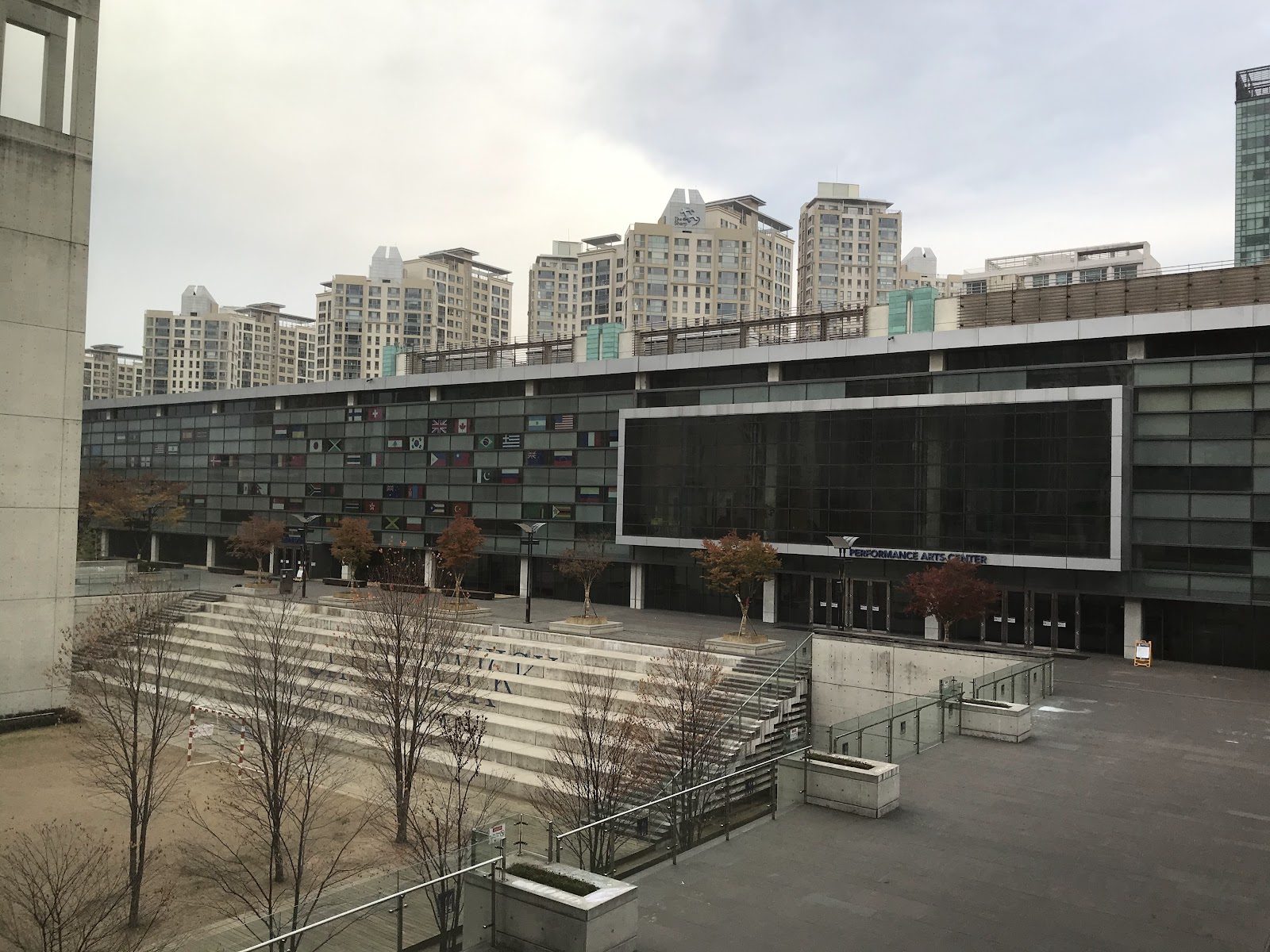
Chadwick International
Incheon · South Korea
One school, two continents: this Songdo campus mirrors a 1935 California founder, pairing IB rigor with mandatory outdoor-education expeditions.
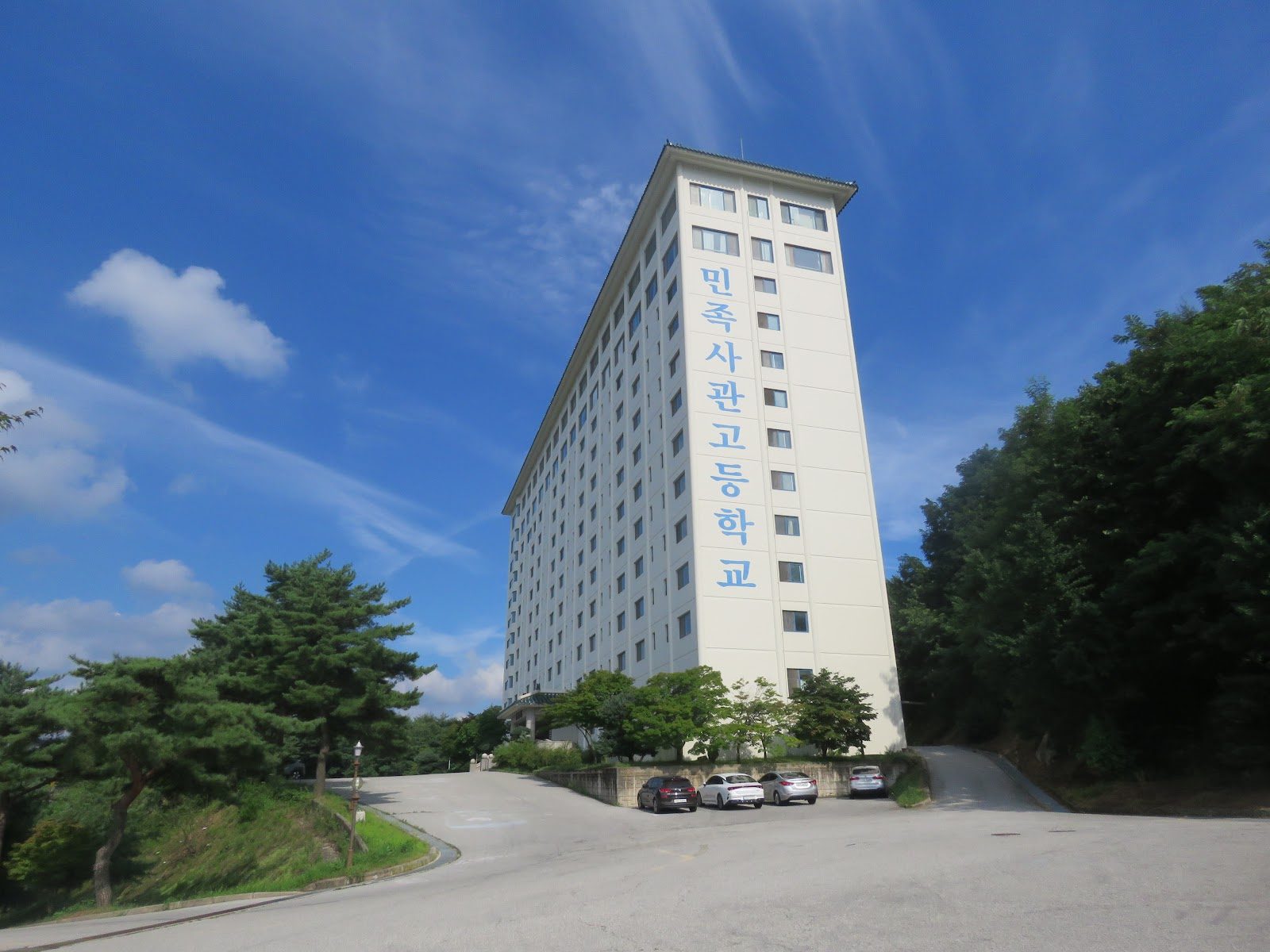
Korean Minjok Leadership Academy
Hoengseong · South Korea
On a Gangwon mountainside, hanbok-uniformed students hold English-only seminars, chasing an IB curriculum built to rival Eton.
Korea International School
Seongnam · South Korea
In Seongnam's Pangyo tech corridor, a dual IB-American track anchors a curriculum built around 24 Advanced Placement courses.
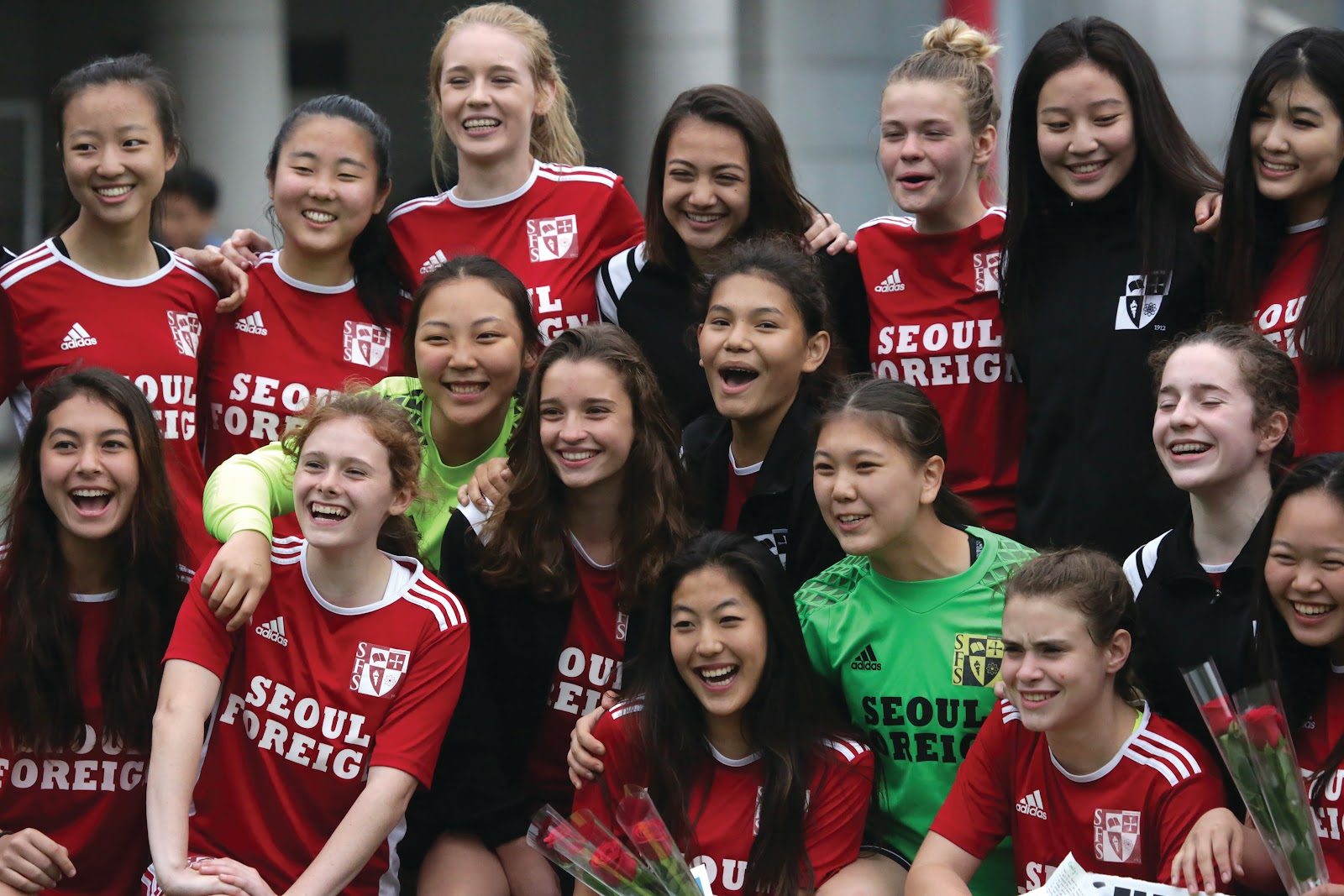
Seoul Foreign School
Seoul · South Korea
Founded in 1912 beside Yonsei University, first in Korea to adopt the IB, blending British, American and Clan-house traditions.
Same country and curriculum — closest matches within ±10 points either way