
Seoul
Founded in 1912 beside Yonsei University, first in Korea to adopt the IB, blending British, American and Clan-house traditions.
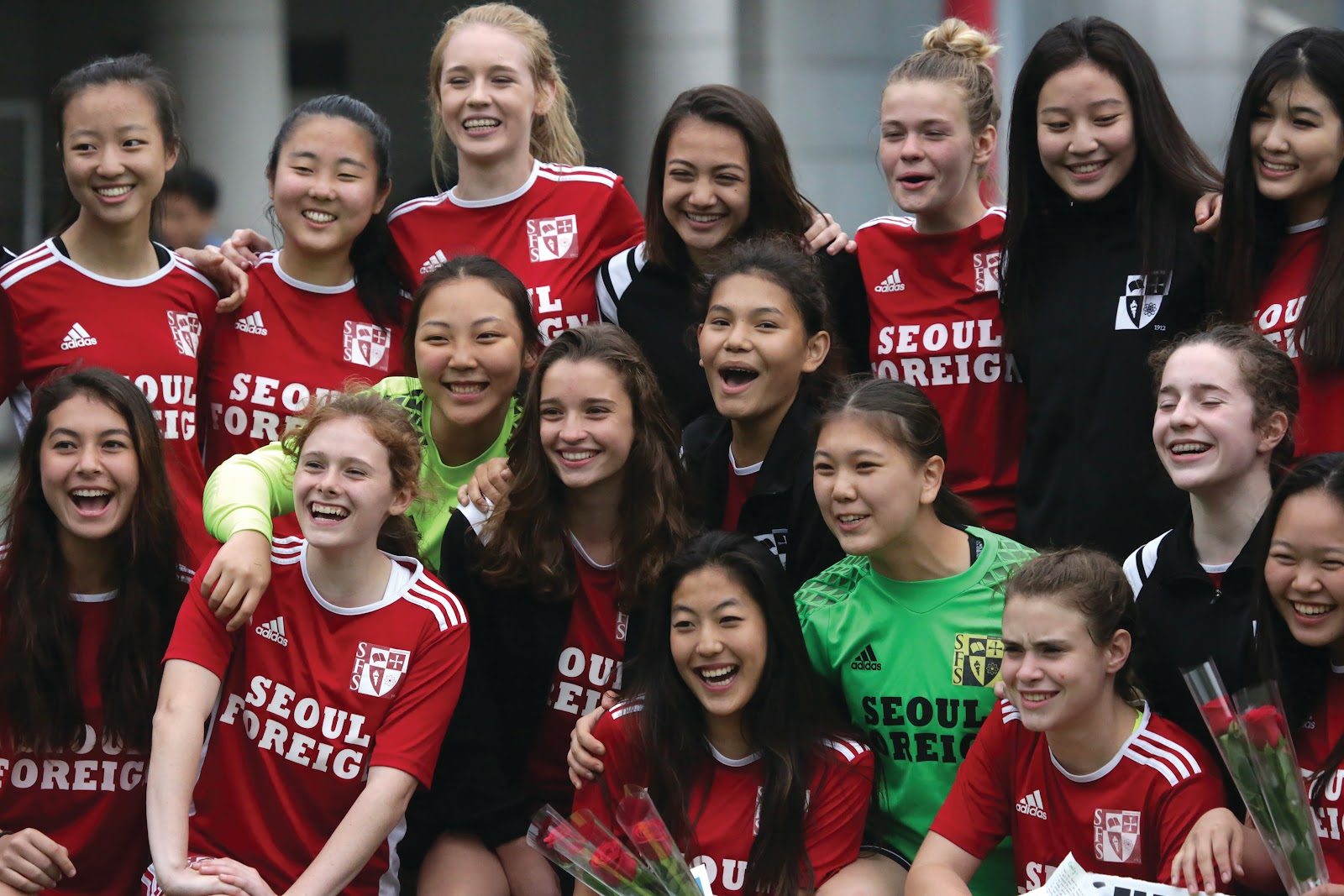
Photo © 서울외국인학교 via Google Maps
Type
Day
Ages
3–18
Curriculum
IB · American · British
Ratio
—
The Verdict
Editor's commitment
Right for
International families wanting English-medium schooling from age 3 to 18, with both IB and British pathways under one Christian roof.
Wrong for
Families wanting a single curriculum, a secular culture, or boarding; Seoul Foreign School is a day school with Christian foundations.
Watch out for
The average annual day fee is $37,530, and the school spans multiple tracks; parents need clarity on the IB versus British route.
Ranking breakdown
Seoul Foreign School · #187 of 1591
Composite score 75.7. 8 weighted criteria.
By criterion
Academic Outcomes
Weight 20%
#293
of 1529 scored
University Placement
Weight 16%
#136
of 1529 scored
Prestige & Heritage
Weight 12%
#307
of 1529 scored
Alumni Network
Weight 12%
#306
of 1529 scored
Facilities
Weight 12%
#27
of 1529 scored
Transparency & Communications
Weight 8%
#40
of 1529 scored
Peer & Industry Review
Weight 10%
#227
of 1529 scored
Admissions Selectivity & Demand
Weight 8%
#991
of 1529 scored
Score history
Seoul Foreign School · 2026
Movement across 2024–2026. Peer average overlaid.
Overall — 2024–2026
75.7/ 100
▲ +16.6 vs 2025
year on year
Peer & Industry Review
How Seoul Foreign School is regarded in the sector
75
Strong · medium confidence
Seoul Foreign School is one of the oldest and most established international schools in Korea (founded 1912), consistently mentioned in expat parent forums and international school directories (e.g., ISC Research, International Schools Database) as a top-tier choice for expatriate families in Seoul alongside Seoul International School and Dwight School Seoul. It holds accreditation from WASC and CIS, and is frequently referenced in expat community discussions (e.g., Internations, Reddit r/expats Korea threads) as a leading option, though it receives less specialist press coverage (Tatler, Good Schools Guide) than schools in more heavily covered markets like Hong Kong or Singapore.
Evidence sources
Editors' overview
Seoul Foreign School earns shortlist status on longevity, structure and curricular range. It traces its origins to 1912 and was founded in 1913 by Christian missionaries, which matters less as a piece of nostalgia than as an explanation for the school’s settled identity: this is not a transient expat start-up but a deep-rooted institution with a long memory of serving Seoul’s international community. The academic shape is unusual and useful. SFS offers the IB continuum and the English National Curriculum, while the wider context also identifies American alongside British and IB strands. In practice, that gives families more than one route through the school without forcing an early compromise between British and international models. It was also the first school in Korea to adopt the IB, which still carries weight in a market where many schools bolt the diploma on late and call that breadth.
The school’s religious character is plain rather than ornamental. Christianity sits in the school’s history and values, and parents who want a secular environment need to register that directly. For others, the attraction lies in a campus culture that puts character formation alongside academics and keeps a strong internal culture rather than a glossy, interchangeable international-school feel. The Clan-house tradition adds to that sense of continuity and belonging. Instruction in English and Korean also gives SFS a more grounded relationship with its host country than English-only schools that float above the local context. At an average annual day fee of $37,530, it sits in the premium bracket, so parents are paying for heritage, curricular options and institutional stability, not bargain access to an international label.
The right student for Seoul Foreign School is one who wants choice without chaos: a child who will benefit from a school that spans ages 3 to 18, values continuity, and offers both IB and British pathways inside one organisation. It suits internationally mobile families who want an established, serious school, and it suits students who thrive in structured communities with explicit expectations around conduct and character. It is a weaker fit for families chasing a fully secular ethos, a loose progressive culture or a school built around constant reinvention. SFS’s appeal lies in being confidently traditional while still academically broad: a rare combination, and one that keeps it firmly in Seoul’s top tier.
Academic Performance
Seoul Foreign School does not publish aggregate IB Diploma outcomes, average point scores, subject distributions or university destination tables in the public domain. That matters. In the top tier of international schools, hard results are the cleanest test of academic quality, and opaque reporting leaves parents without the basic comparators they need. The school can still point to structural strengths: a through-school model, parallel pathways and a long-established academic culture. None of that replaces published outcomes. Relative to peers that release full diploma averages, pass rates and destination lists each year, SFS is less transparent and therefore harder to place with precision on raw academic performance alone.
What can be said with confidence is narrower but still useful. Offering the full IB route across the school gives students continuity rather than a last-minute diploma add-on, and schools with that architecture tend to produce well-drilled, examination-ready candidates. The presence of an English National Curriculum track through the middle years also signals a serious academic spine rather than a loose all-purpose programme. But until SFS puts numbers into the open, any claim to sit among Seoul’s strongest academic performers rests on reputation, institutional depth and programme design rather than disclosed external results. For exacting parents, that is the section of the case that remains unfinished.
Facilities
Seoul Foreign School’s public case on facilities is thinner than a top-fee peer should allow. The school talks at length about ethos and educational pathways, but it does not publish a clear facilities inventory, campus map, specialist-space count or serious visual record that lets parents judge the estate properly. That lack of disclosure matters because facilities are one of the clearest points of comparison in this market. At this price point, parents should not have to infer the quality of science labs, design spaces, sports provision or performance venues from branding language. Relative to leading international schools in Asia that document their campuses in detail, SFS is opaque, under-explained and less legible than it should be.
What can be inferred is structural rather than glamorous. A through-school serving children from the early years to the end of secondary education, with more than 100 years of institutional continuity, demands a campus that can accommodate distinct age groups and multiple teaching models inside one organisation. That usually translates into separate age-phase zones, specialist rooms for older pupils and communal spaces that reinforce school identity. The reference to a Clan-house tradition also points to facilities used for cross-school gathering rather than a purely classroom-based layout. Still, inference is not evidence. Against peers with fully documented, amenity-rich campuses, SFS gives parents too little hard detail. The school may have excellent facilities; it has not made that case in a serious, inspectable way.
Seoul Foreign School’s public case on facilities is thinner than a top-fee peer should allow
Prestige
Seoul Foreign School carries genuine cachet in the Seoul market, but it is a specific kind of prestige. This is not a school trading on glossy novelty or a global franchise badge. Its standing rests on endurance, selectivity by implication, and the confidence that comes from a long-established place in the city’s international hierarchy. The fee level alone — an average annual day fee of $37,530 — puts it in a bracket where parents expect more than competent teaching; they expect a school with social weight, durable networks and a name that travels well among embassies, multinational employers and internationally mobile families. The Christian foundation and settled institutional culture add to that identity. For some families that reads as reassuringly rooted; for others it narrows the appeal.
Its prestige is strengthened by breadth of age range and by an alumni footprint that extends into public life, with at least 12 notable alumni catalogued in Wikidata, including figures in film and music. That is not proof of academic supremacy, and SFS does not publish the exam and destination data that would convert reputation into hard evidence. That gap matters. So the verdict is clear: Seoul Foreign School is high-status, well-known and socially established, with the kind of brand recognition that opens doors in conversation. It is less convincing on the stricter question of intellectual prestige, where top schools earn authority by disclosing outcomes in full rather than relying on name, history and institutional gravitas.
Seoul Foreign School earns shortlist status on longevity, structure and curricular range
Communications
Seoul Foreign School’s parent communication reads as orderly, institutional and tightly controlled. The public site is clean to navigate, with age-phase entry points, clear top-level pathways and a direct message from the head that tells parents what the school thinks matters. That gives a coherent front door. It also reveals the school’s bias: culture and mission are explained far more fully than day-to-day proof points. For parents, that means communication is strong on identity and weaker on operational detail. We have not seen the level of public specificity that top-fee schools can provide on calendars, reporting rhythms, leadership access, campus logistics or academic outcomes. At an average annual fee of $37,530, that gap stands out. This is competent communication, not best-in-class transparency.
The tone also matters. SFS speaks with a settled voice rather than a chatty one, which fits the school’s tradition-minded character and Christian foundation. Some families will value that seriousness; others will find it austere and less responsive than schools that publish more frequent, more granular parent-facing information. The strongest point is consistency: the messaging does not lurch between marketing slogans and educational jargon. The weakness is evidence. Parents can grasp the school’s values quickly, but they get fewer hard signals about how information flows once a child is enrolled. That leaves the verdict in the middle: clear in tone, disciplined in presentation, but not yet transparent enough for a school asking premium fees.
Uniqueness
What sets Seoul Foreign School apart is not one headline feature but an uncommon institutional mix. Few schools combine a Christian foundation, a through-school structure, a British strand, an American strand and the full IB architecture under one roof without sliding into incoherence. Here, that combination gives families real internal choice while keeping children inside one settled community. The school’s claim to have had only 4 heads across more than a century says something important about governance and culture: leadership turnover has been low, the internal identity has held, and the school has not lurched from one educational fashion to the next. For students, that brings continuity, clear expectations and a deeply embedded sense of how the place works.
The other distinctive element is the strength of ritual and belonging. SFS does not read like a generic international school assembled for transient families; it has a rooted, tradition-conscious character, reinforced by its Christian ethos and Clan-house system. That matters in daily school life. Students get more than academic options; they get a framework that presses character, service and community alongside attainment. For the right child, that creates a cohesive environment with real social glue, not just a timetable and a set of exams. The trade-off is clear. Families wanting a secular, fluid or highly experimental culture will find the school too settled in its own identity. Families who value continuity, structure and belonging will find that identity its sharpest point of difference.
Seoul Foreign School carries genuine cachet in the Seoul market, but it is a specific kind of prestige
Student Profile
The students who fit best here are the ones who value structure, continuity and a school culture with explicit moral language rather than vague talk about “values”. This is a school for families who want children held to account, guided closely and folded into a community with durable rituals. A child who likes clear expectations, stable routines and belonging to something larger than a friendship group will do well. The reference to only 4 heads over the school’s long life tells its own story: institutional habits run deep, and pupils who thrive in settled, orderly environments will find that reassuring. Children who need constant novelty, loose boundaries or a highly casual atmosphere will not.
It also suits internationally mobile families who still want roots. Because the school serves ages 3–18, students can grow up inside one social and pastoral framework rather than resetting at each phase. That favours children who benefit from strong adult oversight, cross-age identity and a cohesive peer culture. The Christian element is not incidental, so the best fit includes families comfortable with a school where faith and character formation sit in plain view. The less obvious match is the socially adrift child looking for anonymity. SFS reads as a place where participation matters, tradition matters and community memory matters. For the right student, that is deeply grounding. For the wrong one, it is too enclosed and too prescriptive.
Seoul Foreign School’s parent communication reads as orderly, institutional and tightly controlled
Co-curricular strengths
Arts & sport, on a separate axis
Overall 9.02/10
Scored 0-10 from the school's own published evidence. This axis is editorial-only — it does not feed the main WTS ranking.
Sports
9/10
An indoor sports complex with two gyms, weight room, artificial-turf soccer field, running track, indoor pool and multiple tennis courts, plus KAIAC/FOBISIA competition and a 2024 U14 basketball tournament result, which together evidence a major dedicated athletics facility and active interschool sport.
Drama
9/10
A main theater seating 700+ with hydraulic orchestra pit and turntable, a 200-seat black box, a 450-seat Robb Hall, and recurring drama and musical productions, which is clear evidence of purpose-built, high-spec drama facilities.
Dance
8.5/10
Wikipedia gives explicit evidence of dance through a gymnastics room used for ballet practice, which establishes a dedicated space, but there is no fuller evidence of a broader dance programme, productions or competitive pedigree.
Music
9.6/10
A notably strong music programme with multiple band/choir/orchestra levels, IB DP Music, large rehearsal and practice rooms, a keyboard/composition lab, a 700+ seat theater, and nationwide award recognition including a platinum award, which comfortably reaches the 8 band.
Visual Arts
9/10
The evidence explicitly names Art as a specialist class in the elementary school.
Editor first-pass · editor-reviewable · 7/28/2026
Notable alumni · Wikidata
12notable alumni
1 historic (born pre-1930) · 10 modern (born post-1970)wikidata:2026-07-28 How we source this
WTS 300 badge
2025/26 editionSeoul Foreign School is one of the World's Top 300 Schools for 2025/26. Claim your listing to add it to your site →
Strengths
- +Seoul Foreign School was founded in 1912, making it one of the oldest international schools in the world, with a continuous history spanning more than a century in Seoul.
- +In 1980 SFS was one of the first 200 schools worldwide authorized to offer the IB programmes of instruction, giving it a long track record with the Diploma Programme relative to newer regional competitors.
- +The school offers two complementary educational paths, the International Baccalaureate Continuum and the English National Curriculum, with the IB Diploma Programme offered in Grades 11-12, giving families flexibility between IB and British-style tracks under one roof.
- +In the 2021-2022 school year the average IBDP score at SFS was 36 against a worldwide average of 29.9, and 98% of the 109 diploma candidates passed compared with a 79.1% global pass rate.
- +Seoul Foreign School is the longest-established international school in Korea and the only non-profit school in Seoul, and is fully accredited by the Western Association of Schools and Colleges (WASC), is a member of the Association of Christian Schools International, and its British School was inspected and approved by Ofsted British Schools Overseas.
Considerations
- −Under Korean law students are eligible to apply only if at least one parent holds a non-Korean passport, or if both parents hold Korean passports the child must show proof of 1,095 days or more spent outside Korea, which excludes most local Korean families regardless of interest or ability to pay.
- −Tuition is charged as a mixed Korean-won and US-dollar package with multiple non-refundable one-time charges on top - an application fee of KRW 400,000, a registration fee of KRW 600,000, and a one-time entrance fee of KRW 5,500,000 - adding real cost beyond the headline annual tuition.
- −Flagship schools like Seoul Foreign School often receive more applications than places in primary years, especially Grade 1 and Grade 6, so entry at these popular transition points is competitive rather than guaranteed.
- −A boarding program is not offered; Seoul Foreign School operates as a day school, so families wanting a boarding option must look elsewhere in Seoul or abroad.
Availability
Primary entry gate & tests
Academic Record (Expat Priority)
Gallery
Photo © 김현준 via Google Maps
Photo © Je Young Yoo via Google Maps
Photo © Pius Lee via Google Maps
Photo © Shayne Fitz-Coy via Google Maps
Photo © Josh Li via Google Maps
Photo © Josh Li via Google Maps
Photo © Josh Li via Google Maps
Photo © Ananda Paôla via Google Maps
Photo © 서울외국인학교 via Google Maps
Parent reviews
Have you sent your child here?
Voice reviews carry the strongest trust badge — we transcribe them for you to tidy up before they go live. Prefer to type? A written review is fine too.
Add your voice
In 60 seconds, tell other parents: what's the best thing about Seoul Foreign School, and what surprised you when your child joined?
We ask for a Google sign-in so every review has a real face behind it — no anonymous drive-by attacks on schools, and no faked positive reviews. Your email is never shown publicly.
Send this profile to a friend
International parents rely on word-of-mouth. Share this review with someone weighing the same decision.
Schools with places
Similar schools to Seoul Foreign School with places available now.
Dulwich College Seoul
Seoul · South Korea
- 2026-27
- WAITPOOLSpace-dependent
- 2027-28
- PLACES OPENRolling
Yongsan International School of Seoul
Seoul · South Korea
- 2026-27
- WAITPOOLSpace-dependent
- 2027-28
- PLACES OPENRolling
Availability first, then country, area, curriculum, price, co-curricular
Consider also
Also worth looking at alongside Seoul Foreign School.
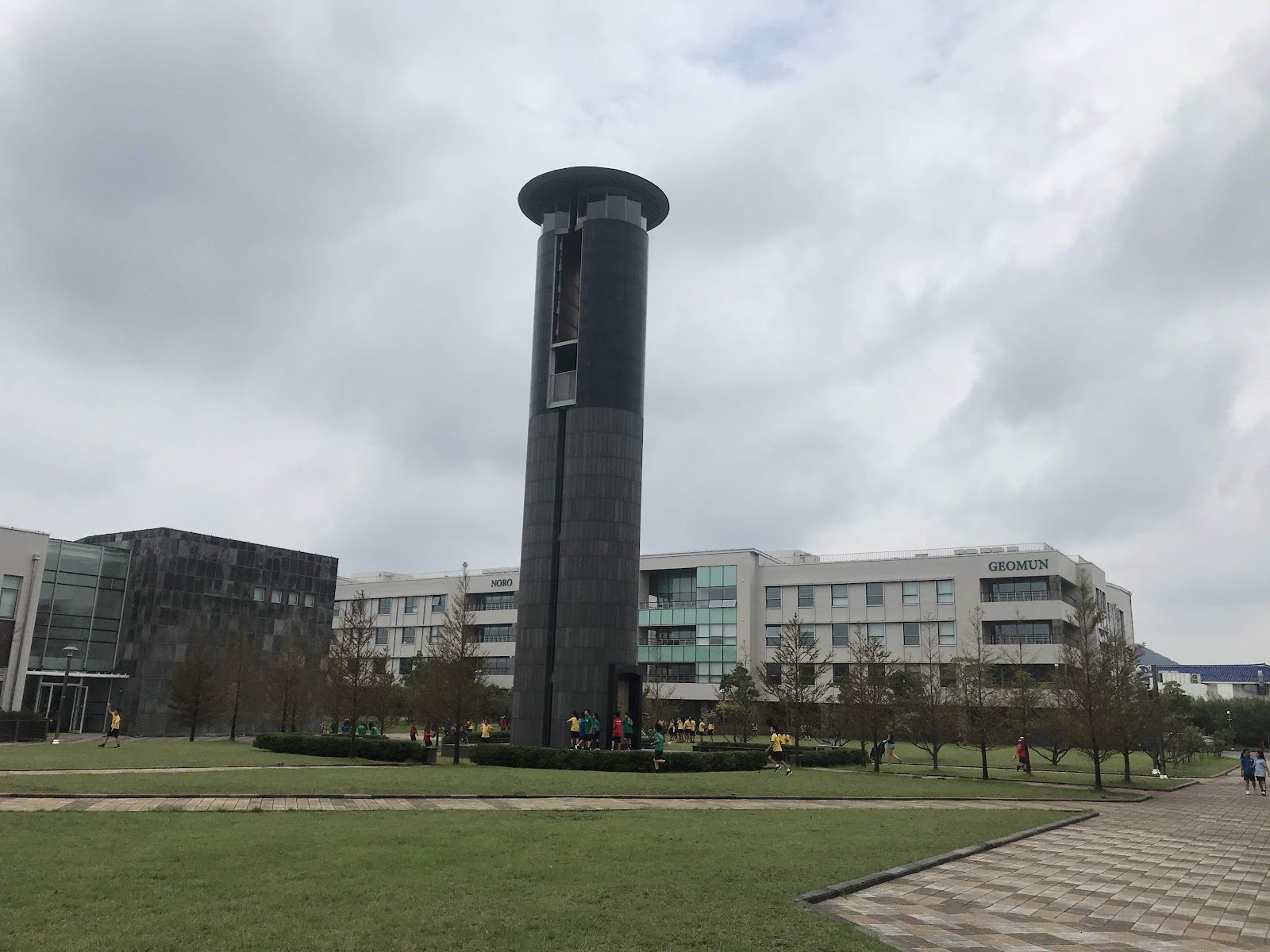
North London Collegiate School Jeju
Jeju · South Korea
Founding school of Jeju's Global Education City, blending a 170-year London pedigree with strong IB results and seven boarding houses.
Korea International School
Seongnam · South Korea
In Seongnam's Pangyo tech corridor, a dual IB-American track anchors a curriculum built around 24 Advanced Placement courses.
Korean Minjok Leadership Academy
Hoengseong · South Korea
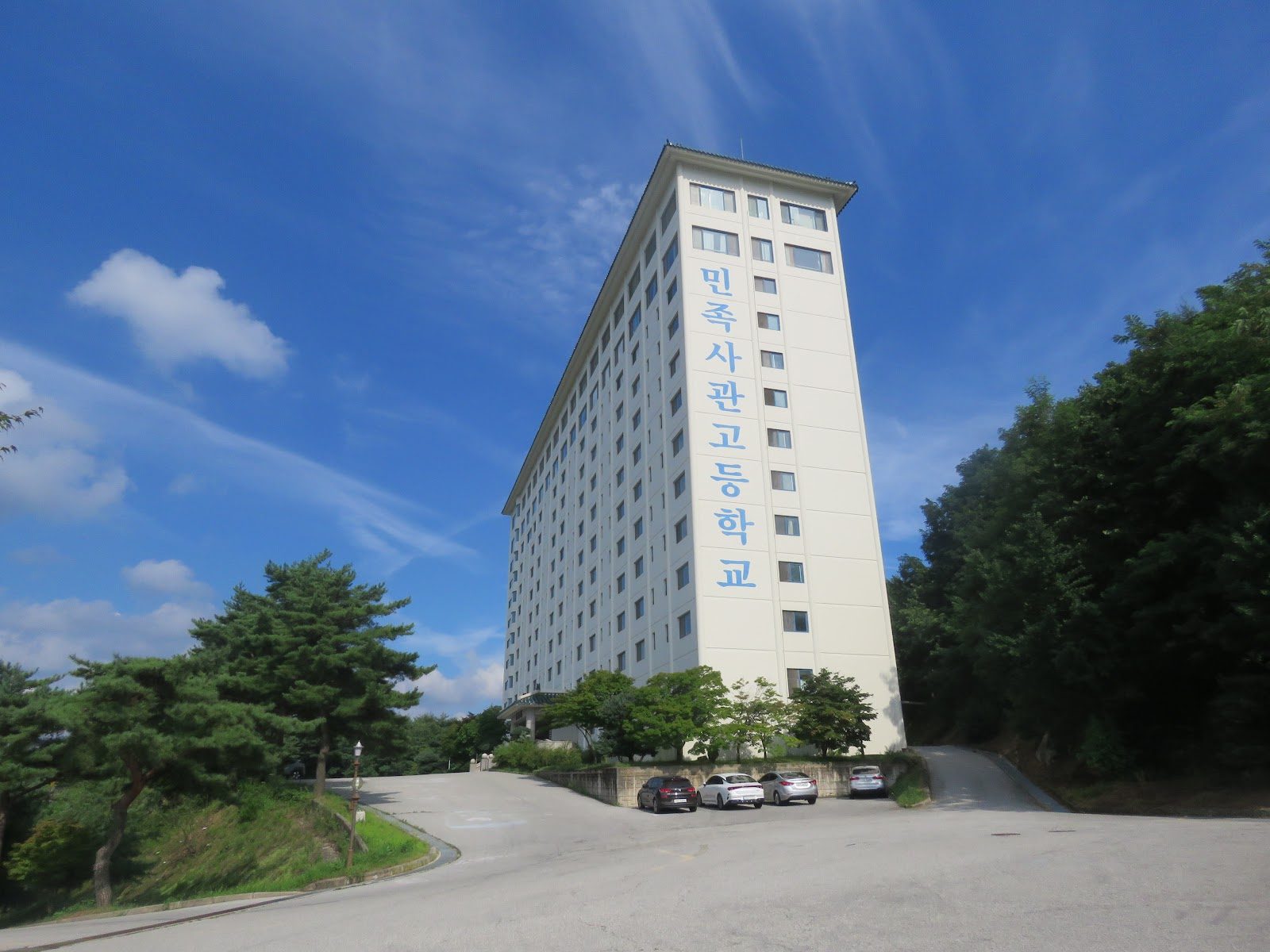
On a Gangwon mountainside, hanbok-uniformed students hold English-only seminars, chasing an IB curriculum built to rival Eton.
Chadwick International
Incheon · South Korea
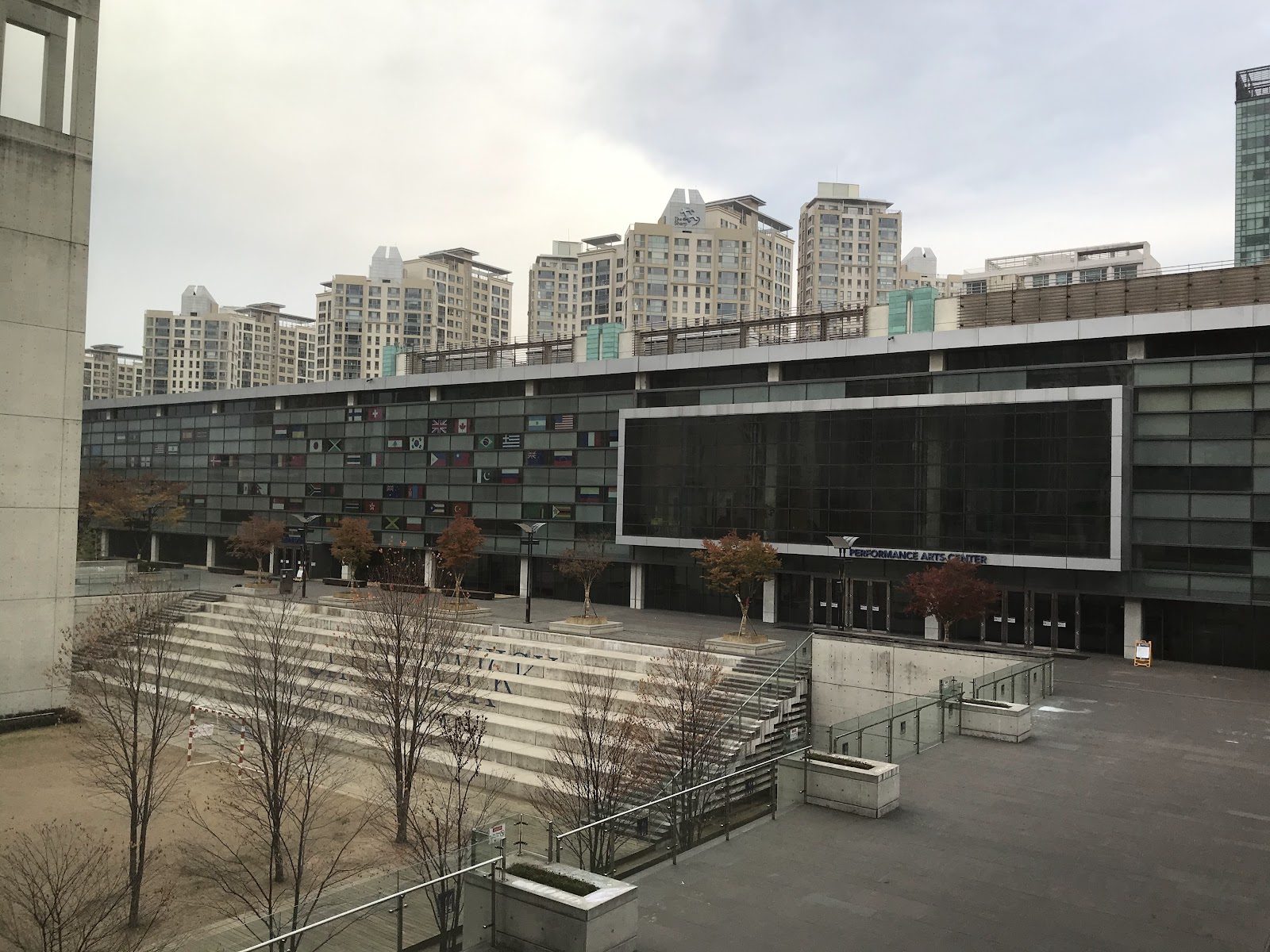
One school, two continents: this Songdo campus mirrors a 1935 California founder, pairing IB rigor with mandatory outdoor-education expeditions.
Same country and curriculum — closest matches within ±10 points either way