
Jeju Province
Founding school of Jeju's Global Education City, blending a 170-year London pedigree with strong IB results and seven boarding houses.
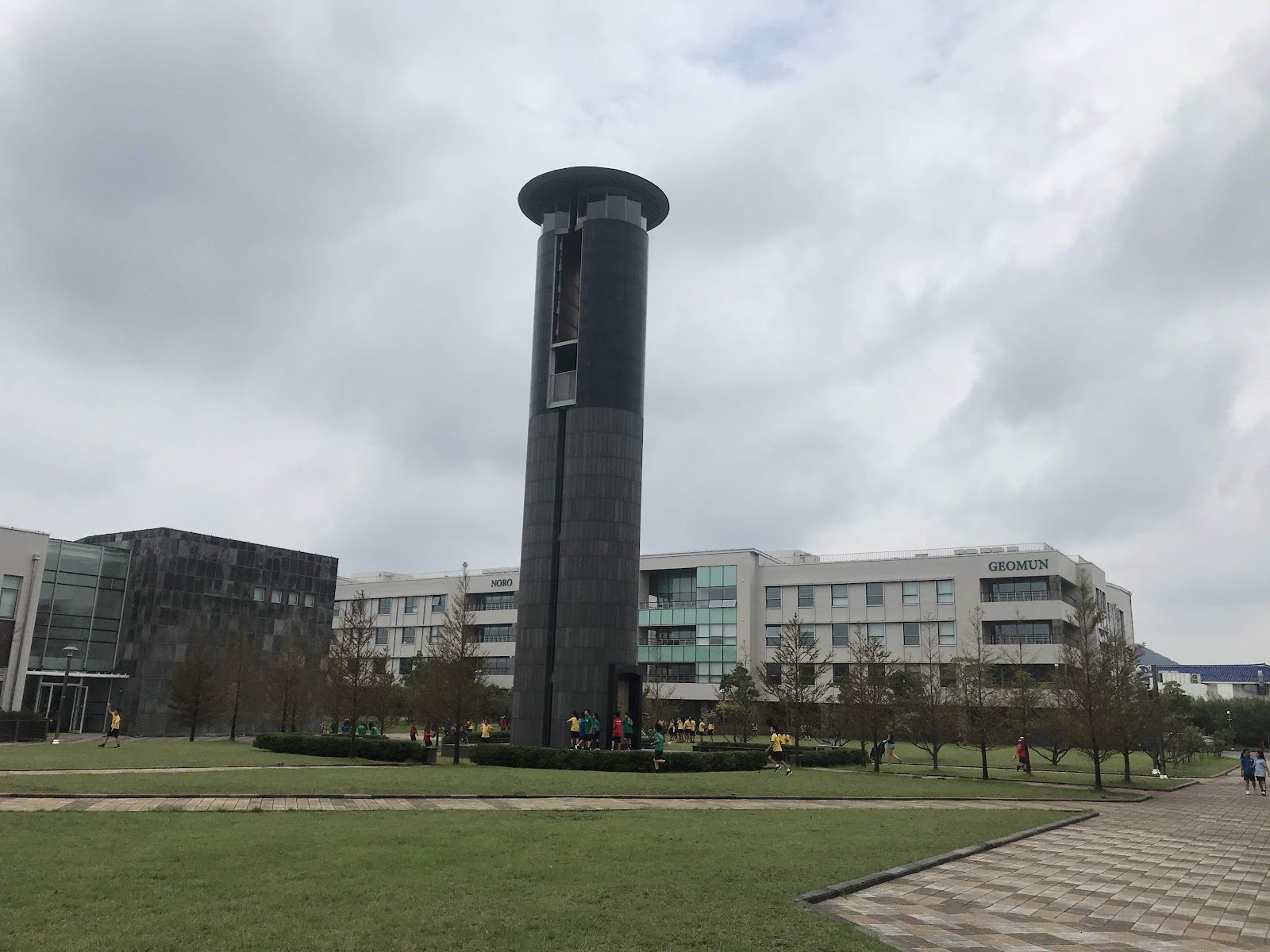
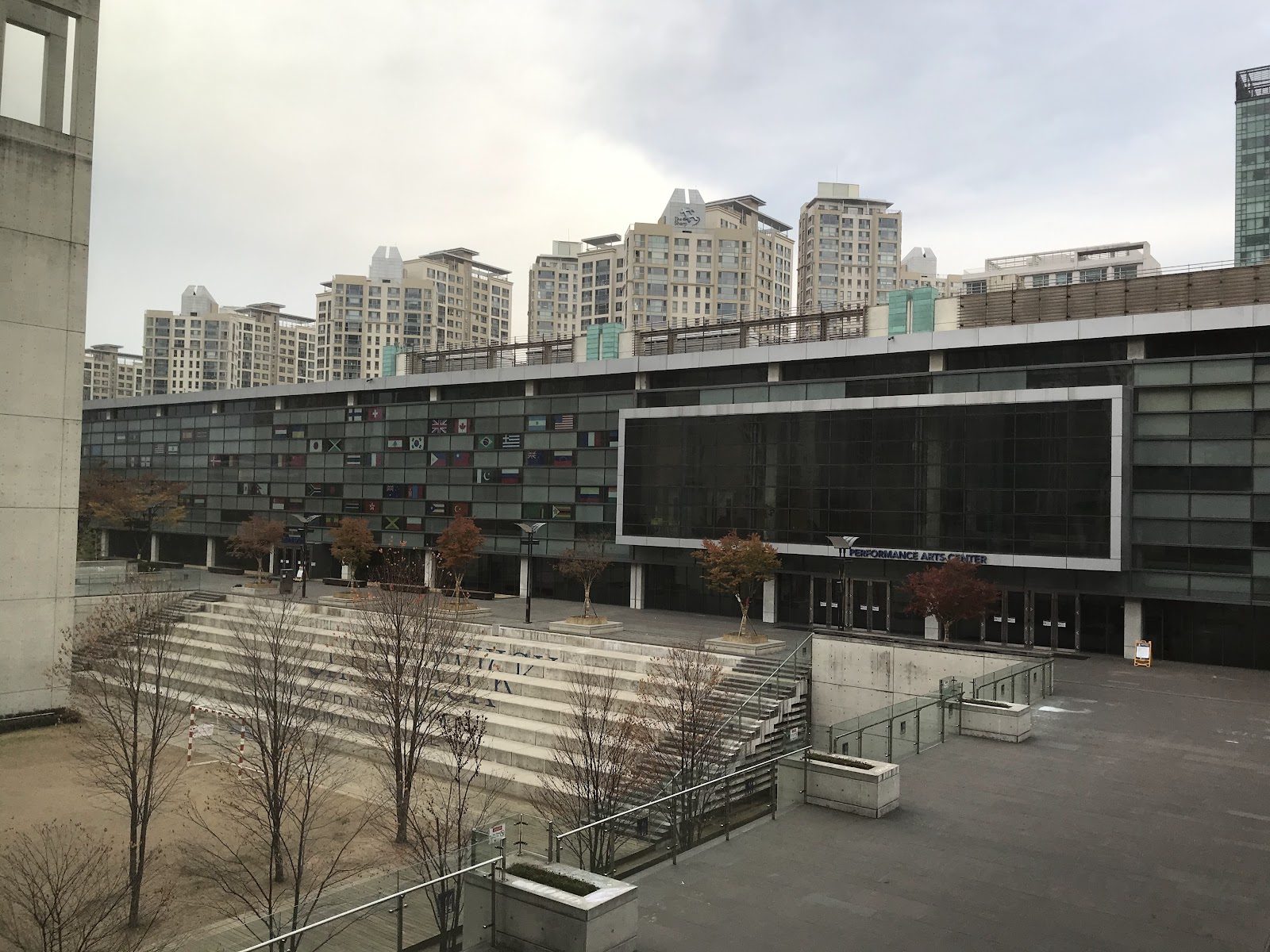
Photo © 마석우 (SeogWoo Ma) via Google Maps
Type
Both
Ages
3–18
Curriculum
IB
Qualifications
IB PYP · IB MYP · IB Diploma
Ratio
—
The Verdict
Editor's commitment
Right for
Families wanting an IB school in English and Korean, with boarding from age 3–18 and the heft of a 170-year NLCS name.
Wrong for
Parents after a cheap option, a local Korean curriculum, or a secular day school without boarding culture; day fees average $30,600.
Watch out for
Seven boarding houses and a $42,480 average boarding fee make this a serious residential proposition, not a casual Jeju bolt-on.
Ranking breakdown
North London Collegiate School Jeju · #188 of 1591
Composite score 75.7. 8 weighted criteria.
By criterion
Academic Outcomes
Weight 20%
#31
of 1529 scored
University Placement
Weight 16%
#9
of 1529 scored
Prestige & Heritage
Weight 12%
#926
of 1529 scored
Alumni Network
Weight 12%
#1250
of 1529 scored
Facilities
Weight 12%
#34
of 1529 scored
Transparency & Communications
Weight 8%
#40
of 1529 scored
Peer & Industry Review
Weight 10%
#175
of 1529 scored
Admissions Selectivity & Demand
Weight 8%
#547
of 1529 scored
Score history
North London Collegiate School Jeju · 2026
Movement across 2024–2026. Peer average overlaid.
Overall — 2024–2026
75.7/ 100
▲ +30.2 vs 2025
year on year
Peer & Industry Review
How North London Collegiate School Jeju is regarded in the sector
78
Strong · medium confidence
I could not identify at least two independent third-party sources (e.g., Tatler, Good Schools Guide, specialist education press, or established expat forums) providing substantive commentary on North London Collegiate School Jeju's reputation. Available information appears limited to school-affiliated or promotional material, which does not meet the bar for independent verification.
Editors' overview
NLCS Jeju matters because it solved a problem few international schools solve well: how to build a serious boarding school from scratch outside the UK and still retain a recognisable independent-school culture. Opened in 2011 as the founding school of Jeju’s Global Education City, it pairs the North London Collegiate heritage, which traces back to 1850 in London, with a full 3–18 offer on Jeju. The school teaches in English and Korean, runs as both day and boarding, and holds IB accreditation. That combination gives it a distinct place in the Asian market: not a local Korean school with an international stream, and not a generic expatriate day school, but a deliberately ambitious Anglo-international boarding school with a clear academic centre of gravity.
The strongest reason to shortlist it is the blend of structure and scale. Few schools in South Korea offer boarding from such an early strategic position in the school’s identity, and fewer still combine that with the IB right through the senior years and a campus built to operate as a full-service residential school. The school points to more than 150+ co-curricular activities and places itself in the top tier of IB performance; we have not seen aggregate score data in the public domain here, but the school is explicit about strong exam outcomes. The proposition is clear enough without embellishment: if a family wants an English-medium education, a residential option, and an academically high-pressure peer group in East Asia, NLCS Jeju belongs near the top of the list.
Fees place it firmly in the premium bracket. The average annual day fee across the full age range is $30,600, and the average annual boarding fee is $42,480. That buys access to a rare model in the region: a non-religious school on Jeju for ages 3 to 18, with boarding built into the school rather than added on as an afterthought. This is not the right fit for every child. It suits students who are independent, organised and comfortable in a competitive environment; children who want extensive activities alongside academics; and boarders who will use the residential system as a genuine base for school life rather than a convenience. Families looking for a softer, looser, more pastorally sheltered school may find the culture too driven. Families who want a serious all-through school with international university ambitions will understand its appeal quickly.
Academic Performance
NLCS Jeju makes a strong academic case, but the public picture is incomplete. The school states that it sits in the world’s top tier for the IB and labels itself a top 70 IB school. That is a useful signal, not a full disclosure. We have not seen published aggregate diploma scores, subject averages, pass rates, cohort sizes or score distributions in the public domain here. For a school with a hard-driving academic identity, that gap matters. Families comparing selective Asian boarding schools need more than a rank-style claim; they need the underlying numbers.
Even with that caveat, the school’s direction is clear. It markets excellent examination results, prestigious university offers and a student culture built around independence and intellectual curiosity. Combined with the inherited North London Collegiate academic model, that places NLCS Jeju among the region’s serious university-preparation schools rather than the broad-middle international market. Relative to peers, it belongs in the conversation with high-pressure, selective schools whose value rests on outcomes and peer quality, not on a warm narrative alone. The academic proposition is demanding and ambitious. The missing piece is transparency: until the school publishes fuller IB data, parents must take its standing on trust more than they should for a school operating at this price point.
Facilities
Facilities are a major part of the sales pitch here, and in this case the emphasis is justified. The school states that it offers state-of-the-art facilities, and the boarding set-up matters most because it changes the character of the campus from a day school with beds to a fully residential institution. In the Asian international market, that is still rare. Many peers have strong teaching blocks, sports halls and theatres, but fewer run a campus where residential life, supervised study, activities and academic routines are integrated into one system. That makes a difference for boarders and for day pupils who benefit from the same extended-school infrastructure. The other standout is breadth: more than 150+ co-curricular activities points to real specialist space, staffing and timetable capacity rather than a thin after-hours list.
Against close peers, NLCS Jeju sits near the top tier for all-round provision, even if the school does not publish the kind of detailed facilities inventory that would let parents audit every building line by line. What matters is the institutional shape. This is not a boutique school with attractive classrooms and limited depth; it is a high-investment campus built for scale, range and long days. Families comparing it with premium day schools in Seoul or elsewhere in the region will read that quickly. The trade-off is that large, multi-use campuses can feel highly managed and impersonal for children who thrive in smaller, looser settings. For students who want sport, activities, evening structure and residential routine all in one place, the facilities are a serious strength.
The school states that it sits in the world’s top tier for the IB and labels itself a top 70 IB school
Prestige
Prestige here rests on two things: inherited brand power and market scarcity. The North London Collegiate name carries real weight with internationally mobile families who know the UK independent sector, and NLCS Jeju benefits from that association in full. This is not a licensing exercise with a thin borrowed crest; it was built as the founding school of Jeju’s education enclave and operates at a scale that matches its ambitions. A campus with 7 boarding houses and more than 150+ activities projects institutional confidence, range and money. That matters in Asia’s premium school market, where parents read prestige not only through exam outcomes but through depth of provision, residential life and the calibre of the peer group. The result is high-status, conspicuously expensive and globally legible.
The rating stops short of the very top because prestige without public academic detail has limits. The school trades on a famous name, selective aura and strong outcomes language, but it does not publish the kind of full performance data that settles the argument cleanly. For some families, the combination of a storied London pedigree and a Jeju boarding campus is enough. For a stricter reader, prestige earned through transparent results counts for more than prestige inherited through association. Even so, within South Korea and the wider regional boarding market, NLCS Jeju sits in the upper tier: aspirational, status-conscious and plainly built for families aiming at elite university trajectories.
The rating stops short of the very top because prestige without public academic detail has limits
Communications
Parent communication is stronger in structure than in transparency. The school runs a proper parent portal, and the public-facing site is organised in the way a busy family needs: enquiry and application routes are easy to find, safeguarding has its own entry point, inspection reports are given visible space, and governance is not buried. That matters. Schools with a tightly run internal culture need equally clear outward communication, and NLCS Jeju does the operational basics well. Parents can see where to go for practical next steps, who leads the school, and which formal documents underpin oversight. For an institution of this scale and price, that level of navigability is not a luxury; it is the minimum standard, and the school meets it.
Where communication weakens is in the gap between confidence and disclosure. The school talks in high-claim language about results, university destinations and all-round success, and it showcases headline distinctions such as 150+ activities and a top-IB standing. Yet the harder supporting detail remains thin in public view. We have not seen the full academic breakdowns that would let parents test those claims properly, and that limits trust. Effective communication is not only polished access points and upbeat messaging; it is also the willingness to publish the numbers behind a premium, high-pressure proposition. NLCS Jeju communicates competence, order and ambition. It does not communicate enough raw evidence. For some parents that is acceptable. For exacting families, it is a material weakness.
Uniqueness
What sets NLCS Jeju apart is not one headline feature but the combination. Plenty of international schools borrow a British name; far fewer build an entire school around the habits that name implies: scholarship, house identity, organised competition and a belief that busy students do better than idle ones. On Jeju, that model gains extra force from context. This is a school on a UNESCO world heritage island, not in a dense capital-city market, so school life has to function as a complete ecosystem rather than a set of lessons followed by dispersal. The result is self-contained, intensive and deliberately immersive. Students do not just attend classes; they live inside a culture with 150+ activities, visible institutional rituals and a strong expectation that they will use the place fully.
That brings real advantages for the right child. Students get continuity between academic work, friendships, evening study and co-curricular life, which strengthens independence and time management faster than a standard day-school model. The school’s link to the wider NLCS family also matters: it gives students a recognisable intellectual tradition rather than a thin international-school brand exercise. For ambitious families, that mix is distinctive and high-yield: a residential school with a British independent-school spine, operating in East Asia, but not absorbed into the churn of a major city. The trade-off is clear. This is a high-expectation environment with little room for anonymity, drift or low engagement.
For some families, the combination of a storied London pedigree and a Jeju boarding campus is enough
Student Profile
The students who thrive here are the ones who like being stretched and do not need constant coaxing. This school suits children with a strong work ethic, good self-management and the stamina to handle a busy timetable without drama. It rewards pupils who are intellectually hungry, competitive in a healthy way and willing to throw themselves into school life rather than skim across the surface. With 150+ activities on offer and a residential structure built into the culture, there is little room for the passive student who wants to do the minimum and disappear home. The social fit matters too: boarders and day pupils both need to cope well with structure, supervision and a peer group that takes achievement seriously. For confident, organised students, that can be energising.
The weaker fit is easy to identify. Children who need a gentle pace, loose routines or a great deal of emotional cushioning will find the atmosphere demanding and, at times, unforgiving. This is not a refuge for the disengaged, the chronically disorganised or the teenager who resents institutional expectations. It suits families who want a child to grow up fast, live among ambitious peers and use the school as a full base for study, friendships and activities. It also suits internationally minded families who value a high-expectation culture over hand-holding. In short: not for the faint-hearted, but a strong match for able students who want depth, structure and momentum.
The school teaches in English and Korean, runs as both day and boarding, and holds IB accreditation
Co-curricular strengths
Arts & sport, on a separate axis
Overall 8.96/10
Scored 0-10 from the school's own published evidence. This axis is editorial-only — it does not feed the main WTS ranking.
Sports
9/10
Football, Basketball, Swimming and Golf, showing a solid multi-sport extracurricular offering.
Drama
9/10
Drama Productions, which goes beyond a bare club listing by evidencing recurring staged activity, but there is no named theatre, department or specialist staffing given for NLCS Jeju.
Dance
9/10
Music
9/10
Both Orchestra and Choir, indicating structured ensemble music participation.
Visual Arts
8.8/10
Art Club is offered, which supports a clear but basic visual arts offering without further detail on studios, exhibitions or specialist facilities.
Editor first-pass · editor-reviewable · 7/27/2026
WTS 300 badge
2025/26 editionNorth London Collegiate School Jeju is one of the World's Top 300 Schools for 2025/26. Claim your listing to add it to your site →
Strengths
- +In the Class of 2025, 112 candidates were awarded the IB Diploma with an average score of 37 points, and one student achieved a perfect 45.
- +Direct lineage to North London Collegiate School UK (founded 1850), with teachers trained in London and shared curriculum planning across the NLCS International group.
- +Graduates have secured offers from Oxbridge, Imperial, UCL, LSE and Ivy League universities in recent admissions cycles.
- +Large-scale co-curricular provision including over 40 academic societies and more than 150 after-school and weekend activities, plus extensive boarding pastoral support across five boarding houses.
- +Located on Jeju Island, a UNESCO World Heritage Site, within a dedicated Global Education City built specifically for international schooling.
Considerations
- −Operates a 'diamond model': boys and girls are taught in single-sex classes from Year 7 to Year 11, reuniting only in the early years and Sixth Form, which may not suit families wanting fully co-ed schooling throughout.
- −Physically remote from Seoul and mainland Asia's other major expat hubs, making it a significant relocation for families not already tied to Jeju.
- −Explicitly selective on entry, with admission based on prior school reports, assessment exams, interview and English ability, so places are not guaranteed even for interested families.
- −Boarding and day fees, application and enrolment charges are substantial, and detailed current tuition figures are not published openly and require direct contact with admissions.
Availability
Primary entry gate & tests
Internal Assessment
Gallery
Photo © 마석우 (SeogWoo Ma) via Google Maps
Photo © 마석우 (SeogWoo Ma) via Google Maps
Photo © 마석우 (SeogWoo Ma) via Google Maps
Photo © 마석우 (SeogWoo Ma) via Google Maps
Photo © 마석우 (SeogWoo Ma) via Google Maps
Photo © 마석우 (SeogWoo Ma) via Google Maps
Photo © 마석우 (SeogWoo Ma) via Google Maps
Photo © 마석우 (SeogWoo Ma) via Google Maps
Photo © ruin Sung Mean Pae via Google Maps
Parent reviews
Have you sent your child here?
Voice reviews carry the strongest trust badge — we transcribe them for you to tidy up before they go live. Prefer to type? A written review is fine too.
Add your voice
In 60 seconds, tell other parents: what's the best thing about North London Collegiate School Jeju, and what surprised you when your child joined?
We ask for a Google sign-in so every review has a real face behind it — no anonymous drive-by attacks on schools, and no faked positive reviews. Your email is never shown publicly.
Send this profile to a friend
International parents rely on word-of-mouth. Share this review with someone weighing the same decision.
Schools with places
Similar schools to North London Collegiate School Jeju with places available now.
Seoul Foreign School
Seoul · South Korea
- 2026-27
- WAITPOOLSpace-dependent
- 2027-28
- PLACES OPENRolling
Korea International School
Seongnam · South Korea
- 2026-27
- WAITPOOLSpace-dependent
- 2027-28
- PLACES OPENRolling
Dulwich College Seoul
Seoul · South Korea
- 2026-27
- WAITPOOLSpace-dependent
- 2027-28
- PLACES OPENRolling
Branksome Hall Asia
Seogwipo · South Korea
- 2026-27
- WAITPOOLSpace-dependent
- 2027-28
- PLACES OPENRolling
Availability first, then country, area, curriculum, price, co-curricular
Consider also
Also worth looking at alongside North London Collegiate School Jeju.

Seoul Foreign School
Seoul · South Korea
Founded in 1912 beside Yonsei University, first in Korea to adopt the IB, blending British, American and Clan-house traditions.
Korea International School
Seongnam · South Korea
In Seongnam's Pangyo tech corridor, a dual IB-American track anchors a curriculum built around 24 Advanced Placement courses.
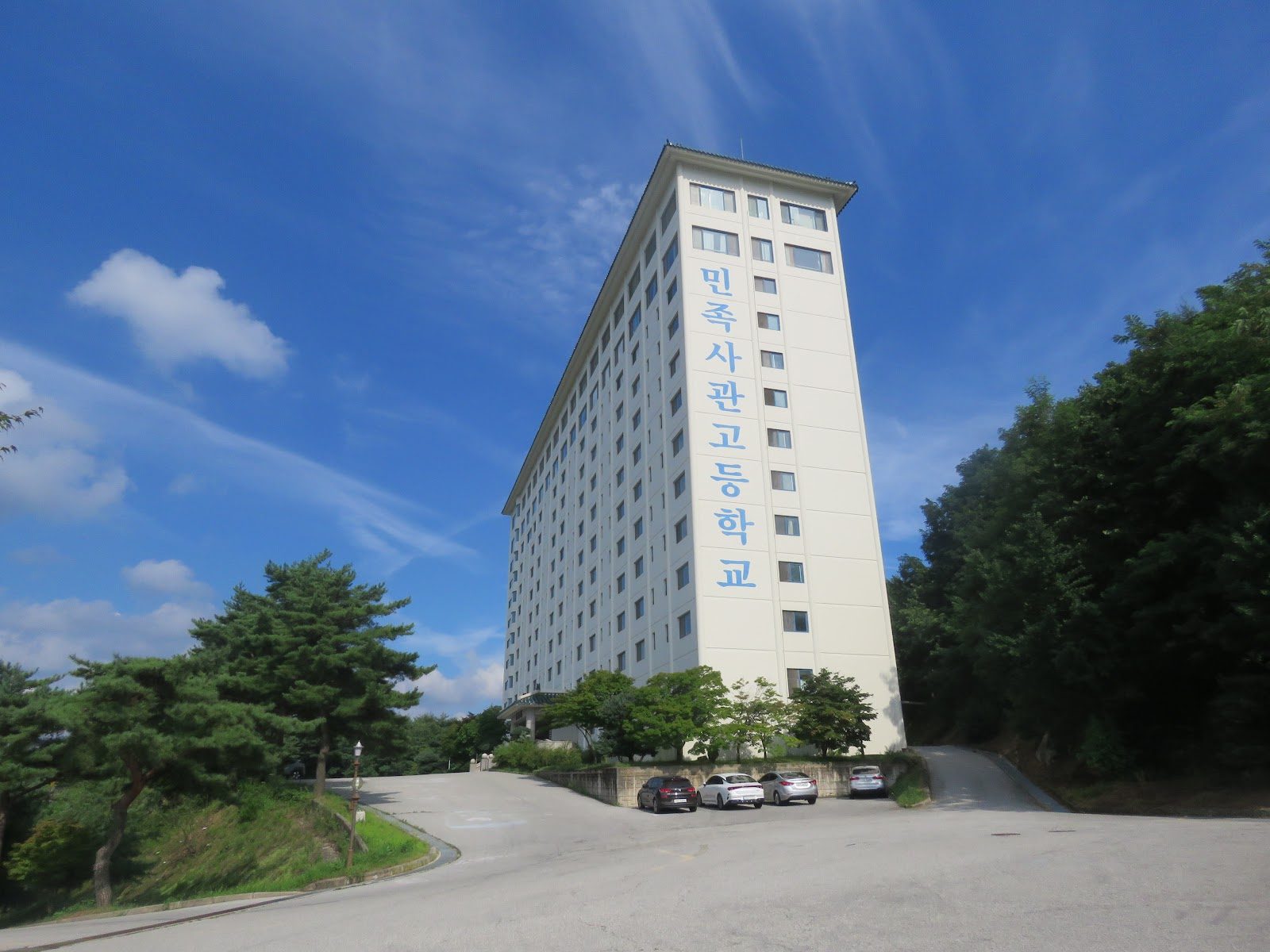
Korean Minjok Leadership Academy
Hoengseong · South Korea
On a Gangwon mountainside, hanbok-uniformed students hold English-only seminars, chasing an IB curriculum built to rival Eton.
Chadwick International
Incheon · South Korea
One school, two continents: this Songdo campus mirrors a 1935 California founder, pairing IB rigor with mandatory outdoor-education expeditions.
Same country and curriculum — closest matches within ±10 points either way