
Gangwon Province
On a Gangwon mountainside, hanbok-uniformed students hold English-only seminars, chasing an IB curriculum built to rival Eton.
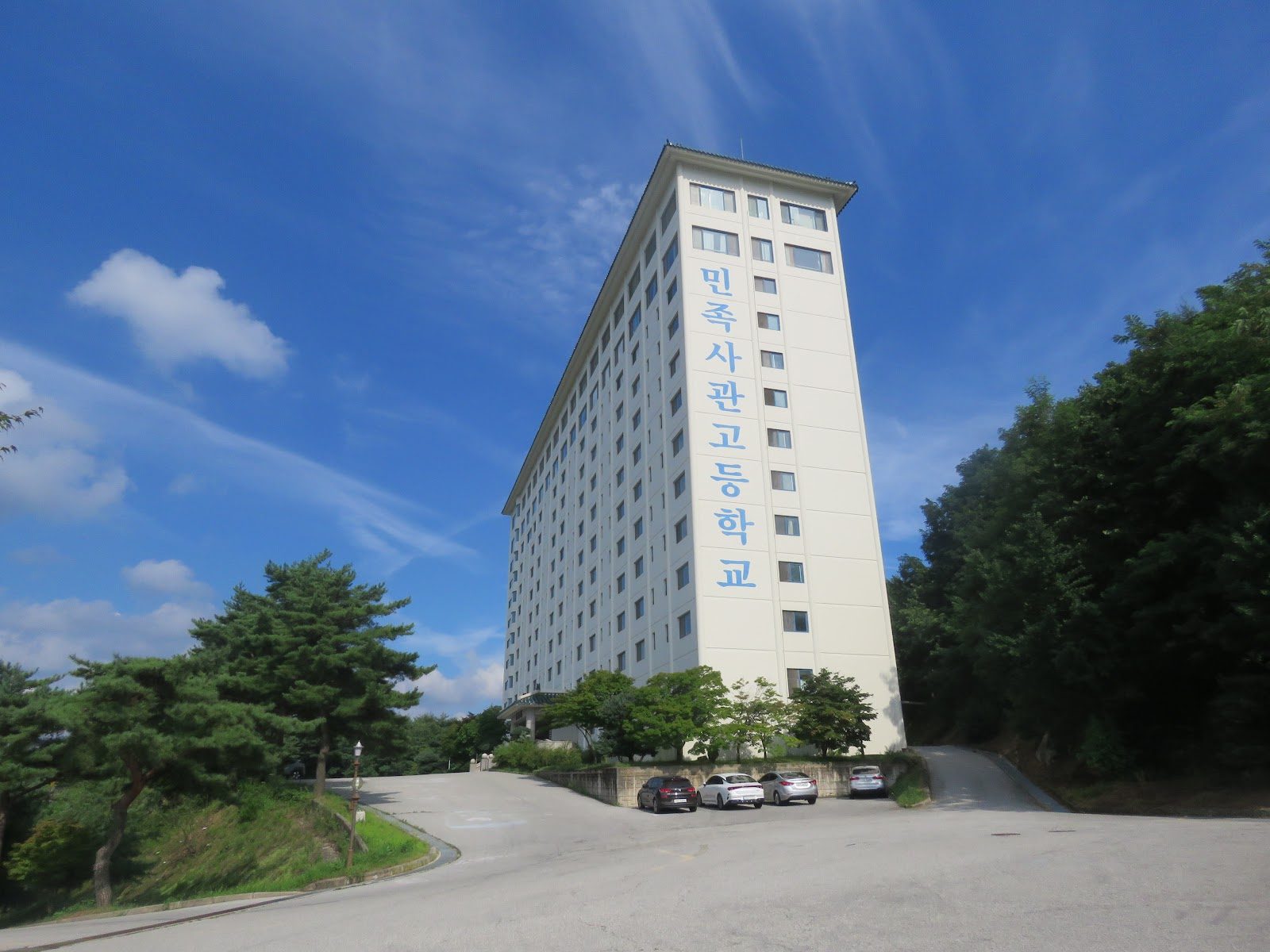
Photo © Taewoo Yoon via Google Maps
Type
Both
Ages
3–18
Curriculum
IB · American
Ratio
—
The Verdict
Editor's commitment
Right for
Ambitious boarders who want an IB and American curriculum in English and Korean, on a 1.27-square-kilometre campus 120 kilometres east of Seoul.
Wrong for
Families wanting a day school, urban convenience or a softer culture; this 1996 Hoengseong boarding school trades comfort for discipline and selectivity.
Watch out for
Boarding averages US$40,000 a year, and the ritualised ethos is unapologetically distinctive: hanbok uniforms, English-only seminars and an IBO-accredited programme.
Ranking breakdown
Korean Minjok Leadership Academy · #121 of 1591
Composite score 70.8. 8 weighted criteria.
By criterion
Academic Outcomes
Weight 20%
#43
of 1529 scored
University Placement
Weight 16%
#59
of 1529 scored
Prestige & Heritage
Weight 12%
#461
of 1571 scored
Alumni Network
Weight 12%
#1440
of 1530 scored
Facilities
Weight 12%
#349
of 1533 scored
Transparency & Communications
Weight 8%
#388
of 1532 scored
Peer & Industry Review
Weight 10%
#97
of 1548 scored
Admissions Selectivity & Demand
Weight 8%
#51
of 1529 scored
Score history
Korean Minjok Leadership Academy · 2026
Movement across 2024–2026. Peer average overlaid.
Overall — 2024–2026
70.8/ 100
▲ +23.3 vs 2025
year on year
Peer & Industry Review
How Korean Minjok Leadership Academy is regarded in the sector
65
Respected · medium confidence
Korean Minjok Leadership Academy (KMLA) is consistently cited in Korean press (Chosun Ilbo, JoongAng Daily) as one of the country's elite autonomous private boarding schools, notable for unusually high placement rates into top US universities like Harvard, MIT, and Yale. It appears in regional 'best schools in Korea' discussions and expat/international education forums discussing Korean boarding school options, though it has limited visibility in Western specialist press (Tatler, Good Schools Guide) which focus more on international/expat-oriented schools rather than domestic elite Korean institutions.
Evidence sources
- Chang Byung-gyu — CEO/Chairman, Krafton - business
- Yeonmi Park — Author/Human rights activist
- Suh Kyung-duk — Professor, academia
Editors' overview
At 600 metres up on a Gangwon mountainside, Korean Minjok Leadership Academy trades urban convenience for intensity. This is a co-educational, independent boarding school in Hoengseong, founded in 1996, with instruction in both English and Korean and an IB and American curriculum mix. The setting matters: the campus covers 1.27 square kilometres, huge by Korean standards, and the school has built a distinct identity around discipline, separation from distraction and a deliberately rarefied academic culture. Parents drawn to glossy city-campus international schools are shopping in the wrong market. KMLA is for families who want immersion, structure and ambition with very little softness around the edges.
What sets it apart is not polished international-school genericism but a high-pressure, highly codified institutional culture with a strong national mission behind it. The school is selective, fully boarding and non-religious, and it has IBO accreditation. It also belongs to the G20 Schools group. The editorial tagline captures the point: hanbok uniforms, English-only seminars and a serious attempt to build a Korean answer to elite Anglo boarding schools. That combination is unusual and, for the right student, powerful. The average annual boarding fee is $40,000, which places KMLA in the premium bracket, but the proposition is more distinctive than many schools at that price because it offers a boarding-led academic environment that is unmistakably Korean while still orientated towards international university pathways.
Why shortlist it? Because very few schools in Asia combine this degree of selectivity, a full boarding model and such a consciously intellectual ethos. KMLA has a verified minimum of six notable alumni catalogued on Wikidata, including three scientists or scholars, which supports its academic reputation without settling into destination-list chest-thumping. It is also reputable for graduate placement at eminent universities, though the school does not publish destination figures here. This is a school for students who are self-propelling, resilient and comfortable with institutional expectations that reach into daily life, language use and personal conduct. It is not for the faint-hearted; it is for the teenager who wants stretch, structure and a peer group that treats academic competition as normal.
Academic Performance
KMLA carries a serious academic reputation, but its public disclosure is thinner than that reputation merits. The school is reputable for graduate placement at eminent universities, yet it does not publish aggregate IB outcomes, AP score distributions, SAT ranges or university destination tables here. That leaves parents without the benchmarking data that top international schools now treat as standard. In a market where peers routinely post average diploma scores, bilingual pass rates and destination breakdowns, that opacity is a weakness. The school’s selectivity still matters: admissions filtering of this intensity, combined with a culture built around scholarship and competition, places KMLA in the high-attainment tier of Korean secondary education.
Relative to peers, KMLA fits the category of elite, exam-oriented schools whose status rests on student calibre and university traction rather than on polished public reporting. The case for academic strength is real, but it is indirect: selectivity, longstanding prestige and a verified minimum of 6 notable alumni on Wikidata, including 3 scientists or scholars. That is credible evidence of intellectual seriousness, not a substitute for published results. Parents comparing KMLA with the best transparent international schools in Asia need to accept a trade-off: the school offers a hard-edged scholarly culture, but not the level of exam-data disclosure that would let outsiders rank it cleanly against IB competitors.
Facilities
The estate is the headline facility here. The school occupies 1.27 square kilometres, an exceptionally large contiguous campus for a Korean school, and that changes the educational offer. Space on this scale gives KMLA what dense urban competitors cannot match: separation, containment and room for a full residential routine to run without feeling crammed into a tower block with a sports hall attached. The mountain setting at 600 metres adds to that sense of remove. For parents, the practical reading is straightforward: this is a campus built for immersion and institutional control, not for after-school drift into city life. Against peer schools in Seoul and other Asian capitals, that is a serious structural advantage for boarding culture, outdoor circulation and campus identity, even if it trades away convenience.
What is missing is just as important. The school does not publish the kind of facility detail strong international peers now treat as basic disclosure: no clear public inventory of science laboratories, performing-arts spaces, sports provision, libraries, makerspaces or residence specifications. That opacity matters because premium boarding schools are judged on the whole lived environment, not just academic reputation. KMLA therefore benchmarks as impressive in scale but opaque in substance. Families choosing between this and more transparent top-tier boarding schools will have a clear picture of the campus footprint and a thin picture of what sits inside it. For a school with this level of ambition, that is a real weakness.
At 600 metres up on a Gangwon mountainside, Korean Minjok Leadership Academy trades urban convenience for intensity
Prestige
KMLA carries real prestige inside South Korea’s academic landscape because scarcity, selection and institutional distinctiveness all pull in the same direction. It is not a generic international school selling global branding at premium fees; it is a status school with a thesis. The school’s reputation rests on being one of the country’s most selective secondary boarding schools and on a long-running record of sending graduates to eminent universities. That matters more than polished marketing language. The membership of the G20 Schools group adds an external signal, but the stronger marker is domestic recognition: KMLA occupies a narrow, hard-won niche for families who want intellectual pressure, hierarchy and a school culture that treats scholarship as a form of national project rather than private enrichment.
I rate its prestige highly because the brand is both academically charged and culturally specific. The school does not borrow cachet from a foreign franchise or a capital-city postcode. It built its own mythos, and that mythos has held. The verified minimum of 6 notable alumni on Wikidata, including 3 scientists or scholars, supports that standing without inflating it. There is, however, a limit to the prestige story. Outside Korea and specialist admissions circles, KMLA lacks the instant recognition of the best-known Anglo-American boarding names. Its status is deep rather than broad: serious, elite and highly legible to informed families, but not universally famous. For many parents, that is a strength, not a weakness.
That leaves parents without the benchmarking data that top international schools now treat as standard
Communications
KMLA’s parent communication reads as an extension of the school culture: formal, selective and more inward-facing than the best international-school operators. The public-facing picture is thin. Parents can identify the school’s broad identity, its stature and its mountain-campus remove, but they do not get the routine decision-making information that helps families judge daily life with confidence. We have not seen robust public reporting on academic outcomes, destination data, residential provision or the practical mechanics of student support. For a school charging an average boarding fee of $40,000 a year, that level of disclosure is below the premium standard. The message is clear: KMLA expects families to buy into the institution first and interrogate details second.
That approach will suit some parents. In a high-control, tradition-heavy school, communication often runs on hierarchy rather than customer-service reflexes, and KMLA fits that pattern. Families who value authority, structure and a degree of institutional distance may read that as serious rather than cold. Others will find it opaque and unnecessarily hard to parse. The school’s distinctiveness does a lot of the communicative work by itself; its rituals and reputation speak loudly. But prestige is not a substitute for clarity. Strong schools explain themselves in detail. KMLA does not do that well enough.
Uniqueness
What makes KMLA distinct is the way it fuses elite-school ritual with a national intellectual project. The hanbok uniform is not a branding flourish; it signals a school that treats culture, conduct and scholarship as one system. So do the English-only seminars in a Korean setting: students are trained to switch codes, defend arguments aloud and operate under rules that reach beyond the classroom. That combination is highly unusual. Many schools offer international pathways; very few build them inside a deliberately Korean institutional frame. The result is a student experience that is intense, rule-bound and consciously identity-forming, not the looser cosmopolitanism of a standard premium international school.
The gain for students is clear. They get a peer group shaped by heavy selection, a residential culture built around collective standards and a daily rhythm that prizes seriousness over comfort. Membership of the G20 Schools group adds one external network, but the stronger differentiator sits on campus: this school asks teenagers to live inside an educational idea, not just attend classes. That brings real stretch. It can sharpen independence, stamina and intellectual confidence at an age when many schools are still negotiating basic discipline. It also narrows the market. Families wanting warmth, informality or room to coast should walk away. Families wanting an uncompromising, rarefied environment with a clear thesis will find one here.
The school occupies 1.27 square kilometres, an exceptionally large contiguous campus for a Korean school, and that changes the educational offer
Student Profile
This school suits a teenager who wants intensity, not balance. The right student is self-disciplined, high-output and comfortable being measured against strong peers every day. They do not need hand-holding, and they do not expect school to revolve around personal preference. KMLA rewards students who tolerate rules, respond to pressure and treat study as a serious craft rather than a means to a résumé line. The social fit matters as much as the academic one: children who enjoy intellectual argument, accept institutional formality and can live productively inside a tightly managed community will cope well. Children who need a softer pastoral tone, more personal latitude or a lighter competitive atmosphere will struggle.
There is also a cultural fit. This is a school for families who value discipline with purpose and who do not flinch at an environment shaped by selection, ritual and collective standards. Ambitious mathematicians, scientists, debaters and humanities students all have room here, but only if they can handle a campus culture that is demanding, status-conscious and short on sentimentality. The verified minimum of 6 notable alumni in Wikidata, including 3 scientists or scholars, reinforces the point: this is fertile ground for academically serious students with stamina. It is not for the faint-hearted. It is for the adolescent who wants to be stretched hard and who gains confidence from structure rather than freedom.
KMLA carries real prestige inside South Korea’s academic landscape because scarcity, selection and institutional distinctiveness all pull in the same direction
Co-curricular strengths
Arts & sport, on a separate axis
Overall 6.9/10
Scored 0-10 from the school's own published evidence. This axis is editorial-only — it does not feed the main WTS ranking.
Sports
7.5/10
A gymnasium with a gymnastics room, an archery field, tennis and basketball courts by the track, daily physical training, and multiple sports including basketball, volleyball, table tennis, Taekwondo and Kumdo, which evidences both dedicated facilities and structured recurring provision.
Drama
7/10
Wikipedia names musical-theatre groups Stars on the Stage and The Scene, a drama club Life is Drama, and an auditorium, giving recurring named productions/groups plus a dedicated performance facility.
Dance
6/10
A dance studio and notes dance sports as an option for 11th graders, which is enough to show dedicated facility-backed provision.
Music
7.5/10
The profile and Wikipedia together show a school orchestra, choir, school bands, Korean traditional music groups, recording studios and practice rooms, a 60-plus-student symphonic orchestra, and the Minjok Culture Center housing music, which supports a notable strength score.
Visual Arts
6.5/10
Arts provision in the Minjok Culture Center and a photography club, Through the Lens, that stages exhibitions inside and outside school, showing explicit visual-arts activity with recurring public display.
Editor first-pass · editor-reviewable · 7/28/2026
Notable alumni · Wikidata
6notable alumni
0 historic (born pre-1930) · 3 modern (born post-1970)wikidata:2026-07-28 How we source this

WTS 300 badge
2025/26 editionKorean Minjok Leadership Academy is one of the World's Top 300 Schools for 2025/26. Claim your listing to add it to your site →
Strengths
- +One of the most selective secondary boarding schools in South Korea, KMLA is reputable for the placement of its graduates at eminent universities.
- +Enrollment stands at 456 students (2025) with a student to teacher ratio of 5.8:1, allowing for close academic supervision relative to typical Korean high schools.
- +Located on 1.27 square kilometers (310 acres), it is one of the largest institutions in terms of contiguous area in the nation, giving students unusually spacious rural facilities for a Korean secondary school.
- +In 2007, KMLA was highlighted by the US College Board as a world best school in the Advanced Placement Program in seven subjects expanded from four subjects the year before, calculus, chemistry, microeconomics, macroeconomics, physics, and statistics.
- +The admission process goes through three steps, a first round selection based on application forms containing school grades, essay, and extracurricular activities, followed by an interview and a physical test, reflecting a genuinely holistic (not purely exam-score) selection model.
Considerations
- −The annual cost of attending KMLA is estimated to be $40,000 (2025), substantially above ordinary South Korean public or private school fees.
- −KMLA is a highly selective co-educational boarding school with a demanding multi-stage entry process that rewards applicants who have had extensive prior academic and interview coaching.
- −The school sits near the town of Hoengseong, Gangwon, South Korea, 120 kilometers (75 mi) east of Seoul, making it a fully residential option with no realistic day-commute from the capital.
- −Motto: Deep Awareness of the Heritage of Our People, an institutional ethos centered on Korean national identity that may sit oddly with families seeking a more internationally neutral school culture.
Availability
Primary entry gate & tests
KMLA Admissions Exam
Gallery
Photo © Taewoo Yoon via Google Maps
Photo © Taewoo Yoon via Google Maps
Photo © SEAN McLaren P via Google Maps
Photo © SEAN McLaren P via Google Maps
Photo © SEAN McLaren P via Google Maps
Photo © jung Scott via Google Maps
Photo © jung Scott via Google Maps
Photo © SooHyun Park via Google Maps
Photo © Kevin Kim via Google Maps
Parent reviews
Have you sent your child here?
Voice reviews carry the strongest trust badge — we transcribe them for you to tidy up before they go live. Prefer to type? A written review is fine too.
Add your voice
In 60 seconds, tell other parents: what's the best thing about Korean Minjok Leadership Academy, and what surprised you when your child joined?
We ask for a Google sign-in so every review has a real face behind it — no anonymous drive-by attacks on schools, and no faked positive reviews. Your email is never shown publicly.
Send this profile to a friend
International parents rely on word-of-mouth. Share this review with someone weighing the same decision.
Schools with places
Similar schools to Korean Minjok Leadership Academy with places available now.
Chadwick International
Incheon · South Korea
- 2026-27
- CLOSEDStandard route closed
- 2027-28
- OPENS SOONInfo mid-Oct '26 / dates TBC
Korea International School
Seongnam · South Korea
- 2026-27
- WAITPOOLSpace-dependent
- 2027-28
- PLACES OPENRolling
North London Collegiate School Jeju
Jeju · South Korea
- 2026-27
- WAITPOOLVacancy-dependent
- 2027-28
- PLACES OPEN
Seoul Foreign School
Seoul · South Korea
- 2026-27
- WAITPOOLSpace-dependent
- 2027-28
- PLACES OPENRolling
Availability first, then country, area, curriculum, price, co-curricular
Consider also
Also worth looking at alongside Korean Minjok Leadership Academy.
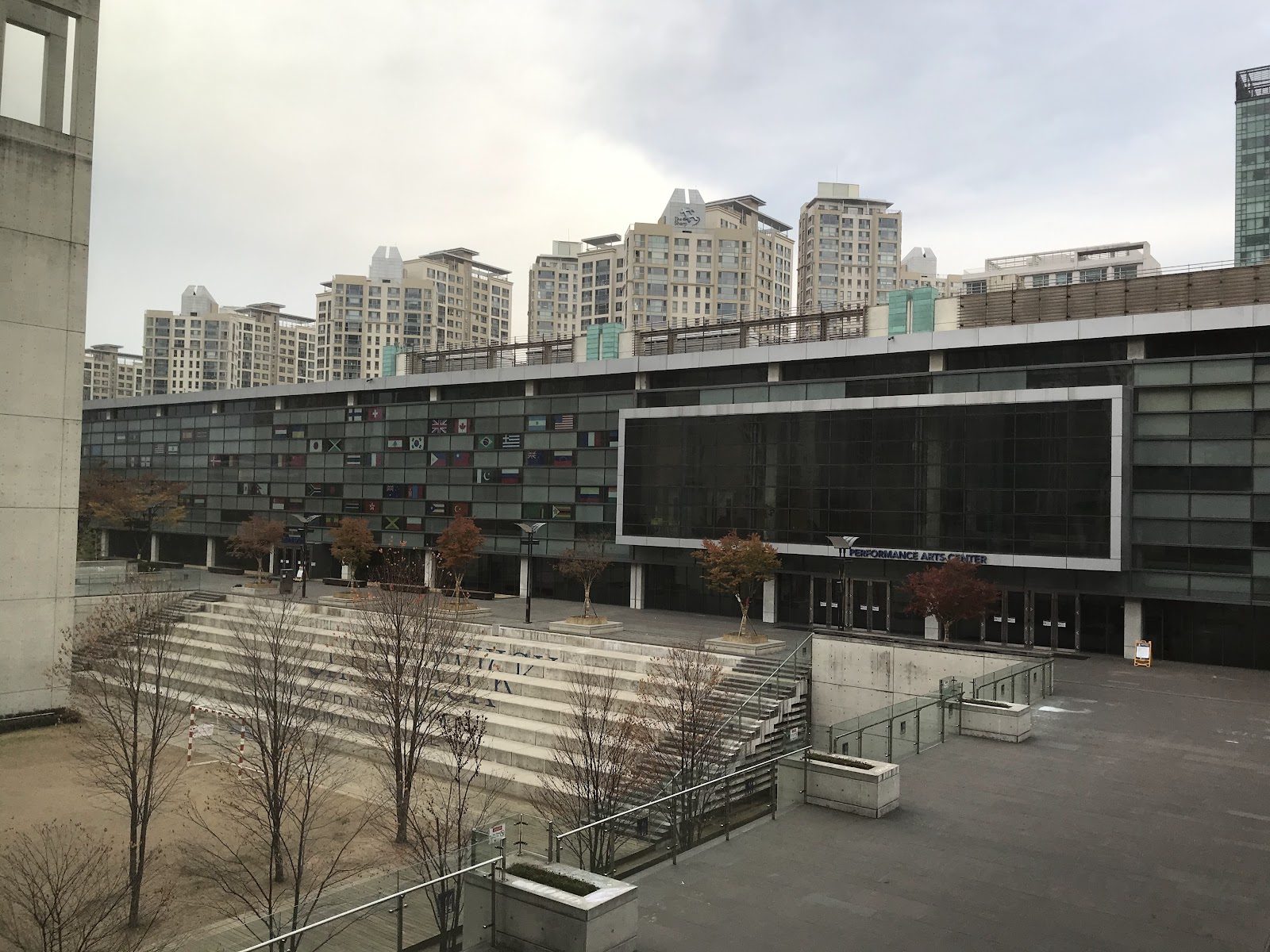
Chadwick International
Incheon · South Korea
One school, two continents: this Songdo campus mirrors a 1935 California founder, pairing IB rigor with mandatory outdoor-education expeditions.
Korea International School
Seongnam · South Korea
In Seongnam's Pangyo tech corridor, a dual IB-American track anchors a curriculum built around 24 Advanced Placement courses.
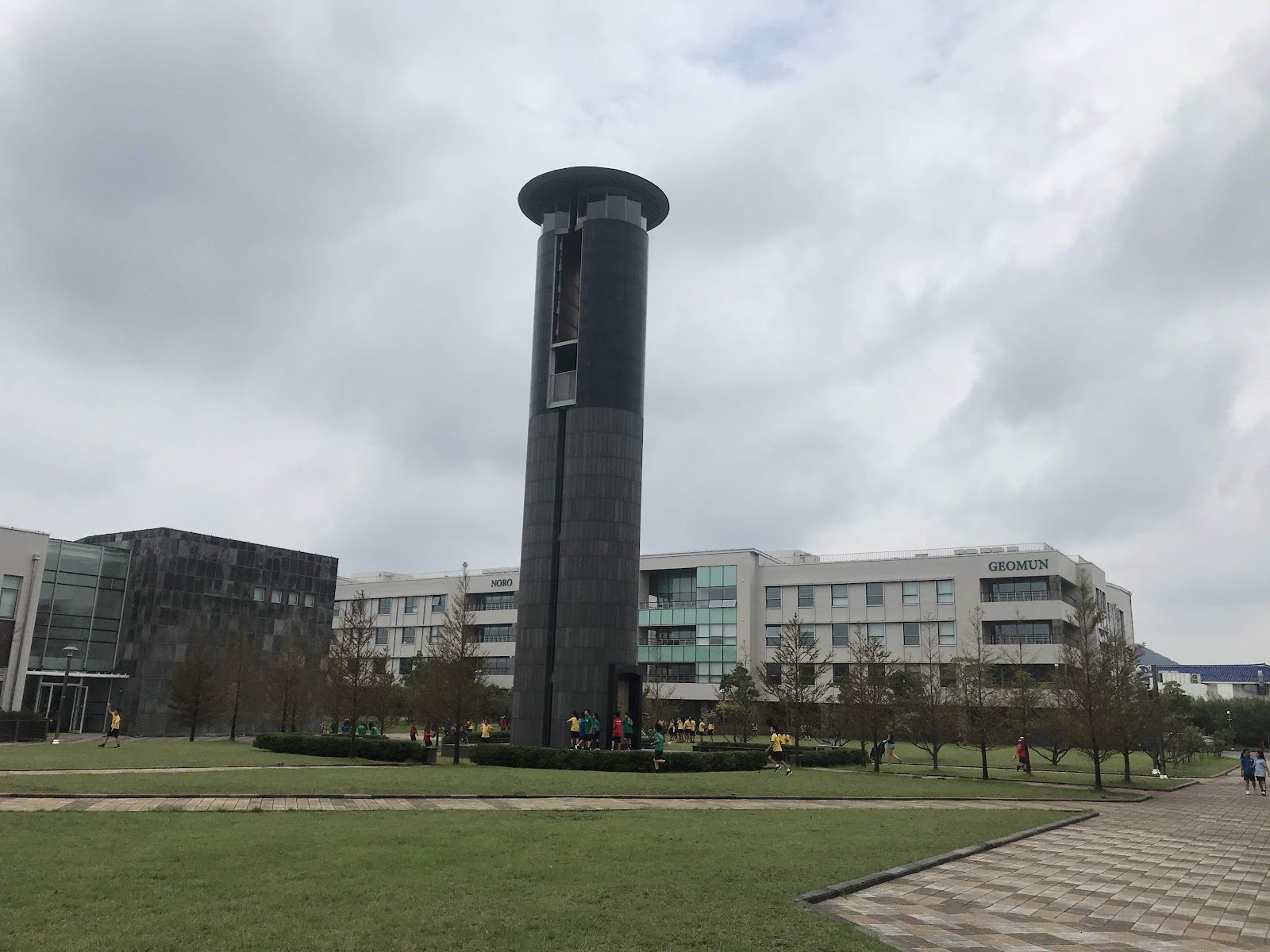
North London Collegiate School Jeju
Jeju · South Korea
Founding school of Jeju's Global Education City, blending a 170-year London pedigree with strong IB results and seven boarding houses.

Seoul Foreign School
Seoul · South Korea
Founded in 1912 beside Yonsei University, first in Korea to adopt the IB, blending British, American and Clan-house traditions.
Same country and curriculum — closest matches within ±10 points either way