
Incheon
One school, two continents: this Songdo campus mirrors a 1935 California founder, pairing IB rigor with mandatory outdoor-education expeditions.
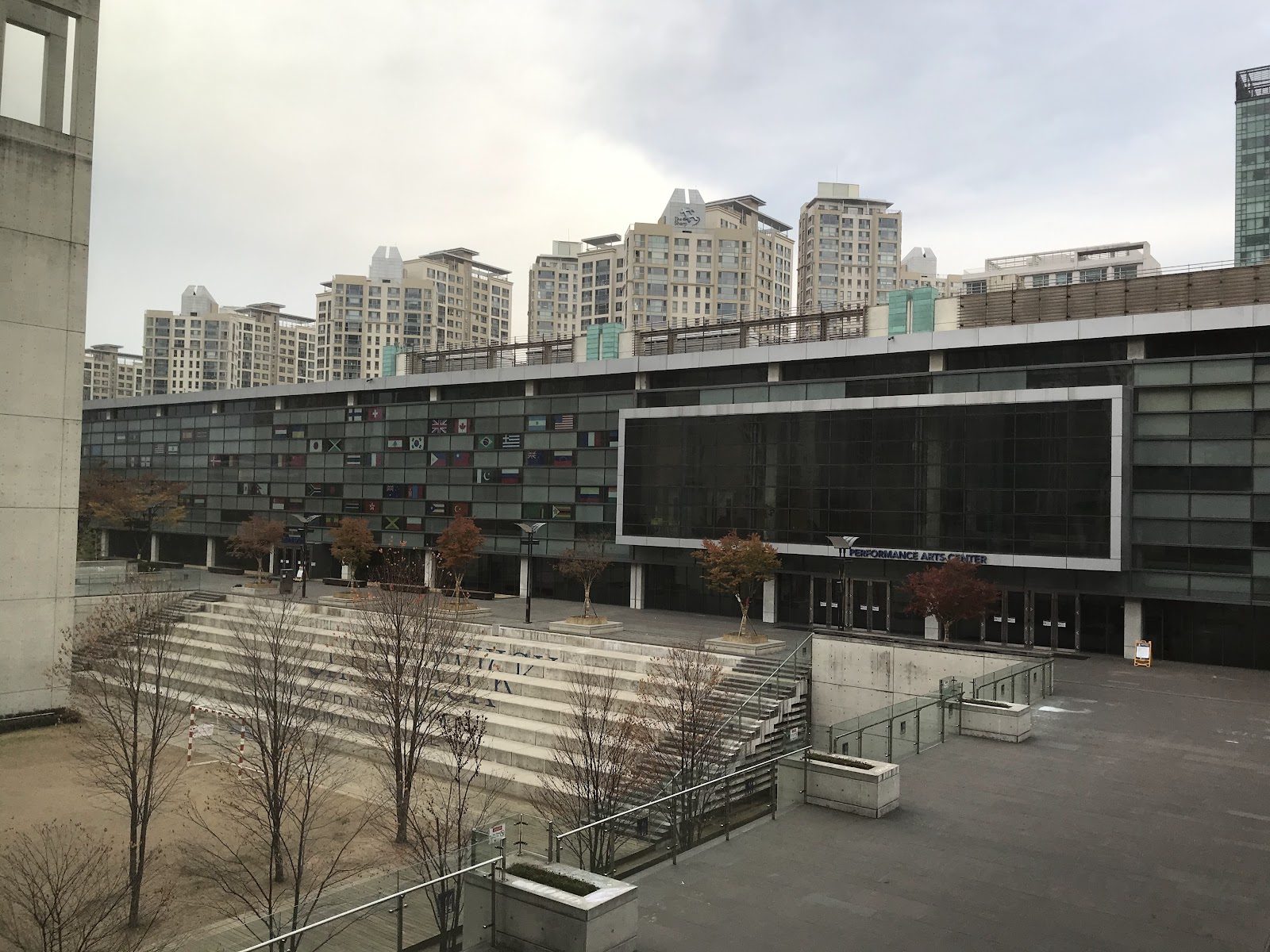
Photo © Nathan Gildart via Google Maps
Type
Day
Ages
3–18
Curriculum
IB · American
Ratio
8:1
The Verdict
Editor's commitment
Right for
Families who want a 3–18 day school in Songdo with IB plus American framing, an 8:1 ratio and English-led teaching.
Wrong for
Parents seeking boarding, a religious ethos, or a cheaper route than this USD 44,335 average annual day fee.
Watch out for
Founded in 2010 and accredited by the IBO, it trades on a 1935 California sister-school link; judge the Songdo campus on its own terms.
Ranking breakdown
Chadwick International · #265 of 1591
Composite score 72.8. 8 weighted criteria.
By criterion
Academic Outcomes
Weight 20%
#334
of 1529 scored
University Placement
Weight 16%
#354
of 1529 scored
Prestige & Heritage
Weight 12%
#446
of 1571 scored
Alumni Network
Weight 12%
#293
of 1530 scored
Facilities
Weight 12%
#279
of 1533 scored
Transparency & Communications
Weight 8%
#436
of 1532 scored
Peer & Industry Review
Weight 10%
#480
of 1548 scored
Admissions Selectivity & Demand
Weight 8%
#282
of 1529 scored
Score history
Chadwick International · 2026
Movement across 2024–2026. Peer average overlaid.
Overall — 2024–2026
72.8/ 100
▲ +21.6 vs 2025
year on year
Peer & Industry Review
How Chadwick International is regarded in the sector
68
Respected · medium confidence
Chadwick International (part of the Songdo IBD, affiliated with Chadwick School in California) is regularly cited in expat parent forums and regional international-school directories (e.g., International School Consultancy/ISC Research profiles, Council of International Schools membership listings) as a leading IB continuum school in Incheon, and is frequently mentioned alongside Dwight School Seoul and Seoul Foreign School in 'best international schools Korea' round-ups. It lacks the level of coverage in Tatler-style prestige rankings or Good Schools Guide International that top-tier global schools receive, and independent alumni-network press is sparse, suggesting solid regional respect rather than top-tier global renown.
Evidence sources
Award
Elite Entrepreneurship, Economics & Finance 60
World's Top School · The Global Ranking
Chadwick International is featured on our Global Top 60 ranking at #14. This seal is available for the school's marketing team to use on their website, prospectus and social channels.
Editors' overview
Songdo gives Chadwick International a rare proposition: an IB school on a purpose-built international campus with a direct institutional link to a California founder dating back to 1935. This is not a loose branding exercise. The school states plainly that it shares mission, philosophy and core values with Chadwick School in Palos Verdes, and student and staff exchanges between the two campuses add substance to that claim. For families who want an American-inflected international education without sacrificing the coherence of a full IB pathway, that matters. So does the scale of adult attention: the published student-teacher ratio is 8:1, a serious number in any market.
What distinguishes Chadwick is its insistence on education through experience rather than mere accumulation of credentials. The school frames learning as “self-discovery through experience”, and the editorial tagline points to mandatory outdoor-education expeditions as part of that culture. That combination — IB rigour, American framing, and outdoor challenge — gives the school a distinctive edge in a crowded field of international schools that promise global citizenship and deliver little beyond the slogan. Chadwick’s non-religious setting, English and Korean as languages of instruction, and age range from 3 to 18 make it a clean fit for internationally mobile families who want continuity on one campus rather than a patchwork of separate schools and systems.
The average annual day fee is $44,335, which places Chadwick in the premium bracket of the South Korean international market. Parents are paying for a full-through school founded in 2010, IB accreditation, and an educational model that puts equal weight on intellectual stretch and character under pressure. The trade-off is clear: this is not the right school for families who want a narrowly exam-drilled environment or a softer, more anonymous campus culture. It suits students who thrive with high expectations, who want close contact with teachers, and who gain energy from challenge, reflection and participation. In short, Chadwick belongs on a shortlist for families seeking an outward-facing, demanding international school with genuine trans-Pacific DNA rather than borrowed Californian gloss.
An Elite Entrepreneurship, Economics & Finance 60 school
Chadwick International in Songdo, Incheon, South Korea, sits at rank fourteen on the Elite Entrepreneurship, Economics & Finance 60 on the strength of a single externally judged result: in 2026, sibling team Taeyang and Shannon Kim were named a Global Winner of the Blue Ocean Student Entrepreneur Competition for Storythm, an AI-driven literacy platform, beating out a field of thousands of international entries. That is a genuine, judged competitive placing rather than an internal school award, and it is the fact anchoring this school's presence on the list.
The curriculum architecture around the specialism is honest rather than exceptional. Chadwick is an IB World School authorized for the PYP, MYP, DP and CP, and its Diploma Programme subject list includes Business Management and Economics as standard offerings rather than a bespoke entrepreneurship pathway. There is no publicly documented dedicated Business or Entrepreneurship department, Investment Lab, Bloomberg terminal or student-managed investment fund at Chadwick International, and no verified record of IEO medals, Wharton Investment Competition placings, Northwestern Economics Tournament results, or DECA/Young Enterprise chapters. What genuinely differentiates the school is pupil-driven initiative: the Blue Ocean win emerged from a campus culture of more than 50 clubs and student-run organizations rather than a formal incubator.
Notable alumni are still emerging: Chadwick International graduated its first cohort only in 2016, so the school has not yet built a long track record of named founders, CFOs or economists. The clearest verified evidence of pupil capability in this specialism remains the 2026 Blue Ocean Global Winner placing for Storythm, achieved by current students rather than graduates, but a genuine marker of entrepreneurial ability worth watching.
International openness is real but geographically bounded. Chadwick International is a day school with no boarding facilities, so overseas families must relocate to Songdo, a planned city inside the Incheon Free Economic Zone, and arrange independent housing; the school eases the transition with a veteran "buddy family" scheme. Instruction is entirely in English, with Korean, Mandarin and Spanish offered as additional languages. Admissions for Korean and Korea-resident foreign passport holders run on a fixed November-to-January window, but Chadwick also offers rolling admission for families actively relocating to Korea, handled directly by the admissions office rather than through outside agents. Annual tuition for 2026/27 runs from roughly KRW 51.6 million to KRW 60.2 million depending on division, plus one-time application, matriculation and capital development fees. Vacancies are limited and vary year to year, so families should start the relocation and application process at least six to nine months out, and should not expect boarding infrastructure: this is a destination for families settling permanently in Songdo, not a boarding-school alternative.
Academic Performance
Chadwick does not publish aggregate IB Diploma results in the public domain, and that matters. In a market where serious schools use mean scores, pass rates and cohort sizes to prove academic substance, silence creates avoidable opacity. Parents can confirm that the full IB continuum is in place, but they cannot test Chadwick’s sixth-form outcomes against Seoul’s strongest international competitors on the numbers that count. That does not indict the academic programme; it does remove one of the cleanest ways to verify where the school sits at the sharp end of selective university preparation.
What Chadwick does disclose points to a school built for high-attention learning rather than mass throughput. The published 8:1 student-teacher ratio, the claim that more than 80% of teachers hold advanced degrees, and the school’s insistence on experiential learning all support a picture of serious classroom support and intellectual ambition beyond rote performance. The question is not whether students receive resources; they do. The question is whether those resources translate into top-tier external results, and the school does not answer it publicly. Relative to peers, that leaves Chadwick in an awkward category: clearly ambitious, well-resourced, and academically structured, but without the disclosed examination data that would place it securely among the region’s proven heavyweights.
Facilities
Facilities are one of Chadwick’s stronger cards. The campus runs to 17 acres, which gives the school room to build for breadth rather than cram activity into a tight urban footprint. The school points to a Makerspace lab, gardens for sustainability work, a main theatre, a football pitch and a TV studio; taken together, that is a serious spread for a through-school and a better mix than many international campuses that prioritise polished atriums over usable specialist spaces. The smart-city setting matters less than the practical result: pupils have access to a campus built for movement, performance, design and hands-on work, not just classroom delivery. That gives Chadwick a more purposeful physical offer than peers whose facilities read well on a tour but do little to shape daily learning.
The standout here is fit between plant and educational model. Schools that talk about experiential learning need spaces that can carry it; Chadwick has them, and its outdoor education programme adds a layer many competitors still treat as an optional extra. The theatre and studio strengthen the arts and communications side, while the lab and garden widen the academic experience beyond textbooks. The weakness is that the school does not publish the sort of granular facilities detail that top-tier rivals now provide — pool specifications, auditorium capacity, dedicated science blocks, or elite sports provision. So the verdict is *strong, credible and well matched to the school’s ethos, but not the arms-race level* of facility disclosure seen at the most heavily resourced campuses.
The question is whether those resources translate into top-tier external results, and the school does not answer it publicly
Prestige
Chadwick carries real prestige, but it is a specific kind of prestige. This is not old-money British ritual transplanted into Asia, nor a school that trades on brute exam publicity. Its status rests on three harder assets: a direct institutional link to a long-established California sister school, a non-profit foundation structure, and a model that binds academic ambition to outdoor education, exchanges and high-touch teaching. For international families in Korea, that gives Chadwick a serious international profile rather than a merely local one. The published 8:1 student-teacher ratio strengthens that standing, because prestige at this level is not just about brand; it is about access to adults, breadth of opportunity and the confidence that a school has funded itself to operate at a high standard.
That said, Chadwick’s prestige is stronger in reputation than in proof. The campus, the foundation link and the experiential ethos all carry weight, and the average annual fee of $44,335 places it squarely among the market’s expensive choices. Yet the school does not publish the aggregate diploma outcomes that would turn social and institutional cachet into hard academic authority. That gap stops it short of the most formidable category, where prestige is backed by relentless public results data. The verdict, then, is clear: Chadwick is a high-status school with genuine substance, international credibility and a distinctive identity, but not one that has fully closed the case in numbers.
That gap stops it short of the most formidable category, where prestige is backed by relentless public results data
Communications
Chadwick communicates with the polish of a school that understands international families expect clarity, not institutional fog. The public-facing site is well organised, easy to navigate and built around parent actions: enquire, apply, tour, and drill into programmes, faculty and campus life without getting trapped in slogan-heavy dead ends. That matters more here than at a simpler local school, because a through-school with a sister-campus relationship, outdoor education, and a broad co-curricular offer creates more moving parts for families to track. Chadwick handles that complexity with clean structure, strong visual hierarchy and a confidently international tone. The school also gives parents concrete handles on quality — teacher qualifications, named facilities, the foundation link, and the exchange relationship — instead of relying only on mood music.
The limitation is depth. Chadwick communicates brand, philosophy and day-to-day ethos very effectively; it communicates outcomes less well. The same pattern that weakens academic transparency also affects parent communications more widely: plenty of message, less hard reporting. Families can grasp what the school values and how it wants children to learn, but they get less published evidence on how those priorities cash out in external performance, cohort trends or comparative attainment. That does not make communication weak. It makes it persuasive rather than forensic. For parents who value culture, access and coherence, that works. For parents who want a hard-nosed data trail before paying $44,335 a year on average, it leaves unfinished business.
Uniqueness
Chadwick’s real point of difference is not the familiar international-school promise of “global citizenship”. It is the fact that this campus has a working relationship with its California sister school under the same foundation, with exchanges for students and staff written into the model. That gives the trans-Pacific identity real operational weight. Families are not buying a borrowed American name or a licensing deal dressed up as heritage; they are buying into a school with shared mission, shared values and direct institutional traffic across 2 campuses. For students, that brings a wider frame of reference, more adult perspectives, and a school culture that connects South Korea to the US in daily practice rather than in prospectus language.
The second differentiator is the school’s insistence on experience as part of the education, not an enrichment add-on. Outdoor education has formal standing here, and the campus infrastructure backs the idea that learning should involve building, performing, growing, broadcasting and testing things in the real world. That matters because many academically ambitious schools still keep risk, discomfort and self-discovery at arm’s length. Chadwick does the opposite. Students get a more demanding, hands-on education that asks for resilience, reflection and initiative, supported by unusually close access to adults through the published 8:1 ratio. The result is a school that feels coherent, deliberate and *not for families seeking a narrow exam factory*.
The trans-Pacific sister-school link reinforces that outlook and gives the community a genuinely outward-facing cast
Student Profile
Chadwick suits children who engage when school asks more than compliance. The best fit is a student who wants close contact with adults, will use feedback, and does not shrink from being known well. This is a community for pupils who can move between academic study, performance, design, sport and reflection without treating one of those domains as decorative. The school’s own language around self-discovery through experience points to a student body expected to test itself in public, make mistakes, and learn through action. That creates a high-expectation environment with a hands-on bias. Children who need anonymity, a narrow revision treadmill or a low-friction school day will find the culture demanding.
It also fits internationally minded families who want their children to grow up around peers with mobile backgrounds and a wider frame than the local catchment. The trans-Pacific sister-school link reinforces that outlook and gives the community a genuinely outward-facing cast. With a published 8:1 ratio, there is less room to hide and more pressure to participate, which suits articulate, curious students who respond to adult attention rather than resist it. Socially, the strongest fit is a child with resilience, decent self-management and the confidence to join in. The weaker fit is a student who wants a soft-edged campus or a purely transactional route to university. Chadwick asks for energy, openness and stamina, and it rewards students who bring all three.
Songdo gives Chadwick International a rare proposition: an IB school on a purpose-built international campus with a direct institutional link to a California founder dating back to 1935
Co-curricular strengths
Arts & sport, on a separate axis
Overall 8.38/10
Scored 0-10 from the school's own published evidence. This axis is editorial-only — it does not feed the main WTS ranking.
Sports
8.8/10
Extensive dedicated athletics facilities including two indoor gymnasiums, an athletic field, running track, five tennis courts, football field, indoor 25m pool and weight room, plus KAIAC league participation and a wide multi-level sports programme, which supports a top-band facilities-based score.
Drama
8.5/10
Theater Productions in extracurriculars, which is stronger than a bare mention of drama because it indicates actual productions, but there is no named theatre department, specialist staff or dedicated drama facility cited.
Dance
7/10
Wikipedia specifically mentions a dance studio and recurring Dance Fit team offerings in middle and upper school, and a dedicated named facility alone clears the 6 floor.
Music
8.8/10
Choir Ensemble and String Orchestra, and the facilities section adds music rooms, showing a solid structured music offering with named ensembles.
Visual Arts
8.8/10
Visual arts studios, and a dedicated named facility for the dimension is enough to reach 6 even though no exhibitions, department or awards are described.
Editor first-pass · editor-reviewable · 7/28/2026
WTS 300 badge
2025/26 editionChadwick International is one of the World's Top 300 Schools for 2025/26. Claim your listing to add it to your site →
Strengths
- +Chadwick International is a Pre-K to Grade 12 school in Songdo, Incheon, founded in 2010, and is an authorized IB World School offering the full PYP, MYP, DP and CP continuum, alongside WASC accreditation.
- +Chadwick International opened in 2010 as the second campus of Chadwick School in Palos Verdes, CA, established in 1935, giving it an established US-linked pedagogical lineage rather than a stand-alone franchise brand.
- +The school reports roughly 150 faculty, an average class size of about 25 students, and a student-to-teacher ratio of 8:1, figures consistent with smaller-group instruction.
- +Chadwick International is one of the first and largest schools in the Seoul metropolitan area where up to 30% of places can go to Korean nationals regardless of overseas-residency requirements, widening access compared with many Seoul foreign schools that require years of overseas residence.
- +Students take part in compulsory Outdoor Education trips from Grades 4-12 ranging from two to twelve days, alongside exchanges with Chadwick School in California, Round Square conferences and Model United Nations.
Considerations
- −Tuition is billed in a dual Korean-won-and-US-dollar structure, with published 2025/26 figures ranging from roughly KRW 27.4 million plus USD 15,530 in the Village School up to KRW 32.2 million plus USD 18,270 in the Upper School, before one-time application, matriculation and capital fees.
- −Qualified students from expatriate families residing in Korea are considered a priority for admissions, which can make places harder to secure for other applicant categories.
- −A child admitted as a foreign-passport student must keep that status throughout enrollment, and there is no guarantee of continued enrollment for students who change citizenship status after admission, an unusual structural risk for dual-national families.
- −The campus sits about 30 kilometres southwest of Seoul in Songdo, making it a day-school-only option (no boarding) that is less convenient for families based in central Seoul.
Availability
Primary entry gate & tests
Cognitive Assessment + Record
Gallery
Photo © 최재혁 via Google Maps
Photo © Nathan Gildart via Google Maps
Photo © Nathan Gildart via Google Maps
Photo © Nathan Gildart via Google Maps
Photo © Nathan Gildart via Google Maps
Photo © Nathan Gildart via Google Maps
Photo © Nathan Gildart via Google Maps
Photo © Marcel Ideler via Google Maps
Photo © Chadwick International School via Google Maps
Parent reviews
Have you sent your child here?
Voice reviews carry the strongest trust badge — we transcribe them for you to tidy up before they go live. Prefer to type? A written review is fine too.
Add your voice
In 60 seconds, tell other parents: what's the best thing about Chadwick International, and what surprised you when your child joined?
We ask for a Google sign-in so every review has a real face behind it — no anonymous drive-by attacks on schools, and no faked positive reviews. Your email is never shown publicly.
Send this profile to a friend
International parents rely on word-of-mouth. Share this review with someone weighing the same decision.
Schools with places
Similar schools to Chadwick International with places available now.
Korea International School
Seongnam · South Korea
- 2026-27
- WAITPOOLSpace-dependent
- 2027-28
- PLACES OPENRolling
North London Collegiate School Jeju
Jeju · South Korea
- 2026-27
- WAITPOOLVacancy-dependent
- 2027-28
- PLACES OPEN
Seoul Foreign School
Seoul · South Korea
- 2026-27
- WAITPOOLSpace-dependent
- 2027-28
- PLACES OPENRolling
Availability first, then country, area, curriculum, price, co-curricular
Consider also
Also worth looking at alongside Chadwick International.
Korea International School
Seongnam · South Korea
In Seongnam's Pangyo tech corridor, a dual IB-American track anchors a curriculum built around 24 Advanced Placement courses.
Korean Minjok Leadership Academy
Hoengseong · South Korea
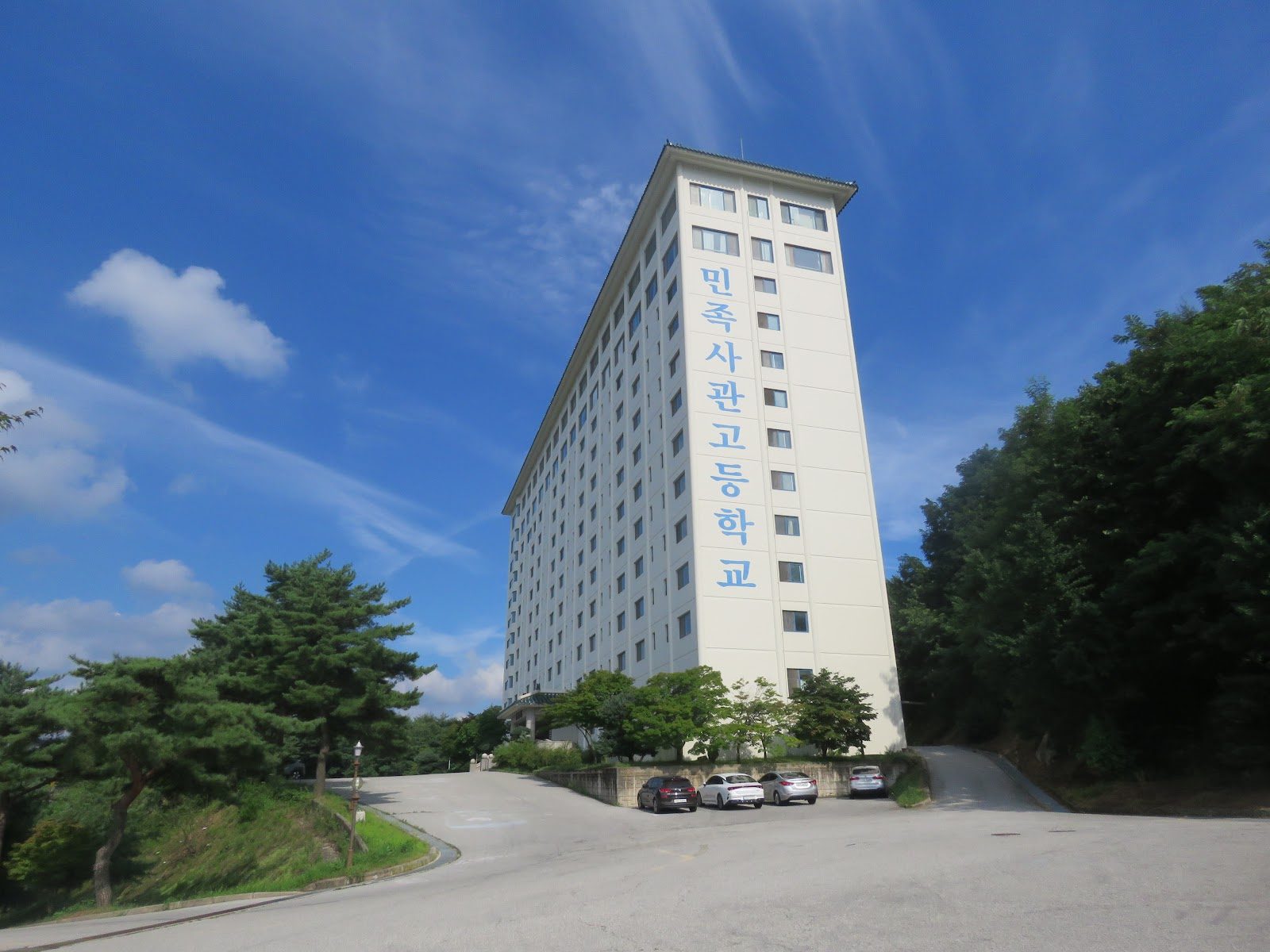
On a Gangwon mountainside, hanbok-uniformed students hold English-only seminars, chasing an IB curriculum built to rival Eton.
North London Collegiate School Jeju
Jeju · South Korea
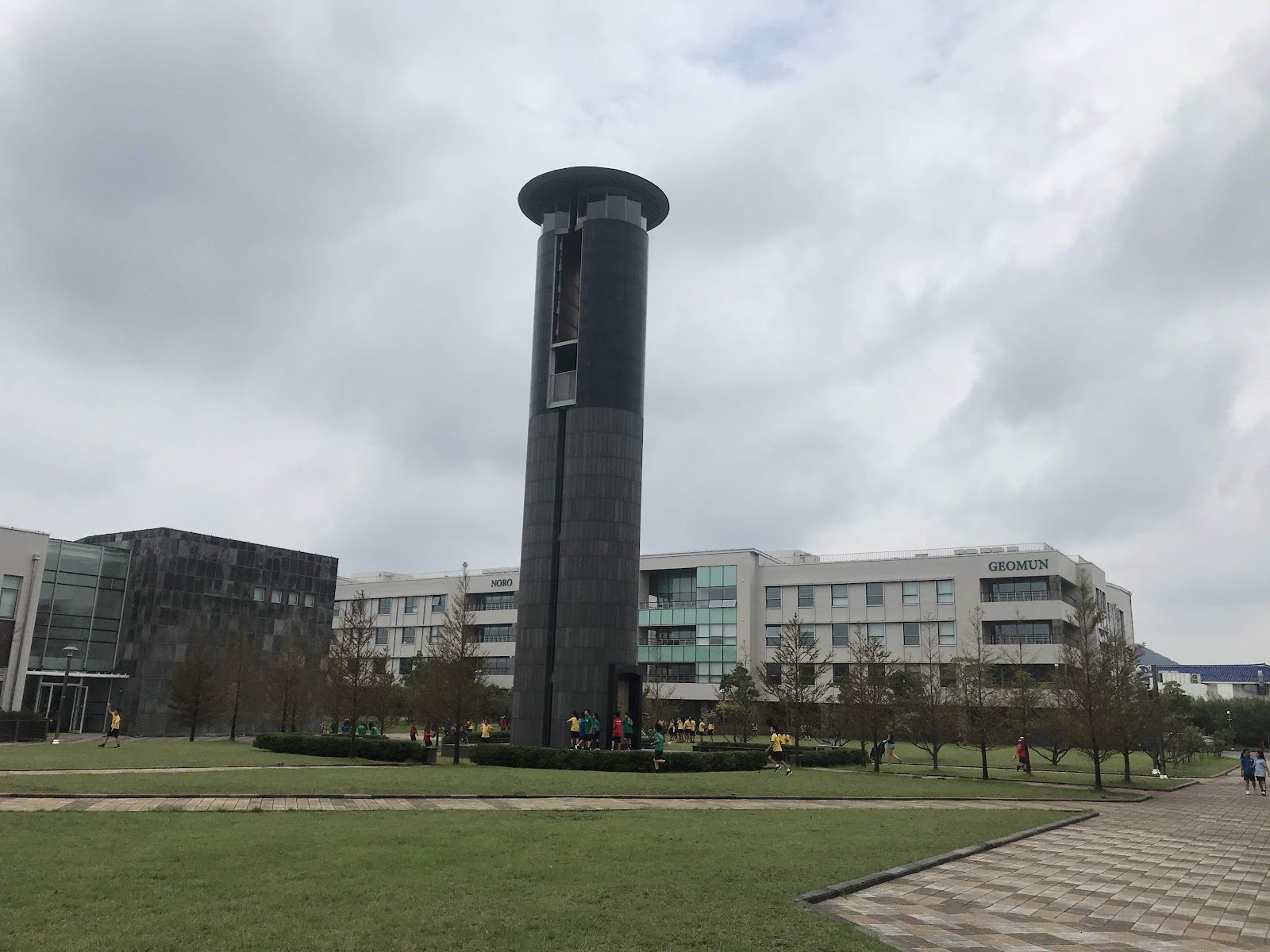
Founding school of Jeju's Global Education City, blending a 170-year London pedigree with strong IB results and seven boarding houses.
Seoul Foreign School
Seoul · South Korea
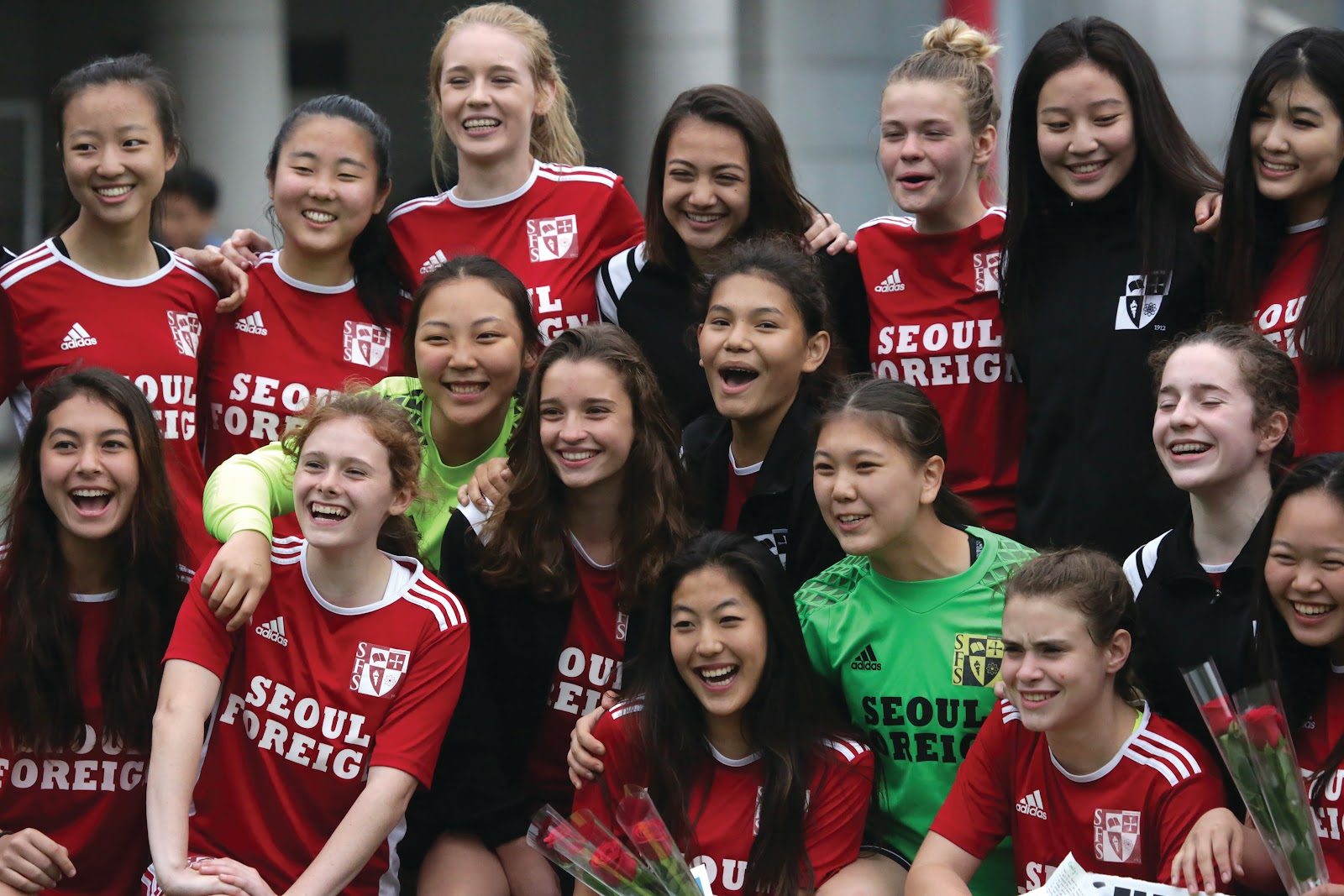
Founded in 1912 beside Yonsei University, first in Korea to adopt the IB, blending British, American and Clan-house traditions.
Same country and curriculum — closest matches within ±10 points either way