
Surrey
Born as a Victorian charity for doctors' orphans, its Surrey campus by the Downs still holds unbroken royal patronage.
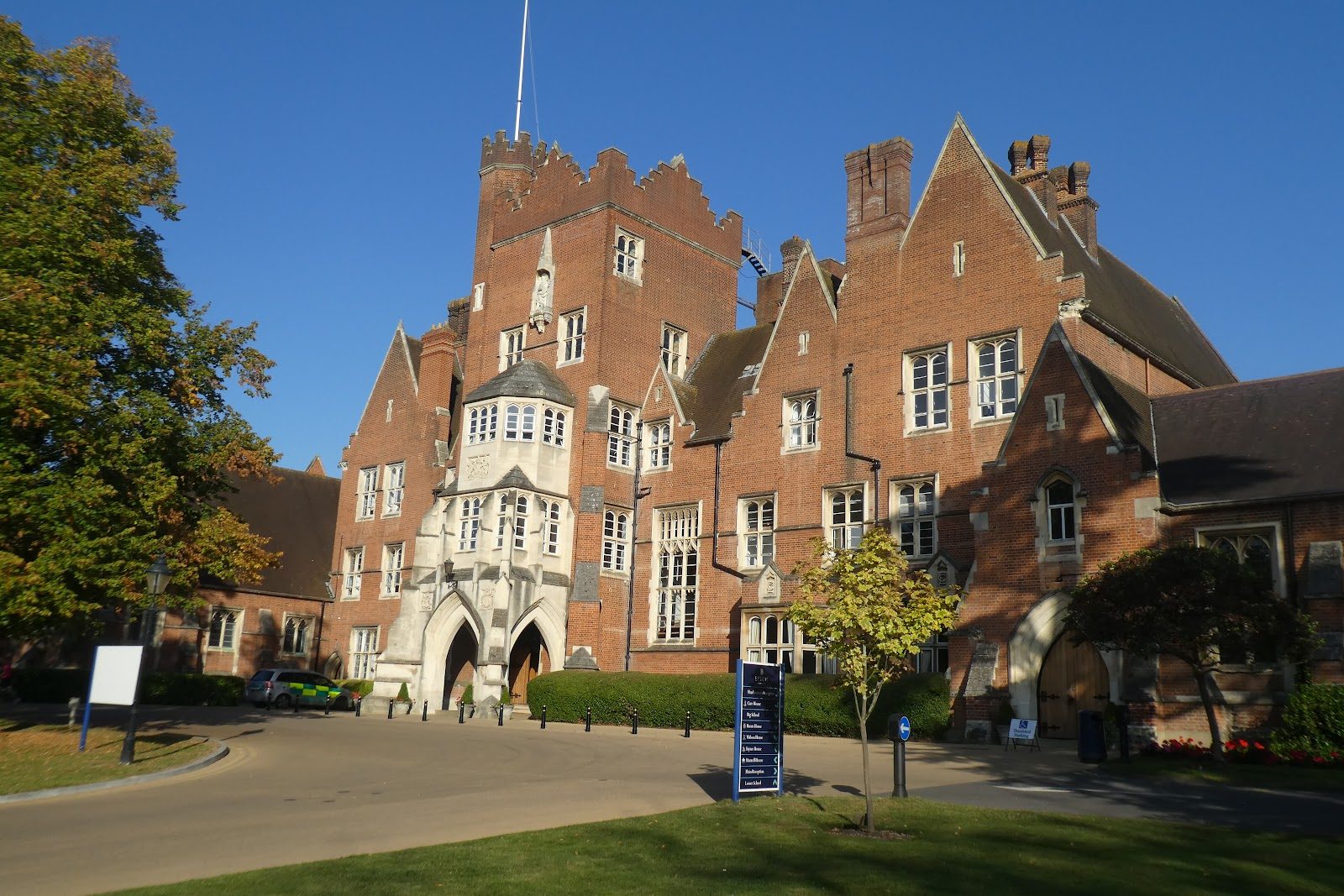
Photo © Michael Pitt-Payne via Google Maps
Type
Both
Ages
13–18
Curriculum
British
Ratio
9:1
The Verdict
Editor's commitment
Right for
Families wanting a British 13–18 school with boarding flexibility, 15-pupil classes and a Surrey campus with more than 30 nationalities.
Wrong for
Anyone needing an 11–18 school, a religious ethos or a cheap option: day fees average £36,326 and boarding averages £51,927.
Watch out for
This is a senior school with Saturday lessons and just under 20% overseas pupils; the full-boarding culture shapes the week, even for day pupils.
Ranking breakdown
Epsom College · #1001 of 1591
Composite score 62.2. 8 weighted criteria.
By criterion
Academic Outcomes
Weight 20%
#1085
of 1529 scored
University Placement
Weight 16%
#1089
of 1529 scored
Prestige & Heritage
Weight 12%
#854
of 1571 scored
Alumni Network
Weight 12%
#544
of 1530 scored
Facilities
Weight 12%
#968
of 1533 scored
Transparency & Communications
Weight 8%
#1073
of 1532 scored
Peer & Industry Review
Weight 10%
#998
of 1548 scored
Admissions Selectivity & Demand
Weight 8%
#837
of 1529 scored
Peer & Industry Review
How Epsom College is regarded in the sector
80
Strong · high confidence
Epsom College has built a genuinely strong industry reputation over the past decade, moving from mid-table obscurity to a fixture in national league tables and specialist guides. WhichSchoolAdvisor notes it was rated "Excellent in all areas" by ISI inspectors and highlights its climb in The Telegraph's A-Level rankings from 132nd to 44th in four years. The Good Schools Guide's independent verdict is emphatic, calling it "a high-achieving, big-hearted and increasingly sought-after school at the top of its game," while Tatler's Schools Guide has praised its community ethos and bursary commitment. The Sunday Times Parent Power tables have separately named it the country's most improved school. With Sir Anthony Seldon's leadership and a confirmed international expansion into Malaysia, Japan and the UAE, peer and press regard is robust rather than merely local.
Editors' overview
Epsom College trades on a rare mix: a Victorian medical-charity origin, a Surrey campus on Epsom Downs, and uninterrupted royal patronage. That gives it more historical weight than many schools in this bracket, but the present-day proposition is clearer than the heritage story: this is a British senior school for ages 13 to 18 that runs as both day and boarding, with the tempo and structure of a boarding school shaping life for everyone. The average class size is 15, which matters more than the rhetoric about “all-round education”; in practical terms, it points to teaching that can stay personal without becoming hothouse. Fees place it firmly in the upper tier of the market: an average of £36,000 a year for day pupils and £52,000 for boarders across the full ladder it covers.
What is special here is the combination of breadth and routine. Epsom makes a serious point of longer days and Saturday lessons, and that tells parents a lot about the school before any glossy language does. This is not a loose, laissez-faire sixth-form college bolted onto a senior school; it is a high-structure, full-programme environment where sport, arts and house life are meant to carry equal weight with A-level study. The school states that just under 20% of pupils come from overseas, with more than 30 nationalities on campus, so it has an international dimension without reading as a transient global brand school. The offer of full, weekly and flexible boarding also widens the appeal for families who want boarding discipline without committing to the old all-or-nothing model.
It belongs on a shortlist for parents who want a properly rounded British education with real scale in co-curricular life, not just a classroom-to-exam conveyor belt. It will suit students who thrive on busy days, organised expectations and a community that asks them to do more than collect grades. Sport-minded children will notice the school’s heavy emphasis on coaching, teams and facilities across its 72-acre estate; creative students get a clear signal too, with art, music and drama built into the school’s self-definition rather than parked at the margins. The less suitable fit is the child who wants a light-touch atmosphere, loose timetabling or a narrowly academic enclave. Epsom offers disciplined variety, and that is its market position in a sentence.
Academic Performance
Epsom College makes strong claims for “academic excellence”, but the hard question is simple: where are the public exam figures? We have not seen aggregate A-level or GCSE results in the public domain from the school in the source set here, and that matters. In this market, serious academic operators publish headline attainment data clearly and consistently, whether that is top-grade percentages, pass profiles or destination detail with enough depth to judge substance over spin. Without that, Epsom’s academic standing against direct competitors stays less transparent than it should be. Parents can infer a demanding school from the structure of the week, the emphasis on longer days and the expectation that pupils carry a full programme, but inference is not evidence.
Relative to peers, that places Epsom in an awkward middle ground. It does not read as a results-factory built on exam metrics alone, and that is not a criticism in itself; many families want a broader school than that. But schools charging an average of £36,326 for day places and £51,927 for boarding need to show the academic return with more precision than general language about great grades. The available picture points to a high-expectation, all-round senior school with academic ambition, but not to a school that invites easy benchmarking on published outcomes. For parents comparing it with academically sharper independents, that opacity is a weakness.
Facilities
Facilities are one of Epsom’s stronger cards. The school’s own emphasis is revealing: sport, art, music and drama sit at the centre of the offer, not as decorative extras. A 72-acre estate gives it room that many commuter-belt independents lack, and that matters in daily school life. The promise of top coaches and support for lower teams as well as elite athletes points to a sports set-up with real depth rather than a first-team shop window. For boarding families, space and routine count for as much as architecture, and Epsom has the physical footprint to run a full-service, high-activity senior school without feeling cramped. Against peers, that puts it in a strong bracket: not the most lavish campus in the sector, but more substantial and more operationally useful than many day-led schools within reach of London.
The limitation is disclosure. The school talks confidently about excellent facilities, but it does not publish a clean, detailed public inventory in the source set here, so parents do not get the usual hard list of specialist spaces, performance venues, laboratories or standout capital projects. That weakens comparison with rivals that spell out exactly what sits behind the rhetoric. Even so, the direction of travel is clear: Epsom has the land, the timetable structure and the co-curricular ambition of a serious boarding campus, with arts provision treated as core business and sport given institutional weight. For families who want broad facilities used hard across the week, that is a meaningful advantage.
Epsom College trades on a rare mix: a Victorian medical-charity origin, a Surrey campus on Epsom Downs, and uninterrupted royal patronage
Prestige
Epsom carries real cachet in the British independent sector, but it is a specific kind of prestige rather than the absolute top-table version. The school has old institutional roots, royal patronage and a long-established place in the public-school landscape, which gives it historical authority that newer or more aggressively branded schools cannot manufacture. The setting on the Downs adds to that social signal. So does membership of the HMC through its head. For many families, that combination reads as proper establishment prestige: recognisable, socially legible, and anchored in mainstream senior-school tradition rather than fashion. The international mix also adds status value, with just under 20% of pupils from overseas and more than 30 nationalities represented, but the school still reads as British first, global second.
Why not rate it higher? Because prestige at the very top of this market rests on two things Epsom does not fully convert into public authority: a sharper academic profile in the public domain, and a stronger sense of singularity. Its reputation rests on breadth, house life, sport, routine and heritage more than on dominating league-table conversation or defining a national academic niche. That still makes it high-status, well-regarded and expensive enough to attract ambitious families, but not mythic. In plain terms: Epsom has the name recognition and social confidence of a serious independent school, without the rarefied aura of the most selective national heavyweights.
Epsom College makes strong claims for “academic excellence”, but the hard question is simple: where are the public exam figures?
Communications
Epsom communicates with parents in a way that matches its institutional character: polished, confident and tightly controlled. The public-facing website does the main jobs well. It tells families what kind of school this is, who it serves, when entry points sit, and what daily life values. It also gives practical routes into admissions through visits, tours and international applications. That matters, because a school built around longer days, house life and a full programme needs to explain rhythm as much as results. Epsom does that clearly. The weakness is depth. The messaging leans hard on broad promises — “academic excellence”, sport, creativity, boarding benefits — but gives less hard-edged evidence than exacting parents will want. We have not seen a strong bank of publicly available performance data, and that limits trust.
For existing parents, the school’s model points to a community that needs disciplined, high-frequency communication: calendar management, weekend commitments, house matters, sport, performances and pastoral oversight all need precision. The structure of the school day leaves little room for muddle. On that front, Epsom’s tone inspires more confidence than its transparency does. It reads as a school that knows how to organise people and expectations, not one that runs on improvisation. The international dimension — just under 20% overseas pupils and more than 30 nationalities — raises the communication bar further, because clarity for families outside the British system is non-negotiable. Epsom clears the baseline competence test, but not the gold-standard transparency test.
Uniqueness
What separates Epsom from a crowded field of expensive British seniors is not one trophy feature but a rare institutional mix. The school still carries the imprint of its original medical-charity purpose, and that history gives it a different moral texture from schools built purely for the fee-paying market. Add unbroken royal patronage and you get a school with establishment weight that does not depend on novelty or branding. More important for students, though, is how that heritage lands in daily life: Epsom runs on the assumption that education happens across the whole day, inside houses, on pitches, in rehearsal rooms and in the gaps between lessons. That produces a full-immersion school experience rather than a timetable with extras bolted on.
The other distinguishing feature is balance with scale. Epsom is international without losing its English centre of gravity, with just under 20% of pupils from overseas and more than 30 nationalities on campus. That matters because it broadens horizons without turning the school into a placeless global brand. Students get a social world that is wider than a local commuter school, but still shaped by strong routines, shared expectations and a recognisable institutional identity. For the right child, that brings real formation: confidence, stamina, adaptability and the habit of contributing beyond the classroom. For the wrong child, it can feel too programmed, too communal and short on privacy. That trade-off is central to Epsom’s identity.
The promise of top coaches and support for lower teams as well as elite athletes points to a sports set-up with real depth rather than a first-team shop window
Student Profile
The student who fits Epsom best is busy, game and comfortable with structure. This is not a school for children who want to drift through the week, protect huge amounts of unprogrammed time or treat lessons as the only serious part of school life. House belonging matters, participation matters, and stamina matters. Pupils need the temperament to move between classrooms, teams, rehearsals, clubs and communal expectations without constant resistance. The average class size of 15 supports students who want teachers to know them properly, but it also leaves less room to disappear. A child who enjoys being stretched across several fronts, and who does not resent visible expectations, will do well here. A child who is deeply private, chronically disorganised or allergic to routine will find it hard-edged, high-pressure and at times too managed.
Socially, Epsom suits families who want a conventional but not narrow British senior-school culture. The pupil body has an international element, with more than 30 nationalities represented, but the centre of gravity stays rooted in mainstream independent-school life rather than transient global turnover. Sport-minded pupils have an obvious route in, but the school also signals serious space for the arts, so it is not reserved for one tribe. The best fit is the all-round joiner: confident enough to contribute, resilient enough to cope with a full week, and willing to be part of a community that asks for energy as well as attainment. For self-starting adolescents, that can be formative; for more fragile or contrarian characters, it can feel unforgiving.
Epsom carries real cachet in the British independent sector, but it is a specific kind of prestige rather than the absolute top-table version
Co-curricular strengths
Arts & sport, on a separate axis
Overall 8.52/10
Scored 0-10 from the school's own published evidence. This axis is editorial-only — it does not feed the main WTS ranking.
Sports
9/10
Absolute UK athletic giant; fields historically dominant varsity rugby, shooting, and tennis squads, holding multiple national independent school titles.
Drama
8.5/10
Exceptional theatrical training centered around world-class campus stages, running a pre-professional training model for acting and tech.
Dance
7.8/10
Strong afternoon performance track offering technical modern jazz and synchronization choreography modules.
Music
8.8/10
Deeply institutionalized choral and string tracking modules feeding active regional touring groups and seasonal events.
Visual Arts
8.5/10
Breathtaking visual studios producing top-tier design portfolios, fine art pieces, and architecture projects.
Editor-verified · 8/6/2026
Strengths
- +Published 2025 A-levels of 91% A*-B and 62% A*-A, with a top-3% national value-added ranking
- +Boarding options span full, weekly, flexible and day
- +72-acre estate supports extensive sport and activities
- +9:1 student-teacher ratio and average class size of 16 allow close attention
- +Substantial bursary programme (55 pupils supported in 2021)
Considerations
- −Premium fees, averaging around GBP 26,500 a year
- −Saturday lessons reduce free family weekend time
- −English-medium instruction may not suit pupils who are not yet fluent
- −Longer days and a boarding-style routine may not suit families wanting a lighter timetable
Availability
Primary entry gate & tests
Written Exams + Interview
Gallery
Photo © London Foodie Fan via Google Maps
Photo © A Gill via Google Maps
Photo © Rakesh Gupta via Google Maps
Photo © Rakesh Gupta via Google Maps
Photo © Muhammad Kamran Yaqub via Google Maps
Photo © Epsom College via Google Maps
Photo © Epsom College via Google Maps
Photo © Epsom College via Google Maps
Photo © Epsom College via Google Maps
Parent reviews
Have you sent your child here?
Voice reviews carry the strongest trust badge — we transcribe them for you to tidy up before they go live. Prefer to type? A written review is fine too.
Add your voice
In 60 seconds, tell other parents: what's the best thing about Epsom College, and what surprised you when your child joined?
We ask for a Google sign-in so every review has a real face behind it — no anonymous drive-by attacks on schools, and no faked positive reviews. Your email is never shown publicly.
Send this profile to a friend
International parents rely on word-of-mouth. Share this review with someone weighing the same decision.
Schools with places
Similar schools to Epsom College with places available now.
Royal Grammar School, Guildford
Guildford · United Kingdom
- 2026-27
- CLOSEDStandard route closed
- 2027-28
- PLACES OPEN11+ / 13+ / 16+ active
Charterhouse
Godalming · United Kingdom
- 2026-27
- CLOSEDStandard route
- 2027-28
- PLACES OPEN16+ Active (Closes 23 Sept); 13+ Late
Availability first, then country, area, curriculum, price, co-curricular
Consider also
Also worth looking at alongside Epsom College.
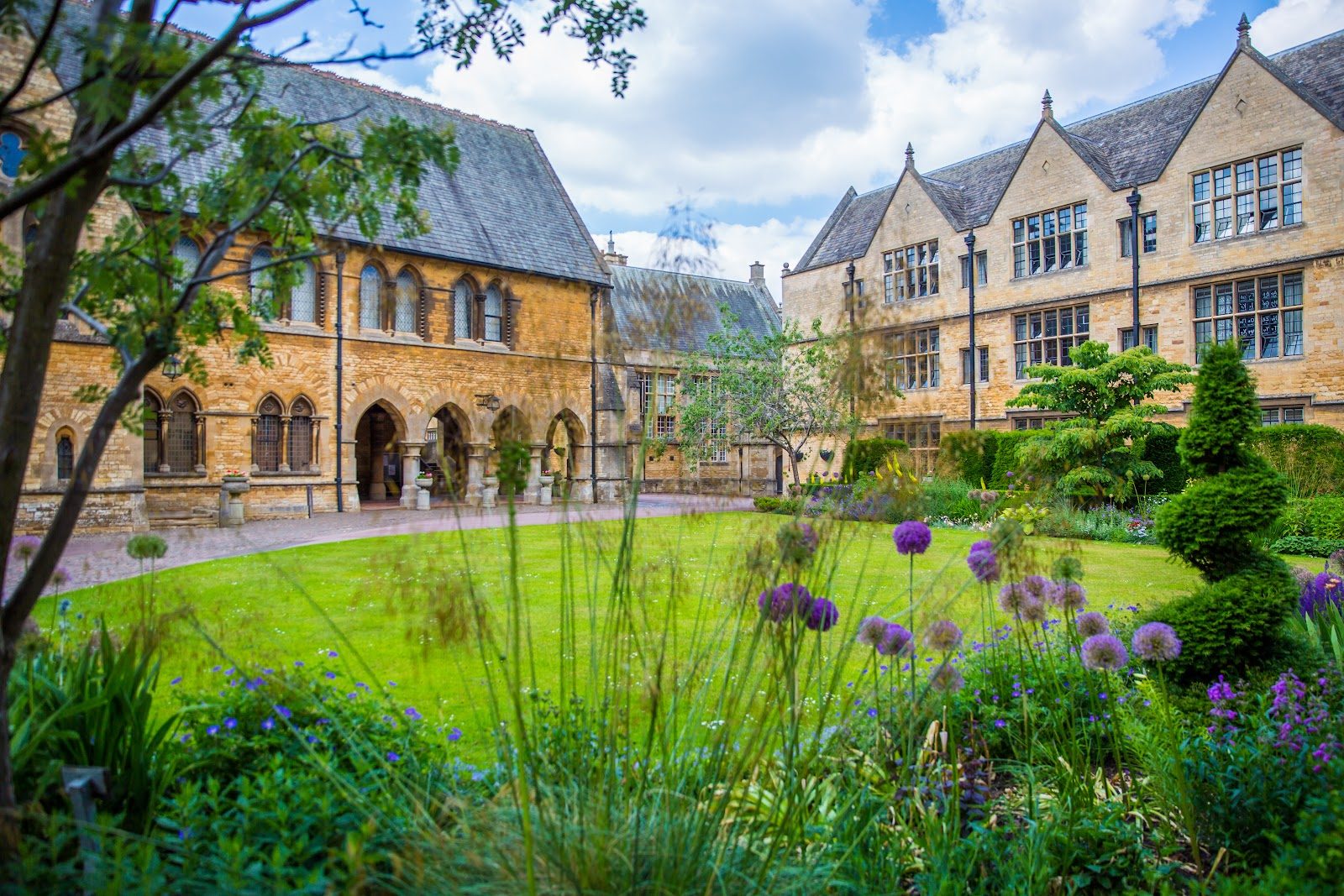
Uppingham School
Uppingham · United Kingdom
A Rutland boarding school where Thring's music-first Victorian philosophy still shapes seven-day house life today

Badminton School
Bristol · United Kingdom
On a Bristol campus where girls have played cricket since 1858, science labs for women followed decades ahead of the curve

Lady Eleanor Holles School
Hampton · United Kingdom
Since 1710 on a 24-acre Hampton site, a Thames boathouse has bred record-holding rowing eights alongside Oxbridge-track academics.
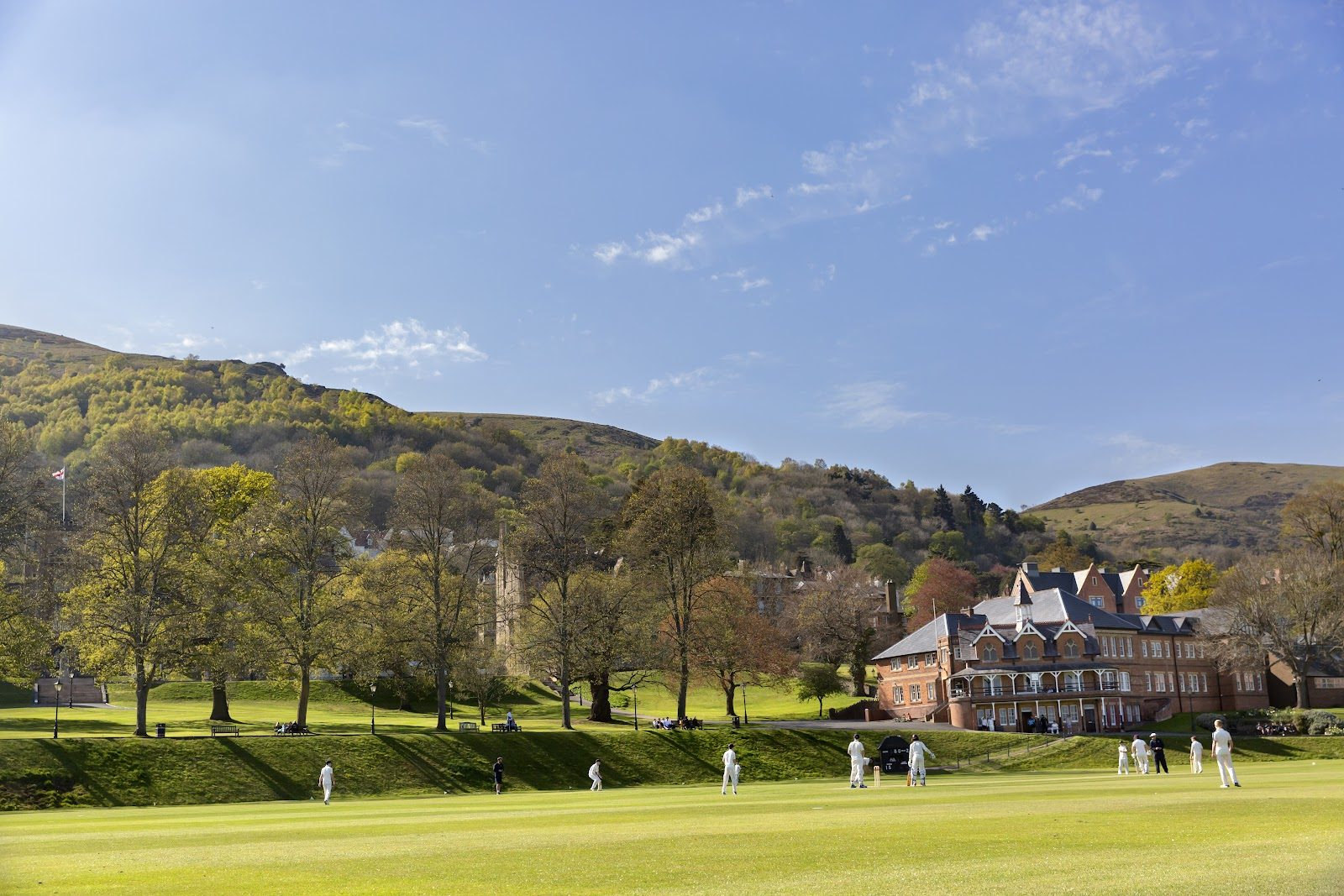
Malvern College
Malvern · United Kingdom
Beneath the Malvern Hills, a campus that once housed wartime radar research has produced four Nobel Prize winners.
Same country and curriculum — closest matches within ±10 points either way