
Hong Kong
St. Paul's Convent School
Founded in 1854 as the French Convent School, this Causeway Bay institution still blends DSE rigor with a distinctly Gallic-Catholic heritage.
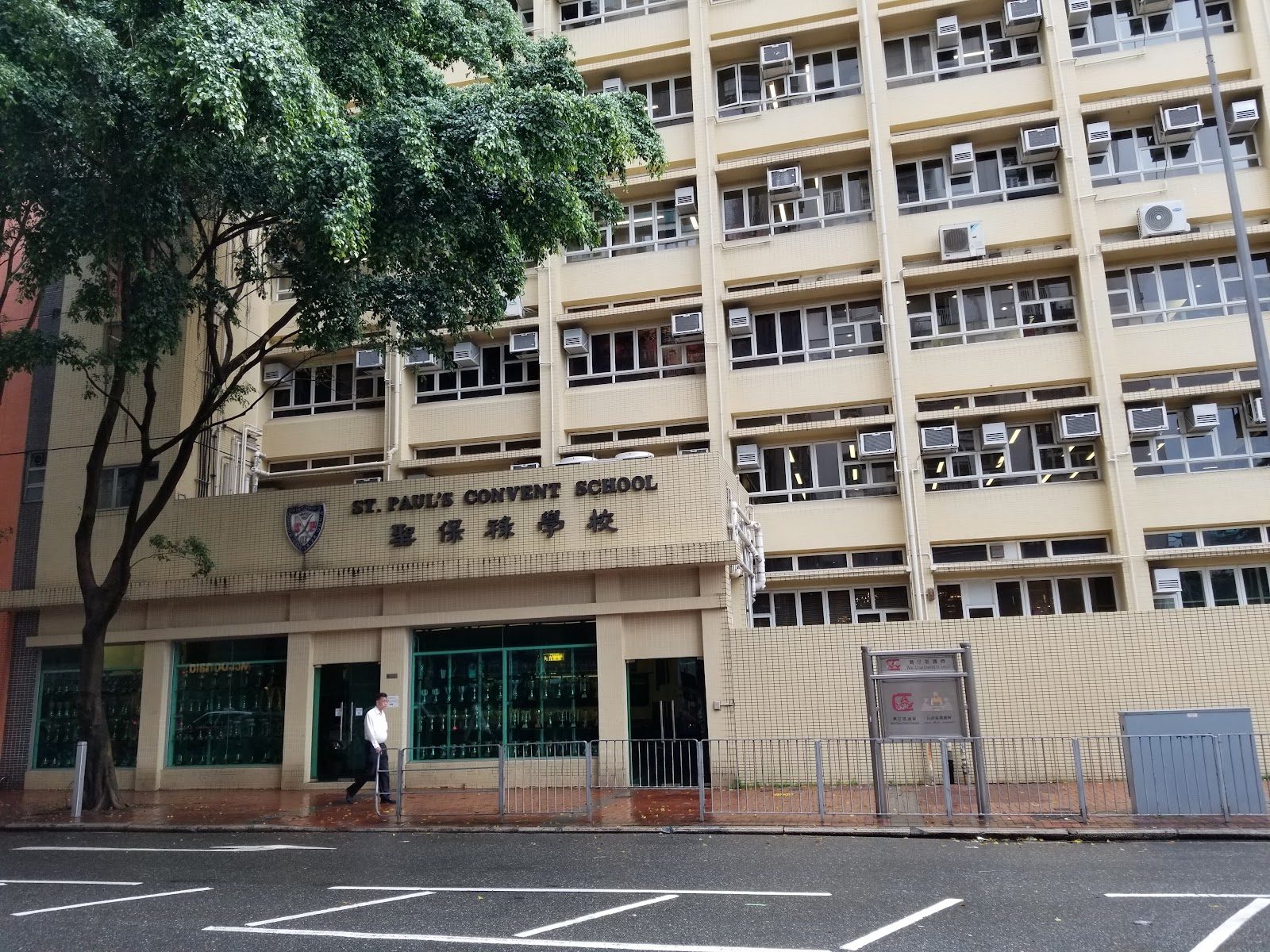
Photo © dolma hongkong via Google Maps
Type
Day
Ages
12–18
Curriculum
HKDSE
Qualifications
HKDSE
Ratio
—
The Verdict
Editor's commitment
Right for
Girls aged 12–18 who want a private Catholic school founded in 1854, with English and Cantonese instruction and HKDSE discipline.
Wrong for
Families wanting co-education, boarding or an IB route; St. Paul's Convent School is a day school and the declared curriculum is HKDSE.
Watch out for
Its French-Catholic heritage is real, but outcomes need scrutiny: the school holds HKEAA accreditation, yet aggregate public exam data are not published here.
Ranking breakdown
St. Paul's Convent School · #806 of 1591
Composite score 65.1. 8 weighted criteria.
By criterion
Academic Outcomes
Weight 20%
#792
of 1529 scored
University Placement
Weight 16%
#793
of 1529 scored
Prestige & Heritage
Weight 12%
#212
of 1571 scored
Alumni Network
Weight 12%
#966
of 1530 scored
Facilities
Weight 12%
#1090
of 1533 scored
Transparency & Communications
Weight 8%
#1019
of 1532 scored
Peer & Industry Review
Weight 10%
#893
of 1548 scored
Admissions Selectivity & Demand
Weight 8%
#308
of 1529 scored
Peer & Industry Review
How St. Paul's Convent School is regarded in the sector
66
Respected · medium confidence
Within Hong Kong's Band 1 aided-school tier, St. Paul's Convent School is consistently grouped with St. Paul's Co-educational College, Diocesan Girls' School and True Light Girls' College as one of the territory's most academically demanding girls' schools, a positioning reflected in the Education Bureau's Band 1 classification and in the school-comparison tables local media (South China Morning Post, Ming Pao) compile each DSE results season, where SPCS regularly features among schools producing multiple 5**-scoring students. Its reputation among universities rests on steady, high-volume progression to the University of Hong Kong and Chinese University of Hong Kong, with growing numbers accepted to UK Russell Group institutions, a pattern admissions counsellors in Hong Kong's international-education circuit cite when advising families on aided-sector alternatives to international schools. Independent commentary is thinner than for the international-school segment covered by Good Schools Guide International, since SPCS operates within the local DSE system rather than IB/A-level pathways, limiting its visibility in Western league tables despite strong domestic standing. Peer heads and counsellors generally regard it as a rigorous, values-driven convent school with an academically selective intake rather than a globally marketed brand.
Editors' overview
St. Paul’s Convent School occupies rare ground in Hong Kong: an old Catholic girls’ school with serious academic clout, a long institutional memory, and a cultural identity that still traces back to its French founding. Established in 1854 as the French Convent School and renamed in 1955, it combines the discipline and examination focus of the HKDSE route with a heritage that feels deeply rooted, high-minded and unmistakably old Hong Kong. The market position is clear. This is not a progressive experiment, a broad-access neighbourhood school, or a glossy international hybrid. It is an established, academically ambitious day school for girls aged 12–18 that trades on tradition, standards and prestige.
What puts it on a shortlist is the concentration of advantages in one place. It has longevity, name recognition and a powerful brand among Hong Kong local schools. It also carries a distinct identity: Catholic foundation, French religious origins, English and Cantonese as languages of instruction, and a girls-only environment that appeals to families who want focus over social sprawl. The school’s standing in the local hierarchy is strong; the cited 2022 ranking places it third among Hong Kong secondary schools. Rankings never tell the whole story, but they do matter in this market, and this one confirms St. Paul’s as fiercely competitive, socially credible and academically serious. Parents choosing between top local schools and expensive international options will find a compelling proposition here: elite local-school outcomes, cultural depth, and none of the curricular drift that plagues weaker institutions.
The right student for St. Paul’s is bright, diligent and comfortable in a structured environment. She will value clear expectations, intellectual pressure and a school culture built around attainment rather than self-expression for its own sake. Girls who thrive here will not need hand-holding; they will bring stamina, self-command and respect for tradition. Families drawn to a looser ethos, heavy pastoral language, or broad curricular experimentation will find this a tighter fit. St. Paul’s suits the student who wants a demanding, disciplined school with status, history and academic edge — and who wants to earn her place in it.
Academic Performance
Publicly cited performance places St. Paul’s Convent School near the top of Hong Kong’s secondary hierarchy. The available benchmark is blunt: a 2022 ranking that places the school third across the sector. That does not replace hard examination data, but it does place the school in the top-flight, results-driven bracket that parents already recognise. In practical terms, this is a school competing with the territory’s most selective local girls’ schools, not with middling neighbourhood institutions and not with international schools judged on a different set of exit routes.
What the school does not publish, at least in the public domain we have seen here, is the data that would sharpen the picture: aggregate HKDSE subject distributions, top-score rates, value-added measures, university destination breakdowns, or year-on-year performance tables. That opacity matters. Families can infer strong outcomes from its standing and reputation, but inference is not a substitute for disclosure. The academic verdict, then, is clear but not complete: St. Paul’s sits in the elite local-school tier, carries a formidable examination reputation, and holds its place among Hong Kong’s most competitive schools, yet it does not make the case with the level of published results detail that a rigorous parent would want.
Facilities
St. Paul’s Convent School does not trade on the sprawling sports grounds or purpose-built mega-campus that newer Hong Kong competitors use to justify high fees. That is the first benchmark point. As a long-established urban girls’ school, its facilities case rests on functionality, location and institutional upkeep, not spectacle. For families comparing it with the territory’s best-resourced international schools, that matters: this is not a campus chosen for wow-factor architecture or resort-style amenity. It is chosen for academic seriousness in a dense city setting. The practical upside is that older central schools in this bracket tend to use space hard and waste little of it; the practical limit is obvious too — less room for the kind of expansive outdoor provision, specialist sports footprint and loose communal space that richer land-holdings permit.
What is missing from the public record is the detail a rigorous parent would want before judging the estate properly. The school does not publish a clear facilities inventory: no consolidated account of science laboratories, performing arts spaces, sports provision, library scale, design or technology suites, or recent capital upgrades. That leaves a gap. Against direct peers among elite local schools, a sparse public account is not unusual, but it is still unhelpfully opaque. Against top international schools, it is a weaker standard of disclosure. The editorial verdict is straightforward: expect a well-used, tradition-bound urban campus that supports the core business of study, and do not expect the school to win families over with facilities theatre.
Paul’s Convent School near the top of Hong Kong’s secondary hierarchy
Prestige
St. Paul’s Convent School carries real social and academic cachet in Hong Kong. The reason is not mystery or marketing. It sits in the narrow band of local schools whose names travel well across professional families, selective university ambitions and the city’s status-conscious parent circles. The public ranking cited in its profile — third among secondary schools in 2022 — matters because it confirms what the name already signals: this is a school associated with high attainment, strict selection and old institutional authority. In the local market, that combination confers prestige more effectively than glossy facilities copy or imported international-school branding.
The prestige also rests on coherence. This is a girls’ school with a clear religious and historical identity, not a generic academic factory. That gives it a sharper profile than many high-performing schools whose reputations rely on results alone. Parents know what the badge stands for: discipline, seriousness and a culture that expects students to carry themselves well. The school benefits from the aura of established privilege that attaches to long-settled, high-performing convent schools in Hong Kong, but the standing holds because the academic reputation still does the work. One caveat remains. The school does not publish the depth of outcome data that would let prestige rest on transparent evidence rather than reputation and rank. Even so, this is top-tier prestige, and it is earned in the market where it counts.
That does not replace hard examination data, but it does place the school in the top-flight, results-driven bracket that parents already recognise
Communications
St. Paul’s Convent School communicates like an old, self-assured institution: formal, selective and not inclined to over-explain itself. That has strengths. Parents choosing a school of this type do not need syrupy community messaging or endless lifestyle content; they need clarity on expectations, dates, procedures and standards. The public-facing picture points to a school that values order over charm and institutional authority over accessibility theatre. That will suit families who read brevity as competence. It will frustrate parents who expect high-frequency updates, pastoral hand-holding or a consumer-friendly tone. The school’s heritage and status give it licence to be terse; they do not excuse vagueness.
The limitation is transparency. We have not seen the level of published parent information that marks out the best communicators: no rich public archive of detailed leadership updates, no substantial disclosure on outcomes, and no expansive explanation of school life beyond the essentials. That matters because strong schools still need to communicate well, not merely rely on reputation and internal culture. The likely pattern here is efficient operational communication paired with tight institutional control over what enters the public domain. For some parents, that reads as disciplined and serious. For others, it reads as opaque. The verdict: effective for families already aligned with the school’s culture, less effective for those who want openness, context and regular evidence rather than trust-by-default.
Uniqueness
What marks St. Paul’s Convent School off from other high-performing Hong Kong schools is not raw status alone. It is the combination of convent discipline, girls’ schooling and a French religious inheritance that still gives the place a distinct grain. Plenty of schools claim tradition; fewer carry a lineage that runs from a French-founded convent school into the modern local academic elite without dissolving into nostalgia or rebranding. The result is a school culture with old institutional confidence, clear moral framing and a sense of continuity that many newer competitors cannot manufacture. The public ranking point — third in 2022 — matters here not as another prestige marker, but as proof that this identity has not turned into museum-piece heritage. It still functions in a hard-edged academic market.
For students, that distinctiveness brings both advantage and pressure. The advantage is coherence: expectations are not vague, the school’s values are not improvised, and the social environment is shaped around female achievement rather than mixed-campus distraction. That can produce serious concentration, strong self-command and a durable sense of belonging to an institution larger than oneself. The pressure is that such environments demand conformity to a settled culture. Students who want latitude for reinvention, looseness or constant pastoral cushioning will chafe. Students who want a disciplined, status-rich tradition with real academic force will find something rare.
Against top international schools, it is a weaker standard of disclosure
Student Profile
The girl who fits here is bright, self-disciplined and unbothered by pressure. She does not need a school to flatter her, and she will not expect adults to translate every demand into therapeutic language. This is a place for students who can absorb correction, work steadily and compete without drama. The social fit matters as much as the academic one: in a girls’ school with this level of standing, students need poise, restraint and a willingness to live inside a settled code of conduct. Girls who enjoy structure, respect hierarchy and take pride in doing hard things well will find the culture clarifying, demanding and status-conscious. Girls who want constant latitude, casual rules or a looser sense of self-expression will find it constricting.
A good match will also have stamina for a peer group that sets a high bar. In schools of this calibre, comparison is inescapable; confidence needs to rest on substance, not performance. The strongest candidates for St Paul’s are not only clever but internally driven: they can organise themselves, recover from setbacks and keep going when the standard rises again. Families also need to share the school’s moral and behavioural expectations. This is not a home for the rebellious, the disorganised or the thin-skinned. It suits the girl who wants a serious-minded education among able peers and who values belonging to an institution with real social weight — one that ranked third in the territory.
Even so, this is top-tier prestige, and it is earned in the market where it counts
Co-curricular strengths
Arts & sport, on a separate axis
Overall 8.92/10
Scored 0-10 from the school's own published evidence. This axis is editorial-only — it does not feed the main WTS ranking.
Sports
8.8/10
Drama
8.8/10
Dance
9/10
Music
9/10
Visual Arts
9/10
Strengths
- +Founded in 1854 as the French Convent School, it is among Hong Kong's oldest Catholic girls' schools, run by the Sisters of St. Paul de Chartres.
- +Academic performance is consistently strong: HKDSE tracking sites place the school in Band 1A, Hong Kong's top academic banding tier.
- +Alongside the mainstream HKDSE track, the school offers an alternative IGCSE and GCE A-Level route in the senior years, giving some curriculum flexibility.
- +A fee remission and scholarship scheme benefits as much as 30 percent of the student population, based on documented financial need.
- +Campus facilities include an indoor heated swimming pool, a library and a dedicated Studio/Media Lab, notable for an inner-city Hong Kong site.
Considerations
- −It is a girls-only school, so it is not an option for families wanting a coeducational environment for daughters and sons together.
- −As a Direct Subsidy Scheme school it sits outside the government's central Secondary School Places Allocation system, meaning families must navigate a separate, competitive application process rather than a guaranteed catchment place.
- −Although English is the stated medium of instruction, Cantonese remains widely used day-to-day, which can be an adjustment for expatriate children arriving with no Cantonese.
- −The school sits in dense Causeway Bay/Wan Chai on Hong Kong Island, so, like most urban HK campuses, outdoor sports and grounds space is constrained compared with suburban or international-style campuses.
Availability
Primary entry gate & tests
Academic Record + Interview (Girls)
Gallery
Photo © Chris Lo via Google Maps
Photo © Heily Cheung via Google Maps
Photo © Stanley Ho via Google Maps
Photo © Denny Liu via Google Maps
Photo © CheungKKAnthony via Google Maps
Photo © Roger CPA via Google Maps
Photo © Roger CPA via Google Maps
Parent reviews
Have you sent your child here?
Voice reviews carry the strongest trust badge — we transcribe them for you to tidy up before they go live. Prefer to type? A written review is fine too.
Add your voice
In 60 seconds, tell other parents: what's the best thing about St. Paul's Convent School, and what surprised you when your child joined?
We ask for a Google sign-in so every review has a real face behind it — no anonymous drive-by attacks on schools, and no faked positive reviews. Your email is never shown publicly.
Send this profile to a friend
International parents rely on word-of-mouth. Share this review with someone weighing the same decision.
Schools with places
Similar schools to St. Paul's Convent School with places available now.
Availability first, then country, area, curriculum, price, co-curricular
Consider also
Also worth looking at alongside St. Paul's Convent School.
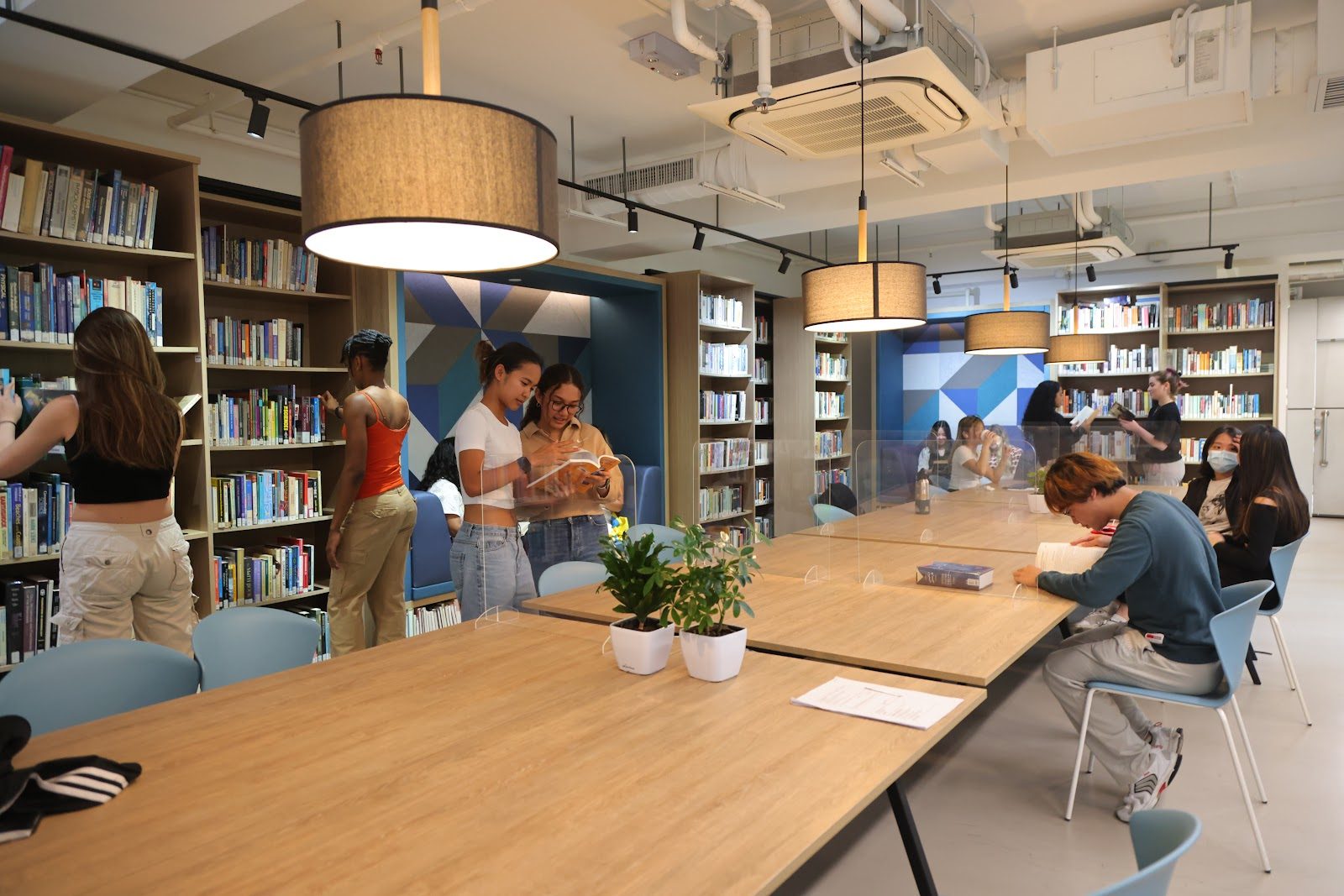
Li Po Chun United World College of Hong Kong
Hong Kong · Hong Kong
Perched above Tolo Harbour, this United World College gathers scholars from 90 nations for a service-driven IB Diploma.
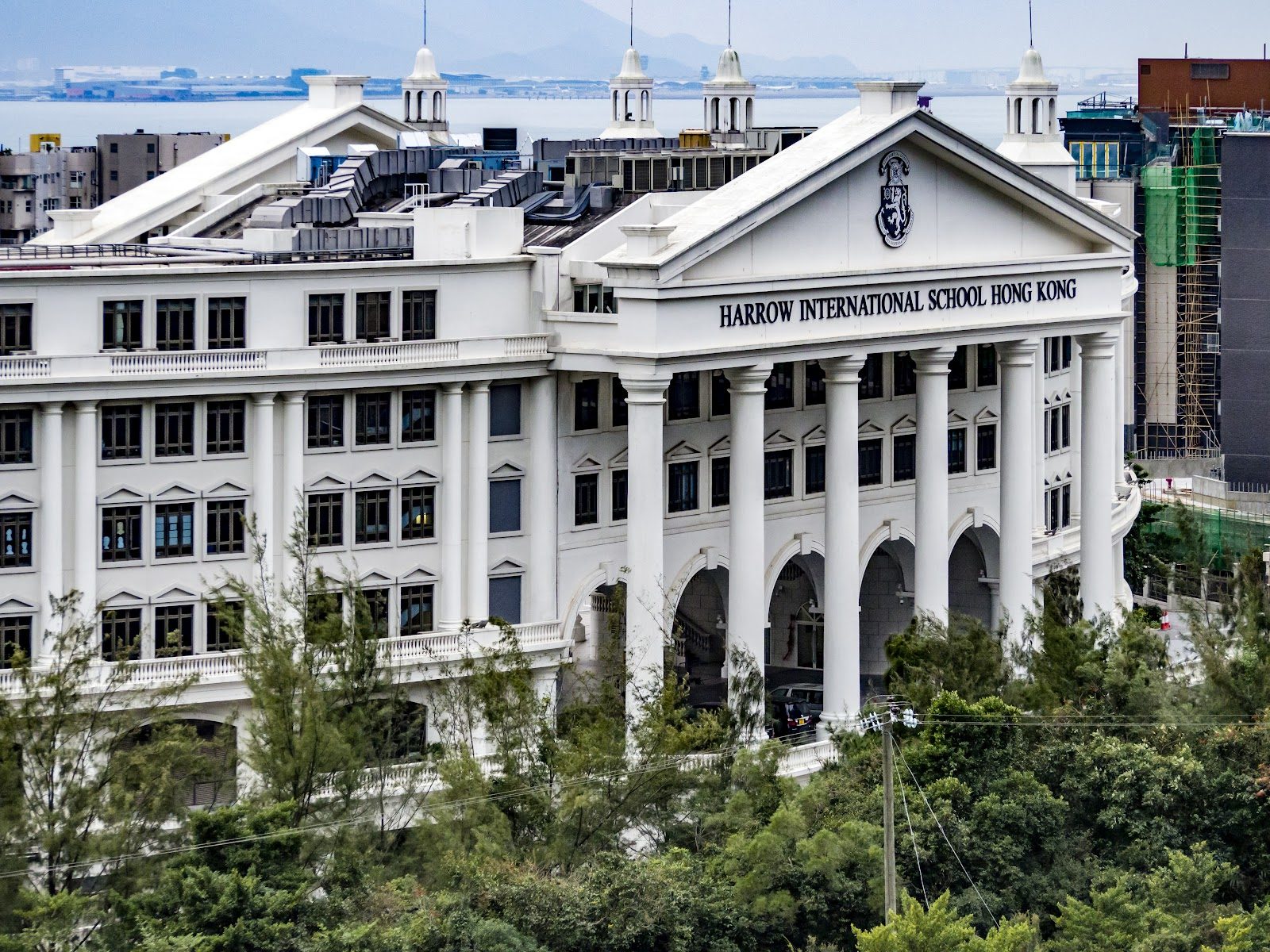
Harrow International School Hong Kong
Hong Kong · Hong Kong
A crescent-shaped Tuen Mun campus, modelled on Bath's Royal Crescent, houses Hong Kong's only formal weekly boarding and house system.
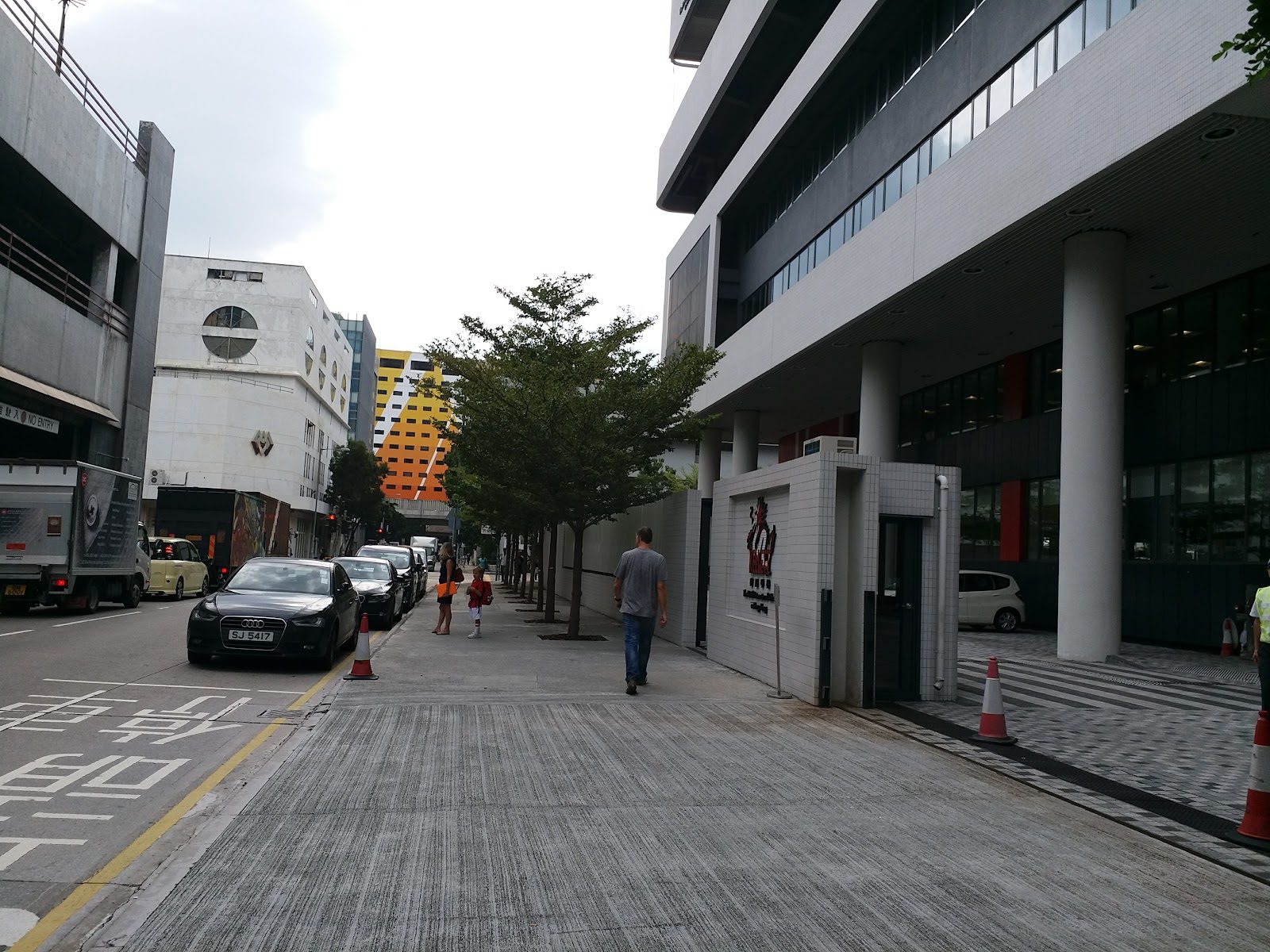
Kellett School
Hong Kong · Hong Kong
Long-established, parent-founded British international day school in Hong Kong, taking pupils through GCSEs and A-Levels from age 4 to 18.
German Swiss International School
Hong Kong · Hong Kong
Perched on the Peak since 1969, twin German Abitur and IB streams share one campus and one house system.
Same country and curriculum — closest matches within ±10 points either way