
Greater London
Queen's College London
low confidence· 6/6 cats · 0 avg sourcesFounded in 1848 as the first institution to award women academic qualifications, this Harley Street school carries that charter forward.
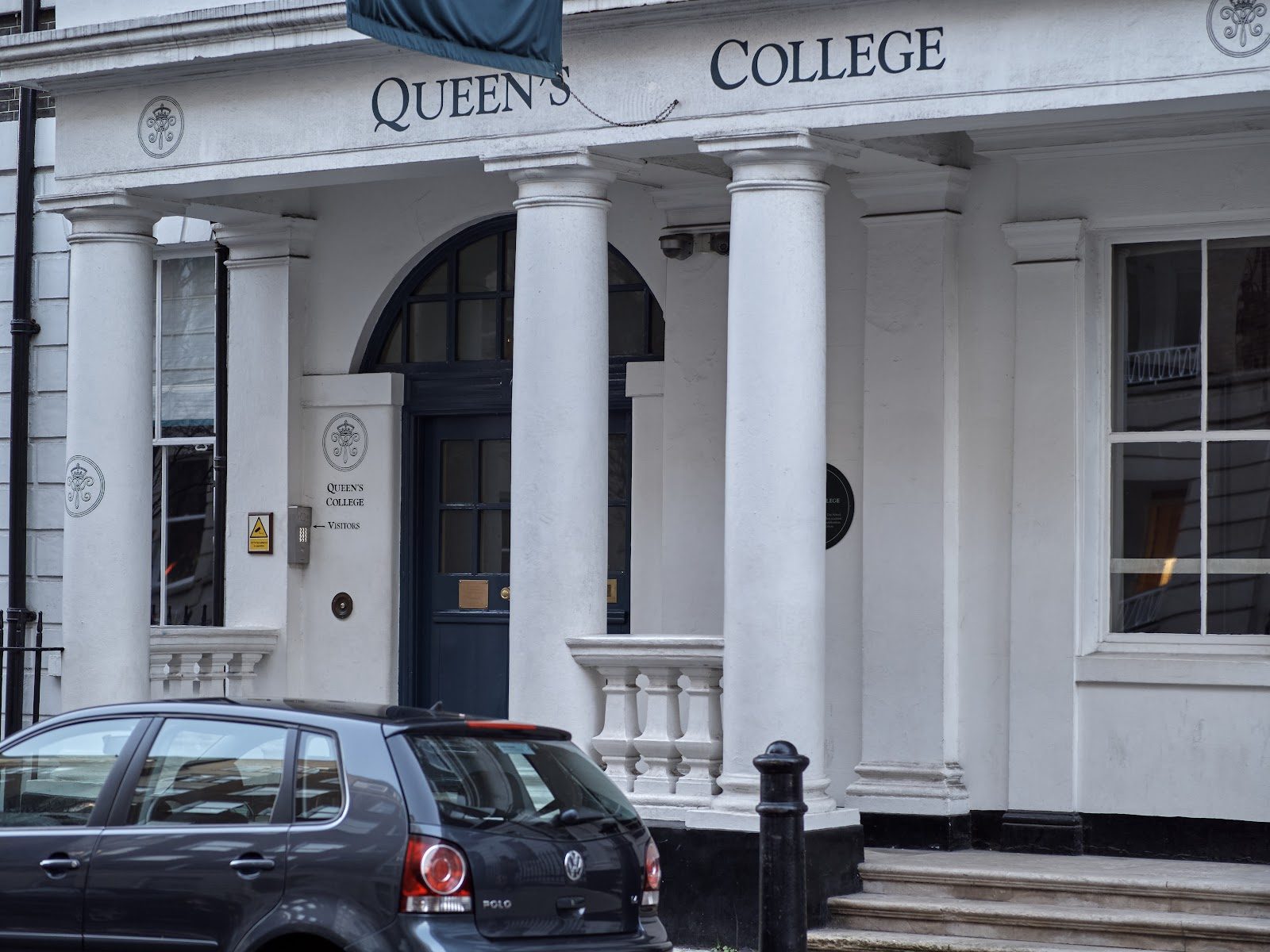
Photo © Peter Foster via Google Maps
Type
Day
Ages
13–18
Curriculum
British
Ratio
—
The Verdict
Editor's commitment
Right for
Girls 13–18 who want a London day school founded in 1848, with a clear all-girls brief and no religious overlay.
Wrong for
Families wanting co-education, boarding, or a through-school before 13; Queen's College London is a day school for ages 13–18.
Watch out for
The average annual fee is £31,000, and the school sells history hard; we have not seen public aggregate outcomes to match the rhetoric.
Ranking breakdown
Queen's College London · #1130 of 1591
Composite score 60.4. 8 weighted criteria.
By criterion
Academic Outcomes
Weight 20%
#1085
of 1529 scored
University Placement
Weight 16%
#1089
of 1529 scored
Prestige & Heritage
Weight 12%
#1060
of 1529 scored
Alumni Network
Weight 12%
#908
of 1529 scored
Facilities
Weight 12%
#1199
of 1529 scored
Transparency & Communications
Weight 8%
#1097
of 1529 scored
Peer & Industry Review
Weight 10%
#988
of 1529 scored
Admissions Selectivity & Demand
Weight 8%
#837
of 1529 scored
Peer & Industry Review
How Queen's College London is regarded in the sector
66
Respected · high confidence
Queen's College London has quietly built a reputation as one of the strongest all-girls day schools in central London, notable for being the first UK institution to award academic qualifications to women. WhichSchoolAdvisor's review notes it delivers strong academic results and has a high percentage of high achievers, with leavers destinations including Oxbridge and Russell Group universities including UCL, Bristol, Bath, King's College London and Durham. The Good Schools Guide is more pointed, arguing the school is not a school that blows its own trumpet, but certainly deserves to be better recognised as not just a back-up option, and reports it now gives local rivals Channing and Francis Holland a real run for their money. Talk Education independently corroborates this trajectory, describing it as a school that now ranks alongside the best of the London day schools, firmly on the 11+ list for many parents. Peer sentiment is consistently warm rather than headline-grabbing, placing it as a well-regarded, rising second-tier player in London's competitive girls' school landscape rather than a perennial top-five name.
Evidence sources
Editors' overview
Harley Street is not short of old institutions trading on history, but Queen’s College London has a claim few schools can match: it was founded in 1848 as the first institution in Great Britain where girls could study for and gain academic qualifications, and it received a Royal Charter in 1853. That matters here because the school still builds its identity around girls’ education rather than treating it as a legacy badge. Queen’s is a day school for girls aged 13–18, non-religious, English-medium and school-declared British in curriculum. The age range makes it a focused senior school rather than an all-through operation, which gives it a clear proposition: adolescent girls taught in an environment designed for that stage, with none of the energy diluted across nursery and prep years on the same site. The school’s own language is full of confidence and purpose; the substance beneath it is a serious academic inheritance with a distinctive historic mandate.
What puts Queen’s on a shortlist is not scale, spectacle or sporting mythology. It is the combination of central London location, an all-girls setting, and a mission rooted in opening academic doors for girls in the first place. Parents who want a co-ed campus with sprawling grounds will look elsewhere. Parents who value intellectual tradition, urban sophistication and a school that takes female ambition as the default rather than the exception will pay attention. The introduction of a Queen’s Diploma from 2026 also signals that the school wants to push beyond exams into a broader account of education, though the school does not publish enough detail here to judge the substance yet. Fees average £30,892 a year across the senior age range, which places Queen’s in the expensive bracket, but not at the outer edge of London independent-school pricing.
The pupil who will want Queen’s is a girl who is ready for a purposefully female academic culture and does not need a school to soften its convictions about that. She will value discussion, intellectual confidence and a setting where leadership by girls is routine, not symbolic. She may also prefer a school with strong-minded tradition over one chasing every fashionable educational fad. This is not a school selling bucolic childhood or glossy all-rounder mythology. It is for families who want an urban senior school with a clear point of view, a long memory, and a direct line back to one of the most important educational breakthroughs for girls in Britain.
A Global Elite 50 Music school
Music is the standout co-curricular strength at Queen's College London, reaching a world-class standard within a school of its size. In a central-London heritage setting that draws daily on the city's concert halls and cultural institutions, the department gives girls across the 11-18 range unusual scope to perform, compose and progress to a genuinely high level. Music sits at the heart of a thriving arts culture that also encompasses elite drama, dance and visual arts, so musicians benefit from cross-disciplinary performance opportunities as well as instrumental depth. For families for whom serious musical development matters as much as academic outcomes, Queen's offers a rare combination: rigorous British-curriculum teaching, close personal attention in classes of up to 22, and a music provision that stands among the strongest of any London girls' day school.
Academic Performance
Queen’s makes a strong claim for academic seriousness, but the public evidence is thinner than a top London senior school ought to allow. We have not seen published GCSE, A-level or equivalent aggregate outcomes, no subject-by-subject breakdowns, and no consistent run of headline results that would let parents place the school cleanly against nearby independent rivals. That matters. In this market, schools with real academic confidence publish hard numbers. When a school does not disclose them, parents lose an important test of standards, value and trend. The school’s language stresses high ambition and outstanding results, but without published data those claims remain insufficiently evidenced.
That does not place Queen’s in a weak academic bracket; it places it in an opaque one. Its history, focused senior age range and explicit commitment to girls’ academic advancement all point towards a school that takes scholarship seriously. The question is not whether Queen’s values academic performance. It plainly does. The question is where it sits relative to London peers that issue clear examination statistics year after year. On that measure, Queen’s is at a disadvantage. At an average annual fee of £30,892, families are entitled to more than rhetoric. They are entitled to published outcomes, university destinations and a track record set out in numbers. Until that information is disclosed, Queen’s cannot claim the same academic transparency as the city’s best-run competitors.
Facilities
Queen’s does not trade on a country-estate fantasy, and parents need to calibrate expectations accordingly. This is a senior school on Harley Street, so the important facilities are the ones that support teaching, discussion and sixth-form life in a dense central setting, not acres of playing fields or a showpiece sports complex. The school’s own public case leans hard on intellectual ambition, girls’ education and a future-facing diploma that will run through the school; that points to classrooms, seminar-style teaching spaces and study provision as the core estate, with pastoral infrastructure carrying unusual weight for an adolescent all-girls environment. Against London day-school peers, that is a clear urban trade-off: less campus theatre, more proximity to the capital’s cultural and professional resources.
What is missing is detail. The school does not publish the kind of facilities breakdown strong competitors now treat as standard: specialist science provision, performing arts spaces, sports access, design and technology, sixth-form centres, or the balance between on-site and off-site sport. That opacity matters. At an average annual fee of £30,892, families deserve a sharper account of what their money buys day to day. The best comparable London schools spell out labs, studios, halls, libraries and athletic arrangements with forensic clarity. Queen’s relies too heavily on institutional stature and educational mission to carry this section. That leaves the facilities picture underpowered and, by peer-school standards, insufficiently evidenced.
The school’s own language is full of confidence and purpose; the substance beneath it is a serious academic inheritance with a distinctive historic mandate
Prestige
Queen’s carries old-money intellectual prestige rather than the mass-market cachet of the biggest London brands. Its distinction rests on status within the history of girls’ education and on the social and professional signals that still attach to a serious Harley Street address. That gives it a recognisable kind of standing: cultivated, academically minded, and rooted in a tradition of female advancement that predates most competitors by generations. The Royal Charter strengthens that aura, and so does the school’s refusal to dilute its identity into generic independent-school language. This is not prestige built on acreage, sporting celebrity or relentless publication of triumphalist statistics. It is prestige built on lineage, seriousness and a mission with genuine historical weight.
That said, Queen’s sits in a specialist prestige tier, not the absolute apex of London school fame. Its all-girls senior focus narrows the market by design, and the school does not help itself by withholding the hard performance data that top-tier institutions use to convert reputation into proof. For some families, the average fee of £30,892 buys entry into a rarefied educational tradition with a clear point of view; for others, that price demands stronger public evidence of present-day academic dominance. The verdict is clear: Queen’s has real prestige, but it is historical and cultural prestige first, and competitive academic prestige second.
Queen’s makes a strong claim for academic seriousness, but the public evidence is thinner than a top London senior school ought to allow
Communications
Queen’s communicates with parents in the same way it defines itself: through a high-control institutional voice that is polished, assured and heavy on mission. The public-facing website is clean and coherent, with a strong through-line on girls’ education, pastoral care and intellectual ambition. That gives parents a sharp sense of ethos. What it does not give them, in enough depth, is operational clarity. Key practical information that serious fee-paying families look for — detailed facilities information, fuller explanation of how new whole-school initiatives will work, and hard academic reporting — is thin or absent. For a school charging an average of £30,892 a year, that is a meaningful communications weakness. Good communications do not stop at tone; they deliver usable detail.
That gap matters because Queen’s is asking parents to trust not just a school, but a historic idea of schooling. In that context, communication needs to be exact, regular and evidential. The school does some of this well: its message is consistent, its values are unmistakable, and there is none of the cluttered overproduction that plagues weaker independent-school websites. But the balance tilts too far towards narrative and not far enough towards proof. Parents can grasp what Queen’s believes very quickly. They get a less complete answer on how that belief translates into daily school life, measurable outcomes and the practical experience of a daughter moving through the senior years. The result is confident but incomplete communication: strong on identity, weaker on disclosure.
Uniqueness
What marks Queen’s out is not just age but constitutional purpose. This school was created to give girls access to serious academic qualification when that door was shut, and it still treats that mission as live business rather than museum history. Many girls’ schools now make a generic case for confidence and leadership; Queen’s has a harder-edged inheritance. The school’s identity rests on the idea that female intellectual ambition needs no apology, no dilution and no co-ed balancing act. That gives students a culture in which girls lead by default, debate by default and occupy the academic centre by default. For the right pupil, that is liberating. It strips out the background noise of gender performance and replaces it with a clear, uncompromising expectation that girls will think seriously, speak up and take up space.
There is also a rare continuity between the school’s past and its next move. The planned Queen’s Diploma, due from 2026, matters because it tries to connect academic study with character and practical skill across a pupil’s journey rather than bolting enrichment on at the margins. The school still needs to publish more detail before parents can judge its intellectual rigour, but the underlying idea fits Queen’s unusually well: education here is not framed as exam manufacture alone. That brings students a distinctive sense of inheritance and, at its best, a stronger sense of obligation — to use education not just for personal advancement, but for public contribution. In a crowded London market, that is genuinely rare.
Good communications do not stop at tone; they deliver usable detail
Student Profile
The girl who fits Queen’s is intellectually self-propelled, articulate and comfortable in a school that treats female ambition as ordinary business, not a special programme. She does not need wide lawns, stadium sport or a noisy social scene to validate school life. She wants teachers and peers who take ideas seriously, and she will thrive if she enjoys discussion, close reading, writing, performance of argument and the discipline of being known well in a focused senior environment. This is a strong match for students who like adult company, respond to high expectations, and value a clear moral and academic framework. It is a weaker fit for girls who want a looser culture, a more anonymous campus experience, or a school whose identity rests on spectacle rather than substance.
There is also a temperamental point. Queen’s suits families who want a daughter educated in a purpose-built girls’ culture with conviction behind it. That brings confidence for many pupils, but it will not suit every teenager. A girl who resents institutional seriousness, or who wants a more relaxed, less self-aware school atmosphere, will chafe. So will families who need constant public proof in the form of published metrics before committing to fees of £30,892. The pupils who do best here will value heritage without being overawed by it, welcome firm pastoral attention, and have the maturity to use a central London setting well rather than treating it as background glamour.
That matters here because the school still builds its identity around girls’ education rather than treating it as a legacy badge
Co-curricular strengths
Arts & sport, on a separate axis
Overall 8.46/10
Scored 0-10 from the school's own published evidence. This axis is editorial-only — it does not feed the main WTS ranking.
Drama
8.5/10
Dance
8.5/10
Music
9/10
Visual Arts
8.5/10
Editor-verified · 8/6/2026
Strengths
- +Founded in 1848; unusually deep educational heritage.
- +First British institution awarding girls academic qualifications.
- +Rated Excellent by ISI, with strong and improving exam results.
- +World-class music provision and elite arts across drama, dance and visual arts.
- +New Sixth Form boarding option launching September 2027 in partnership with DLD College London.
Considerations
- −Girls-only model excludes families wanting co-education.
- −Central-London townhouse setting constrains on-site sports facilities.
- −British curriculum only; no IB or alternative pathway offered.
Availability
Primary entry gate & tests
Written Exams + Interview
Gallery
Photo © Peter Foster via Google Maps
Photo © Katarzyna Wojciechowska-Jarza via Google Maps
Photo © Josep Perez via Google Maps
Photo © Josep Perez via Google Maps
Photo © Queen's College, London via Google Maps
Photo © Further Education Club via Google Maps
Parent reviews
Have you sent your child here?
Voice reviews carry the strongest trust badge — we transcribe them for you to tidy up before they go live. Prefer to type? A written review is fine too.
Add your voice
In 60 seconds, tell other parents: what's the best thing about Queen's College London, and what surprised you when your child joined?
We ask for a Google sign-in so every review has a real face behind it — no anonymous drive-by attacks on schools, and no faked positive reviews. Your email is never shown publicly.
Send this profile to a friend
International parents rely on word-of-mouth. Share this review with someone weighing the same decision.
Schools with places
Similar schools to Queen's College London with places available now.
Availability first, then country, area, curriculum, price, co-curricular
Consider also
Also worth looking at alongside Queen's College London.
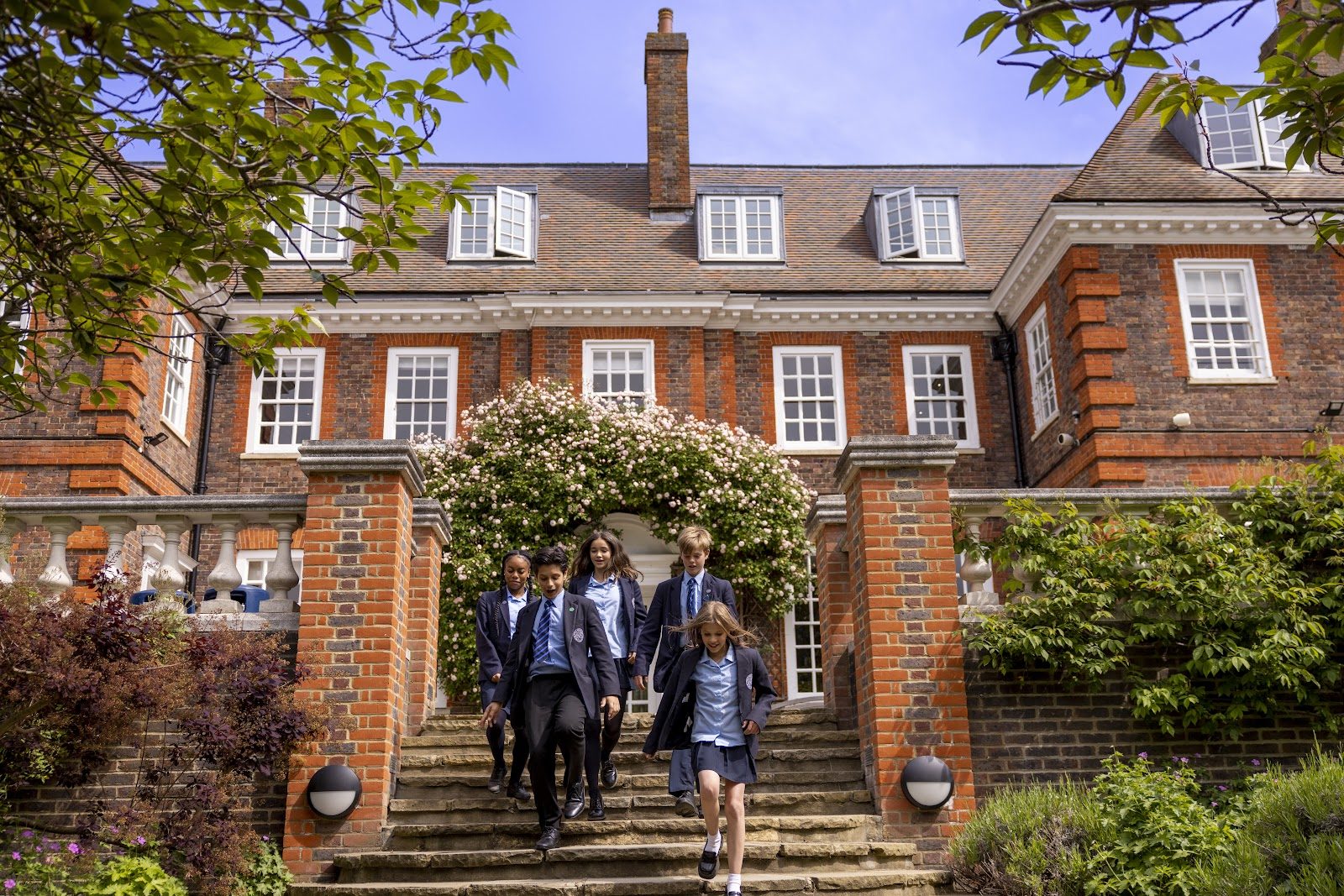
Ibstock Place School
London · United Kingdom
On the fringe of Richmond Park, a Froebel-founded day school has championed co-education since 1894.
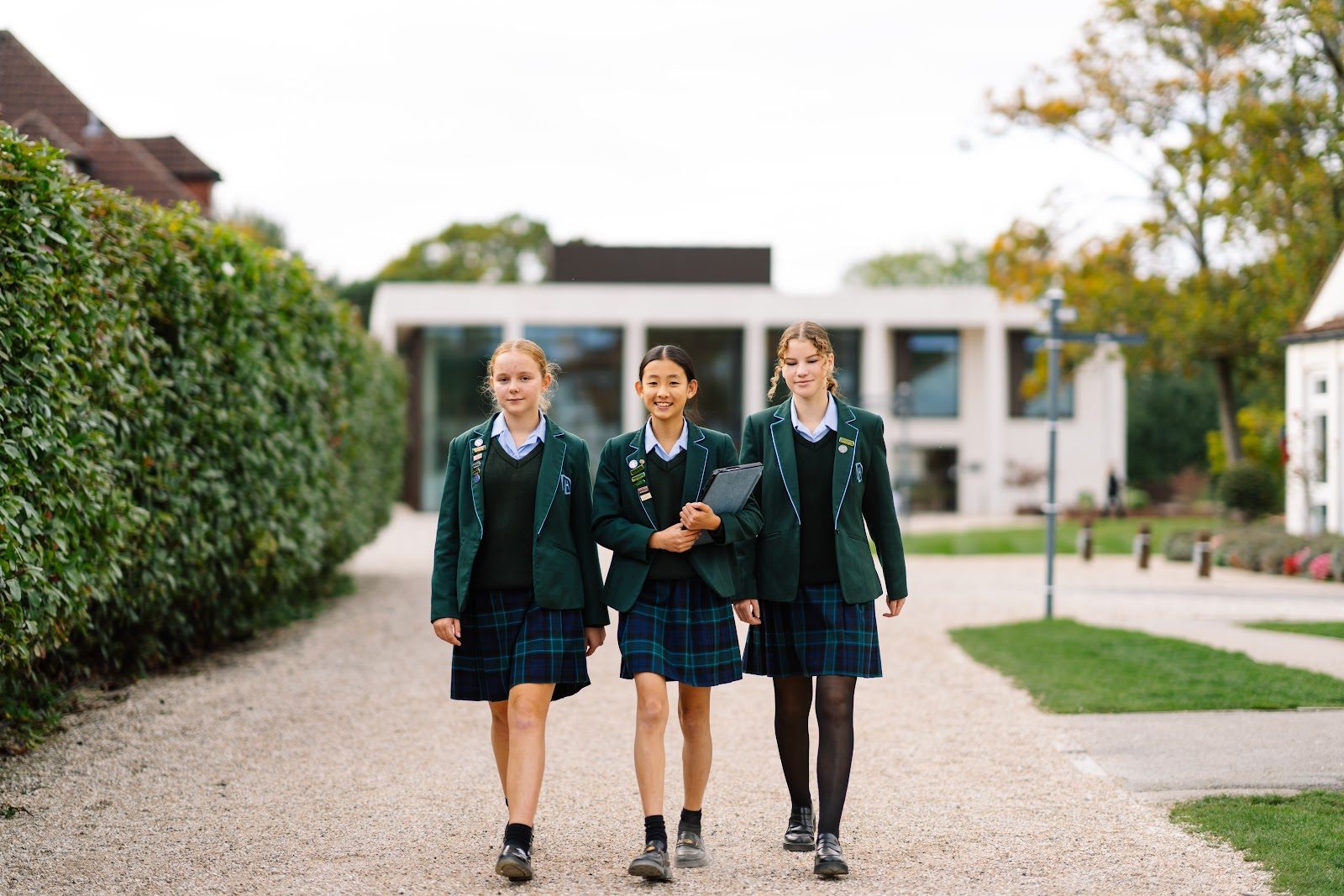
Downe House School
Cold Ash · United Kingdom
Rooted in Charles Darwin's former home, now a 110-acre Berkshire estate where science thrives and Oxbridge ambition runs deep.
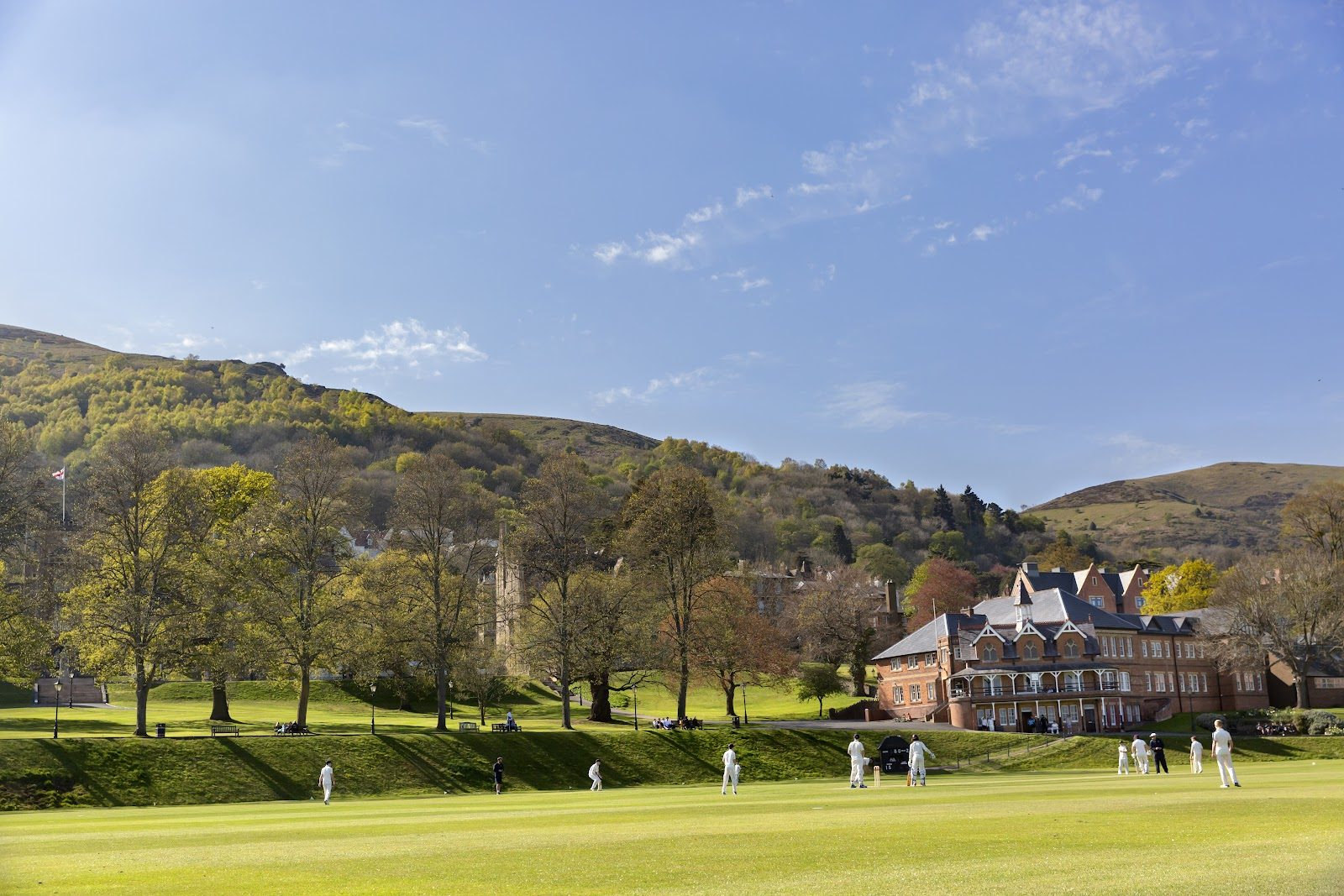
Malvern College
Malvern · United Kingdom
Beneath the Malvern Hills, a campus that once housed wartime radar research has produced four Nobel Prize winners.

Lady Eleanor Holles School
Hampton · United Kingdom
Since 1710 on a 24-acre Hampton site, a Thames boathouse has bred record-holding rowing eights alongside Oxbridge-track academics.
Same country and curriculum — closest matches within ±10 points either way