
Ontario
TFS – Canada's International School
Since 1962, Canada's first French immersion school, now the country's only full-continuum bilingual IB institution across two Toronto campuses.
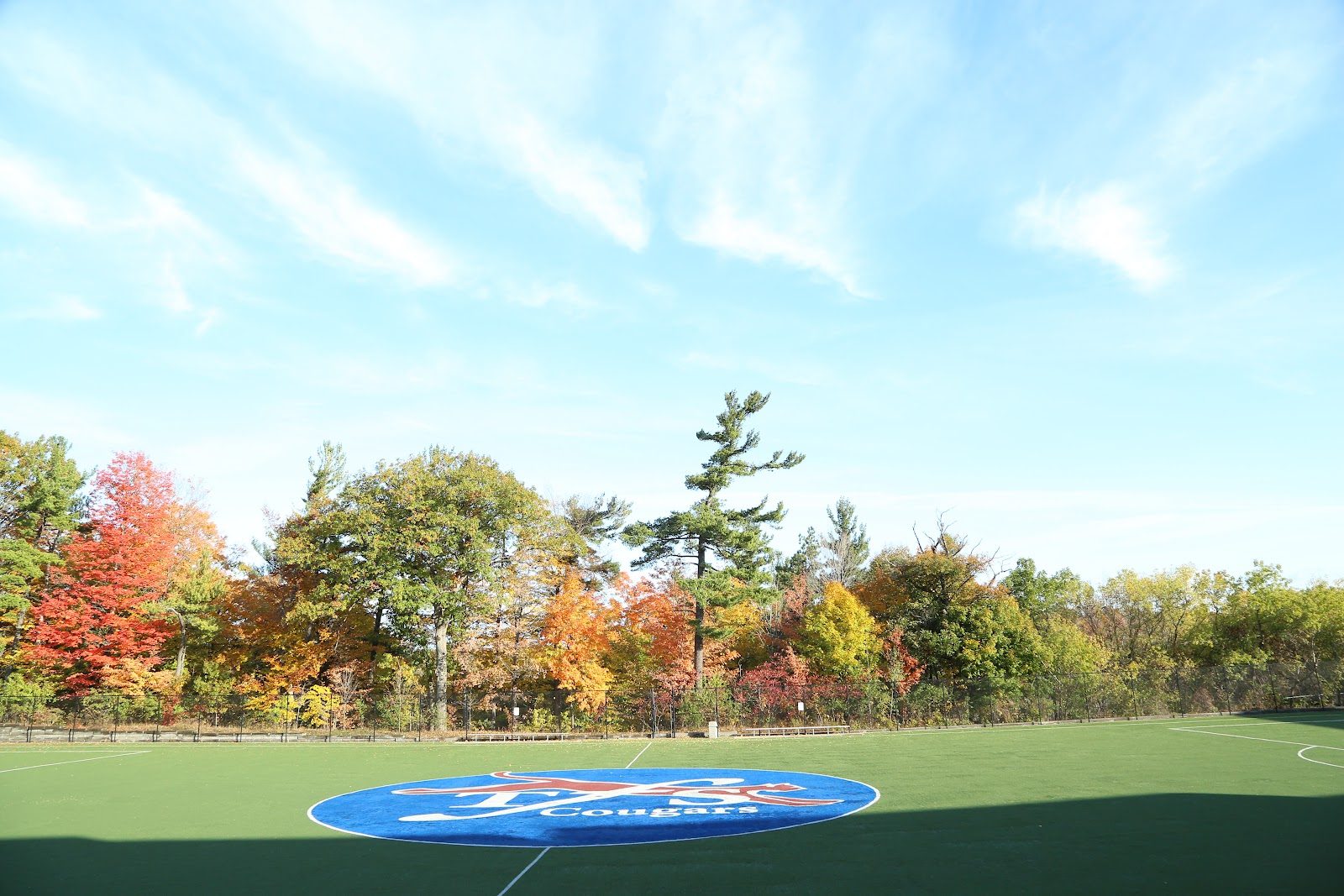
Photo © TFS - Canada's International School via Google Maps
Type
Day
Ages
3–18
Curriculum
IB · French Bilingual
Qualifications
IB Diploma · OSSD
Ratio
—
The Verdict
Editor's commitment
Right for
Families who want a 3–18 day school with English and French throughout, plus a full-continuum IB across two Toronto campuses.
Wrong for
Parents who want one-campus simplicity, a religious ethos, or a cheaper route than a 1,500-student bilingual independent school in Toronto.
Watch out for
TFS holds IB World, CIS and CAIS accreditation, but it does not publish aggregate IB results here; for an expensive school, that matters.
Ranking breakdown
TFS – Canada's International School · #1076 of 1591
Composite score 59.0. 8 weighted criteria.
By criterion
Academic Outcomes
Weight 20%
#957
of 1529 scored
University Placement
Weight 16%
#1089
of 1529 scored
Prestige & Heritage
Weight 12%
#1037
of 1571 scored
Alumni Network
Weight 12%
#1133
of 1530 scored
Facilities
Weight 12%
#848
of 1534 scored
Transparency & Communications
Weight 8%
#1099
of 1532 scored
Peer & Industry Review
Weight 10%
#1415
of 1548 scored
Admissions Selectivity & Demand
Weight 8%
#991
of 1529 scored
Peer & Industry Review
How TFS – Canada's International School is regarded in the sector
58
Credible · medium confidence
TFS is recognized within Canada's independent-school sector chiefly through its CAIS (Canadian Accredited Independent Schools) accreditation, which places it in the same governance and inspection framework as Toronto peers such as Upper Canada College, Havergal College and Branksome Hall, though its bilingual French-English mandate keeps it in a distinct curricular niche rather than direct competitive overlap. As a full continuum IB World School (PYP, MYP, DP), it earns credibility among university admissions offices for consistent Diploma results supporting entry to McGill, University of Toronto and European institutions, reinforced by its LabelFrancEducation recognition from France's Ministry of Education, a distinction few Canadian schools hold. Independent education press coverage is thinner than for Toronto's traditional elite day schools: TFS features more in bilingual-education and IB-network discussions than in Globe and Mail or Maclean's private-school league tables. WhichSchoolAdvisor and Good Schools Guide lack detailed Canadian entries, limiting formal third-party critique, so peer regard is mediated more through IB and AEFE-linked professional networks than mainstream rankings, positioning TFS as respected but specialized rather than broadly benchmarked against Canada's best-known independent schools.
Editors' overview
TFS occupies a rare place in the Toronto market: it is the country’s first French immersion school, founded in 1962, and the only school in Canada to run a full-continuum bilingual IB education from age 3 to 18. That combination matters. Plenty of schools offer strong French, and plenty offer the IB. TFS does both, across the whole age range, in both English and French, with clear institutional intent rather than a bolt-on language track. For internationally minded families, or Canadian families who want their children to move comfortably between anglophone and francophone worlds, that is a serious distinction. The scale also counts: 1,500 students from 40+ countries gives the school a genuine international constituency rather than a token one.
What puts TFS on a shortlist is not romance or branding, but structure. Parents who want a bilingual education without sacrificing academic coherence get a school built around that premise from the start. The IB World School status, alongside CIS and CAIS accreditation, gives it recognised external frameworks and scrutiny. Two campuses in Toronto and Mississauga widen its catchment and make it more usable for families outside central Toronto. Average class size sits at 20, which is healthy for a school of this size: large enough for breadth, small enough for students to be known. The school’s public case rests on bilingual fluency, international seriousness, institutional longevity and a clear academic spine.
The child who will thrive here is not just a high achiever. TFS suits students who are comfortable switching between languages, or who will relish learning to do so; children whose families value mobility, cultural literacy and an education that does not force a choice between local grounding and international transferability. It will also suit families who want a non-religious day school with an adult sense of purpose rather than a performative version of global-mindedness. Students who want a narrow, purely local school identity, or who resist sustained bilingual demands, will find the model less natural. For the right child, though, TFS offers something hard to replicate: a long-established, full-range bilingual IB education with real scale and a cosmopolitan centre of gravity.
Academic Performance
TFS does not publish aggregate IB Diploma results, average point scores, subject breakdowns or year-on-year university-style outcome tables in the public domain. That matters. In a market where strong academic schools increasingly put headline results front and centre, the absence of hard attainment data leaves parents without the cleanest way to judge where TFS sits against other bilingual and IB competitors. The school’s academic case rests instead on institutional design: a full-continuum IB structure, a long-established bilingual model and a student body of 1,500. That points to serious academic infrastructure, but infrastructure is not the same thing as published outcomes. On exam transparency, TFS is *more guarded than the strongest data-sharing schools*.
Relative to peers, that puts TFS in an opaque middle ground. It has more academic substance than schools that trade on ambience and global language alone, but less public proof than top-tier IB schools that release diploma averages, pass rates and destination patterns with precision. Parents who prize hard performance evidence will want direct answers on recent diploma cohorts, score distribution, higher-level subject strength and bilingual attainment at graduation. Until the school discloses those figures, the safest editorial judgement is clear: TFS has a credible academic proposition, but its external examination record is not publicly evidenced with the rigour that its positioning warrants.
Facilities
The physical estate is defined less by grand spectacle than by usability. TFS runs across two campuses, and that matters for families: it gives the school room to separate age groups and avoid the cramped, one-site compromises common in urban day schools. The public case stresses scale and organisation rather than marquee architecture, so this does not read as a school selling a showpiece campus. It reads as a school built to function for a large, academically serious community. That places it ahead of smaller bilingual schools that can struggle for breadth of space, but short of the heavyweight independent schools whose facilities are part of the brand in their own right. With 2 campuses serving 1,500 students, TFS has a practical advantage in footprint, even if it does not trade on flashy excess.
Against peers, that leaves TFS in a solid but not elite facilities bracket. The school projects institutional confidence, but it does not publish the kind of detailed facilities inventory that top schools use to prove strength in science, sport, performing arts or design. Parents therefore get less hard evidence than they should. We have not seen a public-facing breakdown of specialist labs, theatres, athletics provision or standout creative spaces. That opacity matters because facilities shape daily school life, not just admissions marketing. The verdict is clear: TFS has credible operational scale and a sensible multi-campus model, but its public presentation of facilities lacks the specificity of the best-resourced competitors.
Plenty of schools offer strong French, and plenty offer the IB
Prestige
TFS carries real prestige in one specific lane: bilingual international education in Canada. The school’s claim on status does not rest on inherited old-boy mythology, celebrity alumni or a flood of published league-table style outcomes. It rests on rarity, clarity of mission and market position. A school that serves 1,500 students drawn from 40+ countries, while sustaining a fully bilingual model across the full school journey, occupies a distinctive national niche. For families who value French and English at equal institutional weight, that matters more than social cachet. In Toronto’s independent-school market, TFS has the profile of a school chosen for serious educational intent, not for decorative prestige.
That distinction also sets a limit. TFS has institutional credibility and a strong identity, but not the same kind of prestige as the city’s most socially entrenched legacy schools, nor the hard-edged academic prestige earned by schools that publish headline examination data with confidence. Its reputation is strongest among internationally minded families, bilingual households and parents who want substance without confessional framing. That makes TFS high-status in context, but not universally dominant. We rate its prestige as substantial, specialised and earned: the esteem of a school with a clear purpose and a rare offer, rather than the blunt prestige of tradition, exclusivity or publicly evidenced exam supremacy.
TFS does both, across the whole age range, in both English and French, with clear institutional intent rather than a bolt-on language track
Communications
TFS communicates like a large, well-run day school that expects parents to self-serve the basics online and use direct contact for the rest. The public-facing website is orderly, current and functional: admissions pathways are easy to find, practical actions such as applying, booking a visit and checking the calendar sit in plain view, and the school keeps a live events stream rather than a dead news archive. That matters. Parents can tell quickly whether a school has the administrative discipline to keep routine information moving. Here, the essentials are handled cleanly. The school also puts its scale and international reach front and centre, which gives families an immediate sense of community shape without forcing them through layers of branding language. For a school serving 1,500 students from 40+ countries, that level of clarity is not optional; it is operationally necessary.
Where TFS is stronger on communication mechanics than on disclosure is in academic and institutional detail. The website makes contact and engagement easy, but it does not publish enough hard information on outcomes, facilities depth or other substantive proof points that demanding parents will want before committing. That creates a split verdict: day-to-day communication looks competent, current and parent-usable; strategic communication is more controlled than candid. In plain terms, TFS tells families how to engage with the school efficiently, but not everything they need to judge it rigorously from the outside.
Uniqueness
What marks TFS out is not the existence of French, or the existence of the IB, but the fact that the school has built an entire educational journey around both at once. In Canada, that is genuinely rare. Many schools treat bilingualism as an enrichment track, a junior-years feature, or a badge for admissions copy. TFS treats it as the organising principle of the institution. That gives students something more demanding and more useful than classroom exposure: they learn to think, write and operate across two linguistic systems over time, not dip in and out when convenient. For internationally mobile families, and for local families who want children to move comfortably between different cultural registers, that is a serious practical advantage.
The other point of difference is social composition. A community of 40+ nationalities changes the daily experience of school when the intake is large enough to sustain it. Students encounter difference as routine, not theatre. That matters because bilingual education without a genuinely international peer group can turn strangely narrow: strong on language mechanics, weak on lived perspective. Here, the school’s scale gives its mission real weight. The result for students is an education that builds fluency, adaptability and cultural confidence in tandem. The trade-off is obvious: this model asks for intellectual flexibility from the child every day. Students who want a simpler, more monolingual school experience will find TFS demanding by design.
The scale also counts: 1,500 students from 40+ countries gives the school a genuine international constituency rather than a token one
Student Profile
The natural TFS student is mentally agile, socially adaptable and comfortable with complexity. This is not a school for children who want everything delivered in one register, one peer culture or one narrow version of success. It suits students who can move between different expectations without losing their footing: academically serious children, internationally minded children and children who gain energy from a community that draws from 40+ countries. The social fit matters as much as the academic one. A child who is curious about other people, unruffled by difference and willing to speak up across cultural lines will find this environment expansive, adult and genuinely international. A child who wants a more uniform, less demanding social world will not.
Temperament counts here. The strongest fit is a student with patience, self-possession and a readiness to be stretched over time rather than flattered quickly. TFS suits families who value discipline with range: ambition without hysteria, cosmopolitanism without gimmickry, and a school culture that asks students to operate with real intellectual flexibility. It also fits children who do not need constant hand-holding to navigate a large day-school environment. With average classes of 20, students are known, but they still need to participate, organise themselves and meet the school halfway. For confident joiners, thoughtful multilingual learners and children with a serious cast of mind, TFS is a strong match.
What puts TFS on a shortlist is not romance or branding, but structure
Co-curricular strengths
Arts & sport, on a separate axis
Overall 8.12/10
Scored 0-10 from the school's own published evidence. This axis is editorial-only — it does not feed the main WTS ranking.
Sports
8.5/10
Drama
8/10
Dance
7.5/10
Music
8.3/10
Visual Arts
8.3/10
Strengths
- +Founded in 1962 as Canada's first French immersion school, TFS is described as the only full-continuum IB world school (PYP, MYP and DP) teaching French and English in Canada.
- +Curriculum blends the French Ministry of Education program (officially recognised since 1984), the Ontario curriculum and the IB, culminating in a bilingual or advanced bilingual IB Diploma alongside the French Brevet and Ontario Secondary School Diploma.
- +No prior French is required for entry up to Grade 7 thanks to a dedicated Introductory French Program, easing the path for newly arrived expat families.
- +Serves roughly 1,500 students from more than 40 countries across two campuses (Toronto, age 2 to Grade 12; Mississauga West Campus, PK to Grade 7), giving genuine international mix.
- +Recent IB Diploma results reported at a 97% pass rate with an average score of 33.0 points for 2025, alongside a 100% Brevet pass rate in 2024.
Considerations
- −Day fees are steep, ranging from roughly CAD 24,230 at Jardin d'eveil to CAD 41,280 for Grades 11-12, plus a hefty one-time, non-refundable registration fee of CAD 10,000 at the Toronto campus (CAD 4,500 at West Campus).
- −One directory lists TFS's Fraser Institute standardised-test score as below the national median relative to other ranked Canadian private schools, a notable gap given its academic reputation.
- −Merit-based financial support is thin: the school's published entrance scholarship scheme offers just one full award per year for incoming Grade 7-and-above students with demonstrated need.
- −The Introductory French Program that lets non-French-speakers join without prior language study only runs up to Grade 7, so late entrants to the senior years face a much steeper bilingual immersion bar.
Availability
Primary entry gate & tests
SSAT + Internal Assessment
Gallery
Photo © TFS - Canada's International School via Google Maps
Photo © OfficialG Tui via Google Maps
Photo © OfficialG Tui via Google Maps
Photo © Valérie via Google Maps
Photo © Valérie via Google Maps
Photo © Valérie via Google Maps
Photo © Valérie via Google Maps
Parent reviews
Have you sent your child here?
Voice reviews carry the strongest trust badge — we transcribe them for you to tidy up before they go live. Prefer to type? A written review is fine too.
Add your voice
In 60 seconds, tell other parents: what's the best thing about TFS – Canada's International School, and what surprised you when your child joined?
We ask for a Google sign-in so every review has a real face behind it — no anonymous drive-by attacks on schools, and no faked positive reviews. Your email is never shown publicly.
Send this profile to a friend
International parents rely on word-of-mouth. Share this review with someone weighing the same decision.
Schools with places
Similar schools to TFS – Canada's International School with places available now.
Ashbury College
Ottawa · Canada
- 2026-27
- CLOSEDRegular cycle closed
- 2027-28
- PLACES OPENDay Dec / Boarding rolling
Havergal College
Toronto · Canada
- 2026-27
- CLOSEDRegular cycle closed
- 2027-28
- OPENS SOONOpens 1 Sept '26 (Day) / Boarding active
Branksome Hall
Toronto · Canada
- 2026-27
- CLOSEDRegular cycle closed
- 2027-28
- PLACES OPENDay 1 Dec / boarding rolling
The York School
Toronto · Canada
- 2026-27
- CLOSEDRegular cycle closed
- 2027-28
- PLACES OPENActive now
Availability first, then country, area, curriculum, price, co-curricular
Consider also
Also worth looking at alongside TFS – Canada's International School.
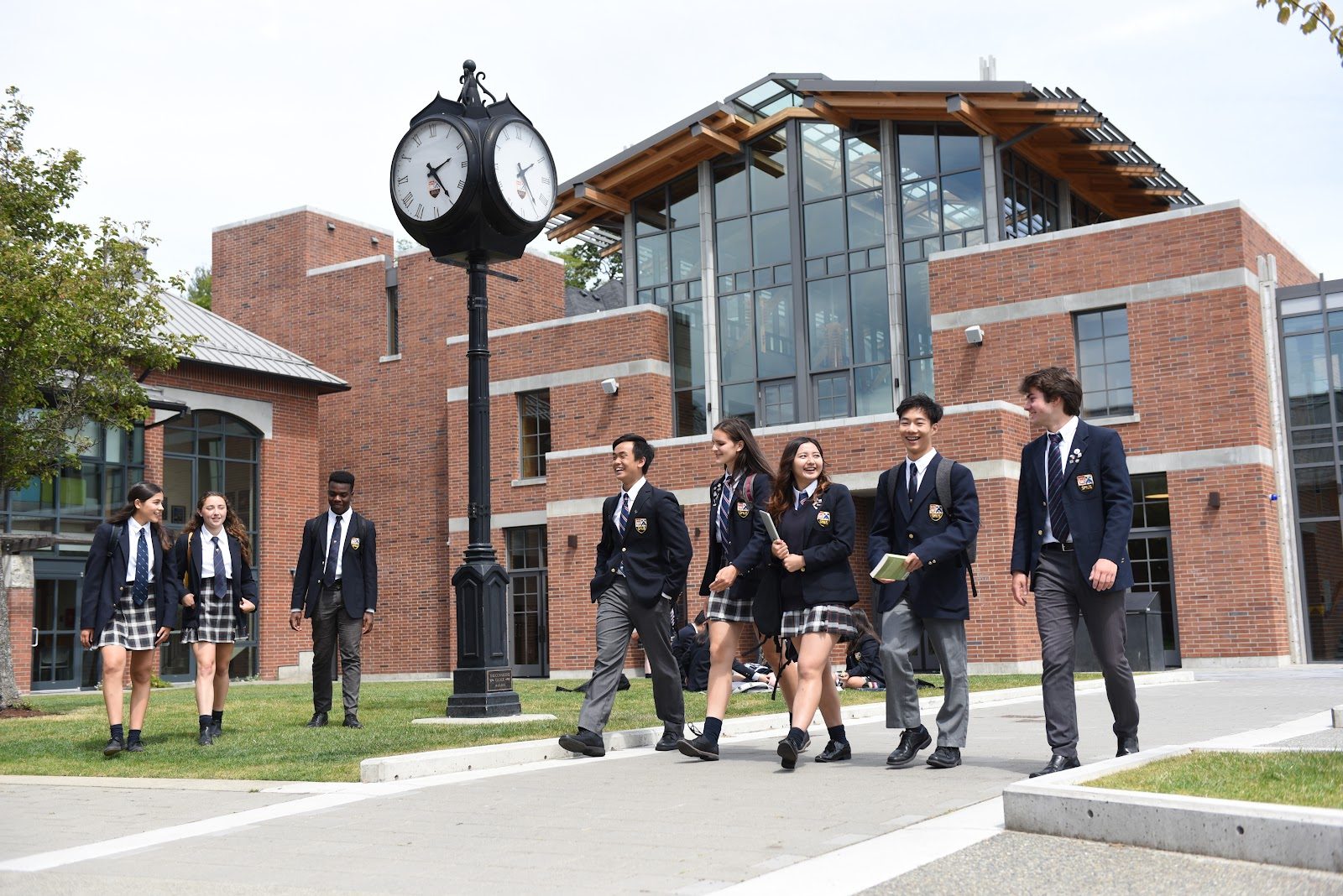
St Michaels University School
Victoria · Canada
On Vancouver Island, a AP pioneer school pairs Canadian, IB and American pathways with its own rowing centre on the Gorge Waterway.
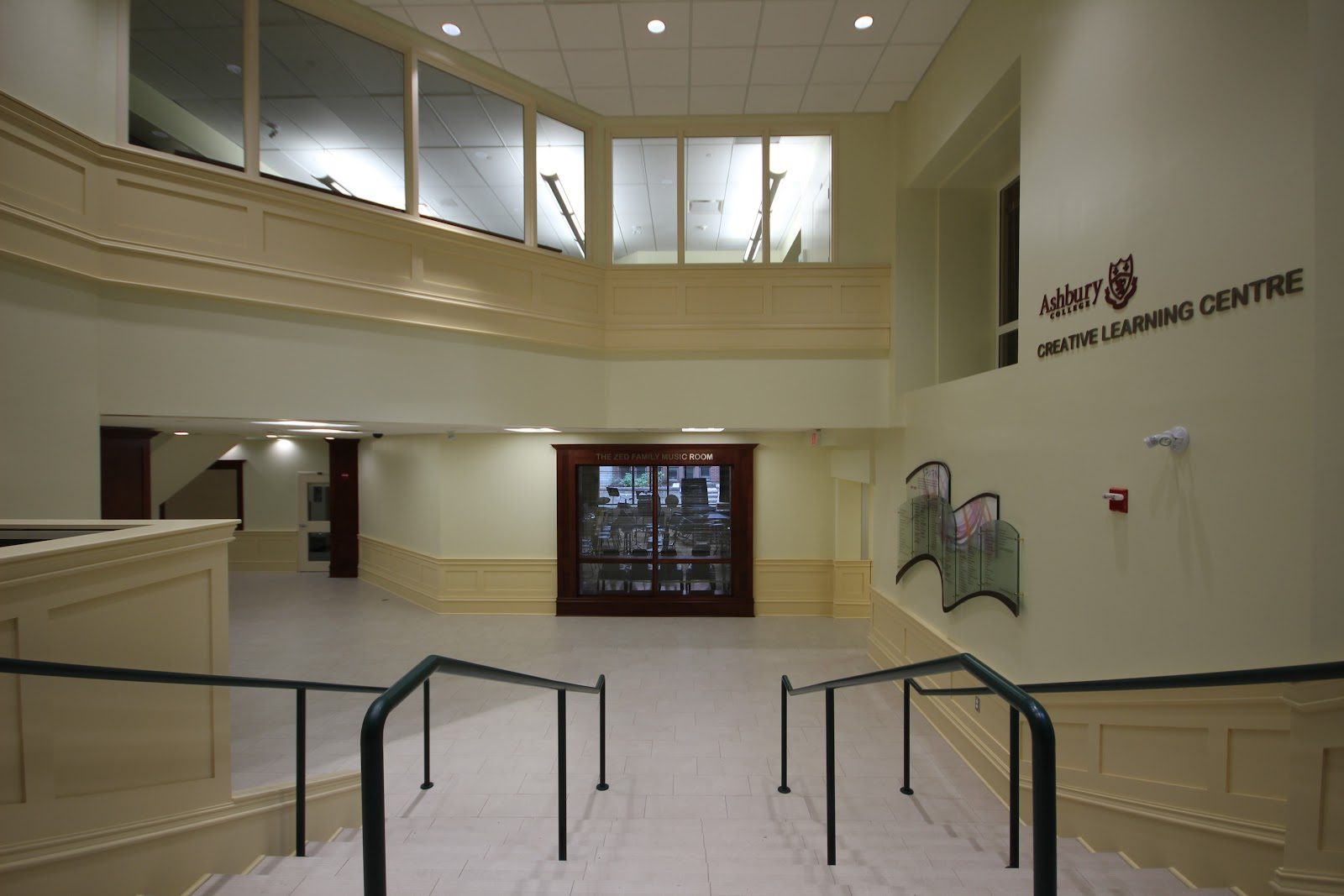
Ashbury College
Ottawa · Canada
Tucked among Rockcliffe Park's embassy residences, this century-old IB pioneer turns diplomatic proximity into a genuine global classroom.
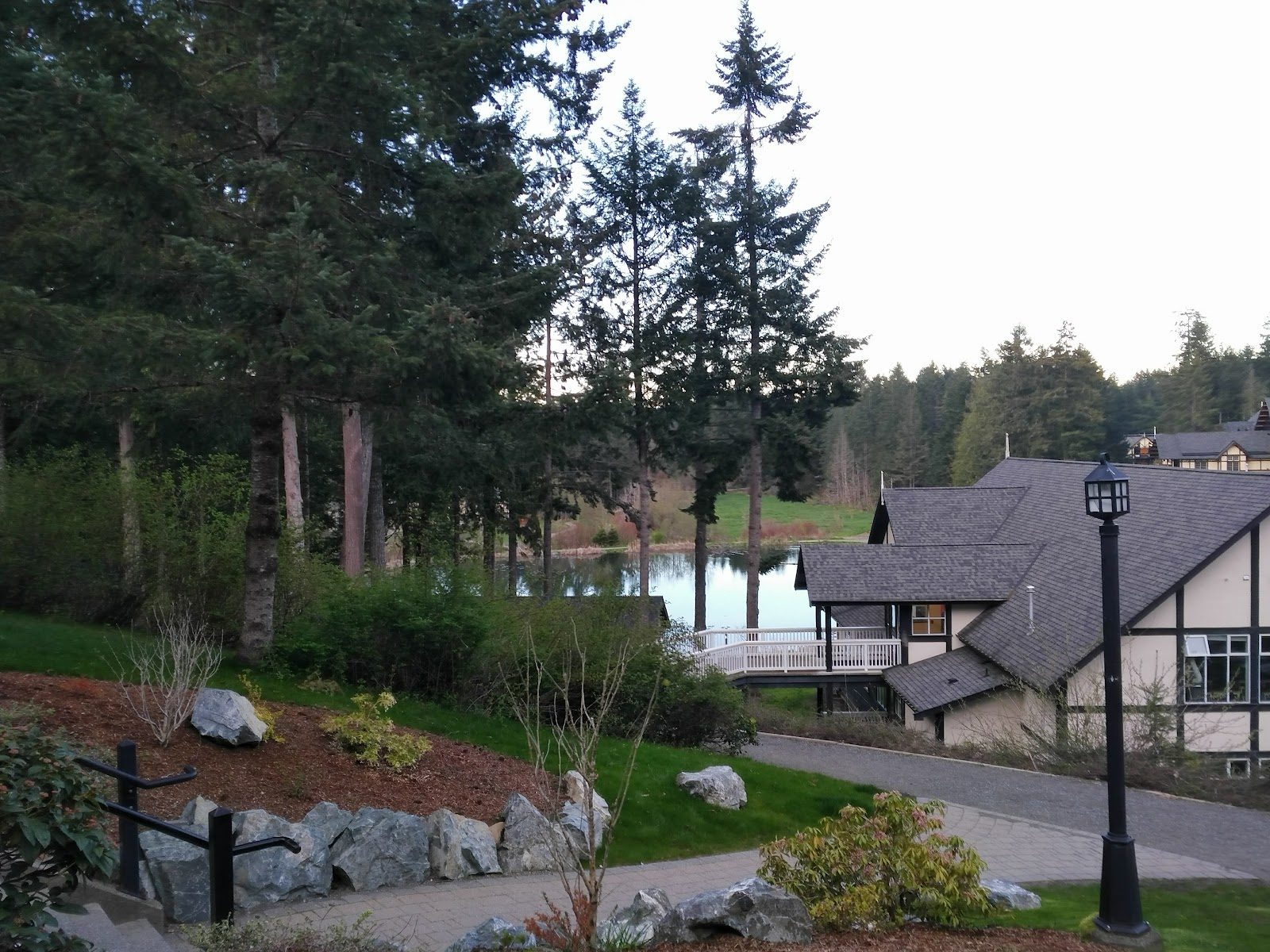
Shawnigan Lake School
Shawnigan Lake · Canada
On a 270-acre Vancouver Island campus, ten boarding houses hold Canada's largest full-time boarding community, a tradition since 1916.
Havergal College
Toronto · Canada
A 22-acre Anglican foundation since 1894, where ten storied houses anchor a rigorous, wellbeing-driven liberal arts curriculum for girls in midtown Toronto.
Same country and curriculum — closest matches within ±10 points either way