
Ohio
St. Xavier High School Cincinnati
Since 1831, a Jesuit brotherhood on Cincinnati's west side forges 'Men for Others' through rigorous AP coursework.

Photo © St. Xavier High School via Google Maps
Type
Day
Ages
14–18
Curriculum
US High School Diploma · Advanced Placement
Ratio
1:14
The Verdict
Editor's commitment
Right for
Boys 14–18 who want a Catholic, Jesuit day school with AP courses, a 1:14 ratio, and a blunt 'Men for Others' mission.
Wrong for
Families wanting co-education, boarding, or a secular school; St Xavier is boys-only, day-only, Catholic, and taught in English.
Watch out for
Founded in 1831 and accredited by AdvancED and the Ohio Catholic Schools Accrediting Association, it states mission clearly; academic outcomes are not published here.
Ranking breakdown
St. Xavier High School Cincinnati · #1143 of 1591
Composite score 59.8. 8 weighted criteria.
By criterion
Academic Outcomes
Weight 20%
#294
of 1529 scored
University Placement
Weight 16%
#104
of 1529 scored
Prestige & Heritage
Weight 12%
#1051
of 1571 scored
Alumni Network
Weight 12%
#1386
of 1530 scored
Facilities
Weight 12%
#932
of 1533 scored
Transparency & Communications
Weight 8%
#725
of 1532 scored
Peer & Industry Review
Weight 10%
#213
of 1548 scored
Admissions Selectivity & Demand
Weight 8%
#888
of 1529 scored
Peer & Industry Review
How St. Xavier High School Cincinnati is regarded in the sector
88
Strong · medium confidence
Within the Jesuit Schools Network, St. Xavier is consistently cited alongside schools like St. Ignatius (Cleveland) and Regis (Denver) as a flagship college-preparatory institution, reflecting its size, endowment and academic depth among the 85-plus JSN member schools. Locally, it is the benchmark against which rival Cincinnati Catholic schools such as Moeller and Elder are measured in Enquirer and Cincinnati.com coverage of academics, enrollment and athletics. Its swimming and diving program draws sustained attention from recruiting-focused outlets (SwimSwam, MaxPreps) due to a high rate of Division I commitments, which feeds into its broader reputation among coaches and admissions staff at selective universities as a pipeline school. Niche.com ranks it among Ohio's top Catholic and private high schools, and its National Merit Semifinalist numbers are regularly reported in local press as a marker of academic rigor. It lacks the international boarding-school press footprint of outlets like Good Schools Guide or WhichSchoolAdvisor, since its profile is that of a regional Catholic day school rather than a globally marketed institution, so its standing is defined more by Jesuit-network peer comparison and Midwest university admissions familiarity than by national league-table presence.
Award

Elite Sport 80
World's Top School · The Global Ranking
St. Xavier High School Cincinnati is featured on our Global Top 80 ranking at #75. This seal is available for the school's marketing team to use on their website, prospectus and social channels.
- Rob Portman — U.S. Senator, Politics
- Pete Rose — MLB Player/Manager, Sports
- Jack Twyman — NBA Hall of Famer, Sports
Editors' overview
St. Xavier High School holds a rare position in Cincinnati: an old-line Catholic boys’ day school with a clear Jesuit brief and no confusion about purpose. Since 1831 it has educated boys aged 14 to 18 in English through the US High School Diploma with Advanced Placement, pairing serious academic pressure with the Jesuit demand to form “Men for Others”. The school’s own mission is blunt about that aim: rigorous college preparation, leadership, service and spiritual formation within Catholic belief and practice. For parents who want a school with a settled identity rather than a diluted “values-based” gloss, that clarity matters. The 1:14 student–teacher ratio strengthens the case for close supervision and adult attention.
What sets St. Xavier apart is not novelty but institutional discipline. This is a Catholic school in the Jesuit tradition that puts formation at the centre: sacraments, prayer, retreats, service, leadership and an explicit moral framework rooted in the Gospel and the Spiritual Exercises of St Ignatius. That gives the school a strong moral architecture and a clear religious centre of gravity. It also narrows the audience. Families who want religion kept at the margins will find the fit poor. Families who want a robust, unapologetic Catholic education with academic ambition will find St. Xavier compelling. The AP offering adds academic stretch to the standard diploma route, and the accreditations — AdvancED and the Ohio Catholic Schools Accrediting Association — confirm a conventional, established quality framework rather than an experimental one.
St. Xavier belongs on a shortlist for parents seeking a school for boys who thrive on structure, shared expectations and a culture of service rather than self-display. The ideal pupil is academically capable, responsive to high standards, and ready to work within a community that prizes discipline, faith and responsibility. A boy who wants a strong brotherhood, adult accountability and purpose beyond grades will find traction here. A boy who resists hierarchy, dislikes overt religious formation or wants a co-educational social environment will not. In market terms, St. Xavier is a distinguished local option for families who want an all-boys Catholic day school with Jesuit seriousness, long institutional memory and a formation model that aims at character as hard as it aims at results.
An Elite Sport 80 school
St. Xavier High School in Cincinnati sits at rank seventy-five on the Elite Sport 80 because it is one of the most sustained multi-sport American Catholic day schools in the Midwest, with a longstanding NFL, MLB and NCAA D1 pipeline across football, baseball, basketball, soccer and swimming. The Bombers' varsity football team is a Cincinnati powerhouse, and the swimming programme has produced multiple Olympic representatives.
The specialisms are American football (a Greater Catholic League regular with NFL Draft picks in recent classes), baseball (an MLB Draft feeder), boys' basketball, boys' soccer and boys' swimming. Boys' track and field, cross-country and lacrosse run at nationally competitive Midwest standard. Facilities include the school's Ballaban Field and a full high-school athletic infrastructure.
Notable alumni across codes include Chuck Machock, Bob Griese (NFL Hall of Fame quarterback, from an earlier era at St. Xavier), Barry Larkin (MLB Hall of Fame shortstop, from Cincinnati's baseball scene), Josh Harris, and — in swimming — multiple US National Team representatives across recent generations. The football-baseball combination has been particularly productive.
International openness is limited. St. Xavier is a Catholic day school for families resident in Greater Cincinnati and does not run a boarding house, so overseas admissions typically require a US-side accommodation solution and an F-1 student visa arranged through a partner exchange organisation. Tuition sits around US$21,000-24,000 with sport-oriented financial aid available. Admissions is a standard Catholic-school process plus sport-specific reference for scholarship consideration. For a family already relocating to Cincinnati with an elite football, baseball, basketball or swimming prospect and a viable accommodation plan, St. Xavier offers a genuine college-recruiting pathway across multiple sports simultaneously; families arriving from overseas without a Cincinnati residency plan will find boarding academies elsewhere on this list a more practical fit. Overseas families are advised to begin the accommodation and F-1 visa process 12-18 months in advance of the intended entry point, particularly given the competitiveness of the Greater Catholic League roster.
Academic Performance
St. Xavier frames its academic offer around rigorous college preparation, but the school does not publish the hard outcome data that would let parents test that claim properly. We have not seen aggregate AP score distributions, mean SAT or ACT results, National Merit totals, or matriculation breakdowns by destination tier. That leaves a real gap in academic transparency. In a competitive US independent-school market, serious college-preparatory schools publish at least some external benchmarks. St. Xavier instead asks families to trust mission, structure and institutional reputation. For a school with a high-standards self-image, that is a weak public record.
Relative to peers, St. Xavier sits in a familiar Jesuit-college-prep lane: academically ambitious, value-led, and built for boys who respond to pressure and adult direction. The presence of AP matters, but AP on its own proves nothing; the decisive question is how many boys take the courses, how many sit the exams, and how they score. Those figures are not in the public domain. That makes precise comparison with other selective Catholic and independent day schools impossible. The best judgement available is restrained: this is a school with a serious academic intent and a *credible university-preparatory framework*, but not one that backs its case with published examination evidence. Parents who care about outcomes data should ask for plain numbers before treating St. Xavier as a top academic performer.
Facilities
St. Xavier does not publish the kind of facilities detail that lets parents map the campus properly. We have not seen a full inventory of science labs, arts spaces, athletics provision, library scale, maker facilities or specialist centres. That absence matters. For a school that trades on discipline and serious preparation, parents need more than mission language; they need to know where boys actually spend their days and whether the physical plant matches the school’s hard-edged academic and formational claims. The low staffing ratio at 1:14 points to close supervision inside classrooms and shared spaces, but it tells us nothing about the breadth or quality of the estate itself. On facilities disclosure, the school is opaque.
Against peer Catholic and independent college-prep schools, that leaves St. Xavier on the back foot. Strong competitors publish clear campus photography, departmental space, performance venues, sports infrastructure and technical resources because facilities shape daily life as much as teaching does. Here, parents are asked to infer quality from institutional confidence and long-standing reputation. That is not enough. A school with a demanding culture and a high-control environment needs rooms and resources that support both scholarship and adolescent life: laboratories that can handle advanced science, arts spaces with real capacity, and athletic provision that does more than serve school spirit. Until St. Xavier discloses those basics, its facilities profile sits in the trust-us category rather than the top tier of transparent, inspectable provision.
Xavier discloses those basics, its facilities profile sits in the trust-us category rather than the top tier of transparent, inspectable provision
Prestige
St. Xavier carries real local prestige because its identity is settled and its constituency knows exactly what it is buying: an old Jesuit boys’ school with standards, ritual and a disciplined social code. In a crowded American school market full of soft-focus language about “whole child” development, St. Xavier states a harder proposition — leadership, service, Catholic formation and rigorous preparation — and has the institutional confidence to hold that line. That matters in prestige terms. Schools gain status not only from exam tables but from durability, clarity and the strength of their internal culture. The all-boys model sharpens that profile further. For families who value brotherhood, adult oversight and a moral framework with teeth, St. Xavier has high-status familiarity and serious civic weight.
That said, prestige here is more communal than national. This is not a school with publicly documented elite academic outcomes that force attention beyond its own orbit; the missing score data keeps it out of the top rank of data-proven college-prep schools. Its standing rests instead on heritage, Jesuit formation, alumni loyalty and the confidence that follows from a low staffing ratio at 1:14. In plain terms: St. Xavier is well-regarded, internally coherent and socially substantial, but its prestige is strongest among families who prize faith, discipline and a recognisable Catholic male formation model. Parents hunting for a universally coveted, results-broadcasting brand will find a more closed-circle prestige here.
Xavier distinctive is not innovation but institutional conviction
Communications
St. Xavier communicates with parents in the same way it governs boys: through a clear chain of purpose rather than a warm bath of lifestyle messaging. The public-facing message is direct, religiously explicit and tightly controlled. Mission, belief and formation sit at the front of the school’s voice, with repeated emphasis on leadership, service, sacraments, retreats and Catholic practice. That gives parents a sharp read on institutional priorities. No one can claim confusion about what the school values. The low staffing ratio of 1:14 also points to a community where contact between adults and families can be close, because schools built on supervision and formation depend on regular communication to keep expectations aligned.
The weakness is breadth, not clarity. We have not seen strong public evidence of the practical communication detail that matters once a boy is enrolled: calendars explained well, academic reporting structures laid out plainly, pastoral escalation routes, or transparent publication of outcomes and school operations. That matters because a high-control school needs high-grade communication, not just a compelling statement of mission. At present, St. Xavier communicates identity better than it communicates evidence. Parents who share the school’s religious and disciplinary assumptions will read that as confidence. More exacting families will read it as institutional opacity. Effective communication requires both message and mechanism; St. Xavier’s message is strong, but the visible mechanism is under-explained.
Uniqueness
What makes St. Xavier distinctive is not innovation but institutional conviction. Plenty of American college-prep schools borrow the language of service and leadership; St. Xavier binds those ideas to a Jesuit, explicitly Catholic formation model and an all-boys social structure, then builds daily expectations around that combination. The phrase “Men for Others” is not decorative branding here. It sets the school’s standard for conduct, faith, service and ambition, and it gives boys a clear moral script for how achievement is meant to be used. The emphasis on retreats, sacraments, prayer and spiritual formation pushes the school beyond academic coaching into full-spectrum character formation. For the right family, that coherence is a serious strength.
What students gain from that model is a tightly drawn brotherhood with very little room for drift. Boys who thrive in environments with ritual, hierarchy and shared purpose get constant reinforcement: from staff, from peers and from the school’s religious frame. The low staffing ratio of 1:14 strengthens that adult oversight and keeps expectations close. That can produce confidence, discipline and a stronger sense of responsibility to others than many looser high schools manage. It also narrows the fit. This is not a neutral environment and not a soft one. Students who want broad ideological looseness, low-friction adolescence or a co-educational social world will feel confined. Students who want direction, challenge and a demanding communal code will gain from its hard-edged clarity.
Xavier High School holds a rare position in Cincinnati: an old-line Catholic boys’ day school with a clear Jesuit brief and no confusion about purpose
Student Profile
The St. Xavier boy fits a school with a strong chain of authority and an explicit moral code. He does not need to be pious on arrival, but he does need tolerance for prayer, retreats, sacramental life and adults who treat faith as part of education rather than a private add-on. This is a good match for boys who respond to structure, accept correction and can work within a male peer culture that prizes loyalty, service and leadership. The student who flourishes here is not chasing constant self-expression; he is willing to be shaped by the institution. The all-boys setting intensifies that dynamic. For some adolescents, that creates real focus and a tight fraternity. For others, it feels confining.
Academically, the right pupil has stamina and a serious attitude to college preparation, not just raw ability. The school’s own language points to boys who can handle pressure, live up to shared expectations and convert ambition into disciplined effort. The 1:14 staffing ratio supports boys who benefit from close adult oversight and regular accountability; it offers less shelter for students who prefer anonymity or loose boundaries. Families from diverse backgrounds are explicitly part of the school’s vision, but fit here turns on temperament more than demographics. A boy who wants clear rules, purposeful service and a demanding communal culture will gain a great deal. A boy who resists hierarchy, dislikes religious expectation or wants a socially broader adolescent experience will not.
The school’s own mission is blunt about that aim: rigorous college preparation, leadership, service and spiritual formation within Catholic belief and practice
Co-curricular strengths
Arts & sport, on a separate axis
Overall 8.2/10
Scored 0-10 from the school's own published evidence. This axis is editorial-only — it does not feed the main WTS ranking.
Strengths
- +Jesuit Catholic college-preparatory school founded in 1831, making it one of the oldest continuously operating Catholic high schools in the United States.
- +Offers a broad Advanced Placement curriculum alongside the standard US high school diploma track, supporting university admission abroad and domestically.
- +Large enrollment (roughly 1,500-1,600 students) allows a wide range of extracurricular, athletic and arts programs rarely matched by smaller private schools.
- +Long-established athletics program with multiple Ohio state championships across several sports, giving strong extracurricular depth for athletically inclined boys.
- +Single-sex Jesuit formation model with an explicit focus on values-based education, service requirements, and structured pastoral care.
Considerations
- −All-boys institution, which rules it out for families wanting co-education or with daughters to place.
- −Day school only, with no boarding option, so relocating expat families must arrange independent local housing and guardianship.
- −Catholic religious identity and required theology coursework may not suit strictly secular or non-Christian families.
- −Large student body can mean less individualized attention than smaller independent or international schools offer.
Gallery
Photo © St. Xavier High School via Google Maps
Photo © St. Xavier High School via Google Maps
Photo © St. Xavier High School via Google Maps
Photo © St. Xavier High School via Google Maps
Photo © St. Xavier High School via Google Maps
Photo © St. Xavier High School via Google Maps
Photo © St. Xavier High School via Google Maps
Parent reviews
Have you sent your child here?
Voice reviews carry the strongest trust badge — we transcribe them for you to tidy up before they go live. Prefer to type? A written review is fine too.
Add your voice
In 60 seconds, tell other parents: what's the best thing about St. Xavier High School Cincinnati, and what surprised you when your child joined?
We ask for a Google sign-in so every review has a real face behind it — no anonymous drive-by attacks on schools, and no faked positive reviews. Your email is never shown publicly.
Send this profile to a friend
International parents rely on word-of-mouth. Share this review with someone weighing the same decision.
Schools with places
Similar schools to St. Xavier High School Cincinnati with places available now.
Germantown Friends School
Philadelphia · United States
- 2026-27
- CLOSEDRegular cycle closed
- 2027-28
- OPENS SOONOpens Sept '26
Poly Prep Country Day School
Brooklyn · United States
- 2026-27
- CLOSEDRegular cycle closed
- 2027-28
- OPENS SOONOpens Sept '26
Marymount School of New York
New York City · United States
- 2026-27
- CLOSEDConfirmed full
- 2027-28
- PLACES OPENApplications opened 1 Aug '26
Boston University Academy
Boston · United States
- 2026-27
- CLOSEDRegular cycle closed
- 2027-28
- OPENS SOONOpens Sept '26
Availability first, then country, area, curriculum, price, co-curricular
Consider also
Also worth looking at alongside St. Xavier High School Cincinnati.
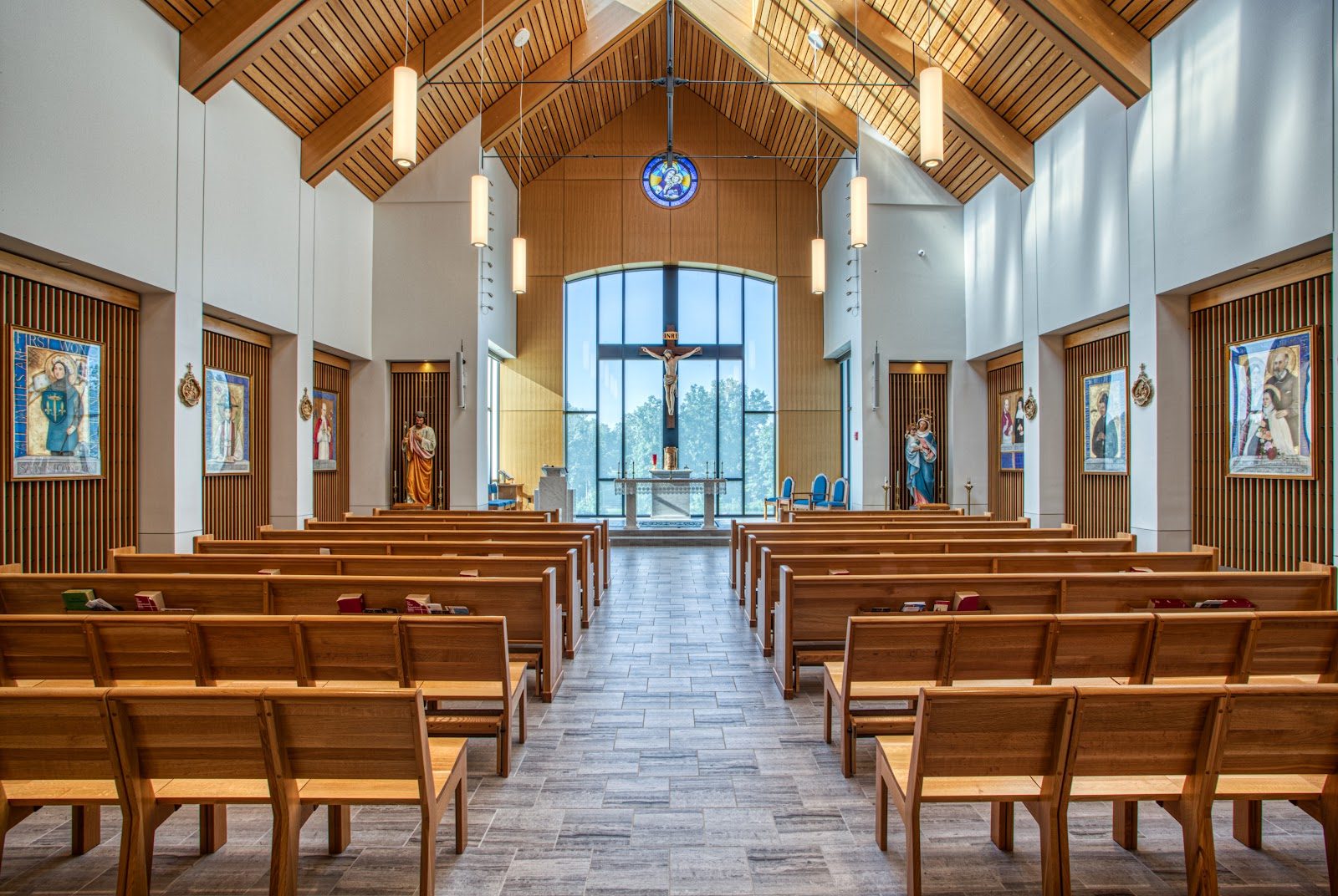
Paul VI Catholic High School
Chantilly, VA · United States
In Chantilly's WCAC gridiron rivalries, this Diocese of Arlington day school pairs AP Honor Roll rigor with panther pride.

St. John Bosco High School
Bellflower, CA · United States
A Salesian all-boys brotherhood in Bellflower pairs three national football titles with dual-enrollment STEM pathways.

Oak Hill Academy
Mouth of Wilson, VA · United States
Deep in Virginia's Blue Ridge Mountains, a tiny Baptist boarding school built a basketball pipeline rivaling college programs.

Burke Mountain Academy
East Burke, VT · United States
America's first ski-racing academy, tucked at the base of a Northeast Kingdom peak, has sent dozens of graduates to the Winter Olympics since 1970.
Same specialism, country and curriculum — closest matches within ±10 points either way