
New York
Poly Prep Country Day School
high confidence· 6/6 cats · 3.5 avg sourcesFounded in 1854 as Brooklyn's first boys' school, this day school pairs a Prospect Park mansion with a 25-acre Dyker Heights campus.
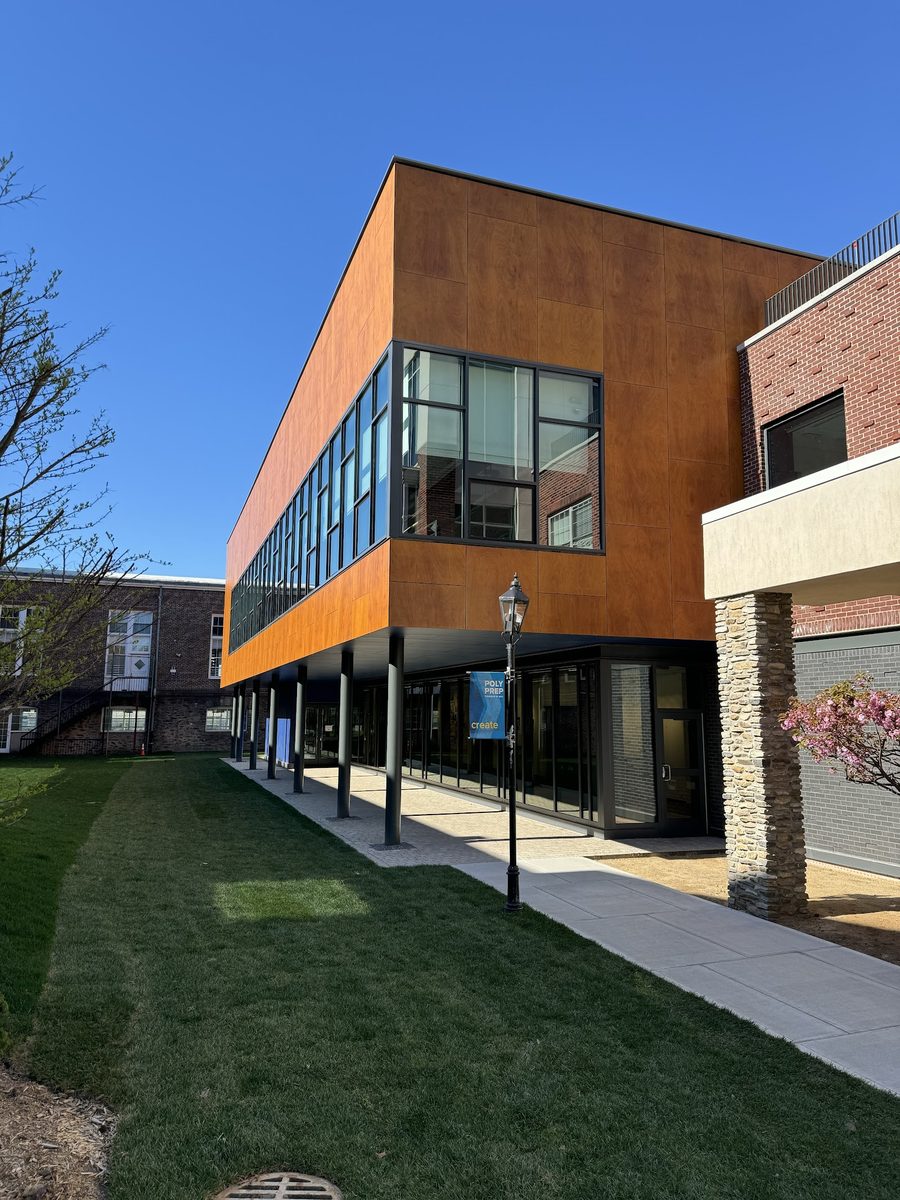
Photo © Poly Prep Country Day School via Google Maps
Type
Day
Ages
3–18
Curriculum
American
Qualifications
AP
Ratio
1:8
The Verdict
Editor's commitment
Right for
Brooklyn families wanting a non-religious American day school, founded in 1854, with ages 3–18 split between Prospect Park and Dyker Heights.
Wrong for
Parents who want boarding, low fees or quiet conformity: Poly is day-only, averages $59,915 a year, and calls itself a noisy school.
Watch out for
NAIS and MSA accreditation confirm a serious institution, but 3–18 on two campuses means logistics matter as much as ethos.
Ranking breakdown
Poly Prep Country Day School · #1099 of 1591
Composite score 60.7. 8 weighted criteria.
By criterion
Academic Outcomes
Weight 20%
#1085
of 1529 scored
University Placement
Weight 16%
#1089
of 1529 scored
Prestige & Heritage
Weight 12%
#1054
of 1571 scored
Alumni Network
Weight 12%
#692
of 1530 scored
Facilities
Weight 12%
#1110
of 1533 scored
Transparency & Communications
Weight 8%
#1073
of 1532 scored
Peer & Industry Review
Weight 10%
#998
of 1548 scored
Admissions Selectivity & Demand
Weight 8%
#837
of 1529 scored
Score history
Poly Prep Country Day School · 2026
Movement across 2024–2026. Peer average overlaid.
Overall — 2024–2026
60.7/ 100
▲ +4.9 vs 2025
year on year
Peer & Industry Review
How Poly Prep Country Day School is regarded in the sector
62
Respected · medium confidence
Poly Prep is a well-known Brooklyn day school with a long history (founded 1854), regularly listed in Niche.com's 'Best Private K-12 Schools in New York' and 'Best College Prep Private Schools' rankings, reflecting solid regional recognition among peer institutions. It has drawn press coverage, notably The New York Times' extensive reporting on historical abuse allegations and subsequent institutional response, which affected but did not eliminate its standing as a respected New York private school. Its athletic and academic programs are noted in regional prep-school circuits, but it lacks the consistent national 'best schools' list presence or globally recognized alumni network seen in top-tier institutions.
Evidence sources
Editors' overview
A Prospect Park mansion for the younger years and a 25-acre Dyker Heights campus for the older ones gives Poly Prep a physical set-up that few New York day schools can match. Founded in 1854 as Brooklyn’s first boys’ school, it has long since evolved into a co-educational, non-religious school for ages 3 to 18, but it still trades on old Brooklyn confidence rather than glossy reinvention. The school’s own line — “Poly is a noisy school” — matters. This is not a polished, hushed college-prep factory. It is a place that values discourse, debate and “constructive dissent”, and that culture will attract families who want intellectual friction rather than deference. In a market full of schools promising community and joy, Poly states the point more bluntly and more convincingly.
The substance underneath that identity is broad. Poly runs an American curriculum in English, with distinct lower, middle and upper school structures, and it puts visible weight on arts, athletics and student life rather than treating them as decorative extras. The published offering spans dance, music, theatre, visual arts, speech and debate, plus a full athletics programme across seasons. That breadth matters because Poly’s appeal is not narrow exam-machine prestige; it is the chance to build a serious all-round school life on a large urban-campus footprint. Accreditation through NAIS and MSA gives the expected institutional reassurance, but the stronger signal is cultural: this is a school that wants articulate, energetic students who will join in, speak up and fill the place with noise.
At an average annual fee of $59,915, Poly sits firmly in New York’s expensive independent-school bracket. Parents paying that level need more than handsome buildings and old-school pedigree. Poly earns its shortlist place through a combination that is hard to replicate in Brooklyn: deep history, substantial space, a full 3–18 ladder, and a school culture that reads as high-energy, opinionated and unapologetically busy. It will suit children who thrive in a lively, socially engaged environment and who want proper scope in sport, the arts and debate alongside academics. It will not suit the student who wants a quiet, tightly managed, ultra-sheltered day. Poly’s personality is too strong for that. For the right child, that is precisely the point.
Academic Performance
Poly’s public case on academic performance is weaker than its case on culture, facilities and breadth. The school publishes college-destination news for the graduating class, and that carries weight in the US independent-school market, but it does not disclose the hard comparative data that serious parents use to judge academic firepower: no school-wide SAT or ACT averages, no AP participation totals, no aggregate AP score profile, no IB data, and no year-on-year examination summary in the public domain. That makes Poly harder to place precisely against New York’s results-driven heavyweights than schools that release a clear scorecard. For a school charging an average of $59,915 a year, that opacity matters. It does not signal weak academics, but it does block straightforward benchmarking.
What the school does publish points instead to an education built around range and intellectual engagement rather than a narrow exam treadmill. The academic structure across lower, middle and upper school is extensive, and the upper school foregrounds graduation requirements, deans and college guidance rather than headline testing boasts. Combined with the school’s own emphasis on discourse, debate and advanced study, that places Poly in the camp of broad-gauge, all-rounder independents: strong college-preparatory schooling, serious co-curricular opportunity, and a student experience that extends beyond transcript optimisation. Relative to peers, Poly looks less like an outcomes-obsessed Manhattan brand and more like a confident Brooklyn school that expects parents to value destination, substance and stretch even without a published exam dashboard.
Facilities
Poly’s physical estate is a real advantage. The split-campus model gives the youngest children a mansion setting near Prospect Park, while older pupils move to a 25-acre site in Dyker Heights. That immediately sets it apart from many New York day schools, which operate on tighter urban footprints and ask families to accept compromised outdoor space. Here, athletics facilities are not an afterthought tucked onto a roof or borrowed off site: the school runs a full interscholastic programme across football, soccer, tennis, volleyball, basketball, hockey, squash, swimming, wrestling, baseball, golf, lacrosse, softball and track. Add strength and conditioning, sports medicine and dedicated arts spaces, and the picture is of a school built for constant use, high-volume activity and a genuinely all-day student life.
The arts provision also carries more substance than the standard independent-school brochure language. Poly publishes distinct routes in dance, music, theatre, speech and debate, alongside visual arts disciplines including ceramics, drawing, painting, photography and museum studies. That breadth matters because peer schools at this price point divide into two camps: those with strong performing arts but thin studio infrastructure, and those with polished art rooms but limited public-speaking culture. Poly has both. The result is a campus offer that feels expansive, properly resourced and refreshingly unsqueezed by city standards. The trade-off is the commute between neighbourhoods and the operational complexity that comes with a two-site school. Still, against Brooklyn and Manhattan peers, the facilities package is one of Poly’s clearest strengths.
That gives the school a distinctive social signature: ambitious, energetic, articulate, and comfortable with public performance
Prestige
Poly carries real local prestige and solid national recognition, but not the ritualised aura of the most status-obsessed Manhattan independents. Its standing rests on a different mix: old institutional weight, a full educational ladder, selective independent-school positioning, and an alumni bench that is plainly serious rather than theatrical. The verified notable-alumni count sits at 50, spanning politics, finance, scholarship, journalism, performance and music. That breadth matters. It points to a school that has produced influence across fields, not a one-track celebrity roll call built for admissions theatre. In New York terms, Poly reads as established, well-connected and socially credible without lapsing into finishing-school polish.
That is why the prestige rating lands below the city’s most rarefied nameplates but above the mass of expensive independents that have money and little else. Poly has identity, history and a recognisable place in the hierarchy. It also has enough self-confidence to foreground noise, dissent and participation rather than elite hush. That gives the school a distinctive social signature: ambitious, energetic, articulate, and comfortable with public performance. The limit on prestige is not quality but profile. Poly does not trade on exam-score publication, global-brand cachet or myth-making alumni marketing. Its reputation is substantial rather than glittering. For many families, that is a strength. Prestige here feels earned, not sprayed on.
In a market full of schools promising community and joy, Poly states the point more bluntly and more convincingly
Communications
Poly’s parent communication carries the same house style as the school itself: direct, busy and full of institutional self-belief. The website is dense but not vague. Key parent-navigation points are easy to find — admissions, tuition assistance, bus routes, calendars, portals, employee directory, athletics schedules and scores, and divisional pages for lower, middle and upper school. That matters because schools with multiple campuses and a broad co-curricular load need to communicate operational detail cleanly. Poly does. The public-facing structure tells parents where to go for logistics, who leads each division, and how school life is organised. There is also a visible news drumbeat, with academic stories, events and student activity pushed forward rather than buried. This is not minimalist, polished silence; it is constant traffic.
The strength here is clarity of volume and intent. Parents get a strong sense that the school wants them plugged into a fast-moving community, not standing outside it. The weakness is that the same density can feel overloaded. Pages carry a lot of menu architecture, and the school’s enthusiasm for showcasing activity can make it harder to distinguish headline information from institutional mood-setting. More importantly, communication is stronger on culture, programmes and day-to-day life than on hard academic metrics. For families who judge a school by published scoreboards, that is a real gap. For families who want to understand the lived rhythm of a large independent day school charging $59,915, Poly communicates that rhythm forcefully and with very little fluff.
Uniqueness
What sets Poly apart is not a single flagship programme but a rare combination of old-school Brooklyn heft, a full age-range under one roof organisationally, and a culture that openly prizes argument. The school does not sell serenity; it says plainly that it is noisy, and that candour matters. Many independents talk about student voice while running tightly stage-managed classrooms. Poly foregrounds discourse, debate and constructive dissent as part of daily life. For students, that brings a clear gain: practice in speaking up, disagreeing without retreat, and handling a school day that is busy, social and full-volume. The published structure also gives unusual continuity across 3–18, with dedicated lower, middle and upper school divisions rather than a loose collection of phases sharing a brand.
The other point of difference is scale of opportunity without the feel of a vast impersonal institution. Poly offers a striking spread of routes in the arts and student life, from museum studies and ceramics to speech and debate, alongside a sports list that runs far beyond the standard city-school handful. That matters for children whose strengths arrive unevenly or late. A pupil can be serious about theatre and squash, or photography and public speaking, without feeling pushed into a single identity. The benefit is an education that is expansive rather than narrow, energetic rather than manicured, and not for the quiet passenger. Students who want room to test themselves in public, on stage, on teams and in discussion gain the most.
The published offering spans dance, music, theatre, visual arts, speech and debate, plus a full athletics programme across seasons
Student Profile
The students who fit Poly best are the ones who want to join in visibly. This is not a school for children who prefer to sit at the back, keep their heads down and drift through the day unnoticed. The school’s own language centres on discourse, debate, constructive dissent, guest speakers, student-led forums, open mic nights and a long menu of clubs, teams and arts routes. That points to a student body that is verbally confident, high-participation and comfortable being known. Children who enjoy arguing a case, performing, competing, asking questions in public and taking up space in a busy community will find room here. The age span from 3–18 also matters: families looking for continuity, rather than a series of school changes, get a single institutional culture from the early years to graduation.
The strongest fit is the energetic all-rounder rather than the narrow specialist. Poly gives students many lanes and expects them to use them. A child can move between theatre, speech and debate, visual art, team sport and academic extension without that mix feeling eccentric. That breadth suits students with mixed talents, late-developing strengths or restless curiosity. It also suits socially confident children who can handle a school that describes itself as noisy and treats that as a virtue. The weaker fit is plain: highly introverted students, or those who want a quiet, low-stimulus school day with heavy adult buffering, will find the pace and social volume hard work. Poly rewards presence. It does not indulge passivity.
At an average annual fee of $59,915, Poly sits firmly in New York’s expensive independent-school bracket
Co-curricular strengths
Arts & sport, on a separate axis
Overall 9/10
Scored 0-10 from the school's own published evidence. This axis is editorial-only — it does not feed the main WTS ranking.
Sports
9/10
'Varsity athletics' as an extracurricular.
Drama
9/10
'Theatre productions' and verified alumni include Tony Award winner Dan Fogler, and a star-tier laureate anchors drama at at least 7.
Dance
9/10
Music
9/10
Multiple structured music activities—'Jazz band,' 'Orchestra,' and 'Choir'—which evidences solid participation.
Visual Arts
9/10
'Visual arts' as an extracurricular.
Editor first-pass · editor-reviewable · 7/28/2026
Notable alumni · Wikidata
50notable alumni
10 historic (born pre-1930) · 18 modern (born post-1970)wikidata:2026-07-28 How we source this
Strengths
- +Founded in 1854; long institutional continuity.
- +Covers ages 3–18 on one school pathway.
- +Two Brooklyn campuses serve different age groups.
- +American curriculum in English may ease US transitions.
Considerations
- −Two-campus arrangement can complicate family logistics.
- −Day-only school; no boarding for overseas families.
- −Brooklyn location only; no other campus options.
Availability
Primary entry gate & tests
ISEE/SSAT + Interview
Gallery
Photo © Poly Prep Country Day School via Google Maps
Photo © Poly Prep Country Day School via Google Maps
Photo © Poly Prep Country Day School via Google Maps
Photo © Poly Prep Country Day School via Google Maps
Photo © Poly Prep Country Day School via Google Maps
Parent reviews
Have you sent your child here?
Voice reviews carry the strongest trust badge — we transcribe them for you to tidy up before they go live. Prefer to type? A written review is fine too.
Add your voice
In 60 seconds, tell other parents: what's the best thing about Poly Prep Country Day School, and what surprised you when your child joined?
We ask for a Google sign-in so every review has a real face behind it — no anonymous drive-by attacks on schools, and no faked positive reviews. Your email is never shown publicly.
Send this profile to a friend
International parents rely on word-of-mouth. Share this review with someone weighing the same decision.
Schools with places
Similar schools to Poly Prep Country Day School with places available now.
Marymount School of New York
New York City · United States
- 2026-27
- CLOSEDConfirmed full
- 2027-28
- PLACES OPENApplications opened 1 Aug '26
The Browning School
New York City · United States
- 2026-27
- CLOSEDConfirmed full
- 2027-28
- OPENS SOONOpens 25 Aug '26; appointments from 8 Sep
The Buckley School
New York City · United States
- 2026-27
- CLOSEDConfirmed full
- 2027-28
- OPENS SOONOpens post-Labor Day '26
Friends Seminary
New York City · United States
- 2026-27
- WAITPOOLLate/held pending openings
- 2027-28
- OPENS SOONExpected Sept '26
Availability first, then country, area, curriculum, price, co-curricular
Consider also
Also worth looking at alongside Poly Prep Country Day School.

Germantown Friends School
Philadelphia · United States
Rooted in an 1845 Quaker meeting in historic Germantown, where juniors design a month-long independent study of their own.
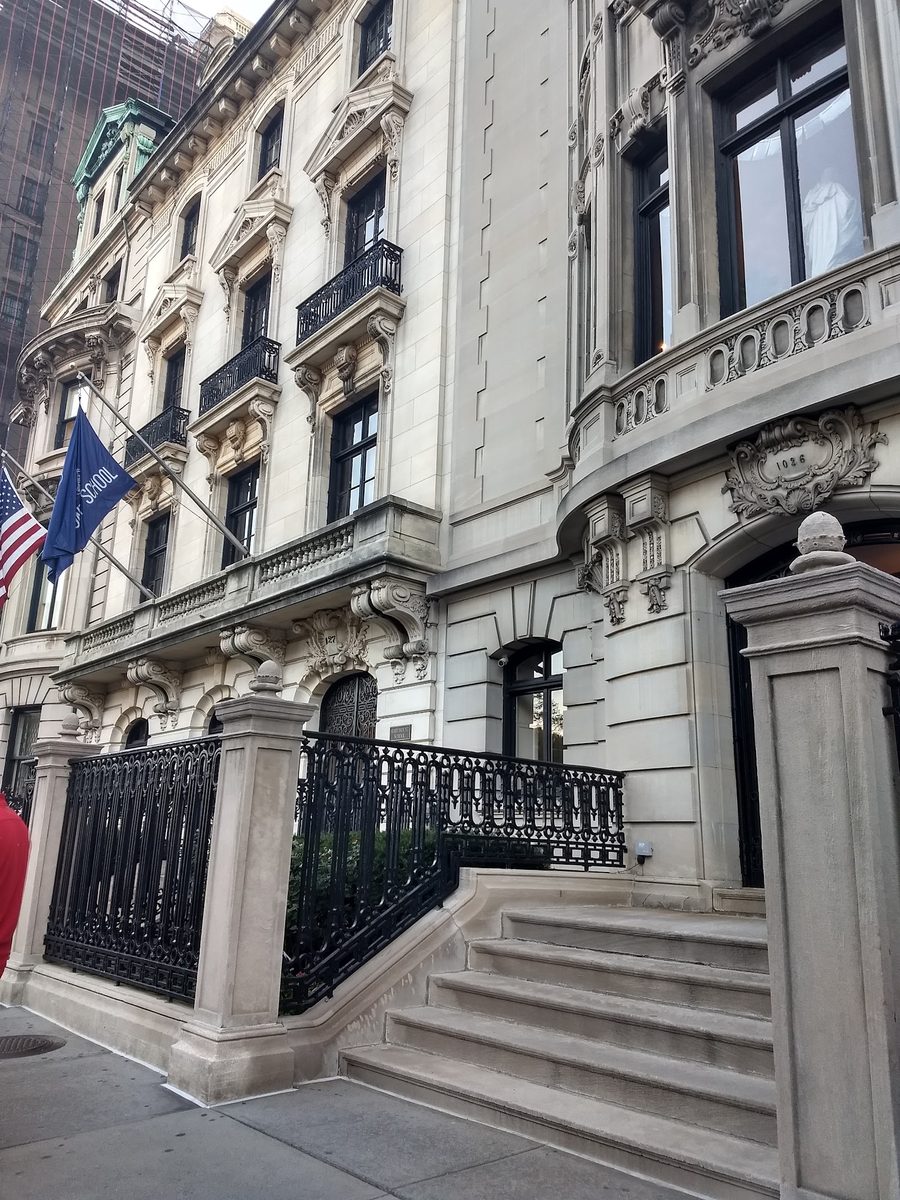
Marymount School of New York
New York City · United States
On Fifth Avenue, landmark mansions give way to Bloomberg terminals and classrooms inside the Met.
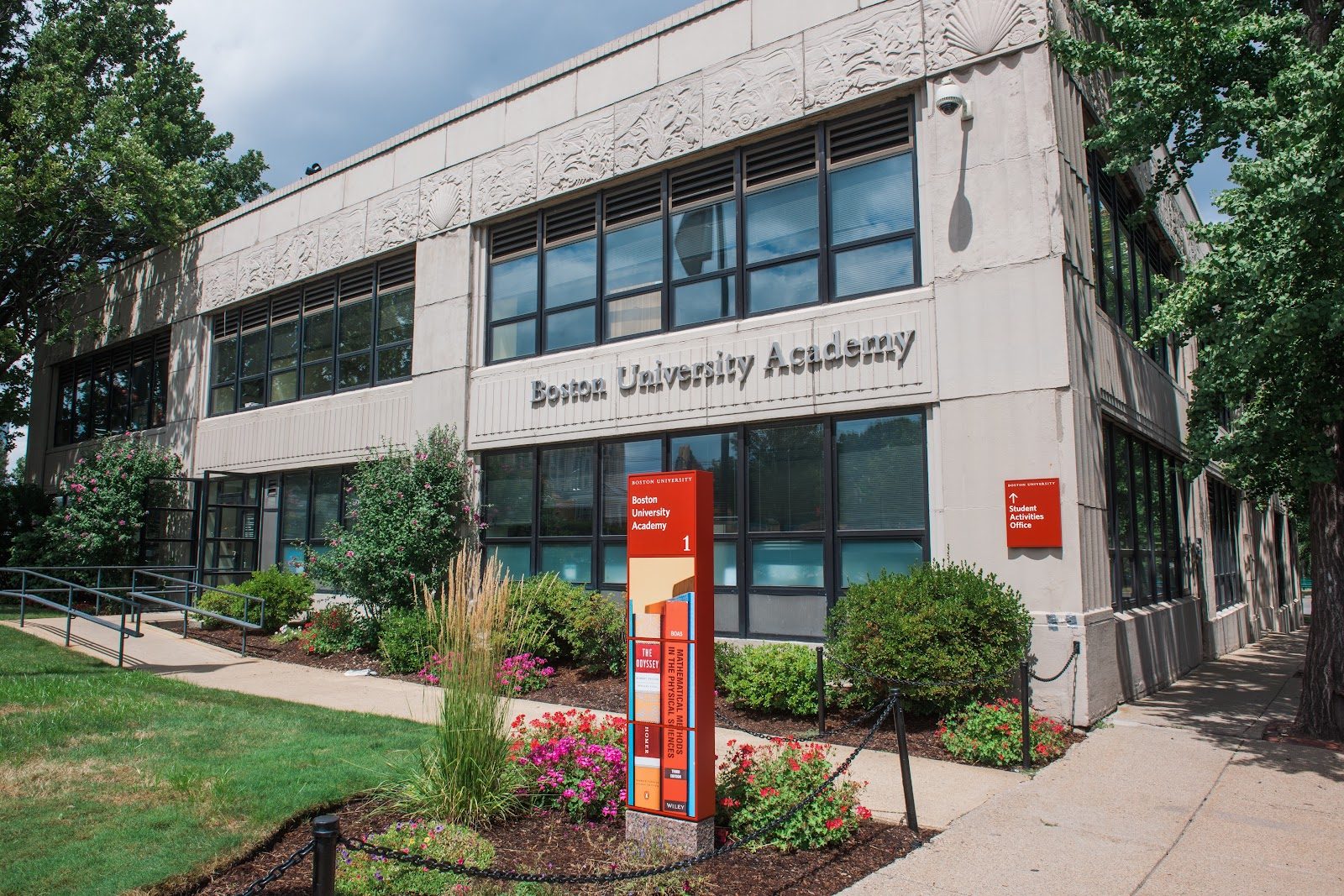
Boston University Academy
Boston · United States
Upperclassmen trade study halls for Boston University lecture halls, banking college credit before graduation.

The Browning School
New York City · United States
Manhattan's only K-12 all-boys day school, expanding onto East 64th Street after nearly 140 years on the Upper East Side.
Same country and curriculum — closest matches within ±10 points either way