
New York
The Browning School
medium confidence· 4/6 cats · 3.38 avg sourcesManhattan's only K-12 all-boys day school, expanding onto East 64th Street after nearly 140 years on the Upper East Side.

Type
Day
Ages
5–18
Curriculum
American
Qualifications
AP
Ratio
1:6
The Verdict
Editor's commitment
Right for
Families set on Manhattan’s only K-12 all-boys day school, with a 1:6 ratio and a new Grade 9-12 site on East 64th Street.
Wrong for
Anyone wanting co-education, boarding or a cheaper New York proposition: Browning is non-religious, day-only, and averages $71,670 a year.
Watch out for
Founded in 1888 and NAIS-accredited, Browning sells intimacy and polish; the school does not publish aggregate academic results here.
Ranking breakdown
The Browning School · #614 of 1591
Composite score 69.0. 8 weighted criteria.
By criterion
Academic Outcomes
Weight 20%
#585
of 1529 scored
University Placement
Weight 16%
#516
of 1529 scored
Prestige & Heritage
Weight 12%
#623
of 1529 scored
Alumni Network
Weight 12%
#531
of 1529 scored
Facilities
Weight 12%
#818
of 1529 scored
Transparency & Communications
Weight 8%
#688
of 1529 scored
Peer & Industry Review
Weight 10%
#637
of 1529 scored
Admissions Selectivity & Demand
Weight 8%
#438
of 1529 scored
Score history
The Browning School · 2026
Movement across 2024–2026. Peer average overlaid.
Overall — 2024–2026
69.0/ 100
▲ +31.0 vs 2025
year on year
Peer & Industry Review
How The Browning School is regarded in the sector
65
Respected · low confidence
The Browning School is a well-known all-boys K-12 independent school on Manhattan's Upper East Side, regularly included in New York private school guides and directories such as Niche and Private School Review, and referenced in NYC admissions press (e.g., New York Times, New York Magazine private school coverage) as a respected, historic institution with a strong local reputation and notable alumni. However, it lacks the broader national/international specialist-press profile (Tatler, Good Schools Guide international lists, etc.) that would place it in the top tier alongside globally benchmarked peer schools.
Evidence sources
- Cyrus Vance — U.S. Secretary of State, politics
- John Lindsay — Mayor of New York City, politics
- George Plimpton — writer/journalist, media
Editors' overview
The Browning School occupies a narrow but distinctive slice of the New York market: it is Manhattan’s only K–12 all-boys day school, and that continuity matters. Boys enter at age 5 and can stay through 18 in one institution, under one academic culture, on the Upper East Side. The school has now extended that footprint with a dedicated Grade 9–12 site on East 64th Street, adding 30,000 sq ft of teaching space, six STEAM labs or studios, and 10,000 sq ft of athletic facilities. That expansion sharpens Browning’s proposition. This is not a loose collection of divisions sharing a badge; it is a deliberate, through-school model for families who want a single-school education for boys all the way to college entry.
What sets Browning apart is the combination of scale and intensity. A 1:6 student-teacher ratio is rare in any city school and gives Browning real room for close academic oversight and direct teacher knowledge of individual boys. The school states plainly that relationships sit at the centre of its approach, and in a boys’ school that claim carries weight only when the structure supports it; here, the ratio does. The curriculum is American, the language of instruction is English, and the school holds NAIS accreditation. The pitch is fiercely focused: a research-based programme, small classes, explicit attention to boys’ development, and a college-preparatory frame from the start. Families who dislike single-sex education will dismiss Browning immediately. Families who want a co-educational social environment as part of the school day should do the same.
The price places it firmly in New York’s premium independent-school bracket: an average annual day fee of $71,670 across the full K–12 ladder. That buys a small, high-control setting with strong adult visibility and a serious academic tone, not a sprawling campus or a broad-brush “big school” experience. Browning’s notable alumni footprint is also substantial, with 32 catalogued in Wikidata across politics, business, writing and the arts, which reinforces the school’s long-established place in Manhattan’s professional class. What the school does not publish here is hard outcome data such as aggregate exam results or university placement breakdowns, so parents looking for quantified academic results will need to ask directly.
The boy who thrives at Browning is bright, verbal, responsive to close teacher attention and comfortable in a school that is structured, traditional in discipline, and openly ambitious. It will suit families who want intellectual seriousness without a boarding-school remove, and who value a compact urban school where boys are known well. It will not suit a child who wants anonymity, a loose culture, or the daily social mix of a co-ed campus. On a shortlist, Browning earns its place for one reason above all: it offers a rare Manhattan combination of K–12 continuity, all-boys focus, and 1:6 adult attention in a city where scale and fragmentation are far more common.
Academic Performance
Browning does not publish aggregate external exam results, average test scores, or a university destinations table in the public domain. That leaves parents without the clean benchmarking data that many premium independents now provide. In a market where academically ambitious schools trade heavily on measurable outcomes, that opacity is a real weakness. The school’s college-preparatory framing, its small-scale teaching model and its emphasis on intellectual challenge all point towards serious expectations, but public proof is thin. For a school charging an average of $71,670 a year, families are entitled to ask for hard numbers: AP participation and scores if offered, SAT or ACT ranges if tracked, and a recent spread of college matriculations.
Relative to peers, Browning sits in a high-expectation New York independent-school bracket where parents can choose between schools that publish outcomes and schools that rely on reputation. Browning falls into the second camp. That does not make the academics weak; it makes them harder to verify. The school’s membership of the New York Interschool adds one useful signal: it operates among academically serious Manhattan independents and competes for the same families. Still, without disclosed results, Browning cannot claim the same data-backed authority as peers that put examination performance and university lists on the record. Any family treating academic performance as the decisive factor needs a direct admissions conversation, not just trust in the brand.
Facilities
Browning’s facilities are strong by Manhattan townhouse-school standards and narrow by the standards of suburban campuses. The decisive move is the dedicated Upper School site on East 64th Street, which gives older boys a clearer sense of separation and seriousness than a single compressed building can manage. The school now has 30,000 sq ft of teaching space for those years, including six STEAM labs and studios, plus a new gymnasium-auditorium and extra student common space. That matters. Many city independents talk about fit-for-age provision; Browning has actually carved it out. The result is a more adult, purpose-built environment for teenagers, with specialist rooms that push the school beyond the cramped, corridor-bound feel that dogs many urban private schools.
Against peers, this is a smart urban upgrade, not a full-spectrum facilities arms race. Families will not find the vast playing fields, theatre complexes or standalone arts centres that larger day schools outside Manhattan use to impress visitors. Browning trades breadth for usable, focused space tied closely to academic life. For a compact boys’ school, that is the right trade. The new athletics provision strengthens a part of school life that can otherwise feel secondary in tight city settings, and the STEAM rooms add practical substance to the academic pitch. Parents comparing Browning with bigger co-ed rivals need to judge the estate for what it is: *efficient, serious and constrained by geography*, but better resolved than many direct competitors.
The Browning School occupies a narrow but distinctive slice of the New York market: it is Manhattan’s only K–12 all-boys day school, and that continuity matters
Prestige
Browning carries real Manhattan prestige, but it is a specific kind of prestige: old-line, urban, and intensely local rather than globally branded. Its standing rests on scarcity and social recognition. There is only one all-boys through-school of its kind in Manhattan, and that exclusivity matters in a crowded independent-school market. The school’s place in the New York Interschool strengthens that status; this is the circuit of established academic independents, not a peripheral player trying to borrow credibility. The alumni record adds weight too, with 32 notable figures catalogued in Wikidata across politics, finance, media and the arts. That breadth signals durable access to New York’s professional class and a network with genuine social capital.
The prestige rating does stop short of the very top echelon because Browning trades more on reputation, continuity and constituency than on published academic outcomes or a loud national profile. It has cachet, but also a narrow identity: all-boys, compact, traditional, and geared to families who value close supervision over institutional sprawl. For the right family, that reads as highly deliberate rather than limiting. For others, it reads as insular. The fee level — an average of $71,670 a year — places Browning firmly in elite company, and the school’s long-established Upper East Side base keeps it visible among New York’s legacy independents. Prestige here is serious and inherited, not glossy.
Boys enter at age 5 and can stay through 18 in one institution, under one academic culture, on the Upper East Side
Communications
Browning communicates with parents in a high-touch, tightly managed way, and the school’s own priorities are visible in what it chooses to foreground. The public-facing structure is clear: admissions pages are easy to navigate, tuition and assistance are signposted, calendars and forms have dedicated space, and there are distinct portals for families and students. More telling is the school’s emphasis on partnership. Parent quotations are prominent, and they focus less on salesmanship than on access to teachers, pastoral reassurance and support for families as boys move through different stages of development. In a school with a 1:6 staffing ratio, that promise carries more weight than it would at a larger institution. The message is consistent: staff know the boys, and parents are kept close to the process.
The effectiveness is strong, with one reservation. Browning communicates culture and day-to-day philosophy well: relationships, wellness, study habits, civil discourse and age-specific support all come through with unusual clarity. The weakness sits in hard performance reporting. The school tells families how it thinks, how it teaches and how it supports; it does not tell them enough, in public, about measured academic outcomes. For some parents, especially in this fee bracket — an average of $71,670 a year — that is a material omission. So the verdict is straightforward: Browning is excellent at relational communication and less convincing on accountability data. If you value contact, tone and adult visibility, it does this well. If you want published numbers, it leaves work for the parent.
Uniqueness
Browning’s clearest point of difference is structural, not cosmetic. It gives boys a full school life in one institution from the first year of school to university entry, in a market where families more often patch together separate junior and senior pathways. Add the all-boys model and the result is a highly controlled educational environment with very few mixed signals about expectations, conduct and pace. The school also leans hard into the question many boys’ schools dodge: how boys learn, organise themselves and manage challenge. Its Browning Learning System puts study skills and executive functioning into the core of school life from the middle years onward, while KinderFirst accelerates the earliest academic route for selected pupils. That makes Browning more engineered than organic; parents either value that design or reject it.
What this brings to students is coherence. Boys do not need to decode a new institutional culture at each phase, and staff can spot patterns in temperament, effort and confidence over a long stretch of schooling. In a setting with a 1:6 student-teacher ratio, that continuity has real force. The dedicated senior site sharpens that further by giving older pupils room to grow into a distinct sixth-form identity without leaving the school behind. Browning also foregrounds civil discourse and social impact more explicitly than many traditional boys’ schools, which matters in a sector that can drift into stale masculinity and rote competitiveness. The upside is a tight, deliberate, high-attention education. The downside is just as clear: boys who want a looser culture or the daily social complexity of co-education will find Browning too enclosed.
What sets Browning apart is the combination of scale and intensity
Student Profile
The boy who fits Browning is academically able, responsive to structure and comfortable being known well by adults. This is a school for families who want close supervision, clear expectations and a deliberately shaped path from childhood to university entry. Boys who thrive here tend to be verbal, conscientious and willing to engage in discussion, not just perform for marks. The school’s emphasis on executive functioning, study habits and civil discourse suits pupils who benefit from explicit guidance in how to organise themselves, argue a point and handle challenge without drifting. In a setting with a 1:6 staffing ratio, quiet disengagement is hard to hide. That is a strength for boys who need attention and accountability; it is a poor fit for those who resent adult oversight.
Socially, Browning suits boys who are at ease in an all-male environment and whose families actively want that choice. The culture reads as traditional but not archaic: serious about conduct, strong on pastoral visibility, and alert to the question of what modern boyhood demands. Boys who want a looser, more anonymous adolescence, or who draw energy from the daily mix of a co-educational campus, will find the atmosphere too contained. The school also fits parents who want partnership and regular access to teachers, and who accept the cost of a premium, high-attention model. At an average of $71,670 a year, Browning asks families to buy into a very specific proposition, not a generic private-school experience.
A 1:6 student-teacher ratio is rare in any city school and gives Browning real room for close academic oversight and direct teacher knowledge of individual boys
Co-curricular strengths
Arts & sport, on a separate axis
Overall 6.88/10
Scored 0-10 from the school's own published evidence. This axis is editorial-only — it does not feed the main WTS ranking.
Sports
7.8/10
Sports are evidenced only by a bare extracurricular listing of Soccer and Basketball, with no facilities, teams structure, staff, fixtures or results described.
Drama
7.8/10
Drama is evidenced only by the bare extracurricular listing of Theater, with no productions, theatre facility, department or specialist staff mentioned.
Dance
3.5/10
Music
7.5/10
Music is explicitly supported by named extracurricular ensembles—Jazz Ensemble and String Ensemble—showing more than a bare mention.
Visual Arts
7.8/10
Editor first-pass · editor-reviewable · 7/28/2026
Notable alumni · Wikidata
32notable alumni
13 historic (born pre-1930) · 4 modern (born post-1970)wikidata:2026-07-28 How we source this
Strengths
- +Founded in 1888; long-established Upper East Side institution.
- +Boys-only education from ages 5–18 suits some families.
- +American curriculum in English eases US university preparation.
- +NAIS membership offers recognised independent-school affiliation.
Considerations
- −Boys-only model excludes families wanting co-education.
- −Day school only; no boarding for overseas families.
- −Single American curriculum may limit cross-border transferability.
Availability
Primary entry gate & tests
ISEE/SSAT + Interview (Boys/ISAAGNY)
Parent reviews
Have you sent your child here?
Voice reviews carry the strongest trust badge — we transcribe them for you to tidy up before they go live. Prefer to type? A written review is fine too.
Add your voice
In 60 seconds, tell other parents: what's the best thing about The Browning School, and what surprised you when your child joined?
We ask for a Google sign-in so every review has a real face behind it — no anonymous drive-by attacks on schools, and no faked positive reviews. Your email is never shown publicly.
Send this profile to a friend
International parents rely on word-of-mouth. Share this review with someone weighing the same decision.
Schools with places
Similar schools to The Browning School with places available now.
Friends Seminary
New York City · United States
- 2026-27
- WAITPOOLLate/held pending openings
- 2027-28
- OPENS SOONExpected Sept '26
Saint Ann's School
Brooklyn · United States
- 2026-27
- WAITPOOLLate / attrition-dependent
- 2027-28
- OPENS SOONOpens 8 Sept '26
Ethical Culture Fieldston School
New York City · United States
- 2026-27
- WAITPOOLLimited late availability
- 2027-28
- OPENS SOONOpens post-Labor Day '26
Riverdale Country School
New York City · United States
- 2026-27
- WAITPOOLLate application possible
- 2027-28
- OPENS SOONOpens 8 Sept '26 (Noon ET)
Availability first, then country, area, curriculum, price, co-curricular
Consider also
Also worth looking at alongside The Browning School.
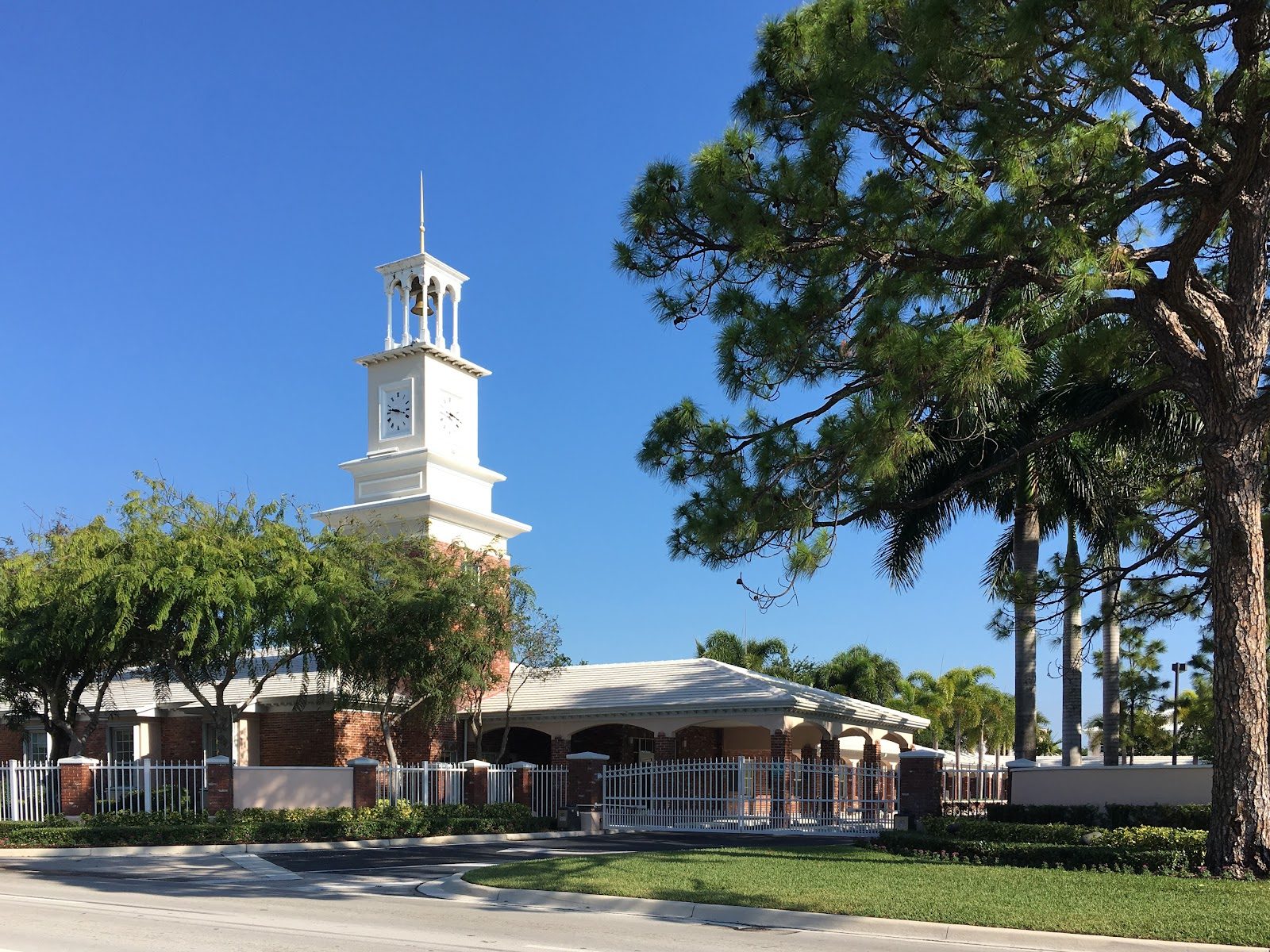
Pine Crest School
Fort Lauderdale · United States
Born as a 1930s tutoring practice for winter visitors, this Fort Lauderdale day school now tops the nation's Challenge Index rankings.
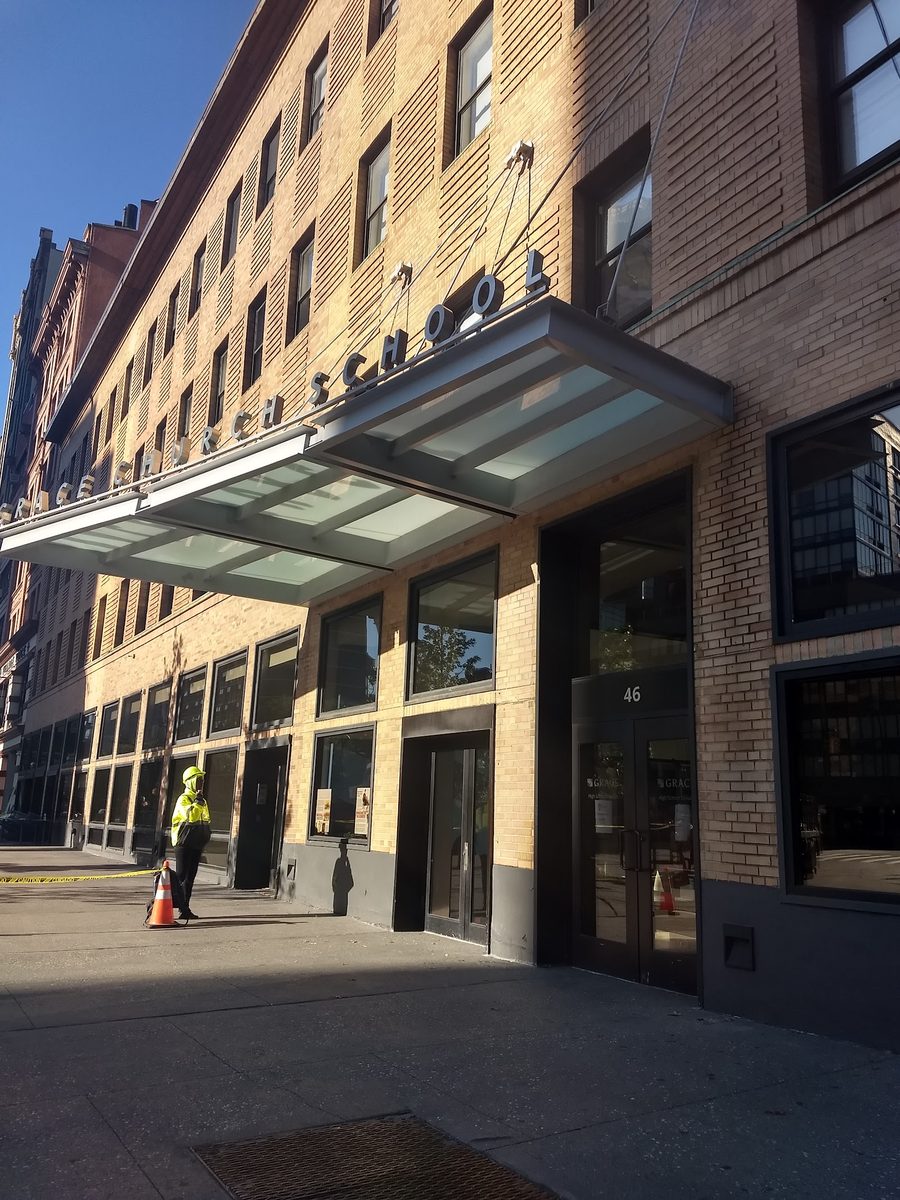
Grace Church School
New York City · United States
Born in 1894 as a choir school for Grace Church, this Greenwich Village Episcopal day school still fills the parish choir stalls.
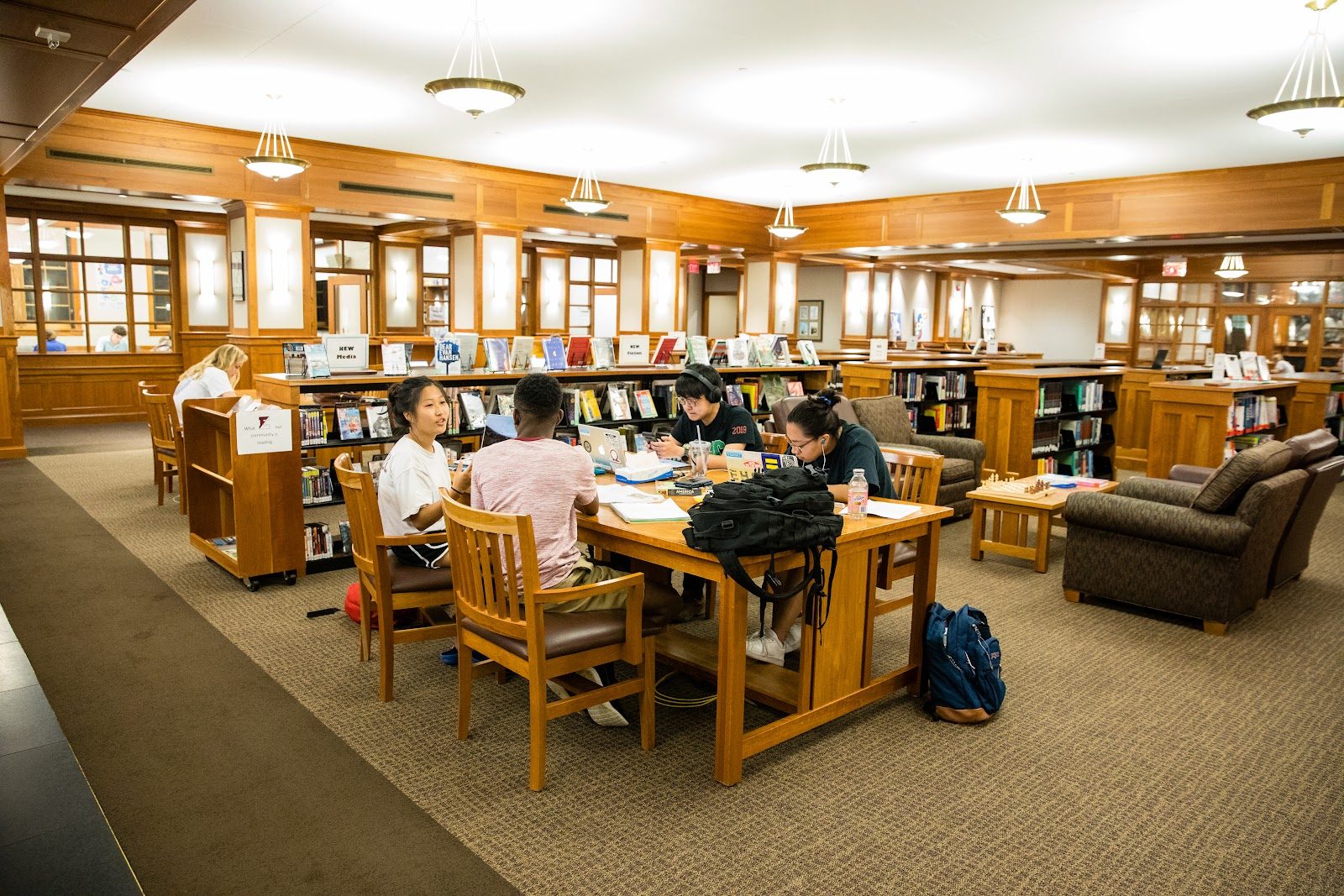
Episcopal High School
Alexandria · United States
A 130-acre hilltop campus 10 minutes from the Capitol, running America's only fully residential school of its caliber in a major metro area.

Ransom Everglades School
Miami · United States
On Biscayne Bay since 1903, where sailing and marine science turn the water itself into a classroom
Same country and curriculum — closest matches within ±10 points either way