
New York
A century-old Bronx country day school split between a Hudson River campus and a Van Cortlandt Park hilltop, built on the motto Mind, Character, Community.
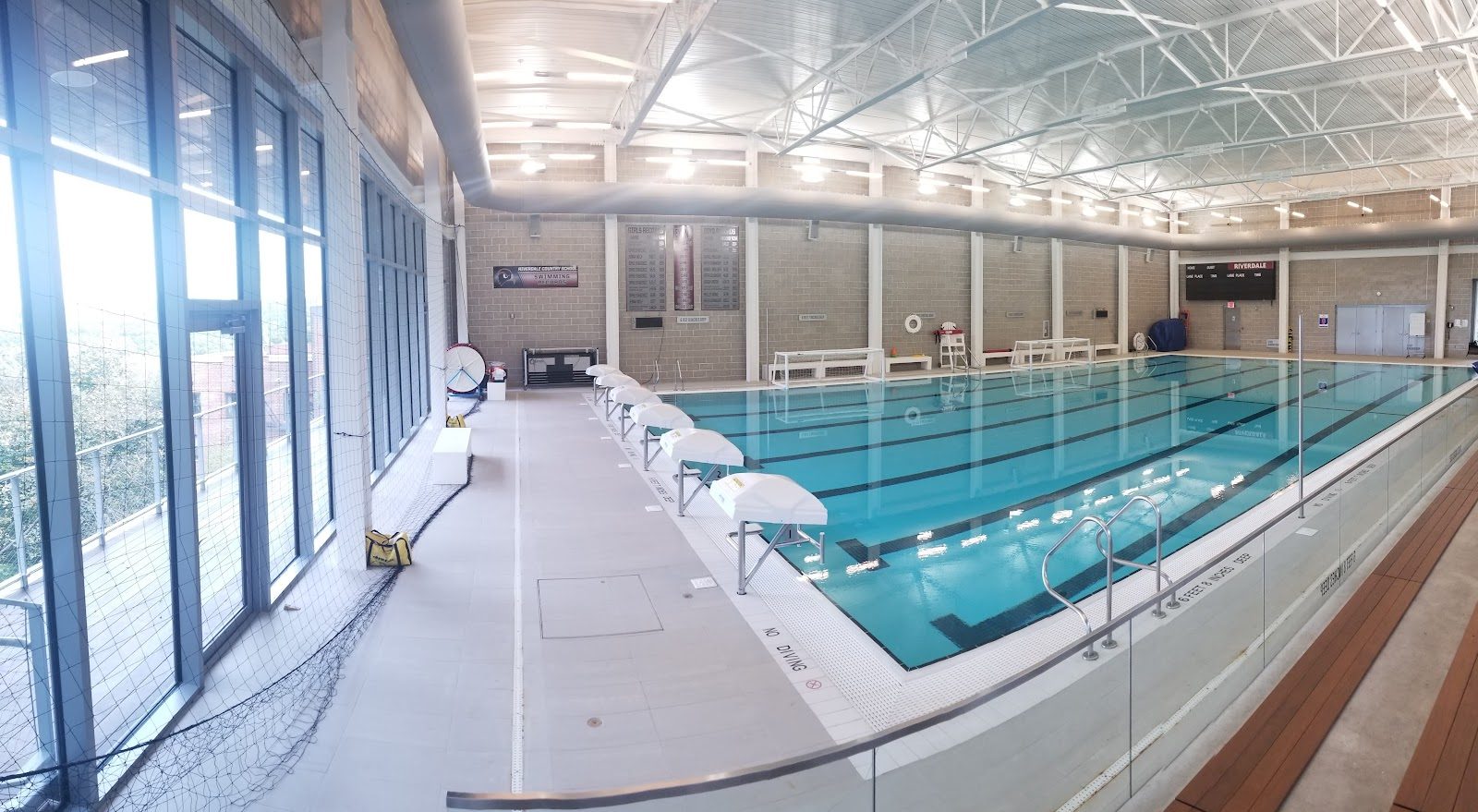
Photo © Pedro Diaz via Google Maps
Type
Day
Ages
3–18
Curriculum
American
Qualifications
AP
Ratio
—
The Verdict
Editor's commitment
Right for
Families who want a 1907-founded, non-religious American day school for ages 3–18, with 1,140 pupils across two Bronx campuses.
Wrong for
Anyone seeking boarding, a single compact campus, or low fees: Riverdale is day-only, spans 27.5 acres, and averages $59,412.
Watch out for
NEASC and NAIS accreditation reassure, but prestige does not shrink the bill: the average annual fee across the ladder is $59,412.
Ranking breakdown
Riverdale Country School · #150 of 1591
Composite score 75.7. 8 weighted criteria.
By criterion
Academic Outcomes
Weight 20%
#261
of 1529 scored
University Placement
Weight 16%
#219
of 1529 scored
Prestige & Heritage
Weight 12%
#212
of 1571 scored
Alumni Network
Weight 12%
#142
of 1530 scored
Facilities
Weight 12%
#254
of 1533 scored
Transparency & Communications
Weight 8%
#254
of 1532 scored
Peer & Industry Review
Weight 10%
#250
of 1548 scored
Admissions Selectivity & Demand
Weight 8%
#266
of 1529 scored
Score history
Riverdale Country School · 2026
Movement across 2024–2026. Peer average overlaid.
Overall — 2024–2026
75.7/ 100
▲ +14.7 vs 2025
year on year
Peer & Industry Review
How Riverdale Country School is regarded in the sector
78
Strong · medium confidence
Riverdale Country School is consistently regarded as one of NYC's elite private K-12 schools, frequently mentioned alongside Horace Mann, Trinity, and Dalton in Manhattan private school comparisons covered by outlets like the New York Times, Niche.com's top private school rankings, and NYC private school admissions guides. Its notable alumni include high-profile figures in media and finance, and it maintains strong college matriculation to Ivy League and top-tier universities, reinforcing peer-level reputation among competitive NYC independent schools, though it has a somewhat lower international/expat profile compared to more globally recognized boarding schools.
Evidence sources
Editors' overview
Riverdale trades on something few New York schools can match: land. It runs across two Bronx campuses totalling more than 27.5 acres, with one by the Hudson and another on a Van Cortlandt Park hilltop, and that physical scale matters. In a city market crowded with vertical schools and constrained sites, Riverdale offers room, separation by division and a stronger sense of school life than many Manhattan competitors. This is a co-educational, non-religious American day school for ages 3 to 18, founded in 1907, now serving 1,140 students. The average annual day fee across the full age range is $59,412, which places it firmly in New York’s expensive, high-status independent tier.
What is special here is not novelty but combination: a century-old institution, a full pre-kindergarten to twelfth-grade ladder, substantial acreage, and a clear college-preparatory identity. Riverdale became fully coeducational in 1972, which matters because the school still carries some of the old East Coast independent-school seriousness associated with its origins, but without the boys’-school framework. The motto, Mind, Character, Community, signals the pitch, and the school’s public identity rests on that blend of academics, conduct and civic expectation. Accreditations from NEASC and NAIS reinforce that this is a fully established school with the governance and institutional weight families expect at this level.
Riverdale belongs on a shortlist for parents who want an academically strong American independent school without sacrificing space, breadth of age range or access to New York City. Its alumni footprint is genuinely deep: at least 75 notable alumni are catalogued in Wikidata, spanning politics, finance, scholarship, writing, film, music and the arts, with verified award-winners in drama and music. That does not prove day-to-day teaching quality on its own, but it does confirm long institutional reach and a network with substance. The school also carries conspicuous external prestige: Wikipedia cites a Niche 2026 placing of 2nd among private K–12 schools in the United States. Rankings are volatile and parents should treat them with caution, but that result places Riverdale in the top-flight conversation.
The student who thrives here wants stretch, structure and a broad peer group, not a niche specialist environment. Riverdale suits children who are comfortable in a large, socially visible school and families who value conventional independent-school signals: academic preparation, institutional polish, recognised accreditation and a campus experience rare in the city. It is less compelling for parents seeking a small, intimate school or a progressive outlier. Riverdale’s appeal lies in serious scale, old-school prestige and a setting that gives students more physical and social room than most New York day schools can offer.
Academic Performance
Riverdale’s academic reputation is strong, but its published exam transparency is weak. The school does not disclose aggregate SAT, ACT, AP or IB results in the public domain, and that matters in a market where many top independent schools use selective data release to signal strength. Parents therefore have to infer performance from proxy indicators: a longstanding college-preparatory identity, sustained external prestige, and a peer set that sits at the sharp end of American independent education. The cited Niche placing of 2nd nationally among private K–12 schools is not an exam result and rankings are an imperfect instrument, but schools do not reach that level without serious academic traction.
Relative to peers, Riverdale fits the top bracket of New York’s academically ambitious day schools, but without the hard-result disclosure that would let families compare it cleanly with exam-forward competitors. That does not weaken the school’s standing; it limits precision. In practice, Riverdale reads as a high-expectation school whose outcomes are strong enough to sustain elite demand and national recognition, yet whose public case rests more on institutional reputation than on published score tables. For families who want raw testing data, that is a real omission. For families who trust prestige, selectivity and long-term destination patterns, Riverdale remains a formidable academic contender.
Facilities
Facilities are a core Riverdale advantage. In a city where many independent schools operate in stacked buildings with limited outdoor room, Riverdale has a decisive physical edge: two campuses spread across more than 27.5 acres. That gives it something Manhattan peers struggle to offer — genuine separation by age group, open space, and a school day that does not feel compressed into corridors and lifts. The Hudson-facing site and the hilltop campus by the park are not cosmetic assets; they shape daily life. Children get more air, more movement and a stronger sense of place. Against New York competitors, that landholding alone puts Riverdale in a rare bracket.
The trade-off is that Riverdale’s public presentation of facilities is less granular than some peer schools’ glossy inventories. It is easy to establish the scale and the two-campus structure; it is harder to pin down a detailed public account of specialist labs, theatres, studios or athletic provision. That does not diminish the underlying estate, but it leaves parents with less precision than they get from schools that publish exhaustive campus detail. Even so, the headline verdict is clear: for breadth of site and the capacity to deliver a proper campus experience inside New York, Riverdale is exceptionally well placed. Families choosing between Riverdale and more space-starved urban rivals will understand the appeal immediately.
Rankings are volatile and parents should treat them with caution, but that result places Riverdale in the top-flight conversation
Prestige
Riverdale carries top-tier prestige in the American independent-school market. That rating rests on three things: durable name recognition, a national reputation that extends well beyond its own neighbourhood, and an alumni base with real public weight. A school does not accumulate 75 notable alumni across politics, finance, scholarship, writing, film, music and the arts by accident. That breadth matters. It signals influence across generations and sectors, not a narrow run of success in one field. The cited national placing also matters. Rankings have limits, but a school sitting at 2nd in a widely read private K–12 table occupies rare air. Parents will encounter Riverdale in the same conversations as the country’s most sought-after day schools, and that social currency has practical force in admissions circles, parent networks and university-facing perception.
The prestige is not only external. Riverdale also has the internal markers families pay for: scale, continuity from the early years through the end of school, and the institutional confidence of a long-established college-preparatory operation. This is not a niche progressive experiment or a local school with a strong postcode reputation. It is a status school, and it knows it. That brings advantages — network, ambition, expectation, visibility — but also a certain social intensity. Children who flourish in highly credentialled, socially conspicuous environments will read that as opportunity. Families looking for low-ego warmth or deliberate understatement will not.
The Hudson-facing site and the hilltop campus by the park are not cosmetic assets; they shape daily life
Communications
Riverdale communicates like an established independent school that expects parents to keep pace. The public-facing side is polished and orderly: core facts are easy to find, the school’s values are stated plainly, and the overall message is consistent across admissions and institutional pages. That matters because schools at this price point need to project competence before a family has even made contact. Riverdale does that. What it does not do, at least in public, is offer much texture about the mechanics of parent communication once a child is enrolled. There is no detailed public explanation of reporting cycles, parent portals, response expectations or how the school handles routine academic updates. For a school serving 1,140 pupils, that absence leaves a gap.
The likely reality is a communications culture that is structured, top-down and aligned with the school’s high-expectation character. Large, prestigious day schools rarely run on informality; parents are expected to read carefully, follow process and stay organised. Riverdale’s scale makes that more necessary, not less. The upside is institutional clarity: families who value order, consistency and a professional tone will find that reassuring. The downside is that parents seeking a chatty, highly personalised flow of information may find the model cooler and less accommodating. The verdict, then: strong on formal presentation, less transparent on day-to-day parent interface, and best suited to families comfortable navigating a demanding, administratively mature school.
Uniqueness
Riverdale’s distinctiveness lies in combination, not gimmick. It is one of the few New York schools that can pair a full childhood-to-university-prep journey with the social scale of a major independent and the reach of a national name. With 1,140 pupils, Riverdale is big enough to sustain a broad peer group, multiple social worlds and a level of institutional momentum that smaller schools cannot match. That matters for students. It gives them room to change course without changing school: the sporty child can become the theatre lead, the bookish pupil can find a larger intellectual tribe, and the quiet student has more than one route into belonging. The result is a serious all-through school rather than a charming small enclave.
Its other point of difference is cultural. Riverdale carries the codes of an old American independent school — high-status, high-expectation, socially visible — but in co-educational form and at a scale that produces real breadth. Students do not get a niche or sheltered experience; they get a dense one. They learn to operate in a community with ambition, competition and strong signals of achievement all around them. For the right child, that is formative in the best sense: it builds confidence, range and fluency in demanding environments. For the wrong child, it can feel pressurised and exposed. That is the honest trade-off, and it is also what makes Riverdale distinctive.
Riverdale carries top-tier prestige in the American independent-school market
Student Profile
Riverdale suits students who want a big stage, not a protected corner. In a school of 1,140, children meet a wide social field early and have to learn how to hold their ground within it. The best fit is confident without being brittle: intellectually switched on, comfortable with scrutiny, and able to manage peers who are ambitious, articulate and well resourced. This is a strong match for children who like being stretched by the people around them and who gain energy from a high-pressure, socially visible environment. It is a weaker match for pupils who need heavy hand-holding, a deliberately soft culture or the shelter of a very small community.
The school also suits families who want their child to move through a long school career inside one institution without sacrificing range of friendship group or seriousness of expectation. Because the age span runs from the early years to the end of school, Riverdale works well for students whose strengths may shift over time and who benefit from access to multiple identities rather than being fixed early into one lane. A child can be academic, artistic, sporty, political or some combination of the lot, and that breadth matters. The catch is that scale and prestige bring status-conscious peer dynamics. Students who thrive here are self-possessed, resilient and ready for a culture that rewards initiative more than comfort.
The likely reality is a communications culture that is structured, top-down and aligned with the school’s high-expectation character
Co-curricular strengths
Arts & sport, on a separate axis
Overall 8.9/10
Scored 0-10 from the school's own published evidence. This axis is editorial-only — it does not feed the main WTS ranking.
Sports
9.5/10
Maximizes its spacious 27.5-acre green campus in the Bronx to field highly competitive Ivy Preparatory League athletic programs.
Drama
9/10
Creative engine staging highly complex, experimental, and student-written theatrical works inside premium venues.
Dance
8/10
Dedicated dance studios offering strong composition paths that serve as a headline asset for school arts showcases.
Music
9/10
Rich instrumental and choral setups supporting advanced jazz combos and traveling vocal ensembles.
Visual Arts
9/10
Unrivaled studio integration, offering cutting-edge digital media labs, 3D printing arrays, and fine art workshops.
Editor-verified · 8/6/2026
Notable alumni · Wikidata
75notable alumni
13 historic (born pre-1930) · 23 modern (born post-1970)wikidata:2026-07-28 How we source this
WTS 300 badge
2025/26 editionRiverdale Country School is one of the World's Top 300 Schools for 2025/26. Claim your listing to add it to your site →
Strengths
- +Founded in 1907, Riverdale Country School is one of the oldest country day schools in the United States, beginning with 12 students and four teachers.
- +The school operates across two campuses totalling 27.5 acres in the Bronx, making it the largest independent school campus footprint in New York City.
- +Total educational costs for 2025-2026 for students in PreK-12th grade are all-inclusive, with tuition covering lunch, books, and all required activities, simplifying budgeting for relocating families.
- +Riverdale has a $12 million financial aid budget, allowing socio-economic diversity throughout the school, with a stated aim to meet full demonstrated need.
- +Graduates regularly matriculate at top US and international universities, and between 2019 and 2025 students accepted offers at all eight Ivy League schools.
Considerations
- −The campus sits in the Riverdale section of the Bronx, a longer commute for expat families who assume a Manhattan-based address or amenities.
- −Total educational costs for 2025-2026 reach $69,300, placing it among the higher-cost independent day schools in the New York area.
- −Non-entry grades (Grades 1-5, 7-8, 10-12) admit only when current students leave the school, and strong retention rates make such openings uncommon, which limits options for families relocating mid-cycle.
- −Riverdale does not publish an official acceptance rate; independent analyst estimates place it near 15-25% at primary entry points, so the process is competitive but less transparent than some peer schools.
Availability
Primary entry gate & tests
ISEE/SSAT + Interview
Gallery
Photo © Andrew Abate via Google Maps
Photo © Pedro Diaz via Google Maps
Photo © Pedro Diaz via Google Maps
Photo © Pedro Diaz via Google Maps
Photo © Pedro Diaz via Google Maps
Photo © Pedro Diaz via Google Maps
Photo © Pedro Diaz via Google Maps
Photo © Pedro Diaz via Google Maps
Parent reviews
Have you sent your child here?
Voice reviews carry the strongest trust badge — we transcribe them for you to tidy up before they go live. Prefer to type? A written review is fine too.
Add your voice
In 60 seconds, tell other parents: what's the best thing about Riverdale Country School, and what surprised you when your child joined?
We ask for a Google sign-in so every review has a real face behind it — no anonymous drive-by attacks on schools, and no faked positive reviews. Your email is never shown publicly.
Send this profile to a friend
International parents rely on word-of-mouth. Share this review with someone weighing the same decision.
Schools with places
Similar schools to Riverdale Country School with places available now.
The Dalton School
New York City · United States
- 2026-27
- CLOSEDConfirmed full
- 2027-28
- OPENS SOONOpens post-Labor Day (Gr 6 Closed)
Nightingale-Bamford School
New York City · United States
- 2026-27
- CLOSEDRegular cycle
- 2027-28
- PLACES OPENCloses 1 Dec '26
Convent of the Sacred Heart (NYC)
New York City · United States
- 2026-27
- CLOSEDConfirmed full
- 2027-28
- OPENS SOONOpens post-Labor Day '26
The Spence School
New York City · United States
- 2026-27
- CLOSEDRegular cycle
- 2027-28
- OPENS SOONOpens mid-Aug '26
Availability first, then country, area, curriculum, price, co-curricular
Consider also
Also worth looking at alongside Riverdale Country School.
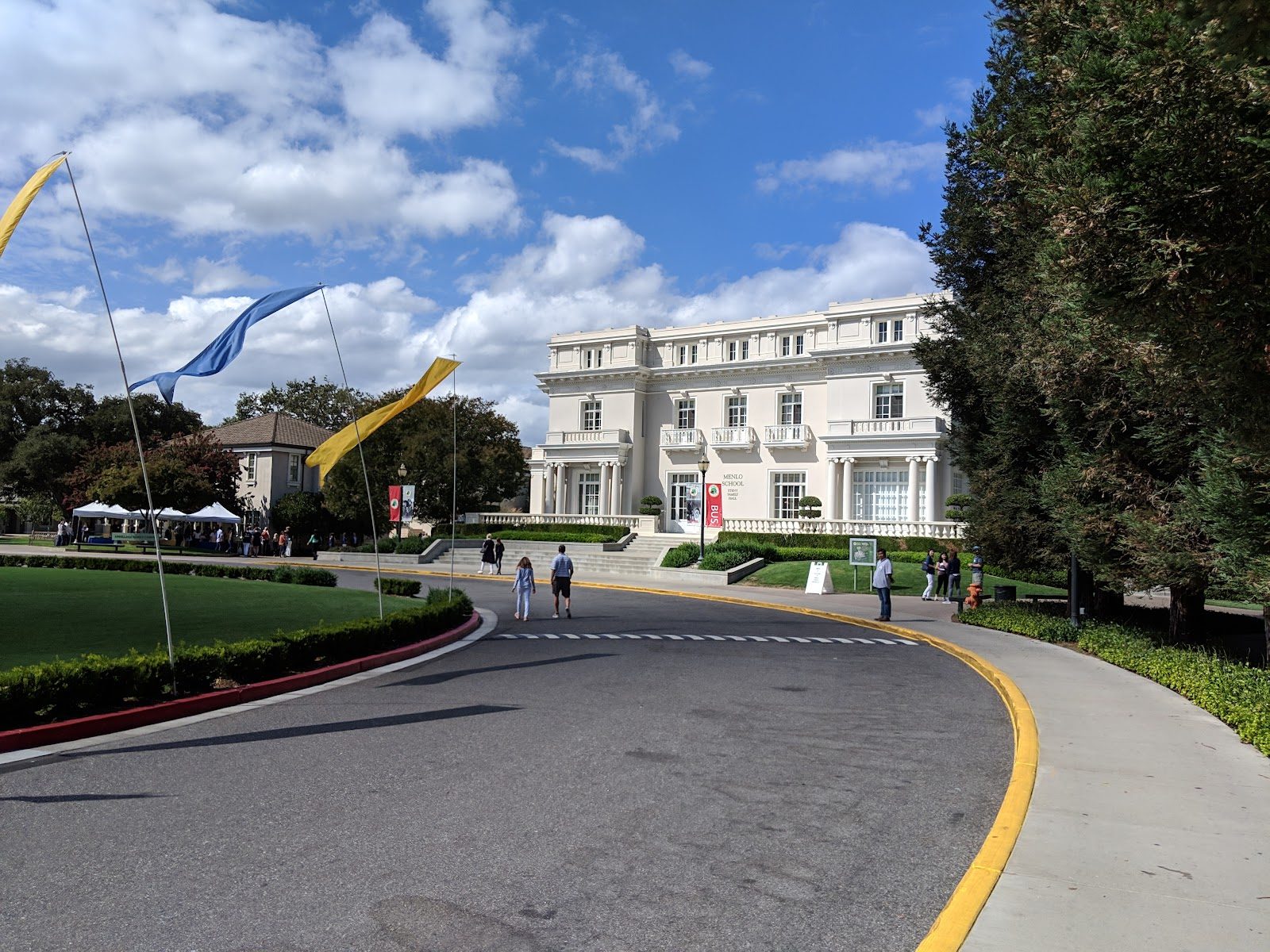
Menlo School
Atherton · United States
A 1915 Atherton campus near Stanford where an 8:1 ratio lets students chart their own humanities, STEM, or arts path.
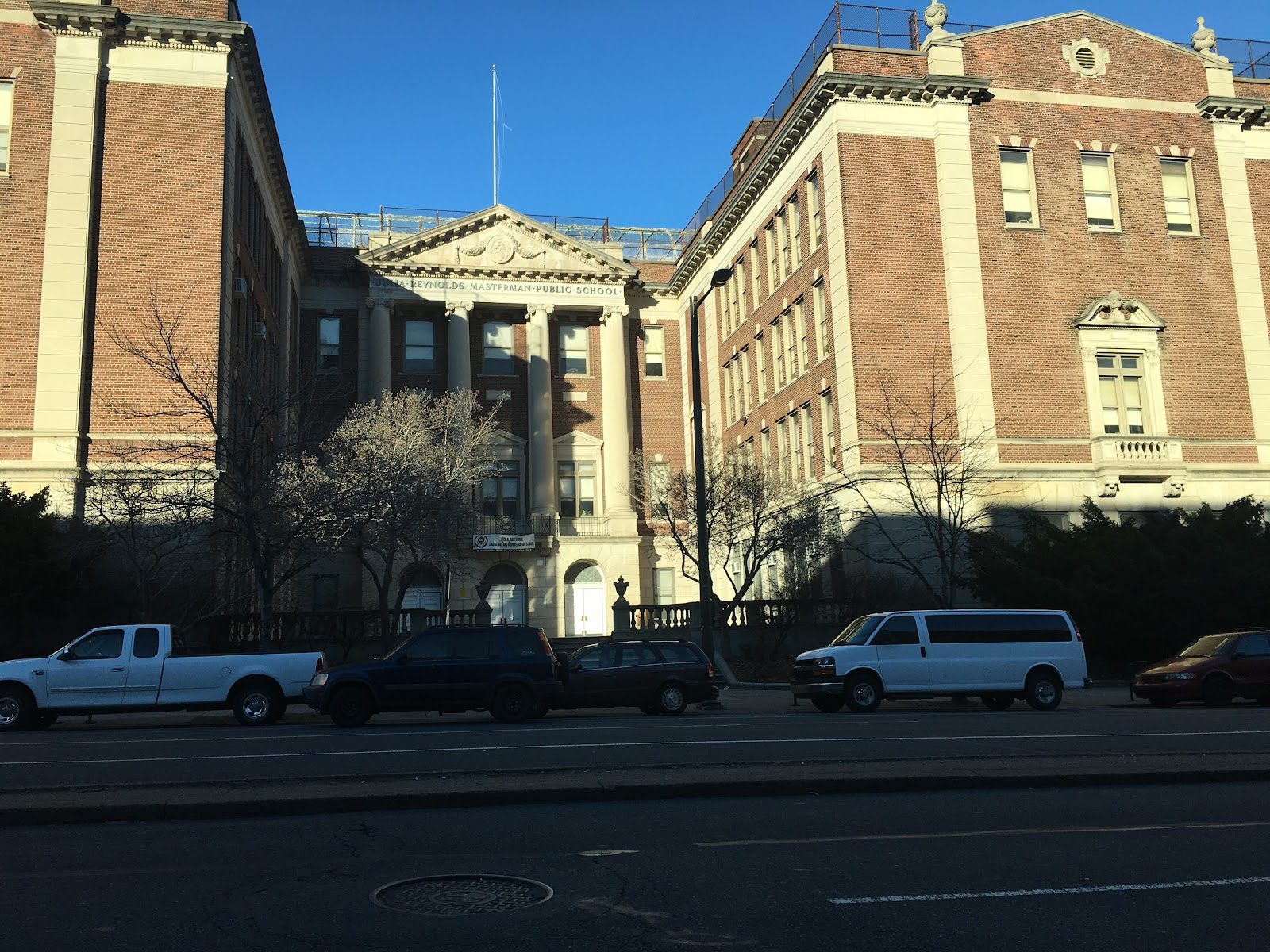
Julia R. Masterman Secondary School
Philadelphia · United States
A North Philadelphia public magnet where fifth-graders enter at a 3 percent acceptance rate and the payoff is a top-10 U.S. News ranking.
Brunswick School
Greenwich · United States
An all-boys Greenwich day school since 1902, building character alongside a coeducational bond with Greenwich Academy.
The College Preparatory School
Oakland · United States
Seminar-style rigor in Rockridge, where an 8:1 ratio once helped earn a Wall Street Journal top-six national ranking
Same country and curriculum — closest matches within ±10 points either way