
New York
A century-old progressive blueprint of House, Assignment, and Lab still shapes learning on the Upper East Side.
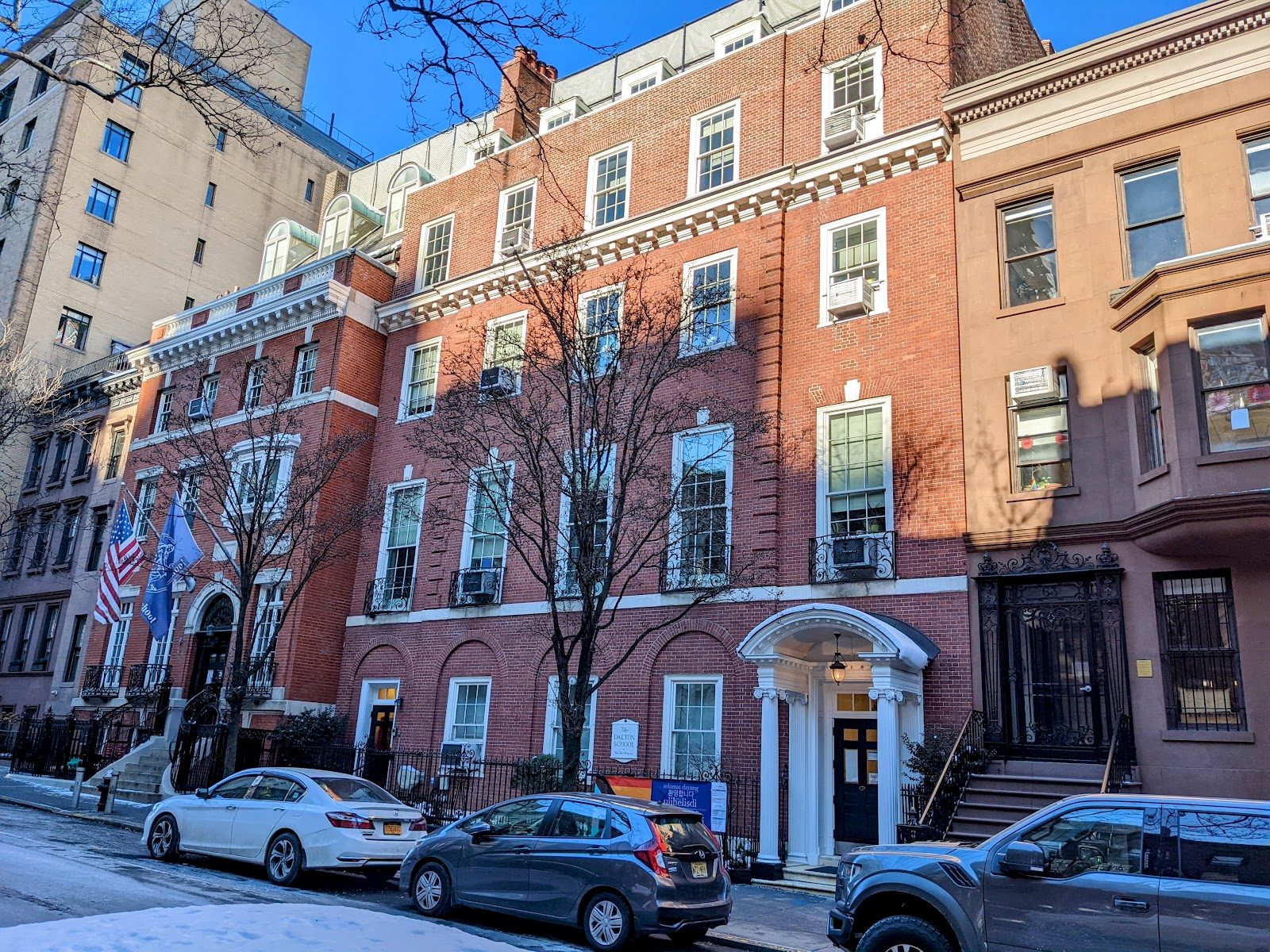
Photo © David Herszenson via Google Maps
Type
Day
Ages
5–18
Curriculum
American
Qualifications
AP
Ratio
—
The Verdict
Editor's commitment
Right for
Children who thrive on autonomy: Dalton’s 1919 Plan still runs on House, Assignment and Lab, with American University and Amherst destinations.
Wrong for
Families wanting external discipline, religion or a conventional classroom; Dalton is non-religious, American-curriculum and unapologetically student-directed from age 5 to 18.
Watch out for
At an average $70,800 a year, this Upper East Side day school charges at the top of the market; NEASC and NAIS do not change that.
Ranking breakdown
The Dalton School · #170 of 1591
Composite score 76.1. 8 weighted criteria.
By criterion
Academic Outcomes
Weight 20%
#208
of 1529 scored
University Placement
Weight 16%
#187
of 1529 scored
Prestige & Heritage
Weight 12%
#223
of 1529 scored
Alumni Network
Weight 12%
#144
of 1529 scored
Facilities
Weight 12%
#352
of 1529 scored
Transparency & Communications
Weight 8%
#204
of 1529 scored
Peer & Industry Review
Weight 10%
#306
of 1529 scored
Admissions Selectivity & Demand
Weight 8%
#229
of 1529 scored
Score history
The Dalton School · 2026
Movement across 2024–2026. Peer average overlaid.
Overall — 2024–2026
76.1/ 100
▲ +20.9 vs 2025
year on year
Peer & Industry Review
How The Dalton School is regarded in the sector
90
Top-tier · high confidence
The Dalton School is consistently cited among NYC's most elite private schools alongside Trinity, Spence, and Brearley, with extensive coverage in the New York Times, New York Magazine, and specialist admissions press regarding its progressive Dalton Plan pedagogy and competitive admissions. Its notable alumni network (including figures like Anderson Cooper, Claire Danes, and numerous prominent business/media/political figures) receives frequent independent press attention, and it is a perennial benchmark in 'best private schools in New York City' rankings from outlets like Niche and local media.
Evidence sources
Editors' overview
The Dalton School still runs on the machinery Helen Parkhurst built in 1919, and that matters. House, Assignment and Lab are not decorative bits of school history here; they remain the organising logic of teaching and learning. In a New York market crowded with ambitious day schools that promise individuality, Dalton has an actual educational framework for it. That gives the school a distinct identity: progressive in structure, demanding in practice, and intellectually serious without being conventionally rigid. For parents weighing Manhattan independents, that difference is the reason Dalton belongs on the shortlist.
This is a non-religious American day school for ages 5 to 18, taught in English, with NEASC and NAIS accreditation and an average annual fee of $70,800. That places it squarely in the ultra-premium tier of US private day education. The school’s public framing leans hard into student agency, curiosity and collaboration, but the more telling detail is the survival of the Dalton Plan itself across a century. Plenty of schools borrow the language of child-centred education; fewer keep a coherent model alive for this long. The strategic emphasis on the Helen Parkhurst Institute and the Unafraid Project also points to a school that wants its pedagogy examined, extended and argued over, not just admired. That gives Dalton more substance than schools that trade on neighbourhood prestige and polished outcomes alone.
The parental calculation, then, is not only about name recognition. It is about fit. Dalton suits students who want room to think, plan and work with a measure of independence from an early stage, and who thrive when adults expect them to manage freedom rather than wait for constant direction. It will appeal to children with strong interests across disciplines, because the school’s own architecture spans arts, engineering and technology, athletics, service learning, internships and global initiatives. It also carries a serious cultural footprint: 45 notable alumni catalogued in Wikidata, including 17 actors and directors and 16 writers and journalists, plus 6 scientists and scholars. Recent university destinations listed in the context include Amherst College (5 students), American University and Babson College. That does not give a full placements picture, and Dalton does not publish a broader destinations spread here, but it does confirm continued access to selective US higher education.
The caveat is straightforward. Dalton is not for families seeking a tightly managed, traditional, rule-bound school day in which every step is prescribed. Its central promise is freedom yoked to responsibility, and that cuts both ways. The right student will find it liberating, demanding and deeply engaging; the wrong student will find it exposed. Parents who want a school with a clear educational thesis, a long institutional memory and the confidence to keep backing its own method will find Dalton compelling. Parents who want conventional structure first, philosophy second, should look elsewhere.
Academic Performance
Dalton does not publish aggregate AP, IB, SAT or ACT results here, and no school-wide external exam profile is in the public domain through the sources reviewed. That matters. For a school with Dalton’s reputation, the absence of hard attainment data leaves parents without the clean benchmarking they get from more transparent competitors. This is not a problem if you already trust the school’s internal academic culture; it is a problem if you want verifiable outcomes rather than institutional confidence. The available evidence points instead to a college-preparatory model built around rigorous coursework, college counselling, research, writing, robotics, arts and internships, with academic performance inferred through selective university destinations rather than demonstrated through published score distributions.
Relative to peers, that places Dalton in an unusually opaque position academically: plainly elite in standing, but not numerically open. Some New York independents also guard exam data closely, so Dalton is not alone; the difference is that parents must judge the school more by its educational architecture and downstream placements than by any disclosed set of top-line results. The recent destinations listed here are narrow rather than comprehensive, but 5 students to Amherst College is a serious signal, and the school’s longstanding access to selective US universities is not in doubt. The conclusion is straightforward: Dalton sits in the top tier of academic ambition, but without the published exam metrics that would let parents rank it with forensic precision.
Facilities
Dalton’s facilities track its educational method rather than a country-estate fantasy of school life. The split Upper East Side footprint separates the youngest pupils from the older years, with one building for grades K–3 and another for grades 4–12, plus a dedicated Physical Education Center on East 87th Street. That matters in Manhattan, where many rivals make do with vertical buildings and compromised specialist space. Dalton also gives unusual prominence to subject-specific provision in the public shape of the school: a robotics lab, engineering and technology, three libraries, a museum programme, archives, visual arts, dance, theatre arts and music all sit as core parts of school life rather than decorative extras. For a city day school, that is a serious spread of specialist infrastructure.
The catch is equally clear. This is not a leafier outer-borough campus with playing fields outside the classroom door, and parents comparing Dalton with suburban American independents will find the physical offer more urban, more compact and more dependent on how efficiently the school uses multiple buildings. Against direct Manhattan peers, though, the provision is stronger than the norm because it aligns tightly with the Dalton Plan’s independent-work model: libraries matter, lab space matters, and dedicated arts and technology rooms matter. The standout facility story here is not spectacle. It is intellectual utility across 3 core sites, with enough specialist space to support a genuinely broad day-school experience.
The Dalton School still runs on the machinery Helen Parkhurst built in 1919, and that matters
Prestige
Dalton’s prestige rests on two things that few schools can combine: a distinct educational doctrine that people in education recognise on sight, and a social footprint that extends well beyond the school gates. The Dalton Plan is not a branding exercise. House, Assignment and Lab give the school a rare intellectual signature, and that matters in a crowded field of elite American independents that can blur into one another. This is a school whose method has entered the wider language of schooling, and whose current investment in the Helen Parkhurst Institute signals that it still treats pedagogy as something to develop, test and defend. That gives Dalton a level of standing that goes past local desirability. It carries institutional prestige, not just parent-demand prestige.
The cultural cachet is equally strong. Dalton has at least 45 notable alumni catalogued in Wikidata, with striking depth in writing, journalism, film and theatre, plus verified star-tier awards among former pupils. That profile tells you something important: Dalton does not just feed selective universities; it also feeds public culture. In New York, that combination of educational theory, Upper East Side location and long alumni visibility makes the school socially conspicuous in a way few day schools are. The limits are clear. Dalton does not publish the kind of hard academic outcome data that would let prestige rest on transparent attainment alone. Its status therefore comes less from disclosed metrics than from reputation, history, influence and who has passed through it. That still amounts to top-drawer prestige.
Relative to peers, that places Dalton in an unusually opaque position academically: plainly elite in standing, but not numerically open
Communications
Dalton communicates like a school that expects parents to navigate a complex institution with confidence. The website is dense but well organised, with clear pathways into admissions, financial aid, leadership, the strategic plan, academic divisions, libraries, arts, athletics, service learning, internships and after-school provision. That breadth matters: parents can see the school’s priorities in the architecture of the site itself. Contact points are easy to find, and the school gives named leadership visibility, a direct phone number, email contacts and active social channels across 4 major platforms. There is also a podcast and a conspicuous effort to surface student voices, which gives communication more texture than the standard independent-school parade of polished announcements. The result is deliberate, multi-channel and stronger on substance than gloss.
The limitation is one of disclosure, not access. Dalton tells parents a great deal about ethos, programmes and institutional priorities, but less than it should about measurable academic outcomes. That weakens the communications picture because clear writing and frequent touchpoints do not compensate for missing hard data. The strategic messaging is also highly curated: civil discourse, belonging, global citizenship and pedagogical method all receive heavy emphasis. Families who value educational philosophy will find that coherent and serious. Families who want plain performance dashboards, fuller destination lists and more systematic reporting will find the school’s communication selective. In short: confident, polished and accessible, but not fully transparent where demanding parents most want numbers.
Uniqueness
What marks Dalton out is that its signature method still runs the school in concrete ways. House, Assignment and Lab are not heritage labels dusted off for admissions season; they shape how children organise work, use time and relate to teachers. That gives Dalton a form of structured independence that many ambitious schools promise and few deliver. Pupils are not carried through a tightly choreographed day. They are expected to plan, pursue and revise their work with real ownership, while still operating inside a demanding academic culture. For the right child, that is genuinely liberating. It builds habits of self-management, intellectual confidence and ease with adult-style dialogue earlier than in more conventional schools.
The other distinctive feature is breadth with purpose. Dalton does not bolt arts, engineering, service, student publications, research and athletics onto the side of the school as enrichment garnish; the programme treats them as integral parts of education. The public life of the school makes that plain, from robotics and science research to dance theatre, chess, internships and the student paper. That range matters because the Dalton model needs material to work on: independent learners need disciplines, tools and forums in which to test themselves. The result is a school that can produce unusually self-directed students with wide cultural fluency, but it also asks a lot of them. Children who need constant prompting or heavy external structure will find the freedom exposing. Children with initiative, appetite and stamina will find it formative in the best sense.
It is intellectual utility across 3 core sites, with enough specialist space to support a genuinely broad day-school experience
Student Profile
Dalton suits children who are ready to work with autonomy early and who do not need adults to script every step. The best fit is a student with intellectual appetite, decent self-organisation and the confidence to ask questions, test ideas and recover from setbacks without drama. This is a strong home for pupils whose interests spill across disciplines rather than sitting neatly in one lane: the child who can move from science research to student journalism, from robotics to theatre, from service work to competitive sport, and treat all of it as serious work. It also fits families who value adult-level conversation with young people, genuine independence and a school culture that expects initiative rather than passive compliance.
The weaker fit is just as clear. Children who need heavy external structure, constant checking, or a highly conventional classroom rhythm will find Dalton exposed, demanding and, at times, unforgiving. Its social and academic culture carries real pressure because the school attracts able, articulate students and offers many public arenas in which they are expected to perform, contribute and collaborate. The Upper East Side independent-school milieu adds another layer of intensity. For the right pupil, that mix is electrifying: bright peers, wide opportunity, and permission to build an identity with substance. For the wrong one, it is tiring and thin-skinned. Dalton is for the child who wants room, responsibility and high-functioning company — not the child who wants to be carried.
The result is a school that can produce unusually self-directed students with wide cultural fluency, but it also asks a lot of them
Co-curricular strengths
Arts & sport, on a separate axis
Overall 8.9/10
Scored 0-10 from the school's own published evidence. This axis is editorial-only — it does not feed the main WTS ranking.
Sports
8.5/10
Competes fiercely across NYC private leagues, balancing urban space constraints with dedicated, high-intensity training structures.
Drama
9/10
Renowned creative engine staging highly complex, experimental, and student-written theatrical works inside premium venues.
Dance
9.2/10
Dedicated dance studios offering strong composition paths that serve as a headline asset for school arts showcases.
Music
8.8/10
Rich instrumental and choral setups supporting advanced jazz combos and traveling vocal ensembles.
Visual Arts
9/10
Unrivaled studio integration, offering cutting-edge digital media labs, 3D printing arrays, and fine art workshops.
Editor-verified · 8/6/2026
Outcomes & destinations
Where students go next
Top destinations
523 placements
- American University· 1
- Amherst College· 5
- Babson College· 1
- Barnard College· 2
- Bennington College· 1
- Berklee College of Music· 1
- Binghamton University· 2
- Boston College· 6
- Boston University· 6
- Bowdoin College· 9
- Brown University· 28
- Bucknell University· 2
- Carleton College· 3
- Carnegie Mellon University· 5
- Case Western Reserve University· 2
- Chapman University· 1
- Clark University· 1
- Colby College· 1
- Colgate University· 1
- Colorado College· 4
- Columbia University· 14
- Cornell University· 36
- Dartmouth College· 7
- Davidson College· 1
- Dickinson College· 1
- Drexel University· 1
- Duke University· 10
- Elon University· 1
- Emerson College· 1
- Emory University· 15
- Georgetown University· 10
- Georgia Institute of Technology· 1
- Grinnell College· 1
- Hamilton College· 5
- Harvard University· 37
- Harvey Mudd College· 1
- Haverford College· 4
- Howard University· 1
- Johns Hopkins University· 4
- Kenyon College· 4
- Loyola Marymount University· 2
- Massachusetts Institute of Technology· 2
- McGill University· 3
- Miami University, Oxford· 1
- Middlebury College· 5
- Muhlenberg College· 1
- New York University· 10
- Northeastern University· 5
- Northwestern University· 22
- Oberlin College· 4
- Parsons School of Design· 1
- Pitzer College· 1
- Pomona College· 3
- Pratt Institute· 2
- Princeton University· 16
- Purdue University· 1
- Rhode Island School of Design· 2
- Rice University· 1
- Rochester Institute of Technology· 2
- Savannah College of Art & Design· 1
- Scripps College· 2
- Skidmore College· 4
- Smith College· 1
- Spelman College· 1
- St. John's College· 1
- Stanford University· 9
- Swarthmore College· 4
- Syracuse University· 7
- The American University of Paris· 1
- The New School· 2
- The University of Texas at Austin· 1
- Trinity College· 1
- Trinity College Dublin· 1
- Tufts University· 12
- Tulane University· 6
- University of California, Berkeley· 1
- University of California, Davis· 1
- University of California, Los Angeles· 2
- University of Chicago· 26
- University of Colorado Boulder· 4
- University of Miami· 2
- University of Michigan· 10
- University of Notre Dame· 3
- University of Pennsylvania· 13
- University of Pittsburgh· 1
- University of Richmond· 1
- University of Southern California· 3
- University of St Andrews· 4
- University of Toronto· 1
- University of Vermont· 1
- University of Virginia· 1
- University of Wisconsin, Madison· 5
- Vanderbilt University· 3
- Vassar College· 2
- Virginia Tech· 1
- Wake Forest University· 4
- Washington University in St. Louis· 11
- Wesleyan University· 16
- Williams College· 10
- Yale University· 22
Reported by the school. Confirm with admissions.
Notable alumni · Wikidata
45notable alumni
3 historic (born pre-1930) · 16 modern (born post-1970)wikidata:2026-07-28 How we source this
WTS 300 badge
2025/26 editionThe Dalton School is one of the World's Top 300 Schools for 2025/26. Claim your listing to add it to your site →
Strengths
- +The Dalton School, originally called the Children's University School, was founded by Helen Parkhurst in 1919, and is guided by the Dalton Plan, preparing students to 'go forth unafraid' as a progressive school, giving it a genuinely century-old pedagogical identity rather than a marketing label.
- +Dalton operates with a 6:1 student-teacher ratio and an average class size of 16 students, allowing closer faculty attention than at many large urban day schools.
- +Over 20% of Dalton's student body attends with the support of more than $15 million in need-based financial aid, and the school commits to meeting 100% of demonstrated financial need.
- +Dalton counts Anderson Cooper and Chevy Chase as graduates, and its alumni list also includes actresses Claire Danes and Chevy Chase, evidence of a long-established New York network.
- +The school is located in four buildings within the Upper East Side of Manhattan, placing it within walking distance of the city's major museums and cultural institutions.
Considerations
- −For the 2026-27 school year, tuition is $70,800, and Dalton is among at least seven Manhattan schools where fees now exceed the $70,000 threshold, making it one of the costliest day schools in the country.
- −Grades of entry are Kindergarten and 9th grade, and independent admissions analyst estimates place Dalton's acceptance rate near 13-15% at the Kindergarten and Grade 9 entry points, so places outside these years are scarce.
- −The school underwent a bruising, well-publicized internal dispute in 2020-2021 over its anti-racism curriculum; Dalton School's Jim Best announced he was leaving after 16 years at the school, following months of controversy over the school's 'anti-racism' focus, and the school's Director of Diversity, Equity, and Inclusion left amid the same firestorm.
- −Dalton does not have boarding facilities, as it is a day school and cannot accommodate students who do not live with their families, so it is only workable for families able to commit to daily Manhattan commuting.
Availability
Primary entry gate & tests
ISEE/SSAT + Interview
Gallery
Photo © Blake Pearson via Google Maps
Photo © Blake Pearson via Google Maps
Parent reviews
Have you sent your child here?
Voice reviews carry the strongest trust badge — we transcribe them for you to tidy up before they go live. Prefer to type? A written review is fine too.
Add your voice
In 60 seconds, tell other parents: what's the best thing about The Dalton School, and what surprised you when your child joined?
We ask for a Google sign-in so every review has a real face behind it — no anonymous drive-by attacks on schools, and no faked positive reviews. Your email is never shown publicly.
Send this profile to a friend
International parents rely on word-of-mouth. Share this review with someone weighing the same decision.
Schools with places
Similar schools to The Dalton School with places available now.
Riverdale Country School
New York City · United States
- 2026-27
- WAITPOOLLate application possible
- 2027-28
- OPENS SOONOpens 8 Sept '26 (Noon ET)
Ethical Culture Fieldston School
New York City · United States
- 2026-27
- WAITPOOLLimited late availability
- 2027-28
- OPENS SOONOpens post-Labor Day '26
Saint Ann's School
Brooklyn · United States
- 2026-27
- WAITPOOLLate / attrition-dependent
- 2027-28
- OPENS SOONOpens 8 Sept '26
Friends Seminary
New York City · United States
- 2026-27
- WAITPOOLLate/held pending openings
- 2027-28
- OPENS SOONExpected Sept '26
Availability first, then country, area, curriculum, price, co-curricular
Consider also
Also worth looking at alongside The Dalton School.
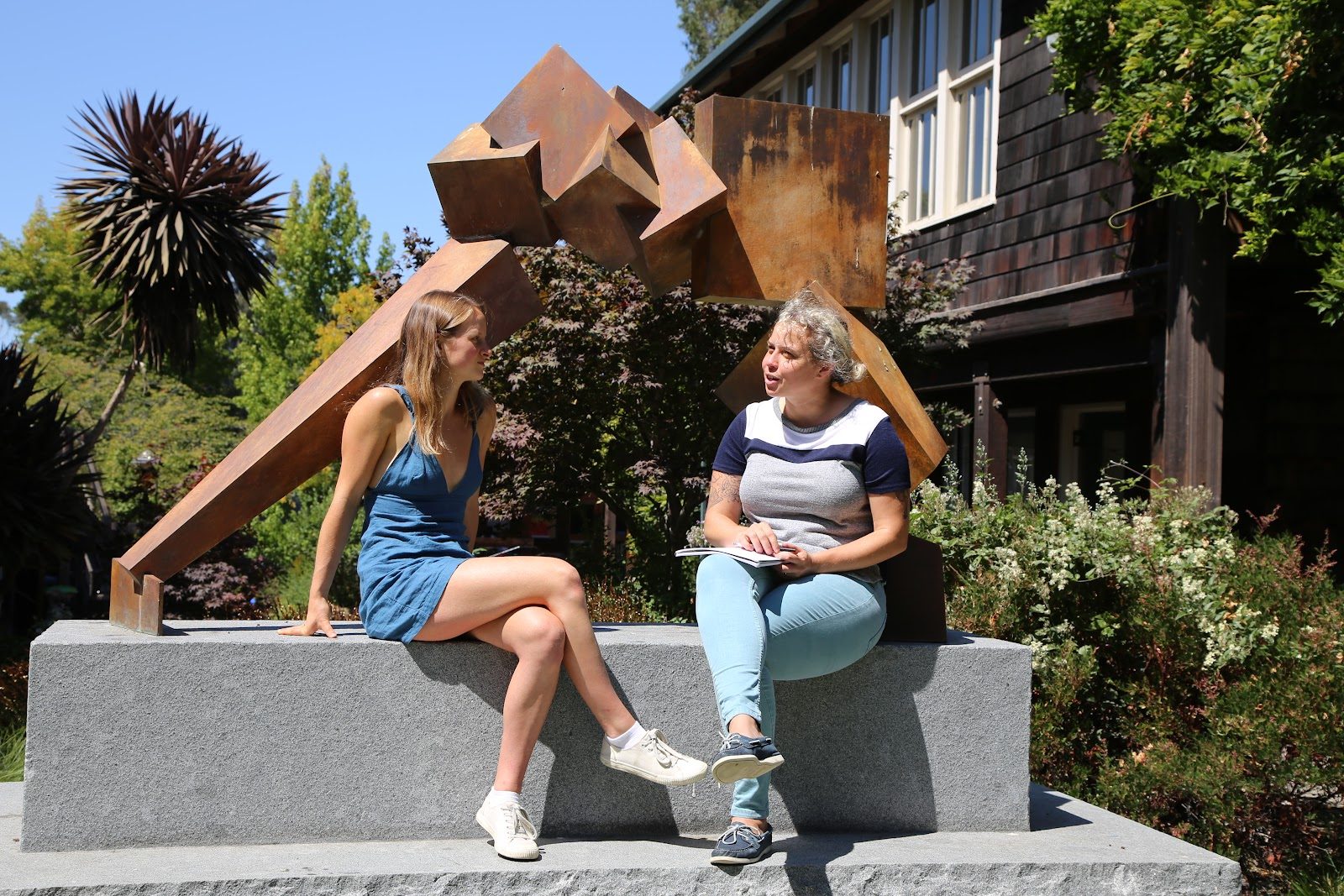
The College Preparatory School
Oakland · United States
Seminar-style rigor in Rockridge, where an 8:1 ratio once helped earn a Wall Street Journal top-six national ranking

The Spence School
New York City · United States
Since 1892 on Manhattan's Upper East Side, an all-girls institution built on research fellowships and a founder's progressive vision.
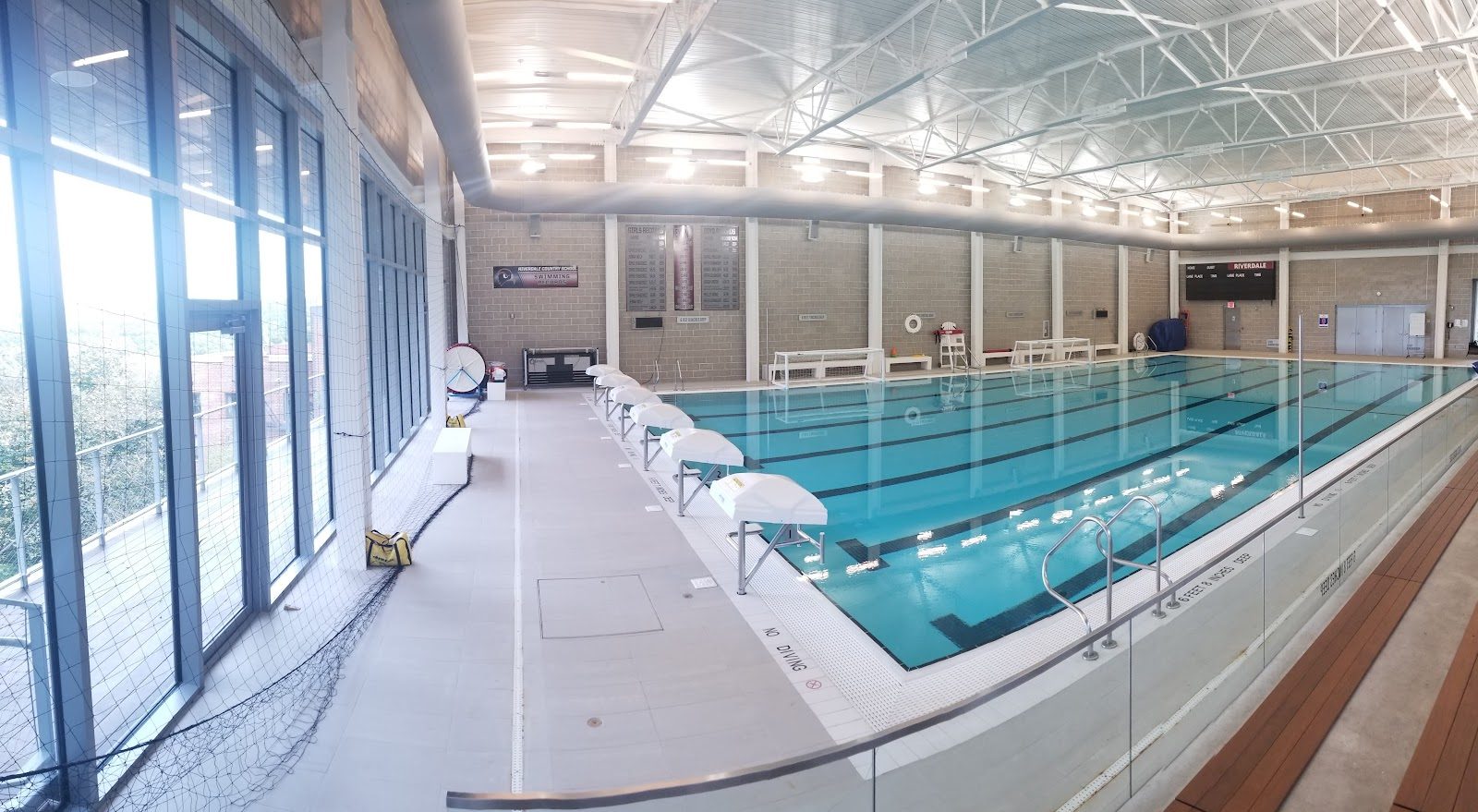
Riverdale Country School
New York City · United States
A century-old Bronx country day school split between a Hudson River campus and a Van Cortlandt Park hilltop, built on the motto Mind, Character, Community.
Menlo School
Atherton · United States
A 1915 Atherton campus near Stanford where an 8:1 ratio lets students chart their own humanities, STEM, or arts path.
Same country and curriculum — closest matches within ±10 points either way