
Greater London
Chartered by Elizabeth I in 1565, this Highgate grammar school now founds access academies alongside its Oxbridge-bound sixth form.
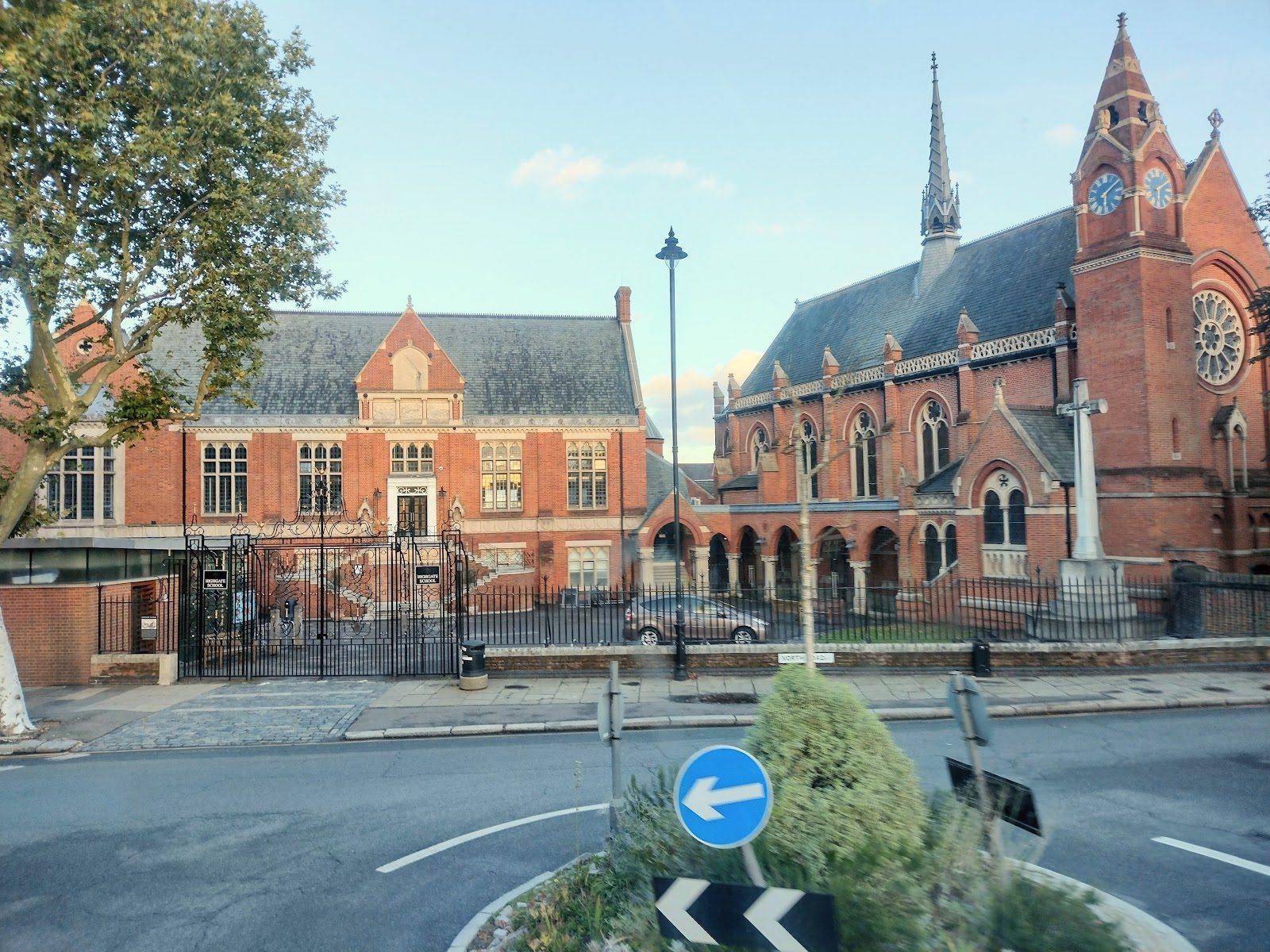
Photo © Lorna via Google Maps
Type
Day
Ages
11–18
Curriculum
British
Qualifications
A-Level
Ratio
10:1
The Verdict
Editor's commitment
Right for
Ambitious London families buying proven university outcomes: 26 Oxbridge offers, 91% to top-100 universities, and a disciplined 10:1 ratio.
Wrong for
Families wanting a smaller, less selective school culture; 175 leavers and a £33,000 average day fee buy a high-performance machine.
Watch out for
Highgate sells scholarship over exam worship, yet Oxford, Cambridge and UCL dominate destinations; children need resilience as much as brains.
Ranking breakdown
Highgate School · # of 1591
Composite score 78.6. 8 weighted criteria.
By criterion
Academic Outcomes
Weight 20%
#118
of 1529 scored
University Placement
Weight 16%
#104
of 1529 scored
Prestige & Heritage
Weight 12%
#88
of 1571 scored
Alumni Network
Weight 12%
#62
of 1530 scored
Facilities
Weight 12%
#271
of 1534 scored
Transparency & Communications
Weight 8%
#153
of 1532 scored
Peer & Industry Review
Weight 10%
#147
of 1548 scored
Admissions Selectivity & Demand
Weight 8%
#153
of 1529 scored
Score history
Highgate School · 2026
Movement across 2024–2026. Peer average overlaid.
Overall — 2024–2026
78.6/ 100
▲ +23.5 vs 2025
year on year
Peer & Industry Review
How Highgate School is regarded in the sector
88
Strong · high confidence
Highgate School occupies a firmly top-tier position within London's independent sector, ranking among only twelve schools in the exclusive "Eton Group," a grouping widely recognised for its "reputation for prestige and exclusivity." Peer-facing review coverage is emphatic on results: WhichSchoolAdvisor notes the school "continues to deliver exceptionally strong academic outcomes," with pupils achieving 94% grades 9-7 at GCSE in 2025, while the Good Schools Guide's independent verdict calls it "impressive, providing a stimulating academic education with outstanding teaching and results delivered in a holistic environment." Its status as a founding HMC member alongside its Eton Group membership cements a benchmark reputation rather than a merely local one, and reviewers note it is genuinely selective, "only accepting those it feels confident can benefit from and enjoy the education it provides." Coverage across specialist and mainstream press is consistently strong, reflecting a well-established reputation among sector peers and the expat parent community.
Evidence sources
Editors' overview
What separates Highgate from the crowded London day-school market is the combination of age, academic seriousness and civic intent. This is a school chartered in 1565 that still trades on scholarship, but it does not package itself as a narrow exam factory. The public line is explicit: intellectual independence matters more than raw score-chasing. That rings true when set against the structure of the school: a 10:1 student-teacher ratio, average classes of 18, and a sixth form built around a personalised A level programme rather than a conveyor belt model. Highgate also has the confidence of a school that knows exactly where it sits in the hierarchy. ISI and HMC membership place it firmly inside the established British independent mainstream, and the average annual day fee of £32,787 marks it as expensive, but not in the absolute top bracket of London day-school pricing.
The real point for parents is outcomes. In the Class of 2024, 175 leavers produced a striking university profile: 91% went to top-100 universities, 26 won Oxbridge places, 50 went to Russell Group institutions, and the most common destinations included Oxford, Cambridge and UCL. That is a hard-edged academic result by any serious measure. Highgate also carries unusual alumni depth: 302 notable alumni catalogued in Wikidata, including 63 scientists and scholars, 53 writers and journalists, 44 politicians and statespersons, plus a smaller but real cluster of award-level figures in drama and the visual arts. That breadth matters. It tells parents that the school’s tradition does not funnel every strong student into the same professional mould.
Why shortlist it? Because Highgate offers a rare combination of intellectual ambition, institutional heft and a wider moral frame. The school talks about charitable partnerships and community with more substance than most, and the editorial tagline points to a grammar-school inheritance now expressed through access academies alongside an Oxbridge-bound sixth form. That gives it a distinct identity in a sector full of polished sameness. The pupil who will want Highgate is bright, self-propelled and comfortable among other able students; the pupil who needs heavy hand-holding or a softer academic pace will find it demanding. This is a strong fit for children who enjoy ideas, read beyond the syllabus, and want a school with serious expectations but not a monastic culture. It is less compelling for families who want a small, intimate school or a place where academic competition sits politely in the background.
Academic Performance
Highgate’s exam performance sits in the top tier of London day schools. The school itself publicises 87% A*-A at A level, and that is not a middling independent-school figure dressed up as success; it is a hard result even in a ferociously competitive local market. The pattern matches the destination profile already noted above: this is a school that converts able intake into elite university access at scale. Highgate also states that academic development matters more than exam outcomes. That claim carries more weight here than it does at schools that say the same while posting softer numbers. At Highgate, the grades already place it among academically serious peers, so the line reads less as excuse and more as institutional confidence.
At GCSE, the school’s public pages flag results but do not publish a clear aggregate headline in the excerpts we have seen, which leaves the picture less complete than it should be for a school of this stature. Even so, the broader evidence points in one direction: Highgate belongs with the exam-strong London independents rather than the merely reputable middle of the pack. It does not read as a narrow marks mill, but no parent should mistake that for looseness. This is an intellectually exacting school with high-octane peer competition and outcomes to match. Families comparing it with the capital’s biggest academic names should treat it as a serious contender, not a sentimental heritage option.
Facilities
Highgate’s facilities read as those of a large, fully developed London independent rather than a cramped urban day school making excuses for its footprint. The public site points parents first to distinct Pre-Prep, Junior, Senior and Sixth Form divisions, and that matters operationally: specialist spaces can be age-specific instead of forced into all-purpose use. The strongest signal lies in the school’s own teaching language. It foregrounds science as exciting and varied, highlights ensemble and cast life, and builds regular fieldwork into subjects such as geography with trips as ambitious as Iceland. That combination points to properly functioning laboratories, serious music and drama provision, and the logistical capacity to support outdoor and off-site learning without treating it as an annual flourish. Among London peers, that places Highgate in the well-resourced upper tier, not the league of schools trading on one showpiece building.
What lifts the offer is breadth rather than architectural spectacle. Community days, environment programming and the Chrysalis and academy partnerships indicate facilities used beyond the timetable and beyond the school gate. Parents should read that as a sign of a busy, intensively used estate with rooms and specialist areas working hard across academic, pastoral and partnership activity. The limit is also clear. We have not seen a published roll-call of standout capital assets — no flagship theatre, arena, design centre or Olympic-grade sports pitch set out in the school’s public pages. Some rivals market those assets aggressively. Highgate markets intellectual life first. That is reassuring for academic families, but for parents weighing pure bricks-and-mortar glamour, the facilities case is less theatrically sold than at some competitors.
Highgate’s exam performance sits in the top tier of London day schools
Prestige
Highgate carries real prestige in the British day-school market, but its standing rests on substance rather than social flash. The school has the old-name advantage, of course, yet that alone does not keep a place in the front rank. What does is the combination of selective academic culture, strong university traction, and an alumni network with unusual range. The verified alumni footprint is deep enough to matter: 302 notable former pupils catalogued in Wikidata, with strength not just in politics and public life but in scholarship, writing, the arts and business. That breadth gives Highgate more than heritage; it gives it institutional reach. A Highgate education carries weight because the name is recognised by universities, employers and London professional circles as shorthand for a pupil trained to think hard and perform under pressure.
The school’s prestige also has a civic dimension that lifts it above the standard affluent-independent template. Highgate was a founding partner of the London Academy of Excellence, is principal education sponsor of London Academy of Excellence Tottenham, and funds the Chrysalis Partnership across 26 state schools in six boroughs. That matters. It marks a school with serious public intent, not one content to polish its own enclave. Combined with its access bursaries and its established sixth-form pull, the result is a brand of prestige that feels earned rather than decorative. This is not the most socially theatrical name in London independent education. It is a high-status, high-trust one.
What separates Highgate from the crowded London day-school market is the combination of age, academic seriousness and civic intent
Communications
Highgate communicates like a school that expects parents to keep up. The public-facing site is clear, busy and segmented sensibly by phase, with direct routes to Senior School, Sixth Form, fees, bursaries, staff email, parent portal and news. That matters. Parents do not need to excavate basic operational information. The school also puts real institutional priorities in plain sight: scholarship, wellbeing, charitable partnerships, environmental work and access. News coverage is active rather than ceremonial, and the inclusion of concrete academic headlines and destination data gives communications more weight than the usual independent-school fog of smiling photographs and abstract “excellence”. The tone is self-assured, adult and information-led.
The limit is that Highgate’s communications still carry some of the density of a big, old London school. There is a lot on the page, and the school writes at length about ethos and educational philosophy. That suits families who want substance over gloss; it is less helpful for parents trying to find quick, comparable detail. We have not seen a clean public dashboard for whole-school GCSE performance, and that omission jars at a school with this level of academic ambition. Still, the basics are done well: prominent portal access, visible staff routes, current news and a bursary message that is explicit, including support of up to 100% of fees. The result is competent, confident communication, not slick salesmanship — which, for this audience, is the stronger choice.
Uniqueness
What makes Highgate distinct is not age alone, and not grades alone. Plenty of old London schools can claim one or the other. Highgate combines serious scholarship with a declared refusal to reduce school life to score production, then backs that with action outside its own gates. This is a school with a clear civic programme: it helped found the London Academy of Excellence, now sponsors London Academy of Excellence Tottenham, and funds the Chrysalis Partnership across 26 state schools in six boroughs. That gives pupils something more demanding than the standard independent-school version of “service”. Community engagement here sits inside the institution’s identity, not at the edge of it as a weekend add-on. For able children, that matters. They get a school that values intellectual horsepower, but also expects them to connect it to the world beyond a privileged campus.
Students also benefit from a culture that is ambitious without being one-dimensional. The school talks openly about scholarship and independence, and the sixth form is framed around a personalised A level programme rather than a standard conveyor belt. That creates room for pupils who want academic stretch without a mechanical exam-factory atmosphere. Add the reach of a former-pupil network running to 302 notable alumni across politics, science, writing, the arts and business, and the result is a school with unusual breadth of inheritance. Highgate does not funnel prestige into one social type or one career script. It produces students who are expected to think hard, contribute seriously and move comfortably between elite institutions and the public realm.
This is a school chartered in 1565 that still trades on scholarship, but it does not package itself as a narrow exam factory
Student Profile
The student who fits Highgate is bright, self-directed and comfortable in fast company. This is not the right school for a child who needs constant prompting, heavy emotional cushioning or a classroom geared to the middle of the pack. Highgate suits pupils who enjoy argument, read past the assignment, and do not panic when surrounded by other able children. The low staffing ratio and classes averaging 18 give teachers room to know their pupils properly, but that does not turn the culture into something soft. The school’s own language of scholarship, independence and deep learning points to a student body expected to think for itself and work with discipline. In the sixth form, the personalised A level structure will suit teenagers with clear interests and the maturity to shape them.
It will also suit families who want serious academic pressure without a joyless exam-factory atmosphere. Highgate makes room for pupils who want strong co-curricular life alongside study: teams, ensembles, casts, fieldwork, community days and partnership work are part of the rhythm, not decorative extras. That makes it a good fit for the high-functioning all-rounder as much as the pure library scholar. Socially, pupils need enough confidence to navigate an established, high-expectation environment with an old institutional memory and a very capable peer group. Bursary provision up to 100% of fees widens the intake beyond one social slice, and that matters. The best fit is an able, engaged child who wants stretch, breadth and clear standards — and who will rise to them.
The public line is explicit: intellectual independence matters more than raw score-chasing
Co-curricular strengths
Arts & sport, on a separate axis
Overall 8.58/10
Scored 0-10 from the school's own published evidence. This axis is editorial-only — it does not feed the main WTS ranking.
Sports
9/10
High-performance North London day athletic powerhouse; fields nationally dominant soccer, cricket, and netball programs across state-of-the-art grounds.
Drama
9/10
Ambitious theater curriculum utilizing an exceptional on-campus theater venue, providing deep training in scriptwriting and tech.
Dance
7/10
Active afternoon co-curricular activity offering structured contemporary and jazz choreography classes.
Music
9.1/10
Outstanding musical depth; supports multiple jazz big bands, massive symphonies, and elite choirs with deep civic pipelines.
Visual Arts
8.8/10
Breathtaking visual studios producing top-tier design portfolios, digital multimedia creations, and fine art pieces.
Editor-verified · 8/6/2026
Outcomes & destinations
Where students go next
Editorial estimateClass of 2024
175 graduates
A-Level distribution
100% covered
- A*48%
- A32%
- B17%
- C3%
Top destinations
78 placements
- Oxford· 14
- Cambridge· 12
- Harvard· 2
- UCL· 14
- Imperial College London· 10
- Durham· 8
- Bristol· 7
- Warwick· 6
- Edinburgh· 5
North London co-ed day school; strong Oxbridge and US flow.
Editor-approximated from the school's own leavers report. Awaiting school-attested figures.
Notable alumni · Wikidata
302notable alumni
181 historic (born pre-1930) · 23 modern (born post-1970)wikidata:2026-07-28 How we source this
The story in one line
68% achieved ≥ AAB in 2+ facilitating subjects·ISI Routine Inspection 2024
AAB with 2 facilitating subjects is the Department for Education's published predictor of admission to a top-third UK university: the pupil has scored high grades in at least two of the classic Russell-Group subjects (maths, sciences, English, history, geography, or a modern language). Independent schools don't appear in the state-only HE-destinations dataset, so this is the strongest DfE-verified sixth-form signal available. Source: DfE 16-18 school and college performance data · 2023/24. Value-added +0.30
DfE-verified statistics
Official GCSE data · 2024/2025
Progress 8
—
Value-added score. State-schools only; 0 = expected progress, +1 = one grade above.
Attainment 8
35.8
Average grade across 8 GCSEs (score out of 90). National ≈ 46.
EBacc average score
2.45
Avg grade across the 5 EBacc pillars (English, Maths, Sciences, Language, Humanity).
EBacc slots filled
1.2
How many of the 5 EBacc pillars pupils typically enter (max 5).
A-Level attainment
Cohort · 2023/24
Avg A-Level grade
A
APS per entry: 51.31
Best 3 grade
A+
Best-3 APS: 51.85
≥ AAB + 2 fac.
68.4%
Russell-Group predictor.
Progress (value-added)
+0.30
Above average
Read with care. Independent schools frequently sit IGCSEs or Pre-U qualifications instead of standard GCSEs — DfE data only counts standard GCSEs, so these numbers may reflect a partial cohort. For a fuller picture, cross-check with the school's own annually-published results.
URN 102163Verified · DfE 2024/2025
Official inspection
ISI report · 2024
Inspectorate
Independent Schools Inspectorate
The Government-approved inspectorate for English independent schools.
Latest report
24 September 2024
Routine Inspection
Report history
Verified · Independent Schools InspectorateSource-of-truth
WTS 300 badge
2025/26 editionHighgate School is one of the World's Top 300 Schools for 2025/26. Claim your listing to add it to your site →
Strengths
- +Independently inspected by the ISI and found compliant against the regulatory standards, with WSA listing the school as academically rigorous and heavily oversubscribed.
- +Strong published university destinations: 91% of the Class of 2024 progressed to top-100 universities, including 14 to Oxford, 12 to Cambridge, 14 to UCL and 10 to Imperial College London.
- +The school publishes its examination results openly; its 2024 A-level cohort recorded 48% A* and 80% A*–A, and it publicly reports Russell Group and Oxbridge placement each year.
- +An all-through structure from Pre-Prep to Sixth Form (ages 4 to 18) allows continuity through Junior and Senior School without an external transfer at 11.
- +Long institutional history (founded 1565) with a strong co-curricular offer — world-class music, sport and drama — and established academic partnership programmes such as the co-founded London Academy of Excellence Tottenham.
- +Extensive on-site facilities, including an indoor pool, gym, sports hall, astroturf and specialist teaching spaces, verified on the school’s own site.
Considerations
- −Boarding was phased out and the last boarders left in 1997; Highgate today operates as a day school only, which matters for relocating families expecting residential places.
- −Entry is academically selective: 11+ candidates sit English, maths and non-verbal reasoning papers followed by a second-stage interview, meaning places are not guaranteed even for capable applicants.
- −Day fees of £30,000 place it at the premium end of the London day-school market before any registration deposits or exam-board charges.
- −With close to 1,500 pupils across the school, families seeking a small, intimate pastoral environment may find the scale a limiting factor.
Availability
Primary entry gate & tests
11+ Written Exams + Interview
Gallery
Photo © Highgate School via Google Maps
Photo © Highgate School via Google Maps
Photo © Заря Звезда via Google Maps
Photo © Заря Звезда via Google Maps
Photo © Заря Звезда via Google Maps
Photo © Highgate School via Google Maps
Photo © Highgate School via Google Maps
Photo © Highgate School via Google Maps
Photo © Highgate School via Google Maps
Recommended reading
Independent write-ups of this school from editorial outlets we trust.
- Highgate School reviewGood Schools Guide
Parent reviews
Have you sent your child here?
Voice reviews carry the strongest trust badge — we transcribe them for you to tidy up before they go live. Prefer to type? A written review is fine too.
Add your voice
In 60 seconds, tell other parents: what's the best thing about Highgate School, and what surprised you when your child joined?
We ask for a Google sign-in so every review has a real face behind it — no anonymous drive-by attacks on schools, and no faked positive reviews. Your email is never shown publicly.
Send this profile to a friend
International parents rely on word-of-mouth. Share this review with someone weighing the same decision.
Schools with places
Similar schools to Highgate School with places available now.
Alleyn's School
London · United Kingdom
- 2026-27
- CLOSEDStandard route
- 2027-28
- OPENS SOONOpens Sept '26 (11+ on 1 Sept)
Harrow School
London · United Kingdom
- 2026-27
- CLOSEDStandard route
- 2027-28
- PLACES OPEN16+ Active; 13+ Closed
City of London School for Girls
London · United Kingdom
- 2026-27
- CLOSEDStandard route
- 2027-28
- PLACES OPENCloses Nov
Godolphin and Latymer School
London · United Kingdom
- 2026-27
- CLOSEDStandard route
- 2027-28
- PLACES OPENCloses Nov
Availability first, then country, area, curriculum, price, co-curricular
Consider also
Also worth looking at alongside Highgate School.
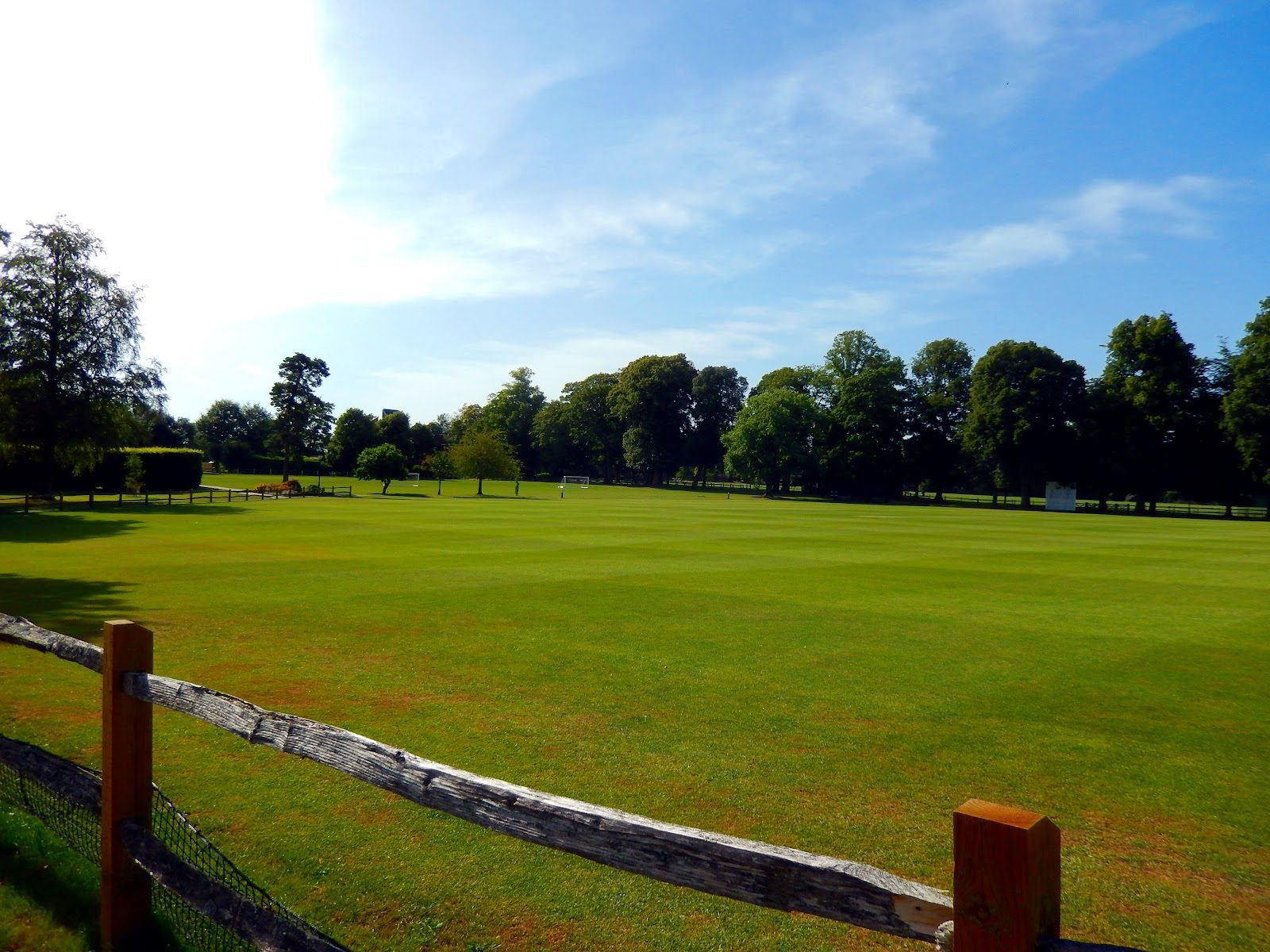
Charterhouse
Godalming · United Kingdom
One of England's Nine Great Public Schools, now fully coeducational, set on a 250-acre Surrey campus with IB scores averaging 37 points.
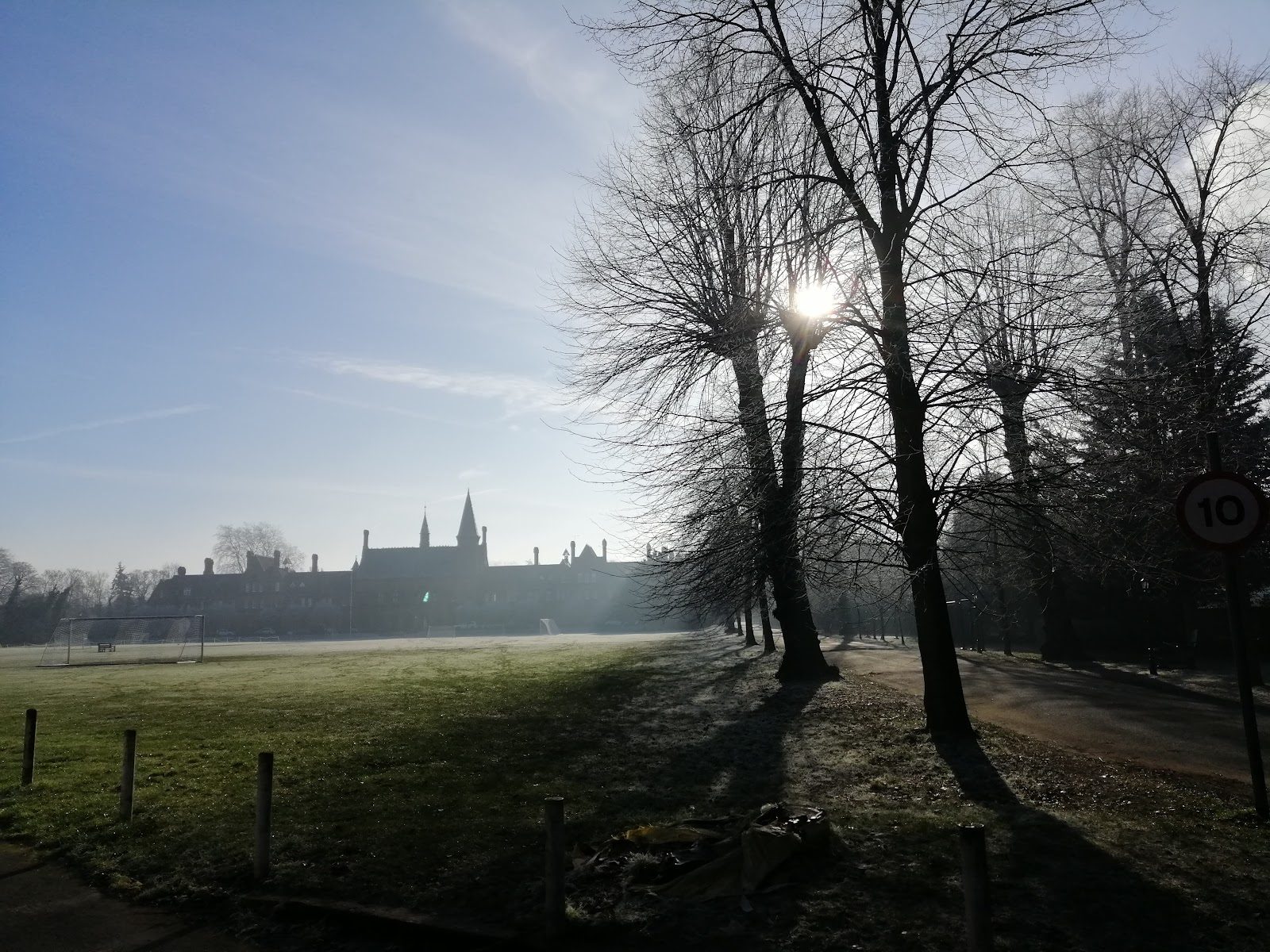
Reading School
Reading · United Kingdom
Founded within Reading Abbey in 1125, this selective state grammar for boys still sends the bulk of its leavers to Russell Group and Oxbridge places.
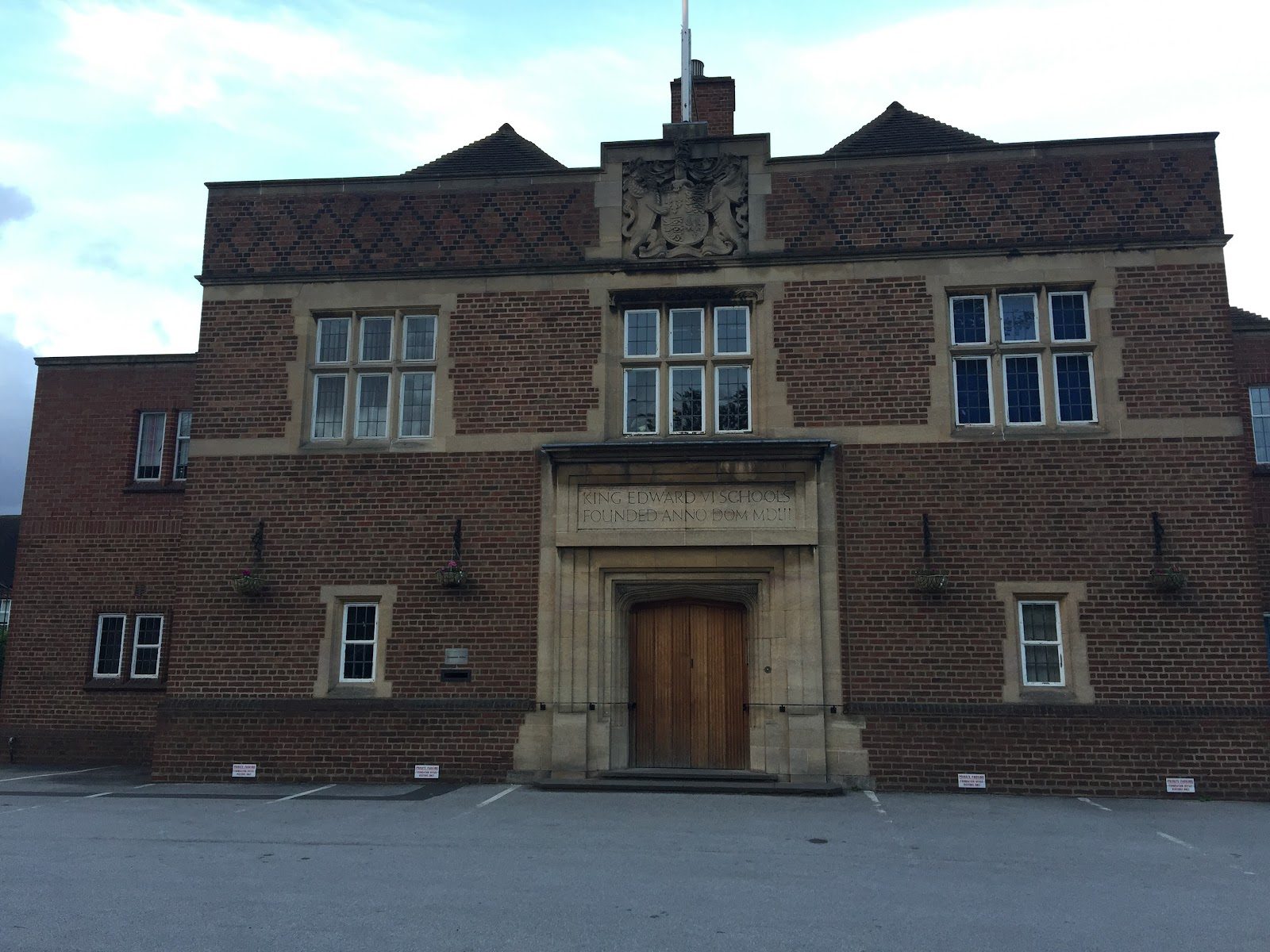
King Edward's School, Birmingham
Birmingham · United Kingdom
A royal charter from 1552 anchors this Edgbaston day school, where a third of new boys receive means-tested fee support.
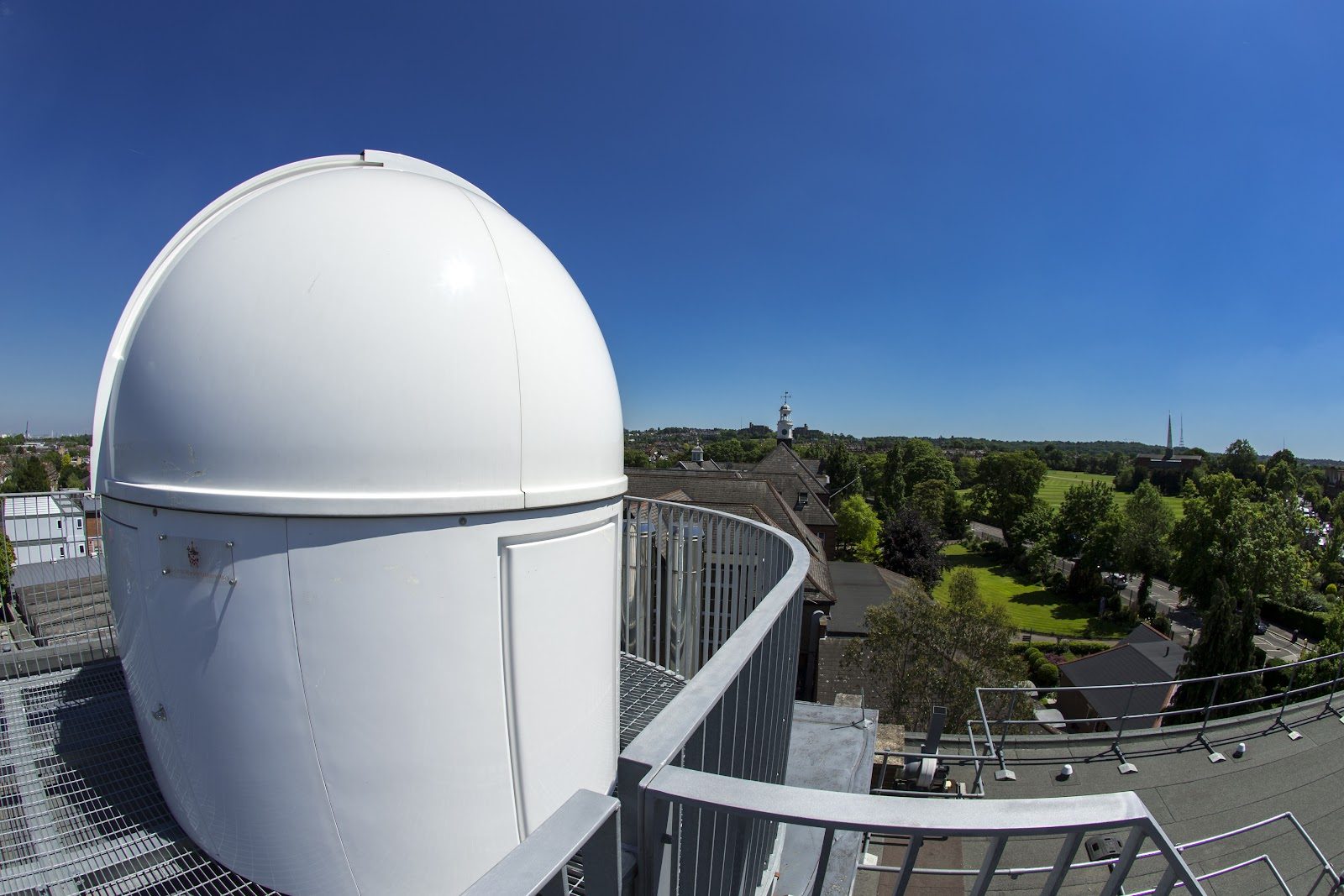
Alleyn's School
London · United Kingdom
A 1619 theatre fortune built this Dulwich day school, whose junior houses still bear the names of Edward Alleyn's playhouses.
Same country and curriculum — closest matches within ±10 points either way