
West Midlands
A royal charter from 1552 anchors this Edgbaston day school, where a third of new boys receive means-tested fee support.
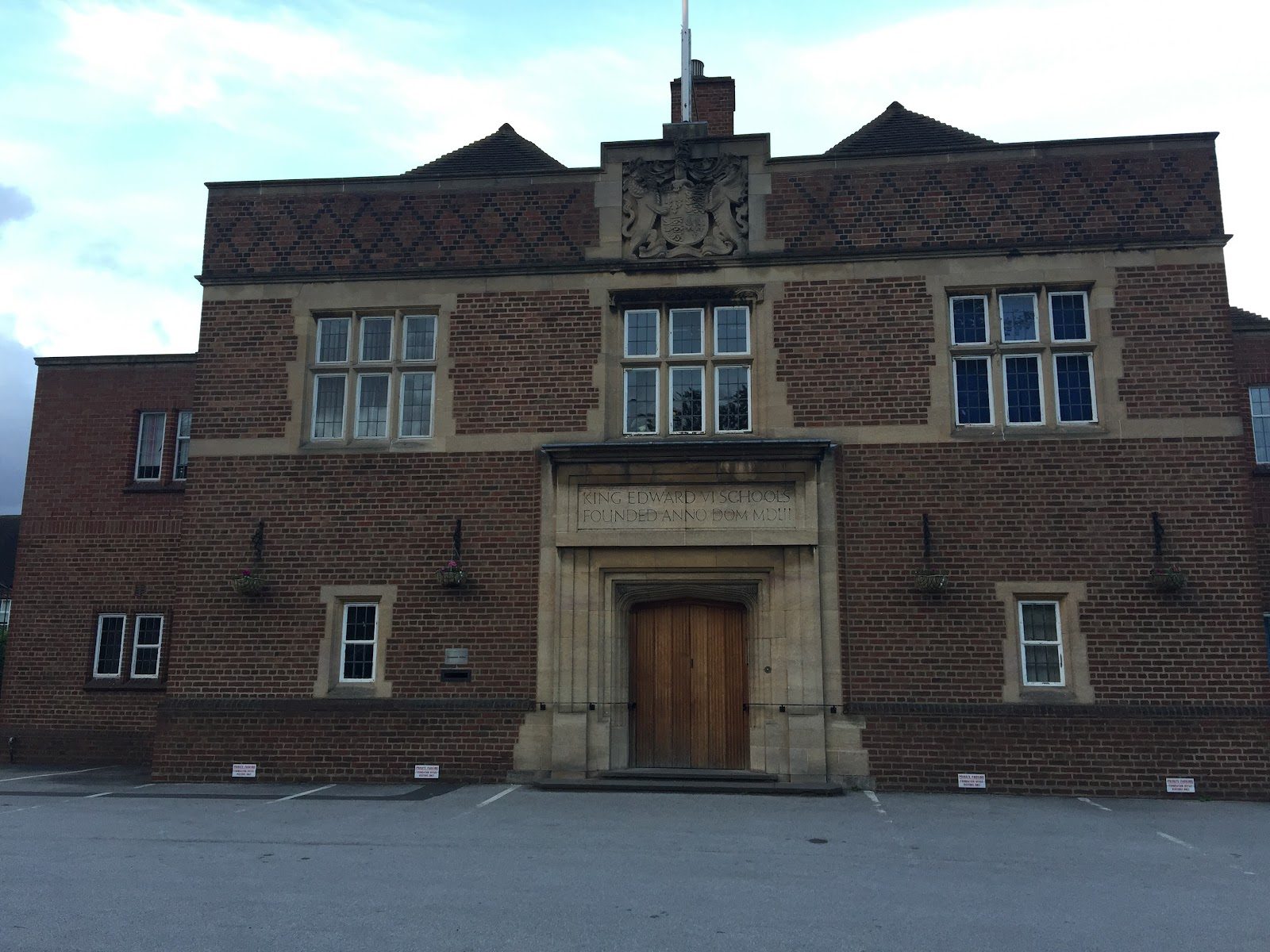
Photo © Ahmed Nahrawy via Google Maps
Type
Day
Ages
11–18
Curriculum
British
Qualifications
A-Level
Ratio
—
The Verdict
Editor's commitment
Right for
Bright boys who want a serious British academic school: 900 pupils, HMC membership, and 26 Oxbridge places from 135 leavers.
Wrong for
Families wanting coeducation, boarding or a softer pace; this Anglican day school runs 11–18 for boys only in Edgbaston.
Watch out for
The average annual fee is £23,085, but a third of new boys receive means-tested support and 88% of 2024 leavers reached top-100 universities.
Ranking breakdown
King Edward's School, Birmingham · # of 1591
Composite score 78.4. 8 weighted criteria.
By criterion
Academic Outcomes
Weight 20%
#118
of 1529 scored
University Placement
Weight 16%
#136
of 1529 scored
Prestige & Heritage
Weight 12%
#88
of 1571 scored
Alumni Network
Weight 12%
#62
of 1530 scored
Facilities
Weight 12%
#271
of 1534 scored
Transparency & Communications
Weight 8%
#204
of 1532 scored
Peer & Industry Review
Weight 10%
#147
of 1548 scored
Admissions Selectivity & Demand
Weight 8%
#153
of 1529 scored
Score history
King Edward's School, Birmingham · 2026
Movement across 2024–2026. Peer average overlaid.
Overall — 2024–2026
78.4/ 100
▲ +17.4 vs 2025
year on year
Peer & Industry Review
How King Edward's School, Birmingham is regarded in the sector
84
Strong · high confidence
King Edward's School, Birmingham sits among the most consistently benchmarked boys' day schools outside London, with the Good Schools Guide calling it "a seriously brainy school where like-minded boys spark off each other and achieve extraordinary things" and praising its meritocratic, socially inclusive ethos. WhichSchoolAdvisor notes it as one of the highest-performing IB schools in the country, having been the first UK school to switch wholesale from A Levels to the IB Diploma. Sector press reinforces this standing: the school ranks 41st nationally and third in the West Midlands on the region's independent school league tables, alongside recent Tatler Schools Guide and Sunday Times Parent Power recognition. Its 500-year history, HMC membership and alumni roster including Nobel laureates and J.R.R. Tolkien give it a durable reputation that peer schools and specialist reviewers routinely reference as a regional (and increasingly national) academic benchmark.
Editors' overview
A royal charter from 1552 still matters at King Edward’s School, Birmingham, but the sharper point is access. This is a serious academic engine with around 900 boys aged 11 to 18 in Edgbaston, and it backs its rhetoric on social reach with money: the school states that the King Edward VI Foundation provides £1 million a year for assisted places, while alumni and supporters have raised over £12 million for the same cause in recent years. The editorial tagline adds the figure parents need to know: a third of new boys receive means-tested fee support. That combination — old grammar-school intellectual culture, independent-school resources, and real bursary depth — gives King Edward’s a market position that is distinctive, not decorative.
The school shares a 50-acre site with King Edward VI High School for Girls, and that scale matters. Few day schools offer this amount of space while remaining academically selective and city-facing. The public case for the school rests on challenge, and the numbers support it. For the Class of 2024, 88% of 135 leavers went to top-100 universities, with 26 Oxbridge places and 51 to Russell Group institutions; Cambridge took 14, Oxford 12 and Birmingham 18. Those are not the outcomes of a school that coasts on reputation. They reflect a high-pressure, high-yield culture in which bright boys are expected to think hard, work fast and compete with confidence.
At an average annual day fee of £23,085, King Edward’s sits in an unusually strong-value position for this tier of academic day school, though “value” here does not mean cheap. It means a demanding education with strong university traction at a price below the most inflated southern competitors. Parents should shortlist it if they want academic seriousness without boarding, substance rather than gloss, and a school with a proven record of sending boys to selective universities. The boy who thrives here is intellectually quick, self-motivated and comfortable in a culture where achievement is normal. The boy who needs constant hand-holding, or wants a softer, more sheltered atmosphere, will find it not for the faint-hearted.
Academic Performance
King Edward’s academic performance sits in the top rank of academically selective day schools outside London. The school publishes separate pages for results and university destinations, and the destinations data already points to the standard of attainment: this is not a school that produces a long tail of middling outcomes masked by a few stars. The pattern is one of sustained high attainment feeding into serious university placement. Within the West Midlands, King Edward’s occupies the same conversation as the region’s most selective independents and grammar-school heavyweights; against national peers, it holds ground through sheer academic consistency rather than marketing noise or inflated claims.
What matters for parents is the type of academic culture those outcomes require. This is a school for boys who can manage pace, competition and intellectual pressure without constant supervision. Results here rest on selective intake, strong teaching and a house style that prizes scholarship across the board, not just in a favoured sixth-form cohort. We have not seen aggregate public exam tables in the source extracts here, so any school that wants cleaner proof will want the current GCSE and A-level profile in black and white. Even with that caveat, the destinations record is strong enough to place King Edward’s in the high-output, exam-driven bracket, with 26 Oxbridge places and 88% progressing to top-100 universities in the latest cohort.
Facilities
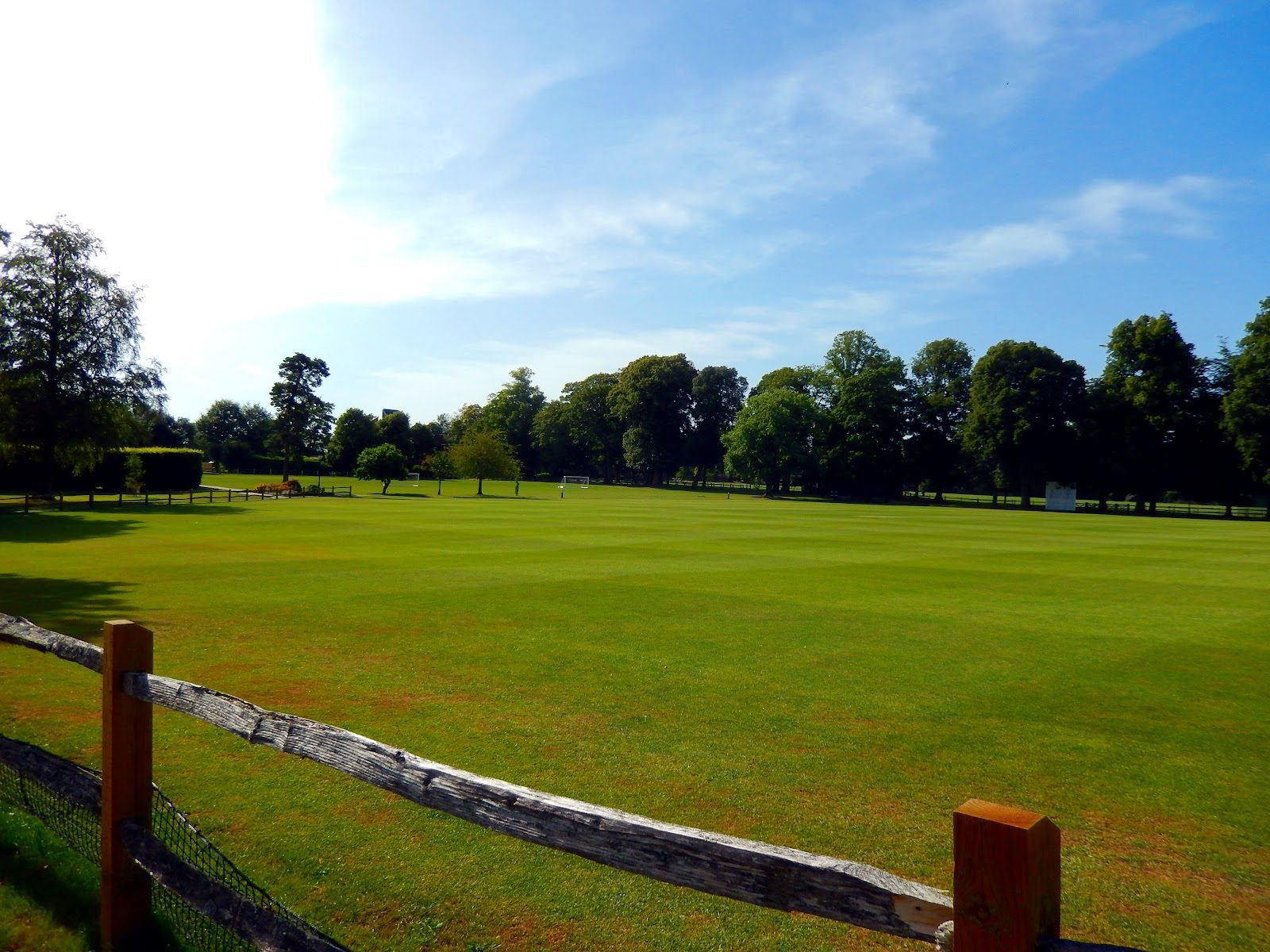
Facilities are a real strength here because the school operates on a scale that few urban day schools can match. The key fact is the shared estate with the girls’ school: a 50-acre site gives King Edward’s room to do sport, drama and music properly rather than by timetable triage and borrowed space. That matters. Many academically selective day schools, especially in city settings, run out of physical capacity long before they run out of ambition. King Edward’s does not have that excuse. Parents can expect extensive playing provision, serious performing-arts use, and the practical advantage of space for clubs, societies, cadets, trips preparation and the Friday-afternoon programme the school advertises. Against peer schools in the Midlands, this is a high-capacity, well-resourced campus with far more breathing room than the norm.
The public academic menu also points to specialist teaching spaces that matter in practice: separate departments across the sciences, design and technology, computer science, classics, art, drama and music, plus a library and dedicated sixth-form spaces. That breadth places King Edward’s in the full-service independent-school bracket, not the stripped-back model where results are strong but facilities lag behind the prospectus. The caveat is straightforward: the school does not publish the kind of granular facilities inventory that would let parents compare lab refurbishment, theatre specification or strength-and-conditioning provision line by line. Even so, on campus scale, subject breadth and co-curricular infrastructure, King Edward’s stands above many academic day-school rivals and competes comfortably with much more expensive peers.
King Edward’s academic performance sits in the top rank of academically selective day schools outside London
Prestige
King Edward’s carries old-established prestige of the kind that does not need theatrical branding. In British terms, this is a serious name: a selective boys’ school in the public-school tradition, tied to a major educational foundation and embedded in the civic and professional life of its region for generations. Prestige here rests on three solid bases. First, admissions select for academic horsepower. Second, university destinations confirm that the school converts that intake into outcomes that matter. Third, the alumni footprint is immense. Wikidata alone records 206 notable former pupils across politics, science, writing, sport and the arts. That is not a decorative roll call. It signals a school with long-range influence and a habit of producing men who enter national life.
The prestige is strongest in circles that value intellect, examination performance and institutional continuity over social display. This is not the glossy, internationally marketed prestige of a famous London boarding school; it is hard-earned, scholarly and locally formidable. For families in the Midlands, the name carries real weight. For families elsewhere, the case rests less on polish than on output: selective admissions, strong higher-education progression, and a deep old-boy network with reach well beyond the region. I rate it highly because the school combines academic seriousness, historic standing and proven alumni consequence without relying on empty cachet. That is substantive prestige, not borrowed glamour.
The result is a distinctive kind of education: high-performing, culturally confident, and less cloistered than many schools with equal status
Communications
King Edward’s communicates in the manner of a serious academic institution, not a lifestyle brand. The public-facing site is dense, well organised and practical: parents can reach admissions, fees, term dates, calendars, policies, pastoral contacts, food information, travel, uniform, trips, sport information and absence reporting without digging through vague promotional copy. The menu structure is extensive but disciplined, which matters at a school with a lot going on. It also signals a house style: information first, gloss second. The presence of separate academic department pages, results and destinations sections, a full parent area, and named routes into pastoral support points to communication that is structured, adult and operationally useful. For current families, that breadth matters more than polished storytelling.
The limitation is tone. King Edward’s writes with institutional confidence and assumes a reader who can keep up. Some parents will value that no-nonsense clarity; others will find it austere and old-fashioned. The school does not flatter, over-explain or soften its edges, and that fits the culture. It also means communication works best for families already comfortable with selective-school systems and expectations. Still, the essentials are there in force: a clear admissions path, visible support channels, and enough detail to navigate school life without endless back-and-forth. For effectiveness, I would score it high. This is not warm communication. It is competent communication, and for many parents that is the more useful thing.
Uniqueness
What sets King Edward’s apart is not heritage on its own, and not raw selectivity on its own, but the combination of scholarly severity with real social reach. Plenty of old boys’ schools trade on tradition; plenty of selective schools talk about widening access. King Edward’s has built fee assistance into the institution’s operating logic, with foundation funding and donor money directed at assisted places on a scale that changes who gets through the door. That gives the school a character many expensive independents lack: meritocratic in practice, not just in slogan. For students, that changes the peer group. Boys do not enter a monoculture of inherited ease; they enter a competitive academic environment with a broader spread of backgrounds and a stronger sense that places are earned.
The second point of difference is the school’s public-school seriousness without boarding-school insulation. Boys get the demanding co-curricular architecture, the old institutional confidence and the expectation of intellectual range, but they remain rooted in ordinary family life and the professional life of the wider region. That produces a pupil who is not only well taught but world-facing, accustomed to moving between high academic expectations and the realities beyond the school gates. The result is a distinctive kind of education: high-performing, culturally confident, and less cloistered than many schools with equal status. For the right boy, that mix builds resilience, independence and social fluency more effectively than a more sheltered model.
A royal charter from 1552 still matters at King Edward’s School, Birmingham, but the sharper point is access
Student Profile
The boy who fits King Edward’s is bright, quick-moving and comfortable with scrutiny. He does not need praise as fuel; he gets his energy from ideas, argument and the satisfaction of getting things right. This is a school for boys who enjoy hard classes, strong peers and teachers who take subjects seriously. The intake pattern matters here: most boys join at the main entry point, with some arriving later for sixth form, so the social fabric is shaped early and then reinforced by academic selection. That creates a cohort with a clear centre of gravity: brainy, competitive and self-propelled. Families who want a school to stretch a boy hard, expose him to able classmates and normalise ambition will find a strong fit. Families looking for a gentler, more buffered culture will not.
The other important feature is range of background within a highly selective setting. The school’s commitment to assisted places means a meaningful share of entrants do not come from uncomplicated affluence, and that gives the student body more texture than the standard fee-paying monoculture. Boys who thrive here tend to be confident across classrooms, clubs, sport and performance, because the school expects full participation, not narrow exam cramming. With around 900 pupils and 11–18 entry span, it is large enough to avoid social claustrophobia but focused enough to keep standards tight. Best suited to boys who are intellectually hungry, resilient under pressure and ready to treat school as serious work rather than a protective cocoon.
The editorial tagline adds the figure parents need to know: a third of new boys receive means-tested fee support
Co-curricular strengths
Arts & sport, on a separate axis
Overall 8.74/10
Scored 0-10 from the school's own published evidence. This axis is editorial-only — it does not feed the main WTS ranking.
Sports
9/10
Powerful independent day athletic pipeline, fielding dominant varsity teams in rugby, hockey, and cricket across expansive grounds.
Drama
9.2/10
Active classical drama societies and Shakespeare showcases focused on building rigorous public speaking and confidence traits.
Dance
7/10
Maintained strictly as a minor auxiliary component for theatrical physical movement blocks or house arts festivals.
Music
9.7/10
Highly elite music wing backed by the custom Recital Hall, supporting top-tier youth orchestras and symphonies in Birmingham.
Visual Arts
8.8/10
Highly structured fine art layout leaning heavily toward technical drawing, fine oils, and advanced portfolio mastery.
Editor-verified · 8/6/2026
Outcomes & destinations
Where students go next
Editorial estimateClass of 2024
135 graduates
A-Level distribution
97% covered
- A*42%
- A31%
- B19%
- C5%
Top destinations
77 placements
- Cambridge· 14
- Oxford· 12
- Birmingham· 18
- Warwick· 12
- Nottingham· 8
- UCL· 7
- Imperial College London· 6
Grammar school with strong Oxbridge tradition and Midlands Russell Group pipeline.
Editor-approximated from the school's own leavers report. Awaiting school-attested figures.
Notable alumni · Wikidata
206notable alumni
127 historic (born pre-1930) · 19 modern (born post-1970)wikidata:2026-07-28 How we source this
The story in one line
46% achieved ≥ AAB in 2+ facilitating subjects·ISI Routine Inspection 2026
AAB with 2 facilitating subjects is the Department for Education's published predictor of admission to a top-third UK university: the pupil has scored high grades in at least two of the classic Russell-Group subjects (maths, sciences, English, history, geography, or a modern language). Independent schools don't appear in the state-only HE-destinations dataset, so this is the strongest DfE-verified sixth-form signal available. Source: DfE 16-18 school and college performance data · 2023/24.
DfE-verified statistics
Official GCSE data · 2024/2025
Progress 8
—
Value-added score. State-schools only; 0 = expected progress, +1 = one grade above.
Attainment 8
23
Average grade across 8 GCSEs (score out of 90). National ≈ 46.
EBacc average score
0.74
Avg grade across the 5 EBacc pillars (English, Maths, Sciences, Language, Humanity).
EBacc slots filled
1.7
How many of the 5 EBacc pillars pupils typically enter (max 5).
A-Level attainment
Cohort · 2023/24
Avg A-Level grade
A-
APS per entry: 46.29
Best 3 grade
A-
Best-3 APS: 46.12
≥ AAB + 2 fac.
45.7%
Russell-Group predictor.
Progress (value-added)
+0.04
Average
Read with care. Independent schools frequently sit IGCSEs or Pre-U qualifications instead of standard GCSEs — DfE data only counts standard GCSEs, so these numbers may reflect a partial cohort. For a fuller picture, cross-check with the school's own annually-published results.
URN 109374Verified · DfE 2024/2025
Official inspection
ISI report · 2026
Inspectorate
Independent Schools Inspectorate
The Government-approved inspectorate for English independent schools.
Latest report
13 January 2026
Routine Inspection
Report history
Verified · Independent Schools InspectorateSource-of-truth
WTS 300 badge
2026/27 editionKing Edward's School, Birmingham is one of the World's Top 300 Schools for 2026/27. Claim your listing to add it to your site →
Strengths
- +Consistently strong A-level results, with 42 per cent of grades at A* and 73 per cent at A*-A in 2024.
- +Strong university progression, with 88 per cent of 2024 leavers heading to top-100 universities and 26 Oxbridge places (14 Cambridge, 12 Oxford).
- +Substantial bursary provision, with means-tested Assisted Places available at 11+ that widen access to less affluent families.
- +Long academic tradition, with notable alumni including author J.R.R. Tolkien.
- +Shares a 50-acre Edgbaston campus with sister school King Edward VI High School for Girls, allowing joint music, drama and some societies despite separate teaching.
Considerations
- −Single-sex boys' school, so families seeking co-education for their son, or a place for a daughter, will need to look elsewhere.
- −The school does not accept applications from international students, a significant structural limitation for relocating expat families.
- −Entry is highly selective, via the school's own maths and English entrance exam plus interview, with the large majority of places filled at 11+ and only a handful of spaces at other entry points.
- −As a day school, some pupils commute considerable distances from across the West Midlands, implying a demanding daily journey for families settling outside central Birmingham.
Availability
Primary entry gate & tests
11+ Entrance Exam (Boys)
Gallery
Photo © Soma Sekhar Yerraguntla via Google Maps
Photo © Soma Sekhar Yerraguntla via Google Maps
Photo © Soma Sekhar Yerraguntla via Google Maps
Photo © Soma Sekhar Yerraguntla via Google Maps
Photo © Soma Sekhar Yerraguntla via Google Maps
Photo © Soma Sekhar Yerraguntla via Google Maps
Photo © Soma Sekhar Yerraguntla via Google Maps
Photo © E via Google Maps
Photo © E via Google Maps
Recommended reading
Independent write-ups of this school from editorial outlets we trust.
- King Edward's School, BirminghamGood Schools Guide
Parent reviews
Have you sent your child here?
Voice reviews carry the strongest trust badge — we transcribe them for you to tidy up before they go live. Prefer to type? A written review is fine too.
Add your voice
In 60 seconds, tell other parents: what's the best thing about King Edward's School, Birmingham, and what surprised you when your child joined?
We ask for a Google sign-in so every review has a real face behind it — no anonymous drive-by attacks on schools, and no faked positive reviews. Your email is never shown publicly.
Send this profile to a friend
International parents rely on word-of-mouth. Share this review with someone weighing the same decision.
Schools with places
Similar schools to King Edward's School, Birmingham with places available now.
Alleyn's School
London · United Kingdom
- 2026-27
- CLOSEDStandard route
- 2027-28
- OPENS SOONOpens Sept '26 (11+ on 1 Sept)
Highgate School
London · United Kingdom
- 2026-27
- CLOSEDStandard route
- 2027-28
- PLACES OPEN11+ (Closes 4 Nov); 16+ (16 Oct)
Charterhouse
Godalming · United Kingdom
- 2026-27
- CLOSEDStandard route
- 2027-28
- PLACES OPEN16+ Active (Closes 23 Sept); 13+ Late
Tonbridge School
Tonbridge · United Kingdom
- 2026-27
- CLOSEDStandard route
- 2027-28
- PLACES OPEN16+ Active; 13+ Std Closed; 13+ Late enquire
Availability first, then country, area, curriculum, price, co-curricular
Consider also
Also worth looking at alongside King Edward's School, Birmingham.
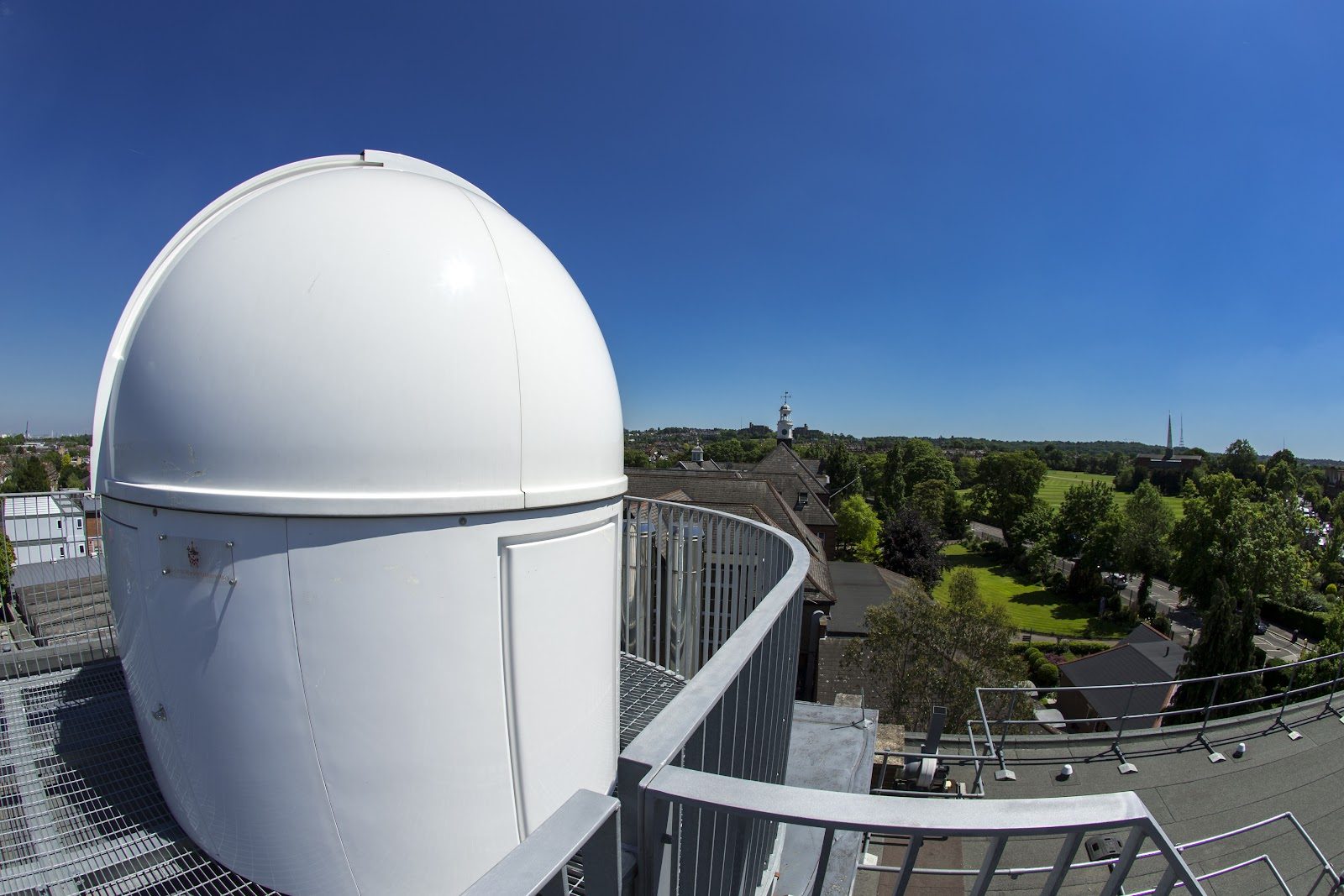
Alleyn's School
London · United Kingdom
A 1619 theatre fortune built this Dulwich day school, whose junior houses still bear the names of Edward Alleyn's playhouses.
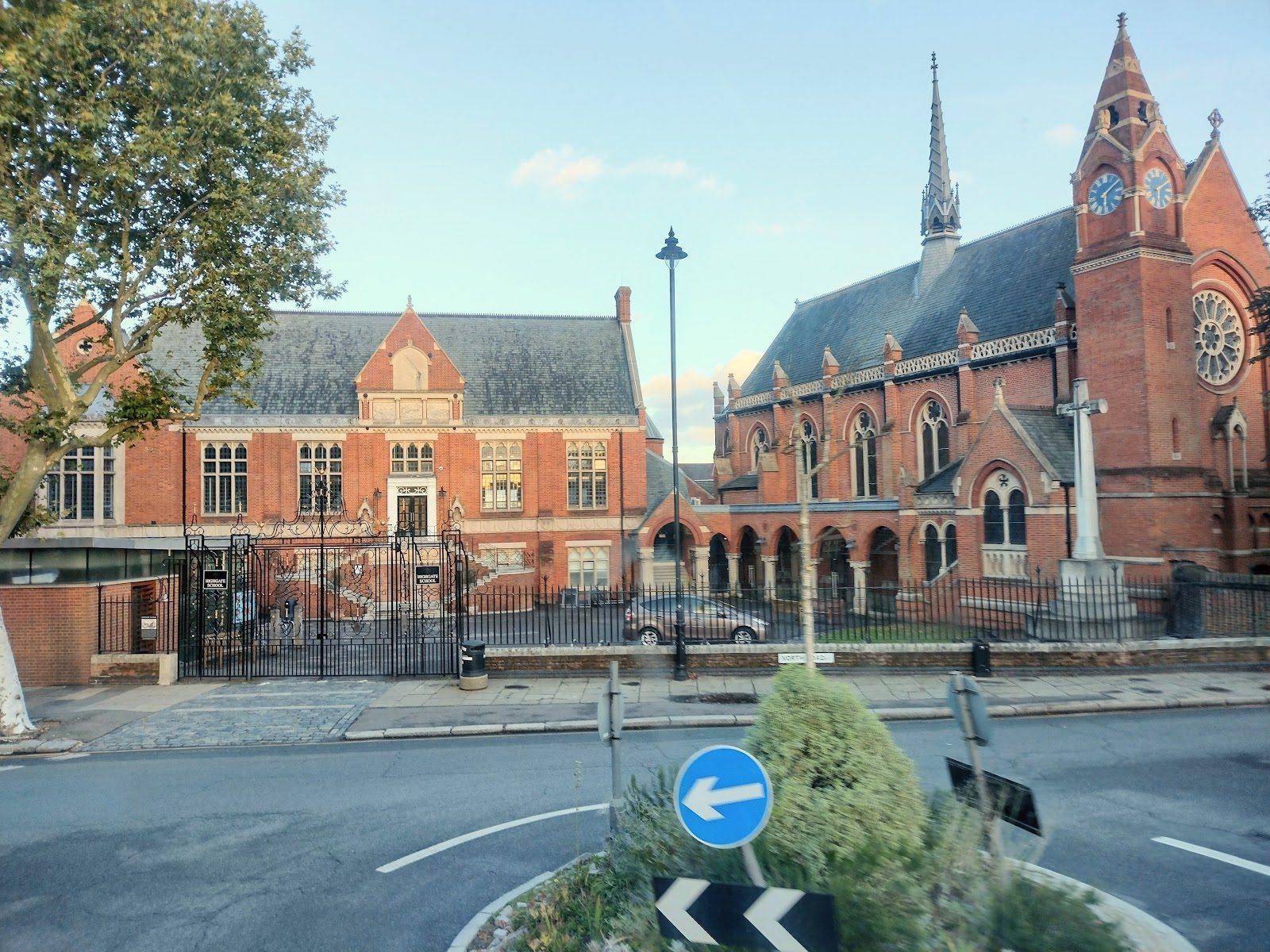
Highgate School
London · United Kingdom
Chartered by Elizabeth I in 1565, this Highgate grammar school now founds access academies alongside its Oxbridge-bound sixth form.
Charterhouse
Godalming · United Kingdom
One of England's Nine Great Public Schools, now fully coeducational, set on a 250-acre Surrey campus with IB scores averaging 37 points.
Reading School
Reading · United Kingdom
Founded within Reading Abbey in 1125, this selective state grammar for boys still sends the bulk of its leavers to Russell Group and Oxbridge places.
Same country and curriculum — closest matches within ±10 points either way