
Kyoto Prefecture
Kyoto International School
low confidence· 4/6 cats · 1.2 avg sourcesGrown from a 1957 missionary homeschool into Kyoto's only full IB continuum, blending British rigor with inquiry-based learning.

Photo © Kyoto International School via Google Maps
Type
Day
Ages
3–15
Curriculum
IB
Qualifications
IB PYP · IB MYP
Ratio
—
The Verdict
Editor's commitment
Right for
Kyoto families wanting English-medium IB from age 3 to 15, with CIS accreditation and a school history reaching back to 1958.
Wrong for
Parents seeking boarding, sixth form, or a non-IB route: this is a day school in Kyoto with teaching in English.
Watch out for
The average annual fee is JPY 1,708,415, and the school stops at 15 despite its status as Kyoto's only full IB continuum.
Ranking breakdown
Kyoto International School · # of 1591
Composite score 52.6. 8 weighted criteria.
By criterion
Academic Outcomes
Weight 20%
#1348
of 1529 scored
University Placement
Weight 16%
#1332
of 1529 scored
Prestige & Heritage
Weight 12%
#1381
of 1571 scored
Alumni Network
Weight 12%
#1008
of 1530 scored
Facilities
Weight 12%
#1375
of 1534 scored
Transparency & Communications
Weight 8%
#1367
of 1532 scored
Peer & Industry Review
Weight 10%
#1216
of 1548 scored
Admissions Selectivity & Demand
Weight 8%
#1232
of 1529 scored
Peer & Industry Review
How Kyoto International School is regarded in the sector
63
Respected · medium confidence
I could not identify at least two independent third-party sources (specialist education press, Tatler, Good Schools Guide, government inspectorate reports, or established expat forums) that specifically assess Kyoto International School's reputation. Without verifiable independent coverage, I cannot substantiate a peer or press reputation score.
Editors' overview
Kyoto International School occupies a narrow but defensible niche: it is Kyoto’s only school offering the full IB continuum, and it does so on a scale that sets it apart from the bigger Tokyo and Yokohama players. The school traces its roots to a missionary homeschool begun in 1957 and was founded in 1958 in its current institutional form; that history still matters because KIS retains the feel of a small, self-contained school rather than a corporate international brand. For families in Kyoto who want English-medium education from age 3 in a non-religious day school, that combination is distinctive. So is the price point: the average annual day fee across the full age range is 1,708,415 JPY, which places KIS in the serious-fee bracket without pushing into the stratosphere occupied by some larger metropolitan competitors.
What puts KIS on a shortlist is not scale, glamour or published outcomes; it is fit. The school teaches in English, serves ages 3–15, and carries both IB World School and CIS accreditation, with WASC accreditation also noted in the primary source. That package gives parents a clear read on standards and international transferability. The other attraction is philosophical. KIS combines the structure associated with British-style schooling with IB inquiry, which suits families who want more discipline than the loosest progressive models but less rote than traditional exam factories. It is compact, clear in purpose and well suited to internationally mobile families who need continuity more than spectacle.
The caveat is just as clear. KIS does not publish the sort of public performance data that would settle the academic question cleanly: no aggregate exam outcomes, no university destinations, no large-cohort headline numbers. Parents who want a school to prove itself through hard results tables will find that opaque. The age span also stops short of the full 18-year school journey listed in many international markets; the context here gives 3–15, while the primary source gives 3 to 16, so families need to confirm the current upper age range directly. This is not the school for parents shopping for a vast campus, a huge activities machine or a heavyweight sixth form.
The right student for Kyoto International School is a child who thrives in a close-knit setting, can handle an English-medium classroom, and benefits from teachers knowing them well rather than losing them in a large cohort. It will appeal to families who value the IB’s inquiry model but do not want an overtly experimental culture, and to parents in Kyoto who need an international school with genuine continuity and recognised accreditation rather than brand theatre. In market terms, KIS is a small, established, academically serious local option with international credentials. That is a strong proposition in Kyoto.
Academic Performance
Academic performance is the weak point in Kyoto International School’s public profile. The school offers the IB pathway, but it does not publish the external-results data that lets parents judge academic strength against other international schools with confidence: no cohort averages, no subject score breakdowns, no year-on-year trend line, and no destination list. That leaves KIS in an opaque category. Families must rely on accreditation, classroom fit and direct questioning rather than hard comparative evidence. In a market where stronger schools put outcomes into the public domain, that silence matters. It does not make the teaching weak; it does make scrutiny harder than it should be.
Relative to peers, KIS fits the small-school, low-visibility end of the spectrum rather than the results-forward model common among bigger international schools in Japan and across Asia. The age range also matters: with students listed at 3–15 in the verified context and 3 to 16 in the primary source, this is not a conventional full senior-school story with a large graduating class producing headline leaver data every year. Parents who care about external examinations need to ask direct questions: how many students sit final assessments, what the score distribution looks like, how stable outcomes have been across recent cohorts, and where leavers go next. Until the school publishes that information, KIS remains credible but unproven in public.
Facilities
Facilities are not the reason families choose Kyoto International School, and that needs saying plainly. This is a small-footprint school, not a campus built to impress on a tour. Parents comparing it with the heavyweight international schools in the Tokyo market will not find sprawling sports grounds, specialist performance venues or the kind of high-spec architectural showpiece that now passes for educational substance in parts of the sector. The practical advantage of a compact site is proximity: younger pupils are not trekking across a large estate, staff oversight is tighter, and the school can feel contained rather than anonymous. For some families that is a strength; for others it will read as constrained.
What matters here is whether the facilities are fit for an all-through international day school serving ages 3–15. The public picture does not show a lavish specialist build, so parents need to ask direct questions about science provision, indoor sport, outdoor play, library depth and dedicated spaces for art, music and design. Peer schools with stronger facilities publish them aggressively because the assets are a selling point. KIS does not put that case into the public domain with the same force, which leaves the physical offer under-evidenced. In Kyoto that may still be enough if the priority is continuity and a close daily environment. For families who rank facilities high on the decision list, this school sits in the functional rather than expansive bracket.
Academic performance is the weak point in Kyoto International School’s public profile
Prestige
Kyoto International School carries local prestige rather than the kind of status that travels on name alone. In Kyoto, that matters: there are not many international options, and KIS holds a clear place for families who want continuity through the school years without moving to a larger metropolitan market. Its prestige rests on endurance, recognised oversight and scarcity value, not on glamour. This is not a school with the social cachet of the biggest capital-city brands, nor one that trades on a grand campus or a large alumni machine. The average annual fee of 1,708,415 JPY signals commitment, but price here buys a small-scale, serious-minded education rather than luxury signalling.
That is why the school sits in the middle tier of prestige overall: credible, established and respected within its niche, but not elite in the global pecking order. The limiting factor is public proof. Schools with high prestige publish outcomes, university destinations and standout student achievements because reputation needs visible results. KIS does not do that, and the gap caps its standing. For families already based in Kyoto, the school’s reputation has practical weight because the alternative set is narrower and continuity counts. For internationally mobile parents comparing across Japan or Asia, the brand carries less force. This is earned trust, not rarefied status.
Facilities are not the reason families choose Kyoto International School, and that needs saying plainly
Communications
Kyoto International School communicates like a small school that expects direct contact rather than a polished information machine. That has advantages. Parents at schools of this scale can usually reach the people who matter without fighting layers of administration, and KIS’s close-contact structure fits that model. The school’s public-facing communication, though, lacks depth. Key decision-making information that strong schools now publish as standard — academic outcomes, destination data, fuller detail on facilities, and a cleaner account of the upper age range — is missing or unclear. That matters because good parent communication is not just warmth and responsiveness; it is also institutional candour. On that test, KIS is serviceable rather than exemplary.
The mixed message on the age span — 3–15 in the verified context and 3 to 16 in the primary source — is a small detail with outsized significance for parents planning more than the next year. A school that communicates sharply does not leave that kind of ambiguity hanging. Nor does it ask families to infer academic strength from reputation and accreditation alone. The likely day-to-day experience for existing parents is personal and accessible; the experience for prospective parents is thinner and more dependent on enquiry, meetings and follow-up questions than it should be. In practice, KIS communicates best when the subject is relationship; it communicates weakly when the subject is proof.
Uniqueness
What makes Kyoto International School unusual is not grandeur but continuity in a market that rarely offers it at this scale. Children can stay in one tight-knit setting from the earliest years into the mid-teens, which changes the texture of school life. Teachers know families over time, transitions between phases carry less friction, and pupils do not need to re-establish themselves every few years inside a much larger institution. For internationally mobile households, that matters. So does the school’s age span: with students running from 3 to 15, KIS covers a long stretch of childhood without the impersonality that creeps into bigger operations. The result is a high-contact, relationship-driven education in which adults have a better chance of spotting academic drift, social strain or untapped strengths early.
The other point of difference is cultural rather than architectural. KIS grew out of a missionary homeschool and now operates as a non-religious international school; that lineage helps explain its self-contained character and lack of corporate gloss. Students get a school with a distinct internal culture rather than a franchised brand experience. There is also a practical benefit to being the city’s only school offering the full IB pathway: families who want that framework do not need to trade continuity for access. The compromise is clear. A small-scale school gives pupils visibility and belonging, but it also offers less anonymity, less breadth and fewer headline resources than the biggest international campuses. For the right child, that trade works in their favour.
Kyoto International School carries local prestige rather than the kind of status that travels on name alone
Student Profile
The students who fit best here are the ones who gain from being known well. In a compact school covering ages 3–15, there is less room to vanish into the background and less tolerance for coasting on charm or confidence alone. Children who need a vast social field, a big-sport atmosphere or the status theatre of a large international campus will feel the limits quickly. Children who prefer steady routines, close adult attention and a peer group they recognise across the school day will settle more easily. This also suits internationally mobile families who want continuity without repeated reinvention. The school’s scale creates a high-accountability environment: strengths get spotted, but so do gaps in effort, organisation and social conduct.
A good fit is a child comfortable in an intimate, mixed-community setting and open to a school culture with little pretence. That includes self-motivated pupils who do not need constant spectacle to stay engaged, and younger children who benefit from clear structure without the impersonality of a much larger institution. It is less well suited to teenagers who want a sprawling senior-school identity, a huge menu of activities or the anonymity to try on different versions of themselves. Parents also need to be realistic about the upper end of the age range: the public picture points to 16 at most, so families planning all the way to university need to think ahead. For the right child, this is a grounded, close-contact school with a strong sense of belonging.
Kyoto International School communicates like a small school that expects direct contact rather than a polished information machine
Co-curricular strengths
Arts & sport, on a separate axis
Overall 6.5/10
Scored 0-10 from the school's own published evidence. This axis is editorial-only — it does not feed the main WTS ranking.
Sports
6.5/10
Drama
6.5/10
Dance
6.5/10
Music
6.5/10
Visual Arts
6.5/10
Editor first-pass · editor-reviewable · 7/30/2026
Strengths
- +Delivers an English-medium International Baccalaureate programme in Kyoto, a city with very few alternatives for expat families wanting IB continuity.
- +Small overall enrolment typical of boutique international schools allows for low student-teacher ratios and close staff familiarity with individual children.
- +Day-school format avoids the significant boarding premiums charged by some international schools elsewhere in Japan.
- +Location in Kyoto gives students ready access to the city's temples, museums and traditional arts for cultural and language immersion outside the classroom.
Considerations
- −As a newer and smaller institution, it lacks the multi-decade track record, alumni network and published university-placement data of larger IB schools in Tokyo or Osaka.
- −Public information on whether the school runs the full IB continuum through to the Diploma Programme is limited, so older students may eventually need to transfer for DP study.
- −Kyoto has far fewer international school options than Tokyo, meaning families who find this school unsuitable have limited local alternatives.
- −Its low editorial ranking (1309) indicates it is not yet a widely recognised name among internationally benchmarked schools in Japan.
Availability
Primary entry gate & tests
Academic Record
Gallery
Photo © Kyoto International School via Google Maps
Photo © Kyoto International School via Google Maps
Photo © Kyoto International School via Google Maps
Photo © K via Google Maps
Photo © K via Google Maps
Parent reviews
Have you sent your child here?
Voice reviews carry the strongest trust badge — we transcribe them for you to tidy up before they go live. Prefer to type? A written review is fine too.
Add your voice
In 60 seconds, tell other parents: what's the best thing about Kyoto International School, and what surprised you when your child joined?
We ask for a Google sign-in so every review has a real face behind it — no anonymous drive-by attacks on schools, and no faked positive reviews. Your email is never shown publicly.
Send this profile to a friend
International parents rely on word-of-mouth. Share this review with someone weighing the same decision.
Schools with places
Similar schools to Kyoto International School with places available now.
Aoba-Japan International School
Tokyo · Japan
- 2026-27
- WAITPOOLSpace-dependent
- 2027-28
- PLACES OPENRolling
Osaka International School of Kwansei Gakuin
Osaka · Japan
- 2026-27
- WAITPOOLSpace-dependent
- 2027-28
- PLACES OPENRolling
Seisen International School
Tokyo · Japan
- 2026-27
- WAITPOOLSpace-dependent
- 2027-28
- PLACES OPENRolling
Canadian Academy
Kobe · Japan
- 2026-27
- WAITPOOLSpace-dependent
- 2027-28
- OPENS SOONExpected ~Sept '26 (one-year-ahead policy)
Availability first, then country, area, curriculum, price, co-curricular
Consider also
Also worth looking at alongside Kyoto International School.

Tokyo International School
Tokyo · Japan
Grown from five preschoolers into a full IB continuum, this Minato campus relocates to Takanawa Gateway City ahead of its first DP class in 2027.
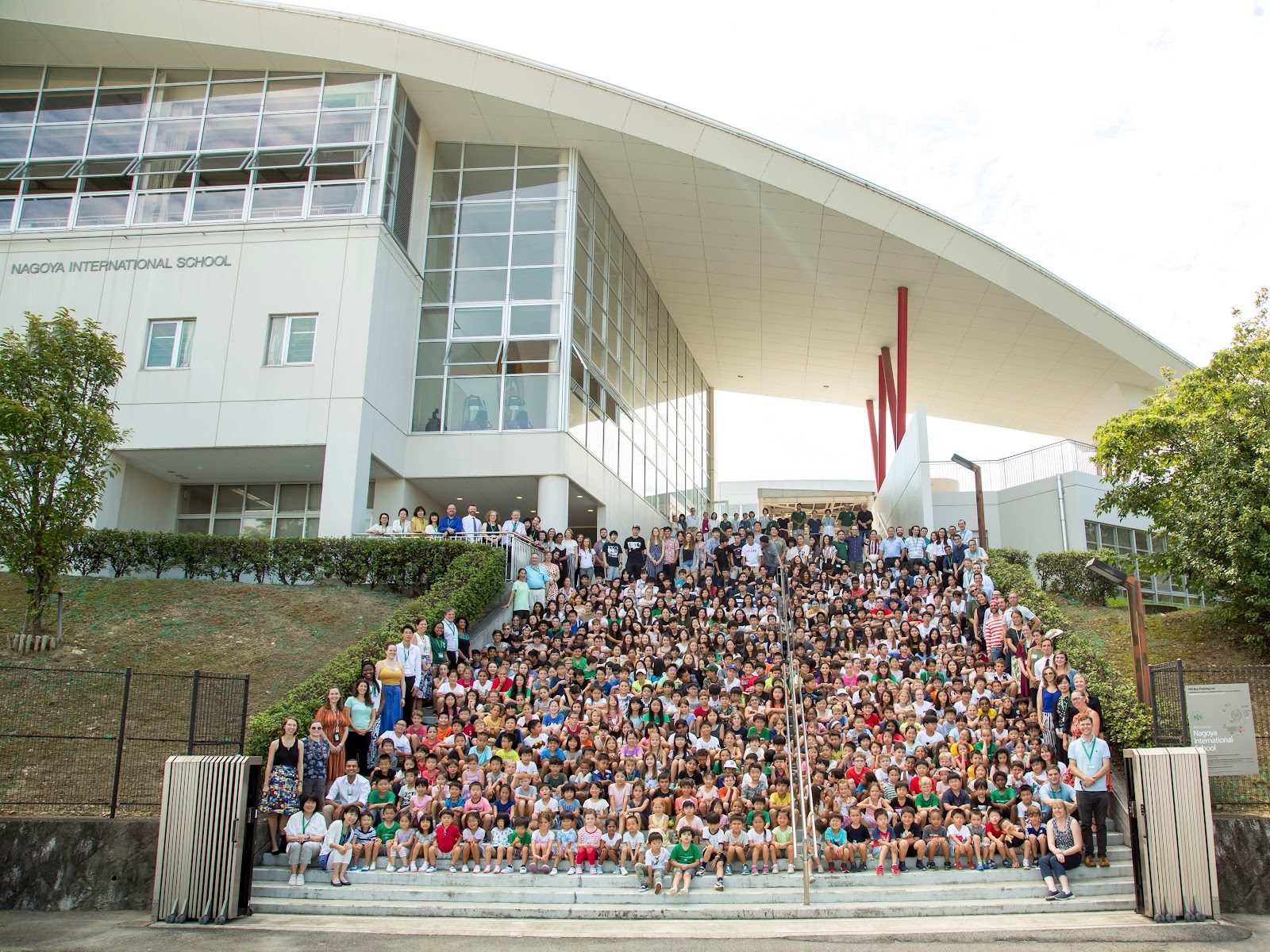
Nagoya International School
Nagoya · Japan
Since 1964, a full IB continuum school anchoring Nagoya's expatriate community at the heart of Japan's auto and aerospace corridor

Hiroshima International School
Hiroshima · Japan
One of Japan's oldest IB schools, where students carry origami cranes to Hiroshima's Sadako Peace Monument each year.
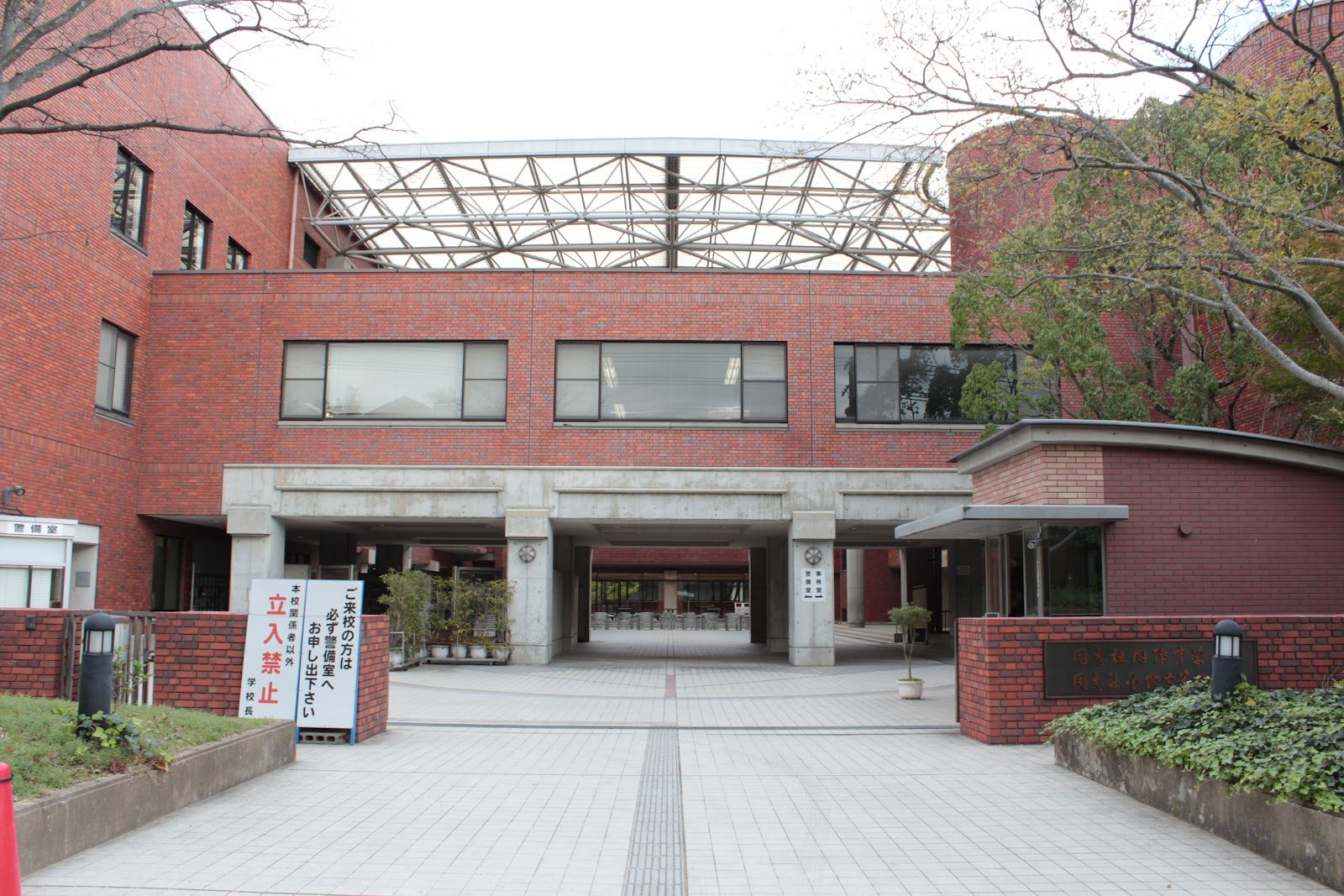
Doshisha International School Kyoto
Kyotanabe · Japan
Small IB classes inside a research-park campus, carrying the 1875 Christian-liberal ethos of the Doshisha network into Kansai Science City.
Same country and curriculum — closest matches within ±10 points either way